


Key Takeaways
- AI-powered search engines now sit between your audience and your website, so visibility depends on how often large language models cite and summarize your content.
- Low-frequency, manual blogging no longer keeps pace with AI-generated content, and brands that lack structured, up-to-date coverage risk disappearing from high-intent searches.
- Programmatic SEO structures content into topic clusters, metadata, and protocols like LLM.txt and Model Context Protocol to make it easier for AI systems to understand and reference your expertise.
- Advanced automation helps marketing teams scale content production, maintain quality standards, and capture more AI citations without stretching internal resources.
- AI Growth Agent provides a programmatic SEO agent that plans, writes, and optimizes blog content for AI search at scale; you can schedule a demo with AI Growth Agent to see how it fits your strategy.
Protect Your Brand Visibility In 2026’s AI Search Landscape
AI-powered search engines like ChatGPT, Google AI Overviews via Gemini, and Perplexity now reshape how people find and trust information. These systems compress many pages into a single response, so the brands they cite and summarize gain most of the attention and traffic.
The old model of optimizing one blog post at a time for a small set of keywords is no longer enough. AI systems evaluate broad patterns, including topic coverage, content structure, recency, and consistency. Brands that publish infrequently or rely on ad hoc posts provide too few data points for reliable AI citation.
Low content volume has become a strategic risk. When AI search tools do not find clear, structured signals from your brand, they shift to competitors with richer content footprints. Those competitors then shape how AI describes your market, your product category, and even your brand. Schedule a demo with AI Growth Agent to assess whether a programmatic approach can help close that gap.
Use Programmatic Content To Improve AI Discoverability
Programmatic content strategies focus on designing an entire content architecture rather than treating each article as a one-off project. This structure helps AI search engines recognize your expertise and connect related ideas across your site.
An AI-ready, programmatic content system typically includes:
- Topic clusters that map core themes, subtopics, and supporting questions across your market.
- Standardized content templates that align headings, schema, internal links, and calls to action.
- Technical metadata such as schema markup, robots directives, and LLM.txt files to guide AI crawlers.
- Consistent publishing cadence that updates, expands, and interlinks assets to reflect new information.
The pace of content production also matters. Large language models reward brands that show depth, breadth, and recent updates across relevant topics. A few manual posts each month rarely generate enough coverage or velocity to shift AI rankings in competitive spaces.
Balance Scale And Quality With Automation
Many teams understand the need for programmatic content but struggle to execute at the required scale.
Common constraints include:
- Traditional SEO agencies that rely heavily on manual research, writing, and implementation, which can limit both speed and the volume of structured content they can deliver.
- Internal marketing teams that lack engineering resources to set up and maintain programmatic SEO systems, technical metadata, and AI-specific files such as LLM.txt.
- Basic AI writing tools that generate drafts but still require significant human work to align strategy, formatting, fact-checking, and technical optimization for AI search.
Programmatic SEO agents address these gaps by automating the full content lifecycle, from research and planning through drafting, optimization, and publishing. Automation helps maintain consistent structure and quality while pushing content volume to a level that can influence AI search visibility. Schedule a demo with AI Growth Agent to review how automation can support your existing team and partners.
How AI Growth Agent Supports 2026 Blog Marketing
AI Growth Agent operates as a programmatic SEO agent that plans, writes, and technically optimizes blog content to help brands earn AI citations at scale.
Key capabilities include:
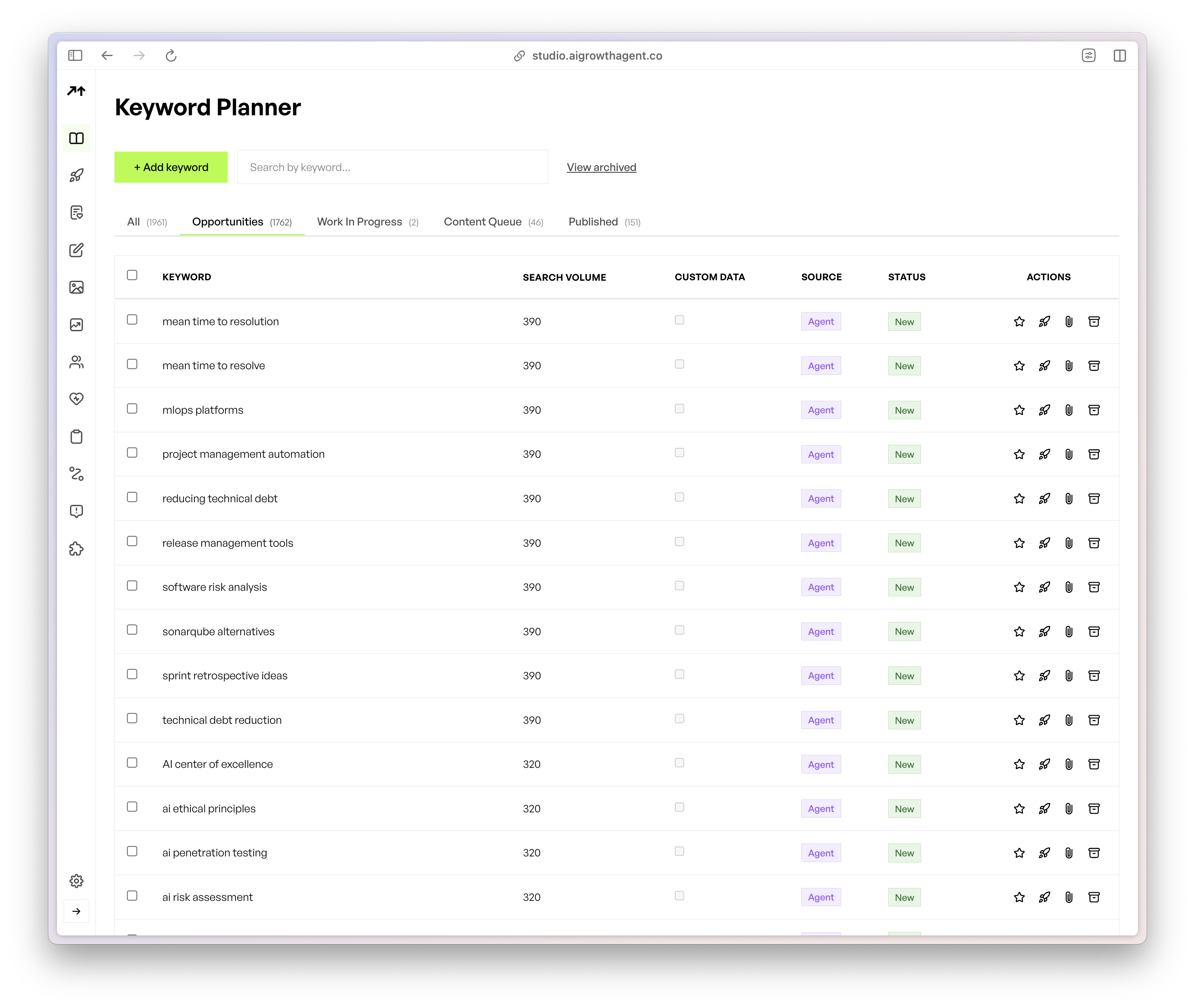
- End-to-end content operations that cover keyword research, brief creation, drafting, fact-checking, and on-page optimization for each article.
- Brand-safe automation guided by a Company Manifesto, which encodes your positioning, voice, and key messages so content stays consistent as volume increases.
- Flexible deployment that connects to your current website or launches a dedicated, optimized subdomain that matches your brand design.
- Advanced technical SEO that handles schema markup, metadata, robots directives, LLM.txt files, and a blog implementation of Model Context Protocol so AI systems can interface with your content more directly.
- Real-time content triggers that react to new trends or data, plus database-to-content automation that converts proprietary data sets into structured, searchable articles.
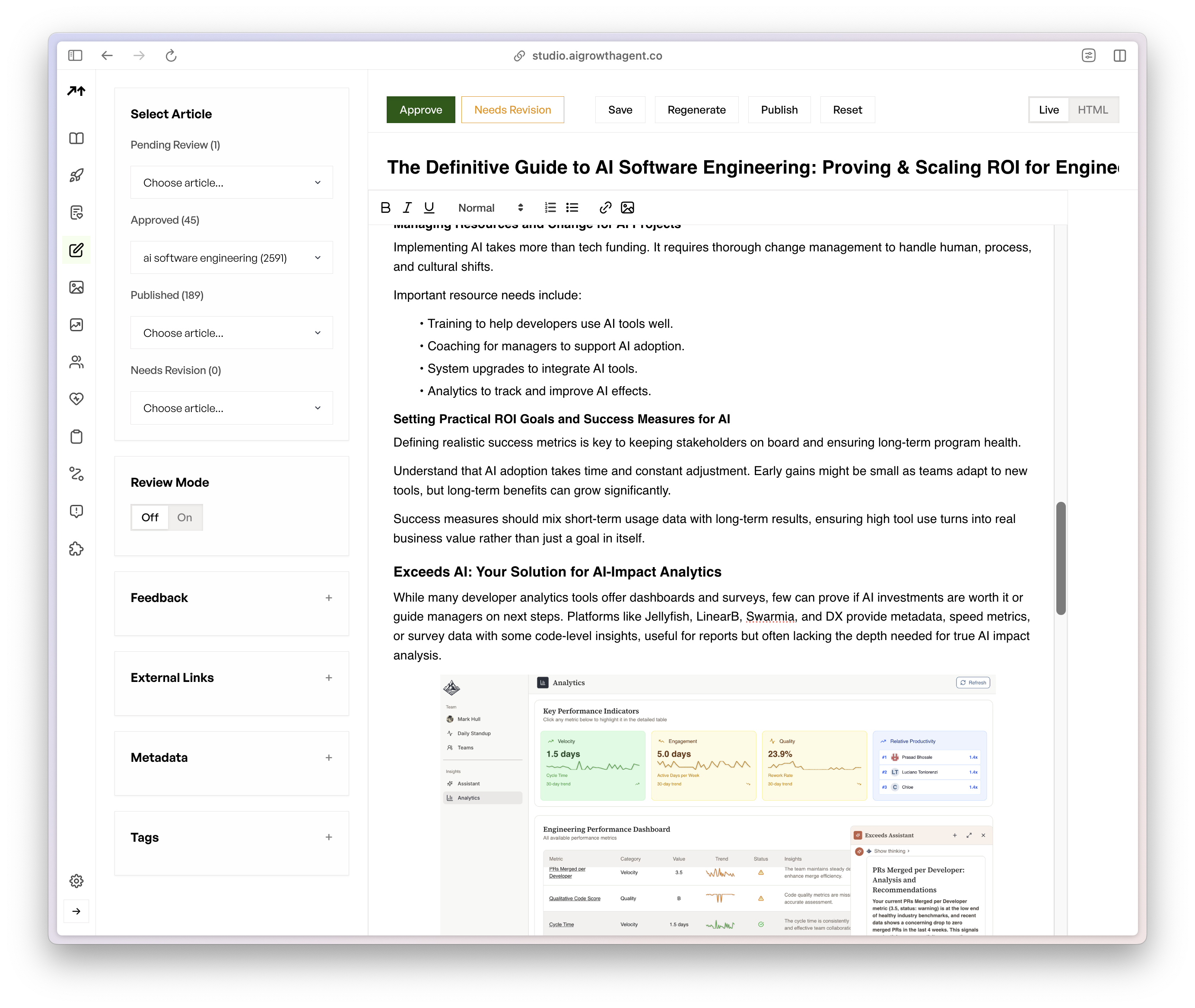
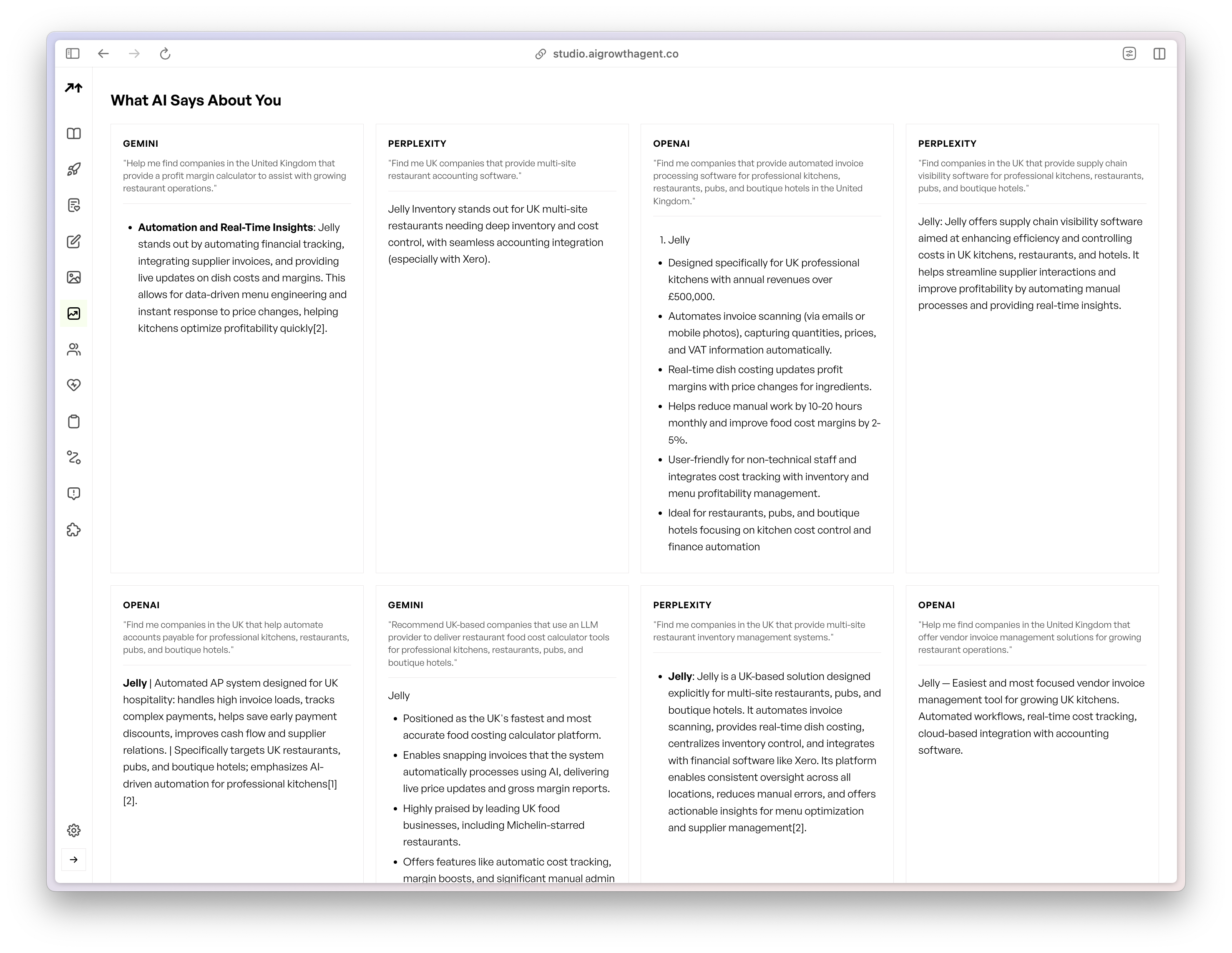
AI search monitoring in AI Growth Agent tracks how your content appears across ChatGPT, Gemini, and Perplexity, along with citations, crawl behavior, and organic traffic from Google Search Console. This feedback loop supports continuous optimization and clearer attribution for programmatic content investments.
|
Solution Type |
Speed |
Technical Optimization |
Scalability |
|
Traditional SEO Agencies |
Varies by agency |
Often manual |
May be limited |
|
AI Writing Tools |
Fast draft creation |
Varies by tool |
May require extra workflow support |
|
AI Growth Agent |
Daily publication |
Automated technical SEO and AI-specific protocols |
Designed for high-volume content programs |
Brands with established products and clear positioning can use AI Growth Agent to expand structured content coverage quickly while keeping messaging aligned. Book a demo with AI Growth Agent to explore how this approach can support your 2026 growth goals.
Frequently Asked Questions About 2026 Blog Marketing Best Practices
How do AI Overviews and SGE impact website traffic and visibility in 2026?
AI Overviews and Search Generative Experience place synthesized answers above traditional search results, which reduces the number of clicks most pages receive. Brands gain visibility when their content underpins these summaries and citations. Clear structure, thorough coverage, and trusted signals raise the odds that AI systems select your pages as source material.
What is the difference between traditional SEO and programmatic SEO for AI search?
Traditional SEO centers on optimizing individual pages for specific keywords and SERP positions. Programmatic SEO focuses on building large, interconnected content sets that cover a topic in depth, supported by consistent templates, schema, and internal links. This structure makes it easier for AI search engines to map relationships, understand context, and reuse your content across many related queries.
How can my content signal authority to AI search engines?
Authority grows when your brand publishes accurate, detailed content across all major subtopics in your domain. Topic clusters, expert-driven insights, clear sourcing, and regular updates help AI systems recognize that your site offers reliable coverage. Structured data and internal linking then reinforce how these assets fit together.
What role do AI-driven search models play in 2026 rankings?
AI-driven search models evaluate how well your content aligns with real user intents instead of only matching exact keywords. Content that addresses beginner and advanced questions, compares options, explains trade-offs, and covers use cases tends to perform better. A programmatic approach helps plan this coverage so you address more intents across the full customer journey.
What are LLM.txt and Model Context Protocol, and why do they matter for AI citation?
LLM.txt is a machine-readable file that summarizes how AI systems should access and interpret your content, while Model Context Protocol defines more direct ways for AI tools to query your data. Both give AI search engines clearer guidance on what your site covers and how different sections relate to each other. Brands that implement these protocols make it easier for AI models to cite them accurately and frequently.
Next Steps For Strengthening AI Search Authority In 2026
AI search has changed the mechanics of digital visibility, and manual blogging alone no longer keeps pace. Programmatic content strategies that pair structured architectures with automation give brands a practical way to compete for AI citations and trusted status.
AI Growth Agent supports this shift by combining autonomous content engineering with technical SEO and AI-specific protocols, so your expertise becomes easier for modern search systems to surface. The result is a clearer, more comprehensive presence across both traditional search results and AI-generated answers.
Brands that move early gain an advantage as AI systems continue to refine their models. If you want to evaluate whether programmatic SEO fits your growth plans, schedule a demo with AI Growth Agent and review what a structured, AI-ready blog strategy could look like for your organization.
