


Last updated: February 1, 2026
Key Takeaways for GEO and AI Growth Agent
- AI Overviews now appear in 30–55% of searches and reduce organic CTR by 34.5%, so growth teams must shift from traditional SEO to Generative Engine Optimization (GEO).
- GEO builds citation authority in LLMs through programmatic SEO (pSEO) using structured data, schema, and fresh content produced at scale.
- Effective GEO strategies include keyword clustering, conversational content formats, and technical upgrades such as FAQ schema, LLM.txt, and MCP.
- Autonomous platforms like AI Growth Agent automate the full content lifecycle, enabling daily publishing velocity and measurable AI citation dominance.
- Teams should monitor performance and iterate to maintain citation velocity, then schedule a demo with AI Growth Agent to secure AI search visibility.
The Problem: AI Overviews Are Stealing Clicks from Growth Brands
The digital marketing landscape now faces a visibility crisis. Thirteen percent of top-ranking articles are AI-written, which floods search results and dilutes brand presence. When AI Overviews appear, the position #1 Google result loses 34.5% of its CTR, which directly weakens traditional SEO performance.
The numbers confirm a major shift. AI Overviews drive 59% of searches into zero-click outcomes, which slashes organic visibility, traffic, leads, and revenue for growth-focused brands. At the same time, AI Overviews cite sources that are 25.7% fresher than standard SERPs, so older content loses ground even if it still ranks.
Manual content production cannot keep pace with this environment. LLMs favor high-authority, fresh sources with strong, structured data, which many agencies and internal teams struggle to deliver consistently. The speed of information now exceeds manual workflows, and brands that cannot scale content risk losing AI citations to faster competitors.
Many teams feel stuck inside manual scale limits. Schedule a consultation session to explore how autonomous systems can restore your visibility.
GEO vs Traditional SEO for Growth Marketing Teams
Generative Engine Optimization (GEO focuses on an app’s entire digital footprint so AI models like ChatGPT, Gemini, and Perplexity can confidently understand, classify, and recommend it. GEO replaces a keyword-first mindset with a focus on citation authority inside AI responses.
|
Aspect |
Traditional SEO |
GEO/pSEO |
|
Focus |
Keywords and rankings |
Authority and citations in LLMs |
|
Scale |
Manual, 1–2 posts per month |
Programmatic, daily publishing velocity |
|
Tech |
Basic meta tags |
Schema, LLM.txt, MCP integrations |
|
Outcome |
Positions in SERPs |
AI Overviews and ChatGPT-style recommendations |
E-E-A-T (Experience, Expertise, Authoritativeness, Trustworthiness) now plays a central role for LLMs. The Experience pillar in GEO counters generic AI content because models cannot invent real-world experience. Structured data then strengthens citations by giving LLMs machine-readable context they can safely extract and reference.
Programmatic GEO Strategies to Build LLM Authority
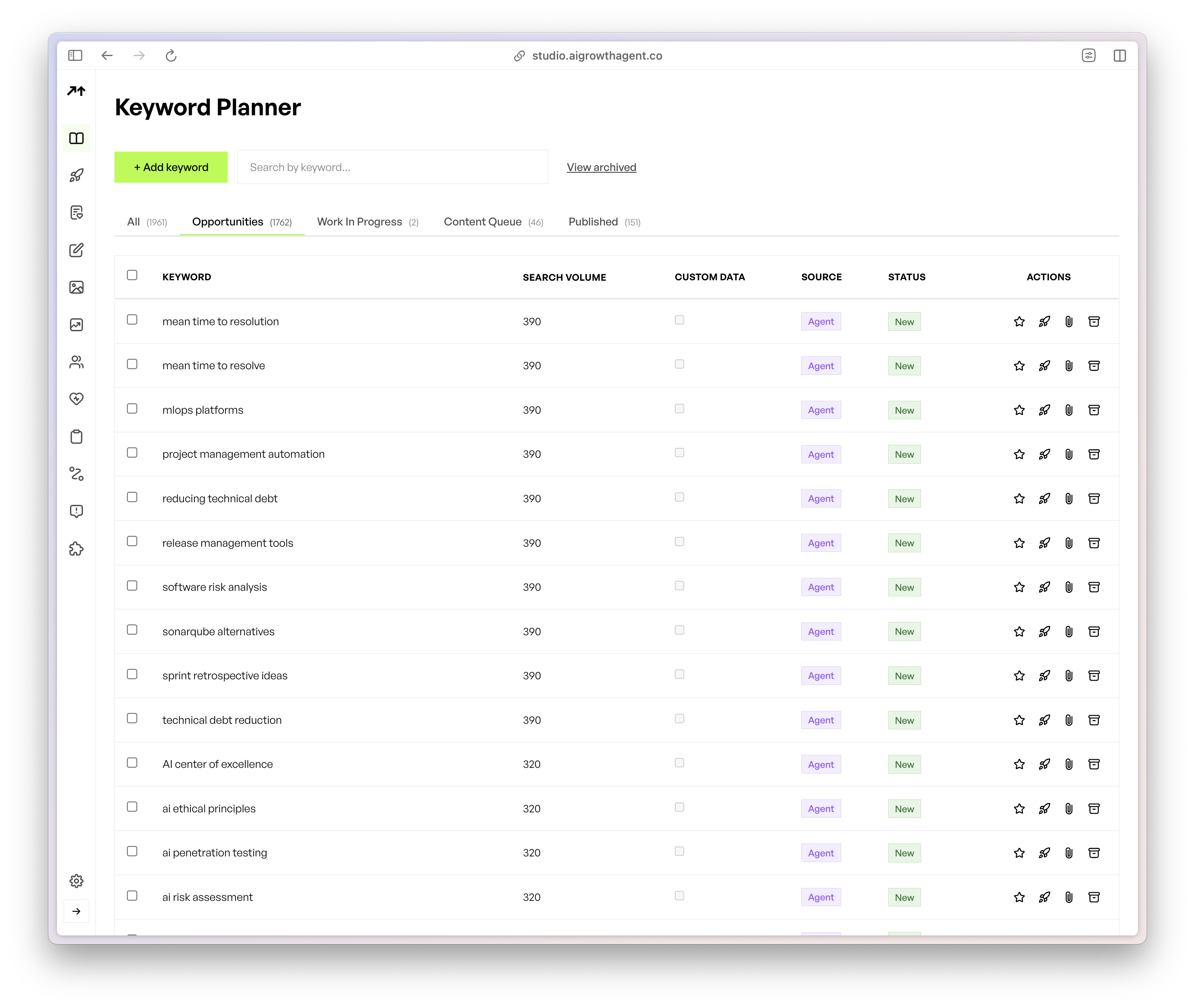
Keyword Clustering That Mirrors AI Query Patterns
Programmatic SEO works best when it uses systematic keyword clustering around long-tail variations. Zapier’s programmatic integration pages attracted 16 million organic visitors each month and ranked for more than 1.3 million keywords, which shows the impact of scaled content architecture.
Teams can use tools like AnswerThePublic to surface question-based clusters, then build programmatic templates that answer each variation with specific, useful content. This structure aligns with the conversational style of AI search queries and increases the odds of becoming a cited source.
Content Engineering That Produces Citation-Ready Assets
LLMs prefer conversational layouts, clear lists, and tables that expose clean data points. A reliable programmatic content lifecycle usually follows seven steps.
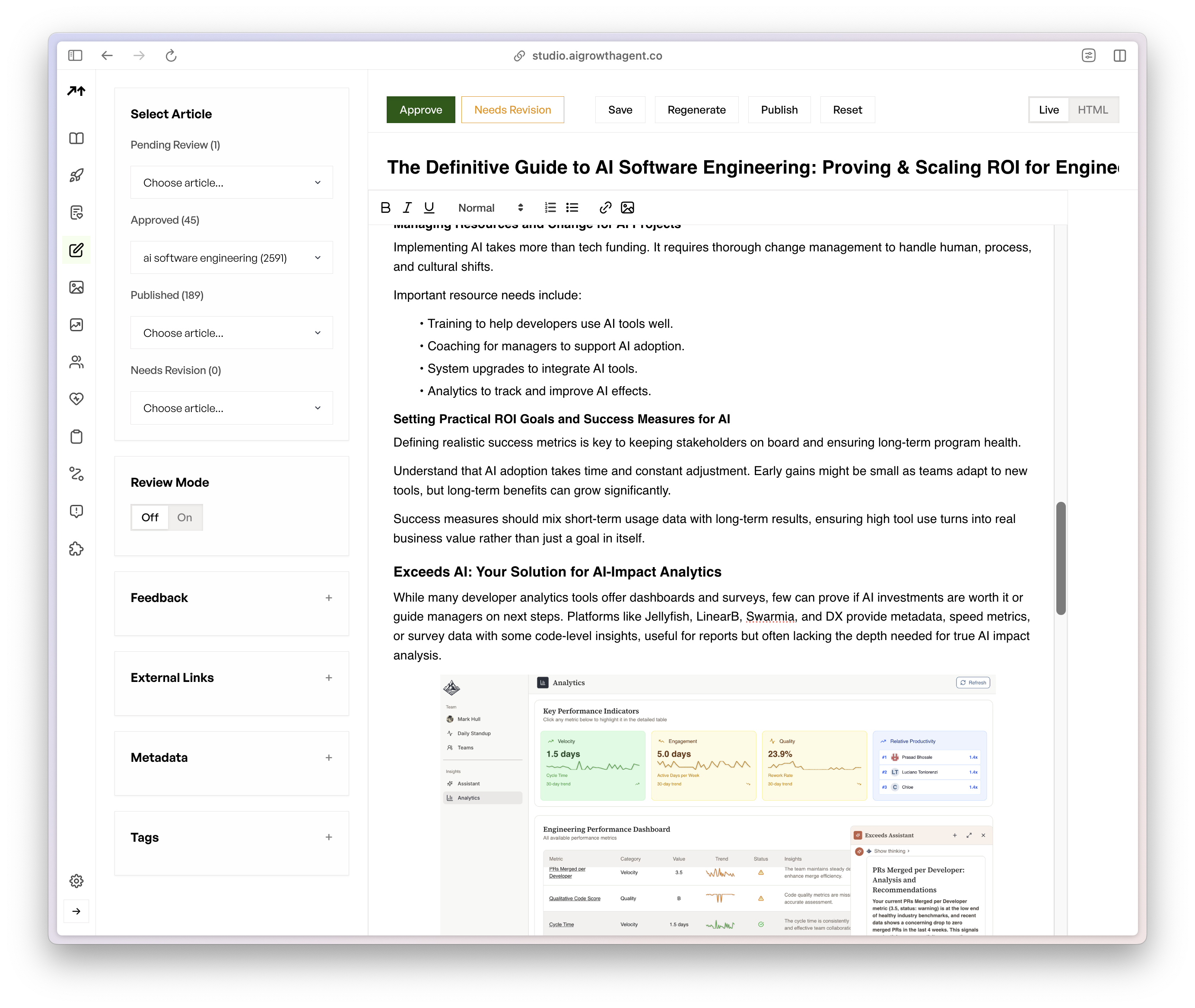
- Manifesto programming that locks in brand voice and positioning.
- Research that pulls from credible sources and validates data.
- Draft creation that produces structured, citation-ready content.
- Fact-checking that confirms accuracy and removes contradictions.
- Schema injection that adds the technical markup LLMs read.
- Publishing that deploys content automatically across properties.
- Monitoring and iteration that track performance and refine assets.
Technical GEO Upgrades: Schema, LLM.txt, and MCP
FAQPage schema plays a crucial role in GEO because it packages question-answer pairs that work perfectly for RAG retrieval. The most valuable schema types for AI visibility include Article, Organization, Person, HowTo, and FAQ.
A solid technical base with llms.txt, LLM sitemaps, FAQ schema, and OpenAI crawler access now forms the minimum requirement for higher LLM citation rates. AI Growth Agent’s Model Context Protocol (MCP) connects directly to your databases, which lets AI search engines interpret your content with near-perfect clarity.
Platform-specific tuning further improves results. Perplexity prefers short sections with clear headings, concise answers, and bullet lists. Gemini responds better to robust schema coverage and strong mobile performance across your site.
AI Growth Agent: Autonomous pSEO for AI Search Dominance
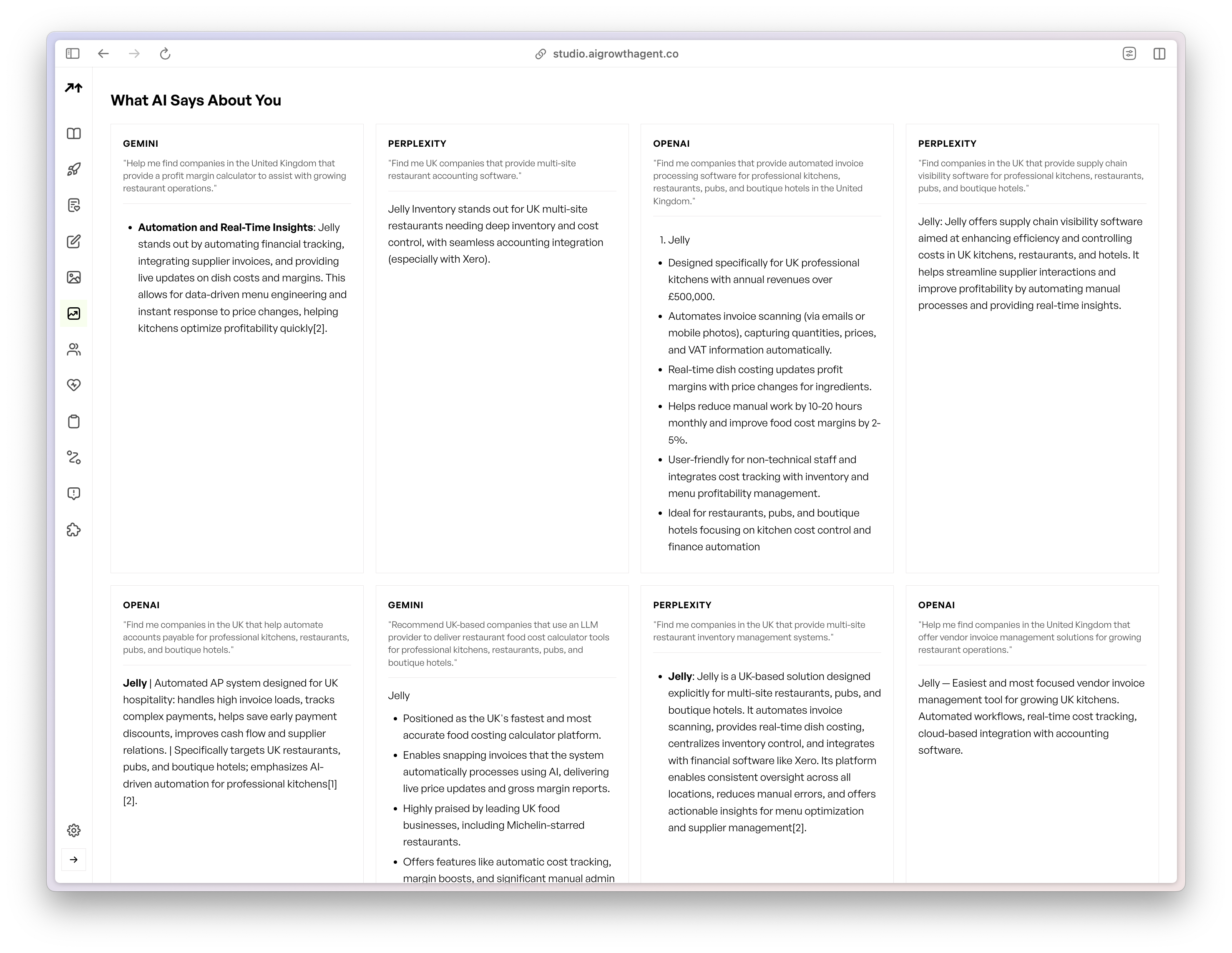
AI Growth Agent provides an autonomous programmatic SEO platform built for AI search dominance. The system includes manifesto-driven onboarding, a Studio control interface, an AI Search Monitor with citation heatmaps, multi-tenant deployment, and real-time content injection.
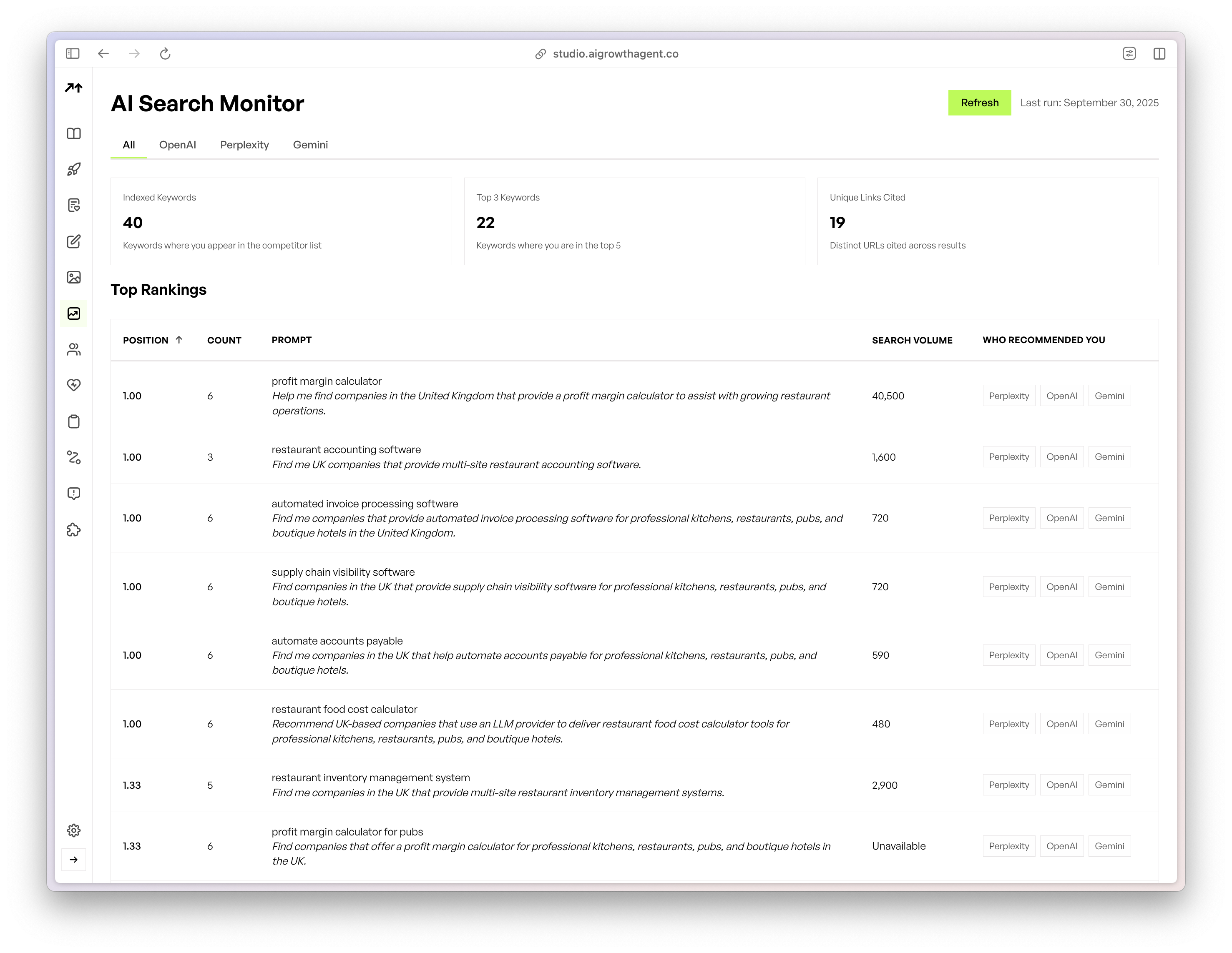
Manual agencies usually ship one or two articles each month, and basic AI tools often produce unstructured text that LLMs struggle to cite. AI Growth Agent replaces those gaps by managing the full pipeline from keyword research through schema-rich publishing. Client results highlight this impact: Exceeds AI reached top Perplexity recommendations within weeks, and Gitar became the leading AI CI/CD authority across ChatGPT, Google AI Overviews, and Perplexity.
Teams that want a clear ROI from GEO can schedule a demo and see how autonomous pSEO turns their brand into the definitive authority in its category.
Scaling GEO for Growth Marketing: Monitor and Refresh
Growth teams maintain GEO performance by monitoring results in Google Search Console and AI-focused tracking tools. Ongoing content refreshes signal freshness to LLMs and protect citation share as new competitors enter the space.
Frequently Asked Questions
What is Generative Engine Optimization?
Generative Engine Optimization (GEO) is the practice of tuning content and digital signals for AI-powered search engines such as ChatGPT, Perplexity, and Google AI Overviews. Traditional SEO targets keyword rankings, while GEO focuses on structured data, authority signals, and content formats that LLMs can confidently cite and recommend. GEO relies on schema markup, FAQ structures, and fresh content signals that help AI models interpret and reference your brand accurately.
How can growth marketers automate AI SEO?
Growth marketers automate AI SEO by using autonomous programmatic SEO agents that manage the full content lifecycle from research through publishing. These systems apply company manifestos to preserve brand voice, run systematic keyword clustering, generate structured content with schema markup, and configure technical assets such as LLM.txt files. The shift moves teams away from manual drafting and toward engineered workflows that produce citation-ready content at scale while keeping quality high.
What are the key differences between SEO and GEO?
Traditional SEO aims to rank for specific keywords in search engine results pages, while GEO aims to earn citations and recommendations inside AI-generated answers. SEO focuses on human users who click through to websites, whereas GEO targets the AI engines that deliver direct responses. GEO requires conversational content formats, richer schema markup, and strategies for zero-click scenarios where users receive answers without visiting a site.
What are the best practices for earning Perplexity citations?
Perplexity tends to favor primary sources, recent content with clear update dates, and pages structured in short, quotable sections. Effective practices include using FAQ schema for question-answer blocks, keeping paragraphs concise with descriptive headers, and publishing specific facts that LLMs can quote directly. Strong domain authority, accurate schema markup, and mobile-friendly design further increase citation likelihood.
How can brands rank in AI search engines?
Brands rank in AI search engines by combining programmatic content velocity with strong E-E-A-T signals. Teams create structured, citation-ready content at scale using schema markup, maintain freshness with regular updates, and build domain authority through consistent publishing. Success depends on balancing volume with quality so that each piece meets AI standards for accuracy, clarity, and usefulness.
Conclusion: Move Now to Secure AI Citation Dominance
AI search now rewards programmatic content velocity that manual workflows cannot match. As AI-generated results continue to erode traditional SEO performance, brands need autonomous pSEO systems that build citation authority at scale. AI Growth Agent delivers this capability through an autonomous programmatic SEO platform tailored for AI search dominance.
The window for establishing AI search authority continues to narrow. Schedule a demo to see if you are a strong fit for autonomous content engineering that positions premium brands as definitive leaders in their categories.
