


Key Takeaways for AI-First Keyword Research
- AI Overviews cause up to 61% CTR drops, so brands now need programmatic keyword research to protect thought leadership visibility in 2026.
- Semantic clustering and zero-volume keywords strengthen E-E-A-T authority and unlock AI citations across ChatGPT, Perplexity, and Google Gemini.
- The 7-step framework, from intent mapping to AI citation validation, creates structured topical authority and delivers 2.3x higher crawl rates.
- Manual SEO cannot keep pace with AI-scale search. Automation cuts research time by 60-80% while exposing competitor gaps and new opportunities.
- AI Growth Agent autonomously runs programmatic SEO. Schedule a demo today to dominate AI search citations for your brand.
Thought Leadership Strategy for AI-Driven Search
Modern thought leadership depends on semantic clustering, intent mapping, zero-volume keyword discovery, and E-E-A-T hub construction for AI visibility. LLMs reward content depth and recency, so brands that want citations in ChatGPT, Perplexity, and Gemini need programmatic systems, not one-off campaigns.
AI Growth Agent starts with a Company Manifesto, a detailed brand intelligence document that anchors all programmatic keyword research. This manifesto captures your positioning, competitors, and thought leadership goals. Every keyword cluster then maps directly to a clear business objective.
Semantic Keyword Research at 2026 Scale
The 2026 keyword landscape favors brands that understand semantic relationships, not just exact-match phrases. Semrush’s analysis of 10 million keywords shows AI Overviews prioritize semantically clustered content. New standards like LLM.txt and Model Context Protocol (MCP) now let AI models query structured data sources with far greater precision.
Traditional tools such as Ahrefs and Semrush still help with discovery, but they lack automation for true programmatic execution. Manual clustering falls apart at enterprise volumes and slows teams just as new opportunities appear. With 37.5 million daily AI queries demanding fast, authoritative answers, manual workflows cannot keep up.
AI Growth Agent solves this with multi-tenant programmatic deployment. One system manages keyword strategies for multiple brands, product lines, or portfolio companies from a single interface. Each entity keeps its own semantic clusters while still benefiting from shared intelligence and cross-market learnings.
Zero-Volume Keywords That Drive Thought Leadership
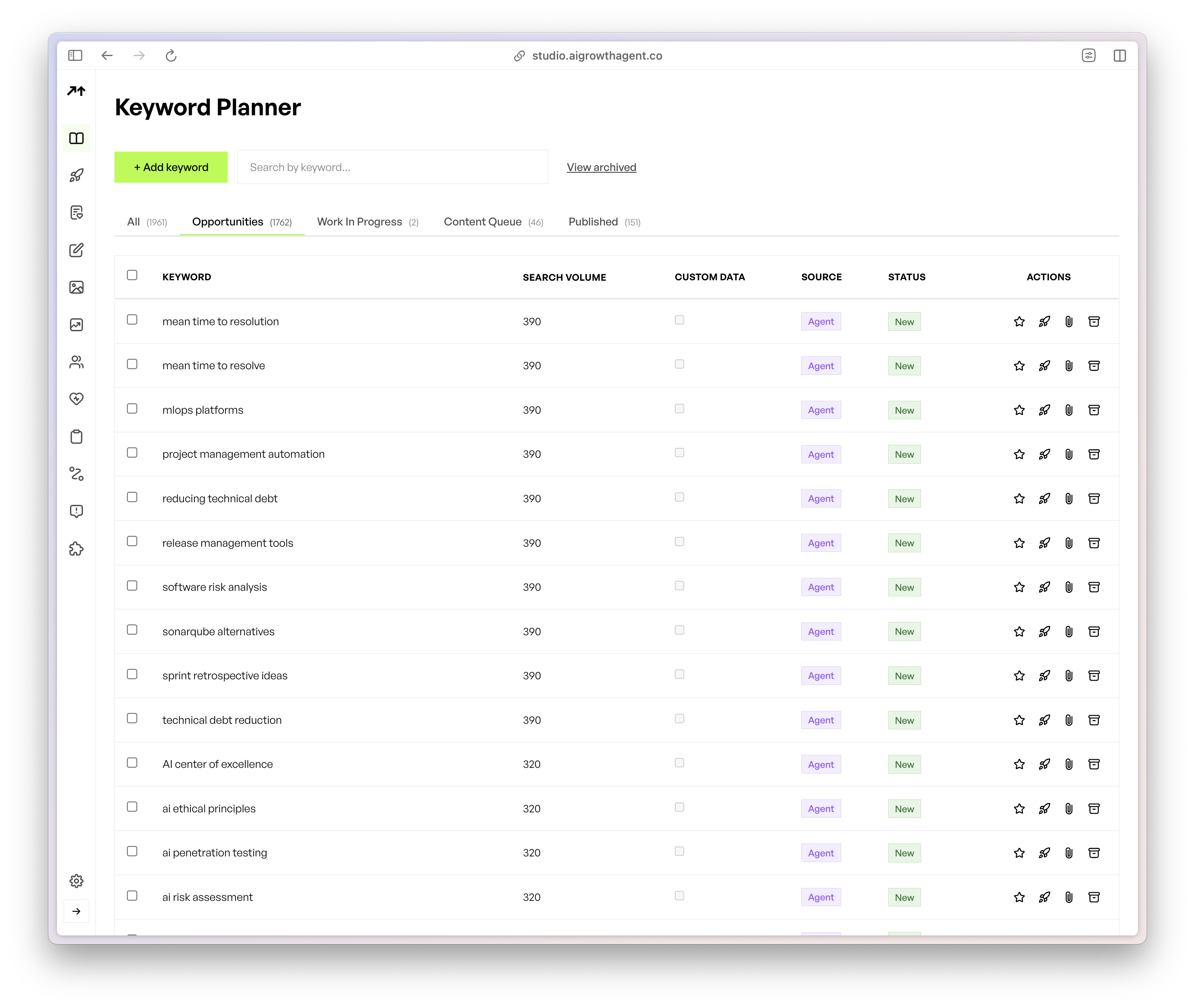
Zero-volume keywords create powerful openings for AI citation dominance. These specific, long-tail queries often signal strong commercial intent and low competition. They work especially well for thought leadership because they reflect emerging problems and advanced use cases.
AI-citation keywords need different evaluation rules than classic SEO terms. Performance depends on semantic alignment with AI training data, clean structure for LLM parsing, and fit with conversational query patterns. Traditional volume metrics often fail in B2B, where zero-volume phrases can drive high-value deals.
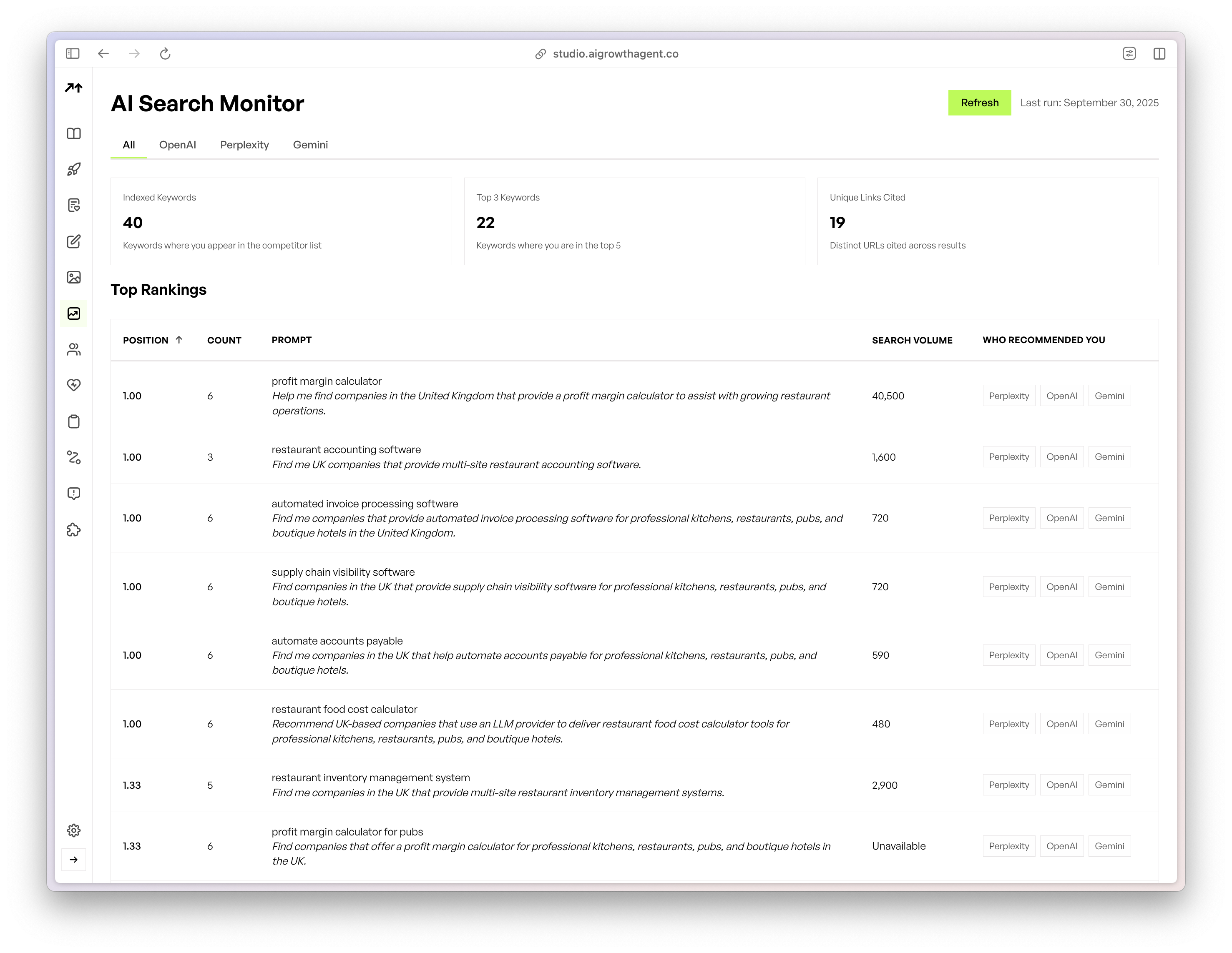
AI Growth Agent uncovers these zero-volume opportunities through semantic analysis, competitor gap mapping, and real-time trend tracking. The AI Search Monitor then shows how your content appears across ChatGPT, Gemini, and Perplexity, so your team can refine zero-volume strategies with live performance data.
Book a consultation to program your AI Growth Agent for programmatic keyword mastery and capture the hidden value inside zero-volume queries.
Seven-Step Framework for Advanced Keyword Research
The 2026 Advanced Keyword Research Framework uses seven steps that align content with AI search behavior.
1. Intent Mapping: Analyze Google Search Console data and People Also Ask queries to understand conversational search patterns. Map each keyword to a funnel stage (TOFU, MOFU, BOFU) so content matches user intent at every decision point.
2. Semantic Clustering: Group related keywords into topical clusters using NLP-driven analysis. Sites with cluster architecture see 2.3x higher crawl rates and 4x more featured snippets than flat structures.
3. Zero-Volume Discovery: Find high-intent, low-competition topics through competitor research, industry trend monitoring, and semantic expansion of your core themes.
4. Competitor Gap Analysis: Compare competitor coverage against your topical map to surface underserved themes. Prioritize gaps where your brand can credibly claim thought leadership.
5. E-E-A-T Hub Construction: Build interconnected content pillars that show expertise, real-world experience, authority, and trust. Semantic clustering drives a 31% average CTR lift and stronger topical coherence.
6. Programmatic Automation: Use autonomous systems for keyword monitoring, content brief creation, and technical checks. Automation cuts research time by 60-80% while expanding the opportunity set.
7. AI Citation Validation: Track performance across AI search engines with tools that measure citations, recommendations, and source attribution, not just rankings.
|
Cluster Type |
Intent |
Volume Range |
Priority Level |
|
Core Topics |
Informational |
1K-10K |
High |
|
Zero-Volume |
Commercial |
0-100 |
Medium |
|
Long-Tail |
Transactional |
100-1K |
High |
|
Competitor Gaps |
Mixed |
Variable |
Medium |
Topical Clustering to Strengthen E-E-A-T
Effective clustering starts with a readiness check and a clear plan. Run a full audit of your current content to find topical gaps and cluster expansion opportunities. AI Growth Agent’s Studio interface then supports roadmap approval and hands-free execution once you confirm direction.
The prioritization matrix above guides how you allocate resources across cluster types. Core topics build foundational authority. Zero-volume clusters capture emerging themes. Long-tail clusters focus on conversions, while competitor gaps round out market coverage.
Onboarding usually moves from initial consultation to first published article within one week. The white-glove process includes Company Manifesto creation, keyword strategy design, and technical setup. CMS integrations with WordPress, Webflow, HubSpot, and other platforms keep publishing workflows simple.
Keyword Research Techniques Built for AI Search
Teams often stumble by ignoring zero-volume terms, relying on unstructured AI writing tools, or skipping scalability planning. Manual processes collapse as keyword volume grows, which leads to inconsistent coverage and missed opportunities.
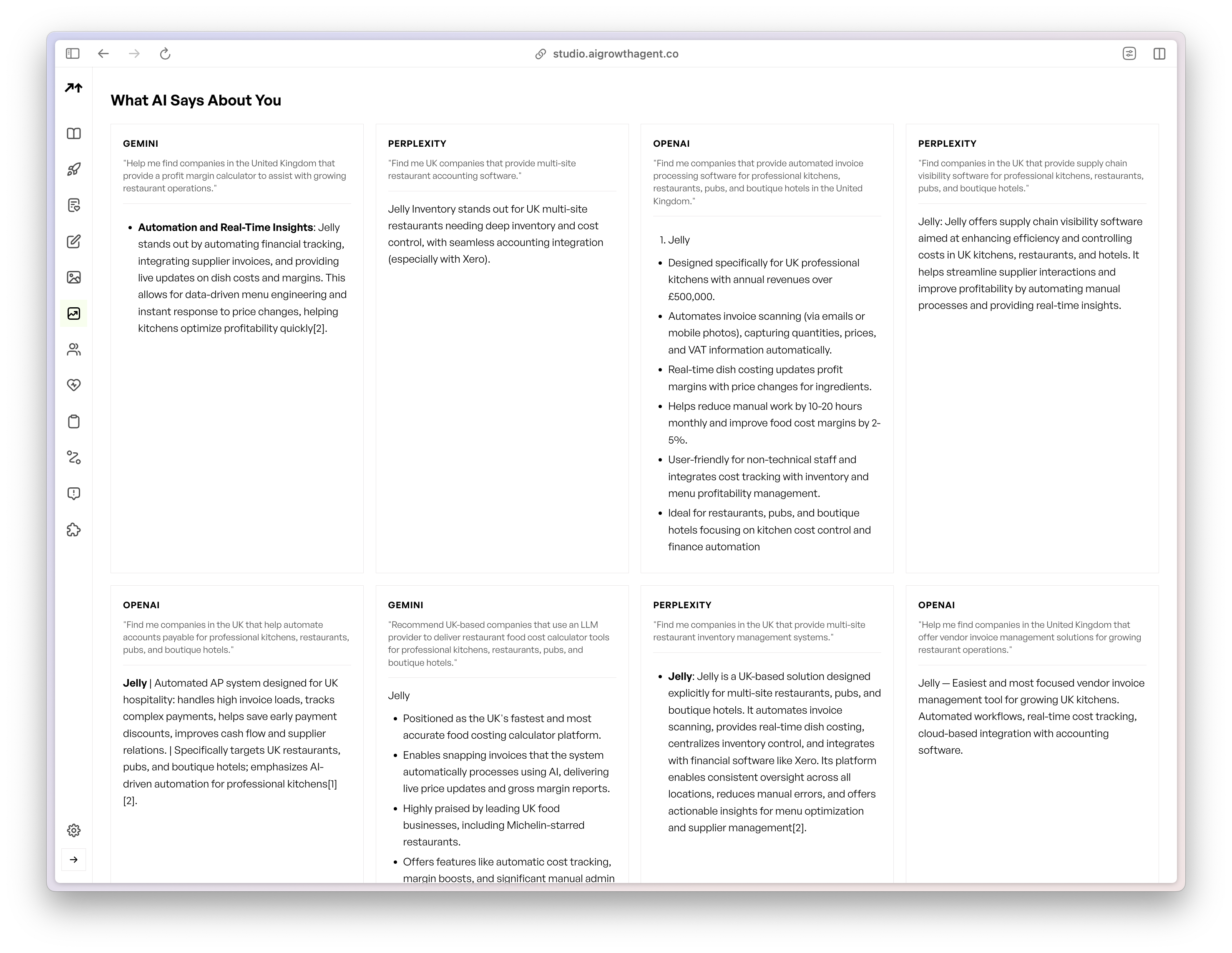
AI Growth Agent counters these risks with strict fact-checking, advanced schema markup, and AI Monitor heatmaps. The system delivers real-time feedback on performance across major AI search engines so your strategy keeps improving with every crawl and citation.
Schedule a demo today to avoid these pitfalls with autonomous pSEO and rely on programmatic keyword execution instead of manual guesswork.
Programmatic Keyword Research in Action
Client results highlight how programmatic keyword research accelerates thought leadership. Exceeds AI reached top recommendations in Perplexity within two weeks and earned ChatGPT citations as the leading AI performance review tool for engineers.
BeConfident captured Google AI Overview visibility for English learning in Brazil and competed directly with brands like Duolingo and Busuu. Bucked Up reached the #1 ChatGPT citation for “best protein soda” in three weeks, showing how quickly programmatic systems can move.
Gitar then emerged as the primary AI-powered CI/CD automation source across major AI search engines. That outcome came from disciplined keyword clustering and consistent authority building across every related topic.
AI Citation Keyword Strategy and FAQs
Advanced Keyword Research Techniques for Thought Leadership
Advanced techniques focus on semantic clusters instead of isolated keywords. Semantic SEO builds topical authority with structured clusters and content pillars, which create complete coverage around a theme. This structure aligns with algorithms like BERT and MUM that reward deep, connected expertise.
How Semantic Clustering Supports E-E-A-T
Semantic clustering proves expertise through full topic coverage and shows experience through detailed examples and case studies. It signals authoritativeness with consistent citation patterns and trustworthiness with accurate facts and credible sources. Clustered architectures earn 2.3x higher crawl rates and 4x more featured snippets, which reflects stronger topical authority.
Tools for Programmatic Keyword Research
AI Growth Agent leads programmatic keyword research with autonomous clustering, real-time opportunity discovery, and multi-tenant deployment. Unlike traditional tools that need constant manual setup, the agent runs from Company Manifesto through publication, delivering end-to-end programmatic execution.
Framework for AI Citation Keywords
The seven-step framework starts with intent mapping and then moves through semantic clustering, zero-volume discovery, competitor analysis, E-E-A-T hub building, programmatic automation, and AI citation validation. Each step builds on previous insights while staying aligned with conversational queries and LLM training patterns.
Role of Zero-Volume Keywords in Thought Leadership
Zero-volume keywords often capture early-stage trends, narrow use cases, and niche expertise where few competitors publish. These terms let brands claim early authority in new segments and attract high-intent visitors who need specific answers. Strong strategies weigh both potential volume and long-term positioning value.
Content Gap Analysis for AI-Ready Thought Leadership
Thought leadership in 2026 requires programmatic keyword research that manual methods cannot match. The seven-step framework offers a clear process for semantic clustering, zero-volume discovery, and E-E-A-T hub development that drives citations across ChatGPT, Perplexity, and Google AI Overviews.
AI Growth Agent gives brands the speed of programmatic keyword research without losing quality. The autonomous agent resolves the scale-versus-quality tradeoff with advanced technical execution, live performance monitoring, and continuous refinement based on AI search feedback.
Premium brands, schedule a consultation to deploy the world’s first Programmatic SEO Agent and become the AI-cited authority in your category through advanced keyword research mastery.
