


Key Takeaways
- AI Growth Agent surfaces tens of thousands of keyword opportunities and fully automates programmatic SEO from research through content creation.
- SEMrush and Ahrefs generate millions and thousands of keywords respectively, which supports deep analysis and competitor research.
- Free tools like Ubersuggest, Keyword Surfer, and AnswerThePublic uncover hundreds to thousands of ideas but cap daily usage and lack advanced clustering.
- AI SEO in 2026 depends on LLM.txt integration, intent-based clustering, and real-time AI search monitoring across ChatGPT, Perplexity, Gemini, and Google.
- Teams scale programmatic SEO efficiently by scheduling a demo with AI Growth Agent to automate thousands of keyword opportunities.
How We Evaluated AI Keyword Tools for 2026
Our evaluation process compared market leaders using 2026 G2 and Capterra ratings, hands-on testing, and AI visibility benchmarks. We tested each platform with 10 seed keywords to measure output volume, clustering quality, and workflow speed. We set baselines with Ahrefs and SEMrush, reviewed free tools like Ubersuggest and Keyword Surfer, and prioritized programmatic platforms. AI Growth Agent led this group for end-to-end automation and AI search readiness.
Snapshot of the Top 12 AI Keyword Tools
These 12 AI tools uncover thousands of SEO keyword opportunities across free, paid, and programmatic options.
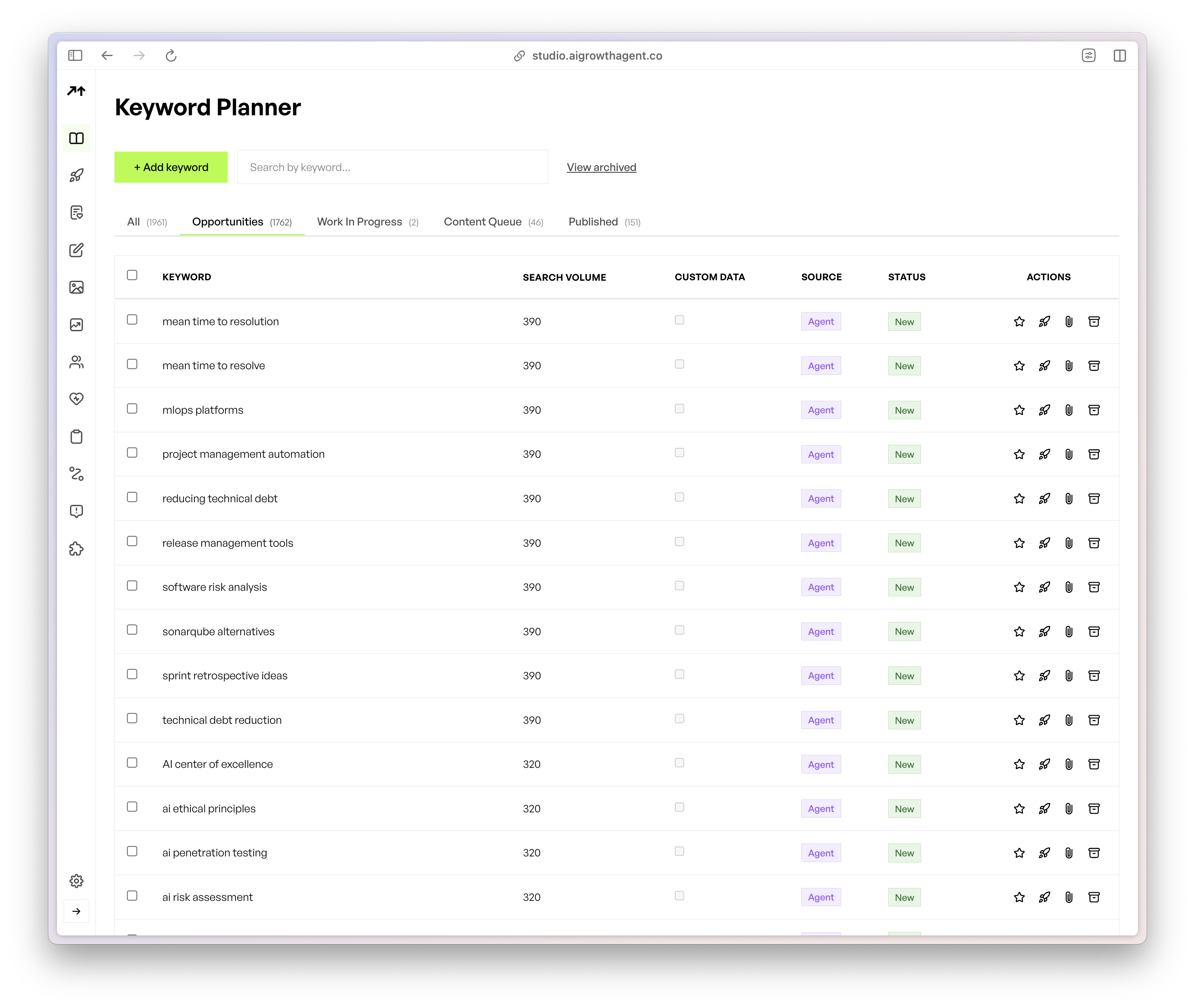
- AI Growth Agent: Tens of thousands of opportunities with autonomous content engineering
- Ahrefs: 5,247 opportunities from a single seed with AI clustering
- SEMrush: 2+ million keyword ideas with advanced filtering
- Ubersuggest: 1,000+ opportunities, 3 free searches daily
- Keyword Surfer: Hundreds of opportunities via Chrome extension
- Scalenut: Thousands of clustered opportunities with ML planning
- SurferSEO: SERP gap analysis with competitor insights
- Frase: Intent-based clustering for content optimization
- Topic Mojo: Topic discovery with trend analysis
- Keyword Insights: Topical authority mapping
- LongTailPro: Long-tail keyword specialization
- AnswerThePublic: Question-based research with free tier
Schedule a demo to see how AI Growth Agent outperforms these tools with programmatic automation.
1. AI Growth Agent: Programmatic SEO at Enterprise Scale
AI Growth Agent operates as a Programmatic SEO Agent that builds high-authority content architectures for category leadership. The platform combines large-scale keyword research with end-to-end content automation that evaluates tens of thousands of queries and topics for your domain. It then creates the content infrastructure required to capture those opportunities across search and AI assistants.
Key Features:
- Programmatic keyword research that evaluates tens of thousands of opportunities from your company context
- Advanced LLM.txt and Model Context Protocol (MCP) integration for AI search visibility and citations
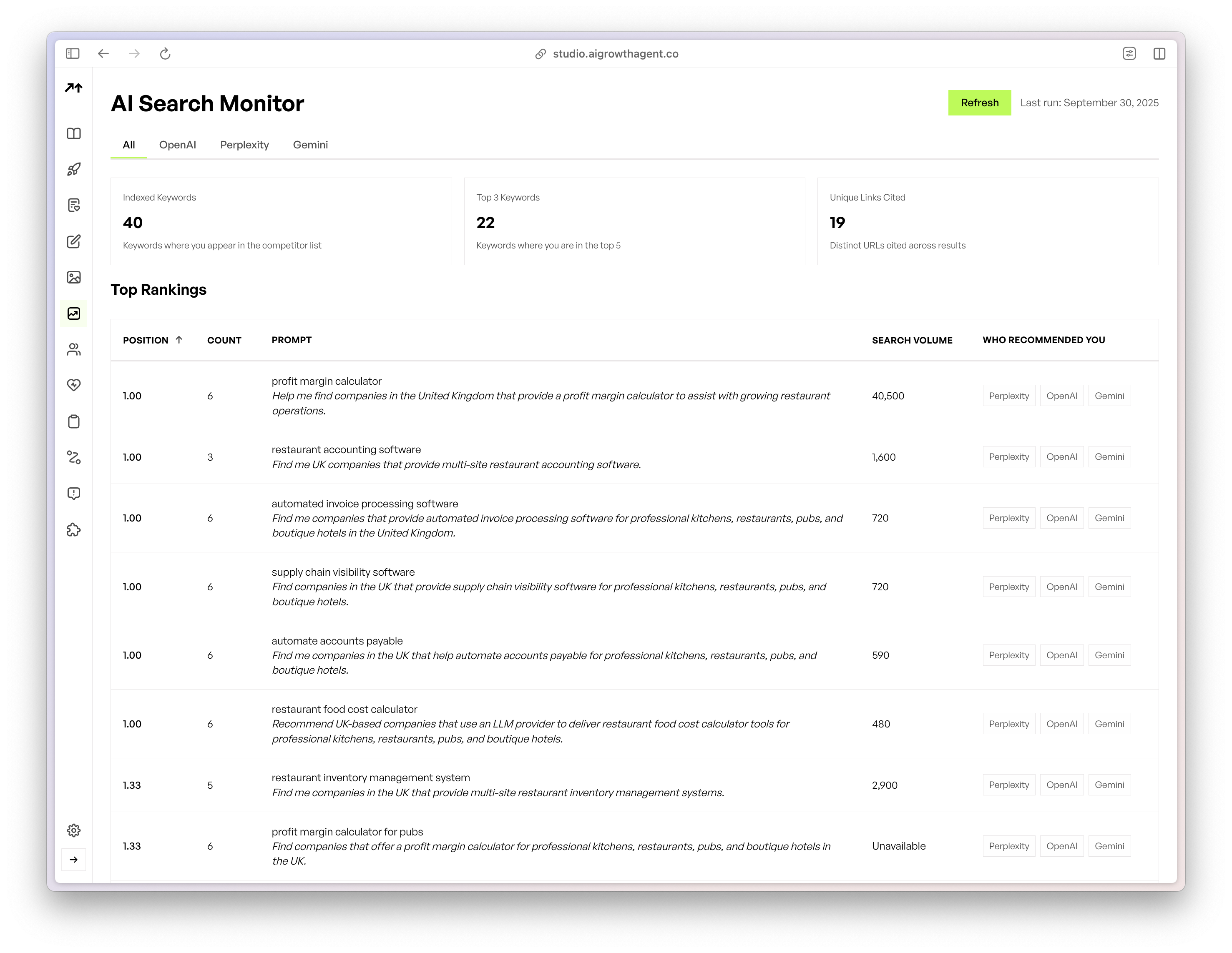
- Real-time AI search monitoring across ChatGPT, Gemini, and Perplexity
- Multi-tenant deployment that supports portfolios and multi-brand environments
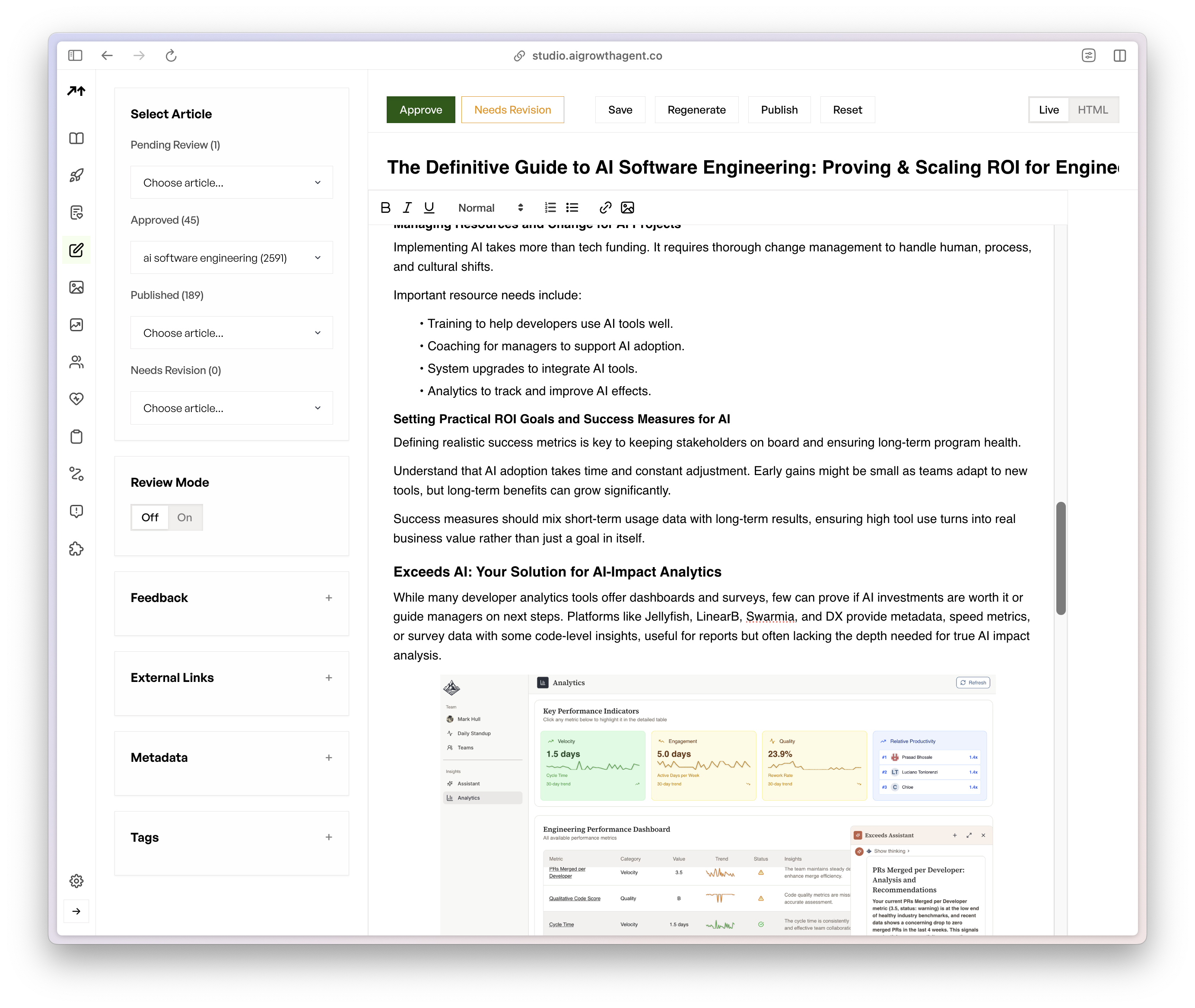
- Database-to-content automation that turns proprietary data into indexable pages
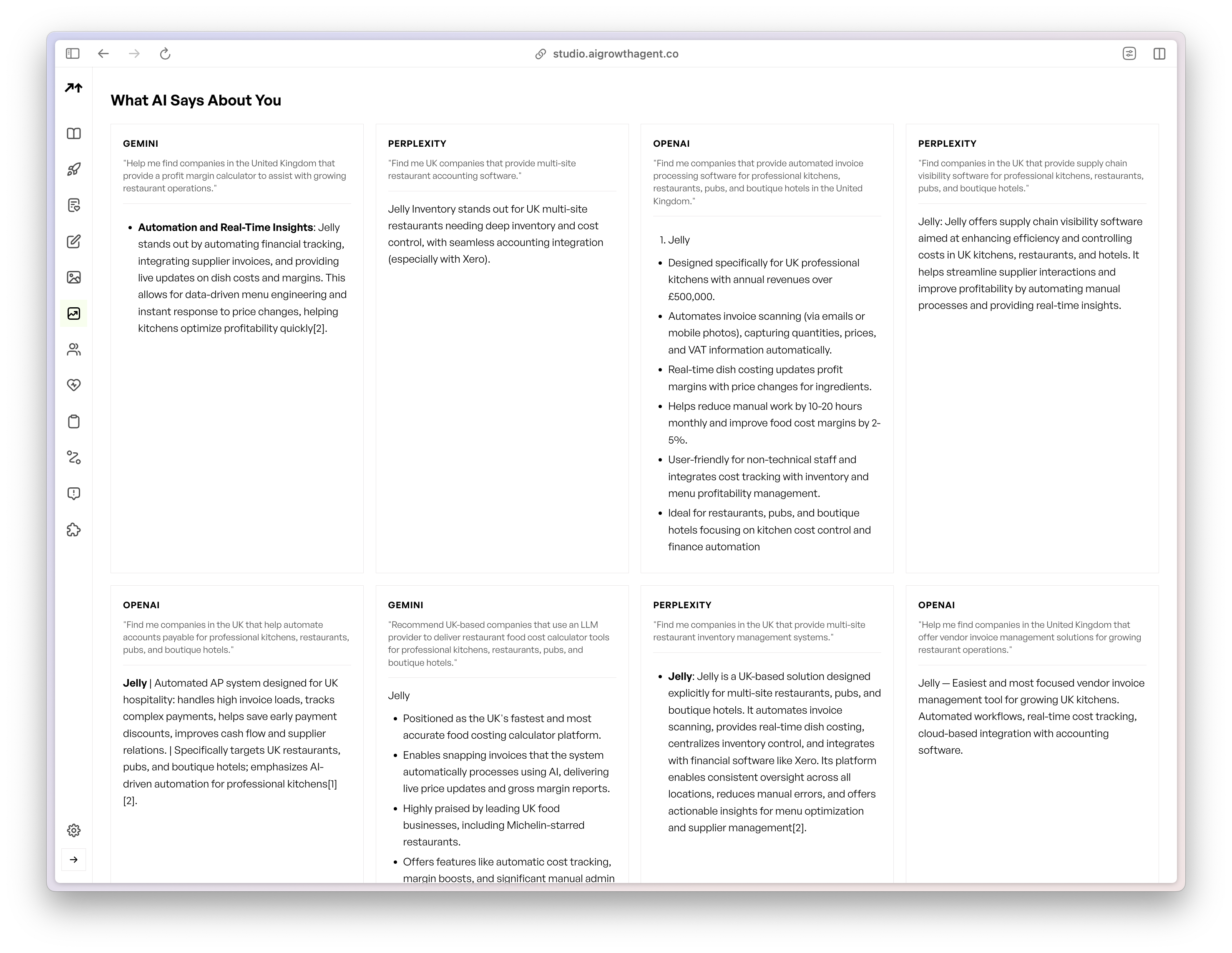
Strengths: The platform delivers superhuman content velocity with verifiable AI citations for clients like Exceeds AI, Gitar, and Bucked Up. Its Company Manifesto system locks in brand voice and guidelines so teams scale content without losing consistency.
Limitations: The platform targets premium brands that already maintain strong technical SEO foundations.
Pricing: Custom pricing based on scope and scale. Schedule a demo to discuss your environment.
Best For: Marketing VPs and SEO leaders who need programmatic content pipelines and enterprise-level visibility.
2. Ahrefs: Deep Competitor and Keyword Intelligence
Ahrefs remains a core platform for keyword research and competitive analysis. Our testing surfaced 5,247 keyword opportunities from the seed term “SEO tools,” which supports broad coverage for content planning. Recent AI enhancements add predictive trend modeling and automated clustering that speed up large research projects.
Key Features: Comprehensive competitor analysis, SERP research tools, and AI processing of billions of backlinks and keywords for anomaly detection and link insights.
Pricing: Lite plan starts at $129 per month with 750 tracked keywords. Standard plan starts at $249 per month with 20,000 tracked keywords.
Best For: Teams that pair keyword research with detailed competitor and backlink analysis.
3. SEMrush: Massive Keyword Database for Global Campaigns
SEMrush generates more than 2 million keyword ideas from a single seed keyword, which suits large and complex campaigns. Its 27+ billion keyword database covers multiple languages and regions for global SEO programs.
Key Features: Advanced filtering by search volume, difficulty, and CPC, along with keyword grouping that supports scalable organization and reporting.
Pricing: Plans start at $139.95 per month. The AI Toolkit add-on costs $99 per month and adds enhanced AI search tracking.
Best For: Enterprise teams that manage SEO, PPC, and competitor tracking in one platform.
4. Ubersuggest: Budget-Friendly Keyword Discovery
Ubersuggest offers three free searches per day and returns roughly 1,000 keyword opportunities per search. This structure helps budget-conscious teams validate ideas and build starter keyword lists.
Pricing: Paid plans start at $12 per month and expand search limits while keeping costs low.
Best For: Small businesses and lean content teams that need affordable keyword research.
5. Keyword Surfer: On-Page Chrome Extension Research
Keyword Surfer runs as a Chrome extension that shows hundreds of keyword ideas directly inside Google search results. Users see volumes and related terms without leaving the SERP, which speeds quick validation and brainstorming.
Best For: Fast keyword checks and on-the-fly research during everyday browsing.
Schedule a demo to see how AI Growth Agent automates workflows that these tools still require manual effort to complete.
6. Scalenut: ML-Driven Topic Clusters
Scalenut includes a machine learning keyword planner that groups terms into topic clusters. It evaluates search potential and generates thousands of opportunities from seed keywords for structured content plans.
Pricing: Plans start at $49 per month and include AI content creation and keyword clustering.
7. SurferSEO: SERP Gap and Content Scoring
SurferSEO focuses on SERP gap analysis by comparing your pages with top competitors. It highlights missing keywords and provides real-time optimization scores that guide on-page improvements.
Pricing: Pricing starts at $79 per month on annual billing for full SERP analysis and content optimization features.
8. Frase: Intent-Based Keyword Clustering
Frase specializes in search intent analysis and clusters keywords based on user goals. It then generates content briefs that align with those patterns, which helps teams write pages that match how people search.
Pricing: Annual plans start at $98 per month and include AI content briefs and intent analysis.
9. Topic Mojo: Early Trend and Topic Discovery
Topic Mojo centers on topic discovery and trend tracking so teams can spot emerging keyword opportunities early. This approach supports content that reaches audiences before competition intensifies.
10. Keyword Insights: Topical Authority Mapping
Keyword Insights maps keywords into topical clusters and content pillars that support authority building. This structure helps teams plan hubs, spokes, and internal links for long-term SEO growth.
11. LongTailPro: Commercial Long-Tail Focus
LongTailPro focuses on long-tail keyword discovery and highlights low-competition phrases with commercial intent. This focus helps smaller sites win traffic where larger brands do not compete heavily.
12. AnswerThePublic: Question-Led Content Ideas
AnswerThePublic pulls question-based keywords from autocomplete data and visualizes them around core topics. These insights reveal user intent and highlight content gaps across FAQs and how-to queries.
Side-by-Side Comparison of Output and Automation
|
Tool |
Max Output |
Free Tier |
Automation |
Best For |
|
AI Growth Agent |
Tens of thousands |
Demo Only |
Full Programmatic |
Enterprise Scale |
|
SEMrush |
2M+ |
Limited |
Clustering |
Comprehensive Analysis |
|
Ahrefs |
5,000+ |
None |
AI Clustering |
Competitor Research |
|
Ubersuggest |
1,000+ |
3 searches/day |
Basic |
Budget Teams |
Free tools usually cap output at hundreds of keywords, while paid platforms unlock thousands of ideas per seed. Only programmatic solutions like AI Growth Agent deliver end-to-end automation from research through content creation and AI search optimization.
Schedule a demo to experience programmatic automation for keyword research at scale.
Best Free AI Tools for Large Keyword Lists
Top free options include Ubersuggest (#4), Keyword Surfer (#5), AnswerThePublic (#12), Google Keyword Planner, and KeywordTool.io’s free tier. These tools work well for initial research and idea validation. Their limits appear during scale, because they restrict daily searches, exports, and advanced clustering that programmatic SEO requires.
Programmatic SEO, AI Agents, and LLM.txt in 2026
AI agents now automate full keyword research workflows that include long-tail expansion, intent clustering, SERP analysis, and content mapping. Modern tools must support LLM.txt and Model Context Protocol (MCP) so AI search engines can correctly index and cite content. Teams should test scale limits, confirm CMS integrations, and run ROI pilot programs before fully committing to a programmatic stack.
FAQs
Which AI tool uncovers the most keyword opportunities?
AI Growth Agent leads this category by evaluating tens of thousands of search queries and topics while building matching content infrastructure. Traditional tools stop at keyword lists, while AI Growth Agent continues through programmatic content creation, publication, and AI search optimization.
What is the difference between free and paid tools for discovering thousands of keywords?
Free tools such as Ubersuggest and AnswerThePublic usually return hundreds of keywords per search and enforce daily caps. Paid platforms like SEMrush and Ahrefs generate thousands to millions of ideas and add advanced filters and clustering. Programmatic solutions then automate execution so teams can act on those large datasets effectively.
How can I use AI keyword tools for programmatic SEO?
Programmatic SEO relies on tools that detect keyword patterns, cluster by intent, and automate content creation at scale. Start with seed keywords that match your products and audience. Expand into thousands of long-tail variations, cluster by search intent and commercial value, then deploy programmatic content to capture those segments systematically.
How do AI keyword tools compare to traditional methods?
AI tools excel at pattern recognition, intent clustering, and high-volume processing that manual methods cannot match. Manual research might uncover dozens of ideas per hour, while AI platforms process thousands in minutes. Automation also enables continuous monitoring and rapid adaptation to shifting search trends.
When will AI citations become the primary traffic source?
AI citations already drive meaningful traffic for brands that optimize for AI search. Companies using programmatic SEO with strong AI search foundations report citations in ChatGPT, Perplexity, and Google AI Overviews within weeks of publishing. The shift has started, so teams that move now gain a durable advantage.
Conclusion: Why AI Growth Agent Leads Programmatic SEO
The AI search era rewards brands that treat keyword research and content creation as programmatic systems. Ahrefs and SEMrush still provide valuable data, yet AI Growth Agent delivers the end-to-end automation required to compete in AI-driven search. Its results with clients like Exceeds AI, Gitar, and Bucked Up show how programmatic SEO builds authority and earns AI citations at scale.
Schedule a consultation session to see whether your team is a strong fit for AI Growth Agent’s programmatic SEO automation.
