Written by: Mariana Fonseca, Editorial Team, AI Growth Agent
Key Takeaways for B2B SaaS Keyword Research in 2026
- AI-dominated search in 2026 favors long-tail keywords with 2.5× higher conversion rates, so intent-driven research is essential for B2B SaaS.
- Map keywords to buyer journey stages (awareness, consideration, decision) using internal CRM and sales data for authentic language.
- Build topic clusters from competitor gaps and tools like Ahrefs and SEMrush to drive 30% more organic traffic and AI citations.
- Align with AI engines using structured content, question-based keywords, and programmatic automation to match content velocity needs.
- Scale your keyword research with AI Growth Agent’s demo for autonomous SEO that builds durable content moats beyond manual limits.
AI Search Trends Reshaping B2B SaaS SEO
The 2026 search ecosystem prioritizes recency, depth, and topical clusters over traditional keyword density. Long-tail queries phrased as questions like “how to reduce churn in SaaS companies” now rank in top-three positions and appear in AI answer boxes, outperforming broad head terms. AI search engines reward semantic relevance and contextual understanding, so topic clusters now sit at the center of sustainable visibility.
B2B SaaS companies hold a structural advantage in this landscape. Internal data from CRMs, support tickets, and sales conversations provides authentic language patterns that AI systems prioritize. Topic clusters drive 30% more organic traffic than standalone pages, while programmatic approaches deliver the content velocity required to compete. AI Growth Agent’s autonomous research capabilities ingest thousands of queries to build comprehensive pillar roadmaps and remove the scale limitations that manual processes cannot overcome.
Step-by-Step B2B SaaS Keyword Research Framework
1. Map Keywords to the B2B Buying Journey
Start by documenting keywords across three critical buyer journey stages. Awareness-stage keywords address problem identification, such as “reduce churn in SaaS” or “improve customer retention metrics.” Consideration-stage terms focus on solution evaluation, including “best CRM for enterprise” or “customer success platform comparison.” Decision-stage keywords target vendor selection with high-intent phrases like “[tool] pricing” or “[tool] implementation timeline.”
Bottom-funnel keywords convert at 8–12% to trials, outpacing top-funnel by 4x. Build persona-specific keyword maps that address different stakeholder concerns. Technical evaluators search for specifications and integration capabilities. Business buyers focus on ROI justification and risk reduction. Capture actual customer language from sales calls and support interactions so your keyword set mirrors how buyers really speak.
2. Use SaaS Jargon and Internal Data as Seed Keywords
Mine your CRM data, support tickets, and sales call transcripts for authentic customer language. This internal data reveals pain points expressed in your prospects’ own words, not generic marketing terminology. Pull verbatim quotes from customer conversations, win or loss analyses, and support interactions to build a strong seed keyword foundation.
Customer-facing teams surface patterns that tools alone often miss. Sales teams understand objection-based queries that appear before purchase decisions. Support teams recognize common troubleshooting searches that signal active users or expansion potential. Use customer surveys and review analysis across platforms to uncover use-case keywords that indicate high purchase intent. This approach keeps your keyword research grounded in real market demand instead of assumptions.
3. Expand SaaS Keywords with SEO Tools
Use SEO tools strategically for B2B SaaS keyword expansion. Rely on Ahrefs Keyword Explorer and SEMrush to analyze search volume, keyword difficulty (KD), and cost-per-click data. Filter results specifically for B2B SaaS by prioritizing keywords with moderate search volume, usually 50–500 monthly searches, low to medium difficulty scores, and clear commercial intent signals.
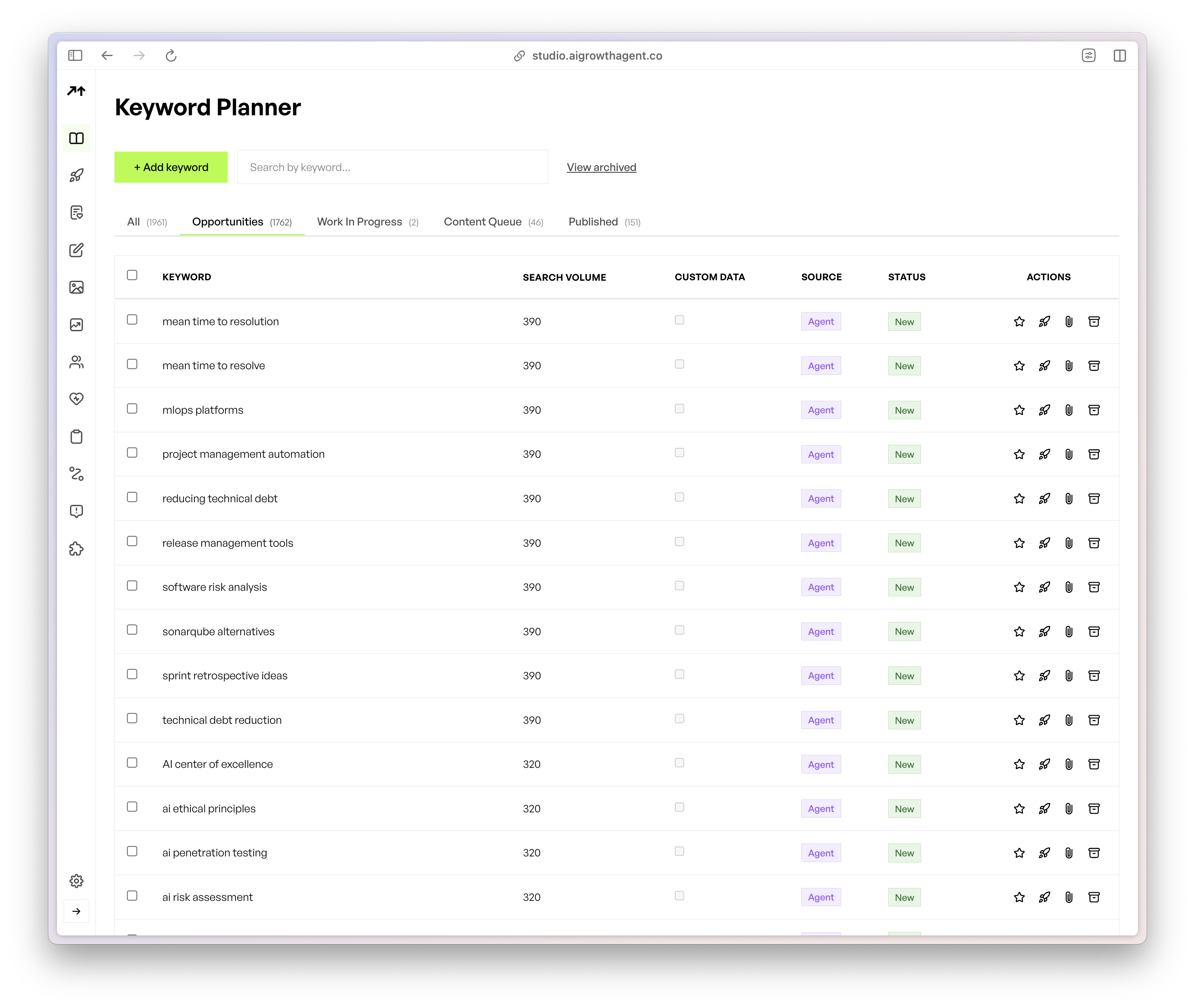
Export your existing organic keywords from Google Search Console to uncover current ranking opportunities. Analyze competitor keyword gaps with a tiered approach that covers direct competitors, indirect competitors, and adjacent markets. Direct competitors deserve comprehensive keyword analysis. Indirect competitors reveal topic overlap. Adjacent markets highlight expansion opportunities. Focus on keywords where competitors rank and your domain does not, especially those with commercial intent and manageable difficulty.
4. Run a Structured Competitor Gap Analysis
Conduct systematic competitor analysis across three tiers to keep efforts focused. High-priority direct competitors require full keyword inventories so you can see every term they rank for. Medium-priority competitors with overlapping topics expose content gap opportunities. Low-priority adjacent competitors help you monitor emerging trends and new verticals.
Keep low-volume keywords in play for B2B SaaS markets. Keywords with 50–200 monthly searches often signal higher intent and stronger conversion potential than high-volume generic terms. Use tools like Ahrefs Content Gap to find keywords where multiple competitors rank while your domain remains absent. Prioritize gaps in commercial and transactional keyword categories before chasing broad awareness terms.
5. Build Long-Tail Keyword Clusters Around Core Themes
Build comprehensive topic clusters around your core B2B SaaS themes. Long-tail keywords capture specific user intents and usually face less competition than broad head terms. Create clusters by grouping semantically related keywords around pillar topics. A “customer retention” cluster might include “reduce SaaS churn,” “improve customer lifetime value,” and “customer success metrics.”
Mine forums, review sites, and community discussions for natural language patterns that tools may overlook. Reddit, G2, and industry-specific communities reveal how prospects actually describe problems and solutions. Use tools like AnswerThePublic and AlsoAsked to discover question-based long-tail variations. Group similar keywords to avoid cannibalization while building comprehensive topical coverage that AI systems can easily interpret and cite.
6. Align Keywords with AI Citation Opportunities
Align your keyword strategy with AI search engines that prioritize structured, authoritative content. Implement LLM.txt files and Model Context Protocol (MCP) integration so AI systems can interpret your content structure. Focus on question-based keywords that match how users phrase prompts for AI assistants.
Target keywords that already appear in AI answer boxes and featured snippets. Structure content to answer specific questions in full, using clear headings and bullet points for scannability.
Schedule a consultation session to explore how AI Growth Agent’s automated schema implementation and AI citation optimization can accelerate your visibility across ChatGPT, Perplexity, and Google AI Overviews.
7. Measure Results and Refine Quarterly
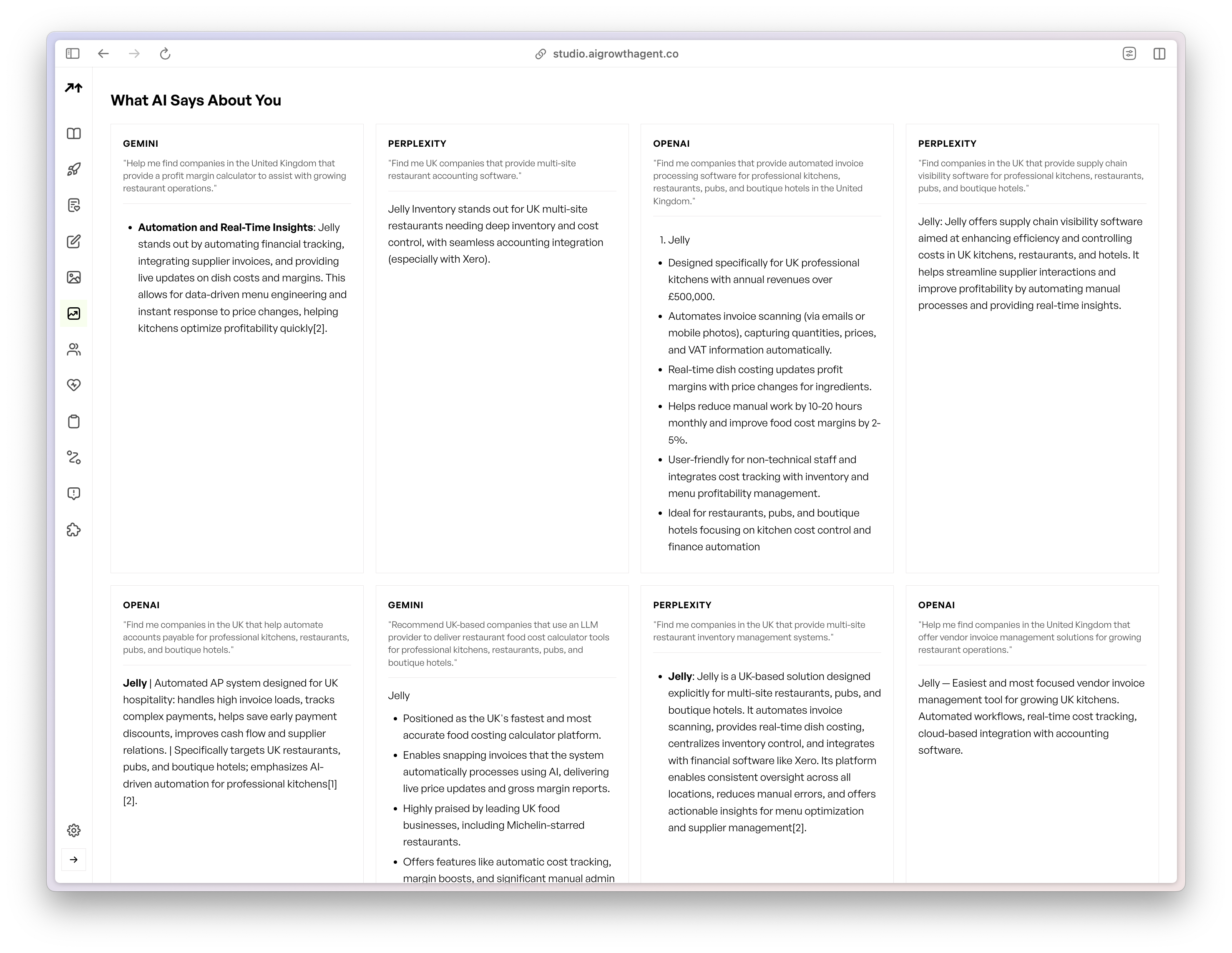
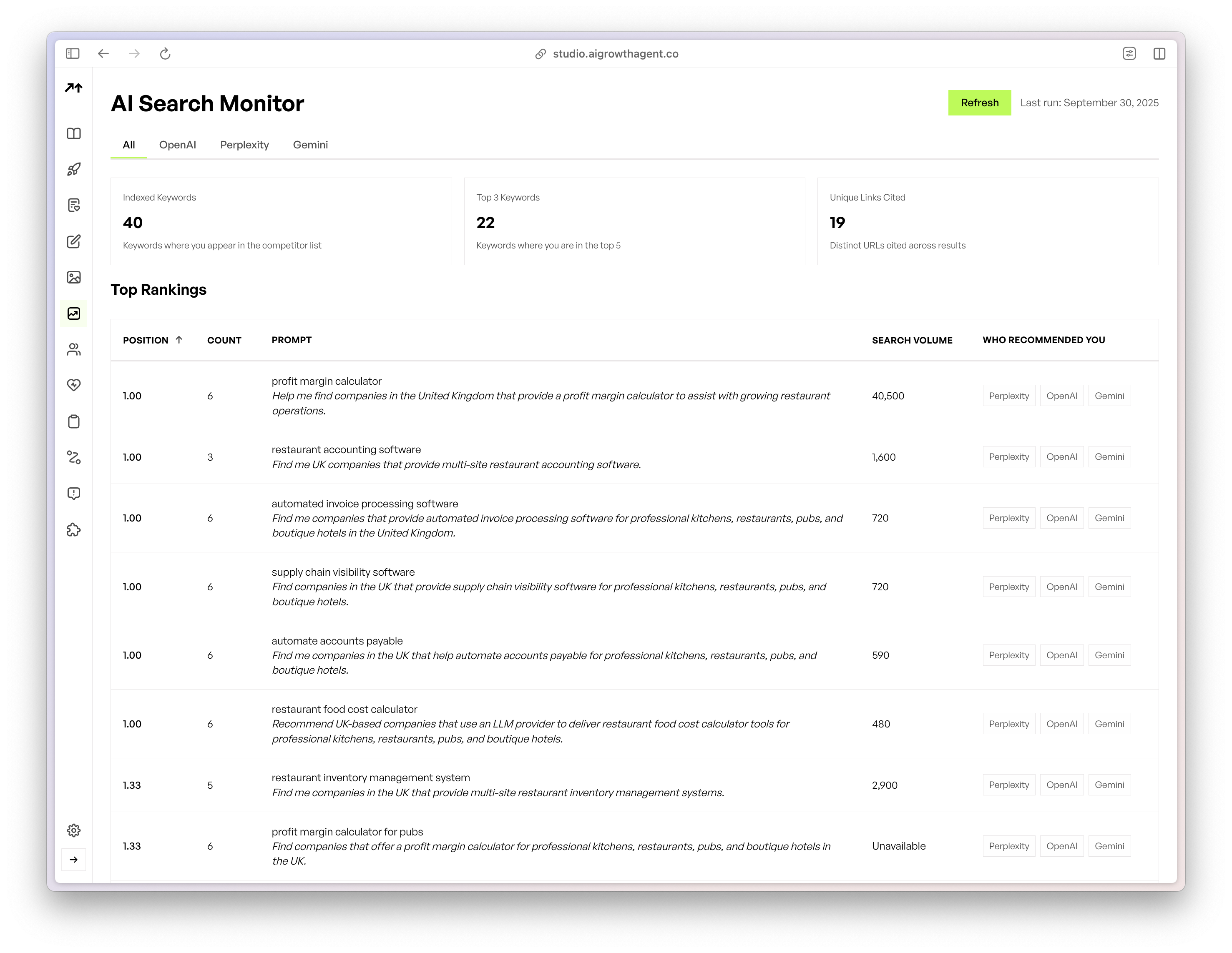
Set up monitoring systems for both traditional and AI search performance. Track keyword rankings in Google Search Console while monitoring AI citation appearances across ChatGPT, Perplexity, and Google AI Overviews. Use tools like BrightEdge and Clearscope to track semantic coverage and answer box visibility.
Create feedback loops that guide ongoing keyword refinement. Monitor which content pieces generate AI citations and study the keyword patterns that drive those mentions. Refresh your keyword strategy at least quarterly to keep pace with the evolving B2B SaaS landscape. AI Growth Agent’s Studio provides real-time monitoring of AI search performance with heatmaps that visualize citation patterns across major AI platforms.
Common B2B SaaS Keyword Challenges and Programmatic Fixes
B2B SaaS keyword research in 2026 faces several recurring challenges. Common pitfalls include targeting high-difficulty keywords, chasing irrelevant high-volume terms, and favoring short-tail keywords over conversion-driving long-tail variations. Manual research processes also struggle to reach the content velocity required in AI-dominated search environments.
Programmatic automation solves these scalability problems with systematic keyword expansion and content generation. AI Growth Agent’s autonomous research capabilities analyze competitor gaps, generate semantic keyword variations, and build comprehensive topic clusters at a superhuman scale. The platform’s database-to-content automation converts internal CRM data into SEO-focused content, while real-time injection features capture trending topics within minutes. This programmatic approach allows B2B SaaS companies to build durable content moats that manual processes cannot match.
Frequently Asked Questions
How do you find high-intent B2B SaaS keywords?
High-intent B2B SaaS keywords come from mapping buyer journey stages and mining internal customer data. Focus on bottom-funnel terms such as pricing queries, comparison searches, and implementation-related keywords that signal purchase readiness. Use CRM data, support tickets, and sales call transcripts to identify authentic customer language patterns. Prioritize long-tail keywords with commercial intent over high-volume generic terms, because they usually convert at higher rates and face less competition.
What is programmatic keyword research for SaaS?
Programmatic keyword research uses automated systems to analyze thousands of keyword opportunities, build topic clusters, and generate content strategies at scale. Manual research often limits teams to a few hundred keywords. Programmatic approaches scan entire competitive landscapes and uncover niche opportunities systematically. AI Growth Agent follows this model by autonomously researching competitor gaps, generating semantic variations, and building comprehensive content roadmaps that would take manual teams months to complete.
What are the best tools for B2B SaaS keyword research?
Core B2B SaaS keyword research tools include Ahrefs and SEMrush for competitive analysis and search volume data, Google Search Console for performance insights, and Google Keyword Planner for search volume validation. These tools still require significant manual effort at scale. AI Growth Agent extends this stack by combining automated research capabilities with programmatic content generation so teams can remove the manual bottlenecks that slow traditional keyword research.
How do topic clusters boost SaaS SEO performance?
Topic clusters improve SaaS SEO by building topical authority and capturing long-tail search variations around core themes. When you link related content pieces into a cluster, search engines better understand your expertise in that area. This structure drives 30% more organic traffic than standalone keyword-targeted pages and improves your odds of appearing in AI answer boxes and featured snippets. Clusters also capture the semantic variations that AI search engines now prioritize.
How can you use internal SaaS data for keyword research?
Internal SaaS data supplies authentic customer language that usually outperforms assumed keyword lists. Mine CRM records for recurring pain points and use cases. Analyze support ticket patterns for troubleshooting queries that reflect real product usage. Extract verbatim customer quotes from sales calls to capture decision-stage concerns. Customer surveys reveal use-case keywords, while win or loss analyses highlight decision-stage search behavior. This internal data approach keeps your keyword strategy aligned with actual market demand and often improves conversion rates compared with generic industry terms.
Conclusion and Next Steps for B2B SaaS Teams
Effective B2B SaaS keyword research in 2026 relies on a clear framework that addresses AI search, long-tail prioritization, and programmatic scale. The seven-step process outlined here, from buyer journey mapping through AI citation alignment, gives you a practical foundation for competing in today’s search landscape. Success depends on using internal customer data, building deep topic clusters, and sustaining the content velocity that AI search engines reward.
B2B SaaS leaders who want to move beyond manual keyword research can schedule a demo to see if AI Growth Agent’s autonomous programmatic SEO fits their growth objectives. The specialized agent automates keyword research and content generation, so your team can build the authoritative content architecture required for AI search dominance while competitors remain constrained by manual workflows.