


Key Takeaways
- AI Overviews appear on 50-60% of searches and create zero-click environments that cut publisher traffic by 30-50% and CTR by 61%.
- Only 274k domains get cited in AI Overviews out of 18M indexed, so passive reliance fails most businesses.
- Programmatic SEO agents drive 220-10k% traffic growth, 340% ROI, and a 527% surge in AI traffic through scalable authority-building.
- Case studies show programmatic agents winning top AI citations across Gemini, ChatGPT, and Perplexity in weeks, outperforming AI Overviews.
- AI Growth Agent supports one-week deployment and multi-platform dominance; schedule a demo today to transform your SEO strategy.
Gemini AI Overviews vs Programmatic SEO Agents in 2026
Gemini AI Overviews and programmatic SEO agents serve very different goals for search and growth in 2026.
|
Aspect |
Gemini AI Overviews |
Programmatic SEO Agents |
|
Purpose |
Zero-click summaries for instant answers on 59% of searches |
Authority-building at scale for AI citations and traffic via volume |
|
Mechanism |
Gemini 2.5/3 synthesis from top sources with parallel queries |
Autonomous engineering: Manifesto, clustering, schema/MCP injection |
|
Scale Potential |
Limited to E-E-A-T sources (274k domains cited of 18M indexed) |
Unlimited pages (5k pages = 1M visits/month) |
|
Citation Reliability |
Exclusivity (76% top-10, but 61% CTR drop) |
Consistent via velocity and structured data (340% ROI) |
|
SEO Impact |
Traffic loss (30-50% publisher revenue down) |
220-10k% growth, 527% AI traffic surge |
|
Cost Efficiency |
Passive/free but unreliable |
Automated ROI (1-week onboarding vs. agencies) |
|
2026 Relevance |
Global expansion but zero-click dominance |
GEO/AEO winner for multi-modal and recency |
This comparison shows that programmatic SEO agents scale authority and traffic, while Gemini AI Overviews mainly support Google’s zero-click strategy.
How Gemini AI Overviews Hurt Organic Growth
Gemini AI Overviews create a zero-click environment that suppresses organic growth for most sites. Users are 47% less likely to click traditional results when AI Overviews appear, so Google keeps attention while publishers lose traffic.
The exclusivity problem makes this even harder. Only 274,455 domains receive citations out of 18.4 million indexed, which turns AI Overview inclusion into a high-stakes lottery for most businesses.
Publisher revenue has declined 30-50% from display ads and 35-60% from affiliate revenue because of lower click-through rates. This revenue collapse shows why passive dependence on AI Overviews cannot support a long-term SEO strategy.
Gemini, Best AI for SEO, and the SEO vs GEO vs AEO Model
Google Gemini delivers mixed results for SEO in 2026. The data shows limited reach, even when conversion rates look strong.
Is Google Gemini good for SEO? The numbers point to narrow impact. AI Overviews appear on only 13% of searches. Visitors from AI search convert 4.4 times better, but the small share of impressions limits total traffic for most brands.
Best AI model for SEO in 2026 comes from orchestration, not a single model. Programmatic SEO agents outperform standalone AI tools by coordinating multiple systems at once. Specialized programmatic SEO strategies deliver 340% average ROI compared to traditional methods, and AI-referred traffic surged 527% in early 2025.
SEO vs GEO vs AEO framework clarifies where programmatic agents win. Traditional SEO focuses on rankings. Generative Engine Optimization (GEO) targets citations inside AI responses. Answer Engine Optimization (AEO) focuses on direct AI answers and voice results. Programmatic SEO agents support all three by producing structured, citation-ready content at scale.
Programmatic SEO Agent Rollout: From Manifesto to MCP
Programmatic SEO works when the rollout removes friction while protecting quality and brand voice. Teams follow a clear sequence from strategy to deployment.
The process starts with Manifesto programming. AI agents learn brand voice, positioning, and constraints through focused data transfer sessions that define how content should sound and what it must include.
Autonomous keyword clustering comes next. The agent analyzes tens of thousands of queries to uncover themes, gaps, and page opportunities. It then runs the full technical pipeline, including strategy, research, drafting, fact-checking, and schema with advanced tools like LLM.txt and Model Context Protocol (MCP) integration.
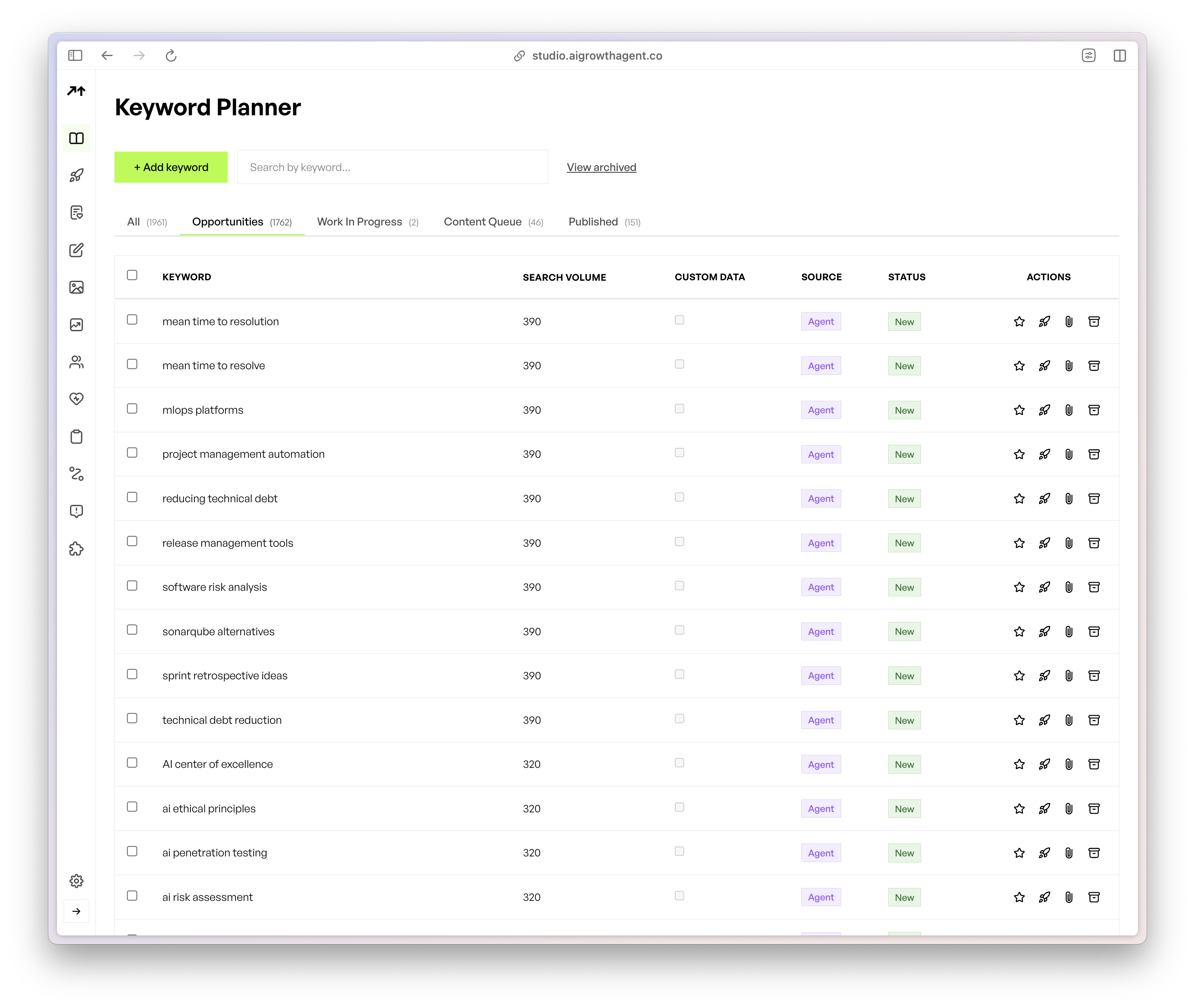
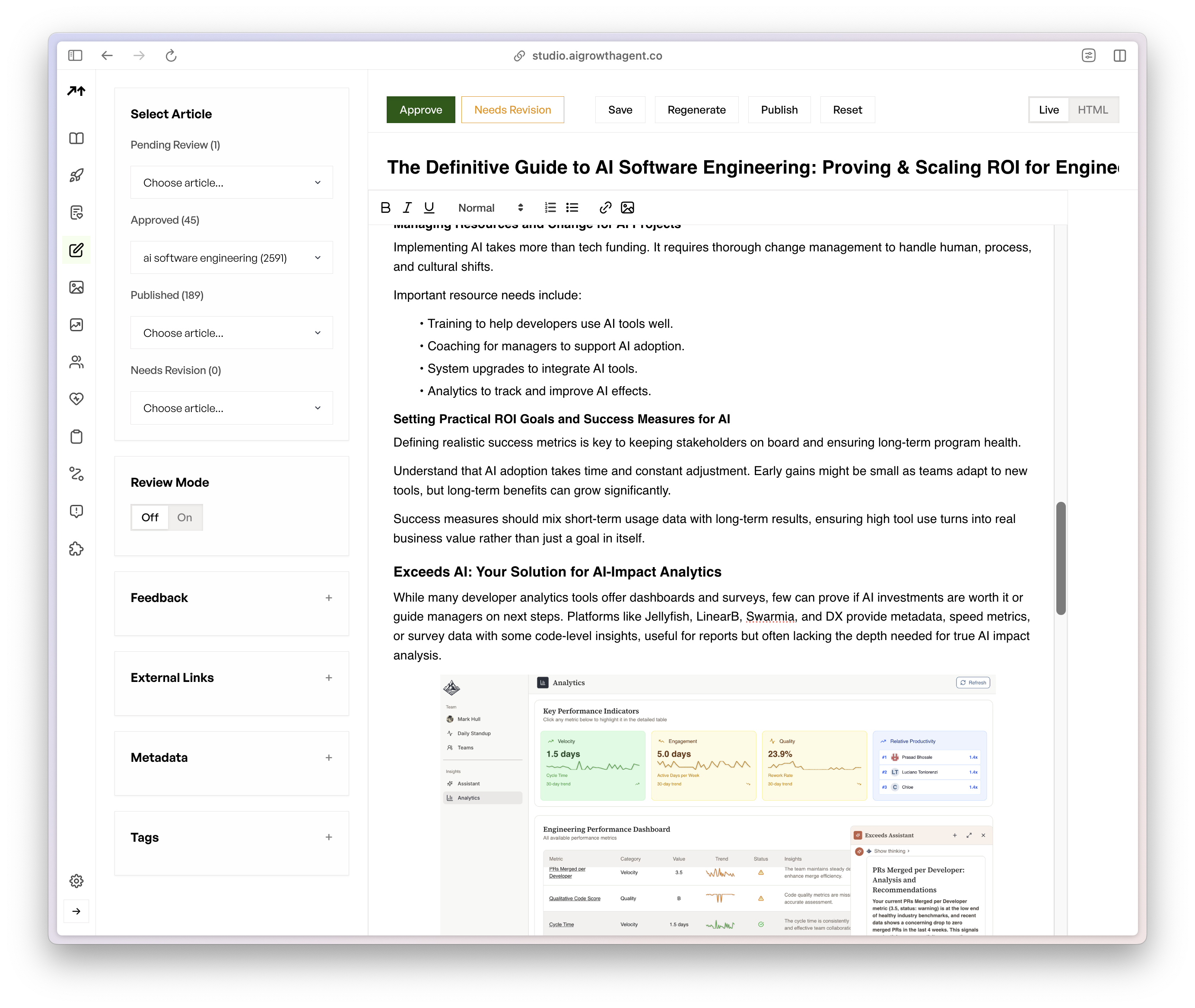
AI Growth Agent adds several competitive advantages. Teams get one-week article deployment, multi-tenant programmatic rollout for portfolio companies, and real-time content injection for trending topics. The Studio control panel gives full visibility, editing access, feedback loops, and an auto-pilot mode for hands-off execution.
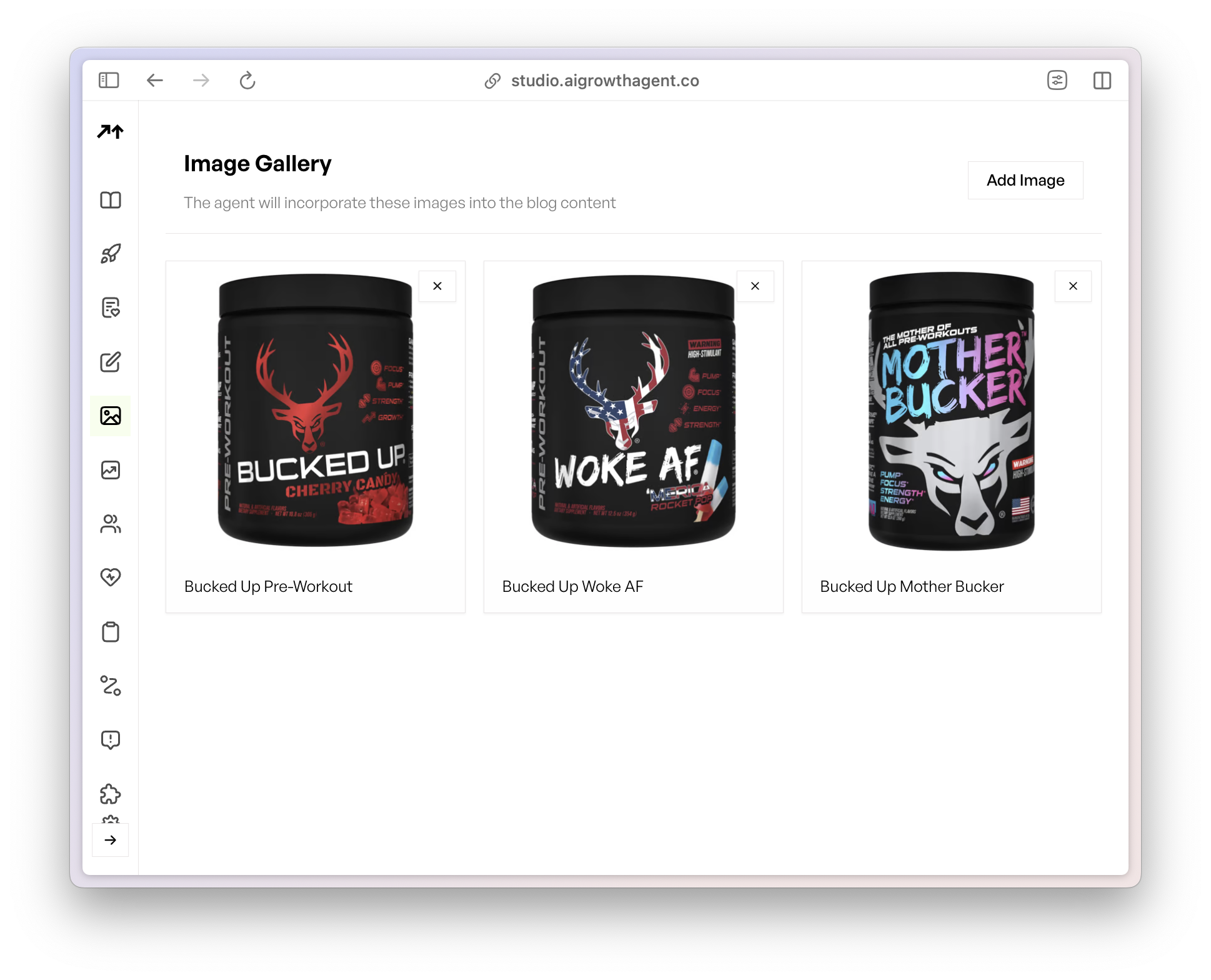
Database-to-content automation turns proprietary data into defensible content assets. Intelligent image and asset placement strengthens visual SEO and engagement. Together, these features let businesses build authority at superhuman scale while staying on-brand and technically sound.
2026 Case Studies: Programmatic Agents Beating Gemini Overviews
Recent case studies show programmatic SEO agents outperforming passive AI Overview strategies across multiple AI platforms. These results arrive in weeks, not years.
Exceeds AI reached Perplexity’s #1 recommendation within two weeks. The brand then secured Google AI Overview and Gemini snapshots for core keywords within three weeks. It now appears across ChatGPT, Google AI Overview and Gemini, and Perplexity as the leading source for AI performance review tools.
BeConfident, which competes with Duolingo and Busuu in English learning, gained immediate indexing after programmatic publishing. It became the #1 app recommendation in Brazil through Google AI Overview and Gemini within weeks. Bucked Up won ChatGPT’s #1 citation for “best protein soda” within three weeks. Gitar emerged as the reference brand for AI-powered CI/CD automation across Google AI Overview and Gemini, ChatGPT, and Perplexity in under two months.
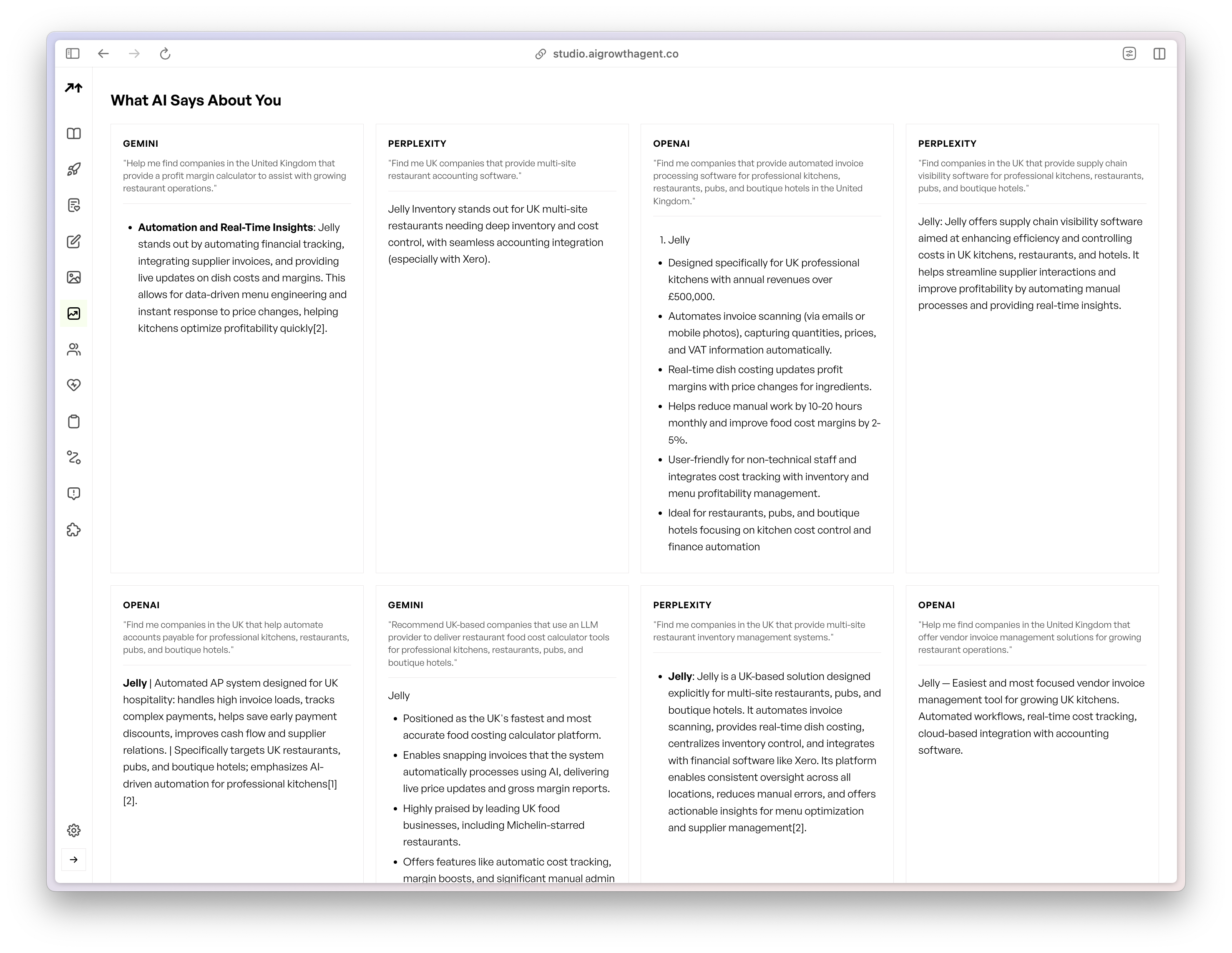
These examples highlight consistent AI citation wins driven by programmatic velocity instead of waiting for AI Overview inclusion. The structured, repeatable system builds measurable authority across AI platforms at the same time.
Schedule a demo to see if AI Growth Agent is your fit
2026 Verdict: Programmatic SEO Agents vs Gemini Overviews
Programmatic SEO agents clearly outperform passive reliance on Gemini AI Overviews for sustainable growth. AI Overviews keep users on Google, while programmatic agents push qualified traffic to owned properties.
Businesses that wait for AI Overview citations risk losing ground while competitors scale content velocity and AI visibility. Programmatic strategies already show 340% ROI and 527% traffic growth, which creates a widening gap.
Deploy AI Growth Agent now to secure durable authority, multi-platform AI citations, and resilient traffic in the AI search era.
Schedule a demo to see if AI Growth Agent is your fit
Frequently Asked Questions
What is a programmatic SEO agent?
A programmatic SEO agent is an autonomous system that plans, writes, and ships content at scale with minimal human input. Unlike traditional SEO tools that need constant manual work, programmatic agents handle the full lifecycle from keyword research to technical setup, publishing hundreds or thousands of pages that build authority and win AI citations across platforms.
How do Gemini AI Overviews compare to programmatic agents for traffic generation?
Gemini AI Overviews cut traffic by creating zero-click experiences that keep users on Google. Users become 47% less likely to click traditional results, and organic CTR drops 61% when overviews appear. Programmatic SEO agents flip this pattern. Case studies show 220-10,737% traffic growth from scalable content that attracts clicks instead of blocking them. Agents build durable traffic sources, while AI Overviews mainly support Google’s retention goals.
What is the best AI SEO agent for 2026?
AI Growth Agent currently leads the programmatic SEO category with several distinct capabilities. These include multi-tenant deployment for portfolio companies, real-time content injection for trending topics, and advanced technical features like LLM.txt and Model Context Protocol integration. The platform delivers one-week onboarding instead of the months typical with agencies, while Manifesto-driven brand rules and autonomous technical checks protect quality.
What is the difference between Gemini and AI Overviews?
Gemini is Google’s large language model that powers AI Overviews, which appear as summary boxes in search results. Gemini 2.5 and 3.0 handle query understanding and content synthesis. AI Overviews present that synthesized information to users. Together, they create zero-click experiences that keep users on Google instead of sending them to the original websites.
Is Google Gemini good for SEO in 2026?
Google Gemini produces mixed outcomes for SEO in 2026. AI Overview citations convert 4.4 times better than standard organic traffic, but the feature appears on only 13% of searches and reduces clicks for most sites. The exclusivity problem remains severe, since only 274,455 domains receive citations out of 18.4 million indexed. That reality makes Gemini unreliable as a primary SEO pillar. Businesses see stronger results from programmatic content that targets AI citations across multiple engines.
What does SEO vs GEO vs AEO mean?
SEO, or Search Engine Optimization, focuses on ranking in traditional organic results. GEO, or Generative Engine Optimization, targets citations inside AI-generated answers from tools like ChatGPT and Gemini. AEO, or Answer Engine Optimization, shapes content for direct AI and voice answers. Modern strategies must cover all three, and programmatic agents excel by producing structured content that performs in search, AI citations, and answer engines at once.
