


Written by: Mariana Fonseca, Editorial Team, AI Growth Agent
Key Takeaways
- AI search engines like ChatGPT and Gemini now reward brands that publish fresh, structured content at scale for citations and recommendations.
- Traditional tools such as Semrush and Ahrefs excel at keyword discovery but stall without connected content creation and publishing workflows.
- AI Growth Agent delivers full programmatic SEO automation, from keyword clustering to autonomous content engineering and AI citation monitoring.
- Clients often secure AI citations within 2 to 3 weeks, with case studies showing fast authority gains in competitive markets.
- Teams ready for full programmatic SEO at enterprise scale can schedule a demo with AI Growth Agent to confirm fit.
Why Automated Keyword Research Now Drives AI Visibility in 2026
AI search engines reward brands that publish semantically rich, structured content with clear topical authority. Manual keyword research cannot keep pace with the volume and consistency required to compete for AI citations. 43% of marketing professionals now use AI to automate repetitive tasks, achieving significant time savings compared to manual workflows.
Automated keyword research platforms deliver intelligent clustering, search intent analysis, competitor gap detection, and bulk processing at scale. These systems can analyze millions of keywords, surface content opportunities, and output structured data that feeds directly into programmatic content pipelines.
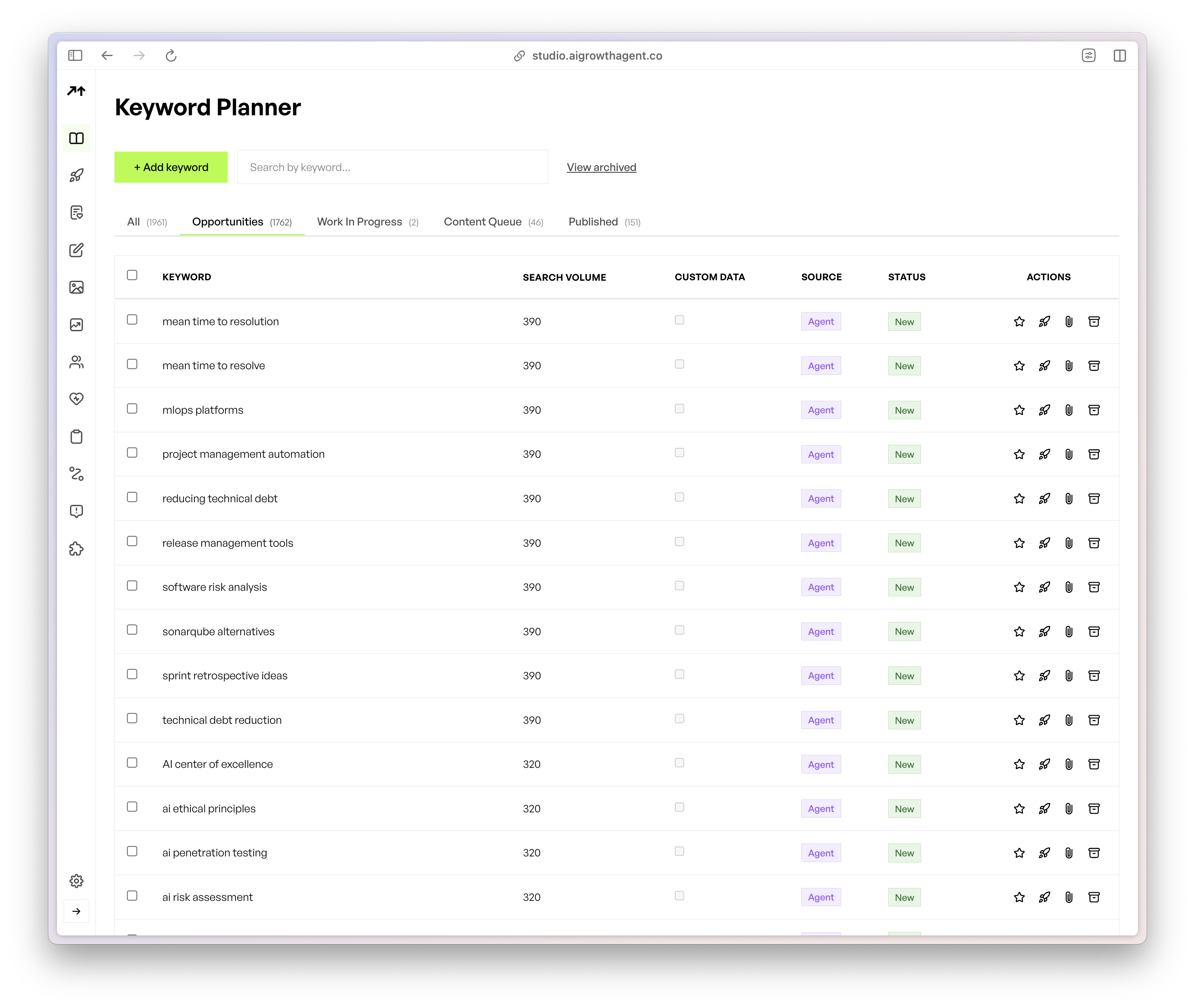
Most current tools still stop at research and leave execution to fragmented teams. Platforms such as Semrush and Ahrefs excel at discovery but do not handle end-to-end content creation and publishing. This gap creates bottlenecks that block true scale. AI Growth Agent closes that gap by pairing automated research with autonomous content engineering and direct publishing.
Teams that replace manual keyword research with automation convert a major bottleneck into a durable advantage. Schedule a demo to see if you are a good fit for comprehensive programmatic SEO automation.
9 Automated Keyword Research Platforms for Scalable Content Programs
1. AI Growth Agent delivers a Programmatic SEO Agent that engineers high-authority content architectures through programmatic keyword research, Manifesto-driven clustering, autonomous content creation, technical enhancements including LLM.txt and Model Context Protocol, a Studio publishing platform, and an AI Search Monitor that tracks citations across ChatGPT, Gemini, and Perplexity. Clients such as Gitar.ai build market authority within weeks through fully autonomous programmatic SEO.
2. Semrush Keyword Magic Tool is an industry-leading platform with 26+ billion keywords and AI-driven search intent analysis. It supports deep competitor analysis, keyword gap discovery, and SERP feature predictions. Enterprise teams use it when they need broad data coverage.
3. Ahrefs Keywords Explorer offers 22+ billion keywords with strong backlink data integration and reliable keyword difficulty scoring. It excels in competitive analysis and provides unique click metrics that refine traffic estimates. Agencies favor Ahrefs for data accuracy and a clear interface.
4. Moz Keyword Explorer focuses on SERP analysis and keyword opportunity scoring. It combines volume, difficulty, and opportunity into a single priority score that guides strategic keyword selection.
5. Keyword Insights specializes in AI-powered keyword clustering and content gap analysis. It groups topics based on search intent patterns and competitor coverage, which supports structured content planning.
6. Lowfruits targets low-competition keyword opportunities through automated difficulty analysis. Newer websites use it to find quick wins in crowded markets through systematic opportunity discovery.
7. ClusterAI groups keywords by semantic similarity and search intent. It supports topic-based content strategies that align with AI search expectations for topical authority.
8. Scalenut combines keyword research with AI content generation. It produces automated content briefs and recommendations based on keyword data and competitor insights.
9. SurferSEO integrates keyword research with content scoring through real-time SERP analysis. It offers automated content recommendations that improve search visibility.
Teams that have outgrown basic keyword tools can schedule a demo to see if they are a good fit for autonomous programmatic SEO that delivers measurable AI citations.
Free vs Paid Keyword Tools for Enterprise-Scale Automation
|
Tool |
Automation Level |
Keyword Volume |
Pricing Tier |
|
AI Growth Agent |
Full End-to-End |
Proprietary Research |
Enterprise Custom |
|
Semrush |
High Research |
26+ Billion |
$117+/month |
|
Ahrefs |
High Research |
22+ Billion |
$29+/month |
|
Google Keyword Planner |
Basic |
Google Data |
Free |
Free tools such as Google Keyword Planner provide basic keyword suggestions that work for small businesses starting SEO. However, free versions of advanced platforms offer limited functionality compared to paid versions required for enterprise scaling.
Paid platforms deliver deeper insights such as historical trends, competitor analysis, and advanced clustering that support large-scale content programs. Enterprise teams also need automation, multi-domain management, and integrations that only premium platforms provide.
Enterprises that want real scale must move from research-only tools to complete automation solutions. Traditional platforms still create bottlenecks in content creation and publishing, which caps growth.
Programmatic SEO Workflow From Keywords to AI Citations
Programmatic SEO succeeds when teams convert keyword research into AI-visible content assets through a clear workflow. The complete process includes seven stages.
1. Automated Keyword Discovery uses tools to surface thousands of relevant keywords across multiple intents and competitor gaps. Teams focus on semantic clusters instead of isolated terms.
2. Intelligent Clustering groups keywords by topic and intent to form content pillars and supporting clusters. This structure matches how AI search systems evaluate topical authority.
3. Content Strategy Development maps clusters to content formats, publishing cadence, and specific targets. Teams prioritize topics using search volume, competition, and business impact.
4. Automated Content Creation produces high-quality, unique articles that use target keywords naturally while preserving brand voice and technical accuracy.
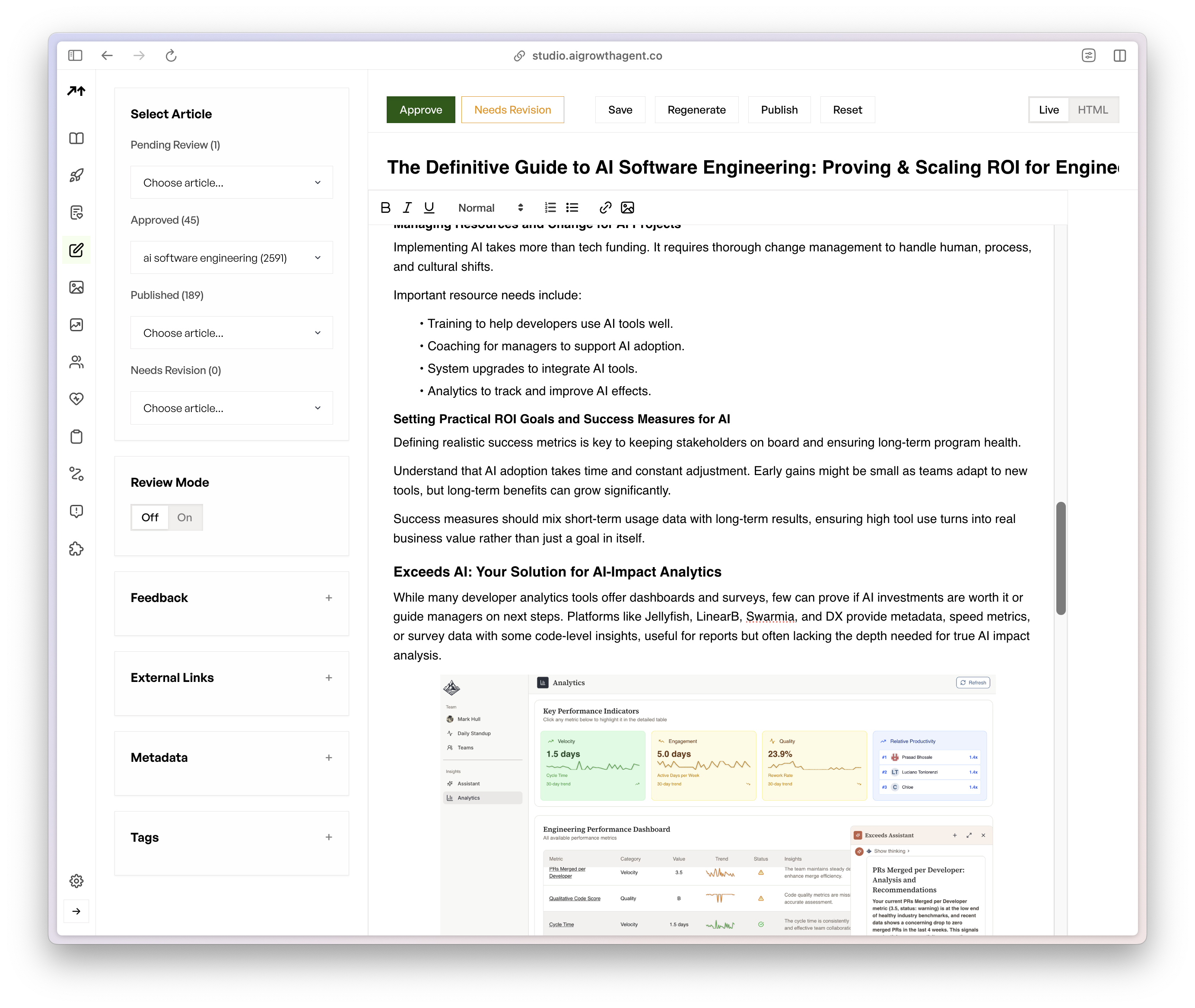
5. Technical SEO Implementation adds schema markup, metadata, and structured data so AI search engines can index and interpret content correctly.
6. Publishing and Distribution pushes content across optimized blog architectures with clean internal linking and strong technical foundations.
7. AI Citation Monitoring tracks performance across ChatGPT, Gemini, and Perplexity to measure AI visibility and citation wins. Case studies show clients gaining AI citations within 3 weeks of launch.
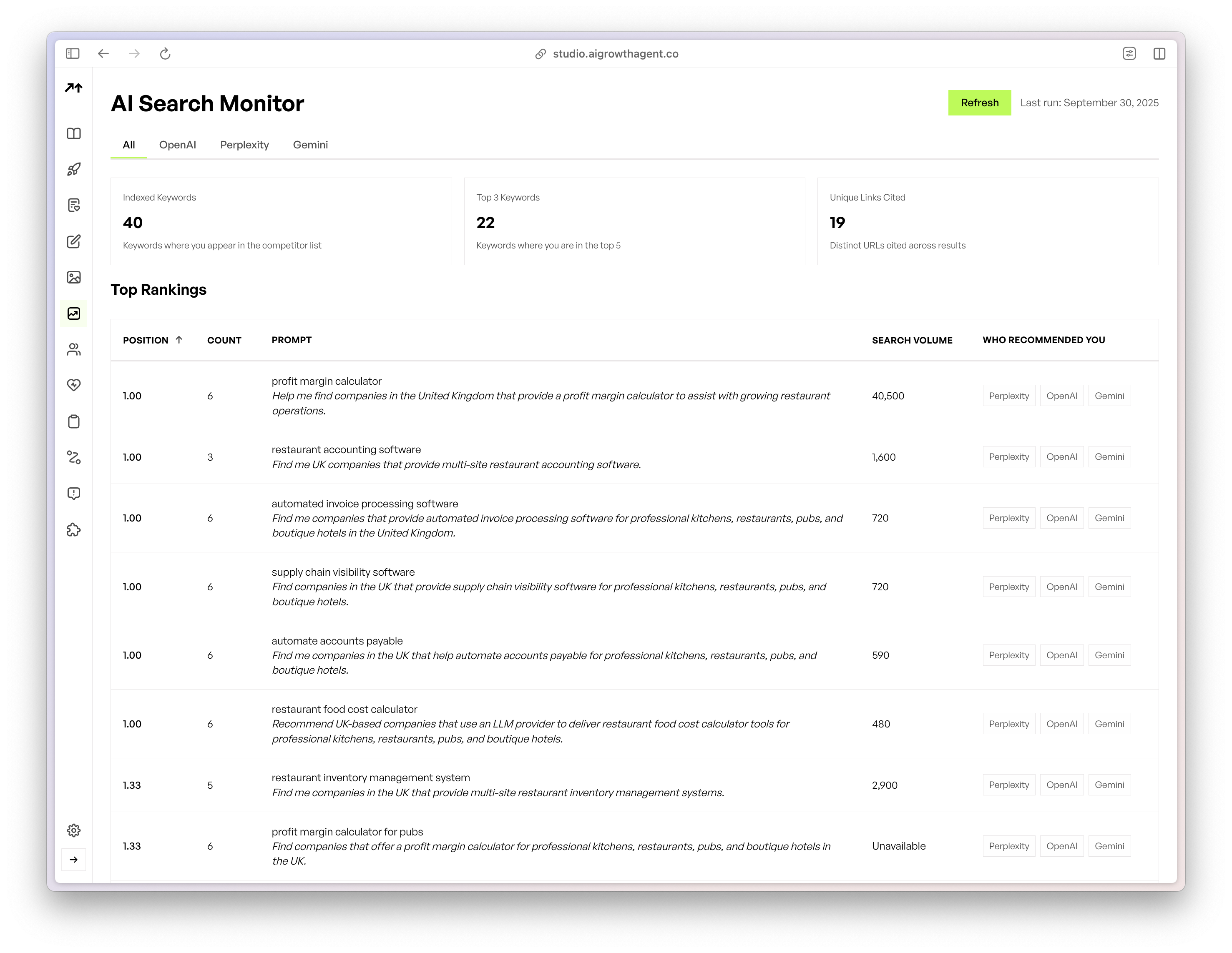
This workflow requires automation that goes far beyond standard keyword tools. AI Growth Agent currently stands as the only platform that executes this full process autonomously and delivers measurable AI citations and organic traffic growth.
Teams can see this workflow in practice by booking a session. Schedule a demo to see if you are a good fit for end-to-end automation that drives real business outcomes.
How AI Growth Agent Scales Programmatic SEO
AI Growth Agent upgrades traditional keyword research into complete programmatic SEO automation. The platform unifies automated keyword research, autonomous content creation, technical enhancements, and direct publishing.
The onboarding process starts with a one-hour strategy session that produces a Company Manifesto. This brand guide keeps all automated content consistent and authoritative. The Manifesto then feeds proprietary research algorithms that surface keyword opportunities aligned with business goals.
Key capabilities include multi-tenant deployment for portfolio companies, real-time content injection for trending topics, and database-to-content automation that converts proprietary data into SEO assets. The platform also implements LLM.txt files and Model Context Protocol integration to improve AI search visibility.
Client stories highlight the impact. Bucked Up secured #1 citations for “best protein soda” within 3 weeks. BeConfident became the top English learning recommendation in Brazil through Google AI Overview. Exceeds AI earned Perplexity recommendations as the leading performance review alternative within 2 weeks of launch.
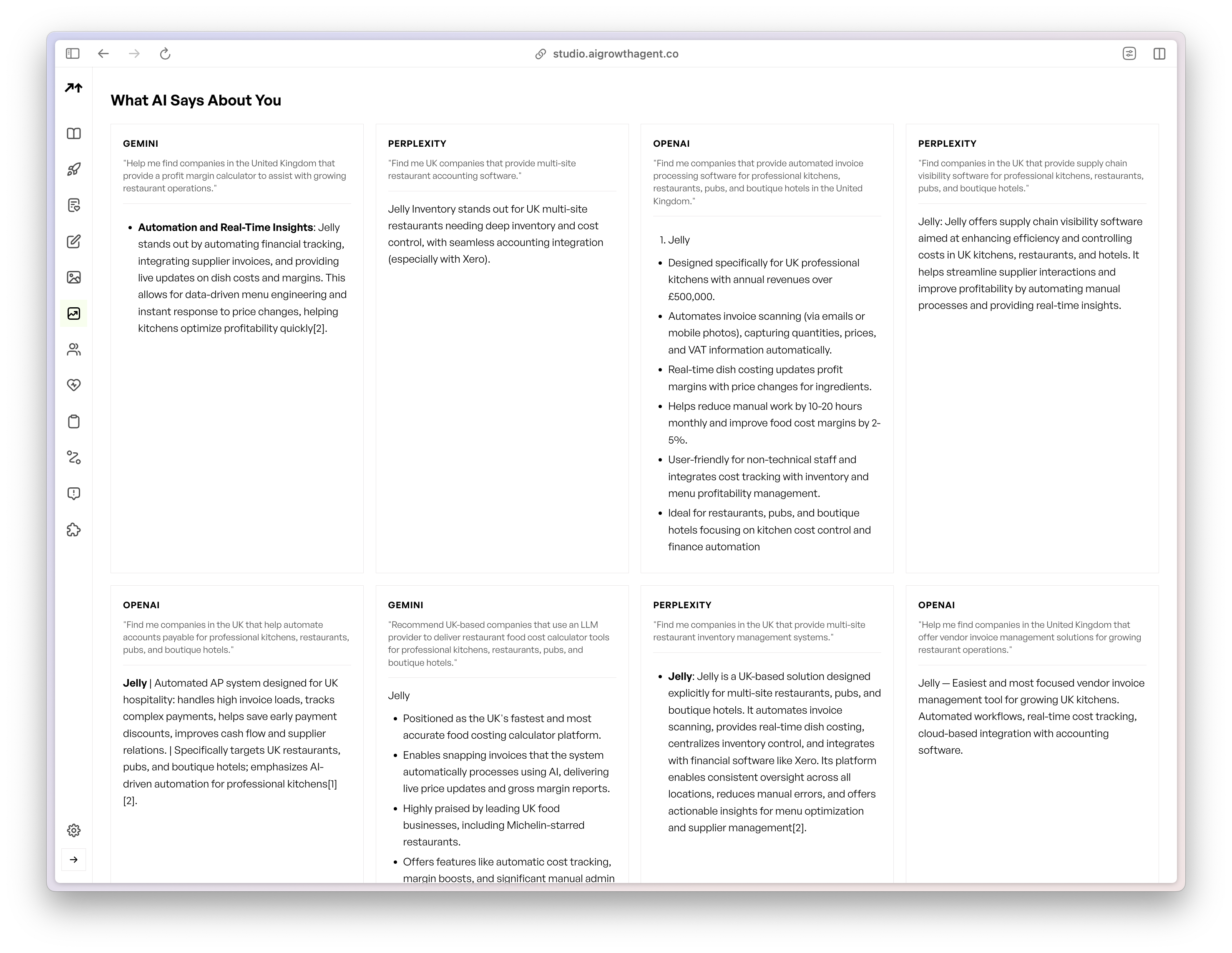
Unlike research-only tools that stall execution, AI Growth Agent automates the journey from keyword discovery to AI citation achievement. Teams no longer need separate tools for content creation, technical optimization, and publishing while still maintaining enterprise-grade quality and brand control.
FAQ: Automated Keyword Research and AI Growth Agent
What are automated keyword research tools?
Automated keyword research tools use artificial intelligence and machine learning to discover, analyze, and organize keywords at scale. These platforms can process millions of search terms, identify search intent patterns, analyze competitor gaps, and group keywords into semantic clusters. Leading tools such as Semrush and Ahrefs provide large databases with billions of keywords, while advanced programmatic SEO platforms such as AI Growth Agent extend automation into content engineering, technical optimization, and publishing workflows.
What are the best free automated keyword research options in 2026?
Google Keyword Planner remains the main free option and provides official search volume data plus basic keyword ideas for small businesses and PPC campaigns. Semrush and Ahrefs offer limited free tiers with restricted features. Free tools still lack the depth, historical data, and clustering power required for enterprise-scale digital growth. Most teams that move beyond basic SEO rely on paid platforms for serious keyword automation.
How does AI Growth Agent differ from traditional keyword research tools?
AI Growth Agent operates as a Programmatic SEO Agent that executes the full technical SEO lifecycle. It covers programmatic keyword research and clustering, content engineering, technical optimization with features such as LLM.txt and Model Context Protocol, and direct publishing. Traditional tools such as Semrush and Ahrefs focus on discovery and analysis and stop at research, which creates production bottlenecks. AI Growth Agent automates the entire workflow from keyword strategy to AI citation achievement through its Studio and AI Search Monitor.
What ROI timelines can be expected for AI citations through automated keyword research?
AI Growth Agent clients often achieve AI citations within about 3 weeks of implementation. Exceeds AI gained Perplexity recommendations within 2 weeks. Bucked Up secured ChatGPT citations as the top protein soda brand within 3 weeks. BeConfident became the leading English learning recommendation in Brazil through Google AI Overview within weeks of programmatic content deployment. Actual timelines depend on technical setup, content quality, and competition.
What are the first steps to implement automated keyword research for scaling digital presence?
Teams usually begin with an audit of current keyword performance and competitor coverage using tools such as Semrush or Ahrefs. They then identify content gaps and clustering opportunities that align with business goals. For full automation, AI Growth Agent offers a streamlined onboarding process that starts with a one-hour strategy session to create a Company Manifesto, followed by automated research deployment and content publishing within one week. The crucial shift involves moving from research-only tools to complete programmatic SEO automation that delivers measurable AI visibility and organic traffic growth.
Conclusion: Turning Keywords Into AI Citations at Scale
Automated keyword research tools now form the base layer for scaling digital presence in the AI search era. Only complete programmatic SEO automation, however, creates a durable competitive edge. Traditional platforms focus on research, while AI Growth Agent converts keyword insights into AI citations and market authority through end-to-end automation.
Teams ready to dominate their category through programmatic SEO can schedule a demo to see if they are a good fit for autonomous content engineering that drives measurable business results.
