


Written by: Mariana Fonseca, Editorial Team, AI Growth Agent
Key Takeaways for Earning ChatGPT Citations
- AI search engines like ChatGPT cite brands with strong entity signals, schema markup, and Wikipedia presence, so technical foundations now drive visibility.
- Topical authority grows from pillar and cluster content that answers core buyer questions with clear, structured, AI-friendly formatting.
- Third-party validation from branded mentions, backlinks, and linkable assets on authoritative sites significantly increases citation rates.
- Programmatic content systems with real-time injection and GEO infrastructure such as LLM.txt help brands outpace manual SEO teams.
- AI citation analytics reveal what ChatGPT already says about you; schedule a demo with AI Growth Agent to apply this playbook and lead AI recommendations.
7 Proven Steps to Become ChatGPT’s Trusted Authority in 2026
1. Build Strong Entity Signals Across the Web
Entity recognition now anchors AI authority for brands. Keep NAP data, your name, address, and phone number, consistent across every directory, profile, and landing page. Implement comprehensive JSON-LD schema markup for products, services, and FAQ content. Wikipedia accounts for 47.9% of citations among top 10 sources, so a well-managed Wikipedia presence supported by strategic PR campaigns now acts as a core entity validation signal.
Prioritize product schema, FAQ schema, and article schema so AI systems receive clear, machine-readable details about your content. These technical foundations help ChatGPT and other models parse, connect, and trust your brand information. Strong entity signals raise the odds that your site appears as a cited source in AI answers.
2. Create Topical Authority Clusters Around Buyer Questions
Topical authority grows when your site covers a subject more completely than competitors. Select a small set of high-value pillar topics that match your revenue drivers and audience intent. Map at least 20 key buyer questions for each topic, then build supporting cluster pages that go deep on each question with practical, specific answers.
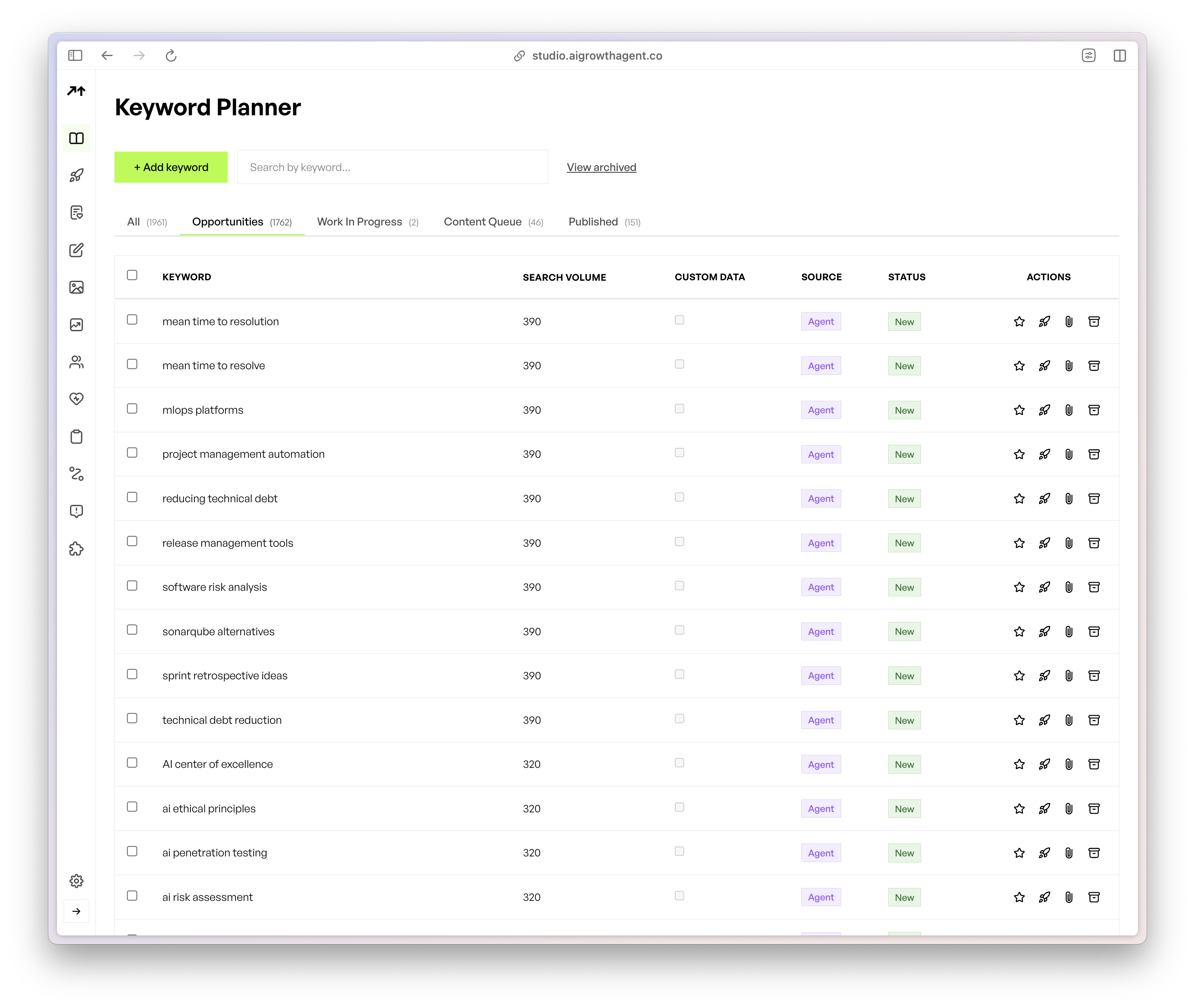
Use clear heading hierarchies, short paragraphs, and bullet lists so answers stand out on the page. Lead each section with the direct answer, then add context and examples. AI systems tend to cite sites with clean information architecture and obvious answer blocks more often, so structure now matters as much as the content itself for ChatGPT visibility.
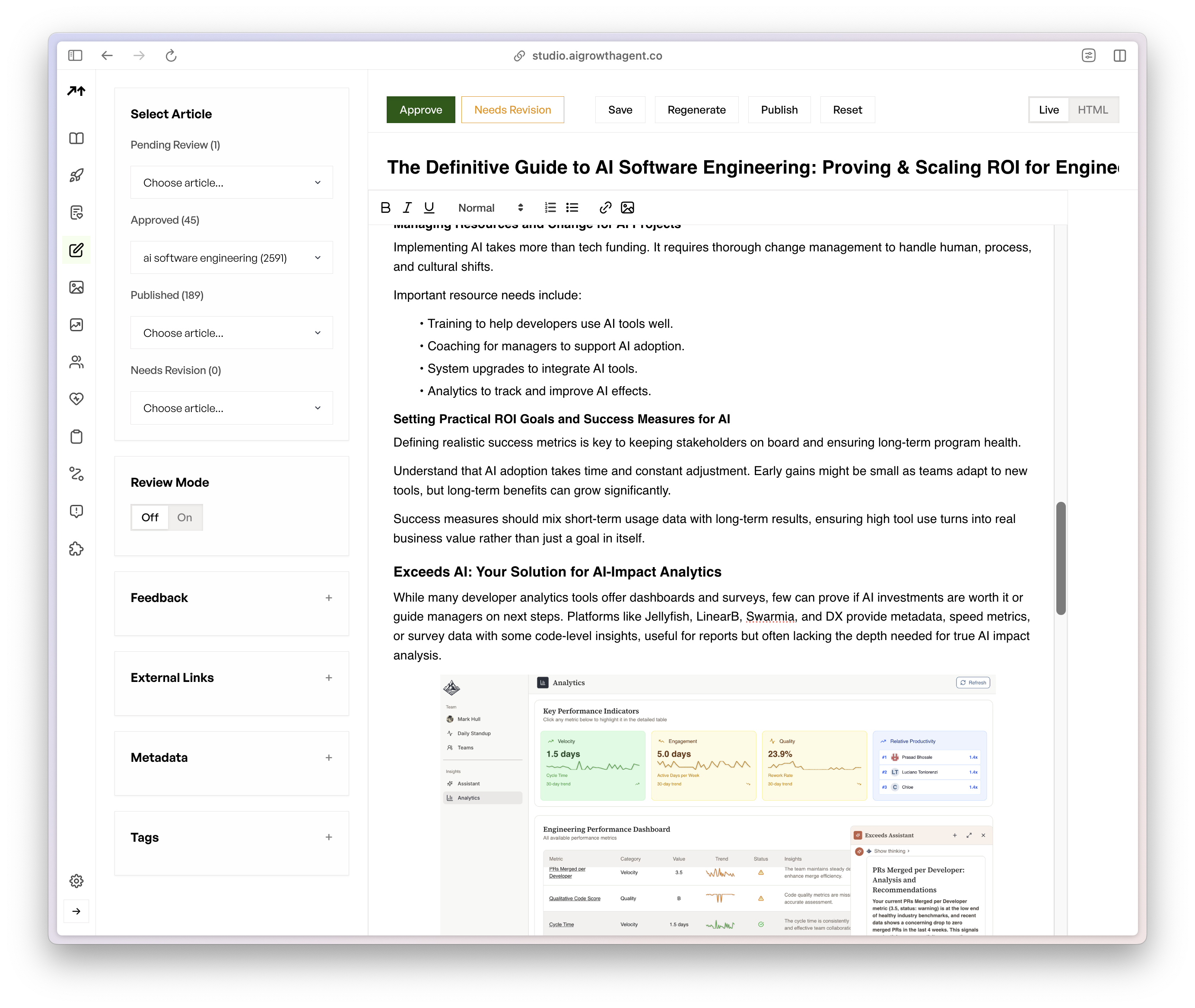
Want to scale this structure across your entire site? Schedule a demo to audit your authority gaps and see how programmatic SEO can speed up ChatGPT citations.
3. Earn Third-Party Validation and Branded Mentions
A 2025 Ahrefs study found branded web mentions have the strongest correlation with citations (Spearman correlation = 0.664), and top quartile brands receive up to 10× more citations. Prioritize coverage in industry publications, expert blogs, and comparison platforms that AI models already treat as trusted sources.
Create linkable assets such as original research, surveys, benchmarks, and calculators that others want to cite. High-quality backlinks from diverse, trusted domains signal credibility to AI systems. Growth in referring domains often aligns with higher ChatGPT citation rates, because models repeatedly encounter your brand as the source for specific data points.
4. Set Up Technical GEO Infrastructure for AI Crawlers
Technical GEO infrastructure now acts as a direct bridge between your content and AI models. Configure LLM.txt files, Model Context Protocol (MCP) endpoints, and robots.txt rules that clearly describe what AI agents can access. These elements help AI search engines interface with your content repositories and interpret your information with fewer errors.
AI Growth Agent automates these technical steps and keeps them aligned with evolving AI platform requirements. This automation reduces friction between your content stack and AI indexing, so your pages become easier for models to crawl, understand, and cite.
5. Scale Content with Programmatic Velocity
Domain traffic is the #1 predictor of AI citations, with high-traffic sites earning 3x more citations. Manual content production rarely reaches the volume and consistency needed to shift that traffic curve. Programmatic SEO systems generate large libraries of high-quality pages while keeping messaging, structure, and technical markup consistent.
AI Growth Agent’s Manifesto and Studio systems handle strategy, research, drafting, and implementation in a single workflow. This approach delivers steady publishing velocity, aligned with your brand voice and schema standards. As output scales, AI models encounter your brand more often, which supports faster authority gains.
6. Feed LLMs with APIs and Real-Time Content Injection
Real-time content injection helps your brand capture emerging topics before competitors move. Use systems that publish and surface new pages within minutes of identifying a trend, product launch, or breaking news event in your space. Early, consistent coverage positions your site as the default reference for those conversations.
Connect internal databases to content templates so proprietary data becomes public, searchable, and linkable. Database-to-content automation can turn pricing tables, performance metrics, or support logs into structured pages that answer niche questions. These pages often become the canonical sources that AI models cite for specific, hard-to-find facts.
Use these tactics to turn ChatGPT into a reliable acquisition channel. Schedule a consultation session to explore advanced GEO strategies tailored to your stack.
7. Track AI Citations and Iterate with Analytics
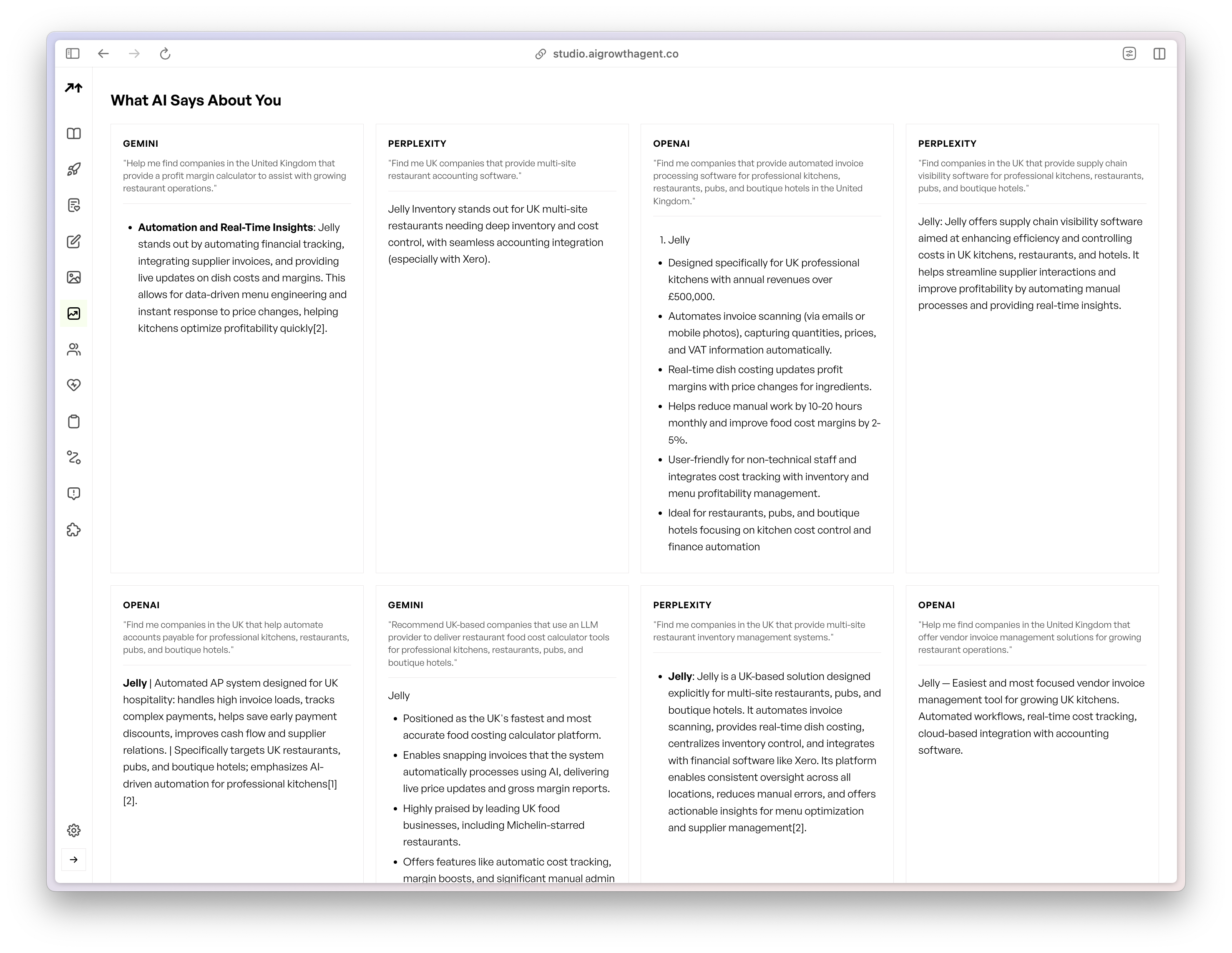
AI search analytics now function like rank tracking for the LLM era. Set up monitoring across ChatGPT, Google AI Overviews, and Perplexity to measure citation frequency, share of voice, and how accurately each model describes your offers. Watch competitor citations as well, because their gains often reveal new topics or formats worth testing.
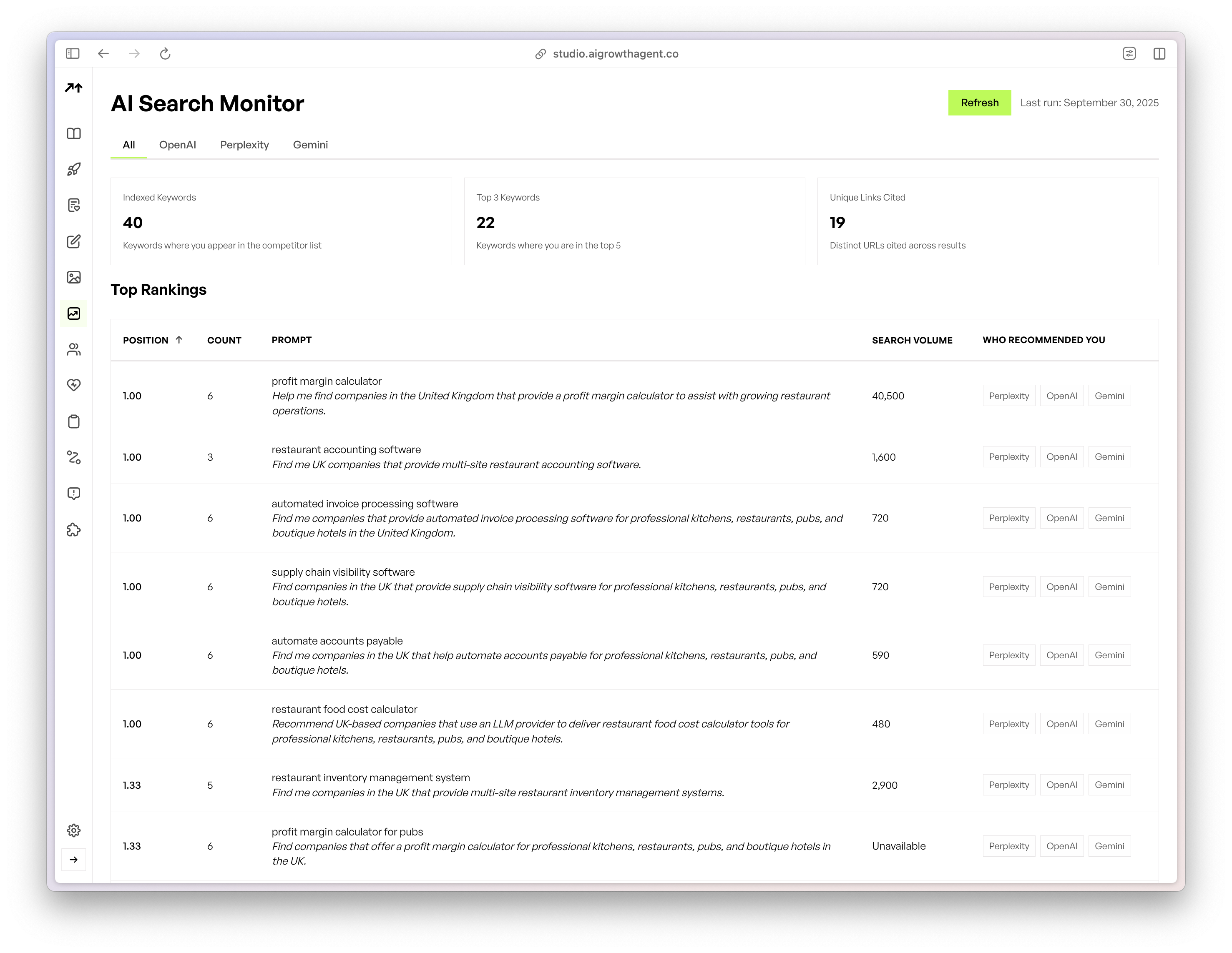
AI Growth Agent Studio provides dashboards with citation heatmaps, URL-level performance, and direct quote capture from AI responses. This feedback loop supports continuous testing of topics, formats, and schema patterns. Over time, you can shift resources toward the content types that produce the strongest and most frequent citations.
Real-World Results from AI Growth Agent Clients
Bucked Up reached the #1 ChatGPT citation for “best protein soda” within three weeks after launching programmatic SEO. The sports nutrition brand now appears as a top citation beside long-established competitors, which shows how technical improvements and content velocity can compress authority timelines.
Gitar became the reference brand for AI-powered CI/CD automation in under two months. The platform now appears as the leading cited tool across Google AI Overview, ChatGPT, and Perplexity for queries such as “fix broken CI builds automatically” and “best AI reviewer that comments on CI failures.”
BeConfident secured the #1 recommendation in Brazil’s Google AI Overview for English learning apps, competing with Duolingo and Busuu. The WhatsApp-based learning platform gained rapid indexing and citations within weeks of launching programmatic content across its core topics.
|
Brand |
Target Query |
Time to Citation |
Traffic Impact |
|
Bucked Up |
“best protein soda” |
3 weeks |
Organic growth |
|
Gitar |
“AI CI/CD automation” |
<2 months |
Authority leadership |
|
BeConfident |
“learn English WhatsApp” |
Weeks |
#1 Brazil citation |
Want similar traction across your category? Schedule a consultation session now to assess your ChatGPT authority potential.
Common Mistakes When Preparing Brands for ChatGPT
The most damaging mistake involves publishing unstructured AI content without technical support. Generic AI writing tools often generate long blocks of text with weak headings, no schema markup, and poor entity clarity. AI systems struggle to interpret and trust that content, so it rarely earns citations.
Manual-only content plans also fall behind because they cannot match the publishing speed of programmatic systems. Teams that release one or two articles each month lose ground to competitors that ship hundreds of structured pages. Over time, this gap creates a durable advantage for brands that invest in programmatic GEO.
Advanced 2026 Tactics to Earn ChatGPT Recommendations
Advanced GEO programs combine real-time content injection, multi-tenant programmatic deployment, and database automation. These tactics help brands capture trending topics quickly while maintaining consistent coverage across multiple products, regions, or customer segments. The result is a dense web of pages that AI models can rely on for both broad overviews and narrow, specialized questions.
Get Your Brand Mentioned in ChatGPT Without Direct Partnerships
Brands can earn ChatGPT mentions without formal partnerships by becoming the primary source for specific facts and frameworks. Publish original research, detailed how-to guides, and comprehensive explainers that cover a topic more thoroughly than existing resources. AI systems favor brands that repeatedly provide unique, verifiable information within a niche.
Increase the Odds of ChatGPT Recommending Your Products
ChatGPT references brands that frequently appear in relevant contexts signaling expertise or authority. Implement detailed product schema, keep messaging consistent across your site and major directories, and secure coverage on comparison and review platforms. These signals help models connect your products with specific use cases and recommendation scenarios.
Frequently Asked Questions
How to get listed on ChatGPT?
Listing on ChatGPT starts with strong entity signals, consistent NAP data, and robust schema markup. Support those foundations with third-party validation from industry publications, review sites, and expert platforms. Programmatic SEO can compress the typical timeline to roughly 2 to 8 weeks, while manual efforts often require 6 to 12 months before models consistently cite your brand.
How to get your brand mentioned in ChatGPT?
Brand mentions usually follow repeated exposure across authoritative sources. Build topical authority with pillar and cluster content, earn backlinks from trusted domains, and implement technical elements such as schema markup and LLM.txt files. Maintain steady content velocity and keep pursuing third-party mentions so AI systems see your brand as a recurring, reliable signal.
How does ChatGPT decide which products to recommend?
ChatGPT product recommendations rely on clear entity recognition, strong review signals, and frequent mentions on comparison platforms. Use product schema markup, maintain high ratings on sites like Google Reviews and Trustpilot, and appear in expert roundups. When technical clarity and social proof align, models gain confidence that your products fit specific recommendation queries.
How do I get ChatGPT to recommend my brand?
ChatGPT tends to recommend brands that own their category through content, structure, and validation. Answer the 20 most important questions in your industry with detailed, structured pages. Secure mentions from respected publications and implement advanced schema across your site. Programmatic SEO can often achieve consistent recommendations in 3 to 8 weeks, while manual programs may require 12 to 18 months.
How to check brand authority in AI search?
Measure brand authority with AI search tracking tools that monitor citation frequency, share of voice, and positioning across ChatGPT, Google AI Overviews, and Perplexity. Track branded search growth, referral traffic from AI platforms, and the accuracy of how models describe your offers. AI Growth Agent Studio centralizes these metrics with citation heatmaps, competitor comparisons, and direct quote logs.
Conclusion: Use AI Growth Agent to Lead in AI Search
The 7-step ChatGPT authority playbook requires technical depth and publishing speed that manual teams rarely sustain. AI Growth Agent delivers a unified system for automated content engineering, technical GEO, and AI search analytics so brands can compete in this new environment.
Our programmatic SEO platform removes technical bottlenecks while preserving quality and brand voice. From entity signal cleanup to advanced schema deployment, AI Growth Agent provides a repeatable engine that turns brands into trusted sources for ChatGPT and other AI systems.
Want ChatGPT citations in weeks instead of years? Schedule a demo to see if your brand is a fit and review your foundation for programmatic authority building.
