


Written by: Mariana Fonseca, Editorial Team, AI Growth Agent
Key Takeaways
- Traditional SEO tools focus on keywords and SERPs, while AI search engines reward citations, recommendations, and structured, extractable content.
- AI Growth Agent operates as a fully programmatic SEO agent, automating end-to-end content lifecycles and real-time AI monitoring for enterprise brands.
- ZipTie and Peec AI excel at Answer Engine Optimization tracking and citation monitoring, while Surfer SEO and Frase improve content for AI extractability.
- Profound and BrightEdge support enterprise analytics and management but stop short of fully autonomous publishing and content engineering.
- Premium brands can shift to AI search dominance by booking AI Growth Agent’s demo for end-to-end programmatic SEO.
Why Traditional SEO Tools Fall Behind in AI Search
AI search engines prioritize citations, context, and recommendations, not just keyword rankings or click-through rates. AI visitors convert 4.4x better than traditional search traffic, yet most brands still publish at a manual pace that cannot earn consistent AI citations.
Content velocity now drives success in AI search. AI search favors semantic relevance and contextual understanding over keyword density. Brands need structured, extractable content produced at superhuman scale. Traditional agencies and manual workflows cannot meet this publishing requirement.
10 Modern AI Search Tools to Replace Legacy SEO Stacks in 2026
1. AI Growth Agent – Programmatic Authority Engine for Enterprise Brands
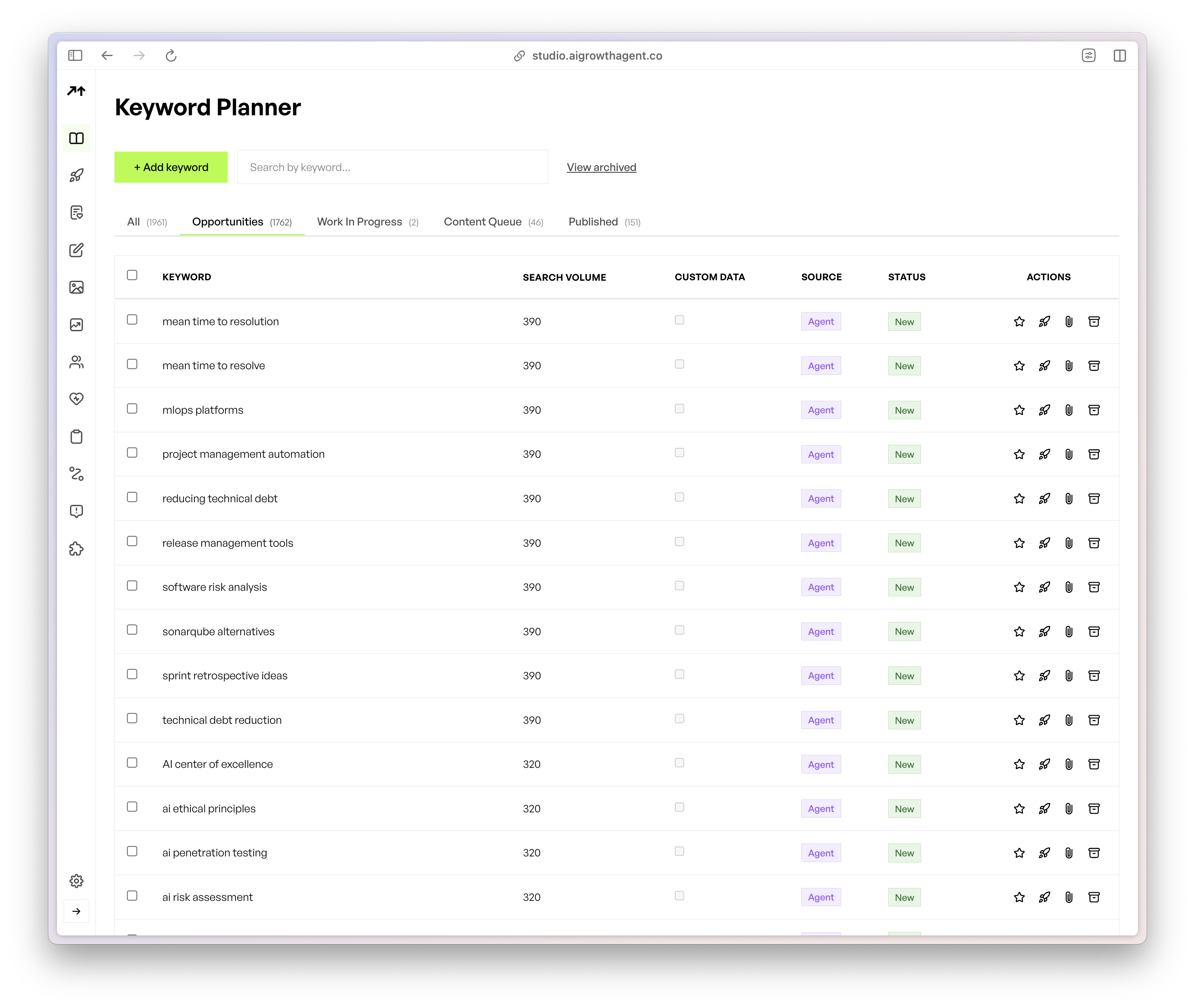
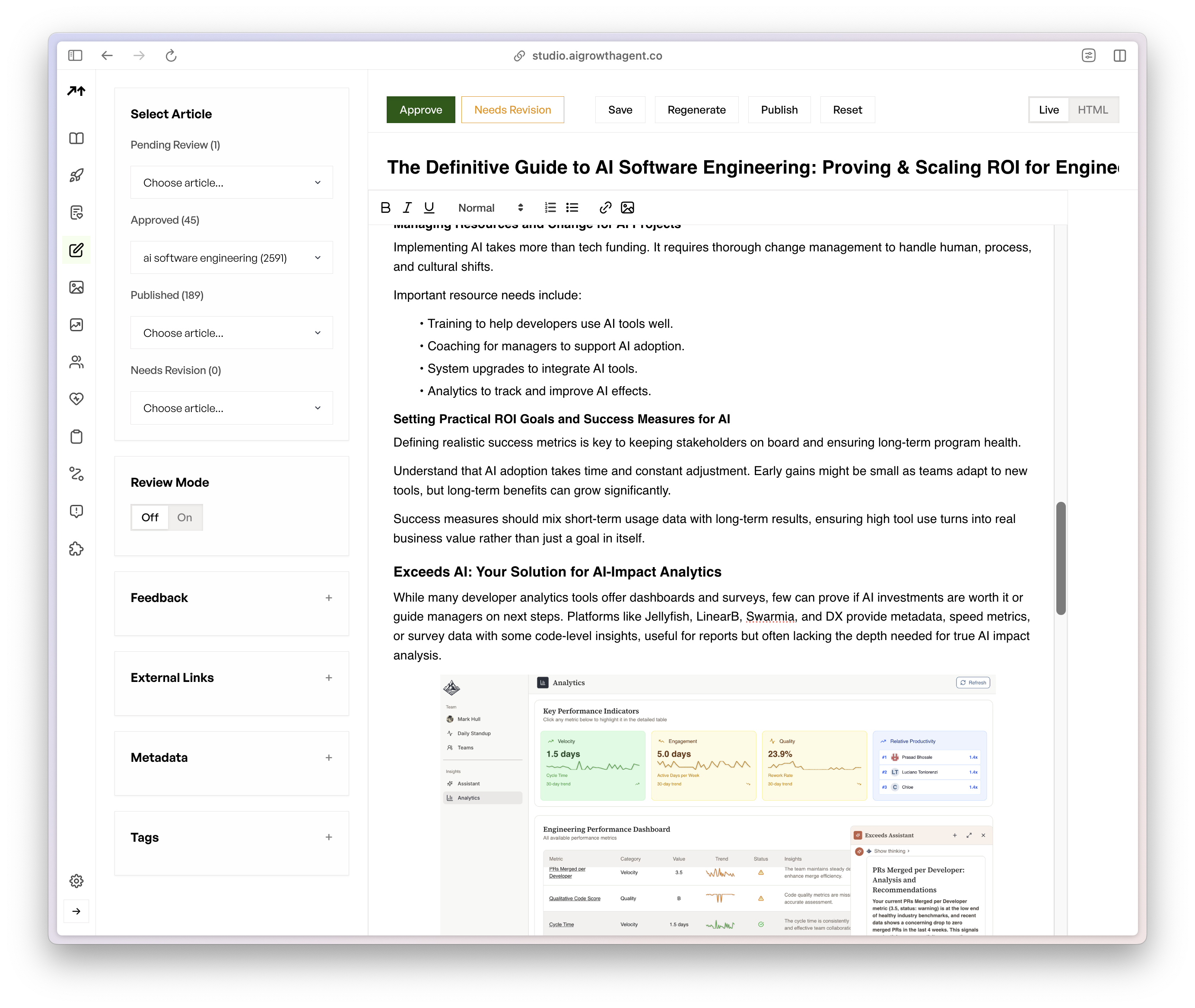
AI Growth Agent operates as a premier programmatic SEO agent that engineers high-authority content architectures and positions companies as category leaders. Unlike traditional tools that stop at recommendations, AI Growth Agent deploys a specialized agent that runs the full content lifecycle, from keyword clustering and brief creation to schema markup and direct publishing.
Key Features:
- Autonomous programmatic SEO content generation aligned with a brand manifesto
- Multi-tenant deployment for portfolio companies and large enterprise groups
- Advanced LLM.txt and Model Context Protocol (MCP) implementation
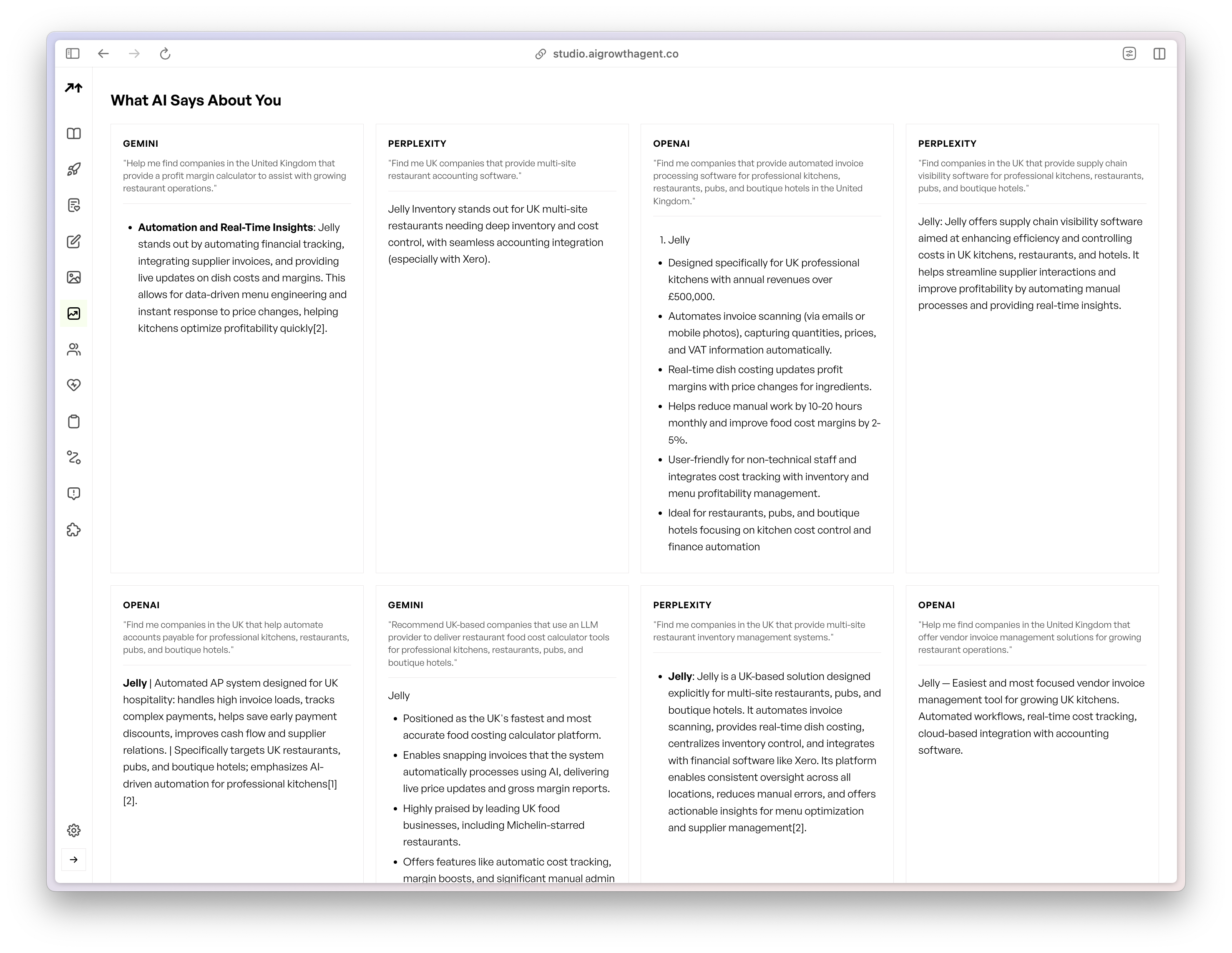
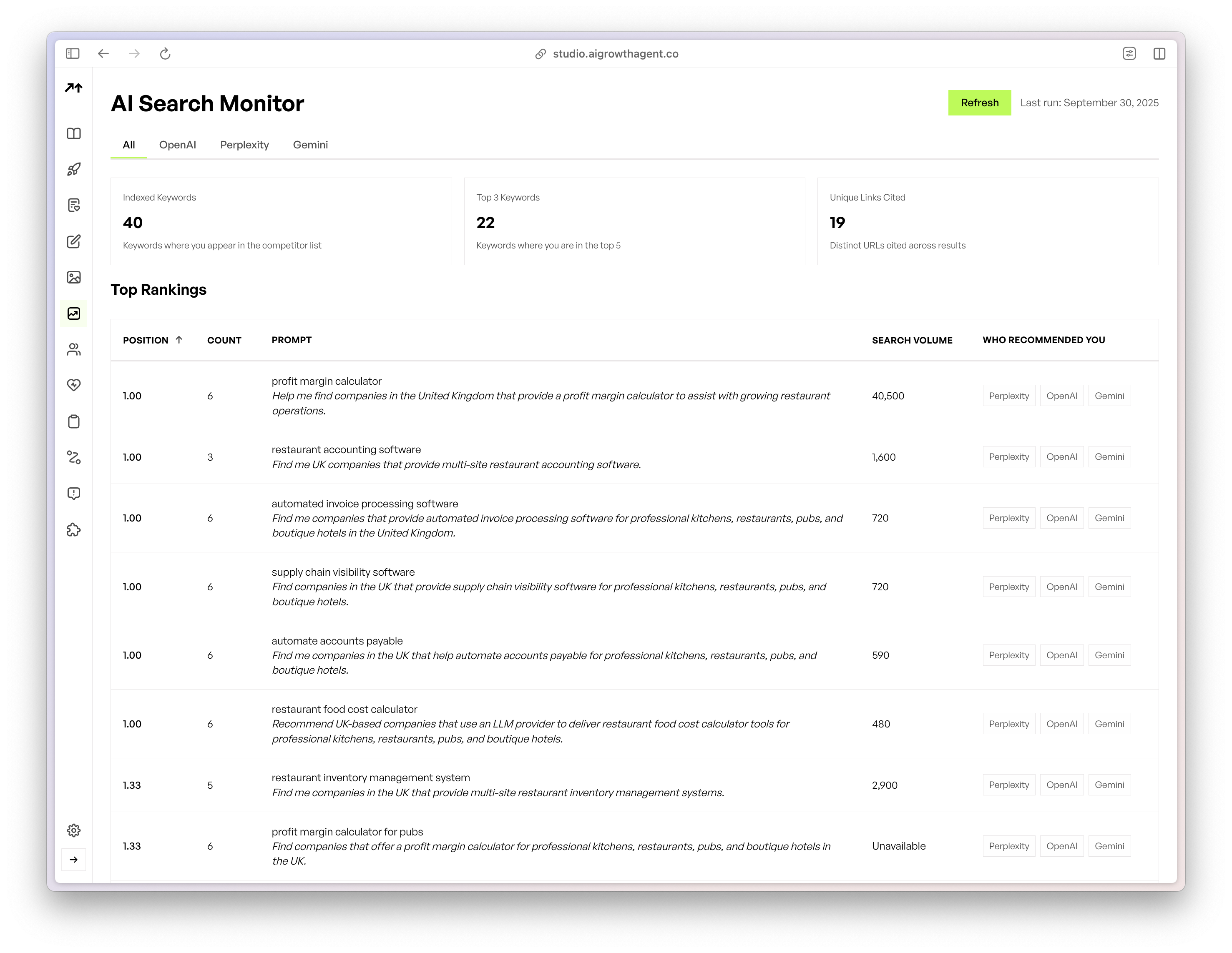
- Real-time AI search monitoring across ChatGPT, Perplexity, and Google AI Overviews
- White-glove onboarding that includes consultation with professional journalists
AI Growth Agent delivers measurable outcomes. Exceeds AI secured Perplexity recommendations within two weeks, and BeConfident became the top cited English learning app in Brazil through Google AI Overviews. Private equity firms use the multi-tenant interface to manage several brands at once, while each brand keeps a distinct manifesto-driven content strategy.
The main limitation is selectivity. AI Growth Agent only partners with premium brands that already have strong technical foundations, because programmatic content cannot compensate for broken SEO infrastructure.
Ideal for:
- Premium brands that need sustained programmatic content velocity
- Portfolio companies running multi-brand AI search strategies
- Enterprises that want autonomous content engineering without internal developer teams
AI Growth Agent marks the shift from manual SEO execution to programmatic authority building and suits brands that treat AI search dominance as a core growth channel.
2. ZipTie – Answer Engine Optimization Tracking and Alerts
ZipTie focuses on Answer Engine Optimization tracking across AI platforms such as ChatGPT, Perplexity, and Gemini. It also offers content gap analysis and enhancement suggestions, giving teams both visibility metrics and practical improvement ideas.
Key Features:
- AI search monitoring across ChatGPT, Perplexity, and Gemini
- Citation tracking and share-of-voice measurement
- Competitor analysis for AI search visibility
- Real-time alerts when AI engines mention your brand
- Content gap analysis with optimization recommendations
ZipTie works well for brands that want diagnostic insights and guided optimization. Pricing starts around $679 per month.
Schedule a demo to see if you’re a good fit for a more comprehensive AI search solution that includes automation.
3. Surfer SEO – NLP Content Scoring for AI and SERPs
Surfer SEO now blends traditional keyword analysis with AI-focused content scoring, SERP analysis, and AI visibility tracking. Surfer uses NLP-based content optimization and scoring that aligns with Google SERP structure while adding features that support AI Overview visibility.
Key Features:
- NLP-based content scoring with specific optimization suggestions
- SERP analyzer that includes AI Overview insights
- Brand voice matching across 11 languages
- Real-time content suggestions that improve AI extractability
- AI visibility tracker for brand appearances in AI responses
Surfer supports efficient content optimization workflows and holds a G2 rating of 4.8/5 with pricing from $99 per month. It offers AI monitoring and some automation, such as auto-optimize features, but does not provide full programmatic content generation for very high publishing volumes. Content teams that want structured guidance benefit most.
4. Frase – AI Research, Briefs, and Programmatic Pages
Frase blends content research, AI-powered brief generation, and programmatic SEO features so teams can create content that works for both traditional search and AI citations. It supports high-velocity page creation through automated discovery and batch publishing.
Key Features:
- AI-powered content brief generation
- Automated research pulled from top-ranking content
- Content optimization scoring focused on AI extractability
- Question-based content structures that align with AI responses
- Programmatic page generation with batch publishing
Frase supports research, planning, and execution in a single workflow and suits content teams that want to scale production without fully autonomous agents.
5. Profound – Enterprise AI Search Analytics and Reporting
Profound targets enterprise AI search analytics, monitoring, and optimization. It tracks visibility across multiple AI platforms and centralizes reporting for large teams. Profound starts at $99 per month with a G2 rating of 4.6/5, which makes it accessible for mid-market and enterprise brands.
Key Features:
- Enterprise AI search analytics dashboard
- Multi-platform visibility tracking and reporting
- Brand mention analysis across AI engines
- Competitive intelligence for AI search performance
- Content optimization and workflow automation tools
Profound excels at analytics and reporting while also offering content-focused features. It suits enterprises that want strong measurement and guided execution.
Schedule a demo to see if you’re a good fit for an end-to-end AI search optimization stack.
6. Nightwatch – Local and Geographic AI Visibility Tracking
Nightwatch tracks AI search visibility with a focus on local and geographic performance. It combines traditional rank tracking with AI search monitoring, which helps brands with strong local footprints.
Key Features:
- AI search visibility tracking with geographic segmentation
- Monitoring for local AI search performance
- Integration with traditional rank tracking
- Automated reporting on AI search metrics
Nightwatch works well for local businesses and multi-location brands that need geographic AI visibility data. It does not include content creation or deep optimization automation.
7. eesel AI – AI-Ready Internal Knowledge Bases
eesel AI focuses on internal knowledge bases and documentation, making existing content easier for AI engines to discover and cite. It improves structure and metadata so AI systems can extract accurate answers.
Key Features:
- Knowledge base tuning for AI search visibility
- Internal content structuring that improves AI extractability
- Documentation enhancements that support citations
- Integrations with common content management systems
eesel AI works best for organizations with large documentation libraries. It enhances existing content rather than generating new material at scale.
8. BrightEdge – Enterprise AI Search and SEO Management
BrightEdge offers enterprise AI search management with deep platform integrations and workflow automation. It merges traditional SEO capabilities with AI search optimization features for large deployments.
Key Features:
- Enterprise AI search and SEO management platform
- Workflow automation for content optimization tasks
- Multi-site management with AI search tracking
- Advanced reporting and analytics integrations
BrightEdge supports complex enterprise environments but often requires significant implementation resources. It does not provide the autonomous content generation needed for true programmatic velocity.
9. Peec AI – Deep AI Citation Monitoring and Analysis
Peec AI specializes in AI citation monitoring and detailed analysis of how brands appear in AI responses. Peec AI focuses on AI visibility tracking at about $105 per month with a 5/5 G2 rating, which reflects strong satisfaction for monitoring use cases.
Key Features:
- Granular AI citation tracking and analysis
- Brand mention monitoring across AI platforms
- Citation quality scoring with improvement suggestions
- Competitive citation analysis
Peec AI serves teams that want detailed citation data while managing content strategy and production internally.
10. AirOps – Custom Workflow Automation for Content Teams
AirOps automates workflows for content creation and SEO processes, connecting traditional tools with AI-powered automation. It focuses on streamlining current operations rather than replacing them.
Key Features:
- Workflow automation for content and SEO tasks
- Integrations with existing marketing technology stacks
- Custom automation design for specific use cases
- Template-based content generation
AirOps offers strong automation but often needs significant setup and configuration. It suits teams with technical resources that want custom workflows instead of an out-of-the-box AI search platform.
Schedule a demo to see if you’re a good fit for comprehensive programmatic SEO automation.
Side-by-Side Comparison of AI Search Tools
|
Tool |
Automation Level |
AI Monitoring |
Scalability |
Starting Price |
|
AI Growth Agent |
Full Automation |
Comprehensive |
Multi-tenant Enterprise |
Custom Enterprise |
|
ZipTie |
Monitoring & Optimization |
Comprehensive |
Mid-market |
$679/month |
|
Surfer SEO |
Content Optimization |
Available |
Team-based |
$99/month |
|
Profound |
Analytics & Optimization |
Enterprise-grade |
Enterprise |
$99/month |
AI Growth Agent stands out for programmatic scalability and end-to-end automation. It unifies content creation, optimization, and AI search monitoring in one autonomous platform. Other tools contribute valuable pieces but often rely on manual work to complete a full AI search strategy.
How SEO Teams Can Transition to AI Search Tools
SEO professionals face real friction when they move from keyword-first tools to AI search platforms. Teams must map entire topic areas instead of isolated keywords and respond to conversational prompts with endless variations.
Switching Checklist:
- Audit existing content for AI extractability and structured data coverage
- Define a pilot timeline for AI search optimization tests
- Plan data migration from keyword rankings to AI citation metrics
- Set up AI search monitoring across ChatGPT, Perplexity, and Google AI Overviews
- Establish content velocity targets that support programmatic publishing
Schedule a demo to see if you’re a good fit for a smoother AI search transition.
FAQ
What are programmatic SEO agents and how do they differ from traditional SEO tools?
Programmatic SEO agents are autonomous systems that manage the full content lifecycle, from strategy and planning through publishing and ongoing optimization. Traditional SEO tools surface data and recommendations, then rely on humans to execute. Programmatic agents such as AI Growth Agent generate, optimize, and publish content at scale while following manifesto-driven brand guidelines. These agents can ship hundreds of optimized articles each month, while manual teams often manage only a few pieces.
How does AI Growth Agent differ from content tools like Surfer or Jasper?
AI Growth Agent delivers end-to-end programmatic automation, while Surfer and Jasper still depend on manual work. Surfer provides optimization recommendations that writers must apply. Jasper generates content but does not handle technical SEO, schema, or publishing automation. AI Growth Agent covers strategy, creation, optimization, technical implementation, and publishing, then tracks AI search performance across multiple engines.
Which tool works best for Perplexity SEO optimization?
AI Growth Agent leads Perplexity SEO optimization by focusing on citation-worthy content and real-time monitoring. Its manifesto-driven strategy and advanced schema implementation target AI engines such as Perplexity directly. Tools like ZipTie and Peec AI track Perplexity citations but do not create the optimized content required to earn those citations consistently.
What ROI timelines can brands expect from AI visibility tools?
Most brands see AI visibility gains within 2 to 12 weeks, depending on content velocity and optimization depth. AI Growth Agent clients such as Exceeds AI reached Perplexity recommendations within two weeks, and BeConfident became the top cited English learning app in Brazil within weeks of programmatic publishing. Monitoring tools alone can measure progress but cannot accelerate results without strong content creation.
How should brands pilot AI search optimization tools?
Brands should run a 90-day pilot that focuses on three to five core topic areas while keeping existing SEO programs active. Teams should capture baseline AI citation and visibility metrics before rollout. Tool selection should match automation needs, from monitoring-only platforms to optimization tools for manual teams or fully programmatic agents for autonomous scaling. AI Growth Agent supports fast onboarding, with content publishing often live within one week of kickoff.
Conclusion: Programmatic SEO as the Path to AI Search Dominance
The move from traditional SEO tools to AI search optimization reshapes digital marketing strategy. Monitoring platforms provide visibility, and optimization tools guide writers, but only programmatic SEO agents such as AI Growth Agent deliver the autonomous content velocity required to win AI search in 2026.
Premium brands that want durable authority in AI search engines must choose between manual execution and programmatic automation. That decision will shape competitive positioning over the next several years. Schedule a demo to see if you’re a good fit and explore how programmatic SEO can power your AI search growth.
