


Written by: Mariana Fonseca, Editorial Team, AI Growth Agent
Key Takeaways
- Traditional SEO agencies create strong content but move slowly and cost $5,000-$20,000 per month, which cannot keep up with the 2026 AI search demand.
- AI content platforms move fast and stay cheap at $50-$500 per month, yet often produce spammy content that Google penalizes, especially after the 2025 updates.
- Programmatic SEO uses AI speed with engineered authority through schema, LLM.txt, and MCP, which reaches 10/10 AI visibility scores within weeks.
- Case studies show brands winning top ChatGPT and Perplexity citations in 2-3 weeks, beating slower competitors.
- Brands that want scalable AI search dominance should upgrade to AI Growth Agent’s programmatic SEO and schedule a demo today.
How Each SEO Option Performs Side by Side
|
Criteria |
Traditional Agency |
AI Content Platform |
Programmatic SEO (AI Growth Agent) |
|
Speed |
Weeks per post |
Minutes (unstructured) |
Autonomous daily publishing |
|
Cost |
$50-$500/month + dev time |
ROI-driven via traffic growth |
|
|
Quality/Authority |
Manual, low volume |
Generic, spam risks |
Schema, LLM.txt, MCP engineered |
|
Scalability |
Headcount-limited |
No strategic framework |
Unlimited programmatic capacity |
|
AI Visibility Score |
4/10 (months to citations) |
5/10 (fast but penalized) |
10/10 (weeks to Perplexity/ChatGPT) |
Traditional agencies deliver quality but cannot reach the publishing speed that AI search now rewards. AI platforms move quickly but lack the technical depth needed to avoid penalties or earn trusted citations. Programmatic SEO closes this gap by automating high-authority content creation at scale.
Schedule a consultation to explore programmatic SEO for your brand
Why Traditional SEO Agencies Fall Behind in 2026
Traditional agencies offer human strategy, brand alignment, and strong editorial control. Their teams protect the voice and standards across every article. However, 3-6 month ROI timelines and $1,500-$5,000 monthly costs break the model once you need true AI-era content volume.
Velocity creates the real bottleneck. Agencies follow a craftsman model where each piece takes weeks of manual work. That pace cannot compete with programmatic content systems that AI search engines now favor.
AI-generated search results now reduce traditional blue-link visibility. Content must show first-hand experience and structured data at scale, which manual teams struggle to deliver consistently.
The agency model also misses AEO recency signals. While a team polishes one article over several weeks, programmatic competitors ship fresh content within hours. Those faster brands earn early AI citations that agencies rarely catch up to.
Where AI Content Platforms Break Down
AI content platforms promise speed and low monthly fees between $50 and $500. They can flood you with drafts in minutes. However, they mostly output raw text that still needs heavy technical work before it performs.
Most tools do not connect cleanly to your CMS, apply schema, or plan keyword clusters. Teams end up spending development time wiring everything together, which erases much of the initial cost advantage.
Penalty risk has grown sharply. Google’s December 2025 Core Update penalized mass AI content by up to 87% when it lacked expert review. The August 2025 Spam Update hit thin AI content and caused steep visibility drops for sites that relied on generic output.
These platforms also fail to build the technical authority that AI search engines need. Without schema markup, LLM.txt files, and structured data, AI systems like ChatGPT, Gemini, and Perplexity often ignore that content entirely.
How Programmatic SEO Creates a Hybrid Advantage
Programmatic SEO blends AI efficiency with engineered authority and human oversight. About 58.5% of SEO teams now use hybrid workflows that rely on AI for research and drafting while humans guide strategy and quality.
AI Growth Agent sits in this hybrid category and focuses on full content engineering. Specialized agents automate every step, from Manifesto onboarding that captures brand voice to keyword clustering and MCP-powered auto-publishing.
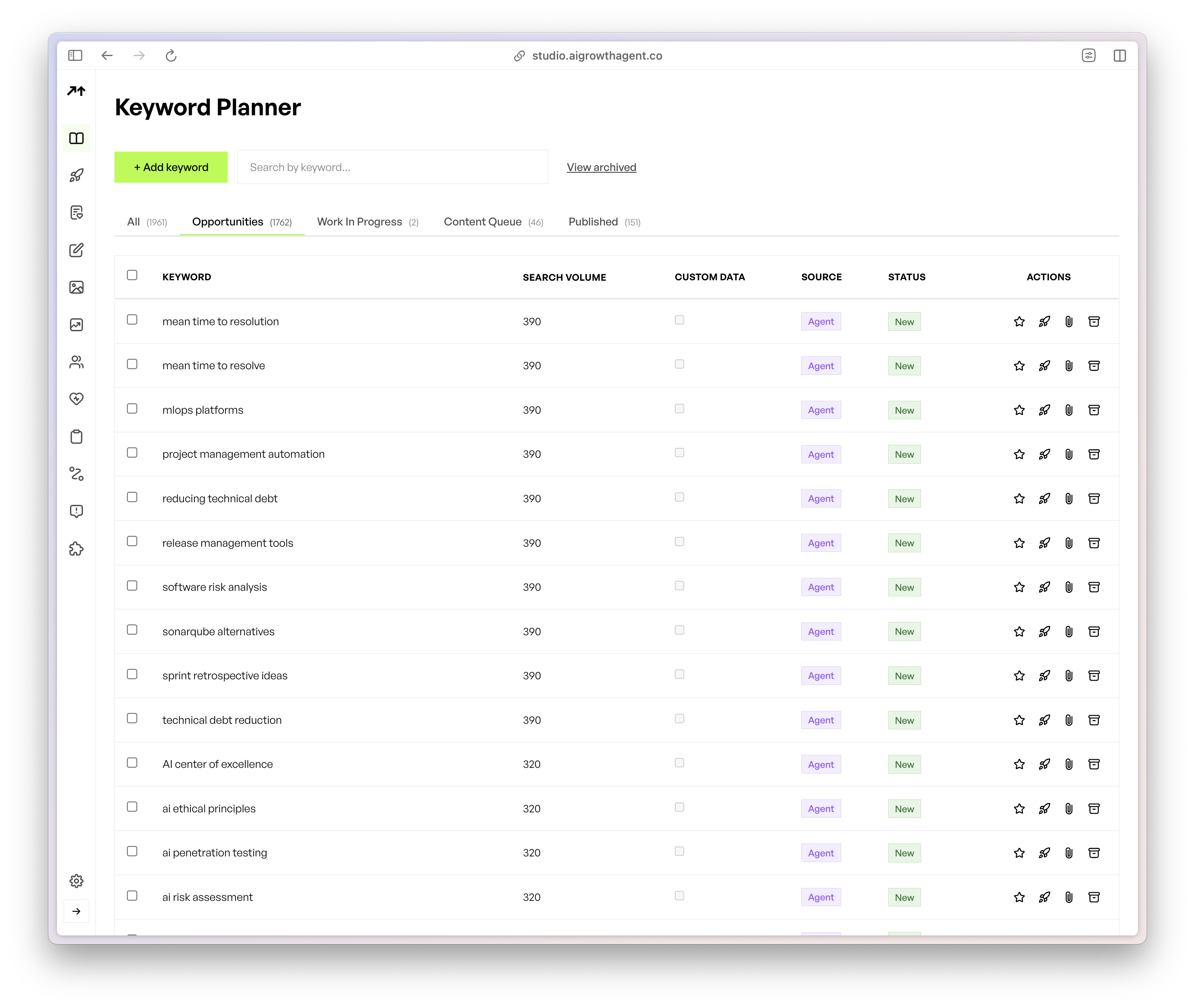
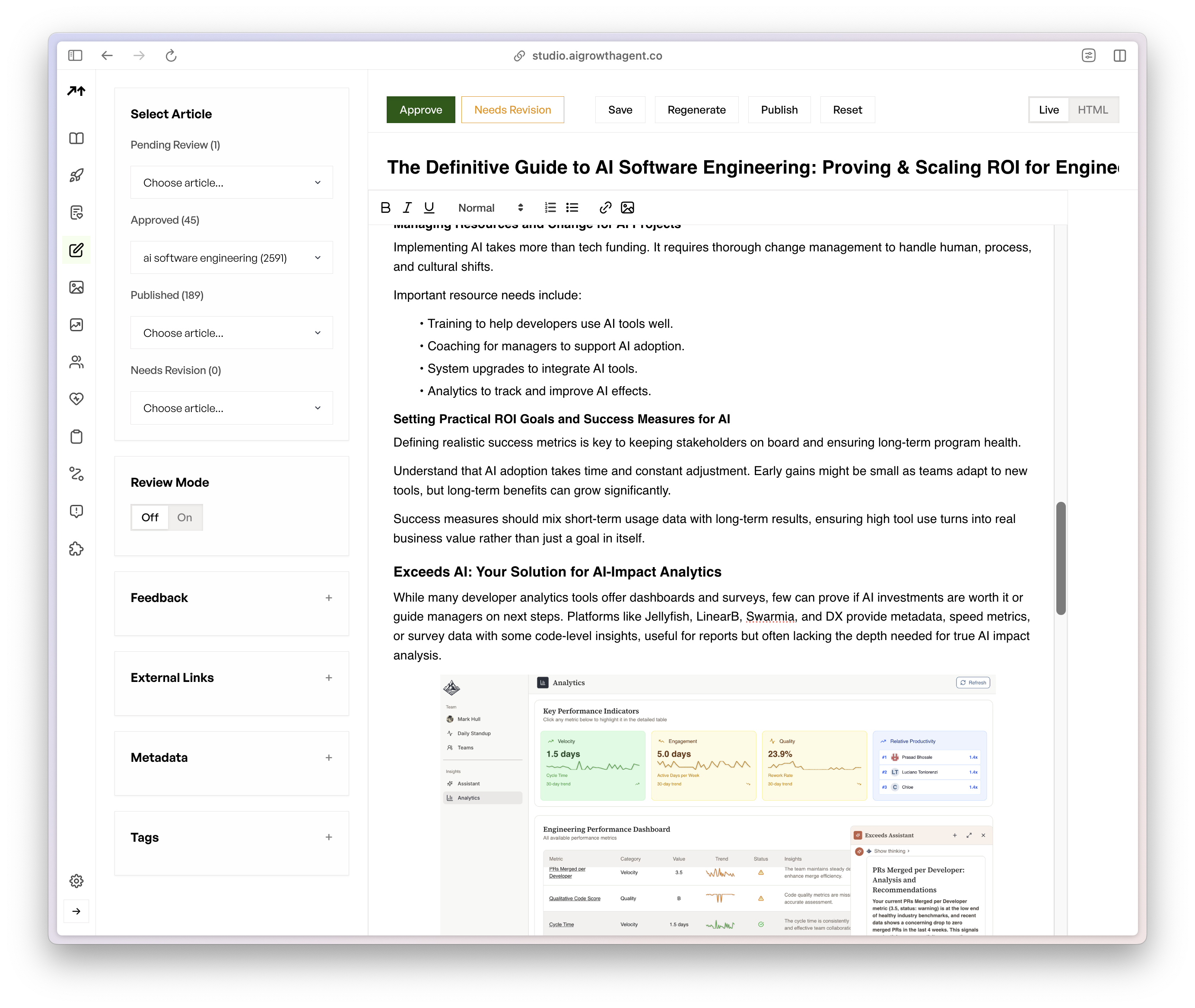
The platform applies advanced technical SEO by default. It handles schema markup, LLM.txt files, and the first blog-focused Model Context Protocol (MCP). AI search engines can then connect directly to your content database for clean indexing and stronger citation odds.
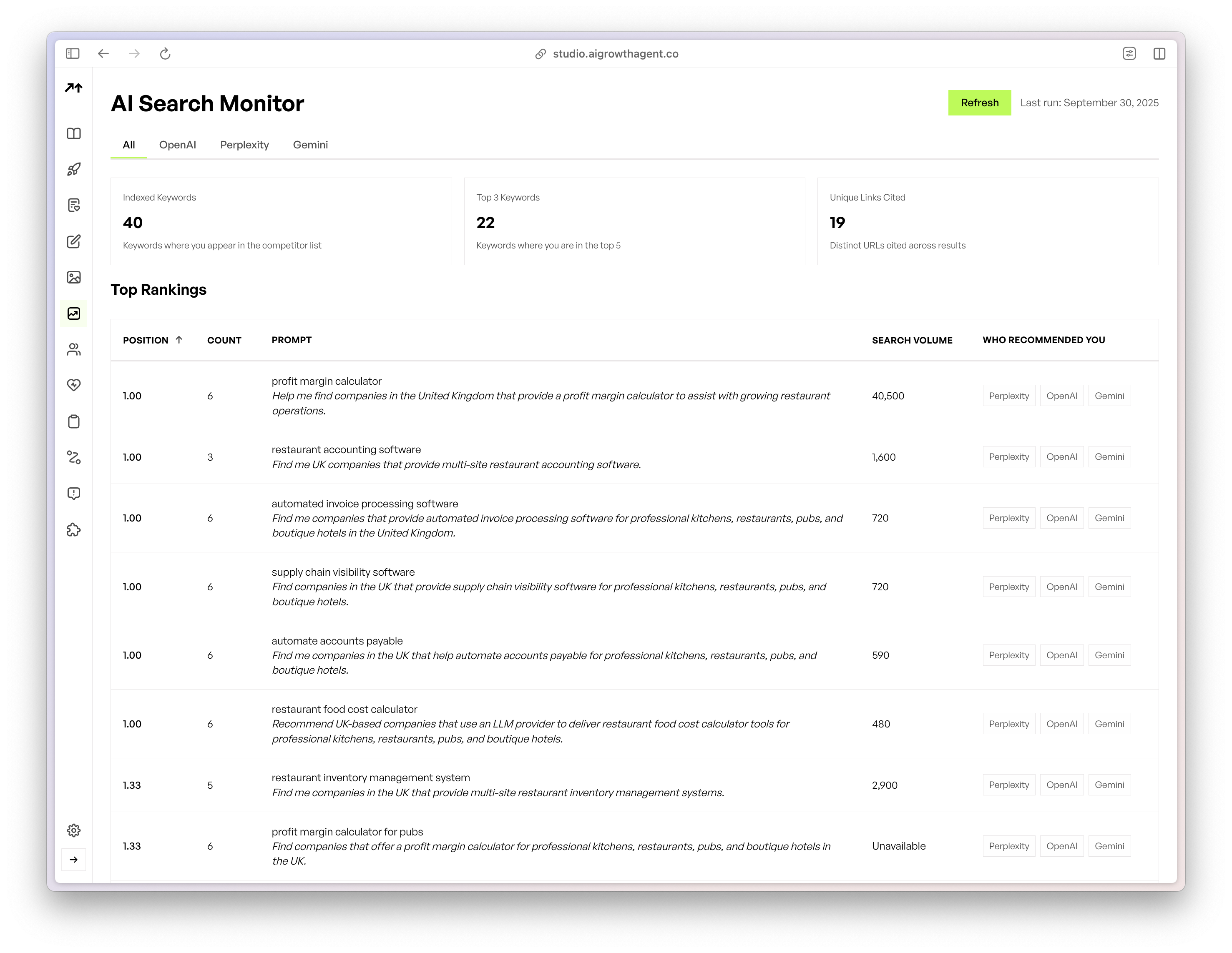
AI-first search tools like ChatGPT are projected to manage 25% of global queries by 2026. Brands now need strategies that blend human expertise with AI across every channel. AI Growth Agent Studio supports this shift with real-time AI search monitoring and citation tracking across ChatGPT, Gemini, and Perplexity.
|
Solution Type |
AI Visibility Score |
Time to Citations |
Scalability Rating |
|
Traditional Agency |
4/10 |
3-6 months |
Limited by headcount |
|
AI Content Platform |
5/10 |
Fast but penalized |
High volume, low quality |
|
AI Growth Agent |
10/10 |
Weeks |
Unlimited programmatic |
Programmatic SEO Case Studies and ROI Proof
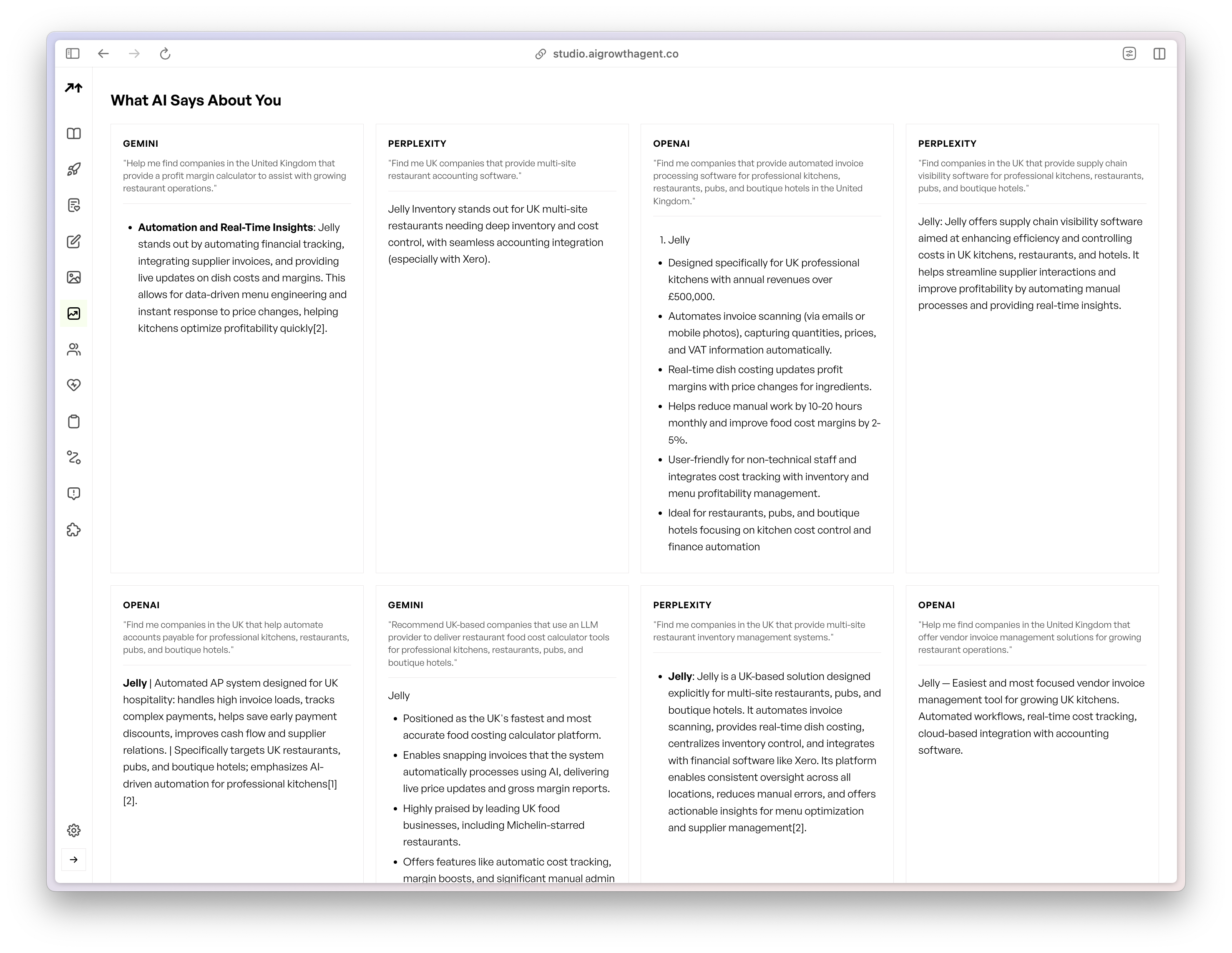
Programmatic SEO delivers results that manual or generic AI approaches rarely match. Exceeds AI secured Perplexity citations as the top alternative to key competitors within two weeks of launch. That outcome highlights the impact of engineered content architecture.
BeConfident competed with Duolingo and Busuu yet became the number one English learning app in Brazil through Google AI Overview within weeks. Structured content and programmatic publishing supported rapid indexing and strong category authority.
Bucked Up gained ChatGPT citations as a leading protein soda brand within three weeks. It appeared as the top citation for “best protein soda” alongside long-standing rivals. This shows how programmatic SEO can build authority quickly in crowded markets.
Hybrid teams outperform both AI-only and human-only setups for most brands. They combine production speed with quality and technical strength that drive rankings and AI citations.
When Programmatic SEO Becomes the Right Move
Programmatic SEO fits brands that need large-scale content without losing quality or authority. Companies stuck between high agency retainers and risky AI tools gain a third option that automates technical work while keeping strategic control.
This approach works especially well for premium brands with solid technical foundations that want clear category leadership. Schedule a demo to see if you are a strong fit for programmatic SEO
Frequently Asked Questions
How do AI content platform costs compare to agency retainers?
Traditional SEO agencies often charge $2,500-$20,000 per month and need 3-6 months to show ROI. AI content platforms cost $50-$500 per month but still require development resources to integrate and maintain.
Hidden costs include CMS setup, schema work, and ongoing optimization that most platforms ignore. Programmatic SEO automates this technical pipeline and usually delivers results faster than agencies at a lower effective cost.
When should companies use AI for SEO in 2026?
Companies should bring AI into SEO once content needs exceed what a manual team can handle. The goal is scale without losing quality or authority.
AI performs best as part of a programmatic system with strong technical implementation. Human experts still guide strategy, brand voice, and quality control while automation handles schema, structured data, and AI search alignment.
What is the strongest hybrid SEO strategy for 2026?
The strongest hybrid SEO strategy pairs AI efficiency with human judgment and automated technical work. AI supports research, keyword clustering, and first drafts.
Humans then refine strategy, protect brand voice, and review quality. A technical layer automates schema markup, LLM.txt, and structured data so AI search engines can surface and cite the content reliably.
Teams also need real-time monitoring of AI citations across ChatGPT, Gemini, and Perplexity, with feedback loops that guide ongoing improvements.
How should teams measure success in programmatic SEO?
Teams should track AI citations, organic traffic growth, and time-to-visibility. Key signals include how often ChatGPT, Gemini, and Perplexity reference your content and how quickly first citations appear.
Ranking gains for target keywords and page views still matter. However, AI-era success also depends on citation frequency and the authority of those mentions.
How does programmatic SEO differ from traditional content marketing?
Programmatic SEO automates the full content engineering lifecycle, from research and planning to technical setup and publishing. Traditional content marketing relies on manual workflows and slower production.
Programmatic systems use AI agents for keyword clustering, content creation, schema, and ongoing optimization at scale. They focus on building technical authority through structured data, LLM.txt files, and indexing signals that AI search engines need for citations.
Traditional SEO agencies and AI content platforms both fall short of 2026 AI search requirements. Agencies deliver quality but lack the speed and technical depth needed for AI citations. Platforms move quickly but create spam risk and weak implementation. Programmatic SEO combines autonomous scale with engineered authority and delivers the AI-era citations and visibility that now define success. Book a consultation to dominate AI search with programmatic SEO
