


Key Takeaways
- AI search in 2026 favors brands with structured, technically optimized content, not just high volume or well-written blog posts.
- Basic AI writing tools help with drafts and ideas, but they do not create a scalable, search-ready content architecture on their own.
- Most AI content tools miss critical technical SEO elements such as schema, internal linking at scale, and LLM-focused files, which limits AI citations.
- Programmatic SEO agents connect strategy, writing, technical SEO, and publishing into one system that can steadily build category authority.
- Marketing teams that partner with AI Growth Agent can deploy programmatic SEO at scale and can book a strategy session to see how it fits their content goals.
How AI Search In 2026 Has Changed Your Blog Strategy
AI assistants like ChatGPT, Google AI Overviews via Gemini, and Perplexity now sit between your content and your audience. These systems summarize, rank, and cite sources instead of simply listing links.
This shift creates a shrinking digital footprint for brands that do not publish enough high-quality, machine-readable content. Marketing leaders need to know which AI tools only speed up writing and which ones actually build durable visibility in AI search.
The sections below break the landscape into seven types of AI blog content tools and explain why only a programmatic SEO agent can reliably earn and keep AI search citations.
1. Basic AI Writing Assistants: Fast Drafts Without Search Strategy (e.g., ChatGPT, Claude)
What it is
Basic assistants like ChatGPT and Claude generate text on request. Teams use them for ideation, outlines, short drafts, and simple rewrites across many topics.
Limitations for AI search
These tools output free-form text without a structured content model, schema, or internal linking plan. They do not connect to your CMS, enforce a content strategy, or generate the technical signals that AI search engines use to understand and cite your site.
2. Template-Driven AI Content Tools: Consistent Output, Limited Depth (e.g., Jasper, Writesonic, Copy.ai)
What it is
Template-driven tools offer pre-built formats for blog posts, product pages, and social content. They standardize tone and structure and sometimes include basic SEO prompts or keyword suggestions.
Limitations for AI search
These platforms still depend on manual keyword research, topic selection, and technical optimization. Content often follows generic patterns, and teams must manually handle schema, internal linking, publishing, and performance feedback, which restricts scale and long-term authority.
3. AI Content Repurposing Tools: Wider Distribution, No New Authority (e.g., AIOSEO’s AI Content Generator)
What it is
Repurposing tools convert existing long-form content into formats such as emails, ad copy, or social posts. They help extend the reach of assets you already created.
Limitations for AI search
These tools rarely add new topical coverage or fresh evidence that AI systems can cite. They do not expand your structured content footprint, introduce new entities or FAQs, or improve site architecture. Your authority plateaus when new, search-focused pieces are not added.
Marketing teams that feel stuck patching gaps with repurposed assets can shift to a system that builds net-new authority. AI Growth Agent focuses on creating structured, search-ready articles that expand topic coverage at scale, and you can schedule a demo to see this approach in action.
4. SEO-Focused AI Generators: Helpful Assistants, Manual Execution (e.g., RightBlogger, Anyword)
What it is
SEO-aware tools mix writing assistance with keyword suggestions, outline builders, and on-page recommendations. Writers gain guidance on headings, word count, and basic optimization while drafting.
Limitations for AI search
These platforms enhance individual posts but stop short of automation. Teams still need to design the content strategy, manage internal link maps, implement schema at scale, maintain LLM.txt or similar files, and publish manually. The result is incremental improvement rather than a unified AI search system.
5. AI Content Editors and Optimizers: Strong Polishing, Limited Scale (e.g., Grammarly, Surfer SEO integrations)
What it is
Editing tools check grammar, clarity, and style. SEO optimizers review drafts for keywords, headings, and basic on-page factors, then suggest changes to align with best practices.
Limitations for AI search
These tools refine what already exists. They do not drive a consistent publishing cadence, they do not manage taxonomy or schema design, and they do not coordinate thousands of pages into a coherent authority map for AI search engines.
6. AI Detection and “Undetectable” Tools: Defensive Moves Without Growth (e.g., Originality AI, Undetectable AI)
What it is
Detection services score content for AI involvement, while rewriting tools attempt to make AI text look more human. Teams often use them to navigate platform rules or internal compliance concerns.
Limitations for AI search
These products respond to symptoms rather than building a durable content engine. Effort shifts to avoiding detection instead of earning citations with clear, accurate, well-structured content. AI search systems reward sources that provide consistent value, not text that simply passes a detector.
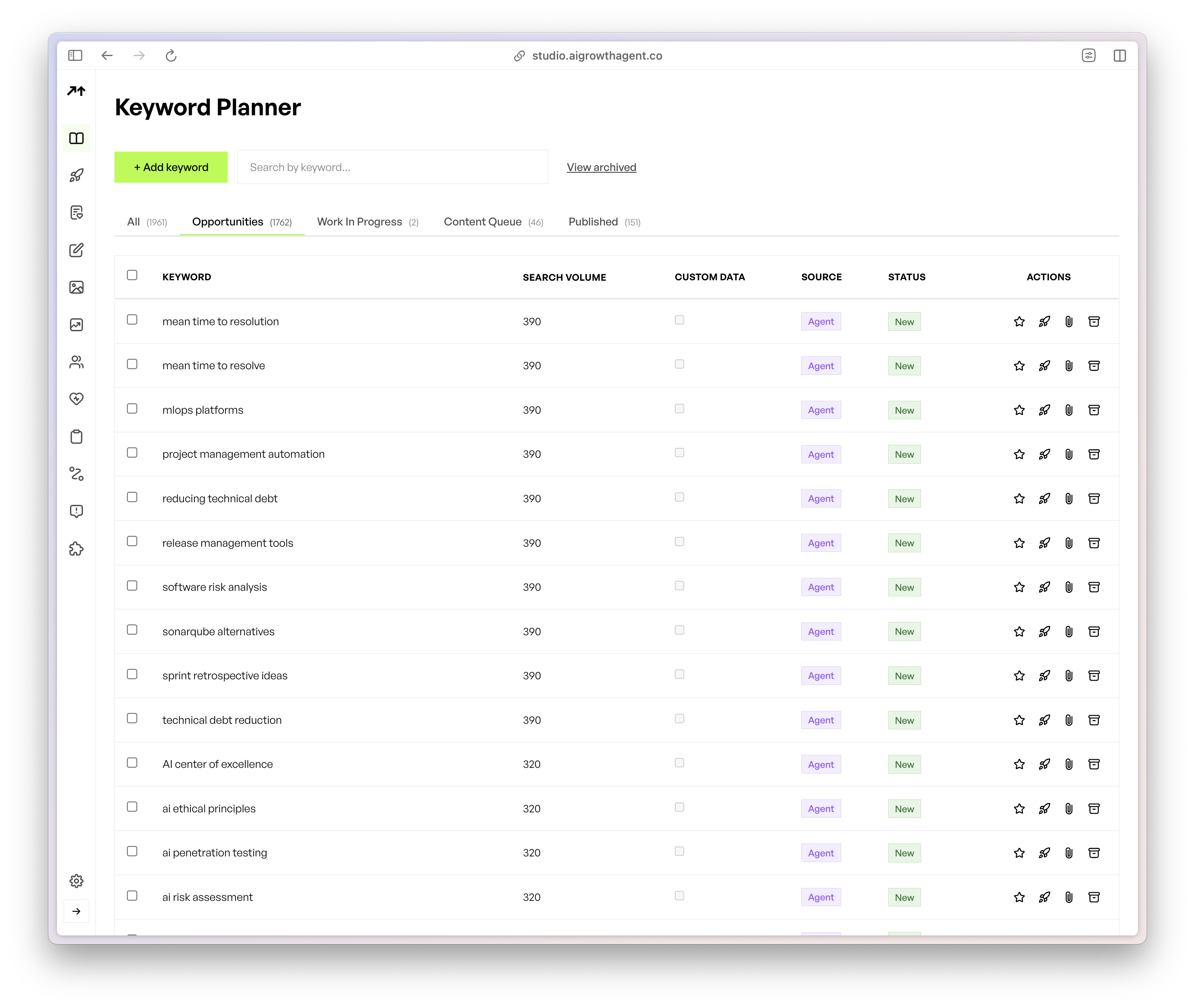
7. Programmatic SEO Agents: Full-Funnel Content Engineering For AI Search (e.g., AI Growth Agent)
What it is
Programmatic SEO agents function as autonomous systems that handle the entire lifecycle of content engineering. They connect research, topic clustering, writing, technical SEO, and direct publishing in a single workflow.
A mature agent such as AI Growth Agent:
- Maps large keyword sets into thematic clusters and article plans.
- Writes articles aligned with your voice, product, and positioning.
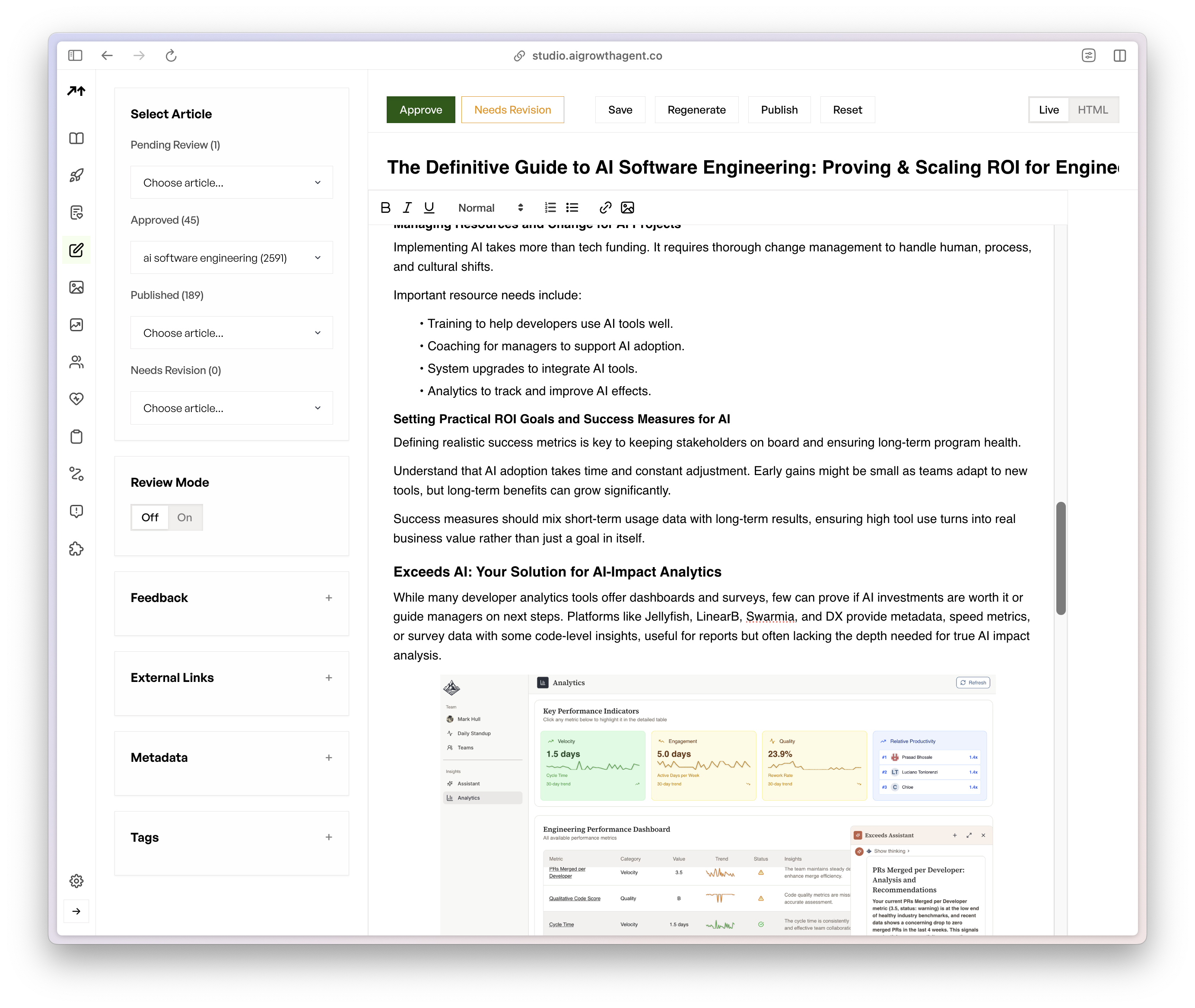
- Implements schema, internal links, and LLM-focused metadata.
- Publishes to your CMS and monitors performance for feedback.
Why this model aligns with AI search
AI search engines favor clear topical structures, well-linked clusters, and content that consistently answers related queries. Programmatic SEO agents create that structure at scale, while maintaining quality controls and technical precision that manual workflows struggle to match.
What to know before deploying
Effective agents require detailed onboarding with a Company Manifesto that captures your brand, offers, messaging, and guardrails. Once configured, the system can publish new, technically sound content on a continuous basis while your team focuses on strategy and subject-matter input instead of manual drafting.
Why Programmatic SEO Gives You A Sustainable Edge In AI Search
Manual content programs rarely keep pace with the volume and depth that AI search ecosystems now expect. A handful of posts per month cannot compete with brands that ship hundreds of structured, interlinked pages across a category.
Programmatic SEO supports sustainability because it:
- Generates new articles at a consistent cadence without burning out internal teams.
- Enforces technical standards, including schema, internal links, and LLM.txt, across every piece.
- Uses feedback from AI search and organic performance to refine ongoing output.
AI Growth Agent adds advanced capabilities such as LLM.txt implementation, database-to-content automation, and multi-tenant deployment. These features help large brands maintain a wide, accurate presence across thousands of long-tail and entity-focused searches.
Implementing Programmatic SEO For Enterprise AI Blog Content
Process: From Brand Narrative To Engineered Content
Implementation starts with defining a Company Manifesto that captures positioning, messaging, tone, and constraints. This document guides the agent as it generates content so every article reflects your expertise and stays compliant with approvals and brand guidelines.
After alignment on the manifesto, the agent maps your market, identifies topic clusters, and begins publishing programmatic articles into your CMS with agreed workflows for review and launch.
Prerequisites: When Programmatic SEO Fits
Programmatic SEO works best for brands that already have:
- A clear market position and defined ICPs.
- Products or services that require education across many topics or segments.
- A commitment to building long-term authority, not short-term SEO fixes.
AI Growth Agent serves as an accelerator for organizations with strong foundations that want to expand coverage, not as a patch for broken product-market fit or unclear messaging.
Measurement: Tracking AI Search Authority
Programmatic SEO success depends on authority metrics, not only individual keyword rankings. Key indicators include:
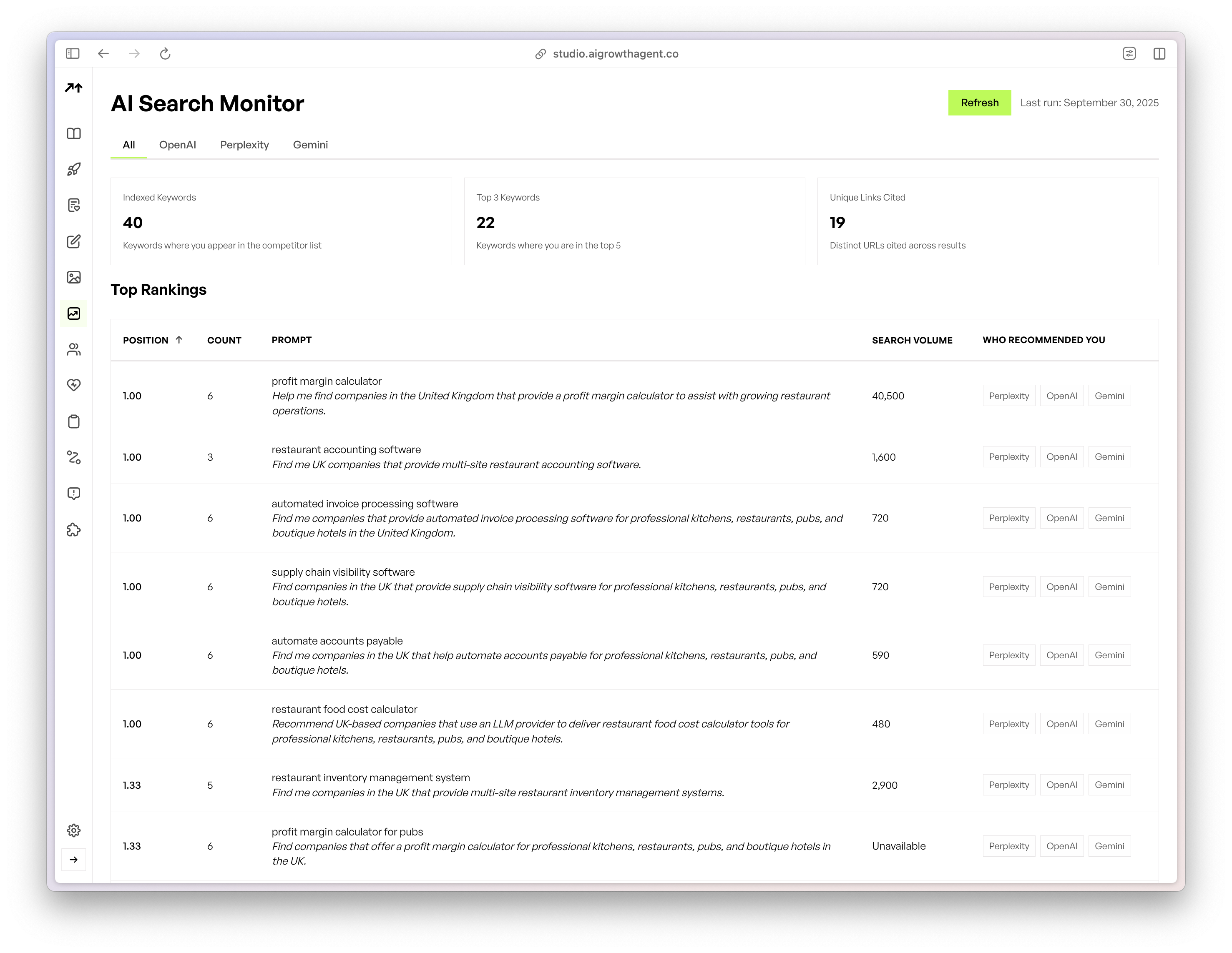
- Frequency and quality of citations in AI assistants such as ChatGPT, Gemini, and Perplexity.
- Crawl coverage and indexation across your growing content library.
- Organic traffic, engagement, and assisted conversions tied to programmatic content.
Key Questions About AI Blog Content And Programmatic SEO
How is Programmatic SEO different from traditional AI writing tools?
Programmatic SEO systems act as autonomous content engineers. They handle research, clustering, writing, schema, internal linking, LLM.txt, and publishing in one loop. Traditional AI writing tools focus on text generation and editing; they still rely on humans for strategy, technical implementation, and scale.
Can AI-generated content still perform well in Google and AI assistants?
Search platforms focus on usefulness, accuracy, and clarity, regardless of how content is created. Programmatic SEO emphasizes quality, structure, and technical completeness so AI systems can interpret, trust, and surface your pages. The focus stays on being helpful, citeable, and aligned with user intent.
Teams that want to scale responsibly can review AI Growth Agent in more detail and schedule a consultation to discuss fit.
Conclusion: Building AI Search Authority With Programmatic SEO
AI search has raised the bar for what brand content must do. Simple drafting tools and manual processes no longer provide enough volume, structure, or technical rigor to earn consistent citations from modern AI systems.
Programmatic SEO agents offer a practical path forward by unifying research, content creation, and technical SEO into one scalable system. AI Growth Agent partners with premium brands that want this model in place and are ready to treat content as an engineered asset. Teams that meet that profile can book a strategy session to evaluate whether programmatic SEO is the right next step.
