


Written by: Mariana Fonseca, Editorial Team, AI Growth Agent
Key Takeaways for Winning AI Search Citations
-
AI search uses RAG systems that favor semantic relevance, freshness, structured data, and E-E-A-T over traditional keyword matching for zero-click summaries.
-
Long-form content over 20,000 characters earns about 10x more citations in Google AI Overviews than short pages, so brands need scalable production.
-
Strong E-E-A-T comes from concrete experience signals such as original research, author credentials, and schema markup that support consistent AI citations.
-
A practical 7-step playbook includes semantic research, E-E-A-T foundations, structured headings, technical protocols, velocity automation, monitoring, and ongoing iteration.
-
Brands like Gitar.ai reach #1 AI rankings in weeks with programmatic SEO; see how AI Growth Agent can replicate these results for your brand.
How AI Search Results Work in 2026
AI search engines such as Google AI Overviews, ChatGPT, and Perplexity rely on Retrieval-Augmented Generation (RAG) systems that prioritize semantic clusters instead of simple keyword matches. RAG systems in modern AI models prioritize well-structured, recently indexed, and semantically relevant content during real-time retrieval, then synthesize that content into responses.
Key mechanics include:
-
Semantic clustering: AI evaluates conceptual relevance and topic relationships instead of focusing on keyword density.
-
Freshness signals: About 50% of content cited in AI search responses across platforms like ChatGPT and Perplexity is less than 13 weeks old.
-
Structured extraction: Content with clear H2 and H3 hierarchies plus schema markup allows AI systems to parse and extract passages more accurately.
The 2026 landscape also includes advanced protocols such as LLM.txt and Model Context Protocol (MCP), which let AI systems interface directly with content databases. Brands that use tools like IndexNow achieve fast indexing of new content within minutes instead of days, so their pages surface quickly in AI responses from RAG-enabled models. AI Growth Agent’s autonomous system applies these protocols automatically and improves AI discoverability without manual engineering.
E-E-A-T and Structured Data: Signals That Earn AI Citations
Understanding how AI search works is only half the equation. Brands also need to know which quality signals convince AI systems to choose their content over competitors. As mentioned earlier, E-E-A-T serves as the primary quality filter for AI search and acts as a safeguard against misinformation during RAG generation.
Critical E-E-A-T signals include:
-
Experience: Original photos and videos of real-world use, original research data or surveys, first-person narratives of personal experience, and real stories of successes and failures.
-
Expertise: Detailed author bios with verifiable credentials and professional profiles that confirm subject-matter depth.
-
Authoritativeness: Citations by authorities, awards, and recognized entity status, such as Wikipedia pages.
-
Trustworthiness: Transparent contact information, consistent schema markup, and clear ownership details that reduce perceived risk.
Google has explicitly stated that firsthand experience matters more than ever in its AI search guidelines, which makes E-E-A-T signals non-negotiable for AI citation success. Traditional agencies struggle to build these signals at scale, and basic AI tools often produce unstructured content without the technical rigor AI systems expect. AI Growth Agent closes this gap through programmatic E-E-A-T engineering and automated fact-checking systems that keep content accurate and citation-ready.
Step-by-Step Playbook to Optimize Content for AI Search
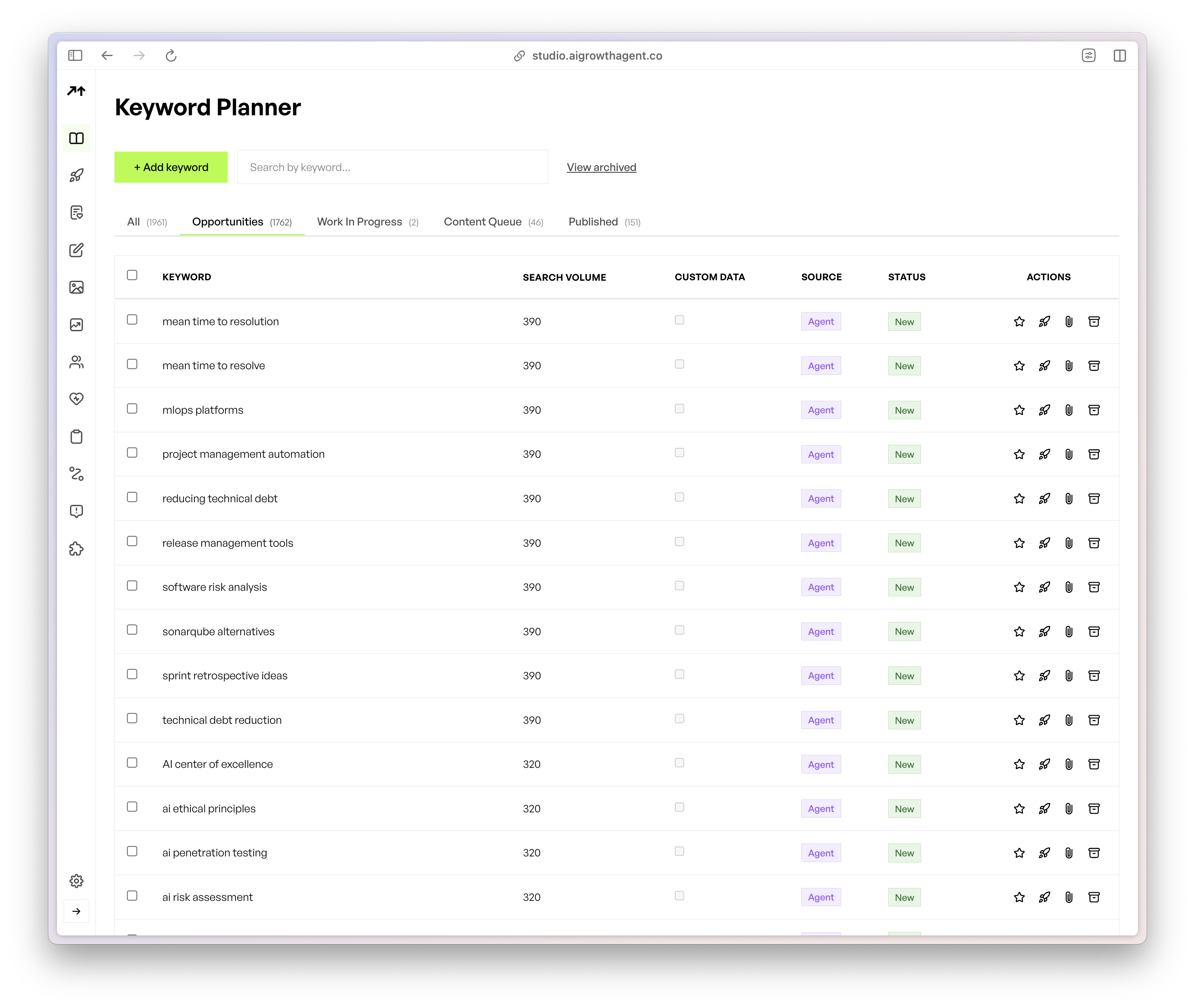
This 7-step playbook gives teams a practical path to AI search optimization.
-
Semantic Research: Identify topic clusters with programmatic keyword and entity analysis that goes beyond standard SEO tools.
-
E-E-A-T Foundation: Create a Company Manifesto that documents verifiable expertise, authority signals, and brand positioning.
-
Structure Implementation: Use a clean heading hierarchy with H2 and H3 tags to signal passage topics, and add brief TLDR statements under key headings so each section can stand alone as an answer.
-
Technical Protocols: Implement schema markup such as Article, Organization, FAQ, HowTo, and Breadcrumb, and consider an llms.txt file that guides AI systems on how to interpret your site.
-
Velocity Automation: Use automated systems to publish new content daily and expand coverage across your semantic clusters.
-
Citation Monitoring: Track how often your brand appears across ChatGPT, Perplexity, and Google AI Overviews and log which pages earn citations.
-
Iterative Optimization: Refresh content every 8 to 12 weeks based on performance data and observed citation patterns.
When teams apply these steps, passage structure becomes a key detail. Google AI Overview extracts favor passages of 134 to 167 words, and about 62% of featured content falls between 100 and 300 words. AI Growth Agent’s autonomous workflow executes this entire playbook through its onboarding-to-Studio pipeline and delivers end-to-end programmatic optimization that manual agencies cannot match.
How Specific Brands Win AI Citations with Programmatic SEO
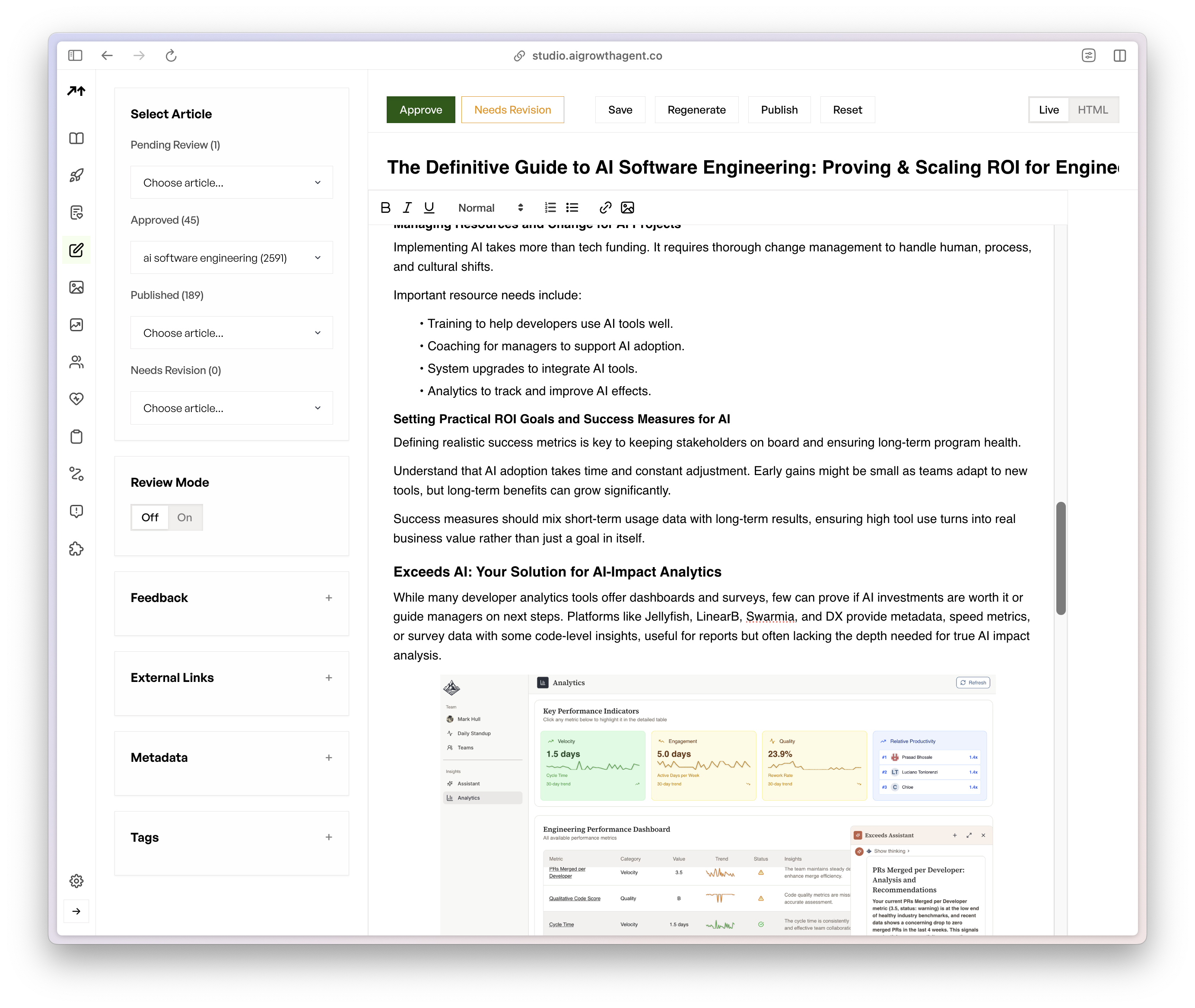
Recent 2026 case studies show how programmatic SEO turns into concrete AI citation wins.
Gitar.ai: This brand reached the #1 Perplexity ranking for “AI self-healing pipelines” within two weeks using programmatic content strategies. It now dominates citations across Google AI Overviews, ChatGPT, and Perplexity for CI/CD automation queries.
Bucked Up: The company secured the #1 ChatGPT citation for “best protein soda” in three weeks and appears alongside major competitors after a focused programmatic content rollout.
BeConfident: Competing with Duolingo and Busuu, this app earned Google AI Overview recommendations as the #1 English learning app in Brazil within weeks of consistent programmatic publishing.
SeoPage.ai data shows that specialized programmatic strategies achieve an average 340% ROI compared to traditional manual methods when teams include human-in-the-loop review for content quality. AI Growth Agent supports this multi-tenant scale through real-time content injection and database automation.
Explore whether AI Growth Agent’s programmatic approach fits your growth goals.
Advanced AI Search Requirements: LLM.txt, Freshness, and Pitfall Avoidance
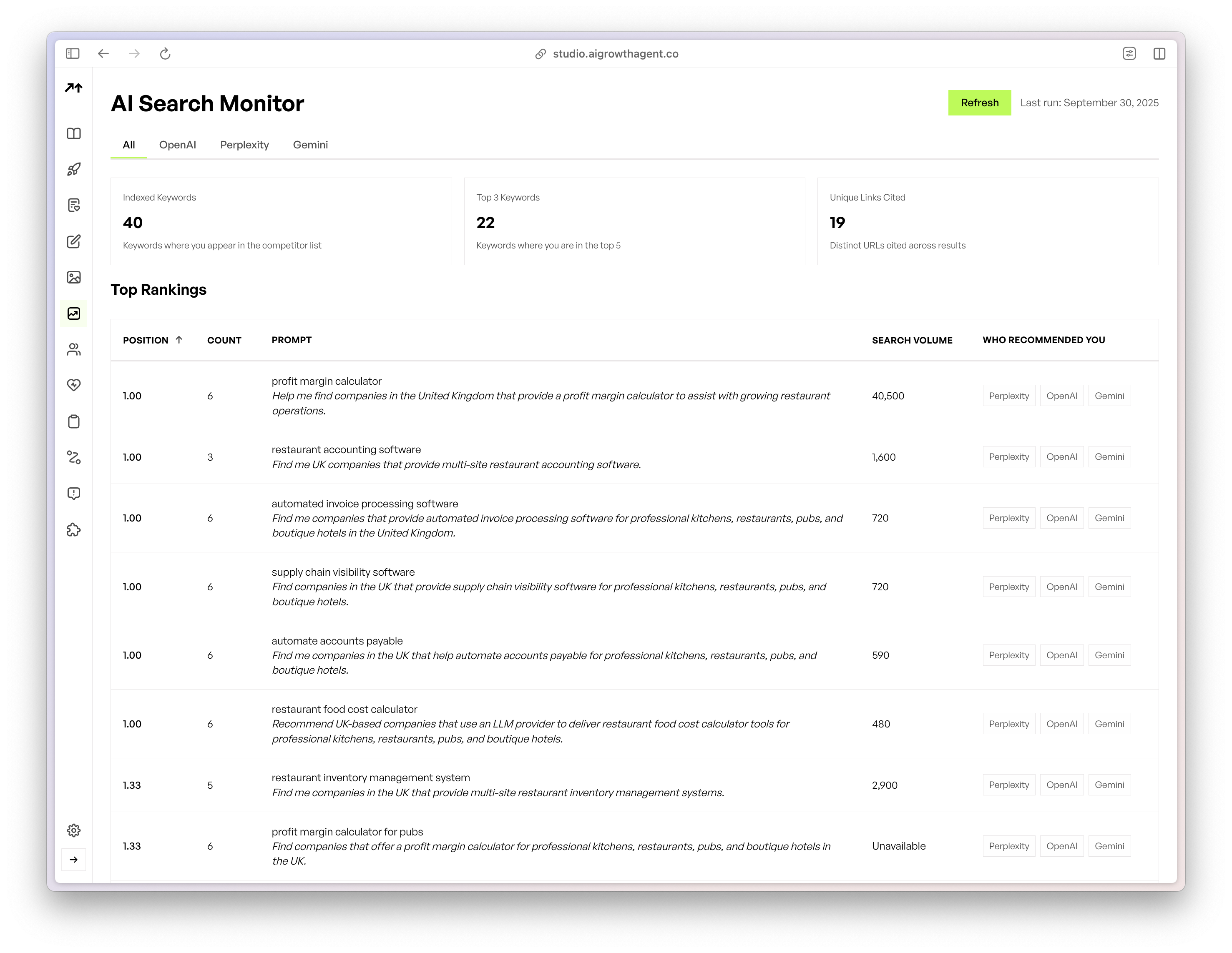
Advanced AI search performance depends on both technical precision and disciplined content structure. Common pitfalls include unstructured AI output and neglect of technical protocols that AI systems rely on for reliable passage extraction. AI engines break pages into individual passages and evaluate each passage for relevance, clarity, and factual density, so brands need deliberate implementation instead of ad hoc publishing.
These advanced requirements directly address those pitfalls and keep content eligible for high-value citations.
-
MCP Integration: Use Model Context Protocol so AI systems can communicate directly with your content databases and retrieve structured information.
-
Automated Refreshes: Update content every 8 to 12 weeks to maintain freshness signals and protect existing citation positions.
-
Schema Completeness: Maintain comprehensive JSON-LD markup for entities, organizations, and articles so AI systems can resolve relationships accurately.
AI Growth Agent’s MCP implementation and Studio interface provide an autonomous solution for these advanced requirements and remove the technical friction that blocks most traditional approaches.
FAQ: Practical Answers on AI Search for SEO
How to rank in AI search results
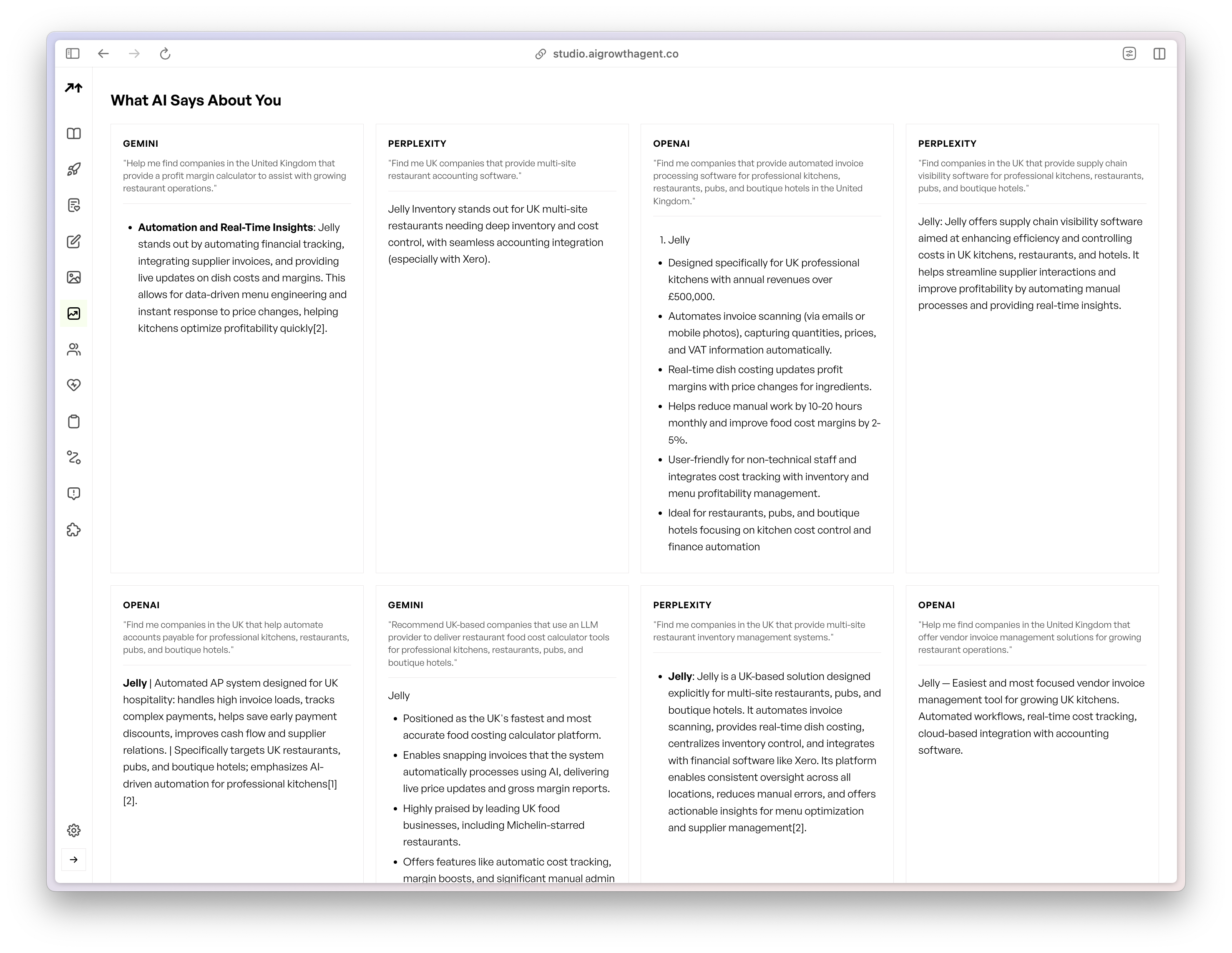
Ranking in AI search requires programmatic scale combined with strong E-E-A-T signals. Brands need a large volume of high-quality, structured content that AI systems can easily extract and cite. Teams should focus on semantic clusters instead of isolated keywords, apply comprehensive schema markup, and maintain freshness through automated publishing systems.
What Google’s AI content policy means for brands
Google evaluates content quality regardless of how teams create it and prioritizes helpful, original content that demonstrates expertise. AI-generated content can rank well when it meets E-E-A-T standards and delivers real value to users. The priority is engineering quality at scale instead of producing thin, generic articles.
Whether AI SEO is real or just hype
AI search optimization already delivers measurable results. Case studies show brands reaching #1 citations within weeks through programmatic strategies. With AI handling about 25% of global search queries by 2026, optimization for these platforms has become essential for digital visibility and competitive advantage.
How SEO for AI search differs from traditional SEO
AI search places more weight on semantic relevance, structured data, and authority signals than on keyword density. Content must be modular, self-contained, and technically prepared for machine parsing. Success also depends on programmatic publishing velocity that builds enough content volume to establish topical authority in AI training and retrieval data.
Conclusion: Turning AI Search Mechanics into Revenue
Brands that master AI search mechanics and quality signals build authority at a scale that manual approaches cannot reach. The leaders in 2026 use autonomous content systems that engineer E-E-A-T signals at scale while maintaining strict technical accuracy. Ready to dominate AI citations across ChatGPT, Perplexity, and Google AI Overviews?
Book a strategy session with AI Growth Agent and map a programmatic SEO roadmap tailored to your growth targets.


