


Written by: Mariana Fonseca, Editorial Team, AI Growth Agent
Key Takeaways
- AI-driven growth marketing combines the AARRR framework with programmatic SEO to achieve 10x organic growth and 3:1+ LTV:CAC ratios.
- Run bi-weekly A/B experiments across channels targeting 15% or higher performance lifts while allocating 20% of budget to testing new tactics.
- Build viral loops and automate onboarding to boost retention, keep churn in the 3–7% range, and drive organic acquisition.
- Use AI personalization to drive 41% higher email revenue and deploy programmatic SEO to win AI search with thousands of structured pages.
- Implement these strategies with AI Growth Agent by scheduling a demo to autonomously scale your growth marketing in 2026.
Foundational Growth Marketing Practices for 2026
1. Master the AARRR Framework with AI Insights
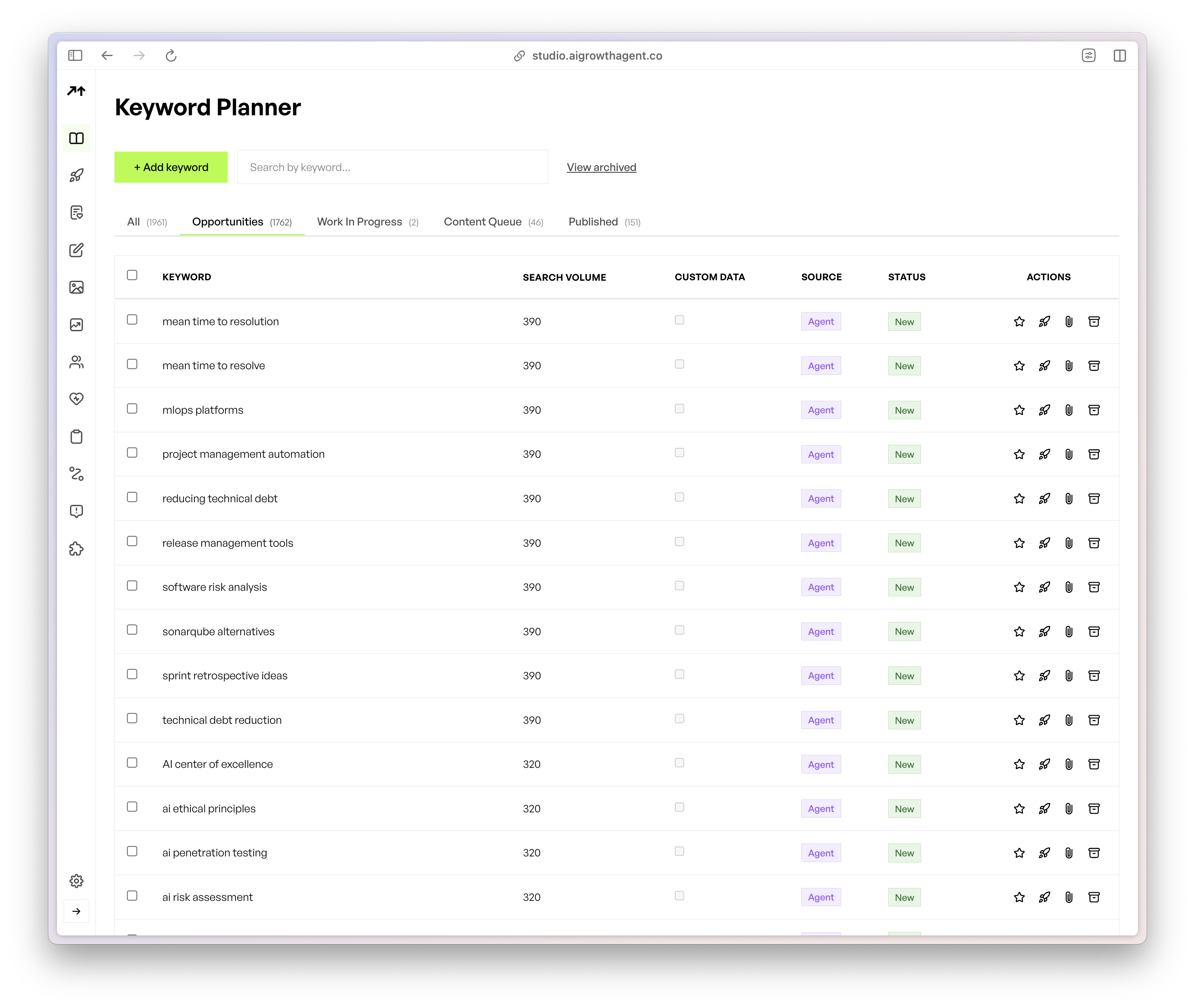
The AARRR framework (Acquisition, Activation, Retention, Revenue, Referral) forms the base of systematic growth marketing. Modern teams use AI tools to predict churn patterns and improve performance at each funnel stage. These tools let you map specific metrics to each phase: track cost per acquisition for acquisition, measure time-to-value for activation, and monitor feature adoption for retention. Target a minimum 3:1 LTV:CAC ratio, with top performers reaching 5:1 or higher. This focus on unit economics explains why 2026 strategies emphasize retention over acquisition as media costs continue to rise.
2. Run Rapid A/B Experiments Across Channels
Continuous experimentation creates compounding growth gains over time. Run bi-weekly A/B tests on email subject lines, landing page layouts, and ad creative variations. Use hypothesis-driven testing with clear success metrics and aim for at least a 15% uplift on each winning variant. Turn high-performing content into educational email courses to grow newsletter subscribers and deepen engagement. Reserve 20% of your marketing budget for experimental campaigns that explore new channels without putting core objectives at risk, and measure these tests against their impact on your unit economics.
3. Track CAC and LTV Metrics with Discipline
Customer acquisition cost and lifetime value metrics give the clearest view of sustainable growth. Track these indicators on a consistent schedule and adjust strategy as trends emerge. The table below highlights three critical metrics to monitor, along with target ranges and measurement cadence.
| Metric | Target Range | Measurement Frequency | Source |
|---|---|---|---|
| CAC | Year-over-year reduction target | Weekly | CRM/Analytics |
| LTV:CAC Ratio | As outlined in Practice #1 | Monthly | Revenue Analytics |
| Churn Rate | 3–7% annually | Monthly | Subscription Data |
4. Build Viral Loops for Organic Acquisition
Viral loops create self-sustaining growth by turning existing customers into a reliable acquisition channel. Design product features that naturally encourage sharing, such as collaborative workspaces or referral rewards. Dropbox’s referral program illustrates this approach by offering storage upgrades for successful invitations. Treat your product as a marketing channel in 2026 and embed sharing mechanisms directly into core user workflows instead of bolting on separate referral programs.
5. Improve Retention with Automated Onboarding
Effective onboarding dramatically improves long-term retention because customers who see product value early churn far less. Build personalized first-login experiences, contextual tooltips, and behavior-based triggers that guide users to their “aha moment” within minutes. Aim for feature adoption rates above 60%, which correlate with 10% higher net revenue retention. Treat onboarding as a continuous system that adapts to user behavior rather than a one-time checklist.
See how AI Growth Agent can automate your onboarding optimization and strengthen retention at scale.
6. Use Omnichannel Personalization to Lift Conversions
AI-driven personalization lifts performance across every major marketing channel. Personalized experiences consistently outperform generic messaging in open rates, clicks, and revenue. Use dynamic segmentation based on engagement levels, purchase history, and lifecycle stage instead of static demographic lists. This segmentation becomes especially powerful across channels, as multi-channel subscribers who receive coordinated campaigns convert more often when they see consistent promotions across email, SMS, and push notifications.
7. Lead with Thought Leadership, SEO, and GEO
High-growth firms invest heavily in SEO and blogging to own their category narrative. Create content that positions your company as the definitive authority for your niche. Focus on Generative Engine Optimization (GEO) so AI search engines can confidently cite your content. Structure articles with clear Q&A sections, FAQs, and schema markup to appear in AI-generated results and featured snippets.
8. Align Growth Across Marketing, Sales, and Product
Growth marketing delivers results when sales, marketing, and product teams share objectives and metrics. Hold weekly cross-functional meetings to review pipeline health, conversion rates, and customer feedback together. Build unified dashboards that track the full customer journey from first touch through expansion revenue. CMOs should use decision frameworks that rank initiatives by their impact on the entire revenue funnel instead of isolated departmental goals.
Learn how to align your teams around shared growth metrics with AI Growth Agent support.
Advanced AI-Driven Strategies for 2026
The next three strategies sit at the frontier of growth marketing in 2026. These approaches rely on mature AI capabilities that move beyond experiments and now provide consistent competitive advantages.
9. Deploy AI Personalization at Scale
AI-driven email personalization achieves 41% higher revenue than traditional batch campaigns. Use AI tools that analyze behavior patterns and automatically adjust messaging, send times, and content recommendations. AI-generated subject lines increase open rates by 26% compared to human-written options. Extend personalization beyond email with dynamic website content, tailored product recommendations, and nurture sequences that adapt in real time to each user’s actions.
10. Engineer Programmatic SEO for AI Citations
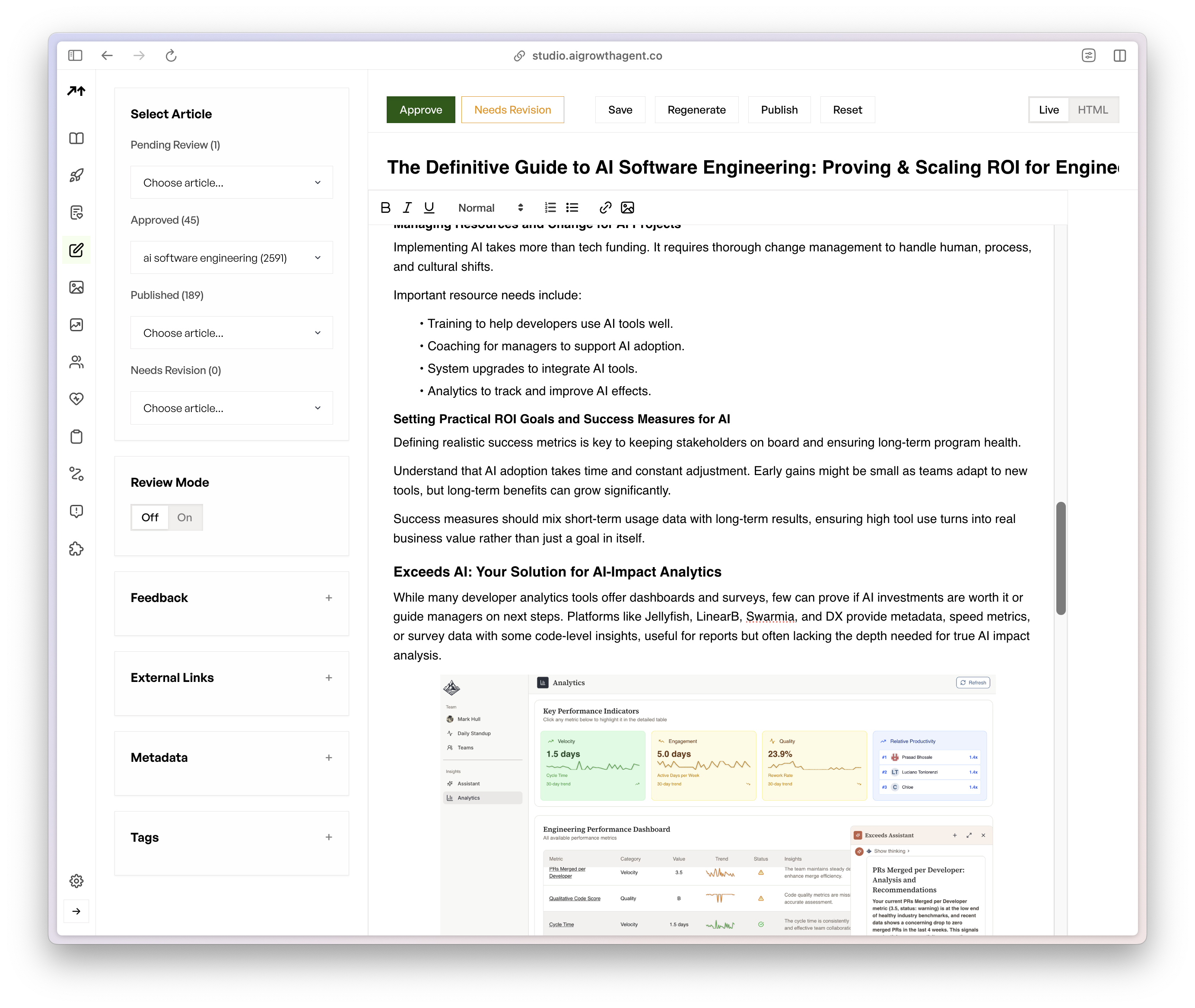
Manual content creation cannot match the speed and volume required for AI search dominance. Programmatic SEO lets companies generate thousands of high-quality, structured pages that target long-tail keywords and build topical authority. Specialized programmatic SEO strategies deliver stronger and more predictable returns than traditional manual methods. The comparison below shows how manual and programmatic approaches differ in speed, scale, and ROI.
| Approach | Speed | Scale | ROI |
|---|---|---|---|
| Manual SEO | Weeks per article | Limited by headcount | Variable |
| Programmatic SEO | Hours per campaign | Unlimited | Strong returns |
AI Growth Agent follows this model by autonomously engineering content architectures from keyword clustering through schema implementation and direct publishing. Case studies include Gitar.ai reaching the top position for “AI self-healing pipelines” and Bucked Up ranking prominently for “best protein soda” searches.
11. Activate Multi-Tenant Programmatic SEO and Feedback Loops
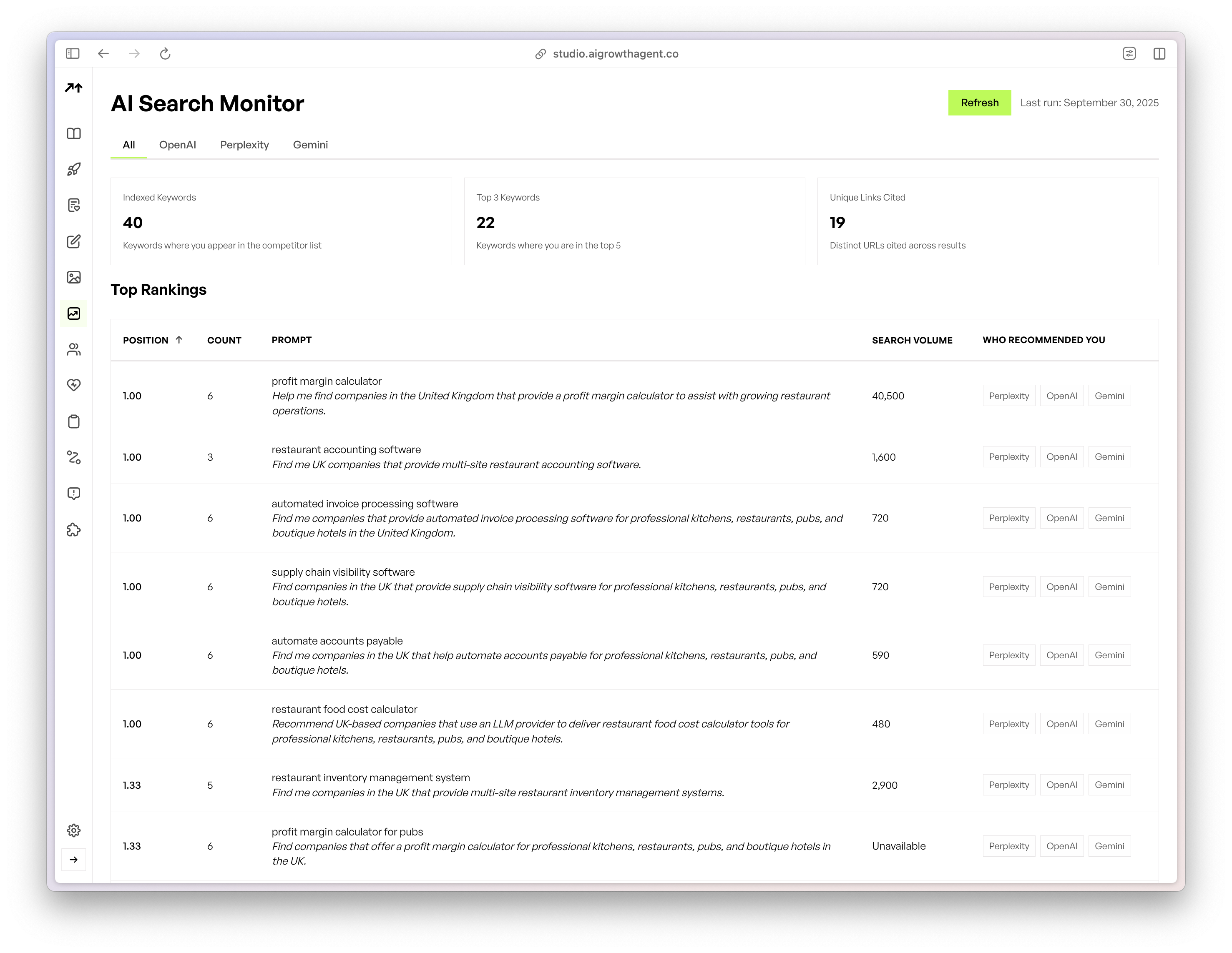
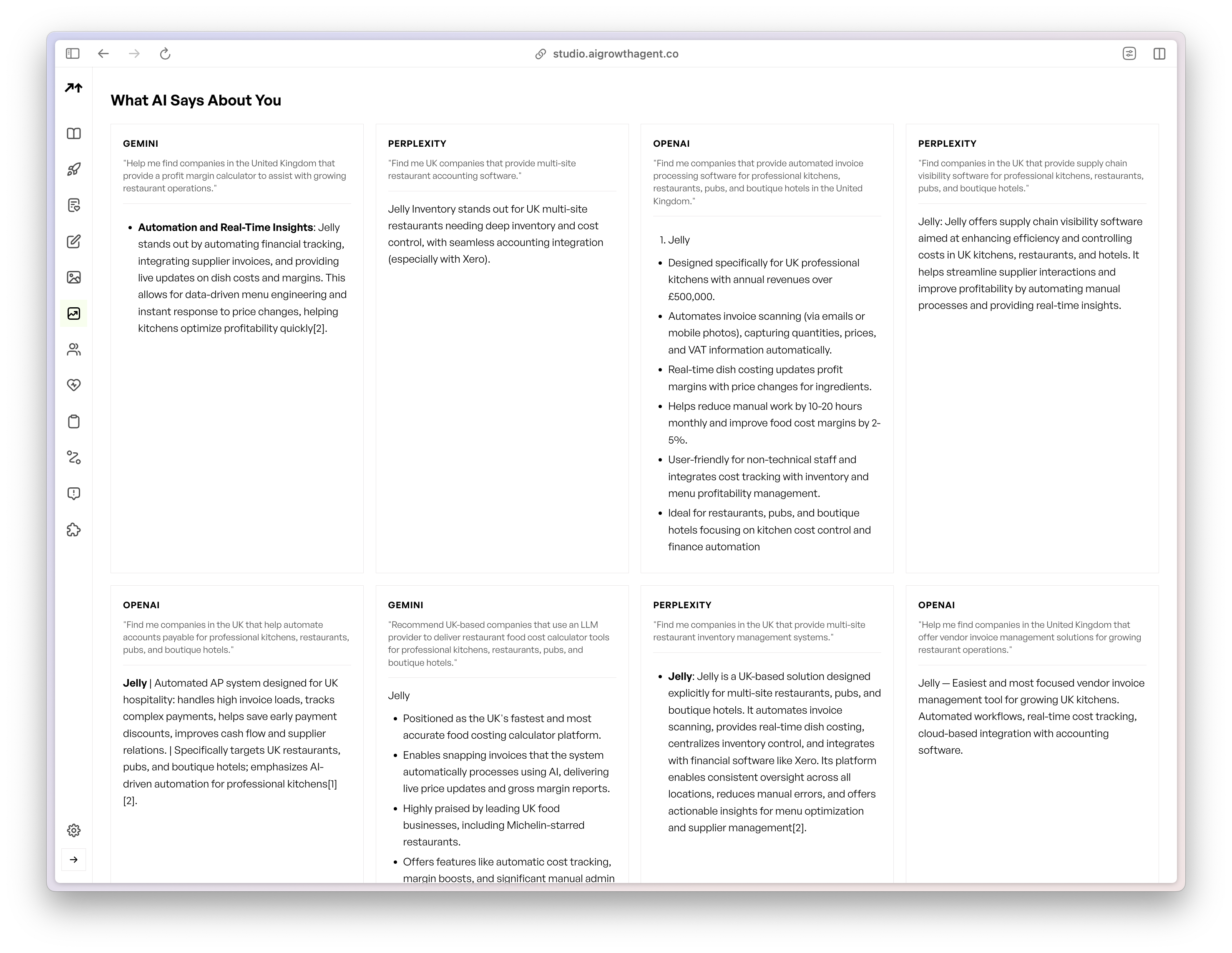
Advanced programmatic SEO systems support real-time content injection and database automation around trending topics. Track AI search performance with tools that monitor ChatGPT citations, Google AI Overview appearances, and Perplexity recommendations. Build feedback loops that automatically refine content strategies based on AI indexing patterns and citation frequency. Multi-tenant capabilities let portfolio companies or large enterprises manage several brand voices from a single programmatic platform.
Growth Marketing Framework for Startups
Manual growth marketing approaches fall behind in the AI-dominated landscape of 2026 because they cannot match the required speed and scale. Successful companies now rely on programmatic systems that run autonomously while still protecting quality and brand consistency. These leaders combine AARRR optimization with AI-powered personalization and programmatic content generation into one integrated framework.
Start by auditing your current AARRR metrics to uncover your biggest conversion bottlenecks. Then apply the 20% experimentation budget rule discussed earlier to those specific stages and deploy programmatic SEO agents for scalable authority building that feeds your acquisition funnel. Companies that maintain LTV:CAC ratios above 3:1 consistently outperform competitors by treating growth marketing as an engineering discipline instead of a purely creative exercise.
FAQ
What are growth marketing best practices examples?
Effective growth marketing examples include Gitar.ai’s programmatic SEO strategy, which achieved top rankings for “AI self-healing pipelines” across multiple AI search engines within two months. Other examples include implementing AI-driven email personalization, which delivers the 41% revenue lift discussed in Practice #9, building viral referral loops like Dropbox’s storage upgrade incentives, and using behavior-based onboarding automation that reduces churn. The strongest programs combine several of these tactics inside a cohesive AARRR framework.
Growth marketing vs lifecycle marketing?
Growth marketing covers the entire customer journey from acquisition through referral. Lifecycle marketing focuses mainly on retention and expansion of existing customers. Growth marketing emphasizes rapid experimentation, viral mechanisms, and scalable acquisition channels. Lifecycle marketing concentrates on nurturing current relationships through targeted communications and retention programs. Both approaches work together, with growth marketing driving sustainable acquisition and lifecycle marketing maximizing long-term value.
What process should companies follow for building growth marketing strategies?
Start by establishing baseline AARRR metrics and identifying the biggest conversion bottlenecks in your funnel. Run bi-weekly experimentation cycles that test one variable at a time with clear success criteria. Create a Company Manifesto that defines your unique value proposition and target audience. Deploy programmatic SEO systems to scale content creation and build topical authority. Track AI search performance and refine strategies based on citation frequency and organic traffic growth.
What role does AI play in 2026 growth marketing?
AI shapes growth marketing through three main applications: personalization at scale, programmatic content generation, and predictive analytics. AI-powered personalization increases email revenue by 41% and enables dynamic segmentation across multiple channels. Programmatic SEO uses AI to generate thousands of structured pages that target long-tail keywords for AI search engine citations. Predictive analytics highlight churn risks and expansion opportunities before they materially affect revenue.
How does growth marketing differ from digital marketing?
Growth marketing focuses on measurable, scalable systems that drive revenue across the full customer lifecycle. Digital marketing centers on brand awareness and reach through online channels. Growth marketing prioritizes metrics such as CAC, LTV, and retention rates, while digital marketing often tracks impressions, clicks, and engagement. Growth teams rely on rapid experimentation and data-driven iteration, whereas digital marketing often runs longer campaigns with broader targeting.
Growth Marketing vs Digital Marketing in the AI Era
The distinction between growth marketing and digital marketing becomes critical in 2026’s AI-driven environment. Growth marketing delivers measurable ROI through systematic improvement of acquisition, retention, and expansion metrics. Companies that adopt comprehensive growth marketing strategies with programmatic SEO gain durable advantages that manual approaches cannot match.
AI Growth Agent represents the next generation of growth tools, offering autonomous programmatic SEO capabilities that position companies as category authorities. The platform supports consistent AI citations across ChatGPT, Google AI Overviews, and Perplexity while preserving brand voice and quality standards.
Schedule a demo to explore autonomous growth marketing systems that scale authority and reduce acquisition costs in the AI search era.


