Written by: Mariana Fonseca, Editorial Team, AI Growth Agent
Key Takeaways for Marketing Leaders
-
Claude 4 excels in creative content and brand voice consistency, which suits agencies that prioritize quality over speed.
-
Gemini 3 leads in SEO research accuracy, response speed, and Google Workspace integration for data-driven teams.
-
Both models support 1M token context windows but use different pricing models: Claude uses seats, Gemini uses token-based API costs.
-
Neither platform delivers true programmatic SEO, so teams still manage content structuring and publishing manually.
-
AI Growth Agent combines Claude-level quality with Gemini-like speed through autonomous programmatic SEO—see how autonomous SEO automation works to automate your marketing authority.
How Gemini 3 and Claude 4 Differ for Marketers
Google’s Gemini 3 functions as a data powerhouse with 1M+ token context windows and deep integration across Google Workspace tools. This infrastructure advantage translates into practical benefits, because the model processes large datasets and taps Google’s search infrastructure for real-time information access. Anthropic’s Claude 4, particularly the Opus 4.6 variant, takes a different approach and focuses on creative reasoning and nuanced content creation, with superior instruction following capabilities that help maintain brand voice consistency. Both Gemini 3 and Claude 4 support 1M token context windows, with Claude 4 offering 200K standard and up to 1M on higher plans, yet their marketing workflows diverge sharply in speed, quality, and integration depth.
How We Benchmarked Real Marketing Workflows
Our evaluation framework focuses on five dimensions that shape marketing team success: speed and accuracy, content quality and brand voice maintenance, SEO research capabilities, integration costs and scalability, and team workflow efficiency. To move beyond vendor claims and marketing hype, each criterion uses verified 2026 benchmarks from independent testing organizations, so the comparison reflects real-world performance instead of theoretical capabilities.
Head-to-Head Benchmarks: Gemini 3 vs Claude 4
Direct benchmarking highlights clear strengths for each model across marketing-critical tasks. Claude Opus 4.6 achieves a high Arena score for instruction following, which makes it strong for enforcing brand guidelines and voice consistency. However, Gemini 3.1 Pro scored 94.3% on GPQA Diamond, which shows stronger factual accuracy for SEO research and data-heavy content.
The following comparison consolidates these benchmark findings across marketing features, so you can see where each model holds a decisive advantage.
|
Feature |
Gemini 3 |
Claude 4 |
Winner |
Benchmark |
|---|---|---|---|---|
|
Creative Copy |
High Arena score |
High Arena score |
Claude |
|
|
SEO Research |
GPQA score |
Gemini |
||
|
Speed |
Fast generation |
Deliberate pace |
Gemini |
Struggling to scale marketing content programmatically? See how programmatic SEO automation solves this in a live walkthrough.
Content Creation: Quality vs Speed Tradeoffs
Claude Opus 4.6 scored highest with an average of 8.6 across prose quality, instruction adherence, and narrative coherence in long-form creative writing evaluations, which significantly outperforms Gemini 3.1 Pro. For marketing teams that need consistent brand voice across many assets, Claude Opus 4.6 can maintain brand voice consistency across multiple asset variations in a single session by internalizing lengthy brand guidelines within its context window. This strength makes Claude a strong fit for thought leadership, email sequences, and narrative campaigns.
Gemini 3 produces content significantly faster than Claude 4 in real-world testing, which suits quick drafts and time-pressured scenarios like ad copywriting or social posts. Teams that value volume and turnaround time often favor Gemini for first drafts, then refine key assets with Claude or human editors.
SEO Research: Accuracy and Source Handling
Google DeepMind’s Gemini 3.1 Pro Thinking (High) scores 94.3% on GPQA Diamond with no tools, and this factual accuracy advantage translates into reliable research for SEO briefs and data-backed content. Gemini benefits from deep integration with Google’s knowledge graph, search infrastructure, and ecosystem tools, which enables quick access to current events and statistics for content outlines and briefs.
In real-time research tests on top AI tools in 2026, Claude Opus 4.6 provided dense inline citations for credibility, while Gemini 3 offered fewer citations, which suggests Claude may serve better for authoritative content that demands extensive source attribution. Teams often pair Gemini for discovery and Claude for final, citation-rich drafts.
Ad Campaigns: Performance Copy vs Strategic Reasoning
Gemini 3 produces more direct, action-oriented headlines suitable for performance marketing, while Claude Opus 4.6 tends toward emotionally resonant, nuanced copy that captures subtle brand distinctions. For rapid ad copy iteration, Gemini 3 demonstrated faster generation speeds and greater suitability for rapid iteration across writing, coding, and research tasks. This pattern favors Gemini for A/B testing many variants.
Campaign strategy development benefits more from Claude’s reasoning capabilities. Claude 4 demonstrates superior reasoning for complex scenarios like campaign strategy, with strong logical consistency, step-by-step arguments, and attention to counterarguments. Strategy teams often use Claude for messaging frameworks, audience segmentation narratives, and multi-channel campaign plans.
Integrations and 2026 Pricing for Teams
Integration depth shapes adoption speed and daily workflow friction. Gemini integrates directly with Google Workspace tools including Gmail, Docs, and Sheets, reducing workflow friction, which helps teams already living in Google’s ecosystem move from research in Sheets to drafts in Docs without switching platforms. Claude 3.5 Sonnet offers fewer ready-made integrations with business tools compared to extensive third-party availability, so teams often rely more on custom API work.
Pricing structures also influence which model fits a given use case. Anthropic’s Claude Team Standard plan uses per-seat monthly pricing with annual billing options, while Claude Team Premium seats cost $100 per seat per month with annual discount (or $125 billed monthly) and include Claude Code access. Gemini 3.1 Pro costs $2.00 input / $12.00 output per million tokens for prompts ≤ 200k tokens ($4.00 / $18.00 for prompts > 200k tokens). These pricing differences, combined with the performance benchmarks above, point to distinct ideal use cases for each model.
Use Case Scenarios for Different Marketing Teams
Claude 4 fits creative agencies that prioritize brand voice consistency, long-form content creation, and strategic campaign development. The model performs best when quality and nuance matter more than speed. Gemini 3 suits data-driven SEO teams, performance marketers focused on rapid iteration, and organizations heavily invested in Google Workspace. Gemini 3 is positioned as the best choice for enterprises invested in Google Cloud or Workspace and teams requiring robust multimodal capabilities.
Hybrid approaches support full-service agencies that span strategy, content, and performance. Multi-model strategies combining Gemini Flash for fast initial triage and classification with Claude Sonnet for high-quality customer-facing responses optimize cost and quality. Teams that adopt this pattern still face manual coordination across tools and channels.
Onboarding, Scalability, and AI Search Limitations
Anthropic’s Claude Team plans support multiple seats per organization, and larger organizations may require the Enterprise plan. Gemini offers more flexible scaling through Google Cloud infrastructure, which makes it easier to expand usage as teams grow or workloads spike. However, both models share a critical limitation for AI search: neither provides comprehensive programmatic content solutions, so teams still manage structured publishing, schema implementation, and AI search optimization manually.
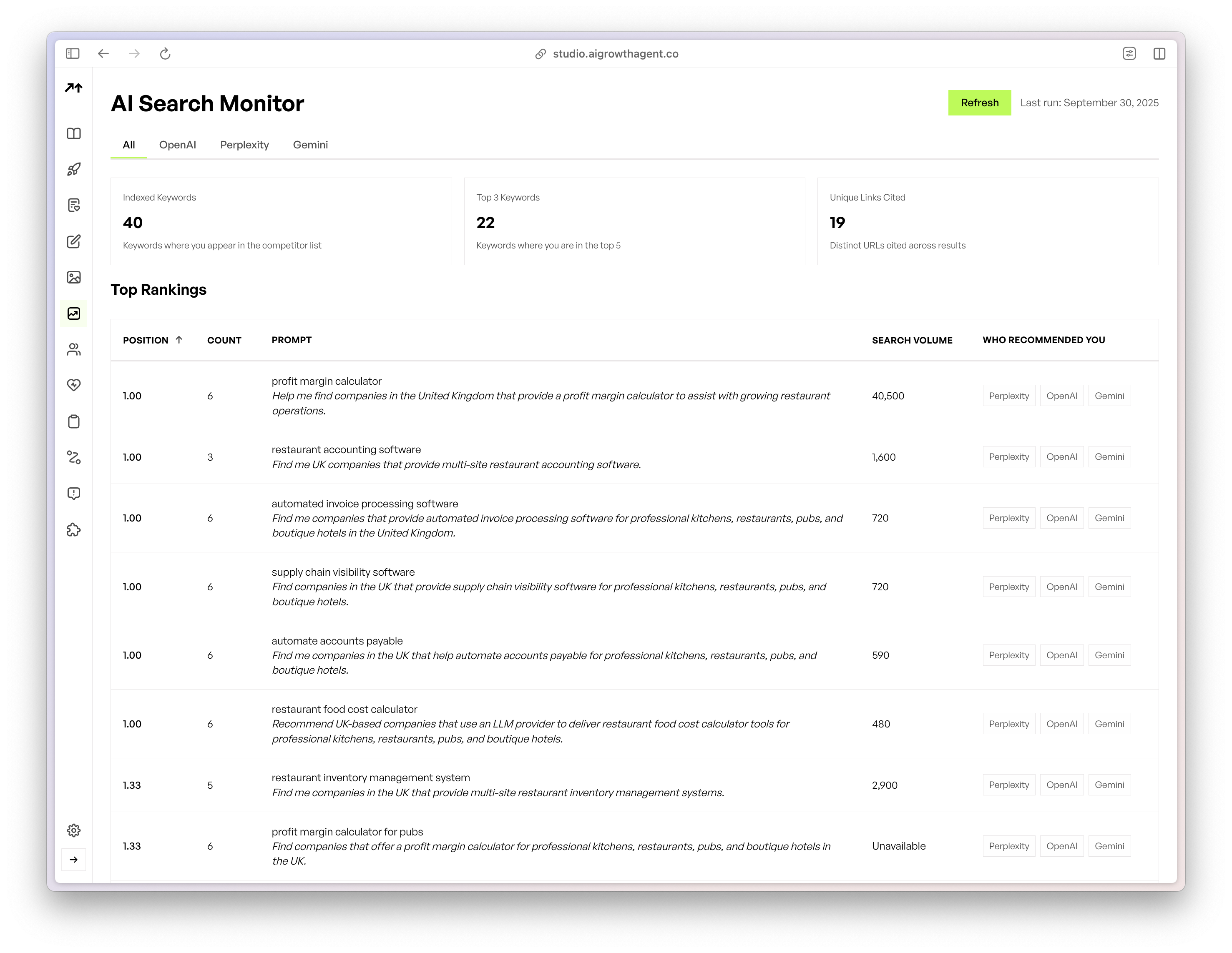
Ready to automate marketing authority at scale? See how we eliminate manual bottlenecks in a live demonstration.
Why AI Growth Agent Solves the Scale vs Quality Gap
The Gemini vs Claude comparison reveals a core gap for marketers. Both models force a tradeoff between Claude’s quality and Gemini’s speed, and neither solves the programmatic scale problem that marketing teams face. Both require manual content structuring, lack programmatic publishing, and provide no automated schema implementation for AI search optimization. AI Growth Agent addresses these limitations through autonomous programmatic SEO that automates the entire content lifecycle.
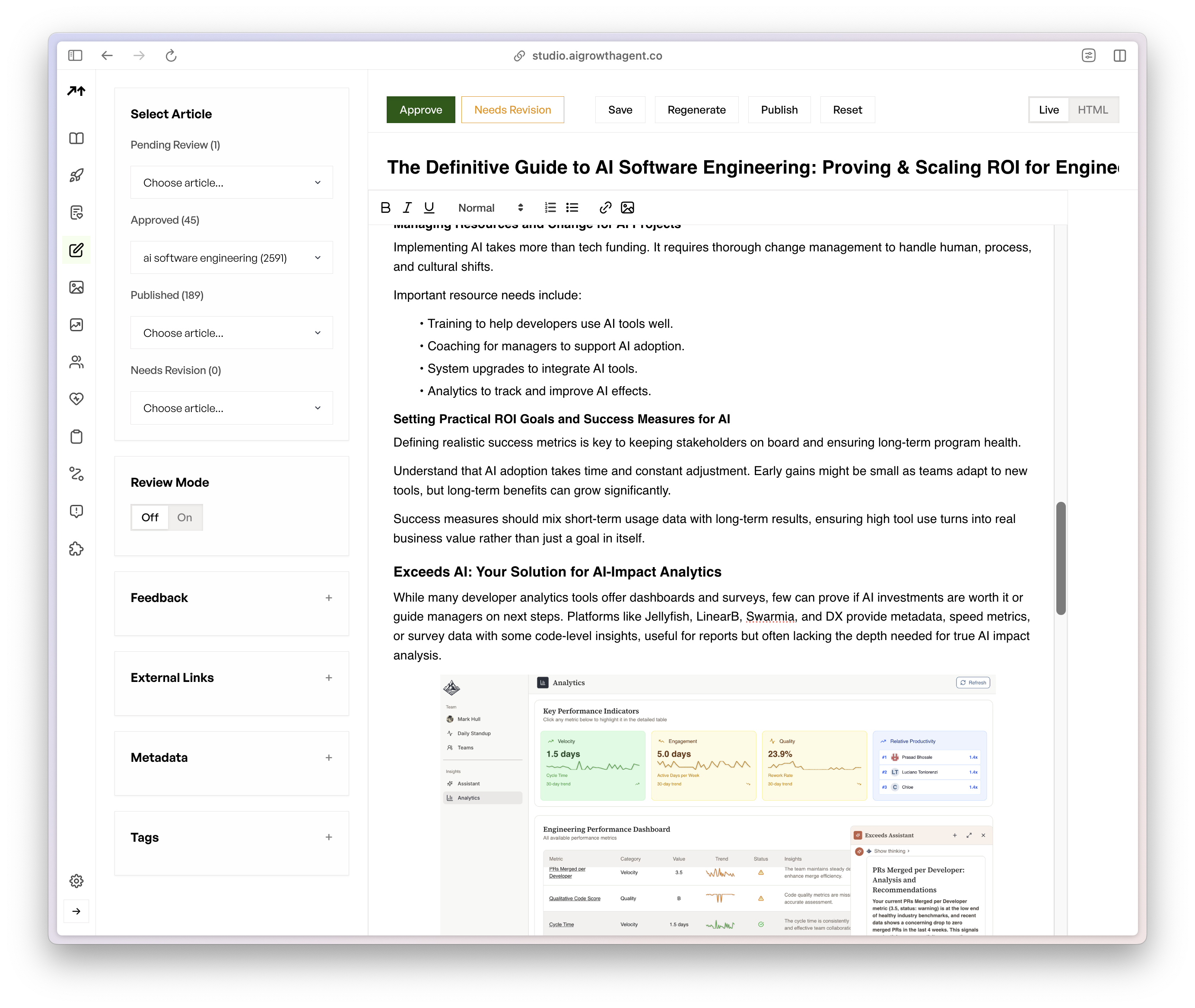
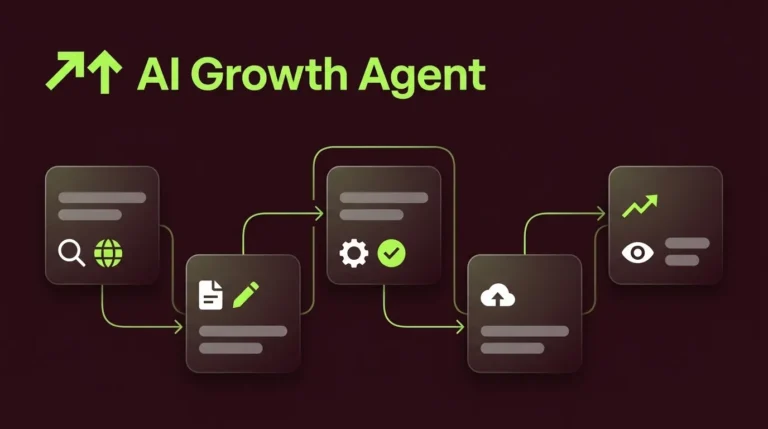
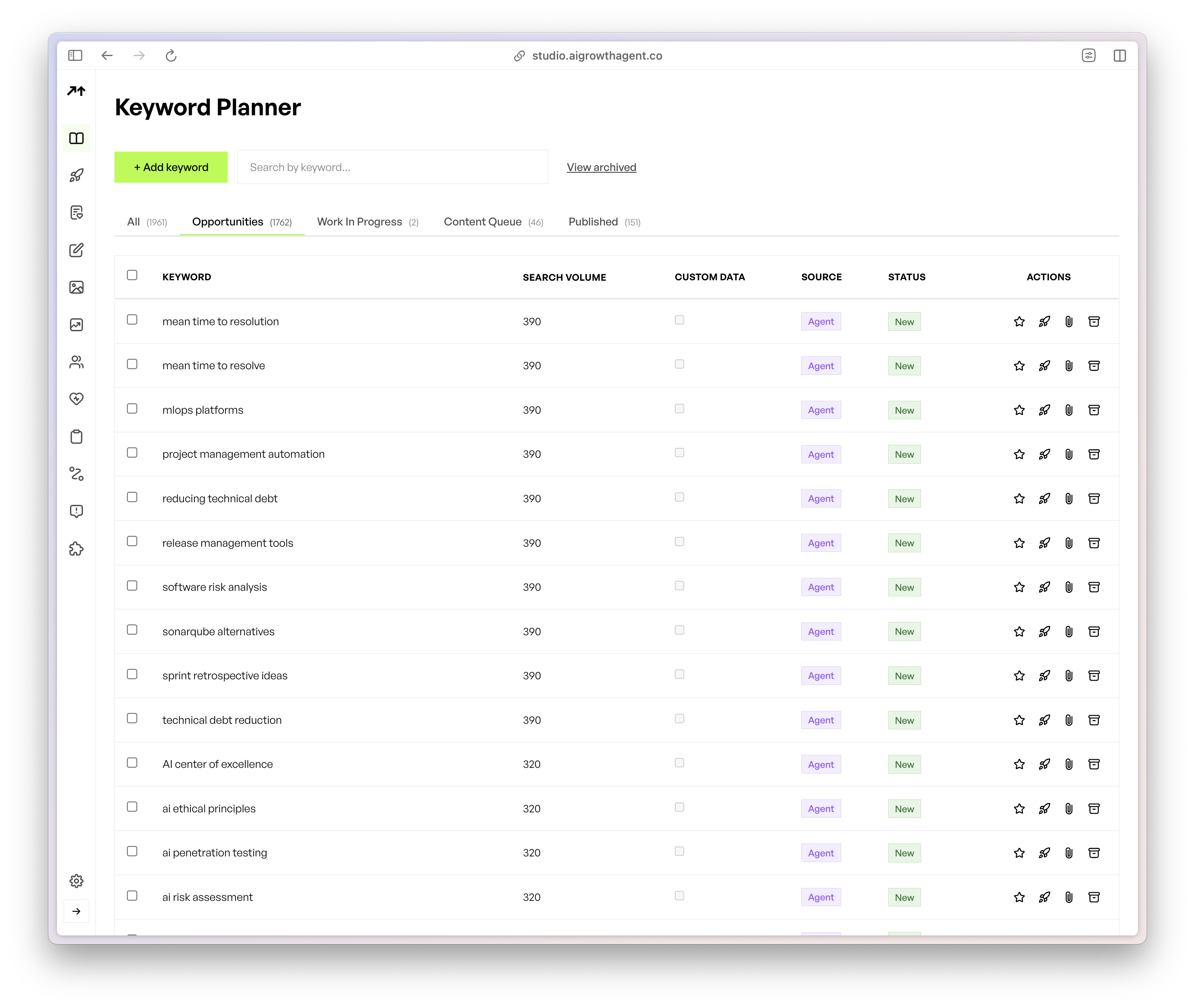
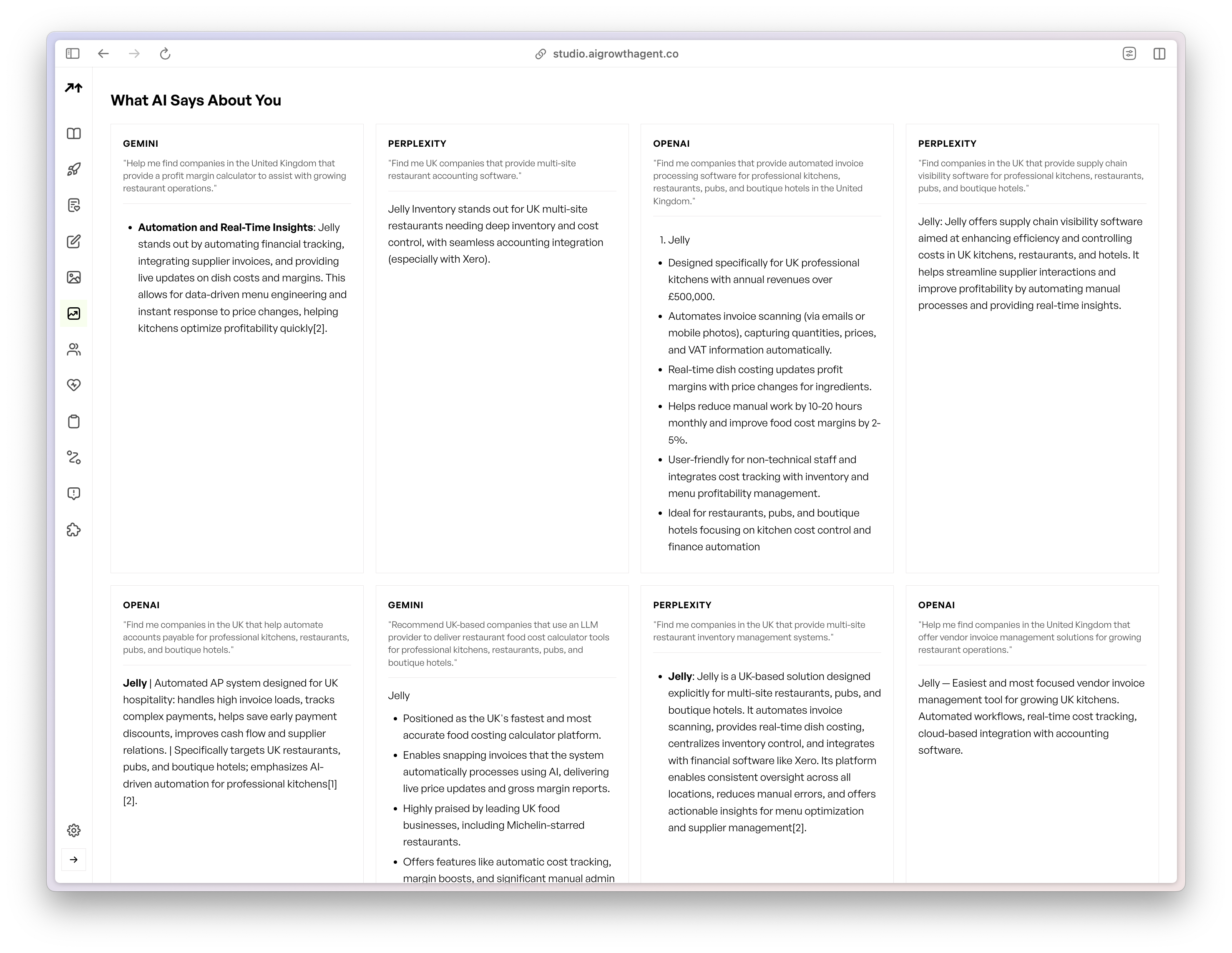
Our Programmatic SEO Agent manages every step from keyword clustering to technical optimization and direct publishing, which removes the manual bottlenecks that slow Gemini and Claude workflows. This automation extends beyond content generation, because we implement advanced LLM.txt files and the world’s first blog Model Context Protocol, so AI search engines can interface directly with your content database instead of relying on ad hoc schema markup. The results speak clearly: Bucked Up achieved #1 citations for “best protein soda” within three weeks of programmatic publishing, a timeline that typical manual AI workflows rarely match.
Decision Framework: When to Choose Gemini, Claude, or AI Growth Agent
Claude 4 works best when your team prioritizes creative excellence, brand voice consistency, and strategic depth over speed. Gemini 3 fits data-driven workflows, Google ecosystem integration, and rapid content iteration. Marketing teams that require true programmatic scale without sacrificing quality need a different approach, and AI Growth Agent provides that by automating authority-building content at superhuman volume and consistency.
See how to establish category authority through programmatic SEO in a live demonstration.
Gemini vs Claude FAQs for Marketing Teams
Which model serves marketing teams better in 2026?
The answer depends on your team’s priorities and existing tech stack. Claude 4 excels at creative content creation, brand voice consistency, and strategic campaign development, which suits agencies and teams that prioritize quality over speed. Gemini 3 performs better for data-driven SEO research, rapid content iteration, and teams deeply integrated with Google Workspace. For comprehensive programmatic SEO that combines both strengths, AI Growth Agent delivers automated content engineering that neither model can match on its own.
How do the pricing models compare for team usage?
Claude’s team pricing starts at $20 per seat monthly for standard access, with premium developer access at $100 per seat. Gemini offers more cost-effective API pricing at $1.25 input versus Claude’s $5 input per million tokens. Total cost of ownership also includes integration complexity, training time, and manual workflow overhead, which both models require but AI Growth Agent reduces through automation.
Which model runs faster for content creation workflows?
Gemini 3 consistently delivers faster generation speeds, especially for short-form content like ad copy and social media posts. Claude 4 responds more deliberately but produces higher-quality long-form content with stronger brand voice consistency. Teams that need both speed and quality at scale benefit from programmatic solutions like AI Growth Agent, which automate the entire content pipeline and remove many manual steps.
Can either model handle programmatic SEO at enterprise scale?
Neither Gemini 3 nor Claude 4 currently provides true programmatic SEO capabilities. Both require manual content structuring, lack automated schema implementation, and depend on human oversight for publishing workflows. They function as writing assistants rather than full content engineering systems. AI Growth Agent addresses this gap by automating keyword clustering, content creation, technical optimization, and direct publishing for enterprise-scale authority building.
Which integrates better with existing marketing tools?
Gemini 3 offers strong native integration with Google Workspace tools including Gmail, Docs, Sheets, and Google Analytics, which makes it seamless for teams already using Google’s ecosystem. Claude has fewer ready-made integrations but provides robust API access for custom implementations. Both require significant manual configuration for content management systems and publishing workflows, while AI Growth Agent supplies a turnkey programmatic infrastructure for those tasks.