


Written by: Mariana Fonseca, Editorial Team, AI Growth Agent
Key Takeaways for 2026 Growth Platforms
-
AI Growth Agent ranks as a leading programmatic SEO platform with a 10/10 AI score, automating content architectures that earn AI search citations at scale.
-
HubSpot and Klaviyo drive CRM growth and email retention, pairing strong AI features with accessible starter plans for growing teams.
-
Analytics tools like Amplitude and Mixpanel surface predictive insights, while Zapier connects over 6,000 apps to automate cross-platform workflows without code.
-
Enterprise solutions such as Marketo support complex attribution and account-based marketing, while startups often choose freemium tools like PostHog and GrowthBook to scale efficiently.
-
Integrated stacks that connect AI Growth Agent with CRM and email platforms can triple organic traffic. See the Stack Builder Matrix below for specific combinations and ROI metrics, or schedule a demo with AI Growth Agent to explore a tailored 2026 growth stack.
Growth Marketing Platforms Comparison Table
The table below compares 12 leading growth platforms by primary use case, entry-level pricing, and AI capability score. Use it as a quick reference while you evaluate which tools match your budget, technical resources, and growth goals.
|
Platform |
Best For |
Starting Pricing (2026) |
AI Score (1-10) |
|---|---|---|---|
|
AI Growth Agent |
Programmatic SEO Authority |
Custom (1-week onboarding) |
10/10 |
|
HubSpot |
CRM Growth |
9/10 |
|
|
Klaviyo |
Email/Retention |
9/10 |
|
|
Marketo |
Enterprise |
8/10 |
|
|
Amplitude |
Analytics |
9/10 |
|
|
Optimizely |
Experimentation |
Custom |
8/10 |
|
Zapier |
Automation |
8/10 |
|
|
Mixpanel |
User Insights |
8/10 |
|
|
PostHog |
Open-Source Analytics |
Freemium |
8/10 |
|
Customer.io |
Journeys |
8/10 |
|
|
GrowthBook |
A/B Testing |
Freemium |
7/10 |
|
beehiiv |
Newsletters |
$0-99/month |
7/10 |
The 12 Best Growth Marketing Platforms for 2026
1. AI Growth Agent – Programmatic SEO Authority Engine
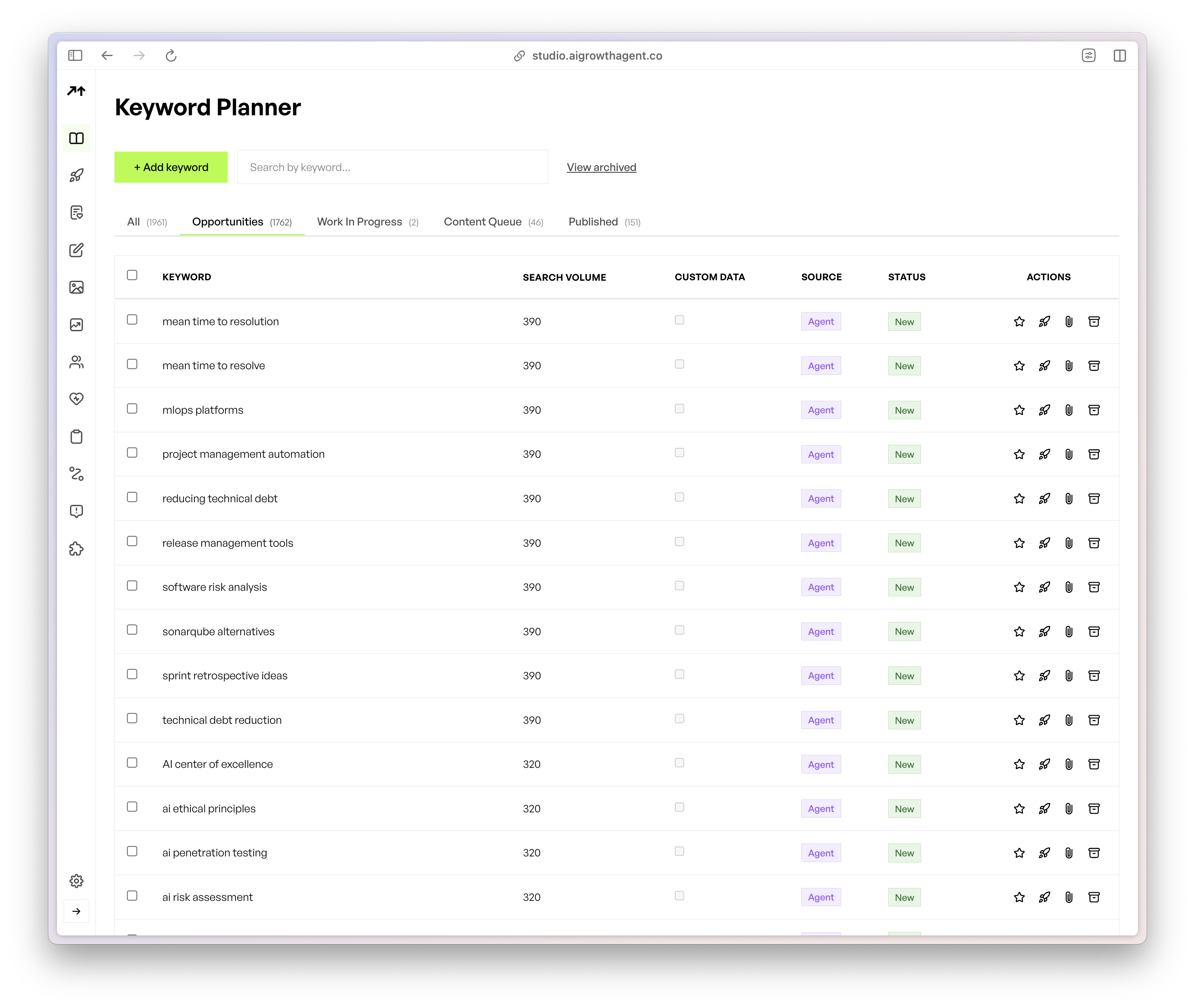
AI Growth Agent functions as a programmatic SEO engine that autonomously builds high-authority content architectures. The platform deploys specialized agents that handle keyword clustering, content creation, schema implementation, and direct publishing at superhuman scale. This automation runs through the Company Manifesto system, which keeps tone and positioning consistent across hundreds of articles. AI Growth Agent also manages technical infrastructure setup and introduced the first blog Model Context Protocol (MCP) for AI search engine integration. These capabilities helped Bucked Up secure the number one ChatGPT citation for “best protein soda” within three weeks. The platform uses custom pricing with one-week onboarding and holds a 10/10 AI compatibility score for programmatic velocity and LLM-focused performance.
|
Pros |
Cons |
|---|---|
|
Multi-tenant deployment, Real-time content injection, Database-to-content automation |
Custom pricing, Requires solid SEO foundation |
2. HubSpot – CRM Growth and Inbound Engine
HubSpot unifies marketing, sales, and service tools with built-in Breeze AI capabilities. The platform supports pipeline management, AI-powered sales prospecting, and customer service automation for full-funnel growth. Starter Customer Platform pricing begins at $15 per seat (promotional, billed monthly). HubSpot includes behavior-based workflows, predictive lead scoring, and more than 1,500 integrations. Embedded AI across CRM, marketing, sales, and service earns a 9/10 AI score and suits mid-market companies that value ease of use and inbound marketing.
|
Pros |
Cons |
|---|---|
|
All-in-one platform, Strong AI integration, Extensive app ecosystem |
Higher pricing tiers, Learning curve for advanced features |
3. Klaviyo – Email and Retention Automation
Klaviyo focuses on email marketing and SMS automation with detailed customer journey mapping. The platform supports AI-driven recommendations, dynamic content personalization, and behavioral trigger workflows. Pricing starts at $0/month with a free plan for up to 250 active profiles. Klaviyo excels in e-commerce retention through cart abandonment flows, post-purchase sequences, and predictive analytics. A 9/10 AI score reflects its machine learning for send-time optimization, content suggestions, and lifetime value predictions, which helps brands increase repeat purchases.
|
Pros |
Cons |
|---|---|
|
Advanced segmentation, Strong e-commerce integrations, Predictive analytics |
Email-focused, Pricing scales with contacts |
4. Marketo – Enterprise Marketing Automation Suite
Marketo, part of the Adobe ecosystem, delivers enterprise marketing automation with Adobe Generative AI support. The platform covers advanced lead nurturing, account-based marketing, and multi-touch attribution. Entry pricing begins at $895/month. Dynamic Chat powers AI-driven conversational marketing, while Marketo Measure offers AI attribution modeling. An 8/10 AI score and deep Adobe integration make Marketo a strong fit for enterprises with complex B2B sales cycles and large-scale personalization needs.
|
Pros |
Cons |
|---|---|
|
Enterprise scalability, Adobe ecosystem integration, Advanced attribution |
High cost, Complex implementation, Steep learning curve |
5. Amplitude – Product and Growth Analytics
Amplitude delivers behavioral analytics and predictive insights that guide user engagement improvements. Pricing starts at $49/month. Core features include cohort analysis, funnel reporting, and predictive retention modeling. AI capabilities span automated anomaly detection, predictive analytics, and intelligent segmentation. A 9/10 AI score reflects its ability to reveal behavior patterns and churn risk, which supports data-driven growth for product-led companies and SaaS teams.
|
Pros |
Cons |
|---|---|
|
Advanced behavioral analytics, Predictive modeling, Real-time insights |
Analytics-focused, Requires technical setup, Higher pricing |
6. Optimizely – Experimentation and Personalization Platform
Optimizely powers enterprise A/B testing, multivariate experiments, and AI-driven personalization. The platform includes feature flags, statistically sound experimentation, and robust APIs for complex testing programs. Custom pricing reflects its enterprise focus, while AI personalization adjusts experiences based on user behavior. An 8/10 AI score comes from machine learning that supports experiment analysis, traffic allocation, and personalization recommendations. Optimizely works well for companies that treat experimentation and conversion rate improvement as core disciplines.
|
Pros |
Cons |
|---|---|
|
Statistical rigor, Enterprise features, AI personalization |
Custom pricing, Complex setup, Enterprise-focused |
See how programmatic SEO complements your experimentation strategy. The AI Growth Agent team can walk through integrations with tools like Optimizely so content authority supports stronger test results.
7. Zapier – No-Code Automation Hub
Zapier connects more than 6,000 web applications through no-code workflows. Entry pricing starts at $19.99/month (billed annually). The platform supports multi-step Zaps, conditional logic, webhooks, and lightweight databases. AI features include automation suggestions and workflow improvement recommendations. An 8/10 AI score and broad integration library make Zapier a practical choice for teams that want to automate repetitive marketing tasks without engineering support.
|
Pros |
Cons |
|---|---|
|
Extensive integrations, No-code setup, Flexible workflows |
Task consumption limits, Limited native AI features |
8. Mixpanel – User Behavior Insights
Mixpanel focuses on event tracking and user behavior analytics. Pricing starts at $0 with a free tier. The platform offers funnel analysis, cohort tracking, and retention reporting with AI-powered anomaly detection. Machine learning supports predictive analytics, automated insights, and intelligent alerts. An 8/10 AI score reflects its ability to surface actionable patterns that help product and growth teams refine engagement and conversion funnels.
|
Pros |
Cons |
|---|---|
|
Event-based tracking, Real-time analytics, Predictive insights |
Technical implementation, Limited marketing automation |
9. PostHog – Open-Source Product Analytics
PostHog delivers open-source product analytics with options for self-hosted deployment. The freemium model includes session recordings, feature flags, and A/B testing. AI features cover automated insight generation and anomaly detection. An 8/10 AI score and open-source flexibility appeal to technical teams and startups that want analytics control, data privacy, and customization.
|
Pros |
Cons |
|---|---|
|
Open-source, Self-hosted option, Comprehensive features |
Technical setup required, Limited enterprise support |
10. Customer.io – Behavioral Journey Orchestration
Customer.io centers on behavioral automation and customer journey orchestration. Pricing begins at $100/month. The platform supports trigger-based messaging across email, SMS, and push notifications. AI capabilities include send-time optimization, content personalization, and predictive segmentation. An 8/10 AI score reflects its use of machine learning to refine timing and content, which benefits teams that run complex lifecycle marketing programs.
|
Pros |
Cons |
|---|---|
|
Behavioral triggers, Multi-channel messaging, Advanced segmentation |
Higher pricing, Learning curve, Limited CRM features |
11. GrowthBook – Open-Source A/B Testing
GrowthBook offers open-source experimentation and feature flag management with a freemium model. The platform provides statistical analysis, experiment tracking, and integrations for development teams. AI features include automated statistical analysis and experiment suggestions. A 7/10 AI score and developer-friendly design make GrowthBook a strong option for technical teams and startups that want cost-effective experimentation tools.
|
Pros |
Cons |
|---|---|
|
Open-source, Developer-friendly, Statistical rigor |
Technical setup, Limited marketing features, Smaller ecosystem |
12. beehiiv – Newsletter Growth Platform
beehiiv focuses on newsletter creation and audience growth with AI-supported personalization. Pricing ranges from $0-99/month, which suits creators and businesses at different stages. The platform includes audience segmentation, monetization tools, and growth analytics. A 7/10 AI score reflects its writing assistance and content improvement features. beehiiv works well for content-led brands and thought leaders that treat newsletters as a primary growth channel and want a fast, roughly 30-minute setup.
|
Pros |
Cons |
|---|---|
|
Newsletter-focused, Easy setup, Monetization features |
Limited automation, Narrow focus, Fewer integrations |
Top 5 Growth Marketing Platforms for Startups and SaaS
Startups and SaaS teams need stacks that balance low upfront cost with room to scale quickly. The most effective combinations pair GrowthBook and PostHog for analytics and experimentation, Zapier for automation, Customer.io for lifecycle messaging, and beehiiv for content distribution. SaaS companies achieving 30% growth often connect these tools into integrated workflows. Zapier acts as the automation hub that passes insights from PostHog into Customer.io triggers, while beehiiv supports thought leadership content that drives top-of-funnel awareness and builds domain authority.
4 Growth Strategies Platforms Enable in 2026
Programmatic Content Authority: Platforms like AI Growth Agent automate content creation at scale and help brands build comprehensive topic coverage. This depth increases the chance of earning AI search citations across ChatGPT, Perplexity, and Google AI Overviews.
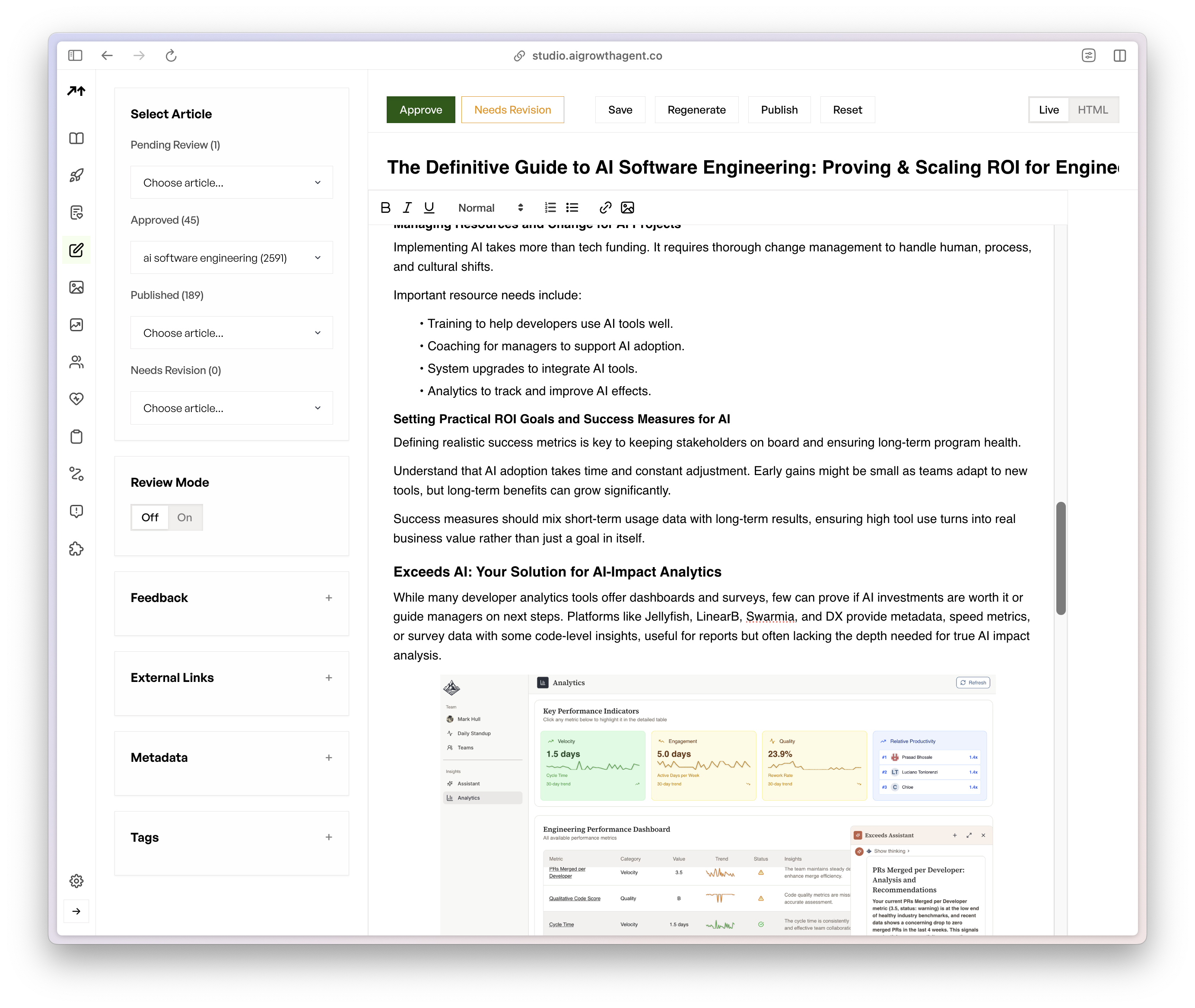
AI-Powered Personalization: The content foundation from programmatic authority then feeds personalization engines. Advanced platforms use machine learning to tailor experiences across email, web, and mobile, which lifts conversion rates and lifetime value through behavioral prediction and dynamic content.
Omnichannel Orchestration: Personalization works best when messages stay consistent across channels. Modern growth platforms coordinate campaigns across email, SMS, social, and web so customers experience a unified brand journey that supports trust and conversions.
Predictive Analytics Integration: Orchestrated journeys generate rich data that fuels predictive models. Platforms apply AI to forecast behavior, flag churn risk, and refine acquisition spend, which supports proactive growth strategies and lower customer acquisition costs.
Stack Builder Matrix: Proven Platform Combinations
High-performing teams rarely rely on a single platform. They assemble integrated stacks where each tool plays a clear role and data flows freely. The matrix below highlights tested combinations, the primary use case for each stack, and the ROI improvements companies have reported after connecting these tools.
|
Core Tool |
Integration |
Use Case |
ROI Boost |
|---|---|---|---|
|
Klaviyo |
Zapier + AI Growth Agent |
Programmatic content to email automation |
25% CAC reduction |
|
HubSpot |
Amplitude + Optimizely |
Analytics-driven CRM optimization |
30% conversion improvement |
|
Customer.io |
Mixpanel + PostHog |
Behavioral journey optimization |
40% retention increase |
|
AI Growth Agent |
HubSpot + Klaviyo |
Authority-driven lead generation |
3x organic traffic growth |
Final Recommendations: Choosing Your 2026 Growth Stack
AI-native growth marketing now rewards teams that combine programmatic content, automation, and analytics into one coherent stack. Marketing automation delivers 444% ROI when strategy, tooling, and execution align. Effective evaluation starts with a decision matrix that weighs AI compatibility, integration depth, and documented ROI for your specific goals. Many companies pair foundational tools like HubSpot or Klaviyo with specialized platforms for programmatic content, advanced analytics, and experimentation. This approach reduces data silos, increases automation coverage, and supports higher customer lifetime value.
Schedule a consultation session to review your current stack and identify where programmatic SEO can amplify existing growth investments.
FAQ
What are growth marketing platforms?
Growth marketing platforms are software systems that automate and coordinate customer acquisition, retention, and optimization. Typical capabilities include email marketing, CRM, analytics, A/B testing, and workflow automation. In 2026, leading platforms also embed AI for predictive analytics, personalization, and programmatic content creation so businesses can scale while maintaining strong customer experiences.
Which growth marketing platforms work best for startups?
Startups gain the most value from platforms that offer freemium tiers or low entry pricing with clear upgrade paths. Strong options include PostHog for analytics, GrowthBook for experimentation, Zapier for automation, and beehiiv for content marketing. These tools cover core growth needs without enterprise-level costs, which helps early-stage teams build sophisticated stacks while preserving capital.
How do growth marketing platforms integrate with AI search optimization?
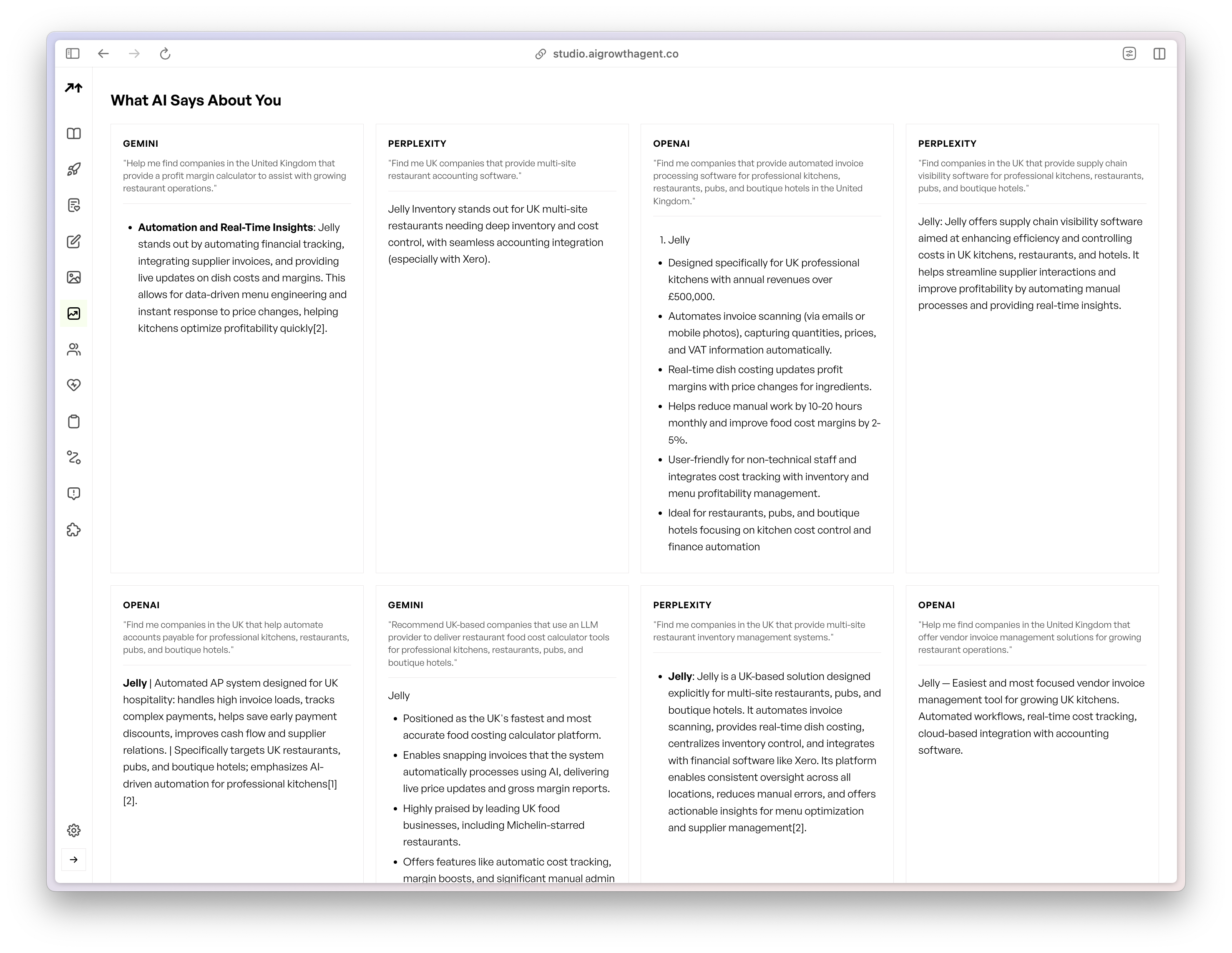
Modern growth platforms increasingly support AI search optimization through structured data, automated content workflows, and citation tracking. AI Growth Agent focuses on programmatic SEO that earns citations in ChatGPT, Perplexity, and Google AI Overviews. Platforms like HubSpot and Klaviyo connect to specialized tools such as AI Growth Agent so teams can feed AI search engines with consistent, on-brand content.
What ROI can businesses expect from growth marketing platforms in 2026?
Well-implemented growth platforms can deliver significant returns. Email marketing often reaches 3,600% ROI, and overall marketing automation averages 444% ROI. B2B SaaS companies see an average ROI of 702% from SEO over three years, according to First Page Sage, while social media marketing averages 420% ROI. Actual performance depends on platform fit, integration quality, and alignment with customer lifecycle strategy.
How should businesses evaluate growth marketing platforms for 2026?
Teams should evaluate platforms based on AI compatibility scores, integration options, pricing scalability, and proven ROI. Primary objectives such as programmatic content, retention, analytics, or experimentation should guide the shortlist. Technical requirements, internal expertise, and budget constraints also matter. Many organizations combine a core platform for CRM or email with specialized tools for programmatic SEO, predictive analytics, or omnichannel orchestration.
Conclusion
The 2026 growth marketing landscape favors platforms that blend classic automation with AI-native capabilities. Foundational tools like HubSpot and Klaviyo still anchor CRM and email programs, while programmatic approaches now create the edge in authority and visibility. AI Growth Agent advances this shift by autonomously building content architectures that earn AI search citations and improve CAC and organic reach. Schedule your demo to deploy autonomous programmatic SEO and position your brand as the definitive authority in its category.
