Written by: Mariana Fonseca, Editorial Team, AI Growth Agent
Key Takeaways
- Contact-based pricing in affordable marketing automation platforms creates forced upgrades as lists grow beyond entry thresholds, often doubling first-year costs through overages and fees.
- Brevo, Mailchimp, ActiveCampaign, Klaviyo, and HubSpot each introduce different scaling limits, such as daily send caps, segmentation ceilings, or mandatory onboarding fees that trigger migrations as campaigns expand.
- Switching costs for marketing automation tools typically span 3 to 6 months, with hidden expenses like data retention limits and rebuilding workflows compounding the financial impact of platform changes.
- Flat-fee alternatives remove per-contact billing risk and instead focus on compounding organic visibility through autonomous engines that scale without upgrade triggers tied to audience size.
- AI Growth Agent replaces fragmented marketing stacks with a flat-fee autonomous solution that delivers measurable lifts in citations, bot visits, and impressions — schedule a demo to see if it fits your growth stage.
Before you compare individual platforms, focus on the pattern behind their pricing. Each “affordable” entry point hides a different upgrade trigger, whether it is send caps, contact tiers, or mandatory fees. Use this table to spot which constraint will hit your business first.
Quick Comparison: Starting Price, Contact Pricing & Scaling Limits
| Platform | Entry Price (2026) | Pricing Model | Scaling Limit / Upgrade Trigger |
|---|---|---|---|
| Brevo | Starting at $9/mo (scaling with email volume under 5k contacts) | Send-volume based, unlimited contacts | Daily send cap forces upgrade during campaign bursts |
| Mailchimp | Free up to 500 contacts, Premium from $350/mo | Contact + send volume | Advanced segmentation and omnichannel hit limits quickly |
| ActiveCampaign | $15 per month for up to 1,000 contacts when billed annually, or $19 when billed monthly | Contact-based per tier | Costs increase with higher contact volumes |
| Klaviyo | Free up to 250 profiles, $45/mo email, $60/mo email + mobile | Profile (contact) based | Costs scale steeply with database growth |
| HubSpot Mktg Hub | Starter $9 per seat per month annually ($15 monthly), Professional $800/mo annually or $890 monthly (including three seats plus a $3,000 onboarding fee) | Contact volume + seat | Significant scaling with contact volume, mandatory onboarding fees |
1. Brevo: Low Entry Cost, Hidden Send Caps
Brevo charges starting at $9 per month, scaling with email volume, for businesses under 5,000 contacts, which creates one of the more accessible entry points in the market. Unlike most competitors, Brevo’s free plan allows unlimited contacts but caps daily email sends at 300, with paid Starter plans beginning at $9 per month for additional send volume. Multi-channel coverage includes email and SMS from a single dashboard, with behavior-based triggers for new sign-ups, purchases, and link clicks.
The upgrade trigger is send volume, not contact count. Brevo imposes daily sending limits calculated as the monthly allowance divided by 30, which places emails on hold during campaign bursts. Any team running time-sensitive promotions or high-frequency nurture sequences will hit this ceiling before list size becomes the constraint. Automation workflows on the free tier are also restricted to 2,000 subscribers, which creates a second ceiling for teams that rely on automated sequences from day one.
Teams under 5,000 contacts with predictable, low-frequency send patterns can treat Brevo as a defensible choice. Once campaign cadence increases or segmentation needs deepen, the daily cap shifts from minor annoyance to structural limitation.
2. Mailchimp: Segmentation Limits Behind a Free Plan
Mailchimp offers a free plan for up to 500 contacts, with Premium plans starting at $350 per month. Costs for Mailchimp range from $13 to $350 per month for email automation with basic segmentation, targeting small businesses under 5,000 contacts. Multi-channel support spans email, SMS, social ads, and postcards, although the depth of that coverage varies sharply by plan.
The main scaling pain is segmentation rather than headline price. Mailchimp relies heavily on tags and aggregated fields for segmentation, so advanced use cases hit limits quickly, which forces upgrades when teams need granular, behavior-based, or multi-event segmentation. Data retention varies from 30 days on free accounts to 18 months on premium tiers, so historical segmentation becomes a hidden upgrade trigger as lifecycle analytics needs grow. Mailchimp also offers very basic omnichannel orchestration with no multi-channel or multi-message campaigns, which forces migration once coordinated email, SMS, push, or WhatsApp flows become a requirement.
Mailchimp works as a starting point for low-volume broadcast email. It turns into a migration project once a team needs behavioral depth, cross-channel coordination, or more than 18 months of historical data.
3. ActiveCampaign: Workflow Depth with Operational Ceilings
ActiveCampaign’s Starter plan costs $15 per month for up to 1,000 contacts when billed annually, or $19 when billed monthly, with a scaling curve that is more predictable than HubSpot’s modular structure. The platform serves as a flexible mid-market option for B2B and hybrid businesses with strong workflow depth and built-in CRM.
Multi-channel capabilities include advanced email automation and segmentation, with the Plus tier unlocking deeper automation as contact lists grow. ActiveCampaign’s Starter plan costs $15–$49 monthly and includes email automation plus CRM integration for small businesses. The workflow depth stands out at the mid-market level, but contact-volume pricing models in platforms like ActiveCampaign create forced-upgrade scenarios as organizations grow beyond entry-level contact limits.
The practical ceiling appears when workflow complexity requires conditional logic tied to real-time behavioral data. When adding workflow complexity requires IT help, custom development, or enterprise-tier upgrades, this marks a practical scaling ceiling that forces organizations to migrate to higher-tier platforms. ActiveCampaign supports the mid-market well. Operational complexity, not raw contact count, eventually forces a decision.
4. Klaviyo: Ecommerce Power with Profile-Based Costs
Klaviyo provides a free plan for up to 250 profiles, with Email plans starting from $45 per month and Email + mobile from $60 per month, with costs scaling based on database size. Klaviyo starts at $45 per month for ecommerce-focused marketing automation and targets stores with $500K to $1B GMV, offering transparent pricing tiers and predictive models for CLV, churn, and order timing.
Klaviyo uses a profiles-plus-sends pricing model with transparent tiers, which feels more legible than HubSpot’s modular structure. Multi-channel coverage spans email, SMS, and push notifications, primarily for Shopify-native brands. Klaviyo has reported deliverability challenges and platform outages during high-volume sending periods such as Black Friday and Cyber Monday, which limits reliability for growing contact volumes at the moments that matter most.
Database-growth cost sits at the center of the risk. Klaviyo’s costs scale steeply with database growth beyond entry limits. For ecommerce operators with fast-growing lists, the per-profile billing model turns every new subscriber into a direct line item. Klaviyo fits Shopify brands under $1B GMV with stable list sizes. It becomes expensive as a growth vehicle for teams aggressively building their database.
5. HubSpot Marketing Hub: All-in-One with Compounding Costs
HubSpot Marketing Hub Starter costs $9 per seat per month with annual billing ($15 monthly), while Professional costs $800 per month annually or $890 monthly, including three seats plus a $3,000 onboarding fee, with overall pricing scaling according to marketing contact volume. Any marketing automation features require Professional or Enterprise plans, which creates a forced upgrade from its free CRM tier with no mid-tier option.
The three-year cost picture becomes significant very quickly. The total cost of ownership for mid-market platforms such as HubSpot Enterprise grows sharply once overages and seat growth enter the mix. HubSpot’s costs scale heavily with contact volume at higher levels, compared to other platforms, and that gap compounds each year. HubSpot employs modular pricing that can increase total cost as teams scale marketing features, with each add-on creating a separate billing line.
HubSpot Marketing Hub Enterprise starts at $3,600 per month, or $43,200 per year, plus a required one-time $7,000 Enterprise Onboarding fee, for a year-one total of $50,200, and works best for sub-500 employee B2B teams. For teams already inside the HubSpot CRM ecosystem, the switching cost calculus feels real. For teams evaluating it fresh, the mandatory onboarding fees and contact-volume scaling create a difficult fit for any organization expecting list growth in the next 12 months.
Decision Matrix: Clear Signals to Leave Contact-Based Tools
The pattern across all five platforms stays consistent: the advertised price assumes a static list at low volume. Contact-based pricing punishes large prospect lists, event-based pricing punishes product-led growth, and hidden costs such as data overages, integrations, and implementation fees routinely double the first-year bill. Walk away from a contact-based tool when any of the following apply: your list is growing faster than 20% per quarter, which means you will hit tier ceilings every few months; you need coordinated multi-channel flows beyond basic email, which pushes you into enterprise tiers that were never in the original budget; your team requires behavioral segmentation at the SKU or event level, which most affordable platforms cannot support without custom development; or your current platform’s migration cost is already being discussed internally, which signals that the pain of staying now rivals the pain of switching.
The flat-fee alternative removes the per-contact billing variable entirely. Instead of paying more to reach more people, a fixed-price engine compounds organic visibility. It builds a channel the brand owns, where content keeps working long after publication, with no upgrade trigger tied to list size.
Conclusion: Affordable at 1,000 Contacts, Expensive at Scale
Every platform reviewed here feels affordable at 500 or 1,000 contacts. None of them stay affordable at scale without trade-offs such as send caps, segmentation ceilings, mandatory onboarding fees, or per-profile billing that turns list growth into a cost center. A large share of marketing technology budgets in 2026 flows into automation, and a meaningful slice of that spend disappears into pricing model quirks rather than outcomes.
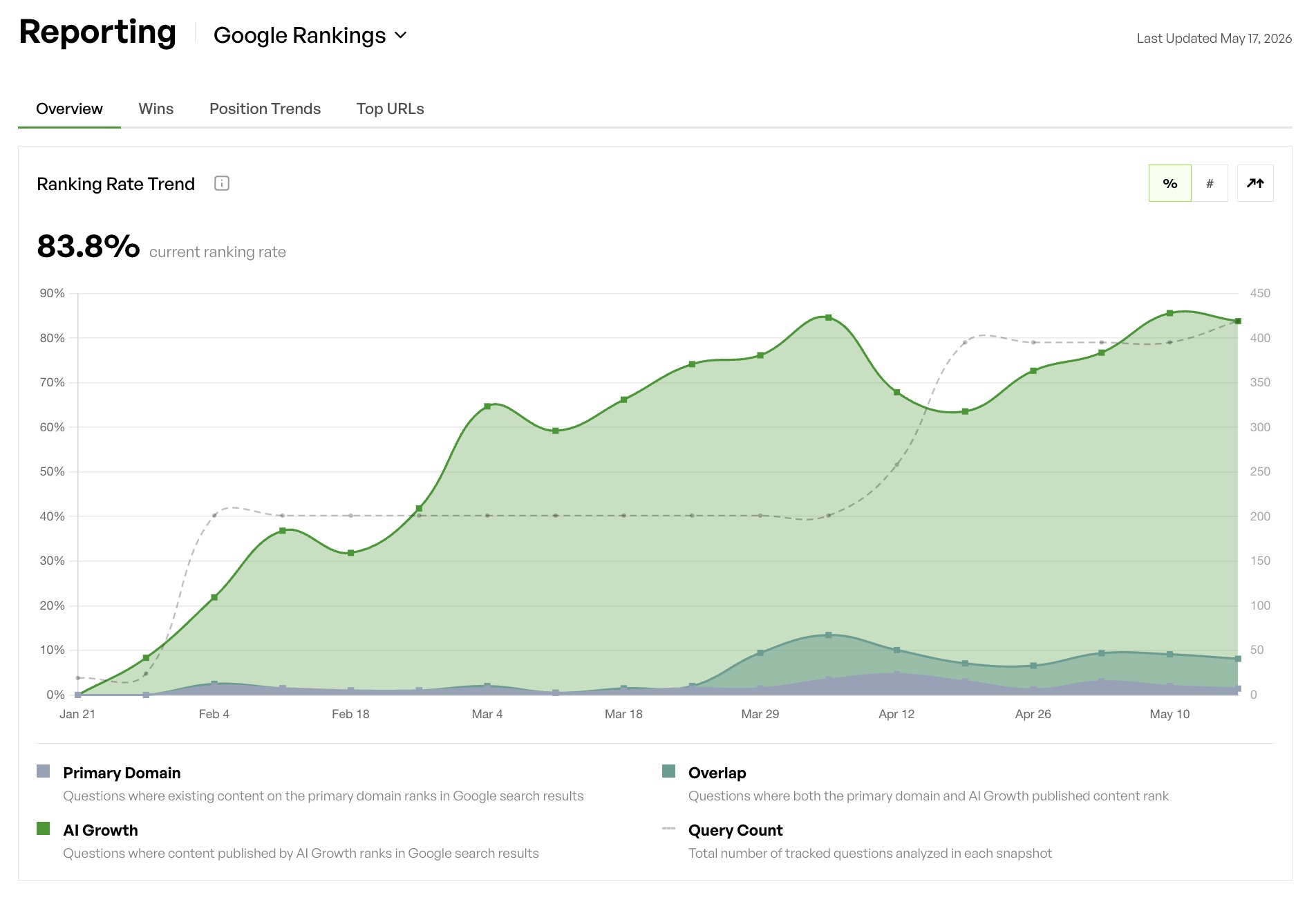
AI Growth Agent targets operators who have already run the contact-based math and rejected it. It replaces the fragmented stack of keyword research, content production, technical SEO, publishing, and monitoring with one autonomous engine at a flat fee. No per-contact charges. No per-prompt caps. No upgrade triggers tied to list size. The engine maps your brand’s full search universe, ships authoritative and search-ready content on autopilot, and compounds organic visibility in a channel you own outright. Clients average more than 12,000 additional AI citations and mentions, over 100,000 additional bot visits, and a 20% or greater lift in impressions within the first three months.
Frequently Asked Questions
How much does marketing automation actually cost at 10,000 contacts in 2026?
Costs at 10,000 contacts depend on platform and pricing model, not just the advertised starter tier. ActiveCampaign’s costs increase with contact volume under its contact-based tiers. Klaviyo scales steeply from its $45 entry point as profiles grow, with costs varying by send volume on top of profile count. HubSpot Marketing Hub Professional starts at $890 per month regardless of contact count, with additional scaling charges as marketing contact volume grows. Brevo avoids strict contact-based pricing but imposes daily send caps that force upgrades during high-frequency campaigns. Mailchimp’s Premium tier starts at $350 per month and climbs with list size and send volume. In every case, the advertised entry price understates the realistic cost at 10,000 contacts once send volume, feature tiers, and mandatory fees are included.
What are the most common forced-upgrade triggers in affordable marketing automation platforms?
Five triggers appear consistently across platforms. First, contact or profile count crossing a tier threshold, which is the most common trigger in contact-based tools like ActiveCampaign, Klaviyo, and HubSpot. Second, send volume limits, particularly Brevo’s daily cap calculated as monthly allowance divided by 30. Third, segmentation depth, since Mailchimp’s tag-based model hits limits when teams need behavioral or multi-event segmentation, which forces an upgrade or migration. Fourth, omnichannel requirements, because Mailchimp offers no native multi-channel or multi-message campaigns, so any need for coordinated SMS, push, or WhatsApp flows requires a platform change. Fifth, mandatory onboarding fees, as HubSpot’s Professional and Enterprise tiers require $3,000–$6,000 in onboarding fees that do not appear in the monthly subscription price.
How painful is migrating away from Mailchimp or a similar entry-level platform?
Migrating away from an entry-level platform usually feels more painful than teams expect. Enterprise marketing automation migrations typically take 3 to 6 months. Even mid-market migrations involve re-creating automation workflows, re-validating contact lists, rebuilding segmentation logic, and re-integrating with CRM and analytics tools. Data retention limits on lower Mailchimp tiers, as short as 30 days on free accounts, mean historical behavioral data may not be portable at all, which removes the segmentation value that justified the migration. The switching cost often exceeds any license savings in year one.
When should a business consider a flat-fee alternative instead of a contact-based platform?
A flat-fee alternative becomes the logical choice once contact-based math stops working in the business’s favor. Clear signals include list growth outpacing the budget allocated to the platform, the team spending more time managing upgrade decisions than running campaigns, platform segmentation or channel limits constraining campaign strategy, or the business needing durable organic visibility rather than another campaign execution tool. Contact-based platforms are built to send messages to a list you already have. A flat-fee autonomous engine like AI Growth Agent is built to grow the list by making the brand the answer across organic search and AI-generated results, compounding visibility in a channel the brand owns, with no billing tied to audience size.
What does “affordable marketing automation” actually mean at enterprise scale?
At enterprise scale, affordability reflects total cost of ownership rather than sticker price. List pricing often covers fewer than 30% of total cost once usage overages, implementation fees, mandatory premium support, and sandbox environments enter the picture. For mid-market companies with 50–500 employees, realistic year-one total cost of ownership for marketing automation ranges from $60,000 to $250,000 including implementation. HubSpot Enterprise’s total cost of ownership becomes substantial when overages and seat growth are factored in. Platforms that appear affordable in a vendor comparison often become the most expensive line items in the marketing budget within 18 to 24 months of deployment.