Written by: Mariana Fonseca, Editorial Team, AI Growth Agent
Key Takeaways For AI Citation Growth
- Schema markup AI optimization structures page content as entity graphs using @graph, sameAs, and knowsAbout so AI Overviews, ChatGPT, and Perplexity can identify and cite authoritative sources.
- Generic Article or Organization markup is insufficient. Only connected entity graphs with consistent @id references and external sameAs links provide the signals AI systems need for citation.
- The minimum viable 2026 schema stack combines Article/BlogPosting, FAQPage, Person, and Organization inside a single @graph array, plus agentic layers like llms.txt and Blog MCP for self-healing infrastructure.
- Real deployments show measurable gains. Leva Sleep and Breadless achieved top AI citations and impressions after implementing AI-optimized schema and content through structured data strategies.
- Schedule a consultation to see how AI Growth Agent can measure and automate schema-driven citation gains for your brand: see the measurement framework in action.
Building A 2026-Ready Schema Entity Graph
The minimum viable schema stack for AI citation readiness in 2026 is Article or BlogPosting, FAQPage, Person (author), and Organization, all wired together inside a single @graph array. The following JSON-LD block demonstrates that pattern with sameAs, about, and knowsAbout properties included.
<script type="application/ld+json"> { "@context": "https://schema.org", "@graph": [ { "@type": "Organization", "@id": "https://www.example.com/#organization", "name": "Example Brand", "url": "https://www.example.com", "logo": { "@type": "ImageObject", "url": "https://www.example.com/logo.png" }, "sameAs": [ "https://www.linkedin.com/company/example-brand", "https://www.wikidata.org/wiki/Q_EXAMPLE", "https://www.crunchbase.com/organization/example-brand" ], "knowsAbout": [ "schema markup", "AI search optimization", "entity graph linking" ] }, { "@type": "Person", "@id": "https://www.example.com/#author-jane-doe", "name": "Jane Doe", "jobTitle": "Head of Content", "worksFor": { "@id": "https://www.example.com/#organization" }, "sameAs": ["https://www.linkedin.com/in/janedoe"] }, { "@type": "BlogPosting", "@id": "https://www.example.com/blog/schema-guide/#article", "headline": "Schema Markup AI Optimization Guide", "author": { "@id": "https://www.example.com/#author-jane-doe" }, "publisher": { "@id": "https://www.example.com/#organization" }, "about": { "@type": "Thing", "name": "Schema Markup AI Optimization" }, "datePublished": "2026-06-16", "dateModified": "2026-06-16" }, { "@type": "FAQPage", "@id": "https://www.example.com/blog/schema-guide/#faq", "mainEntity": [ { "@type": "Question", "name": "What schema types help with AI citations?", "acceptedAnswer": { "@type": "Answer", "text": "FAQPage, HowTo, Article, and Organization schema with sameAs and knowsAbout properties are the highest-impact types for AI citation in 2026." } } ] } ] } </script> Each entity should be defined once inside the @graph array and referenced via @id from other entities rather than duplicated. Duplication creates conflicting entity signals that AI systems cannot resolve confidently. sameAs should point only to external pages that genuinely represent the same entity, such as LinkedIn company pages, Wikidata entries, or Crunchbase profiles. Random citations or pages that only mention the entity in passing weaken entity confidence rather than strengthening it.
For Product and Review schemas, the same @graph pattern applies. A Product node links to the Organization via a brand property referencing the organization’s @id. An AggregateRating node nests inside the Product only when real reviews exist. Shipping AggregateRating with a fabricated review count triggers Google’s SpamBrain and can result in manual actions that take months to clear.

Turning Schema Into A Self-Healing Agentic Layer
Agentic extensions turn static markup into living, self-healing infrastructure. llms.txt placed at the domain root provides AI agents a curated Markdown map of the site’s most important content. Platforms such as Mintlify provision an MCP server alongside llms.txt and llms-full.txt to turn documentation into a queryable knowledge layer. Blog MCP exposes schema, manifest, discovery, and capability guidance directly to agents.
Agent Card guidance and OpenAI discovery served via /.well-known/ complete the discovery layer so any agent crawling the domain can identify what the site offers and how to interact with it. The recommended deployment sequence is to add llms.txt first, then structured data, then audit key user actions from an agent’s perspective. This sequence turns MCP implementation into an extension of existing infrastructure rather than a rebuild.
Has Schema Actually Helped Anyone Get Cited In AI Overviews
With the technical foundation established, the natural question becomes whether these implementations actually drive measurable citation gains. The skepticism is reasonable. Schema alone does not guarantee a citation. Google states that schema types like FAQ, HowTo, and Article markup may support inclusion in AI Overviews, though they are not guaranteed to do so. Evidence instead shows a consistent directional advantage for structured pages over unstructured ones.
Pages with FAQPage schema are more likely to appear in AI responses, and secondary sources attribute a 44% increase in AI citations from structured data to BrightEdge research, but no primary BrightEdge study confirms this and the statistic appears unsubstantiated. A majority of websites implement at least one structured data format, which keeps the competitive bar for early adopters relatively low.
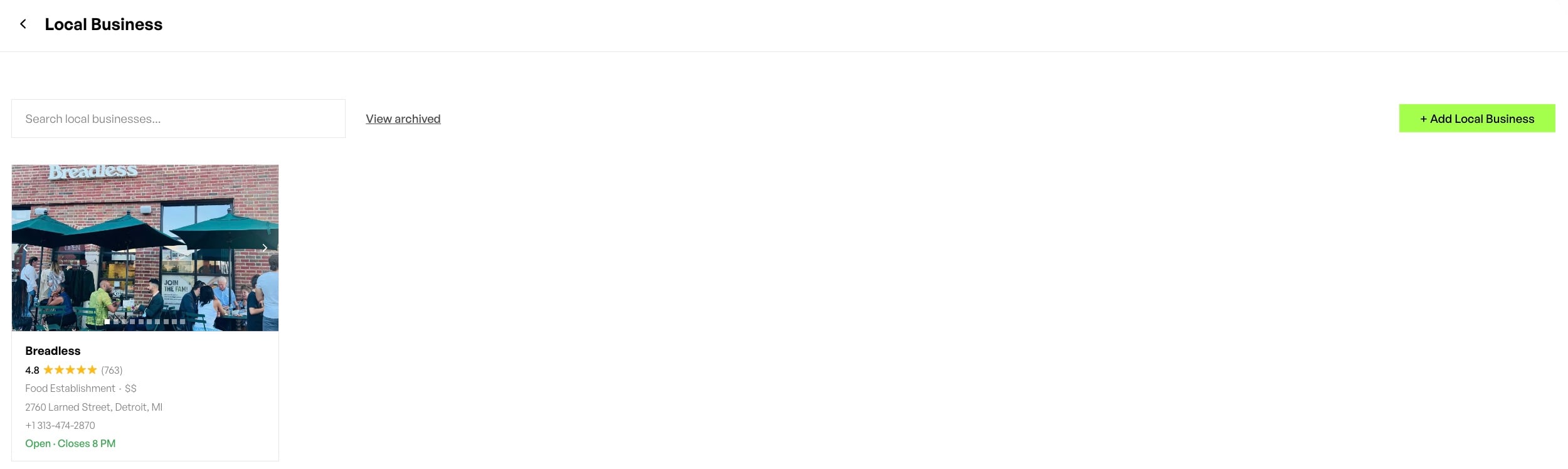
The more compelling evidence comes from real deployments. Leva Sleep, running AI-optimized content through AI Growth Agent, became the most mentioned retailer for adjustable beds in Canada, with ChatGPT citing its content over thousands of times per month and tens of thousands of dollars in deals closed in under three weeks from AI-driven buyers. Breadless achieved a significant lift in Google Search Console impressions over six months and is now the most recommended healthy franchise in the US ahead of CAVA, Rush Bowls, and Sweetgreen.
Isolating the schema contribution from the broader content investment requires the four-pillar data foundation. Search Intelligence establishes the traditional ranking baseline, which provides the control against which AI-driven changes can be measured. AI Analytics then tracks citation and mention patterns across AI surfaces, but without Bot Tracking to confirm which crawlers are reading which pages and when, teams cannot verify that AI systems have even seen schema updates.
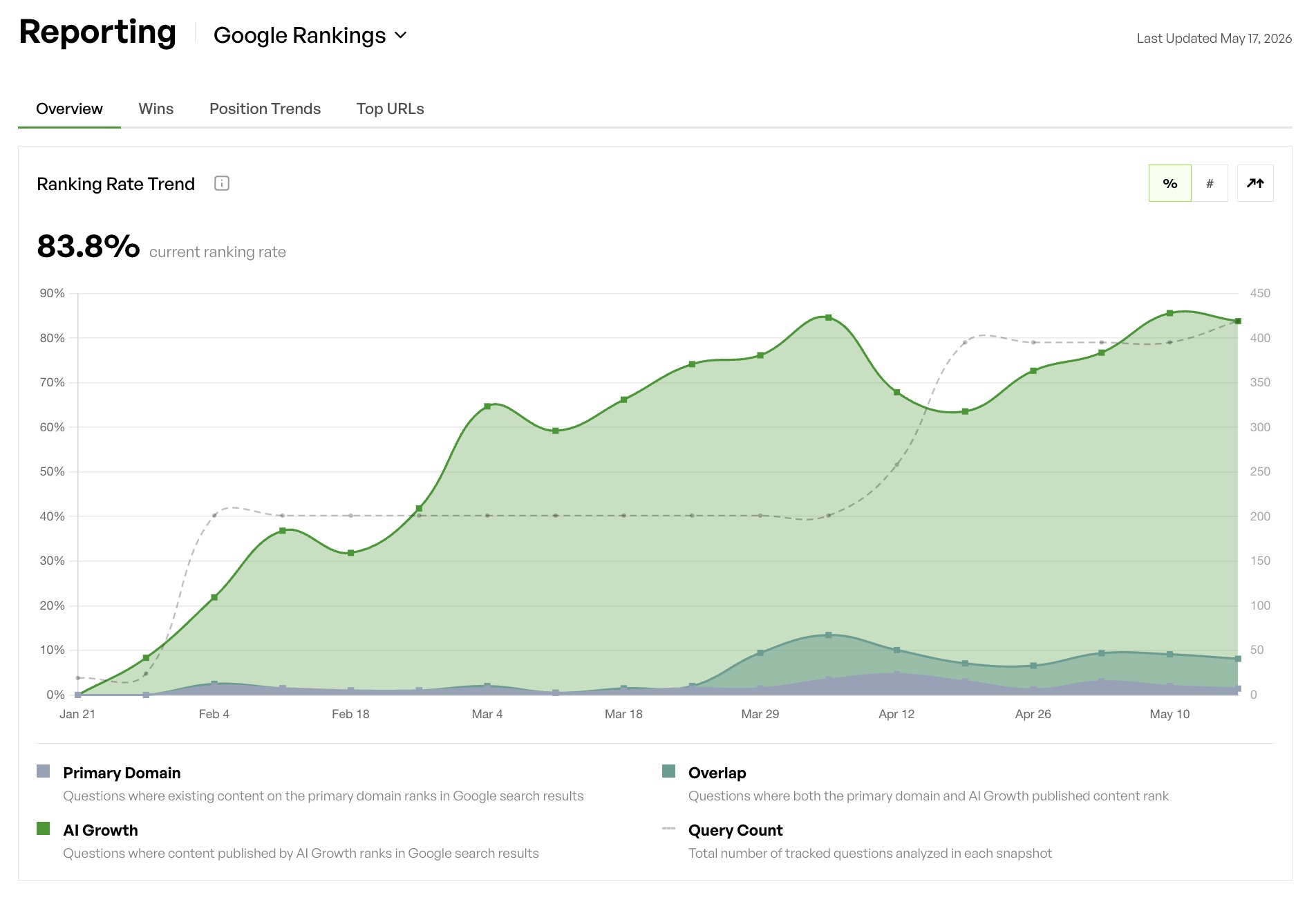
AI Ranking completes the picture by monitoring order of mention and citation context week over week, which allows teams to distinguish whether a citation improvement followed a schema deployment or a content change. Only when all four pillars work together can teams produce incremental visibility reporting that isolates what schema and content changes actually generated.
Step-By-Step Schema Validation Workflow
Schema that passes a syntax check but fails a content-alignment check earns no citations and risks manual action. The following numbered checklist covers the full validation path for 2026.
- Run every page with markup through Google’s Rich Results Test before deployment to catch syntax errors and rich-result eligibility failures. This tool is lenient and focused on eligibility, so it serves as a necessary first pass, not a sufficient one.
- Run the same markup through the Schema.org Validator, which is strict and catches undefined properties, typos, and type mismatches that the Rich Results Test ignores. Both validators must pass before deployment.
- Verify content-schema alignment. Every Question in FAQPage JSON-LD must appear word-for-word in the visible HTML, with the answer also visible in the initial HTML, or the page will not earn AI citations. Mismatches between schema and visible content, such as schema stating “In Stock” while text says “Sold Out,” risk AI systems flagging the site as untrustworthy.
- Check for duplicate
@idvalues caused by multiple schema injections from plugins. Post-publication validation must target the rendered DOM rather than raw HTML source when schema is injected via JavaScript or plugins. - Monitor Search Console Enhancements reports in production. Track rich-result impressions, Knowledge Panel accuracy, and AI Mode citation rates on a 30-day cadence for 90 days after changes, because Google’s indexing of schema updates can take weeks.
- Confirm bot-tracking proof. Cross-reference Bot Tracking data against schema deployment dates to verify that AI crawlers from OpenAI, Google, and Perplexity are hitting updated pages. A citation uptick that follows a bot visit to a schema-updated page is the closest available proof of schema contribution.
- Run recurring audits. Schema can break silently during redesigns, CMS updates, and content changes, so monthly audits using crawling tools such as Screaming Frog are recommended to catch schema drift across the full site.
How AI Growth Agent Provisions And Self-Heals Schema At Scale
The validation workflow above describes what a technical team must do manually for every page, every deployment, and every CMS update. Most enterprise marketing teams do not have that team. AI Growth Agent removes the dependency entirely.
Every site AI Growth Agent stands up ships with the full schema suite provisioned automatically: Article, FAQ, local business, Organization, Review, Product, author, and software application schema, all wired into a coherent @graph with consistent @id anchors and sameAs links. No schema plugin to configure, no JSON-LD to write, no validation step to run manually. The engine handles it and self-heals when content changes.
When an article is updated, the schema updates with it. This alignment keeps content-schema consistency intact and avoids the trust penalties that mismatched markup triggers in AI systems. The agentic layer described in the tutorial, including Blog MCP, llms.txt, and /.well-known/ discovery, ships automatically with every AI Growth Agent site. The difference is that it self-heals, so schema and discovery files update as content changes and stay aligned without manual intervention.
Across the first twelve weeks, AI Growth Agent clients average more than thousands of additional AI citations and mentions, over tens of thousands of additional bot visits, and a lift in impressions. The outcomes described earlier for Leva Sleep and Breadless follow this same pattern, with schema and agentic infrastructure working together to drive citation volume and buyer-intent traffic. Bisutti’s results in Brazil demonstrate that the model scales across markets and verticals, as AI Growth Agent drove a majority of its brand mention visibility and helped it become the second most recommended events brand by AI in the country.
Frequently Asked Questions
What is the difference between generic Article schema and an @graph entity graph?
A standalone Article block tells a crawler that a page contains an article. An @graph entity graph connects that article to a named author, a verified organization, a topical subject declared via the about property, and external identity confirmations via sameAs. AI systems use those connections to resolve whether the source is authoritative for the topic being cited. Without the graph, the entity is ambiguous, and ambiguous entities lose citations to clearly structured competitor pages.
How long does it take for schema changes to affect AI citation rates?
Google’s indexing of schema updates can take weeks, and AI citation latency varies widely by model, ranging from hours for some platforms to weeks for others, with many pages still uncited after 30 days. The standard measurement cadence is to track rich-result impressions, Knowledge Panel accuracy, and AI Mode citation rates on a 30-day cadence for 90 days after any schema change. Bot Tracking data can provide an earlier signal, because a confirmed crawl by ChatGPT’s or Perplexity’s bot on a schema-updated page is a leading indicator that the citation pool has been refreshed.
Does llms.txt directly improve AI citation rates?
Evidence on llms.txt remains mixed. Some experiments show directional benefits in referral traffic from answer engines, while controlled studies have found no statistically significant citation uplift attributable to the file alone. The stronger consensus is that llms.txt functions as infrastructure rather than strategy. It reduces the computational cost for AI models to parse a site and provides a curated navigation layer, but it does not substitute for authoritative content, entity-linked schema, and consistent external mentions.
The recommended approach is to deploy llms.txt and llms-full.txt as part of a complete agentic technical SEO stack rather than as a standalone tactic.
Can schema markup hurt a site if implemented incorrectly?
Incorrect schema carries real risk. Shipping AggregateRating with fabricated review counts can trigger spam detection and result in manual actions. FAQ markup on pages where the FAQ is not the primary content can become ineligible for rich results or carry manual action risk after the March 2026 core update. Schema that contradicts visible page content, such as a price in markup that differs from the price on the page, erodes AI engine validation trust.
The safest implementation practice is to mark up only what is genuinely present on the page, validate with both Google’s Rich Results Test and the Schema.org Validator before deployment, and run monthly audits to catch drift.
What schema types have the highest impact on AI citation in 2026?
As noted in the key takeaways, FAQPage, HowTo, Article or BlogPosting, and Organization schema with sameAs and knowsAbout properties form the core stack for AI citation readiness. These types have high impact because they make content directly extractable. FAQPage surfaces question-and-answer pairs that AI systems can quote. HowTo exposes step sequences that answer procedural queries. Organization schema with knowsAbout declares topical authority that AI source-selection logic uses when choosing which sources to cite for a given query category.
Conclusion: Turning Schema Into Compounding AI Authority
Schema markup is table stakes for AI search in 2026. A page without structured data forces an AI system to interpret everything from prose, while competing against pages that provide a pre-built entity graph. The gap between those two pages widens every quarter as AI surfaces become more selective about which sources they cite.
Generic Article or Organization markup closes some of that gap. Living schema, with @graph entity linking, sameAs identity confirmation, knowsAbout topical authority signals, and agentic extensions including Blog MCP, llms.txt, llms-full.txt, and /.well-known/ discovery, closes the rest and then compounds. Each new piece of content that ships with a correctly linked entity graph reinforces the organization’s authority signal. Each bot visit that confirms a crawl of schema-updated content adds a data point that the citation pool has been refreshed, and each citation that follows becomes a training signal for the next generation of models.
The brands cited in AI search this year are training the next generation of models with their own narrative. The brands that wait are training those models with whatever happens to be sitting on the open web. Schema forms the foundation, and living, agentic schema turns that foundation into compounding authority in a zero-click world.
Get your first schema-optimized, entity-linked article live within a week: start the implementation.