Written by: Mariana Fonseca, Editorial Team, AI Growth Agent
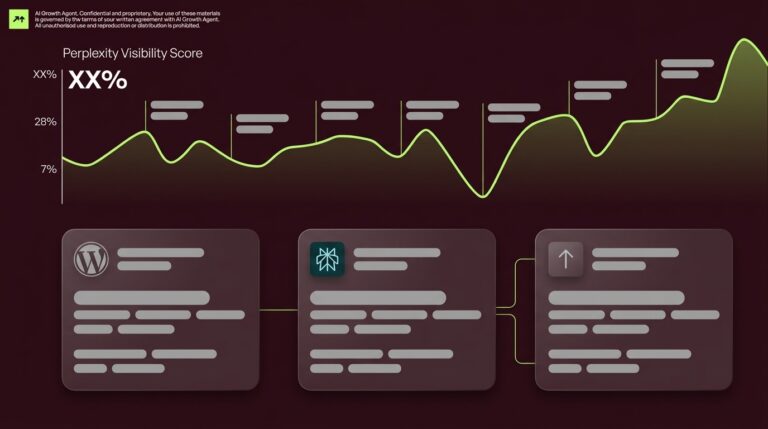
AI-powered tools like ChatGPT, Gemini, and Perplexity have changed how customers discover businesses. Unlike traditional search engines, these systems prioritize authority and citations in Large Language Models (LLMs) over keyword rankings. This shift calls for a new content strategy focused on establishing credibility in AI search.
For enterprise marketers, adapting to AI search offers both opportunities and challenges. Brands that position themselves as trusted sources can gain citations and control their narrative. Those slow to adjust may lose ground as competitors shape the conversation and their online presence fades amid growing AI-generated content.
This comparison looks at two tools tackling this shift. Surfer SEO focuses on traditional search optimization, while AI Growth Agent is built for AI search authority. Both optimize content, but their features and impact on strategy differ significantly in today’s discovery landscape.
Why Traditional Content Strategies Struggle with AI Search
AI search operates on different principles than traditional SEO. Older strategies centered on keywords and backlinks often miss the mark when it comes to earning visibility through authority and depth in AI systems.
Your online presence diminishes as AI generates vast amounts of content daily. Without consistent, high-value material, your brand’s visibility drops in AI-indexed spaces. Daily publishing isn’t just a goal, it’s a necessity to stay relevant in this fast-paced environment.
If your content doesn’t address user needs with expertise, AI search tools will highlight competitors instead. They’ll gain citations and thought leadership, while your brand fades from view. Content gaps become losses to rivals in this new space.
Traditional approaches often fall short. SEO agencies, limited by human resources, can’t match the needed publishing pace. A single monthly post won’t compete with daily authoritative content. Internal teams may lack the technical skills for AI-specific requirements like schema markup or LLM.txt files.
Basic AI writing tools also struggle, producing generic output that risks penalties from search engines. They shift strategy and publishing tasks back to staff, failing to offer a complete solution while draining resources better used elsewhere.
Learn how AI Growth Agent helps your brand lead in AI search optimization and avoid losing ground to competitors.
What Enterprise Marketers Need in AI Search Content Tools
Choosing a content solution for AI search means focusing on specific capabilities that go beyond traditional SEO tools. These requirements separate minor gains from major strategic wins.
- Full automation in content creation, from research to publishing, with little human input for routine tasks. This supports the volume needed for visibility while freeing teams for bigger goals.
- Technical features tailored for AI search, like schema markup, LLM.txt file setup, and Model Context Protocol (MCP) to ensure content connects with AI systems.
- Scalability to handle multiple brands or products at once, maintaining unique voices and strategies for complex enterprise needs.
- Quick content generation to address trending topics or market shifts, helping capture search interest and build thought leadership.
- Clear reporting on AI citations across platforms like ChatGPT and Gemini, showing how content performs and where it stands against competitors.
Surfer SEO: Strong Support for Traditional Search Optimization
Key Features of Surfer SEO
Surfer SEO stands out for content marketers working on traditional search goals. It focuses on on-page optimization with AI, content scoring, competitor insights, and topic grouping to boost rankings through data-driven advice.
Its AI Content Editor provides briefs, outlines, and live scoring based on top-ranking pages. This tool helps creators match content to proven ranking factors with real-time feedback.
The SERP Analyzer breaks down top pages for specific keywords, spotting gaps and areas to improve. The Content Planner offers topic ideas based on keyword and competitor data.
Features like Grow Flow with weekly AI tasks and an Audit Tool for site-wide upgrades keep content efforts on track. Integrations with WordPress and Google Docs ease team workflows.
For standard SEO, Surfer delivers actionable insights. It analyzes top pages to suggest word counts, keywords, and structures for better results, aiding teams who need a clear optimization path.
Challenges with AI Search
Surfer SEO shines in traditional SEO but shows gaps for AI search needs. It’s mainly an optimization tool, offering guidance while relying on human input for final content and decisions.
Even with some automation, its focus stays on traditional search. The AI writing can feel generic and often needs editing for quality, which may slow down content output.
Its design doesn’t fully address AI indexing needs. Surfer lacks advanced AI-specific features and focuses more on content planning than complete automation. Elements like LLM.txt or MCP integration aren’t part of its toolkit.
Surfer supports SEO tasks like keyword research and audits, but often as an aid to human strategy rather than a standalone solution for AI search demands.
AI Growth Agent: Building Authority in AI Search
AI Growth Agent shifts away from tool-based support to fully automated content authority. It uses specialized AI agents to handle tasks of an entire content team, targeting visibility and citations in AI search.
A Complete Automated Process
Setup starts with a one-hour ‘White-Glove’ Onboarding session. A journalist helps create a Company Manifesto, guiding AI agents to keep content aligned with your brand’s voice and goals.
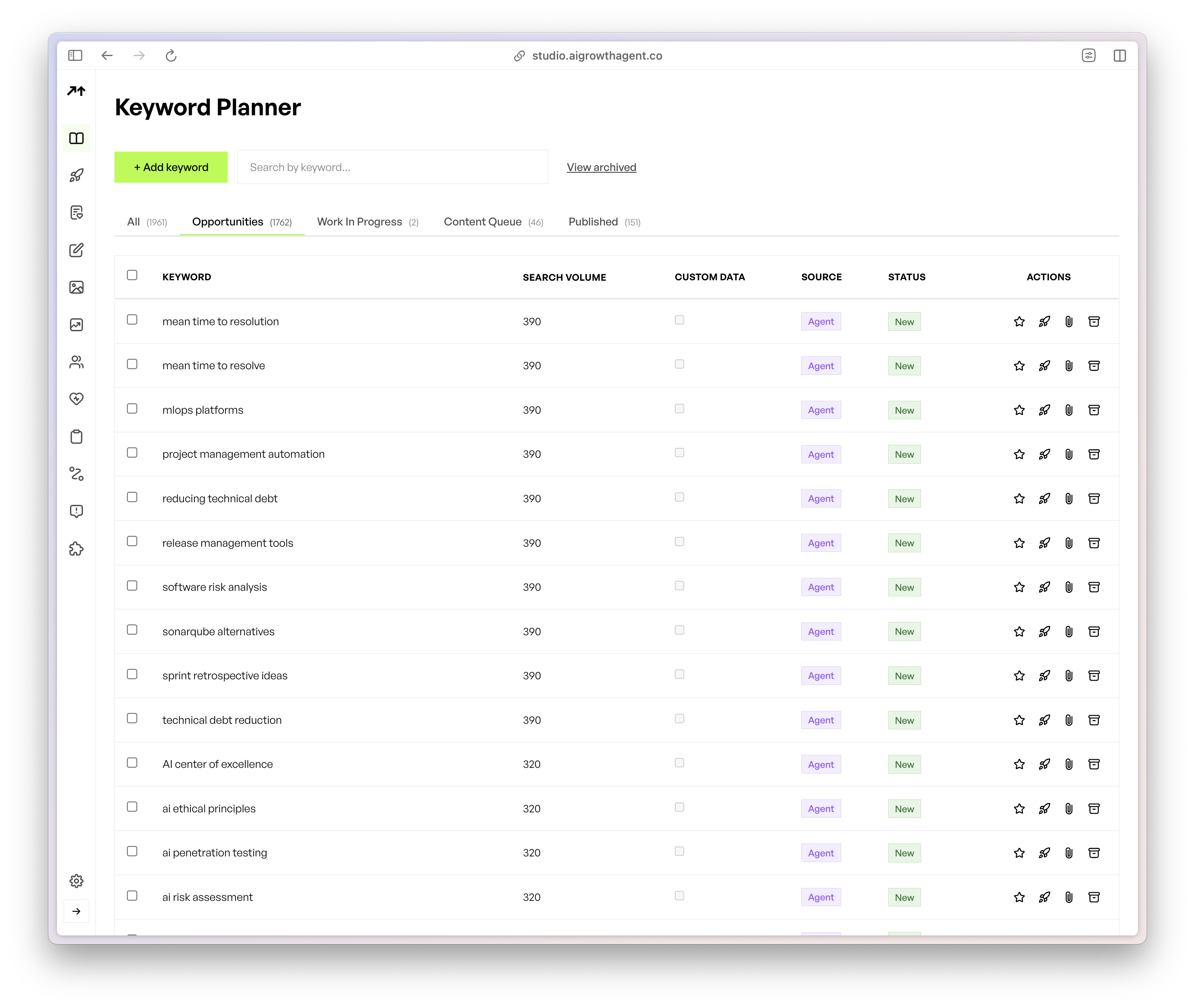
The Keyword Deep Research Agent analyzes thousands of search queries within 24 hours. It builds a detailed strategy by topic, forming a plan for content that targets clear opportunities.
Autonomous Blog Deployment sets up optimized blogs as subdomains, matching your site’s design and boosting domain strength. It handles schema markup, metadata, LLM.txt files, and MCP setup for better AI indexing.
The Core Content Agent oversees everything from briefs and research to drafting and technical optimization. It ensures accuracy and applies AI-specific SEO without manual effort.
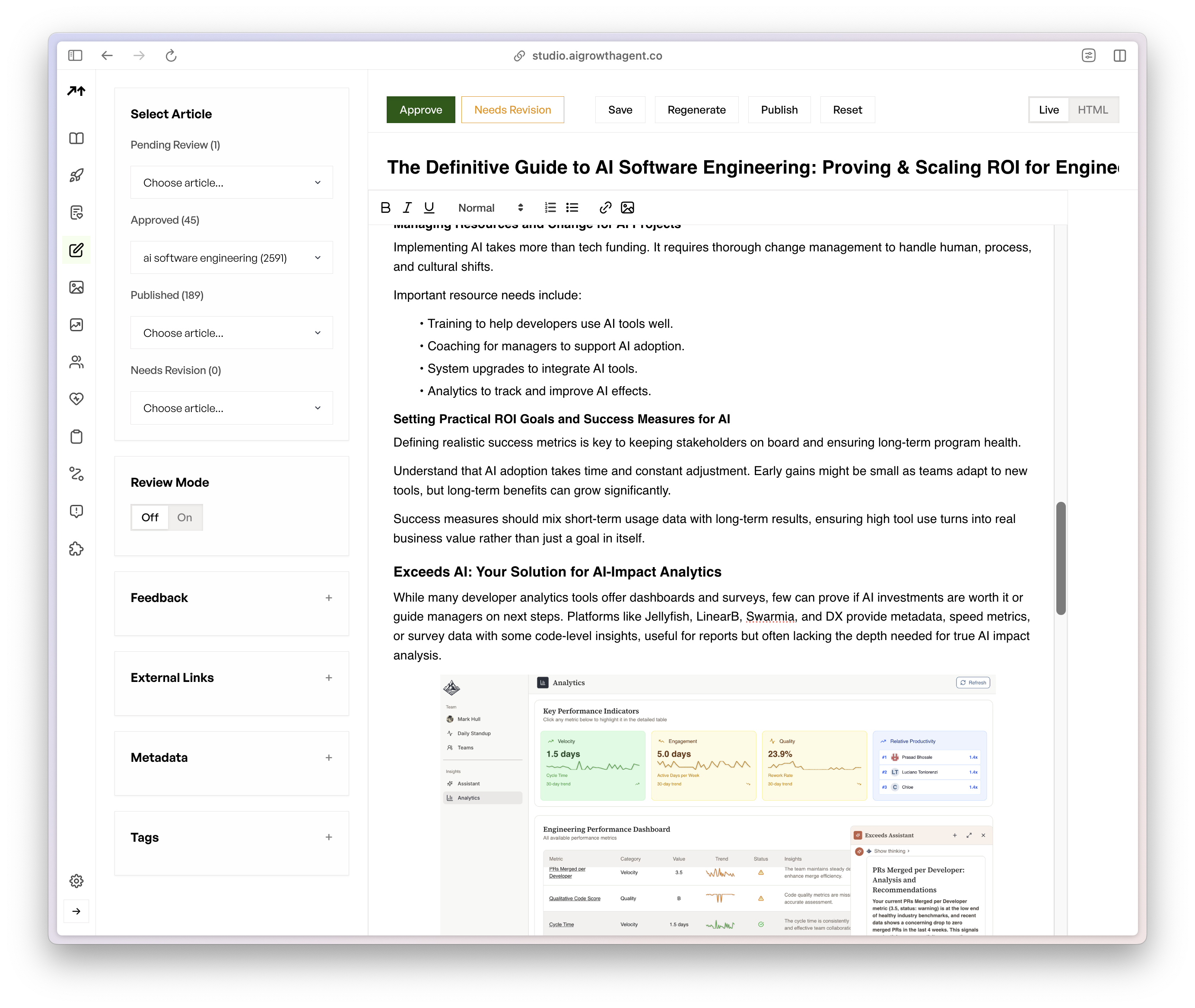
AI Growth Agent Studio offers a dashboard for oversight. You can edit content, give feedback, approve work, and set schedules, with the system learning over time to operate independently.
Advanced Features for Enterprise Needs
AI Growth Agent offers tools suited for large-scale content efforts. Parallel Agent Deployment runs multiple agents from one hub, each with distinct strategies and targets, ideal for managing several brands.
Real-Time Content Generation creates brand-relevant articles fast, letting you engage with trending topics and grab search interest as it happens.
Custom Data Integration turns unique data into optimized content, giving you an edge with material competitors can’t match.
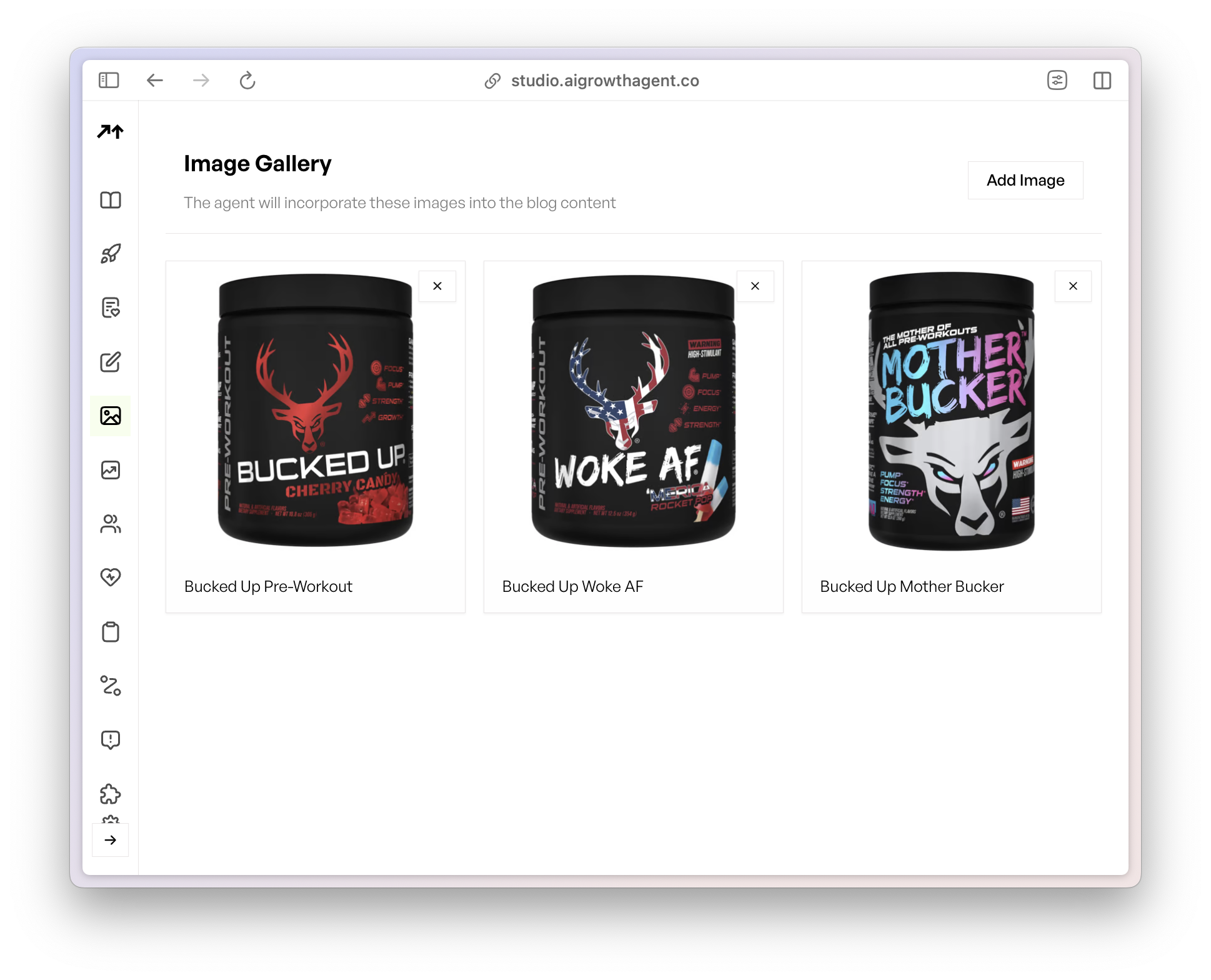
Intelligent Image Placement adds visuals from your library or AI-generated options, fully optimized for image SEO to maintain consistency across posts.
Comparing AI Growth Agent and Surfer SEO for AI Search
Feature Breakdown
| Feature Category | Surfer SEO | AI Growth Agent |
|---|---|---|
| Core Purpose | On-page optimization for traditional SEO | Automated authority building for AI search |
| Content Creation | Human-led with AI support, often needs editing | Fully automated, tailored to brand |
| Technical SEO for AI | Basic SEO advice, lacks AI-specific features | Advanced setup for AI indexing with schema, LLM.txt, MCP |
| Scalability & Automation | Some automation, may need human input | Complete automation, supports multiple brands |
| Feature Category | Surfer SEO | AI Growth Agent |
|---|---|---|
| AI Search Monitoring | Tracks traditional SERPs | Monitors AI citations and competitor rankings |
| Operational Impact | Assists teams, may require effort in some areas | Scales output, frees up strategic focus |
| Target User | SEO specialists needing optimization help | Enterprise leaders seeking AI search authority |
| Market Positioning | Tool for content improvement | Platform for automated content authority |
The main difference is approach. Surfer SEO handles specific tasks like scoring or keyword research, often with human guidance in some cases, while AI Growth Agent automates the full process.
Surfer focuses on traditional search, where human input can still be necessary. It supports optimization but may not fully automate content for all scenarios. This could slow down the pace needed for AI search.
AI Growth Agent aims to remove these barriers with end-to-end automation. It manages analysis, creation, and publishing for consistent output, supporting high-volume needs in AI search.
Explore how AI Growth Agent can enhance your enterprise AI search strategy with a tailored approach to content operations.
How These Tools Impact Enterprise Brands
Comparing Surfer SEO and AI Growth Agent goes beyond features to how they shape strategy and operations for enterprise marketers facing AI search challenges.
Implementation varies widely. Surfer often needs ongoing human effort for strategy and oversight, which can demand time to master its features and adjust to AI search pace.
AI Growth Agent focuses on ease with automated workflows. After onboarding, it handles content creation and technical tasks, letting teams focus on broader planning rather than daily execution.
Scalability also differs. Surfer offers automation, but human involvement in some areas may limit its reach for large enterprise demands.
AI Growth Agent supports growth through parallel agents. A small team can oversee multiple brands without adding staff, a clear benefit for complex setups with varied content needs.
Team focus shifts as well. Traditional tools tie up senior staff on routine tasks. AI Growth Agent aims to redirect that talent toward strategy and growth planning.
While Surfer improves individual content efforts, it may not build broad authority in AI search for all cases. AI Growth Agent targets full content lifecycle management with AI-specific optimization for lasting competitive edges.
Key Insights on Content for AI Search Optimization
How AI Search Content Differs from Traditional SEO
AI search content emphasizes depth and credibility over keyword focus or backlinks. It must deliver thorough, accurate answers to meet AI evaluation standards, requiring more expertise and technical setup than standard SEO content.
Technical needs stand out. AI search calls for schema markup, LLM.txt files, and MCP integration so AI systems can access content directly. Traditional SEO prioritizes readability for humans, while AI content balances human and machine demands.
Publishing frequency matters more. Traditional SEO might work with monthly updates, but AI search requires regular content to stay visible and earn citations, often relying on automated tools.
Do Tools Like Surfer SEO Meet AI Search Needs?
Many tools, including Surfer SEO, focus on traditional search and may not fully cover AI search requirements. They offer optimization support but often lack the full automation and technical depth needed for AI authority in certain situations.
Surfer provides automation for content tasks, yet some cases benefit from human strategy input. This can hinder scaling for high-volume AI search needs. Its focus also stays on classic ranking metrics over AI-specific setups.
Most existing tools don’t execute a complete strategy autonomously. They help teams but may not handle the full planning and workload needed for robust AI search optimization, especially for enterprises seeking scalable solutions.
Understanding Model Context Protocol for AI Search
Model Context Protocol, or MCP, is a technical setup that lets AI search systems interact directly with content sources. It helps AI understand and cite content more accurately than older methods.
This setup boosts visibility in AI search by improving how systems recognize your brand’s expertise. Higher citation chances follow, strengthening your position in results.
MCP moves from passive indexing to direct communication with AI. This edge is vital for enterprises aiming to lead in their market through AI search.
How Fast Can AI Growth Agent Build Authority?
AI Growth Agent starts producing content within days of setup, with publishing following soon after. AI indexing can begin shortly once content goes live. However, consistent authority and citations often build over months of steady output.
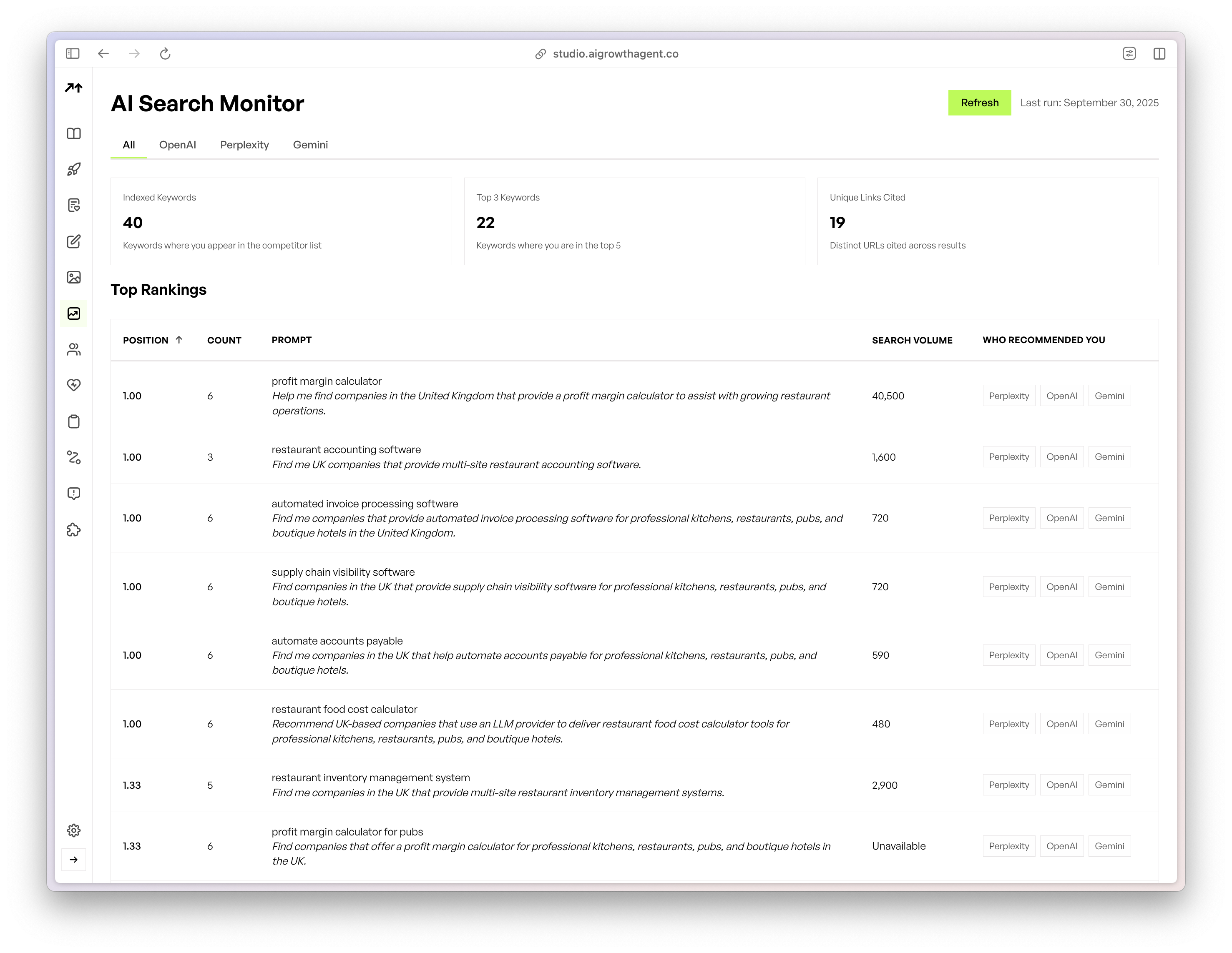
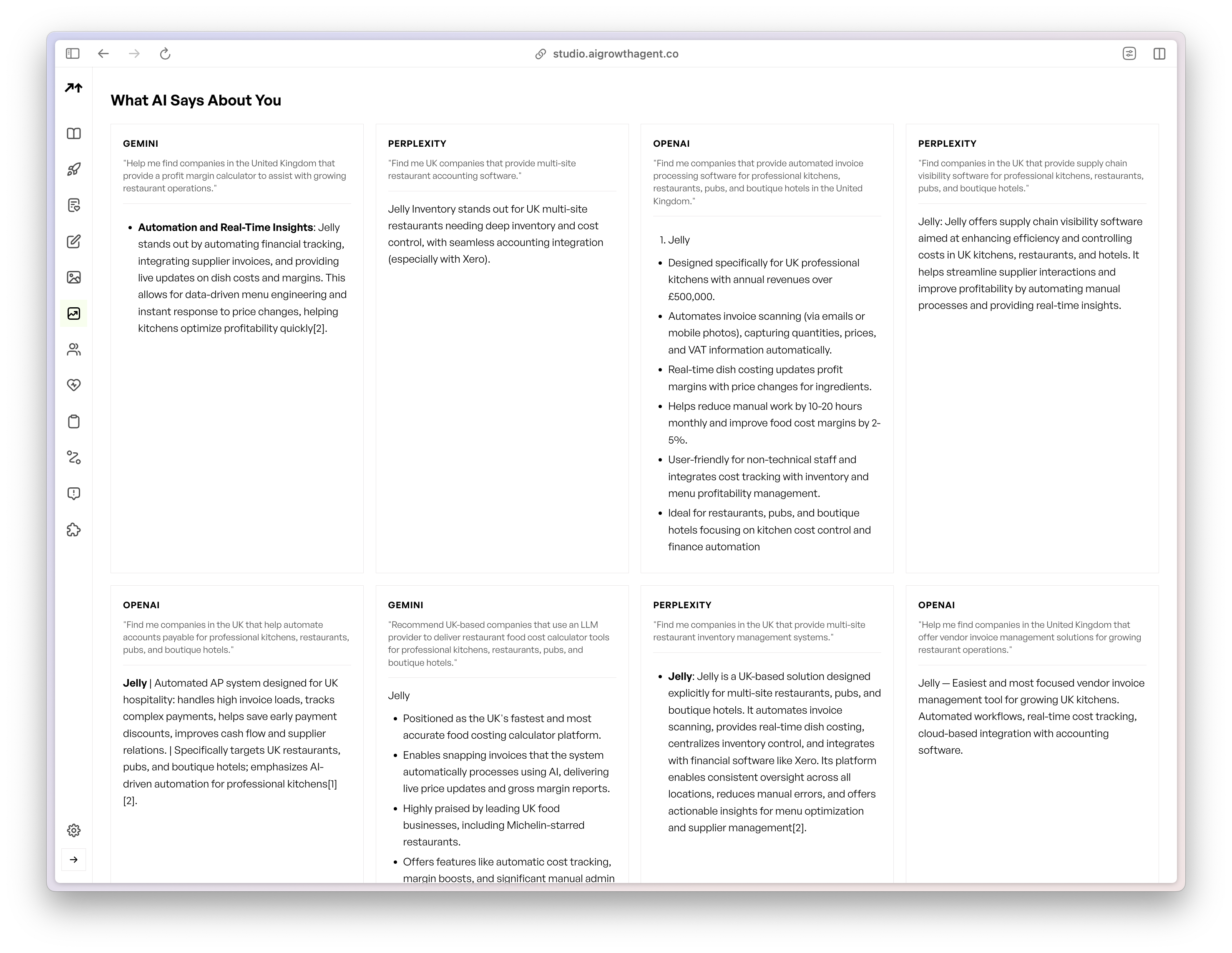
Its AI Search Monitor tracks citation performance across platforms, showing frequency and competitor standings. Speed depends on market competition and existing content strength, with solid technical bases potentially accelerating gains.
Making the Right Choice for AI Search Leadership
Enterprise marketers face a decision that shapes their stance in AI-driven discovery. Tools like Surfer SEO offer value for traditional search but may not fully tackle AI search challenges in every case.
Surfer suits brands focused on optimizing content within classic search frameworks. Its guidance and automation help teams improve conventional metrics, though varying levels of human effort might be needed based on goals.
AI Growth Agent provides a tech-focused path for building content authority. By automating the content process and optimizing for AI search, it helps enterprises gain market presence as AI tools grow in use.
Your choice hinges on priorities. For steady improvements, traditional tools may work well. For market leadership, a platform built for scaled content and AI-specific needs might offer more.
This decision shapes broader operations. Traditional tools refine current methods, while AI Growth Agent seeks to overhaul content workflows and create lasting advantages through authority.
Book a consultation to see if AI Growth Agent fits your AI search optimization goals and learn how automated content authority strengthens your position in today’s discovery landscape.