Written by: Mariana Fonseca, Editorial Team, AI Growth Agent | Last updated: December 19, 2025
Key Takeaways
- AI-driven search in 2026 rewards brands that design content specifically for AI citation, not just human readers.
- A structured manifesto and content architecture help AI systems understand your positioning and keep your brand voice consistent.
- Technical infrastructure, from schema to LLM.txt, now plays a central role in how AI systems index and surface your content.
- Continuous monitoring of AI search results and rapid content updates keep your brand visible as queries and topics evolve.
- AI Growth Agent offers an end-to-end programmatic SEO workflow for premium brands, and you can schedule a demo to see it in action.
The AI-Powered Content Imperative: Why Modern Workflows Must Evolve for Programmatic SEO
AI-powered search tools now act as primary discovery channels for many users, so content must be engineered for AI citation as well as rankings. Keyword lists and a few manual posts each month no longer sustain visibility when AI systems summarize and recommend content at scale.
Marketing leaders face shrinking digital footprints as AI accelerates content production. Brands that lack structured, high-quality, and technically sound material give large language models few reasons to reference them, which leaves space for competitors to become preferred sources in AI answers.
Traditional SEO agencies and basic AI writing tools rarely meet this bar. Manual production models cannot match programmatic scale, and generic AI outputs lack the metadata, schema, robots rules, and LLM.txt structure that advanced AI search now expects for reliable citation.
1. Strategic AI Onboarding and Manifesto Creation for Brand Consistency
Strategic AI onboarding creates a detailed Company Manifesto that encodes your positioning, terminology, guardrails, and examples, so agents generate content that reflects your real strategy. This upfront data transfer prevents generic, off-brand copy, reduces editing time, and gives AI systems a consistent narrative to reference when surfacing or summarizing your content.
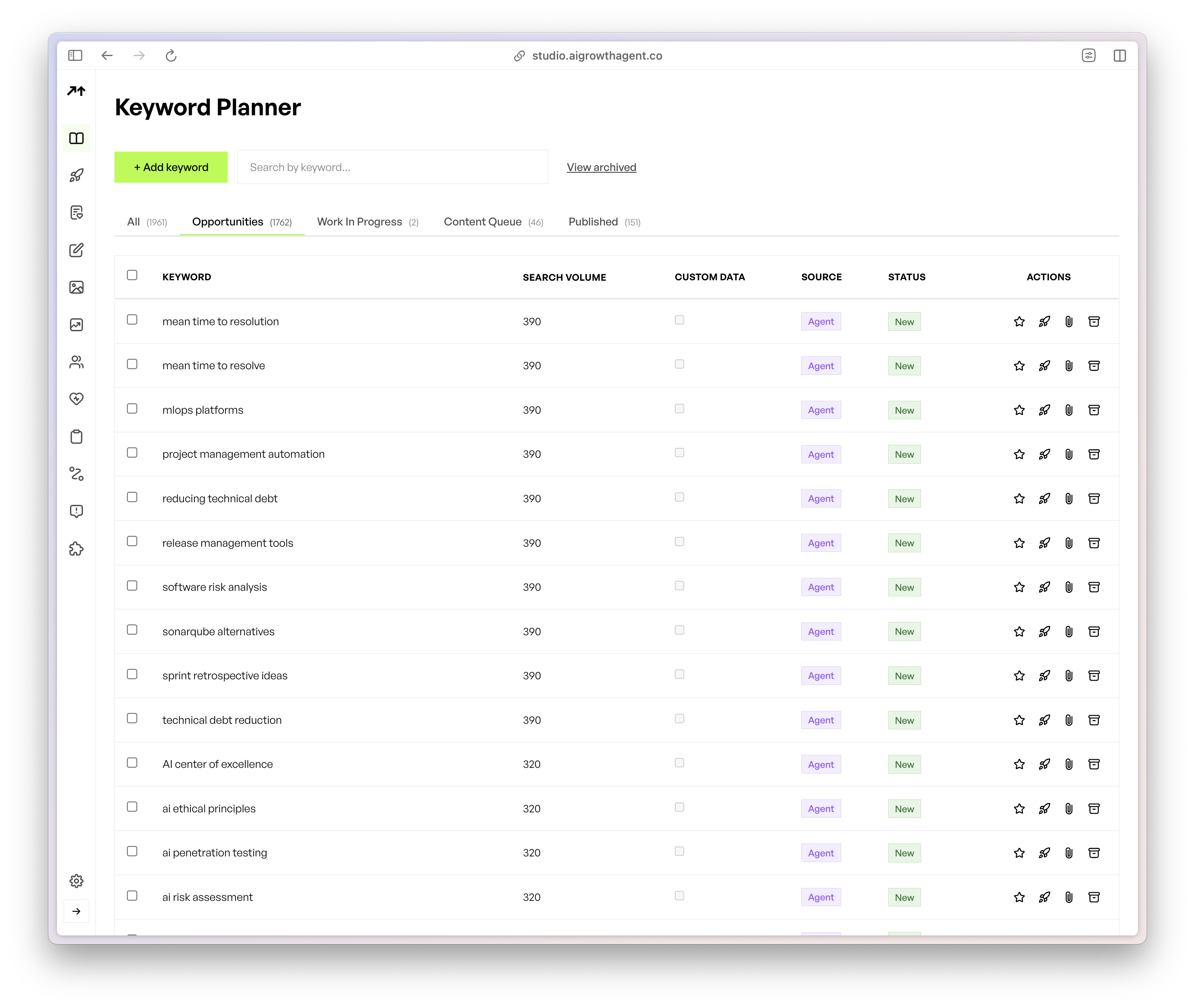
2. Programmatic Keyword and Content Architecture Research for AI Citation
Programmatic research evaluates thousands of queries and ingests company context to map topics into pillars and clusters that build true topical authority rather than isolated posts. This structure aligns with how AI systems interpret relationships between concepts and increases the chance that your pages become preferred citation sources across entire subject areas.
3. Autonomous Technical Infrastructure Deployment for Optimal AI Indexing
Autonomous technical deployment sets up optimized blog subdomains or integrated CMS environments that match your brand while meeting modern technical SEO standards. Clean architecture, correct schema, and precise crawling rules give both search engines and AI systems a clear, structured view of your content, which improves indexing, interpretation, and long-term visibility.
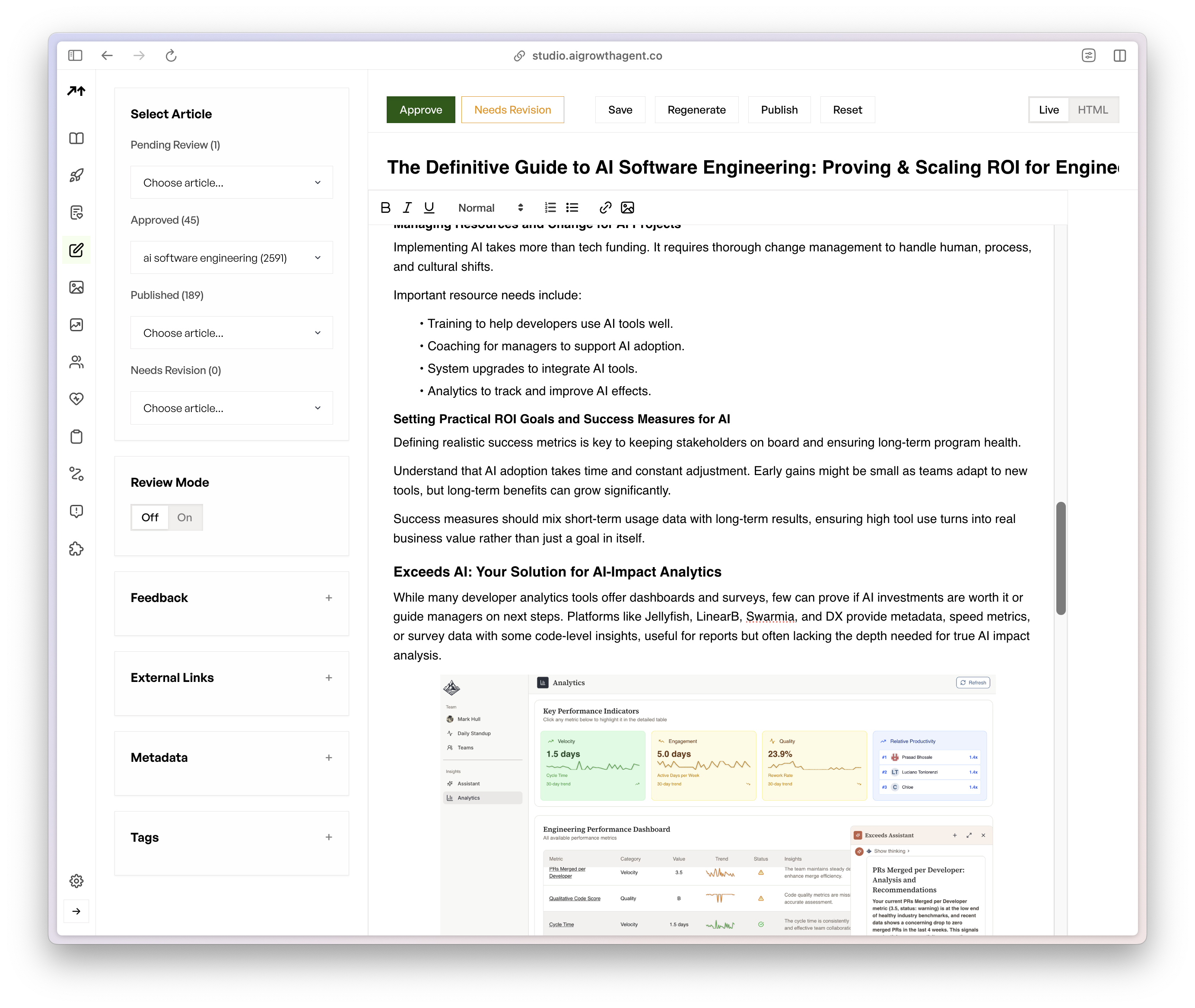
4. AI-Powered Content Engineering Lifecycle with Model Context Protocol (MCP)
An AI-powered content lifecycle moves from strategy and brief creation through drafting, fact-checking, metadata application, and publication inside a single workflow. Model Context Protocol, or MCP, aligns your content database with AI models so pages include rich schema and LLM.txt instructions that clarify context, support accurate summarization, and improve citation likelihood.
5. Real-time Programmatic Content Injection for Trending Topics and Freshness
Real-time content injection lets your team feed in relevant news or emerging topics and receive optimized, on-brand articles within minutes. This speed captures search and AI attention while queries are surging, satisfies model preferences for fresh information, and keeps your brand present in fast-moving industry conversations.
6. Multi-Tenant Programmatic Deployment and Orchestration for Enterprise Scale
Multi-tenant deployment manages several Programmatic SEO Content Agents from one interface, each with its own Manifesto, keyword map, and publishing destination. Enterprises, portfolios, and multi-brand organizations can scale consistent, technically sound content across domains while preserving clear differentiation for each brand.
7. AI Search Monitor and Feedback Loop for Continuous Optimization
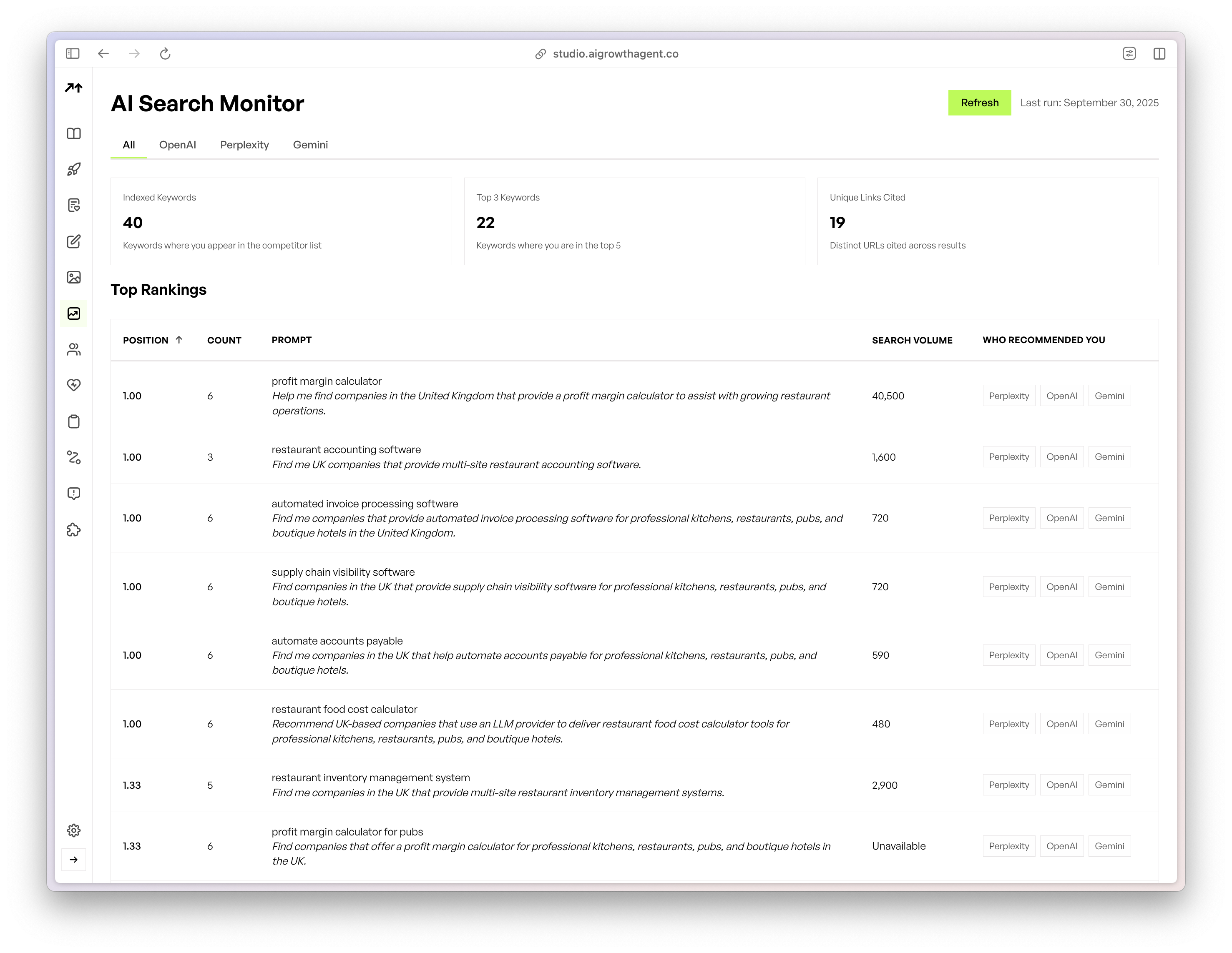
An AI search monitor tracks how often your content appears or is cited in tools like ChatGPT, Gemini, and Perplexity, alongside crawl and traffic data. This feedback loop reveals which topics, formats, and structures perform best, then guides updates to manifests, architectures, and templates so the workflow improves with every cycle.
Implementation and Practical Considerations for Successful AI Content Workflows
Effective AI content workflows rely on solid technical SEO foundations, including sound site architecture, clean performance, and accurate tracking. AI Growth Agent focuses on brands that already meet these basics and does not function as a repair service for major technical issues that block crawling or indexing.
Measurement should extend beyond rankings to include AI-specific indicators, such as citation frequency, share of voice in answers, direct quotations in model responses, and downstream conversion impact.
Enterprise teams also benefit from clear governance rules for approvals and multi-brand management, along with integrations into CRM, analytics, and CMS platforms to keep operations efficient.
Schedule a demo to see whether AI Growth Agent aligns with your programmatic SEO roadmap and to discuss requirements for your stack.
Frequently Asked Questions About Advanced AI Content Workflows
How do AI content workflows differ from traditional content marketing?
Advanced AI workflows focus on programmatic scale, technical engineering for AI interpretation, and direct optimization for AI citations, while traditional content marketing relies on largely manual production and keyword lists that struggle to match the speed, volume, and technical precision required in 2026.
Can basic AI writing tools replace a sophisticated AI content workflow for programmatic SEO?
Basic tools generate text but do not plan architectures, apply advanced schema, manage LLM.txt files, or publish autonomously, so they cannot replace a full workflow that handles strategy, quality control, technical optimization, and ongoing iteration across hundreds or thousands of pages.
What is programmatic SEO in the context of AI content workflows, and why is it essential?
Programmatic SEO in this context means using AI to identify opportunities, engineer structured templates, and publish large volumes of authoritative content that covers a topic comprehensively, which gives AI systems strong reasons to surface your brand as a reliable reference.
How does an advanced AI content workflow ensure brand voice consistency across all output?
The workflow uses a Company Manifesto, example content, and explicit style rules so every agent shares the same guidance, then enforces those rules inside prompts, templates, and review steps to keep tone, terminology, and positioning consistent at any scale.
Why is optimizing for AI citations increasingly important in 2026, and what role do workflows play?
AI citations now influence how users discover brands because many answers summarize content instead of listing links, and structured workflows give your content the authority signals, clarity, and metadata that models use when deciding which sources to quote or recommend.
Conclusion: Build a Workflow That Matches the AI-Driven Future of Search
AI-powered search has changed how authority forms online, so brands need workflows that engineer structured, high-quality content rather than isolated articles. A system that spans onboarding, research, technical deployment, content engineering, real-time injection, multi-tenant orchestration, and AI monitoring gives your organization a repeatable way to earn citations and maintain visibility.
Premium brands that want this level of control and scale can partner with AI Growth Agent for an end-to-end programmatic SEO solution. Book a strategy session with AI Growth Agent to evaluate your current foundations and explore how an advanced AI content workflow can support your goals for 2026 and beyond.