


AI is reshaping digital marketing for B2B SaaS leaders. With tools like ChatGPT, Gemini, and Perplexity driving how users find information, old SEO tactics no longer cut it. AI-generated content floods the web daily, shrinking your company’s visibility unless you adapt. Ranking well in AI search results is now essential for staying relevant.
This guide helps B2B SaaS marketing executives navigate these changes. You’ll learn why an AI content strategy matters, how to create content that AI engines prioritize, and what tools can help you scale efficiently. Forget sporadic blog posts or keyword-heavy pages. It’s time to build authority with AI-optimized content at a faster pace.
Why You Need an AI Content Strategy in B2B SaaS Marketing
Your Digital Presence Is at Risk
AI generates massive amounts of content every day, drowning out established brands. Without a focused AI content strategy, your messaging could disappear from the radar of AI indexers that shape modern search experiences.
When a potential customer asks ChatGPT or Perplexity about solutions in your space, your company might not even come up. If you don’t have enough authoritative content to address their needs, AI will point to a competitor instead. This isn’t just about lower rankings, it’s about being completely absent from AI’s knowledge pool.
Daily Quality Content Is the Standard
The speed of information flow has outpaced traditional marketing schedules. AI models value recent, in-depth, and consistent content in ways that change the game. Posting a couple of blogs a month won’t keep you visible in AI search results anymore.
Think of it like social media’s rise, where daily engagement became essential. AI search engines constantly refresh their grasp of topics and entities. Companies posting high-quality content every day build stronger relevance compared to those sticking with older, slower schedules.
Ignoring This Costs You
Not acting in the AI search space creates growing risks. If your brand lacks content to influence AI responses about your market, competitors step in. They get cited as the go-to sources, their views shape AI answers, and their positioning overshadows yours in prospects’ minds.
This starts a downward spiral. Less content means fewer mentions by AI engines. Fewer mentions mean you’re less prominent in AI training data. Falling behind makes it harder and more costly to catch up over time.
Main Point to Remember
AI search shifts the focus from keywords and links to authority and citations. This isn’t just a technical update, it’s a rethink of how businesses show up online. Book a consultation to refine your AI content strategy and position your company as a leader in this shift.
How AI Search Differs from Traditional SEO
From Keywords to User Needs
Traditional search focuses on short, keyword-driven queries, while AI search handles longer, conversational, and task-based interactions. This changes how content must be built and optimized.
Traditional SEO targets exact keyword matches, but AI search focuses on understanding what users want. Content needs to cover related questions, tackle broader concerns, and offer depth to meet complex needs in one go.
Authority Over Links
AI values recognition as a trusted source more than the number of backlinks. Unlike traditional SEO’s focus on link-based domain strength, AI prioritizes content authority through consistent, expert material.
AI systems gauge expertise by looking at the range and depth of content on related topics. A B2B SaaS company that regularly shares detailed insights on their field, trends, and customer wins gains stronger recognition than one relying on occasional, keyword-focused posts.
Direct Answers, Less Clicks
AI chat tools provide answers right in the interface, cutting organic traffic but raising the importance of being cited. Moving from search result links to AI-generated replies changes content marketing’s value.
Success now hinges on being referenced in AI answers, not just driving clicks. Content must be accurate, authoritative, and clearly attributable to earn trust from AI systems, shifting focus from typical engagement stats.
Optimizing for Answers and AI Models
Answer Engine Optimization targets direct answers featured prominently in search interfaces. Content must be crafted for AI to interpret and cite easily.
Generative Engine Optimization views citations in AI responses as the key measure of authority. To succeed, content should be reliable, well-organized, and factual enough for AI to reference confidently.
Building Your B2B SaaS AI Content Strategy for Authority
What This Means for Marketing Teams
An effective AI content strategy requires rethinking resources and approaches. Content needs regular updates, often with AI tools adjusting based on current data, shifting to dynamic documents over static posts.
This calls for investing in systems that keep content fresh and technically aligned with AI updates. Marketing leaders need budgets for tools that refresh information as markets change and track evolving AI rules.
Teams must also align on workflows for daily publishing without losing quality. Clear processes, content guidelines, and metrics tied to AI search performance, not just old SEO goals, become vital.
Steps for AI-Friendly Content
Creating content that AI trusts involves specific formats different from standard blogs. Here are key practices:
- Use clear, factual statements with verifiable details AI can cite.
- Incorporate detailed markup and metadata to aid AI understanding.
- Write for natural, conversational queries and follow-up interactions.
Discover how to craft content AI prioritizes with a demo and see how top B2B SaaS firms apply these tactics at scale.
Challenges in Adopting AI Content Strategies
Why Traditional SEO Agencies Don’t Work
Most SEO agencies can’t meet AI content needs. Their models, tied to human effort and hourly billing, aren’t built for the daily output AI search demands. They might produce a few solid pieces monthly, but not the volume needed for authority in AI results.
Costs also stack up fast. As the need for frequent content grows, agency fees rise in step, making daily posting unaffordable for many B2B SaaS firms. This gap between AI search needs and agency capacity persists.
Internal Teams Face Limits
Marketing teams inside companies often lack resources for AI content strategies. They know the brand and market well, but usually don’t have the technical skills for AI-specific optimizations.
AI content goes beyond writing, involving complex setup like markup, metadata, and specialized files. Most teams don’t have the staff or expertise to manage these alongside other duties.
Basic AI Tools Aren’t Enough
Simple AI tools like ChatGPT fall short for strategic content needs. Their output lacks depth or business context and needs heavy editing to meet enterprise standards.
More importantly, these tools push strategy, optimization, and publishing tasks back to internal staff. They don’t manage the full content process, leading to generic content that risks penalties for low value.
Steer clear of common AI content pitfalls with a consultation to see how full platforms solve these core issues.
AI Growth Agent: Automated Solution for AI Search Success
A Platform for Automated Content Authority
AI Growth Agent offers an automated content system using specialized AI agents to position your company as a trusted source in your field, ensuring AI search engines cite you. Instead of just another tool, it delivers a full-scale solution that matches and exceeds traditional agency output.
This platform tackles the key issue for B2B SaaS leaders: producing high-value content quickly and at scale for AI search, without overloading staff or depending on slow, costly agencies.
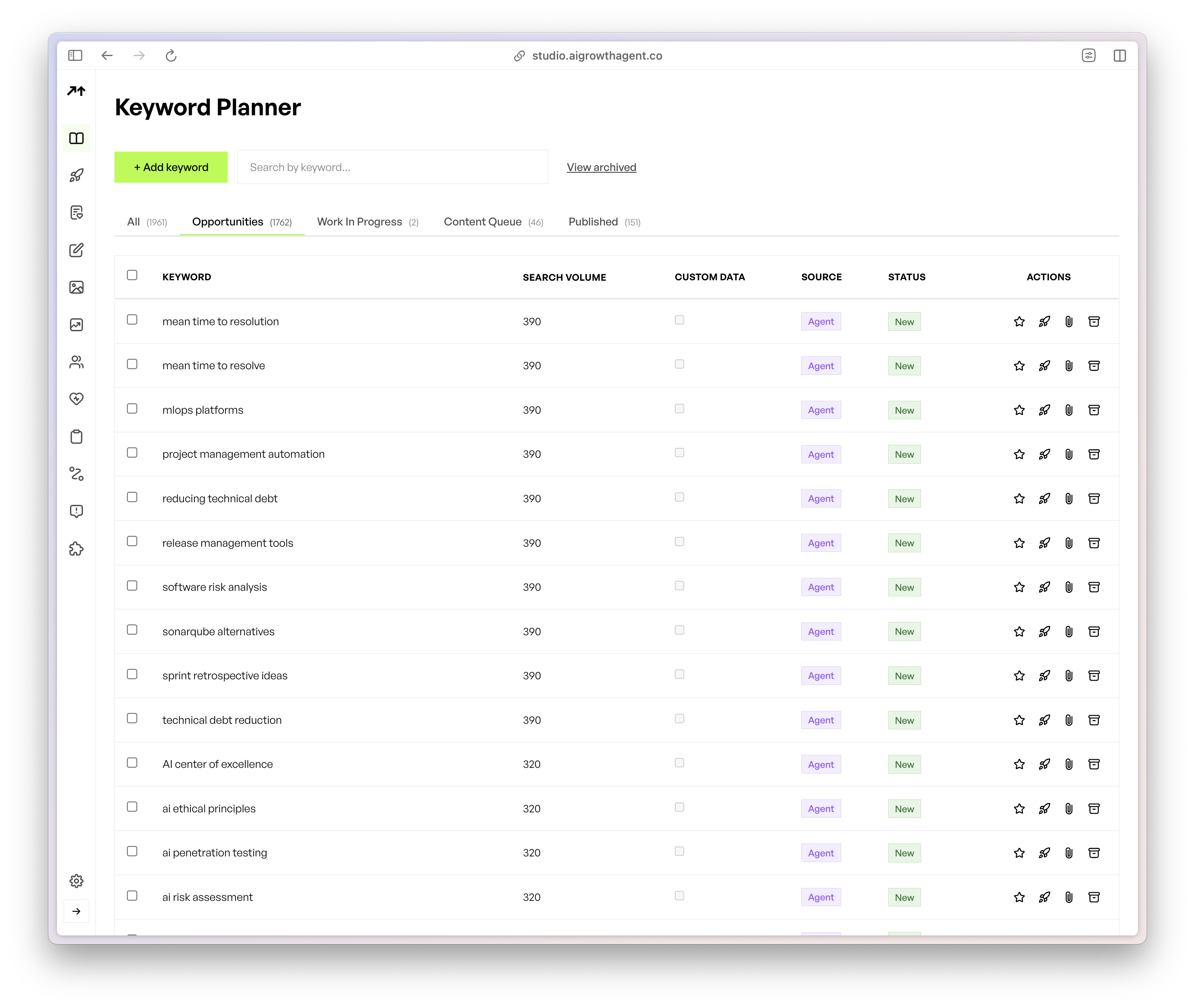
How It Delivers Results
AI Growth Agent uses dedicated agents for the entire content process:
- Keyword Research Agent: Analyzes thousands of search terms in your niche within 24 hours, creating a detailed strategy to target key opportunities.
- Content Creation Agent: Manages everything from planning to publishing in minutes, including research, drafting, fact-checking, and technical setup, all in your brand’s voice.
- Search Monitor Agent: Tracks AI search performance on platforms like ChatGPT and Gemini, providing real-time data on citations and competitor standings.
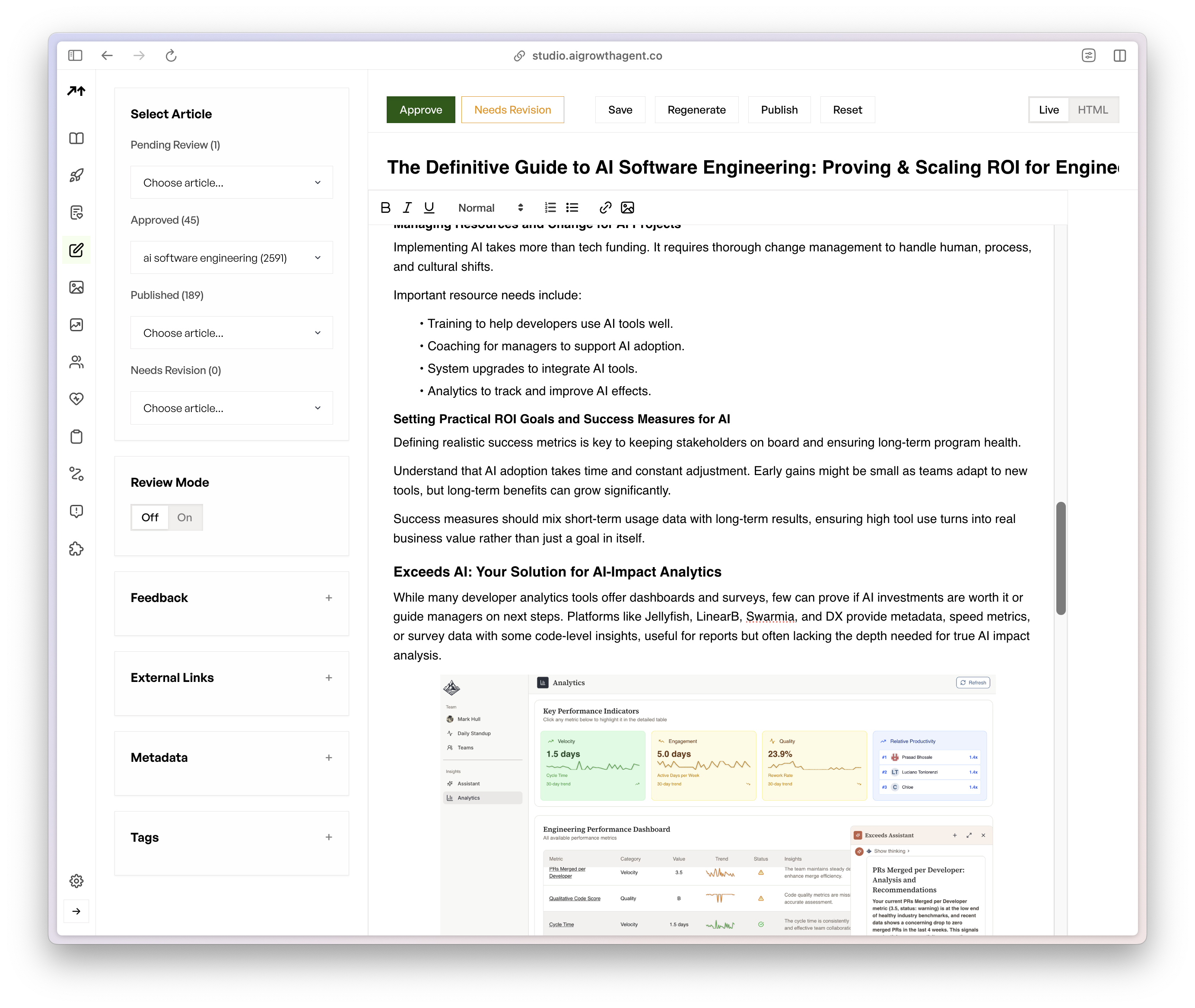
Unique Features for Greater Impact
The platform offers distinct advantages:
- Multi-Brand Management: Handles separate content strategies for different products or brands from one dashboard, maintaining unique voices and plans.
- Instant Content Response: Reacts to breaking news by generating relevant, branded content in minutes to capture timely search interest.
- Data-Driven Content: Turns your proprietary data into search-friendly assets, like creating articles from unique datasets to drive traffic.
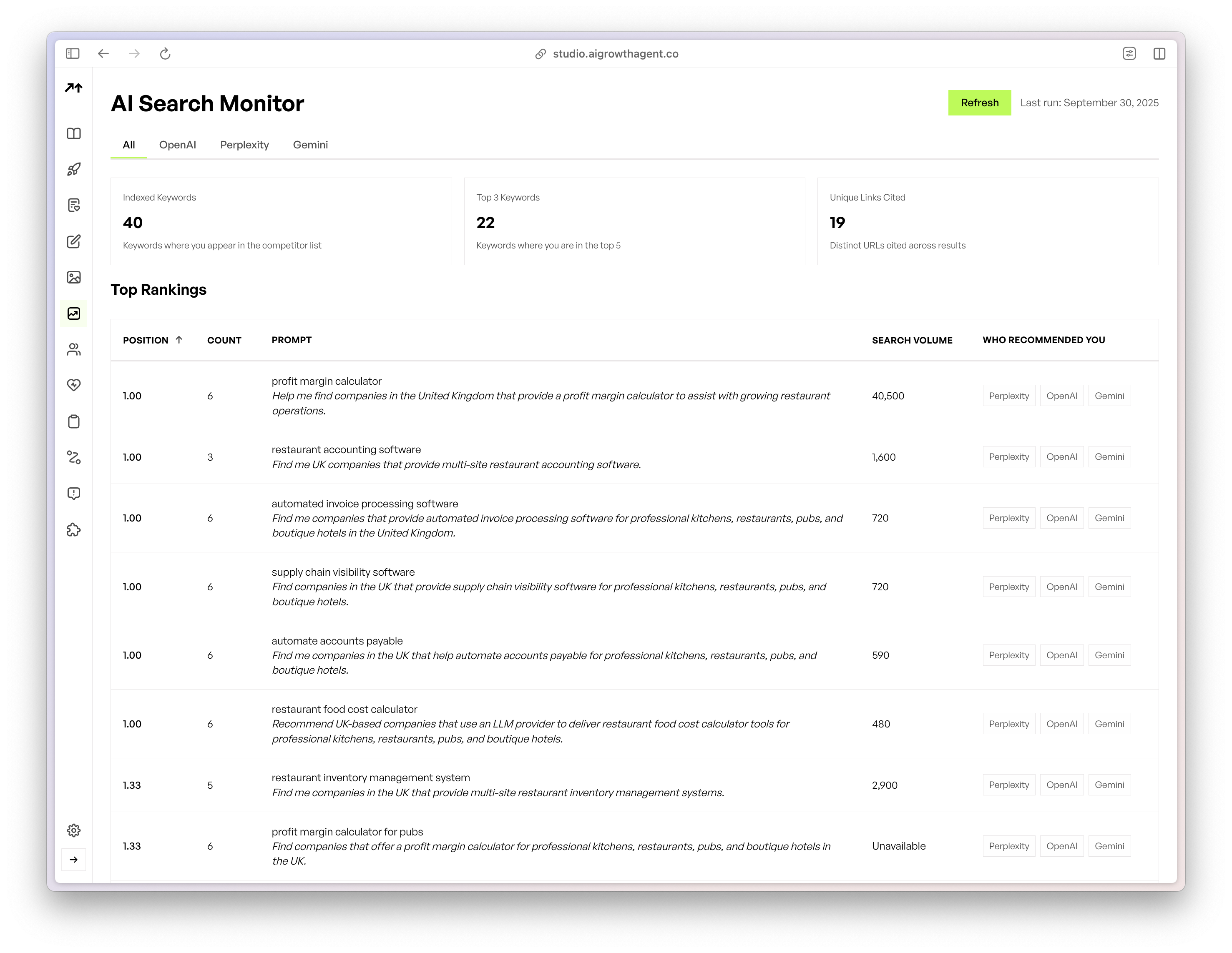
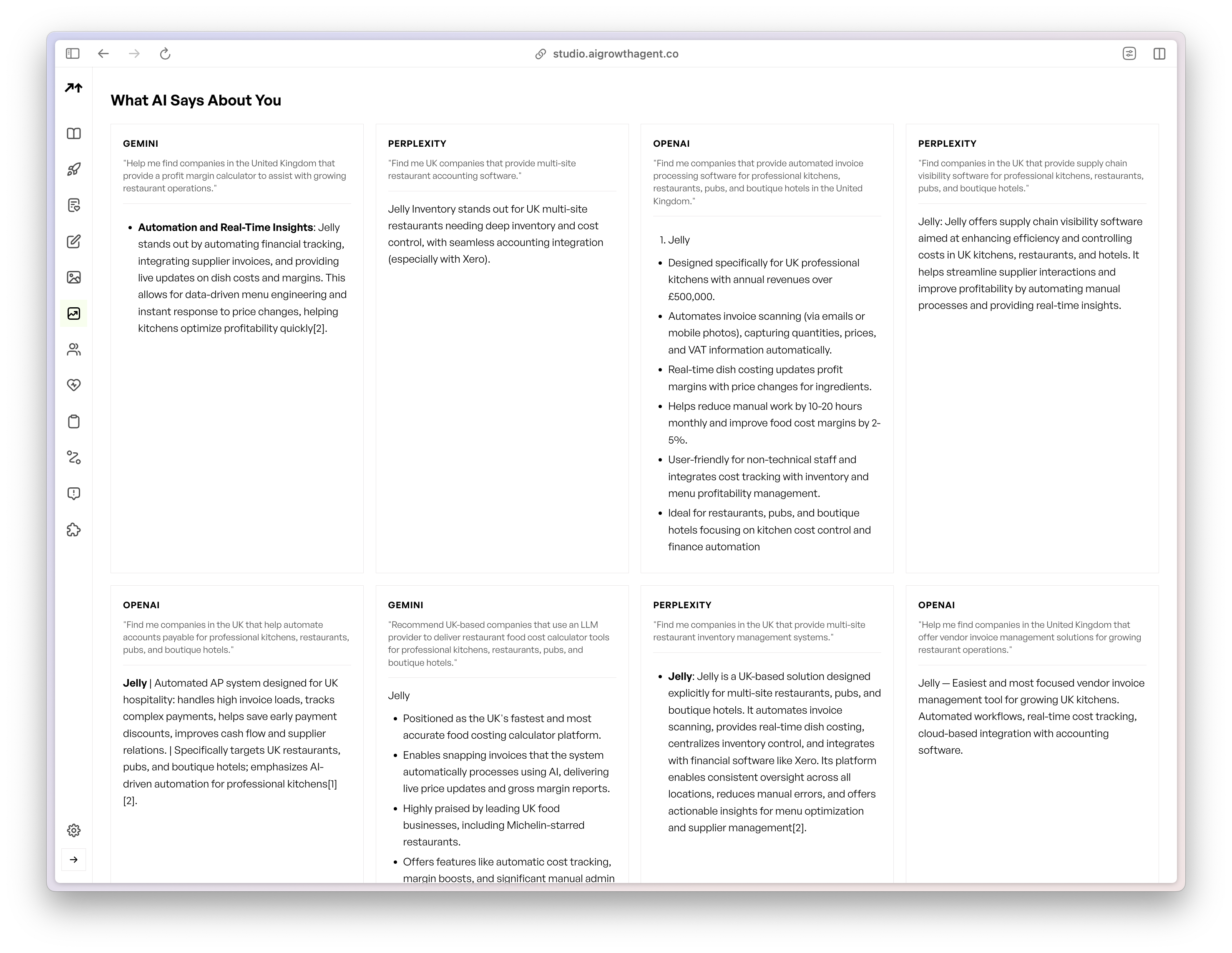
Comparison with Other Options
| Feature | AI Growth Agent | Traditional SEO Agency | Basic AI Tools |
|---|---|---|---|
| Content Volume & Speed | Unlimited, Fast, Daily | Limited, Slow, Monthly | Basic, Manual, Uneven |
| Technical Setup | Advanced Markup, Specialized Files | Basic Support | None, User-Handled |
| Strategic Depth | Automated, Brand-Aligned | Manual, Staff-Dependent | None, User-Led |
| Full Automation | Complete Process from Start to Finish | Partial, Human-Reliant | None, Manual Work Needed |
This table shows why older methods fall short for AI content needs. Agencies are limited by human capacity, and basic tools demand too much manual effort. AI Growth Agent offers complete automation for enterprise demands.
Common Questions on AI Content and Optimization
How Does Traditional SEO Differ from AI Search Optimization?
Traditional SEO focuses on keywords, links, and site setup for search rankings. AI Search Optimization centers on user intent, content depth, entity trust, and being cited by AI models. While traditional SEO drives traffic via rankings, AI optimization aims for direct mentions in AI replies.
Success metrics vary too. Traditional SEO looks at rankings and clicks, while AI optimization measures citations and recognition on platforms like ChatGPT or Perplexity.
Why Does Content Frequency Matter for AI Search?
Frequent, fresh content is vital for AI search performance. AI models favor recent, detailed, and regular updates when choosing sources to cite. Daily high-quality posts are now the minimum, not an edge.
Consistent updates help AI systems stay current on topics and entities. Companies posting daily build greater authority over those on slower cycles. This regular output creates a growing lead that’s tough for others to match.
Are Basic AI Tools Enough for B2B SaaS Content?
Basic AI tools don’t meet enterprise content needs. Their output often feels generic, lacking business context, and needs major edits to fit professional standards. Search engines may also flag such content for low value.
These tools leave strategy, optimization, and publishing to your team, adding workload instead of reducing it. For enterprise needs, specialized platforms with full process management and technical focus are necessary.
What Does Being Cited by AI Search Mean?
Being cited by AI means your content is used or referenced in AI-generated replies. Rather than just showing as a search link, your information appears in the answer, often with credit to your brand.
Citations are the new marker of online authority. When users ask AI about your category, being cited positions your expertise as a key influence. Content must be accurate and clear to earn this trust from AI systems.
How Is Technical SEO Different for AI Search?
Technical SEO for AI goes beyond basic site tweaks to focus on AI readability. Detailed markup helps AI grasp content context. Rich metadata signals relevance and trust.
New needs include files for AI crawlers and protocols for clear content mapping. Optimization shifts to smaller content segments for precise relevance. This complexity often requires skills beyond typical marketing teams.
Lead in AI Search with an Automated Content Approach
The move to AI-driven search redefines how businesses build online authority. AI prioritizes citations over rankings, frequent content is essential, and manual methods can’t keep up with the scale needed.
B2B SaaS leaders must choose their path. Traditional agencies aren’t suited for AI demands, internal teams lack capacity for daily output, and basic tools create extra work. Companies leading in AI search are adopting automated, tech-driven strategies today.
AI Growth Agent bridges current gaps and future needs. Our system positions your brand as a trusted source for AI citations through agents that handle content from planning to posting, helping B2B SaaS firms gain an edge.
The chance to lead in AI search is here, but it won’t last long as more recognize the need. Early action builds citation patterns and authority that competitors will struggle to overcome.
Ready to boost your AI content strategy and establish authority? Schedule a session with AI Growth Agent to see how our platform can turn your content into a lead-driving advantage.
