Written by: Mariana Fonseca, Editorial Team, AI Growth Agent
AI is reshaping how users find information online, creating new challenges for marketing leaders. Around 80% of search users depend on AI summaries for answers at least 40% of the time. Tools like Perplexity, ChatGPT, and AI features in traditional search engines powered by models like Gemini are changing the game. Brands that want to stay visible must earn recognition as trusted sources by these AI systems. This article explains why old engagement strategies no longer work and offers practical steps to build authority with the help of AI Growth Agent.
Why Traditional Engagement Struggles in AI Search
AI summaries are changing user behavior in significant ways. About 25% of Google searches now end with no clicks, as users get answers directly from summaries instead of visiting websites. This shift reduces direct traffic to brand sites.
The impact is clear for marketers. Up to 60% of searches on traditional engines conclude without a click to another site, causing organic traffic drops of 15 to 25%. The old model of search-to-visit-to-conversion is breaking down, leaving brands disconnected from their audience.
Old metrics like click-through rates don’t tell the full story anymore. Success now depends on authority and influence within AI responses, which standard tools often fail to measure accurately.
How AI Search Changes User Intent and Discovery
Users no longer stick to basic keyword searches. They engage across six or more channels for discovery, using AI tools, chatbots, and visual systems. This raises expectations for tailored, cross-channel content.
Search queries have grown more complex. AI search engines handle natural-language questions and track context over multiple exchanges. Instead of typing “marketing tools,” users now ask detailed questions like, “Which marketing platform suits a B2B SaaS company with 50 staff, integrates with Salesforce, and offers lead scoring?”
The way users seek information has shifted. About 44% of users now rely on AI search engines as their main source of information, overtaking traditional search. Brands must adapt to users conversing with AI systems that pull data from multiple places to provide answers.
The Risk of Losing Control Over Your Brand Narrative
AI systems cite the most trusted sources when answering user questions. If your brand lacks strong, relevant content, AI will reference other sources, often competitors. This lets others shape how your industry or market is perceived.
Over time, competitors cited by AI gain an edge, not just in visibility but in defining market perspectives. This can create a lasting disadvantage for your brand if left unaddressed.
Marketing leaders must act now to build a strong content presence. Without it, competitors will continue to control the narrative, making it harder to regain ground later.
How to Build Authority for AI-Driven Engagement
Creating content for AI search goes beyond basic SEO. Content needs clear explanations, logical structure, and credible backing to boost citation by AI systems. Here’s what effective content looks like:
- Thorough answers to complex questions, avoiding shallow overviews.
- Structured data like schema markup for better AI comprehension.
- Frequent updates and consistent publishing to stay relevant.
- Deep insight into industry specifics that shows expertise.
Scale matters as well. While traditional content might mean a few posts monthly, AI authority requires daily, high-quality content across key topics in your field.
Optimizing Content for AI Citation Beyond SEO
Standard SEO isn’t enough for AI visibility. Brands need strategies focused on appearing in AI-generated summaries. Key technical elements include:
- Structured data to help AI grasp content context and relationships.
- Protocols like LLM.txt to guide AI crawlers on content relevance.
- Direct communication setups for real-time AI clarity on content.
- Formats that make content easy for AI to extract and cite correctly.
AI Growth Agent: Boosting Your Brand in AI Search
Meeting the demand for frequent, optimized content is tough with traditional methods. Many current solutions fall short for marketing leaders seeking results in AI search.
- SEO agencies often lack the capacity for daily content output.
- Internal teams may not have the technical skills for AI optimization.
- Basic AI tools often create generic content without strategic depth.
AI Growth Agent offers a platform with autonomous agents to tackle these issues by creating and optimizing content for AI authority. Key features include:
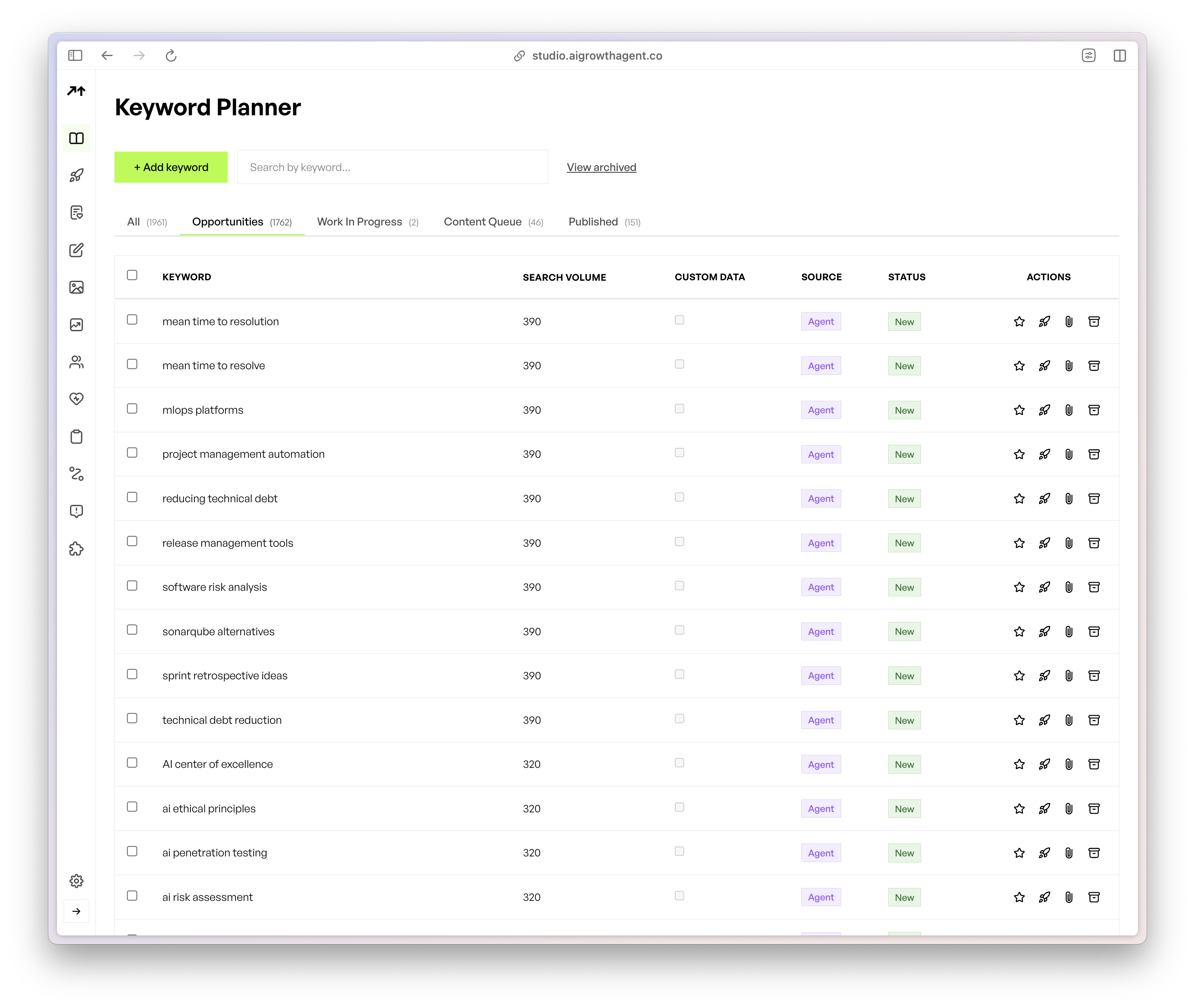
- Deep keyword research to identify content opportunities in 24 hours.
- Full-cycle content creation with technical SEO elements included.
- Fast content output to capture trends and breaking news.
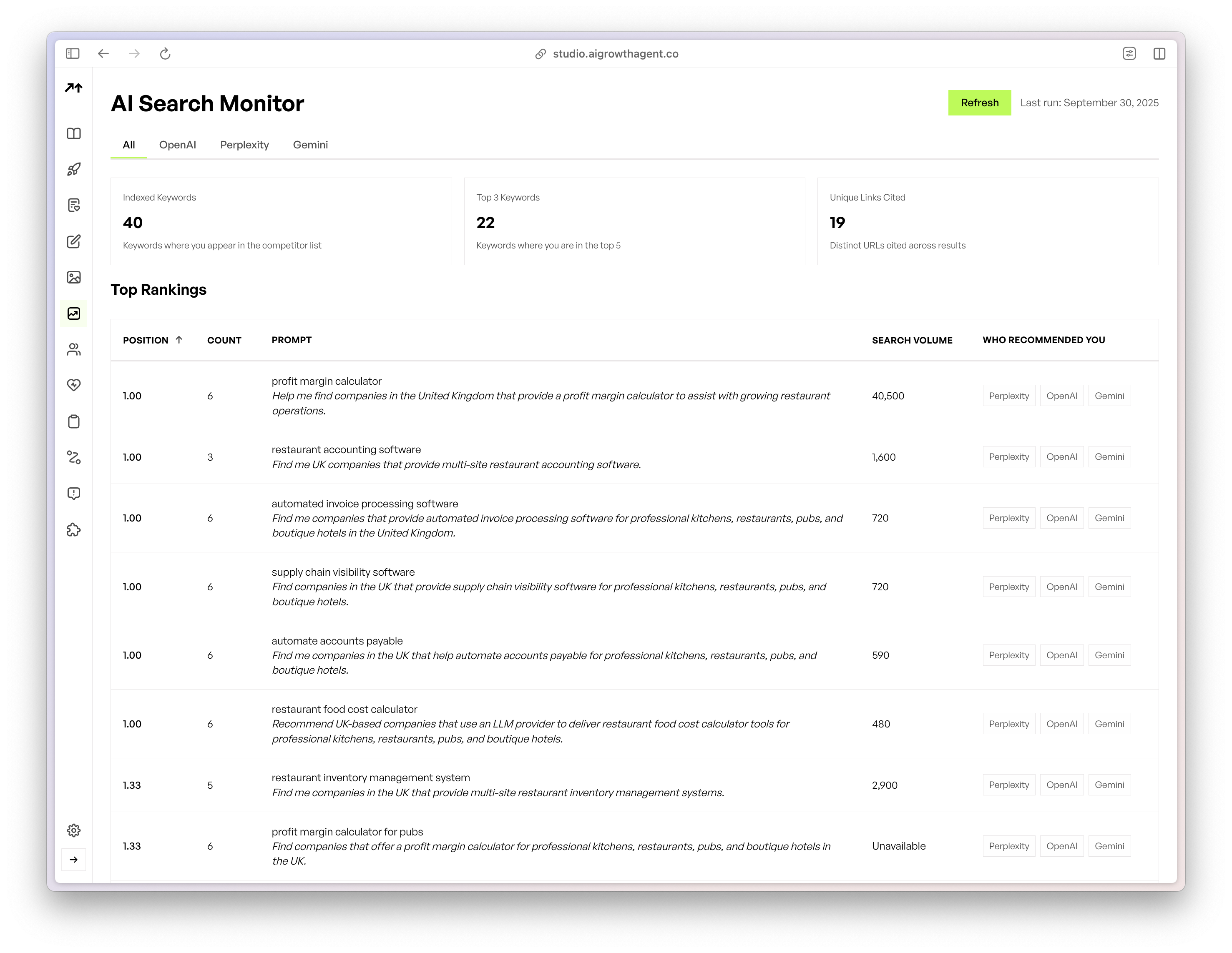
- Monitoring to track how AI platforms cite your content.
| Solution Type | Content Volume | AI Optimization | Engagement Metrics |
|---|---|---|---|
| SEO Agencies | 2-4 articles/month | Basic schema | Traffic, rankings |
| Internal Teams | Inconsistent | Often missing | CRM data |
| Basic AI Tools | High volume, low quality | Generic optimization | Basic pageviews |
| AI Growth Agent | Daily, enterprise-quality | Advanced protocols | AI citations, authority growth |
Tracking Success in the AI Engagement Era
Engagement metrics have evolved with AI search. Success now focuses on answer accuracy, conversation depth, follow-up queries, and retention over just clicks. Consider tracking:
- How often AI cites your content for relevant queries.
- The depth and accuracy of AI answers using your content.
- Your brand’s presence across different AI platforms.
- How often your content displaces competitors in AI responses.
AI Growth Agent provides tools to monitor these metrics, helping leaders gauge their progress in AI-driven engagement.
Gaining a Competitive Edge in AI Search
AI search offers unique chances for brands to stand out. Building authority now can create lasting benefits over competitors. Opportunities include:
- Early authority that AI systems reinforce over time.
- Technical barriers from complex optimization needs.
- Advantages from consistent, high-quality content volume.
- Unified presence across multiple AI search platforms.
AI Growth Agent helps brands seize these opportunities with a focused, automated approach to content creation and optimization.
Steps to Implement an AI-First Engagement Plan
Moving to an AI-focused engagement strategy takes careful steps. Leaders should balance quick visibility gains with sustained authority growth through phases like:
- Starting with content on core expertise areas.
- Applying technical optimization for better AI understanding.
- Targeting competitor-dominated queries with stronger content.
- Expanding into related topics to widen authority.
AI Growth Agent supports every step, letting leaders focus on strategy while the platform handles execution.
Key Insights on AI Search Engagement
What metrics matter for AI search engagement? Focus on how often AI cites your content, the depth of answers, and how you stack up against competitors. AI Growth Agent tracks these for clearer insights.
How do brands maintain trust without direct visits? Build authority by publishing detailed, accurate content that AI systems prioritize in summaries over other sources.
Does keyword research still apply to AI search? Yes, but it needs a broader scope. AI Growth Agent analyzes thousands of user queries to align content with AI search patterns.
How soon can brands see AI optimization results? Initial progress may appear in weeks, with stronger authority growth over months through consistent, optimized content via AI Growth Agent.
Conclusion: Secure Your Brand’s Future in AI Search
User engagement now hinges on earning citations from AI systems, not just clicks. Brands that establish themselves as trusted sources will maintain visibility as AI content grows.
Marketing leaders must decide whether to adapt by building authority or risk losing relevance. Traditional methods often lack the scale and technical depth needed for AI success.
AI Growth Agent provides a platform to create content that meets AI search demands. Acting now can position your brand ahead of competitors in this evolving space.