


Written by: Mariana Fonseca, Editorial Team, AI Growth Agent | Last updated: January 10, 2026
Key Takeaways
- AI search experiences now highlight only a small set of cited sources, so mobile optimization must focus on earning citations, not just rankings or clicks.
- Modern mobile design for AI search depends on clear structure, readable content, and consistent E-E-A-T signals, alongside core technical SEO.
- Programmatic, schema-rich content architectures help AI systems interpret pages, extract answers, and reuse content blocks in AI-generated responses.
- Marketing and product teams benefit from updating KPIs toward AI citation share, brand presence in AI answers, and API-ready mobile commerce flows.
- AI Growth Agent provides a programmatic SEO agent that builds and maintains AI-optimized mobile content at scale; schedule a demo to see it in action.
The Problem: Why Traditional Mobile-Friendly Design Fails in AI Search
AI search in 2026 centers on citation and answer extraction, not on traditional click-through behavior. Mobile-first indexing still matters, yet visibility now depends on how often AI systems reuse and reference your content in their responses.
Past mobile optimization emphasized responsiveness, speed, and keyword targeting. These remain necessary, but AI ranking signals now place more weight on originality, clarity, and tight organization than on simple keyword density or basic UX. AI experiences compress attention into a few cited sources and reduce click-through rates by answering in-line, so many mobile pages never reach users.
Scale has become a core obstacle. SEO playbooks built around ten blue links no longer keep pace with AI search. Brands now compete on topical depth and coverage across many related queries, while AI-generated content rapidly fills the web.
Brands that depend only on classic SERP rankings for mobile traffic face growing risk. Mobile content needs structures and signals that make answer extraction safe, reliable, and easy for AI systems.
Teams that want to update their mobile approach for this environment benefit from a programmatic, data-driven system. Schedule a consultation session with AI Growth Agent to review options for AI-focused mobile optimization.
The Solution: Programmatic Mobile Optimization for AI Discoverability
Modern mobile optimization for AI search aligns human experience with AI interpretability. Content and design decisions aim at answer presence and task completion, not just rankings and time-on-page. AI systems favor structured, concise responses they can reuse safely, so content must be easy to segment and cite.
Effective strategies combine structured data, clean information architecture, and low-friction user flows. AI systems prioritize data clarity, consistent logic, and efficient paths to completion over purely aesthetic choices, which makes technical precision a central concern for mobile teams.
Content systems also need scale. Component-based architectures help organizations cover many related queries and scenarios, something manual production often cannot match.
Essential Elements of AI-Ready Mobile Content
Structured data (Schema.org). Detailed Schema.org markup now often acts as a requirement for AI agents to extract prices, stock, shipping, and other attributes. Strong schema coverage also clarifies entities and relationships across your site.
Clear content architecture. AI systems reward content that uses headings, lists, and tables to organize ideas into scannable blocks. These blocks become reusable components in AI answers and summaries.
Technical SEO fundamentals. Crawlability, indexability, fast mobile performance, and reliable rendering still underpin AI discoverability. AI tools work on top of these search indexes, so weak foundations limit citation potential.
E-E-A-T signals. Content that demonstrates expertise, experience, authority, and trust tends to perform better in AI recommendations. Clear sourcing, author details, and risk disclosures help AI models assess credibility.
AI Growth Agent: Programmatic Support for Mobile AI Search
AI Growth Agent operates as a programmatic SEO agent built for the AI search environment. The system designs content architectures that help companies earn AI citations at scale while keeping mobile experiences clear for human users.
Marketing teams use AI Growth Agent to achieve both quality and volume in mobile content. Traditional agency models that ship a few pieces each month struggle to cover the breadth of queries AI systems generate. Programmatic workflows from AI Growth Agent produce consistent, technically sound content that aligns with AI search needs.
Key features tailored to mobile-friendly design for AI search include:
- Autonomous technical engineering. Each post receives structured data, metadata, and image optimization that meet strict AI indexing requirements, without manual tagging at the page level.
- LLM.txt and Model Context Protocol (MCP). This implementation gives AI systems a structured way to understand and query your content, improving interpretation and citation across mobile pages.
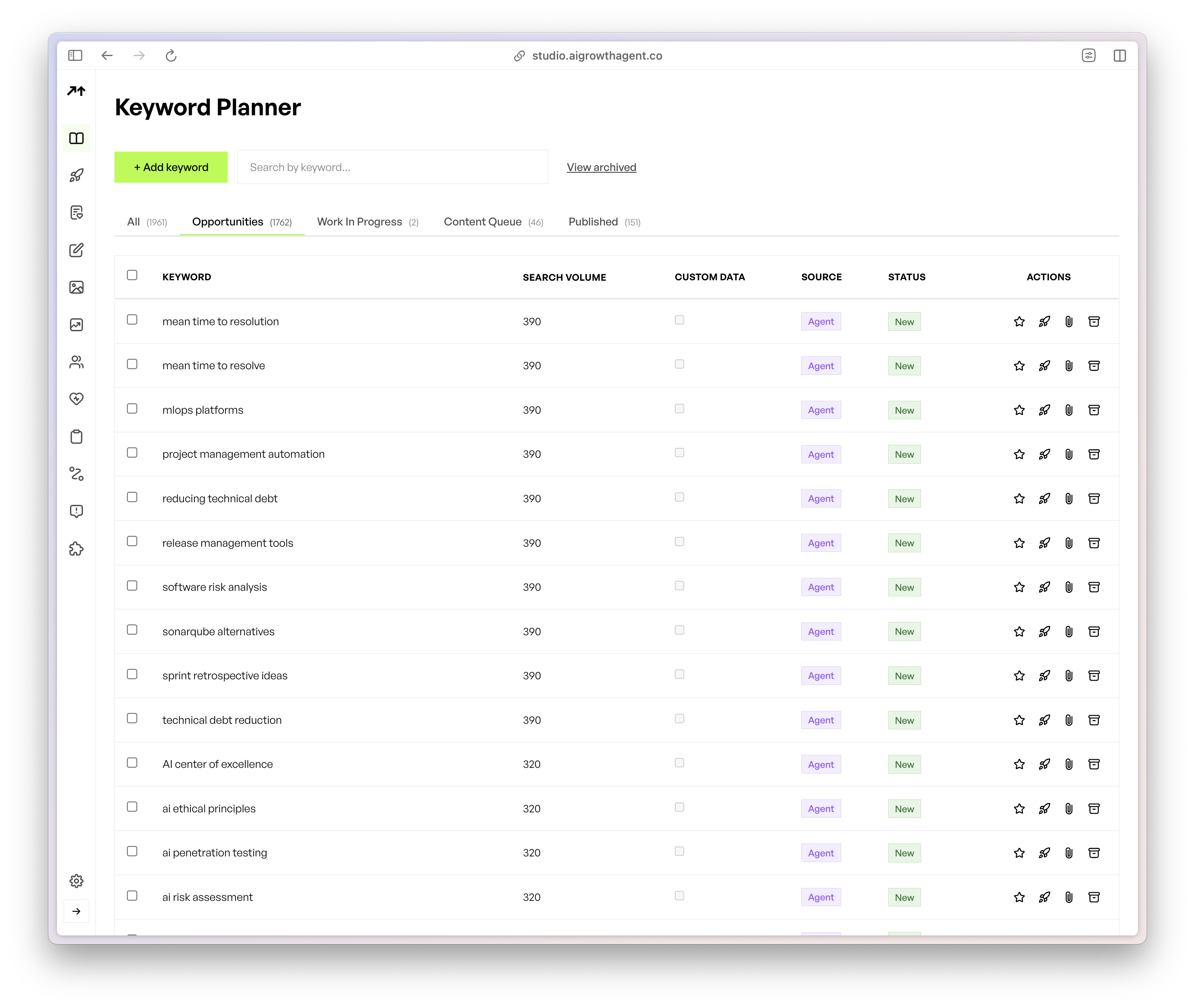
- Programmatic keyword and content research. The agent maps thousands of related questions and intents, then builds content that aligns with AI-style queries instead of relying only on traditional keyword lists.
- Real-time programmatic SEO content injection. New topics and shifts in demand trigger fresh content that aligns with AI search patterns, helping brands appear early on emerging themes.
Schedule a demo with AI Growth Agent to review how these capabilities can support your mobile and AI search goals.
Strategic Insights for AI-Powered Mobile Experiences
Adapting KPIs for AI Citation and Brand Presence
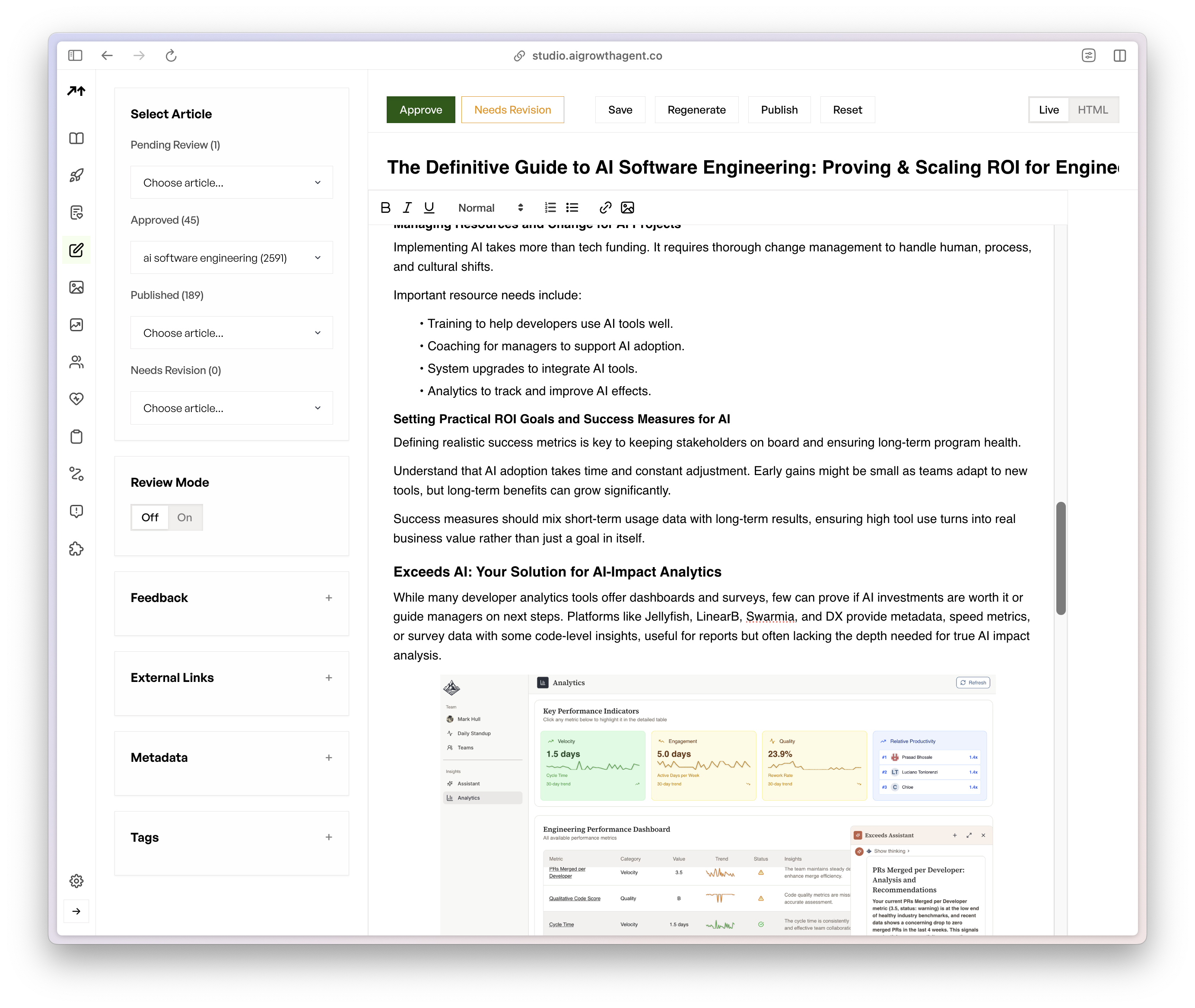
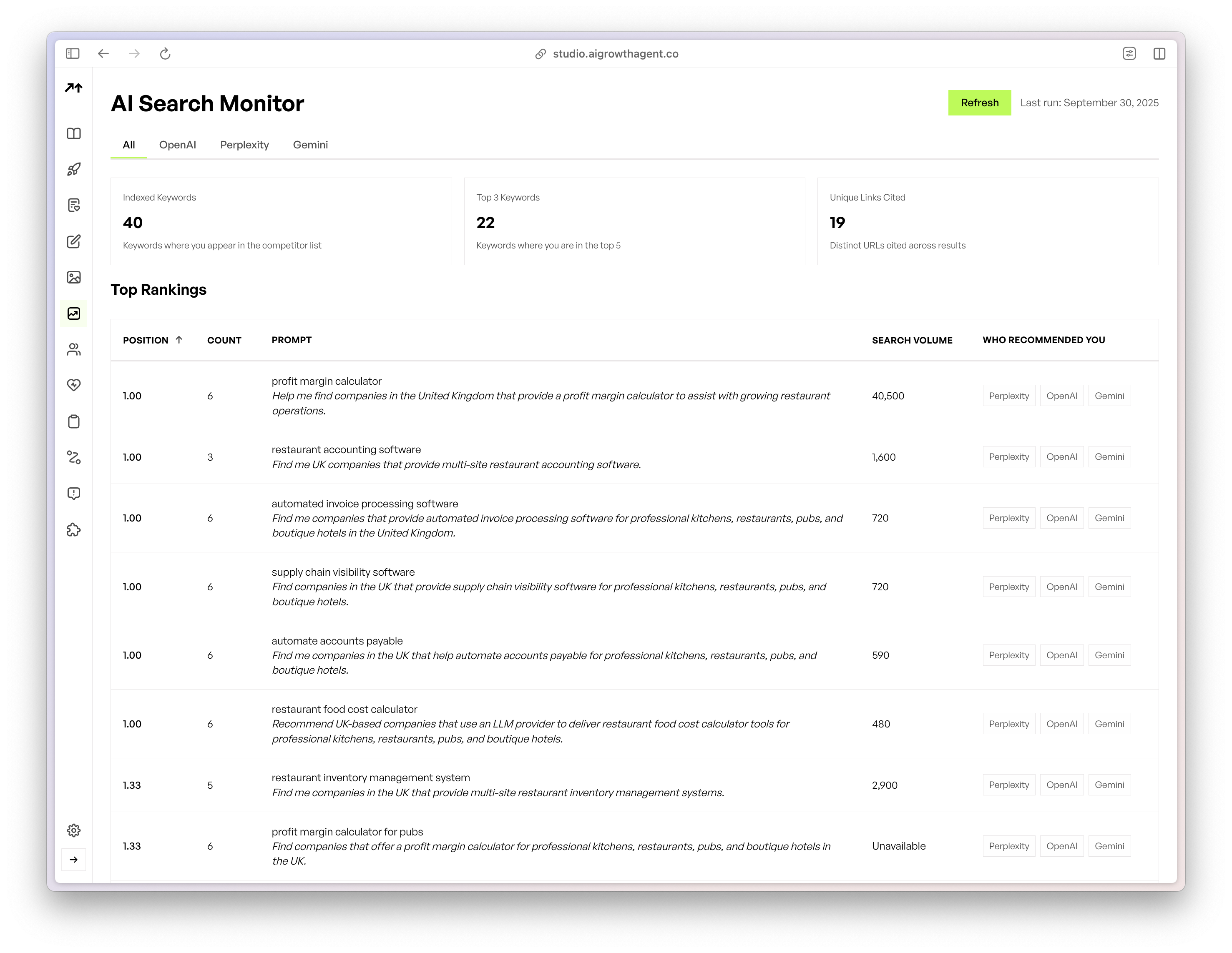
Performance measurement now extends beyond mobile sessions and click-through rate. Marketing teams track brand mentions in AI answers, citation share of voice, and presence in AI-summarized journeys. These metrics help explain impact even when direct visits decline.
The Rise of AI Agents and API-Driven Commerce
AI agents increasingly evaluate products, compare options, and complete purchases over APIs. Mobile sites that expose structured product data, clear policies, and documented API endpoints give these agents what they need to transact reliably.
Continuous Content Audits for AI Trust and Clarity
Regular content audits reduce conflicting or outdated information. Consistent facts across mobile pages, help centers, and product docs make it easier for AI systems to trust and reuse your content.
AI-Powered Tools for Mobile Development and Optimization
Developers now rely on AI tools for performance analysis, accessibility checks, and responsive code generation. These tools support continuous improvement of Core Web Vitals and mobile quality that, in turn, supports AI visibility.
Comparison: Traditional vs. AI-Driven Mobile Optimization
|
Feature/Metric |
Traditional Mobile Optimization |
AI-Driven Mobile Optimization |
|
Primary goal |
User experience, responsiveness, SEO rankings |
AI citation, answer presence, machine readability |
|
Content focus |
Readability, keyword density, general UX |
Structured data, semantic blocks, E-E-A-T signals |
|
Technical stack |
Responsive design, basic SEO, manual schema |
Advanced structured data, LLM.txt, MCP integration |
|
Measurement |
Organic traffic, bounce rate, mobile rankings |
AI citations, brand mentions in AI experiences |
Frequently Asked Questions About Mobile-Friendly Design for AI Search
How does AI search impact mobile-first indexing?
Mobile-first indexing still determines which version of a page search engines store and evaluate. AI search then applies additional filters that look at clarity, intent matching, and trust signals. Pages that explain topics clearly, answer specific questions, and keep a logical structure stand a better chance of being cited.
What is “AI citation visibility” and why is it important for mobile?
AI citation visibility describes how often AI systems quote, reference, or summarize your content in their answers. Mobile pages with strong citation visibility keep influencing user decisions, even when users do not click through to the site, because the content still shapes the AI-generated response.
Can an existing mobile site be updated for AI, or is a rebuild required?
Most mobile sites can be upgraded for AI search without a full rebuild. Teams usually focus on richer structured data, clearer heading structures, consistent E-E-A-T signals, and scalable content operations. The level of work depends on current technical health and how much content already follows these patterns.
How does AI Growth Agent support mobile-friendly design for AI search?
AI Growth Agent automates many steps that teams usually handle manually. The agent conducts keyword and topic research, produces content aligned with AI-style queries, and applies advanced technical SEO patterns such as schema markup and LLM.txt across pages. This approach keeps mobile content consistent, interpretable, and easier for AI systems to reuse.
What makes programmatic mobile optimization different from responsive design?
Responsive design focuses on layout and visual adaptability across screen sizes. Programmatic mobile optimization adds structured data, metadata, and repeatable content templates that directly support AI parsing and citation. This approach treats mobile content as an ongoing system instead of a one-time design project.
Conclusion: Secure Your Mobile Authority in the AI Search Landscape
AI search has shifted mobile strategy from simple responsiveness and rankings toward citation, structure, and credibility. Brands that align design, content, and technical SEO with these expectations maintain visibility even as user behavior changes.
Programmatic mobile optimization provides a practical way to reach the required scale and consistency. AI Growth Agent helps teams implement this approach across planning, content creation, and technical rollout. Schedule a consultation session with AI Growth Agent to evaluate how a programmatic SEO agent can support your mobile authority in 2026 and beyond.


