Written by: Mariana Fonseca, Editorial Team, AI Growth Agent | Last updated: January 10, 2026
Key Takeaways
- AI search tools in 2026 prioritize content that is accurate, structured, and aligned with clear entities, not just content that targets individual keywords.
- Marketing leaders gain an advantage when they use programmatic content architectures that cover entire topic areas and reinforce a consistent brand perspective.
- Technical factors such as structured data, performance, and crawlability now act as eligibility filters for AI citations, not just ranking signals.
- Ongoing monitoring of how ChatGPT, Gemini, and Perplexity reference your site supports continuous optimization and sustained authority.
- AI Growth Agent helps teams plan, create, and maintain programmatic SEO content for AI search at scale; schedule a demo to see it in action.
The AI Search Revolution: Why Your Current Content Strategy Is Falling Behind
AI models now choose which sources to cite based on authority, structure, and relevance. Citation has become as important as ranking.
AI-generated content volume grows every day. Without a programmatic approach that creates many high-quality, related assets, your brand presence in AI responses shrinks while competitors fill the gap.
Traditional workflows that publish a few manual posts each month cannot satisfy AI models that favor depth, recency, and consistent structure at scale. Brands with limited high-quality data points risk losing category authority in AI search.
Step 1: Defining “High-Quality, Relevant Content” for AI Search (The 2026 Standard)
AI search systems apply quality standards that extend beyond classic SEO. These standards focus on factual reliability, technical strength, structure, and freshness.
Reliability and Factual Accuracy
Content that earns AI citations is original, accurate, and clearly written for people. Structured data must align with the visible page content, since misalignment weakens reliability signals and reduces eligibility for AI-driven experiences. AI Growth Agent uses programmatic checks to keep metadata and on-page content synchronized.
Technical Excellence as a Citation Filter
Fast, secure pages now function as basic entry requirements. Sites that load quickly, respond well on mobile, and use full HTTPS support appear more often in AI responses. Slow or unstable pages fall out of the candidate pool before ranking even becomes relevant.
Structured Content for AI Comprehension
AI models interpret and extract information more easily from content that follows a clear structure with headings, concise answers, and organized sections.
Effective pages often include:
- Logical heading hierarchies that break down subtopics
- FAQ sections that provide direct, scannable answers
- Internal links that group related content into topic clusters
Programmatic systems apply these patterns consistently across hundreds or thousands of pages, which manual methods rarely maintain.
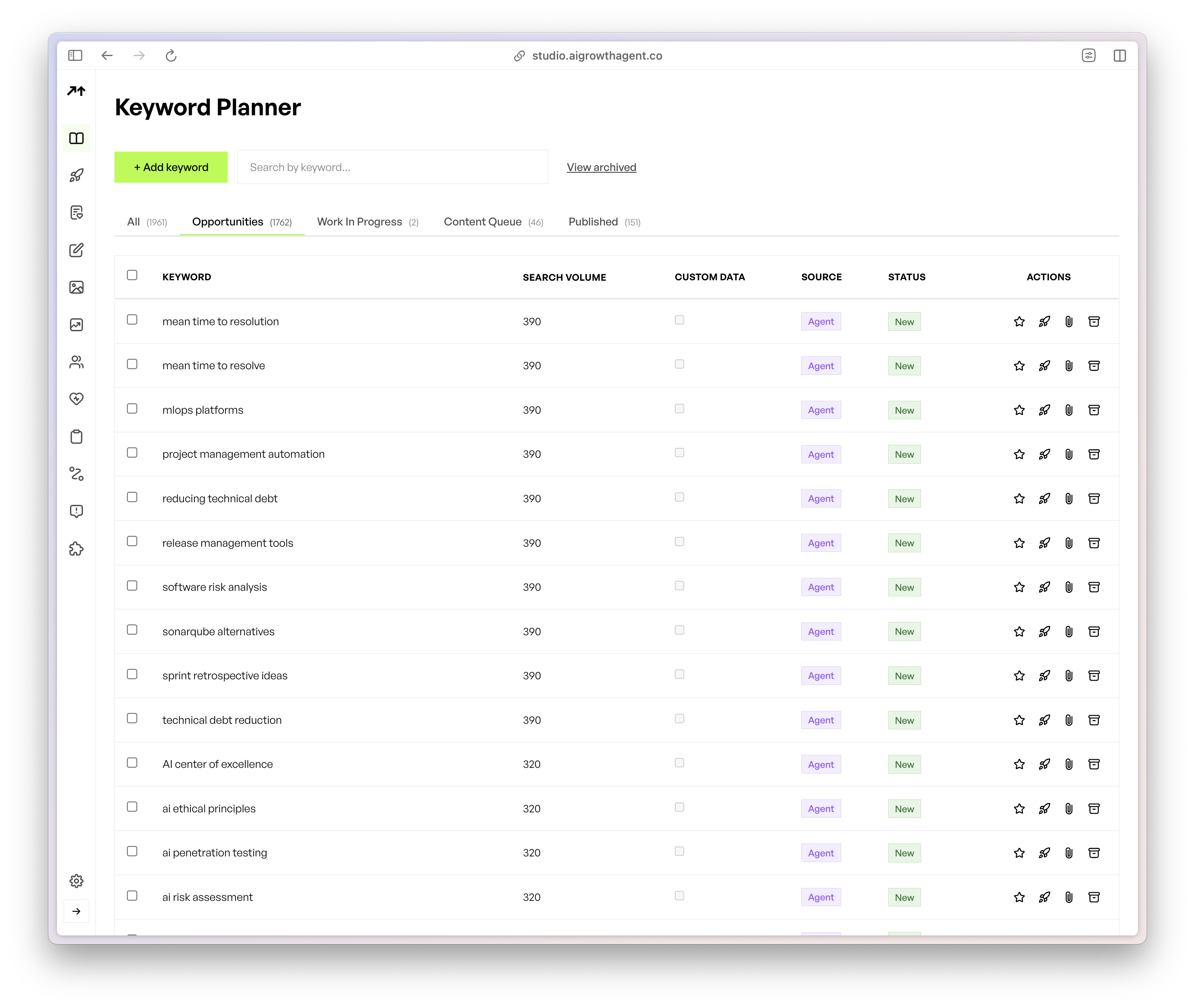
Freshness and Recency Signals
AI systems favor content that appears current and actively maintained. Clear last-updated dates on evergreen pages and frequent, meaningful updates help signal ongoing curation.
Large sites usually need automated processes to schedule revisions, refresh data, and update metadata. Manual updates at scale often create gaps and inconsistencies that reduce perceived relevance.
Step 2: Strategizing for AI Citation: Beyond Keywords to Programmatic Authority
Authority in AI search comes from comprehensive topical coverage, not isolated keyword wins. Content must show depth across related questions and use consistent entities and terminology.
Programmatic Keyword Research and Topical Clustering
Sites that cover an entire topic area in detail tend to gain more AI citations. Programmatic research identifies thousands of related queries, then groups them into clusters that map to your expertise.
This method supports:
- Complete coverage of subtopics and intent variants
- Content plans that scale across many URLs
- Clear relationships between individual assets and broader themes
Manual keyword research rarely uncovers this level of breadth and structure.
Entity Coherence and Consistent Brand Messaging
AI models rely on entities, relationships, and consistent context to understand who you are and what you do. Content that uses stable naming, terminology, and positioning across pages helps AI associate your brand with specific domains.
Programmatic architectures keep this coherence steady so each new article strengthens the same core entity signals instead of fragmenting them.
Multimodal Content Architecture
AI search increasingly combines text with images and other media. Well-labeled visuals with descriptive file names, alt text, and structured metadata can support citation and discovery.
Programmatic workflows can select, compress, tag, and embed images at scale instead of relying on ad hoc uploads that miss metadata or slow down pages.
Many teams rely on basic AI writing tools that output raw text without technical structure or metadata. These tools do not solve the programmatic planning, linking, and optimization needed for AI authority.
Marketing leaders can move toward programmatic content architectures designed for AI citation and topical authority. Schedule a consultation with AI Growth Agent to see how an autonomous system can support this shift.
Step 3: Implementing Technical Infrastructure for AI Indexing at Scale
AI-focused optimization depends on robust, consistent technical foundations that extend beyond one-time SEO fixes. Scalable systems are necessary for large content libraries.
Optimal Crawlability and Renderability
AI crawlers must access, render, and understand your content on both desktop and mobile. Clean robots directives, logically structured sitemaps, and reliable rendering prevent gaps in coverage.
Manual technical management across hundreds of templates and sections often introduces small errors that block or distort content for AI systems.
Advanced Structured Data and Schema Markup
Structured data now functions as a key trust signal. Schema must stay accurate and in sync with page content at all times.
Programmatic schema generation can:
- Apply the right schema types at scale
- Keep fields aligned with on-page text
- Update schema automatically when content changes
AI Indexing Protocols and Context Sharing
AI Growth Agent uses tools such as advanced LLM.txt files and a blog-focused implementation of Model Context Protocol (MCP) to make content easier for AI systems to consume and reference. These methods give models structured access to your content database, which can improve understanding and citation quality.
The Scale Challenge of Manual Technical SEO
Programs that span hundreds or thousands of pages need automation for metadata, schema, performance optimization, and link structures. Manual work often cannot maintain accuracy, creating uneven technical quality that limits AI visibility.
Step 4: Automating Content Engineering for AI Citation with AI Growth Agent
AI Growth Agent operationalizes programmatic SEO by combining structured strategy, content creation, and technical implementation in a single system built for AI search.
Programming Your Programmatic SEO Agent
Engagement begins with a focused kickoff session that captures your positioning, audience, and expertise. AI Growth Agent converts this input into a Company Manifesto that defines how the agent writes, what it prioritizes, and how it represents your brand.
This manifesto guides all future content and keeps narrative, terminology, and technical standards consistent at scale.
The Autonomous Content Engineering Lifecycle
AI Growth Agent then runs an end-to-end workflow that includes:
- Structured briefs and topic selection from your content strategy
- Research across your manifesto and credible public sources
- Drafting content tailored to your brand and audience
- Fact-checking and quality review steps
- Technical SEO implementation, including schema, metadata, LLM.txt, and MCP integration
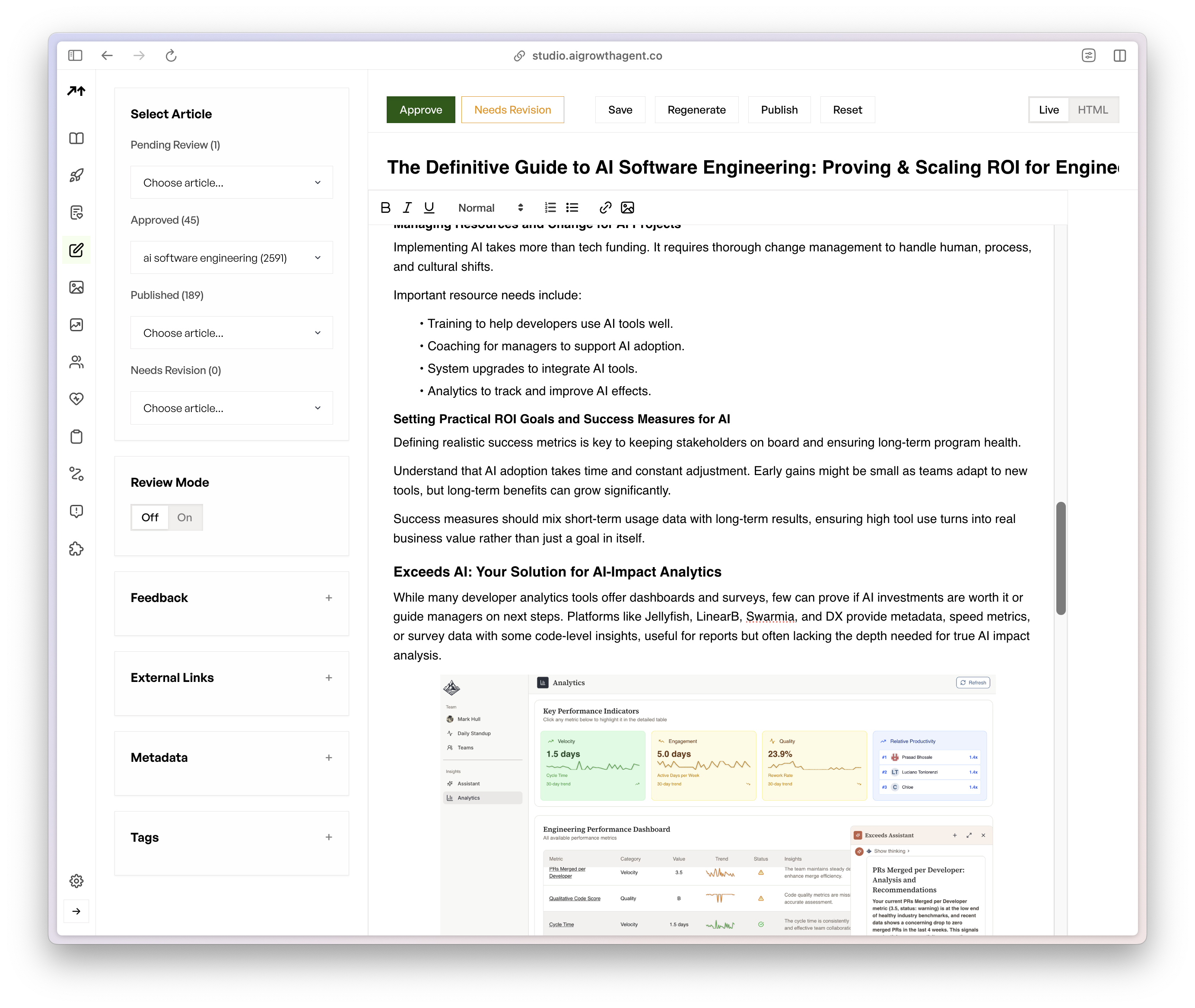
The AI Growth Agent Studio: Central Control for Programmatic SEO
Marketing teams use the AI Growth Agent Studio as a central command center for programmatic SEO. The interface allows you to review drafts, edit content directly, provide feedback that trains the agent, and choose between manual approvals or Auto-Pilot publishing.
Capabilities That Support Competitive Advantage
AI Growth Agent includes features designed for complex environments, such as:
- Multi-tenant deployment for multiple brands or regions
- Real-time content injection to address emerging topics quickly
- Database-to-content automation that activates proprietary data in content
- Intelligent image and asset placement with automated metadata
Schedule a demo with AI Growth Agent to review how this system can support AI search visibility for your organization.
Advanced Considerations: Sustaining Authority and Adapting to Evolving AI Search
Long-term success in AI search depends on measurement, iteration, and ongoing maintenance as models and interfaces change.
AI Search Monitoring and Feedback Loops
Marketing teams benefit from tracking when and how AI systems reference their content. AI Growth Agent includes monitoring for ChatGPT, Gemini, and Perplexity, including citation frequency, quoted passages, top URLs, and coverage across target keyword groups.
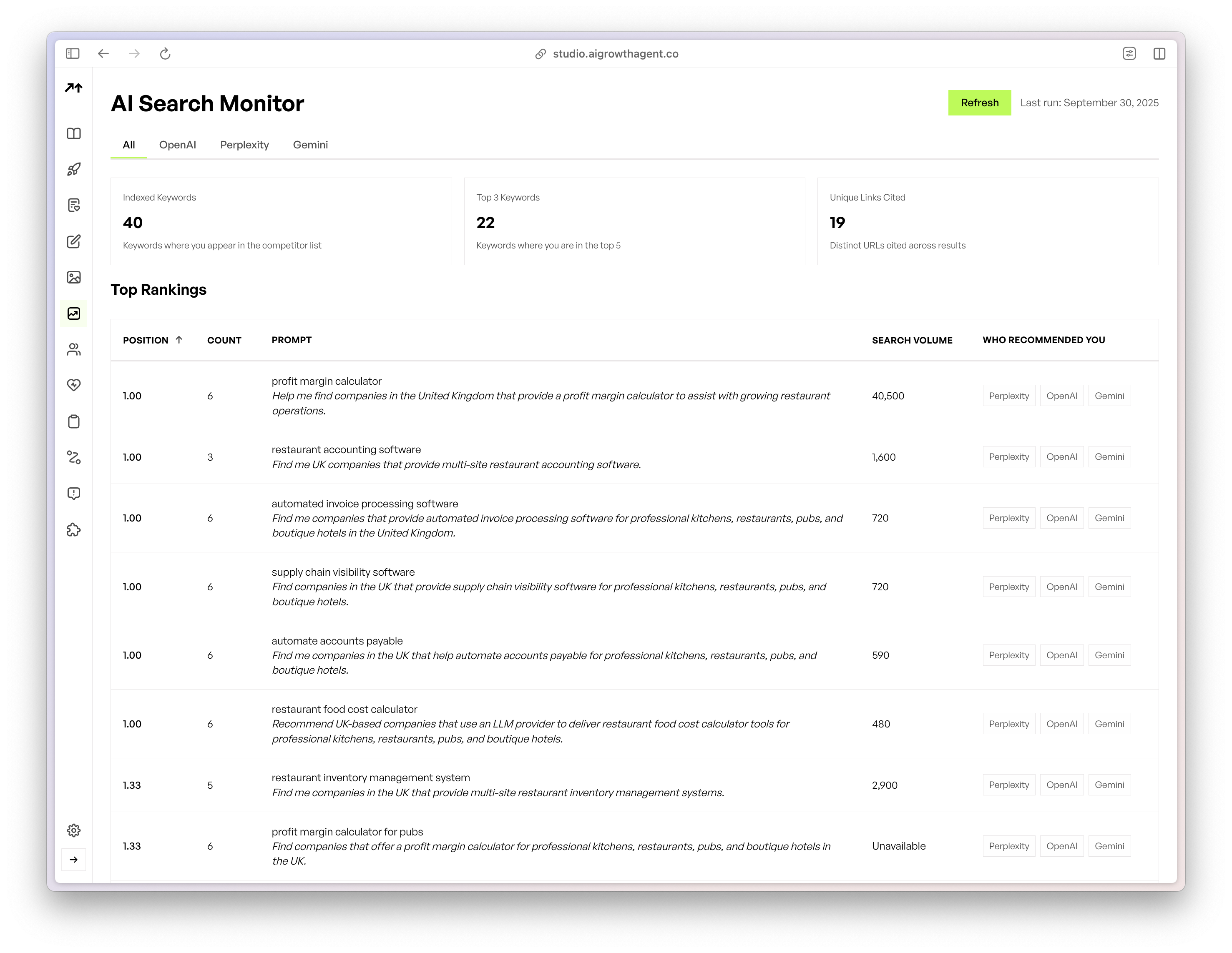
These insights feed back into topic planning, on-page improvements, and technical refinements.
Continuous Content Optimization and Maintenance
AI models evolve over time, which means optimization practices must evolve as well. Programmatic systems that refresh content, refine structure, and update schema on a schedule help maintain visibility as expectations shift.
Using Large Context Windows to Strengthen Authority
Modern AI models can process long documents and networks of linked pages. Brands that build deep, internally consistent content ecosystems gain an advantage because models can analyze more context and surface their material as reliable sources.
Frequently Asked Questions About High-Quality AI Search Content
How quickly can content start appearing in AI search results?
Companies that deploy structured, programmatic content systems often see citations within weeks of launch. For example, Exceeds AI became a recommended source by Perplexity within about two weeks and appeared in Google AI Overview and Gemini snapshots soon after. BeConfident reached a top recommendation position for English learning in Brazil within weeks of programmatic publishing. Timelines vary by implementation quality, competition, and crawl frequency.
How does AI Growth Agent maintain quality at scale?
AI Growth Agent uses the Company Manifesto to preserve voice and positioning across all content. The system applies defined research steps, factual checks, and technical standards for each asset, then learns from editor feedback to refine future outputs without losing consistency.
Is traditional SEO still relevant for AI search optimization?
Traditional SEO remains a foundation. Crawlability, clear information architecture, performance, and trustworthy content still matter. AI search then adds needs such as precise structured data, semantic topic coverage, and automated freshness that basic SEO practices and manual work rarely deliver at scale.
What is the difference between Google AI Overviews and AI Mode for content strategy?
Google AI Overviews summarize information alongside classic search results, while AI Mode offers a separate conversational experience that can replace the results page in some sessions. Content strategies need concise, extractable information that works well in Overviews and deeper authority pages that support extended AI Mode conversations.
How do programmatic content systems differ from basic AI writing tools?
Basic AI writing tools help generate drafts but usually stop at text output. Programmatic systems such as AI Growth Agent include strategy, research, structure, schema, technical optimization, and publishing workflows. This approach turns AI into a content engineering engine rather than a standalone writing assistant.
Conclusion: Build Sustainable Authority in AI Search with Programmatic Content
Manual, ad hoc content production no longer matches the pace and structure that AI search ecosystems expect. Programmatic content engineering that combines quality writing, clear structure, and rigorous technical implementation offers a more reliable path to AI citations.
Marketing leaders who act now can define their category presence in AI search by building dense, coherent content architectures that AI systems recognize as trusted references.
AI Growth Agent provides a structured way to plan, create, and maintain this type of content system. Schedule a strategy session with AI Growth Agent to evaluate how programmatic SEO can support your brand’s authority in the 2026 AI search landscape.