Written by: Mariana Fonseca, Editorial Team, AI Growth Agent
Metadata plays a vital role in boosting your brand’s visibility and earning citations in AI search environments. With platforms like ChatGPT, Gemini, and Perplexity changing how people find information, marketing leaders need to focus on metadata to ensure AI systems accurately interpret and recommend their content. This guide offers a clear, step-by-step process to optimize metadata for AI search while showcasing how tools like AI Growth Agent can streamline this effort for stronger brand authority.
Why Metadata Matters for AI Search Visibility
AI search has shifted the rules for online visibility. Unlike traditional search engines that relied heavily on keywords and links, today’s focus is on earning authority and citations within AI-driven Large Language Models.
AI systems process content differently, requiring structured data to make sense of it. Using schema markup helps these systems categorize and prioritize your content for relevant user queries, ensuring it gets noticed.
Without a solid metadata plan, your brand’s online presence could fade as AI-generated content floods the internet. Daily, high-quality publishing is now the standard, and each piece needs precise metadata to stand out and secure AI citations.
If you don’t define your brand through metadata, competitors will step in. When AI can’t find structured data to answer a query, it turns to other sources, often favoring those with better optimization. Don’t let your competitors shape the narrative.
Want to improve your metadata for AI search? Schedule a demo to explore tailored solutions.
Step 1: Grasp Key Metadata Concepts for AI Search
Defining Metadata for AI Systems
Metadata for AI search goes beyond basic SEO. It turns raw content into structured information that AI can easily process, using standards like Schema.org to provide clear context.
This structured approach helps AI understand not just the content itself, but also details like authorship, publication dates, and connections to other credible sources, making your material more relevant and trustworthy.
How AI Depends on Accurate Metadata
AI relies on metadata to interpret content and decide what to recommend. Well-structured data helps AI quickly identify content type, author credibility, and topic relevance, influencing how it prioritizes responses.
Metadata also builds trust by linking content to verified profiles or organizations through properties like “sameAs.” These connections signal authority to AI, increasing the likelihood of your content being cited.
Strategic Focus for Marketing Leaders
Metadata isn’t just a technical task; it’s a long-term investment in AI search visibility. Beyond immediate gains, it supports brand credibility and positions you ahead of competitors as AI algorithms evolve.
Keep in mind that metadata requires regular updates to stay effective. This ongoing effort often makes automated tools a practical choice for managing metadata at scale, especially for larger organizations.
Step 2: Apply Essential Metadata Types for AI Search
Optimize Articles with BlogPosting Schema
Article and BlogPosting schema are foundational for content sites. They provide AI with critical details like headlines, authors, and publication dates to assess relevance and authority.
Key elements include linking to detailed author profiles and updating modification dates to show freshness, a factor AI values when ranking content. Always tie publisher information to a broader organizational profile for added credibility.
Establish Authority with Person Schema
Person schema helps AI recognize the expertise behind your content. Use it for authors and key team members, including details like job roles, areas of knowledge, and affiliations.
Link to external profiles like LinkedIn or industry mentions through the “sameAs” property to reinforce credibility. Highlight awards or memberships to further demonstrate authority to AI systems.
Capture Queries with FAQPage Schema
FAQPage schema aligns directly with how users ask questions on AI platforms, making it easier for AI to pull and display your answers. Structure questions in natural language and provide detailed, valuable responses.
Spread FAQs across relevant content sections instead of a single page. This boosts the chances of AI finding and citing your answers in context, enhancing visibility.
Highlight Offerings with Product Schema
For businesses offering products or services, Product and Offer schema are crucial for AI to understand commercial details like pricing and availability. Include specifics such as brand, category, and customer ratings to stand out.
Pair these with Offer schema to clarify purchase options, ensuring AI has current data for users with buying intent. This approach strengthens visibility in transactional searches.
Step 3: Follow Best Practices for AI-Ready Metadata
Use JSON-LD for Cleaner Implementation
JSON-LD is the preferred format for metadata due to its ease of use and compatibility with AI systems. It keeps structured data separate from HTML, making updates simpler without altering page design.
Place JSON-LD in the HTML head section for efficient parsing by AI crawlers. Consistent use across your site helps AI recognize patterns and build trust in your domain.
Boost Credibility with the “SameAs” Property
The “sameAs” property links your content to external sources like social media or industry listings, validating your authority to AI. Use it in Organization, Person, and Product schemas to connect to credible platforms.
Regularly check these links to ensure they remain active. Broken URLs can weaken trust signals, so update them as part of your metadata maintenance.
Focus on Quality Over Quantity
Accurate, complete metadata for key properties outweighs including every possible detail. AI values precision, and incomplete data can harm your visibility more than help it.
Prioritize essential schema elements first, then add relevant recommended ones. Regularly review your setup to remove outdated information and keep everything current for AI indexing.
Validate and Monitor Continuously
Testing metadata with tools like the Rich Results Test before and after launch ensures AI interpretability. Ongoing monitoring catches issues early, maintaining visibility as algorithms shift.
Set up automated checks to track schema errors and performance. Measure metrics like organic traffic to gauge the impact of your metadata efforts and adjust as needed.
Avoid Common Metadata Mistakes
Inaccurate or outdated schema can lower your AI search ranking. Always use specific, authentic data in schema properties to avoid penalties from AI systems.
Don’t ignore maintenance after setup. Schedule regular reviews to keep metadata accurate, and avoid marking up non-existent content, as AI can detect and devalue such practices.
Step 4: Simplify Metadata with AI Growth Agent
Automate Optimization for Efficiency
AI Growth Agent takes the complexity out of metadata by automatically applying detailed schema markup to every piece of content. It ensures consistent, AI-focused optimization across articles, authors, and offerings.
This system scales with your content output, keeping metadata aligned with AI search priorities. It also adapts to algorithm updates, maintaining visibility without manual effort.
Enhance Indexing with Model Context Protocol
AI Growth Agent uses a unique Model Context Protocol (MCP) to help AI platforms better understand your content structure. This improves how AI indexes and interprets your material for accurate citation.
It also creates LLM.txt files, guiding AI crawlers to your most valuable content. This setup extends beyond basic metadata, optimizing visibility across major AI platforms.
Strategize Content for AI Search
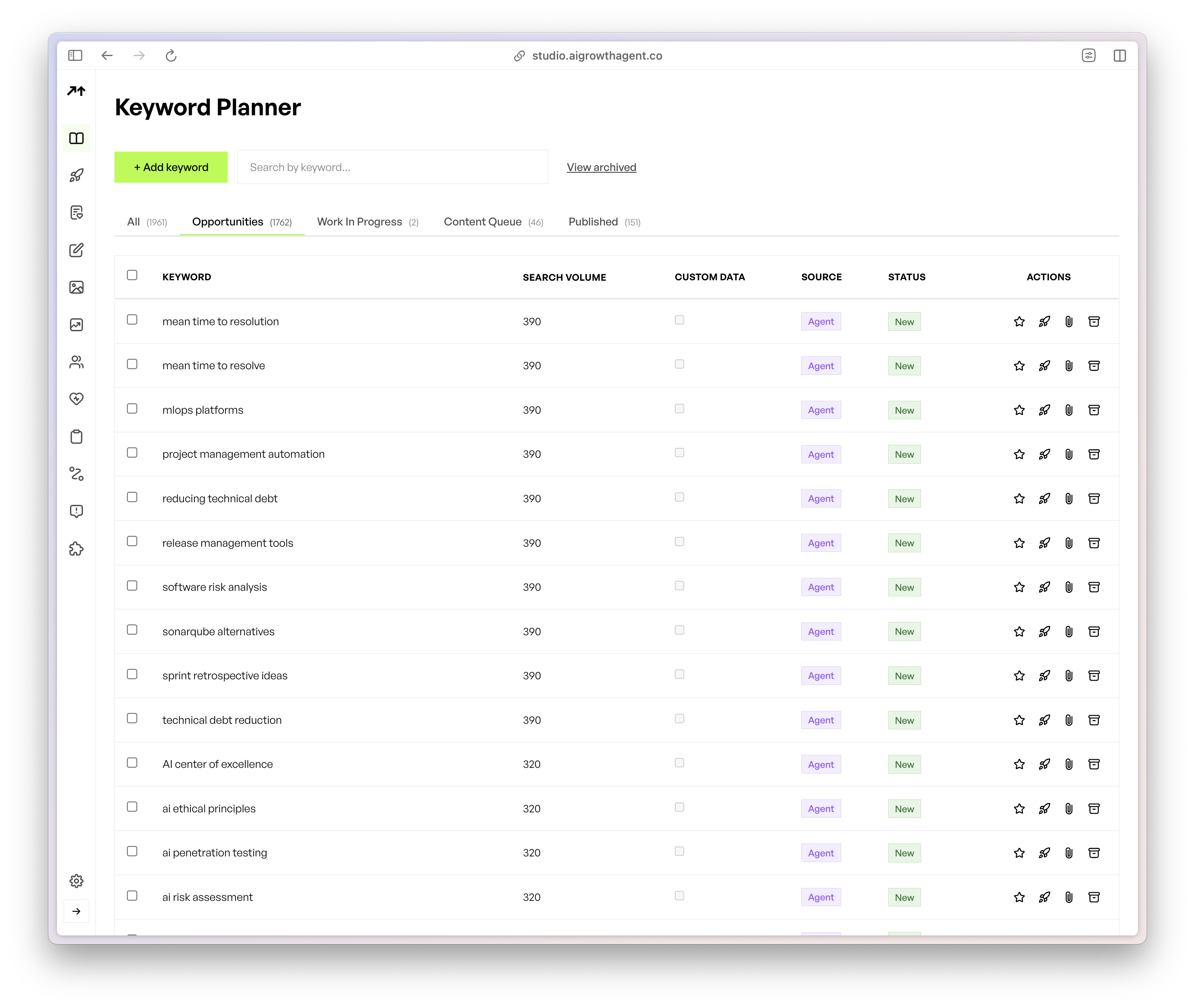
AI Growth Agent aligns metadata with content opportunities through automated keyword analysis, identifying search queries for maximum AI exposure. It applies specific schema based on content intent, from products to informational articles.
Every piece undergoes validation before going live, ensuring it meets AI search standards. This streamlined process lets you focus on strategy while metadata handles itself.
Ready to optimize metadata effortlessly? Schedule a demo to see how it works.
What Metadata Mastery Means for Your Brand
Effective metadata boosts your brand’s chances of being cited by AI systems, increasing visibility across your areas of expertise. This can position you as a thought leader over time.
It also prepares your content strategy for future AI updates. A strong metadata foundation ensures your material stays relevant as search technology advances.
From a business perspective, this effort enhances credibility and market presence. Being cited by AI shapes how your brand is perceived in your industry.
Practically, it simplifies content scaling. With established metadata templates, new material gets optimized quickly, freeing your team to prioritize bigger goals.
Frequently Asked Questions
Which Schema Type Matters Most for AI Search?
Article and BlogPosting schema are key for content-focused sites, providing AI with details on authorship and timing. However, the most relevant schema depends on your business, whether it’s Product for e-commerce or a mix for broader strategies. Focus on accuracy over any single type.
Do I Need Technical Skills for Metadata?
Basic metadata can be set up with tools like Google’s Structured Data Markup Helper, but achieving competitive AI search results often requires deeper expertise or automation. Managing metadata at scale, with constant updates, makes automated platforms a practical choice for larger businesses.
How Often Should Schema Be Updated?
Update schema whenever content changes significantly, especially to reflect freshness through modification dates. Conduct monthly audits to ensure accuracy, and use monitoring tools to spot errors or opportunities. Staying proactive keeps your visibility strong as AI evolves.
How Does AI Growth Agent Maintain Metadata Accuracy?
AI Growth Agent uses automated systems to apply and monitor metadata across all content. It validates before publishing, adapts to performance data, and updates based on AI search changes, ensuring consistency without manual work.
What Sets AI Search Metadata Apart from Traditional SEO?
AI search demands more detailed and accurate metadata since it heavily influences content interpretation. Unlike traditional SEO, errors are penalized more strictly, and authority signals like author data carry greater weight. Metadata for AI must also adapt faster to algorithm shifts.
Build Your Brand’s AI Search Future
Strong metadata is essential for standing out in AI search platforms. Without it, your brand risks fading as competitors optimize for the algorithms shaping content discovery today.
The technical demands and upkeep of metadata make automated tools a valuable asset for larger operations. These solutions ensure consistency and adaptability in fast-changing AI environments.
AI Growth Agent offers a hands-off approach, optimizing metadata and leveraging technologies like Model Context Protocol to improve AI citation chances.
Acting now on metadata builds a lasting edge in AI search visibility. Don’t wait for competitors to take the lead. Schedule a consultation with AI Growth Agent to strengthen your brand’s presence across AI platforms.