


Written by: Mariana Fonseca, Editorial Team, AI Growth Agent | Last updated: January 10, 2026
Key Takeaways
- AI search engines like ChatGPT prioritize current, reliable information, so content freshness now directly affects whether your brand appears in AI-generated answers.
- Clear structure, strong metadata, and consistent fact-checking help AI systems interpret your pages accurately and cite them with confidence.
- Programmatic workflows for keyword research, clustering, and real-time content creation support the content velocity that AI search now expects.
- AI-specific metrics, including citation frequency, answer accuracy, and freshness, give a more complete view of search authority than traditional SEO alone.
- AI Growth Agent offers a structured way to keep content accurate, fresh, and visible in AI search, and you can explore this through a short AI Growth Agent demo.
The AI Search Authority Crisis: Why Freshness Determines Citation Success
Information currency now shapes how AI search engines weigh your content against competitors. Many AI systems factor in publication and update dates when evaluating relevance, which gives a clear advantage to brands that refresh content consistently.
Stale content erodes AI visibility over time. Older pages often lose citations to competitors that maintain more recent coverage of the same topics. Each month that high-value pages go untouched, AI systems have more reason to favor newer sources in answers and overviews.
Marketing teams that want reliable AI citations need a systematic approach to freshness. That means tracking which topics change fastest, prioritizing updates for those pages, and planning a predictable cadence for expert revisions and new material. For brands that want structured support, you can explore how AI Growth Agent manages this process at scale by booking an AI Growth Agent demo.
The Technical Architecture of AI-Optimized Content Accuracy
Accurate content for AI search depends on more than correct facts. It requires clean structure, consistent terminology, and metadata that helps AI models interpret each page. Key components of a strong AI content score include grammar and integrity, structure and readability, and topical authority, all of which influence how trustworthy your site appears.
AI systems scan for clear logic, stable definitions, and alignment with the central topic of the page. Pages that progress logically and stay tightly focused tend to produce more accurate AI summaries, which increases the odds of direct citation.
Schema and Structured Data Requirements
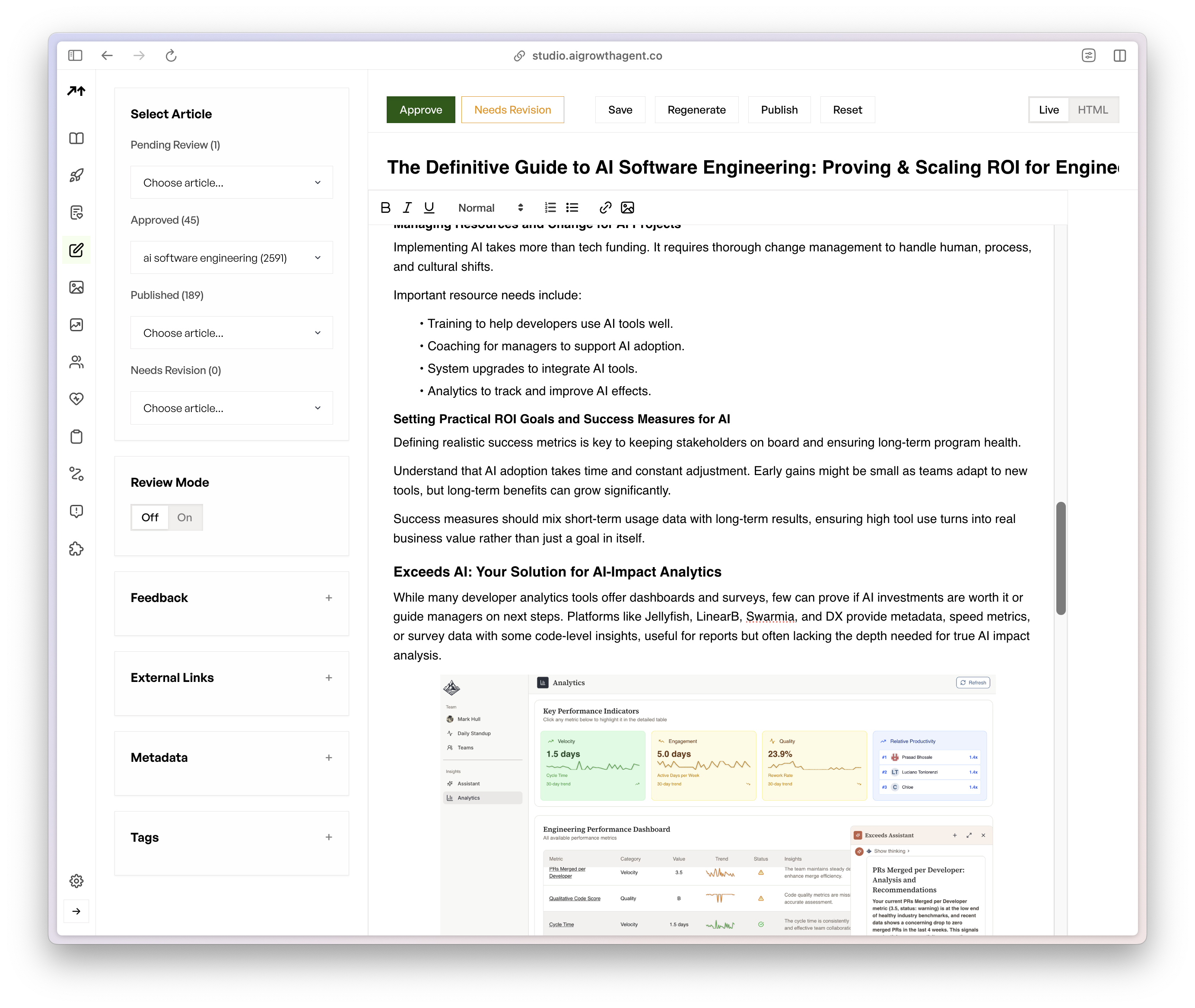
Technical accuracy starts with precise metadata. Schema markup, clean headings, and structured data clarify how information on a page fits together. When this structure is consistent across a site, AI crawlers can map content to entities, topics, and relationships more reliably.
AI Growth Agent applies schema markup, LLM.txt files, and a blog Model Context Protocol to expose content in structured ways that align with how language models ingest data. This approach reduces ambiguity and helps AI systems match your pages to specific questions and intents.
Fact-Checking and Validation Protocols
Content accuracy also depends on ongoing validation. Pages that show recent research, data updates, or revised technical details signal active stewardship, which can increase trust signals in AI systems.
AI Growth Agent supports this through automated checks that flag outdated statistics, aging citations, and inconsistent claims. Editors can then replace or expand those sections with current, verifiable information instead of surface-level changes.
Programmatic Solutions for Content Velocity and Authority
Modern AI search moves faster than traditional content workflows. Brands now track an AI visibility score that reflects how often they appear in AI-generated answers, which puts pressure on teams to publish and update at higher velocity.
Manual production often advances one article at a time, with long gaps between concept, review, and release. In contrast, AI platforms frequently give preference to recently updated material, especially on fast-moving topics. Programmatic systems that plan keywords, generate drafts, and schedule refreshes help close this gap.
Content Clustering for Comprehensive Coverage
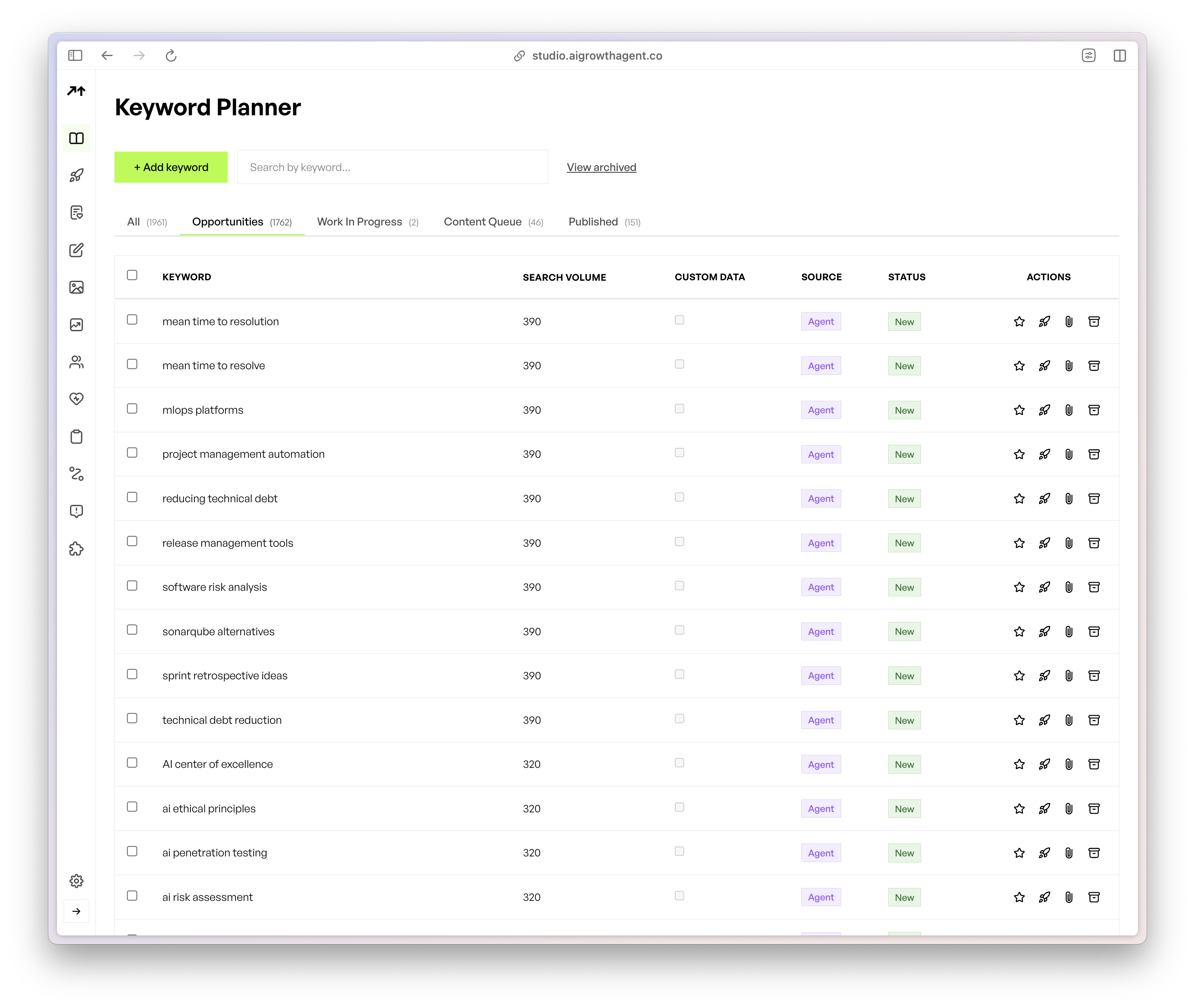
Strong AI authority comes from depth as well as speed. Well-planned content clusters that stay current across related searches increase the odds of citation across many query variations.
AI Growth Agent groups thousands of keywords into topic clusters, then builds articles and supporting pieces that cover each theme from multiple angles. This structure helps models recognize your site as a consistent source on specific subjects instead of a collection of isolated posts.
Real-Time Content Injection Capabilities
Timely coverage of new developments is now a core part of AI visibility. Brands in fast-moving categories gain an advantage by quickly publishing analysis or explainers on emerging news.
AI Growth Agent includes a real-time content injection feature that can turn a fresh news link into a complete, on-brand article within minutes. Teams can add expert input and compliance review, then publish while the topic is still trending, which signals freshness to AI systems.
Marketing leaders who want this kind of repeatable workflow can review how it operates in practice by requesting an AI Growth Agent demo.
Measuring AI Citation Success: Beyond Traditional SEO Metrics
Standard SEO metrics, such as rankings and organic sessions, do not fully capture performance in AI search. Tracking how often AI systems reference or draw from your content reveals perceived authority in generated answers.
Metrics such as answer accuracy and freshness score show whether AI platforms rely on your latest information or on older, less complete material. These indicators highlight how well your content supports both correctness and recency in AI-generated responses.
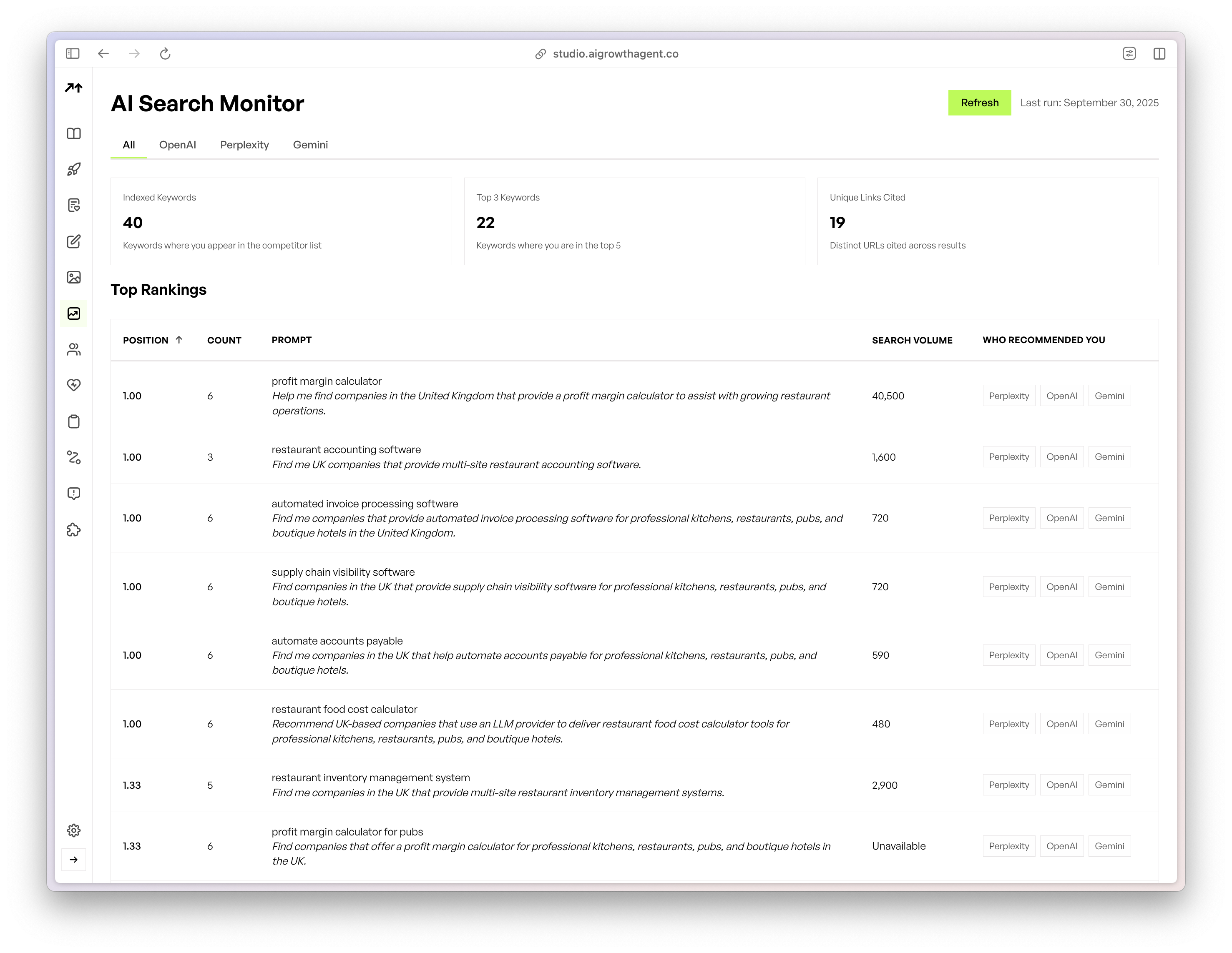
Useful AI-specific KPIs include:
- Frequency of citations or quotes across ChatGPT, Gemini, and Perplexity.
- Share of answers in which your brand appears for key topics.
- The accuracy of the details that AI systems reproduce from your pages.
- Content freshness scores for priority URLs.
- Comparison of your content recency against the main competitors.
AI Growth Agent aggregates these signals into a single view. Teams can see which URLs drive the most AI citations, how often language models quote them directly, and where gaps appear in coverage or accuracy. This visibility supports a clear roadmap for updates and new content.
Competitive Intelligence for AI Authority
Competitive context helps prioritize effort. Some tools compare your content recency to competitors and flag pages that lag behind, which makes it easier to choose which articles to refresh first.
AI Growth Agent extends this with monitoring of competitor presence in AI answers across key themes. Content teams can then plan clusters and refreshes that target clear openings, rather than making isolated updates.
Implementation Framework: From Strategy to AI Citation Success
Effective AI search optimization requires more than a one-time project. Organizations that treat AI visibility as a continuous process of monitoring and refinement are better positioned as AI answer surfaces evolve.
AI Growth Agent follows a structured implementation framework that focuses on repeatable steps:
- Onboarding and source-of-truth definition through a Company Manifesto that encodes brand voice, positioning, and non-negotiable facts.
- Programmatic keyword research that groups tens of thousands of queries into pillars and clusters aligned with AI search behavior.
- Programmatic content generation that fills gaps across those clusters while reinforcing topical authority.
- Real-time content injection for important news, product updates, and market shifts.
- Ongoing monitoring of AI citations, answer accuracy, and freshness to guide updates.
This workflow helps teams move from scattered AI experiments to a disciplined content system that serves both human readers and AI models.
Marketing leaders who want to evaluate this model for their own organizations can request an AI Growth Agent demo and review sample dashboards, content flows, and governance controls.
Frequently Asked Questions
How often should content be updated to maintain AI search visibility?
Update frequency depends on topic volatility and competition. Evergreen topics may only need a thorough review once a year, while fast-changing or high-competition topics benefit from quarterly or even monthly updates. Focus each refresh on meaningful changes, such as new data, clearer explanations, refined examples, or updated product details. AI Growth Agent flags pages that show declining AI citations or aging information so teams know where to focus next.
What makes content “accurate” from an AI search perspective?
AI models assess accuracy through signals such as precise language, clear structure, and alignment between claims and evidence. Well-structured headings, consistent terminology, and explicit references to credible sources help AI understand what is being claimed and why it is reliable. Technical elements like schema markup and structured data make this even clearer, since they present entities, dates, and relationships in predictable formats.
Can small updates really impact AI citation rankings significantly?
Targeted updates can have a noticeable effect when they reflect real improvements. Adding current statistics, integrating new research, expanding coverage of key subtopics, or clarifying outdated explanations can all increase the likelihood of citation. Superficial edits or simple date changes rarely help because AI systems detect when the substance has not changed.
How do I measure if my content accuracy improvements are working?
Monitor how often AI systems surface your pages in answers for target topics, and review whether they reproduce the updated details correctly. Improvements are working when citation frequency rises, when models use your language or data in generated responses, and when fewer outdated or incorrect statements appear. AI Growth Agent Studio highlights which URLs now earn more citations and where additional work is still needed.
What role does technical infrastructure play in content accuracy for AI search?
Technical infrastructure gives AI systems a clear path to your information. Fast loading times, logical URL structures, and clean HTML all support efficient crawling. Schema markup, LLM.txt files, and context protocols help models interpret content elements correctly, from prices and dates to product names and use cases. AI Growth Agent builds these components into its deployments so that content and technical signals work together to support accurate AI citations.


