Written by: Mariana Fonseca, Editorial Team, AI Growth Agent | Last updated: January 10, 2026
Key Takeaways
- AI search engines now surface a small set of citations in response summaries, so brands that lack clear authority signals risk disappearing from AI-driven discovery.
- Real-time data processing lets teams publish, update, and optimize content in near real time, which improves freshness signals and AI citation likelihood for time-sensitive topics.
- Structured content, strong technical SEO, and proprietary data all increase the chance that AI systems recognize a brand as an authoritative source worth citing.
- New analytics for AI mentions, citations, and assisted traffic help marketing leaders measure performance beyond traditional SEO metrics and refine strategy continuously.
- AI Growth Agent provides programmatic SEO, AI-aware technical infrastructure, and monitoring tools that help teams operationalize real-time data processing. Schedule a demo with AI Growth Agent to see how this approach can support your 2026 growth goals.
The Problem: Your Brand’s Digital Footprint Is Shrinking in AI Search
AI search has reduced the number of visible URLs per query. AI systems now provide single synthesized answers that cite only a few sources instead of full results pages, which concentrates attention on a small group of domains.
How AI Citation Concentration Limits Visibility
Most AI citations now come from a narrow pool of sites. Roughly 86% of AI citations originate from a relatively small subset of domains, and the top 20 sources account for 31.9–67.3% of citations across 12 major AI search models. Brands without strong, consistent authority signals risk being ignored.
Why Manual Content Programs Fall Behind
Manual publishing cadences cannot keep up with AI demand for timely information. Freshness and recency now influence which sites AI models select for time-sensitive queries, and slow updates reduce trust in AI responses that reference outdated pages. Teams shipping one or two articles per month fall behind brands that operate with high, automated velocity.
How Citation Misattribution Erodes Authority
Misattributed citations make the problem worse. Audits of multiple AI search tools show frequent errors such as citing syndications instead of original publishers. Without clean technical signals and timely publishing, original sources may lose credit to aggregators and content farms.
The Solution: Real-Time Data Processing for AI Citation
Real-time data processing shifts content operations from static editorial calendars to continuous optimization. Systems ingest data, generate and refresh content, apply technical SEO, and publish updates within short cycles so AI models always see current, well-structured pages. Schedule a consultation with AI Growth Agent to review how real-time processing can support your content program and help your brand appear more often in AI answers.
Core Components of a Real-Time AI Citation Strategy
Effective real-time processing for AI citation usually includes:
- Programmatic content engineering that automates research, drafting, and optimization at scale.
- AI-focused technical SEO that uses structured data like Schema.org markup for Article, FAQPage, HowTo, and Product content types to clarify entities and intent.
- Dynamic content refresh processes that keep pages updated as topics, data, and news change.
- AI search monitoring and feedback loops that show which pages earn citations and where gaps remain.
How AI Growth Agent Supports Real-Time Programmatic SEO
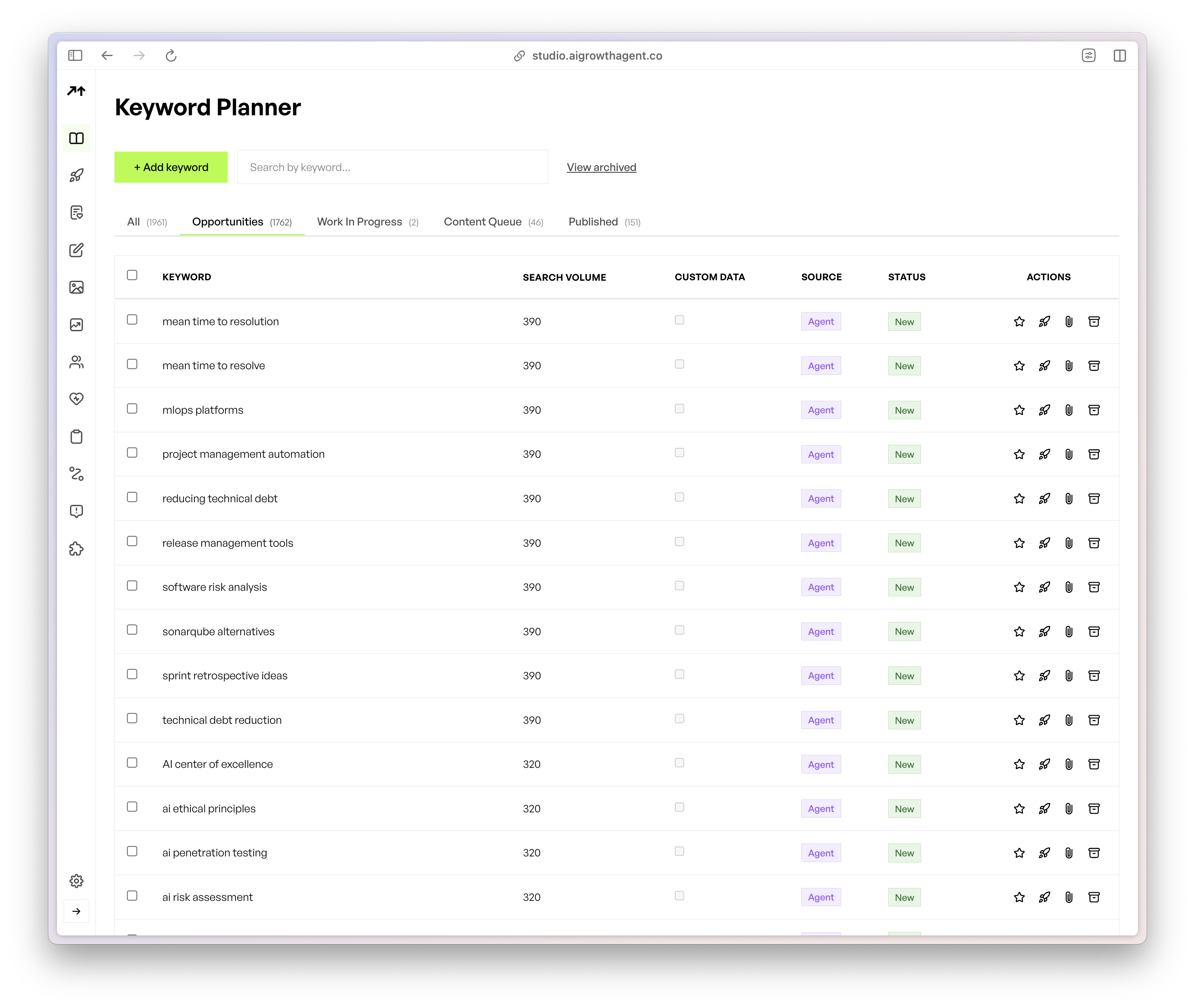
AI Growth Agent focuses on these components for marketing teams. The platform builds large-scale content architectures, supports Real-Time Programmatic SEO Content Injection for rapid response to news and trends, and converts internal databases into search-ready articles through Database-to-Content Automation. These capabilities help brands publish more high-quality pages with consistent technical standards.
Technical Infrastructure for AI-First Content
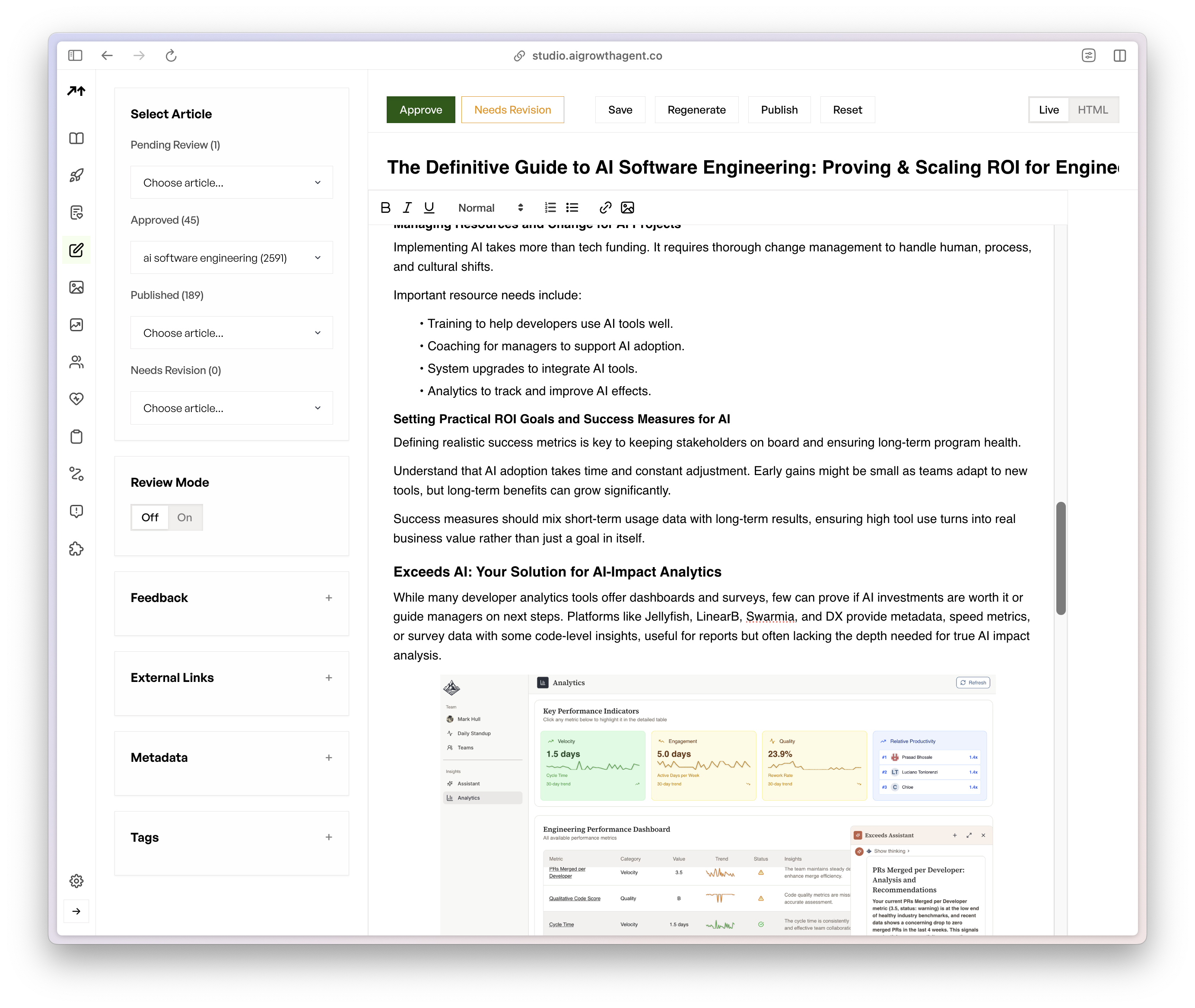
Technical infrastructure determines how clearly AI systems can interpret a site. AI Growth Agent supports advanced elements such as LLM.txt files and a blog Model Context Protocol (MCP) that allow AI systems to access and interpret blog content more reliably. The platform also deploys optimized blog architectures that align with existing site designs while maintaining clean technical foundations for programmatic SEO.
The Strategic Advantage of Real-Time Processing
Real-time processing gives brands a structural advantage over manual SEO programs. Content that sends clear expertise and accuracy signals earns about 4.2 times more citations from AI systems, and programmatic workflows make it practical to maintain that level of quality across many pages.
|
Strategy Component |
Manual SEO Approach |
Real-Time Data Processing |
|
Content Volume |
1–2 articles per month |
Frequent publication at large scale |
|
Technical Optimization |
Basic metadata, selective schema |
Consistent advanced schema, LLM.txt, MCP |
|
Freshness Signals |
Occasional updates |
Ongoing updates based on new data and trends |
|
AI Citation Rate |
Lower probability, weaker signals |
Higher probability, explicit AI-friendly signals |
Programmatic velocity lets teams ship more pages, refresh them more often, and apply consistent technical patterns. Schedule a demo with AI Growth Agent to evaluate how this model could change your AI citation performance across core topics.
Implementation Best Practices for Marketing Leaders
Real-time processing works best when aligned with how AI systems evaluate expertise and structure information.
Building Topical Authority at Scale
Topical breadth within a focused niche increases citation odds. AI systems favor sites that cover a topic comprehensively and treat them as go-to sources for repeated citations, and models often prefer established outlets when multiple pages answer the same question. Real-time processing helps fill coverage gaps quickly with targeted, structured articles.
Structuring Content for AI Extractability
Clear structure makes it easier for AI to quote or summarize content. Sections such as concise definitions, bullet lists, and short how-to steps improve extractability for AI overview panels, and pages that work well for rich results and snippets often perform better in AI Overviews. Real-time systems can standardize these patterns across many pages.
Using Proprietary Data to Strengthen Authority
Unique data gives brands defensible differentiation. AI platforms tend to favor original research, first-party statistics, and proprietary studies, and transparent methodology descriptions help models classify content as trustworthy. Real-time processing can turn internal reports, dashboards, and customer data into structured articles that signal primary expertise.
Measuring Success: Real-Time AI Citation Analytics
AI-era measurement extends beyond rankings and organic sessions. Teams can now track AI mentions, citations, and traffic from AI surfaces as dedicated performance metrics, then adjust content and technical strategy based on those signals.
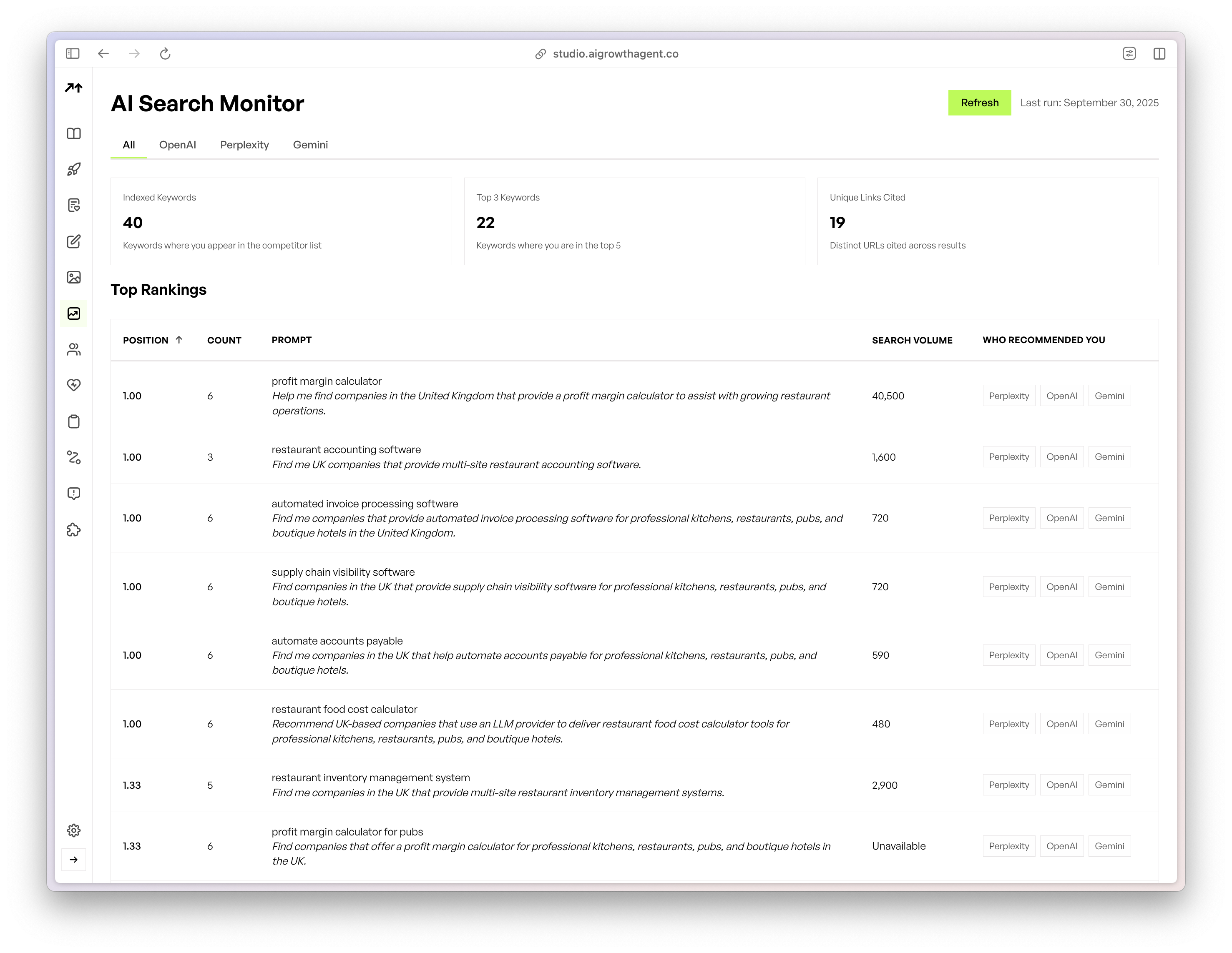
AI Growth Agent includes an AI Search Monitor that shows brand mentions across ChatGPT, Gemini, and Perplexity, highlights direct quotes and citations, and reports crawl behavior from AI search engines. These views reveal where competitors earn AI citations that your brand does not, which supports data-driven content planning and prioritization.
Frequently Asked Questions
What is real-time data processing for AI citation?
Real-time data processing for AI citation is an automated workflow that ingests data, updates or creates content, applies AI-aware technical SEO, and publishes changes within short timeframes so AI systems see current, well-structured pages.
How do AI search engines decide which content to cite?
AI search engines combine semantic retrieval, authority signals, freshness, structure, and technical markup to identify a small set of sources that appear accurate, comprehensive, and easy to quote.
Can smaller marketing teams compete with larger brands?
Smaller teams can compete when they use programmatic platforms that automate drafting, optimization, and publishing, because this reduces manual workload while increasing content volume and consistency.
Which technical measures most improve citation probability?
Structured data for key content types, concise answer sections, LLM.txt files or MCP integrations, regular updates, strong internal linking, and clear methodology descriptions all help AI systems evaluate and cite content.
How quickly do brands usually see results?
Brands that implement real-time processing with solid technical foundations often see early AI citations within weeks, then expand coverage as more content and data-driven optimizations roll out.
Conclusion: Positioning Your Brand for AI-First Search
AI-powered search has concentrated visibility among a limited set of well-structured, authoritative domains, and manual publishing models no longer match that environment. Brands that adopt real-time data processing can publish and refresh content at the speed AI systems expect, strengthen topical authority, and send clearer technical signals for citation.
AI Growth Agent helps marketing leaders operationalize this approach through programmatic SEO, AI-aware infrastructure, and AI citation monitoring. Schedule a demo with AI Growth Agent to evaluate how real-time data processing can support your AI search strategy in 2026.