Written by: Mariana Fonseca, Editorial Team, AI Growth Agent
AI-driven search has reshaped digital marketing. For marketing leaders at established brands, producing a high volume of authoritative content is now essential to stay relevant on platforms like Perplexity.
Traditional methods often fall short of meeting these demands, but brands that adopt scalable, autonomous content systems can gain a clear edge in AI citations and category authority.
Why Traditional Content Struggles in an AI-Driven World
Your Digital Presence Is Shrinking Amid AI Content Overload
Your brand’s online visibility is fading fast. With AI accelerating the volume of content published daily, your message gets buried in the flood. What used to require monthly updates now demands daily, high-quality posts to maintain a presence in AI search results.
AI platforms value fresh, in-depth, and consistent content. Relying on one or two monthly blog posts, a common output for many agencies, won’t keep your brand visible to AI indexers. Without frequent updates, competitors can easily outpace you, capturing the citations and recommendations that fuel growth.
This loss of visibility isn’t just a marketing issue. It threatens your brand’s credibility. If AI search platforms can’t find enough relevant content from you, they’ll turn to other sources, letting competitors shape industry narratives and customer perceptions.
Human-Led Content Creation Can’t Keep Up
Manual content production faces serious limitations. Resource constraints and operational bottlenecks make it nearly impossible to achieve the output needed for AI search success.
SEO agencies, bound by billable hours and staff capacity, often struggle to produce content daily. Even with strong writing, their model limits the volume required for AI visibility. Internal teams, while familiar with the brand, face similar issues of limited manpower and competing tasks, often lacking the technical skills for AI-specific optimization.
Basic AI tools aren’t a full fix either. Their output can feel generic, missing the unique context of your business. These tools also shift the burden of strategy, editing, and publishing back to your team, failing to provide a complete solution.
More importantly, traditional methods often skip critical technical elements for AI search, like schema markup or LLM.txt files. Without these, even well-written content may go unnoticed by AI algorithms driving citations.
AI Citations Define Authority, and You Could Lose Ground
In AI search, insufficient content means platforms might highlight competitors instead. This isn’t just about losing clicks; it’s about losing the ability to shape your industry’s narrative. When other sources get cited more often, they become the go-to authority in customers’ minds.
Brands publishing high volumes of optimized content daily stand a better chance of earning AI citations. Those falling behind risk fading into secondary mentions or disappearing from recommendations altogether.
This creates a snowball effect. Competitors with more citations build greater authority over time, making it harder for slower brands to catch up. Content output speed directly impacts your market position in this AI-focused landscape.
Ready to move beyond outdated content methods? Schedule a consultation to see how scalable platforms can boost your AI search strategy.
How Scalable Platforms Build AI Search Authority
Key Technical Features for Effective Content Scaling
A robust content platform for AI search needs more than simple automation. It requires advanced systems to create brand-aligned, relevant content quickly without losing quality. These setups must also connect smoothly with existing business processes to handle automated workflows.
For AI search success, these systems must apply technical SEO features, helping platforms index and cite content accurately. This ensures your content stands out in an AI-driven environment.
Enterprise-Level Scaling Beyond Basic Tools
Scaling for large organizations means more than automating content. It requires coordinated systems to manage complex strategies at volume. The best platforms integrate easily with current marketing tools and CMS setups, reducing friction as output grows.
Flexibility in content planning is also vital. Platforms should adapt strategies based on performance data, competitor moves, and market shifts.
Top-tier systems allow management of multiple content streams at once. This suits companies with diverse products or brands, enabling centralized control over varied strategies without losing focus or consistency.
Balancing Speed with Quality and Credibility
Scaling content output poses a challenge: maintaining quality at high speed. Effective platforms use automated quality checks while keeping human input for strategic oversight. This focuses staff on brand storytelling and planning, leaving execution and optimization to the system.
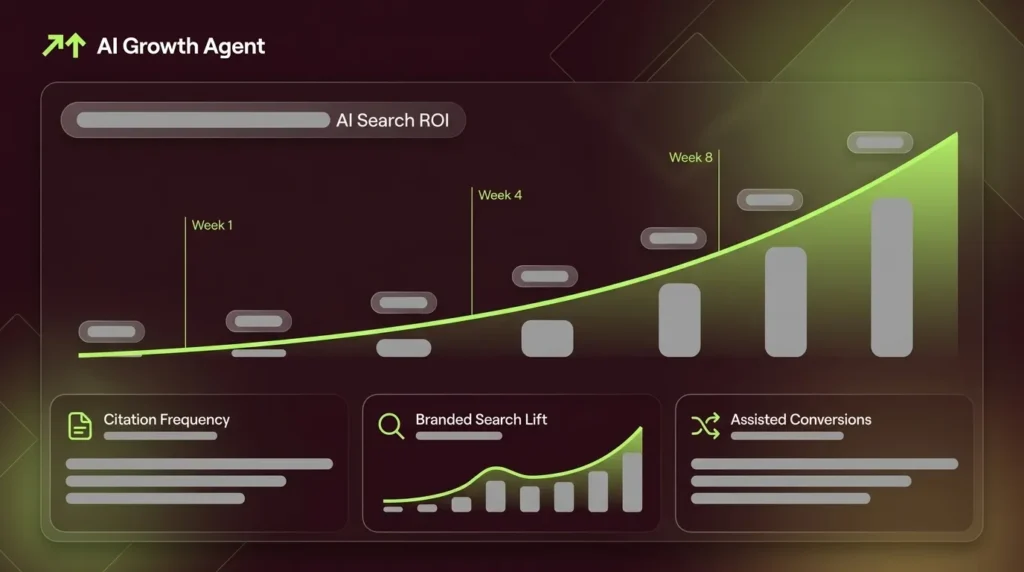
This approach ensures growing content volume reinforces brand credibility rather than weakening it. Detailed analytics track both standard metrics, like traffic, and AI-specific ones, like citation rates across platforms, supporting ongoing improvement at scale.
AI Growth Agent: Built for AI Citation Success
AI Growth Agent offers a specialized platform designed to secure authority in AI search through scalable, autonomous content production. Marketing leaders using this tool access features tailored for optimizing AI visibility.
Automated Content Production at Massive Scale
AI Growth Agent condenses weeks of agency work into minutes using a network of coordinated AI agents. It starts with a “White-Glove” Onboarding, including a one-hour session with a journalist to build a detailed Company Manifesto. This document guides all content, ensuring brand consistency at any volume.
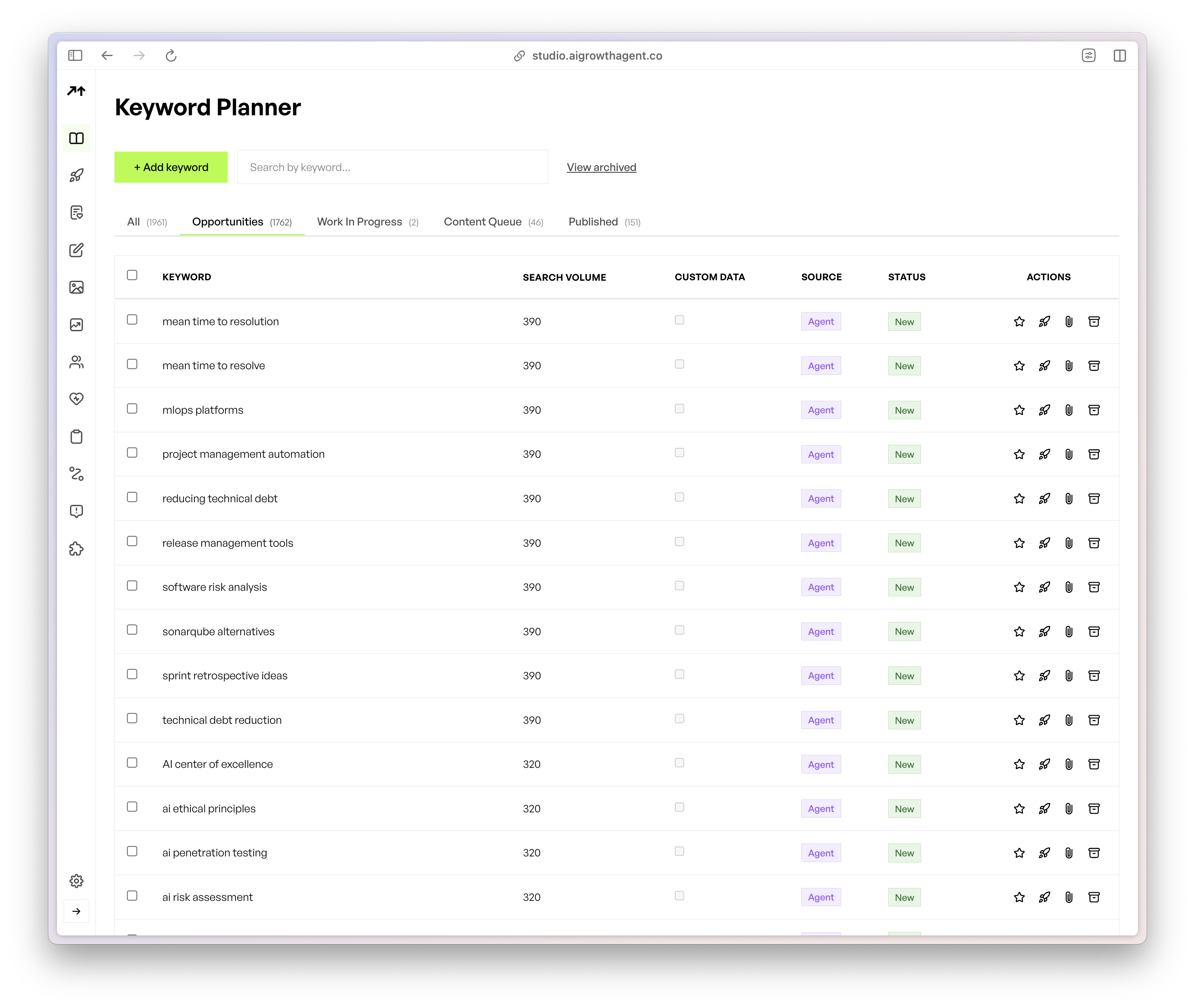
Next, the Keyword Deep Research Agent analyzes thousands of search queries in your field, delivering a full keyword strategy within 24 hours. This targets specific opportunities to grow your AI search presence, aligning content with business goals.
The Core Content Agent manages the entire process, from planning and research to drafting and technical tweaks, without manual input. It applies advanced SEO elements like schema markup, LLM.txt files, and a unique blog Model Context Protocol, helping AI platforms understand and cite your content effectively.
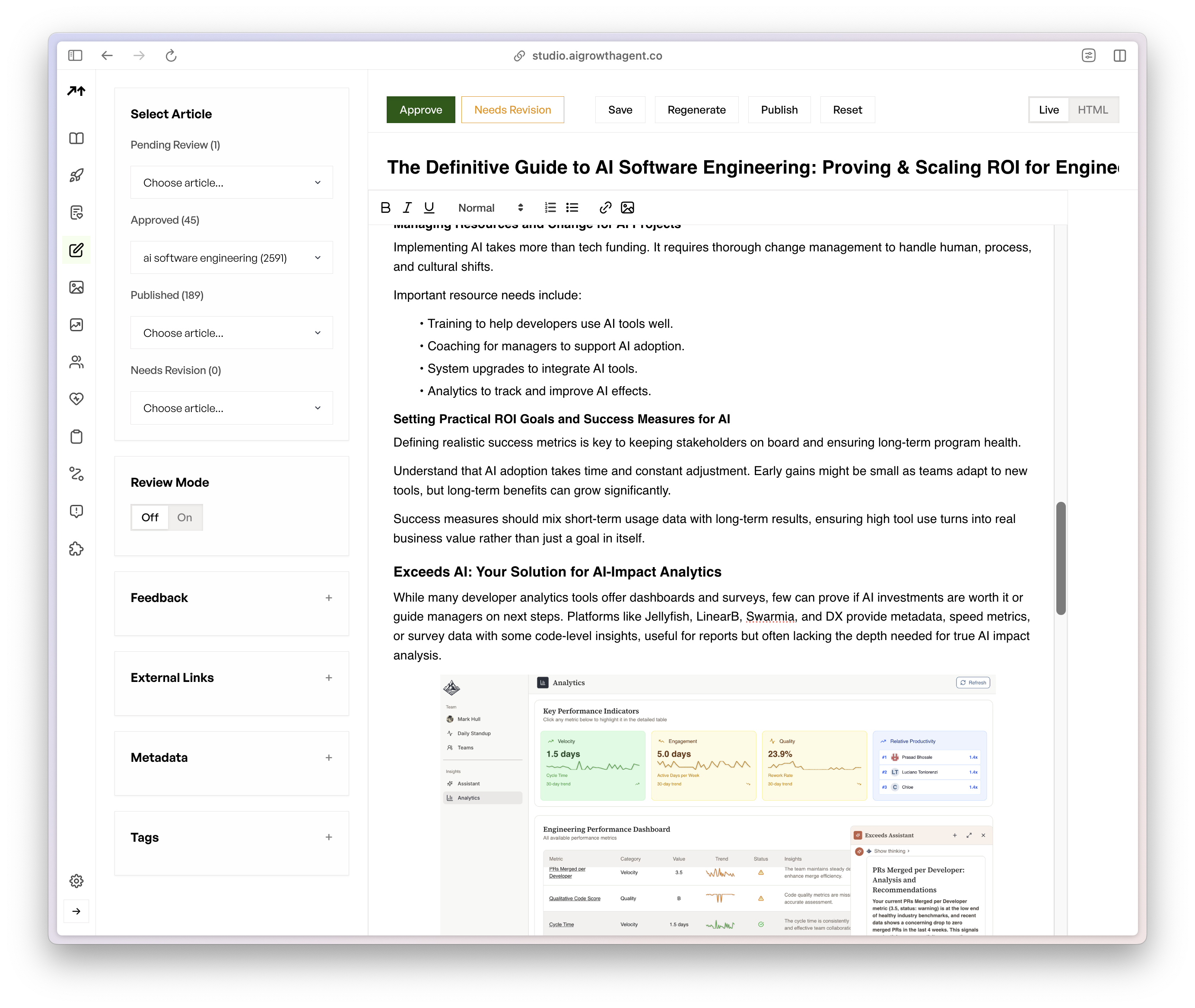
Through the AI Growth Agent Studio, leaders retain control and visibility. Teams can edit, give feedback, and track progress as the system learns and becomes more independent over time.
Unique Features for Leading in AI Search
AI Growth Agent brings distinct capabilities for gaining an edge in AI search results.
- Parallel Agent Deployment allows multiple Content Agents to run unique strategies from one dashboard. Each maintains its own voice and goals, ideal for managing diverse brand portfolios or product lines at scale.
- Real-Time Content Generation lets brands respond to news or trends instantly. Submit a link to a current event, and get brand-consistent content in minutes, capturing timely search interest.
- Custom Data Integration turns hidden data, like app insights, into indexed, traffic-driving articles. One client used this to transform food recommendation data into strong search content.
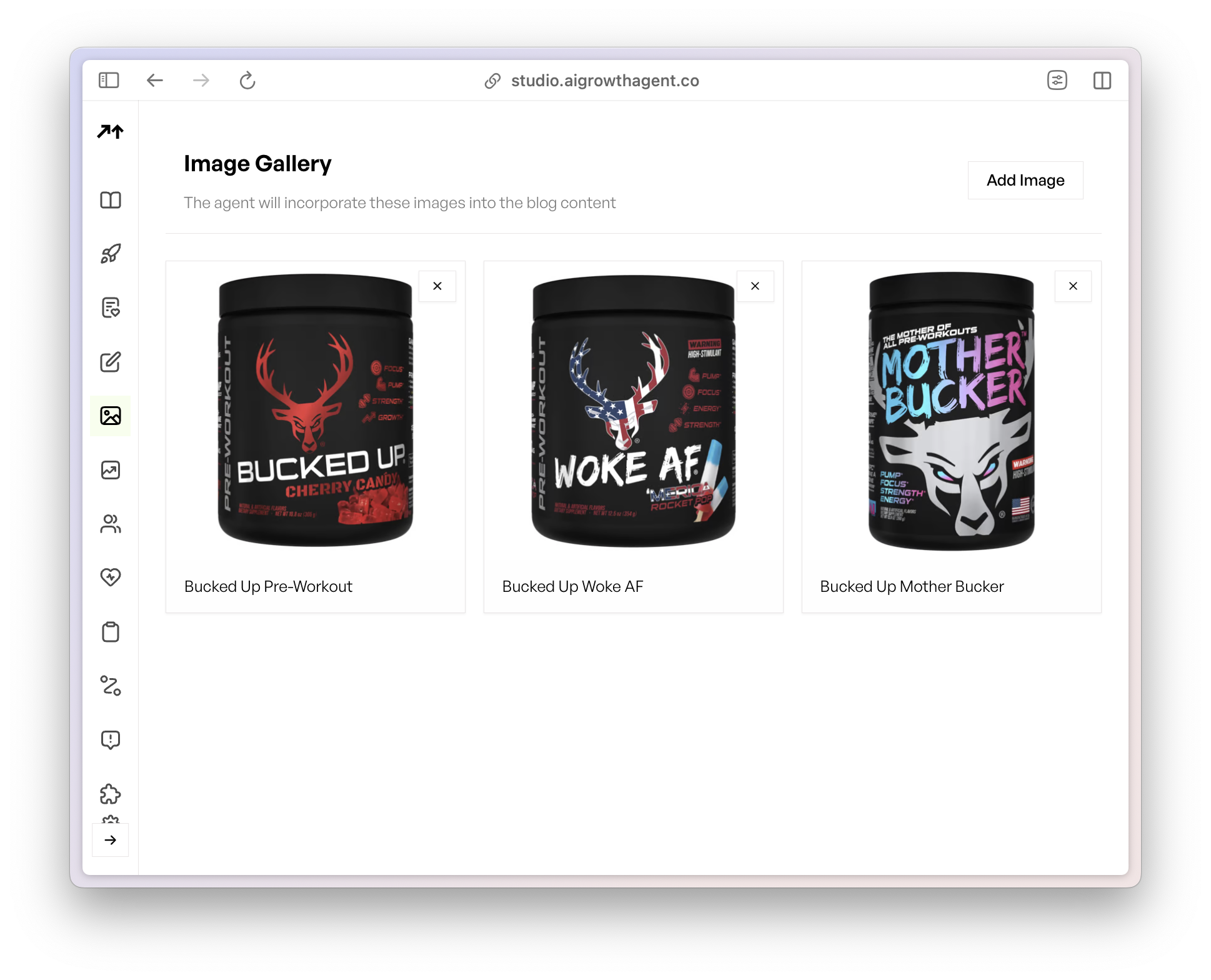
- Intelligent Image Placement embeds optimized visuals with proper metadata for image SEO. It uses existing brand images or creates new ones, enhancing content appeal without extra effort.
Tracking Performance and Refining Strategy
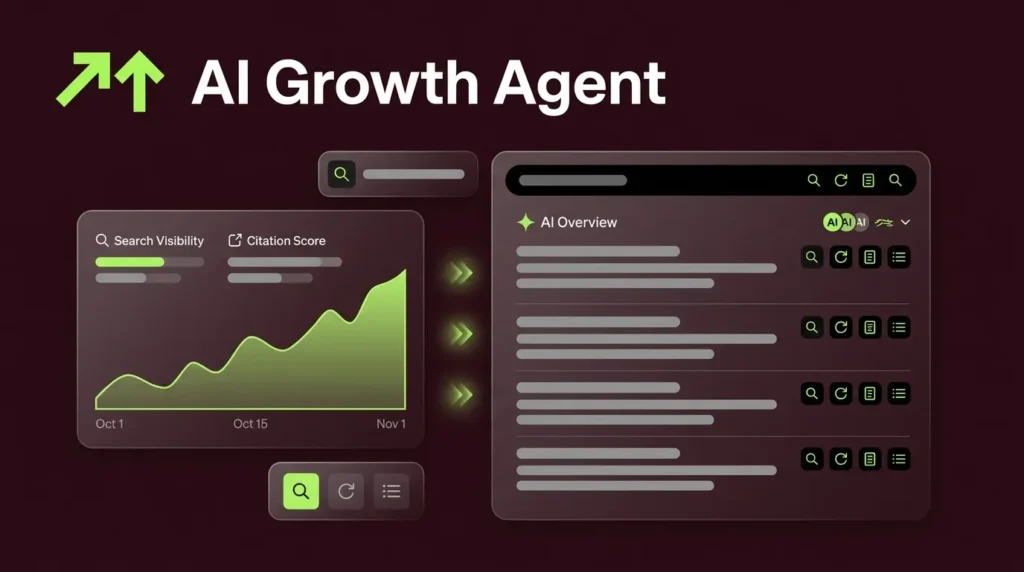
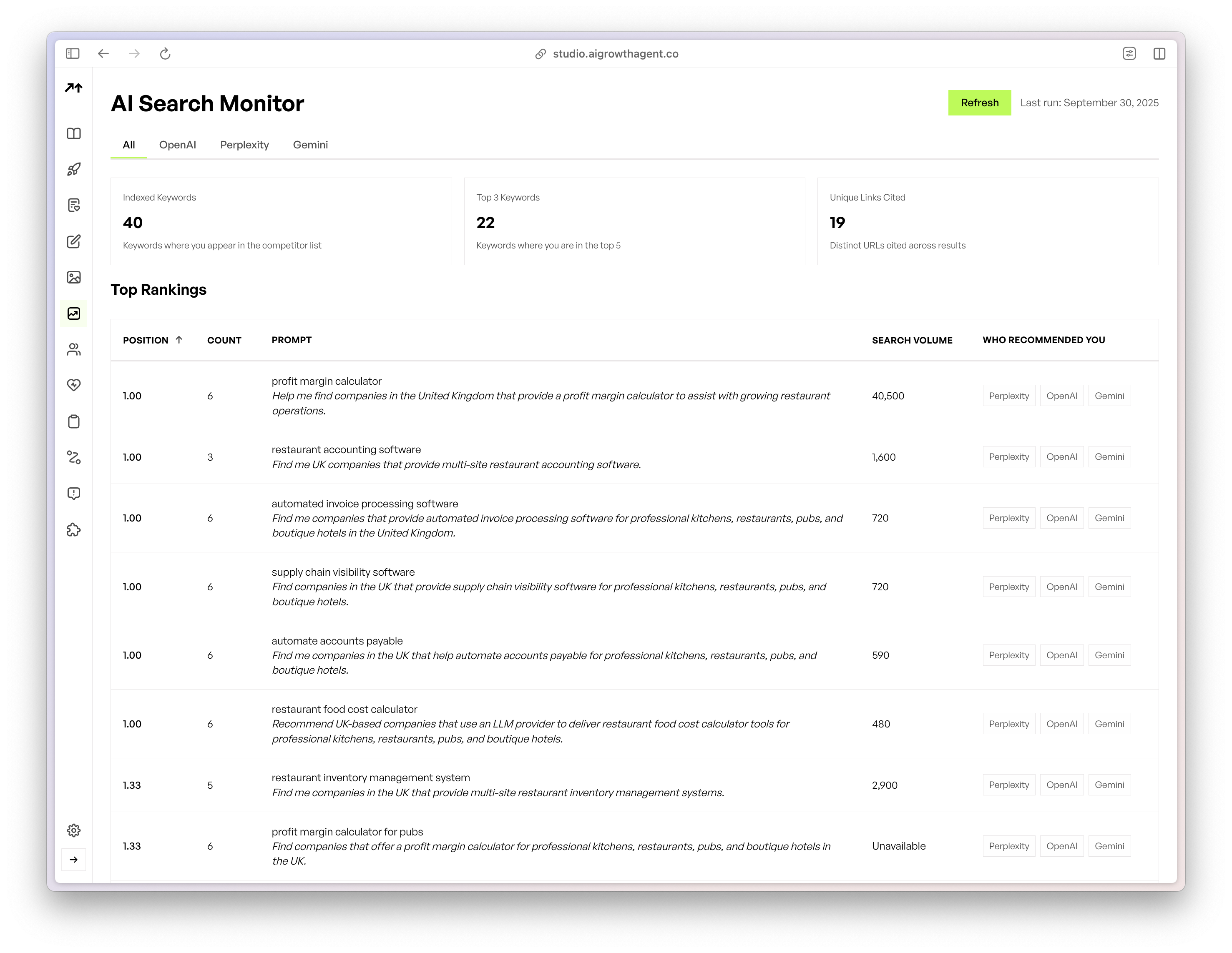
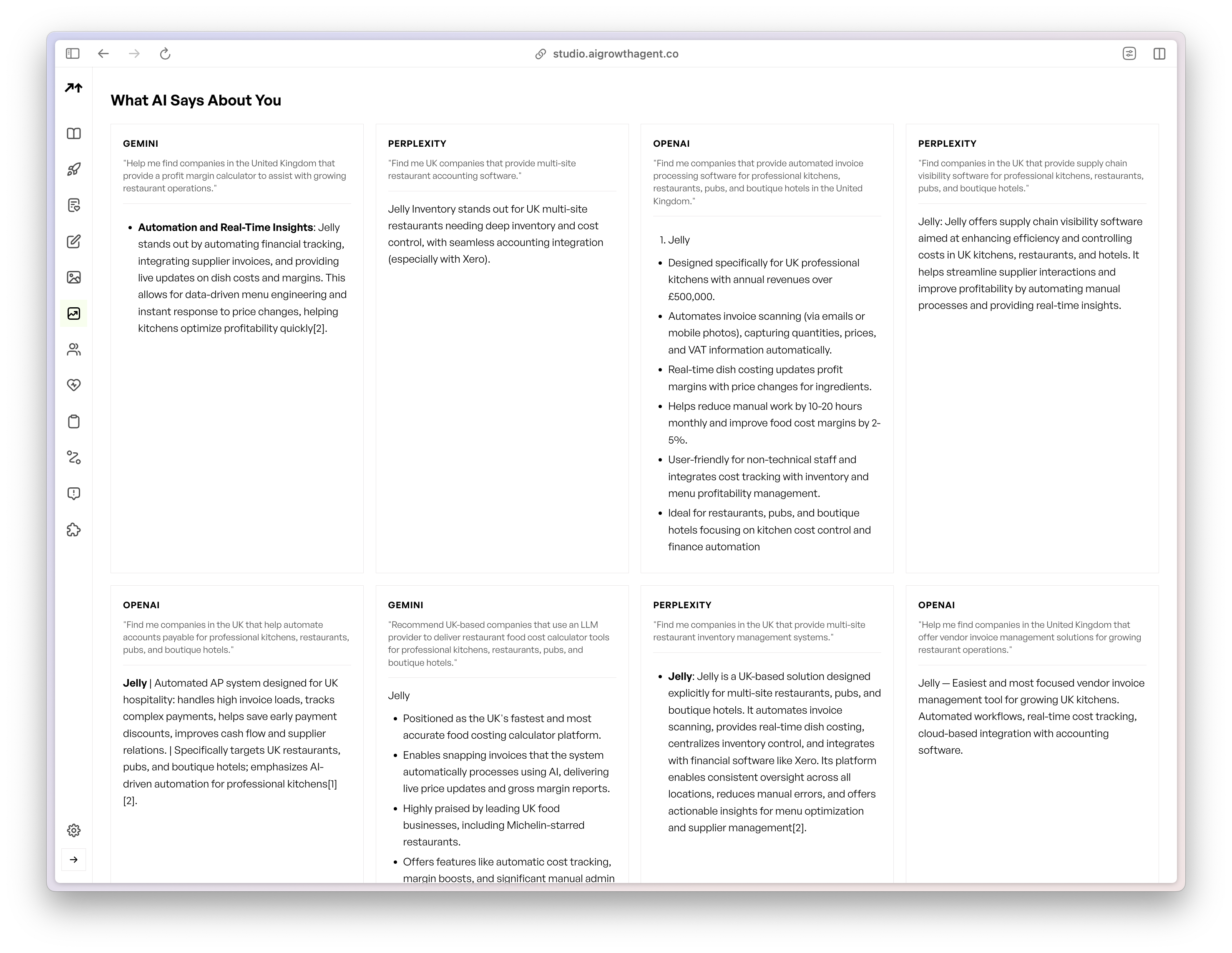
AI Growth Agent offers deep insights into AI search results through monitoring tools. The AI Search Monitor tracks content performance across platforms with real-time heatmaps, showing keyword indexing, citation rates, and competitor standings.
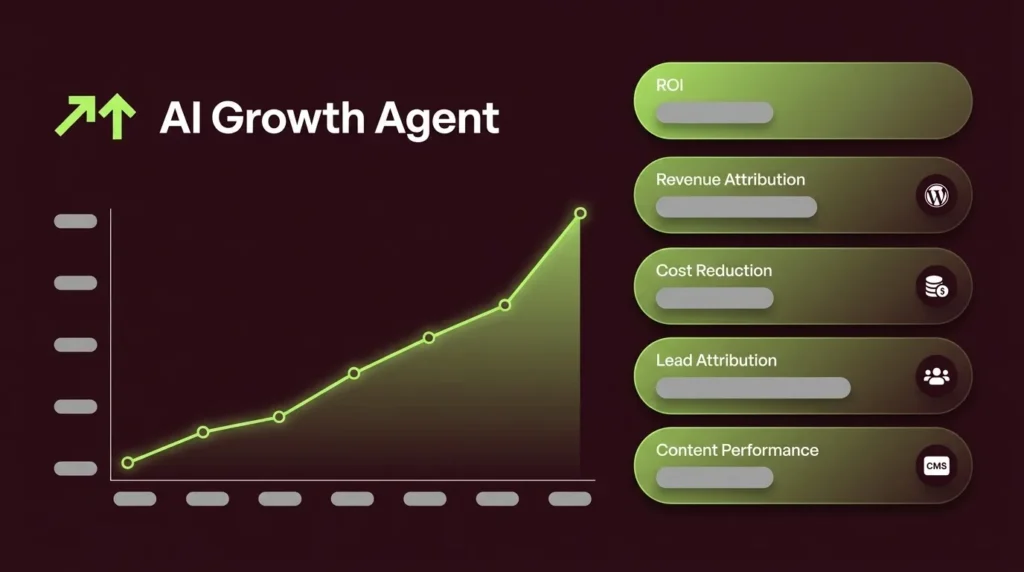
It highlights which pages drive visibility, linking content efforts to measurable authority gains. Integration with Google Search Console provides data on traffic growth and click rates, proving the value of content output.
The system also monitors bot activity and indexing focus by AI platforms. This helps adjust strategies to match platform preferences, maximizing citation potential.
Interested in building your brand’s AI search presence? Schedule a demo to explore tailored scalability solutions.
How AI Growth Agent Stands Out
|
Feature |
Traditional Agencies |
Basic AI Tools |
AI Growth Agent |
|
Content Volume |
Limited, project-based |
High, low effort |
High, fully automated |
|
Quality & Authority |
Varies, relies on humans |
Often generic |
Strong, brand-focused |
|
Platform Scalability |
Limited by resources |
Moderate, tool-based |
Advanced, agent-led |
|
Technical AI SEO |
Inconsistent |
Basic features |
Comprehensive, specialized |
This table shows why AI Growth Agent offers a distinct approach. Unlike agencies constrained by manpower or basic tools with generic output, it combines automation with technical depth for lasting impact.
Measuring Success in AI Content Platform Scalability
When assessing AI content platforms, focus on metrics tied to search performance and business results. Content output capacity is a core measure, evaluating not just quantity but also quality and brand alignment as production scales.
Resource efficiency tracks how well a platform turns minimal input into high-value content. This lets teams prioritize strategy over manual tasks.
AI-specific metrics, like citation frequency, keyword authority, and real-time opportunity capture, highlight a platform’s search effectiveness. Integration with existing systems is also key, ensuring smooth operations at scale.
Adapting to the Evolving AI Search Landscape
AI search algorithms change quickly, so platforms must adapt to stay effective. The best systems adjust content and technical strategies to match updates across multiple platforms, maintaining visibility.
Scalability isn’t just about meeting today’s needs. It’s about creating an advantage that grows as AI search advances. Platforms that evolve with new protocols and integrations offer long-term value.
Steps to Adopt a Scalable AI Content Platform
Implementing a scalable platform takes careful planning, covering workflow changes, performance tracking, and ongoing refinement. Treat it as a shift in operations, not just a new tool.
Start with a content audit and competitor review to set baseline metrics. This helps measure progress and show clear returns to stakeholders.
Managing team transitions is critical when moving to automated systems. Help staff focus on strategy and optimization, not production tasks. Plan integrations to enhance current operations, and use data to refine strategies over time.
Ready to strengthen your AI search authority? Schedule a consultation to discuss tailored implementation plans.
Common Questions on Scalability for AI Citations
How Does Scalability Impact AI Search Citations?
Scalability affects your capacity to produce frequent, quality content that AI platforms are more likely to cite. Tools like AI Growth Agent support daily publishing of optimized content, providing fresh material for AI systems. This increases the odds of being referenced for relevant queries, improving your position in results.
What Technical Features Define a Scalable AI Content Platform?
A scalable AI platform needs systems for fast, brand-aligned content creation. It should manage multiple streams with consistent output, automate quality controls, apply technical SEO like schema markup, and integrate with marketing tools while offering performance insights.
Can AI Ensure Quality at Enterprise Scale?
Yes, with the right design, AI platforms maintain quality at high volumes. They combine automation for routine tasks with human input on strategy and narrative, using onboarding and feedback to ensure consistent standards as output grows.
What Metrics Matter for Platform Scalability?
Key metrics include content output capacity with quality, resource efficiency, and adherence to brand standards. AI-focused measures like citation rates, keyword authority, and search opportunity capture are critical, alongside traffic growth and competitive gains in AI results.
How Do Platforms Adapt to AI Search Changes?
Effective platforms monitor performance across AI systems, spotting algorithm shifts and adjusting content or SEO tactics accordingly. Flexible architecture ensures updates happen without disrupting workflows, keeping brands competitive as search evolves.
Conclusion: Lead in AI Search with AI Growth Agent
Traditional content methods no longer suffice. Relying on agencies, strained teams, or basic tools may leave your brand overlooked in AI search, while competitors with scalable systems gain ground.
AI Growth Agent offers an automated, scalable solution to build category leadership. With features like parallel agent deployment, real-time content, and detailed monitoring, it helps brands stand out in AI search.
Your brand can be the one cited when prospects search for solutions. AI Growth Agent supports that goal with robust scalability and content automation.
Want to elevate your content strategy for AI search? Schedule a demo with AI Growth Agent to see how our platform can help.