


Key Takeaways
- ChatGPT’s October 18, 2026 update introduced structured brand entity recognition and reduced the number of brands mentioned in each answer, reshaping how AI search surfaces businesses.
- Average brand visibility declined 31 percent after the update, and more than 85 percent of brands saw visibility losses across analyzed queries.
- Citations now concentrate more heavily on authority domains such as Wikipedia and Reddit, while visibility gaps between leading brands have narrowed.
- AI-specific, programmatic SEO and structured data optimization now play a central role in earning and protecting brand visibility in AI answers.
- AI Growth Agent offers a programmatic SEO and AI search monitoring solution that helps brands adapt to these changes and can be explored in a strategy session at this AI Growth Agent demo link.
The ChatGPT October Update: Key Changes Analyzed
The October 18 rollout marked a major shift in how ChatGPT processes and presents brand information. The update restructured core AI search behavior, so marketing and growth teams now face a different set of rules for earning visibility.
Entity recognition now treats brands as structured data
ChatGPT now uses a consistent Entity[“brand”, …] field to tag brands as distinct entities. This change moves brand handling away from simple keyword matches toward structured recognition. The spike in brand entity references after October 18 shows that AI systems now favor brands that appear clearly defined and consistent across the web, not just frequently mentioned.
Fewer brand mentions per answer increase competition
The update reduced the number of brands listed in a typical response from about 6–7 down to 3–4. This cut of roughly 40 percent means there are fewer slots available in each AI answer. Brands now compete for a smaller set of mention opportunities, so authority and relevance matter more than raw content volume.
Citations cluster around a smaller group of authority sources
Citations shifted toward established domains, with Wikipedia and Reddit now capturing a large share of links. The long tail of other sites extends further behind these leaders, making it harder for smaller or mid-tier domains to earn citations. Brands that lack a clear authority footprint or structured content now have a higher risk of being excluded from AI-generated recommendations.
Data-Driven Impact: How Brand Visibility Declined
Post-update performance data highlights how broad and consistent the impact has been on brand visibility.
Most brands experienced visibility declines
Average brand visibility scores dropped 31 percent across the analyzed dataset. More than 85 percent of brands saw some level of decline, which signals a systemic change rather than isolated ranking shifts. Brands with strong, structured authority profiles were more likely to maintain or slightly improve their positions.
Visibility losses varied by brand but remained material
About 13 percent of brands experienced losses greater than 10 percentage points, and 58 percent saw declines between 2 and 10 points. These changes can alter where a brand appears in AI answers and how often it is considered as an option, with direct implications for lead flow and awareness.
Top brands now compete in a narrower performance band
The visibility gap across top-performing brands narrowed by 23 percent, including within the top 10 positions. Smaller performance differences now separate leaders from followers. In this compressed field, minor improvements in authority, technical SEO, and content structure can shift rankings and recommendation frequency.
|
Visibility Metric |
Before Oct 18 |
After Oct 18 |
Change |
|
Avg. Brand Visibility Score |
45.2% |
31.1% |
-31% |
|
Brands with Visibility Declines |
N/A |
85.3% |
+85% |
|
Top 10 Visibility Gap |
23.7 points |
18.2 points |
-23% |
Why AI Search Optimization Is Now Central to Brand Authority
AI search now acts as a primary discovery layer for many users, and the October update made that layer more selective. With fewer brands surfaced in each response and citations clustered around authority sources, standard SEO alone no longer protects visibility.
Brands now benefit from AI-specific optimization that treats ChatGPT and other models as distinct channels. Structured data, clear entity definitions, and authoritative content collections give AI systems more confidence when selecting brands to mention and cite.
Manual content workflows struggle to keep pace with the rate of AI change. Programmatic approaches that can scale content production, schema coverage, and testing across multiple AI platforms now provide a durable way to earn and retain visibility.
Learn how focused ChatGPT optimization can support your AI search visibility strategy.
Navigating the New Landscape With AI Growth Agent’s Programmatic SEO
AI Growth Agent focuses on the specific requirements of AI search and the patterns exposed by the October ChatGPT update. The platform combines programmatic SEO, technical integration, and monitoring so brands can build and measure authority at scale.
Programmatic SEO that aligns with AI ranking behavior
The Programmatic SEO Agent designs interconnected content architectures that clarify topical authority for AI systems. It generates schema-informed pages at scale and keeps structures consistent across related topics and entities. This approach helps models treat a brand as a reliable source for defined subject areas.
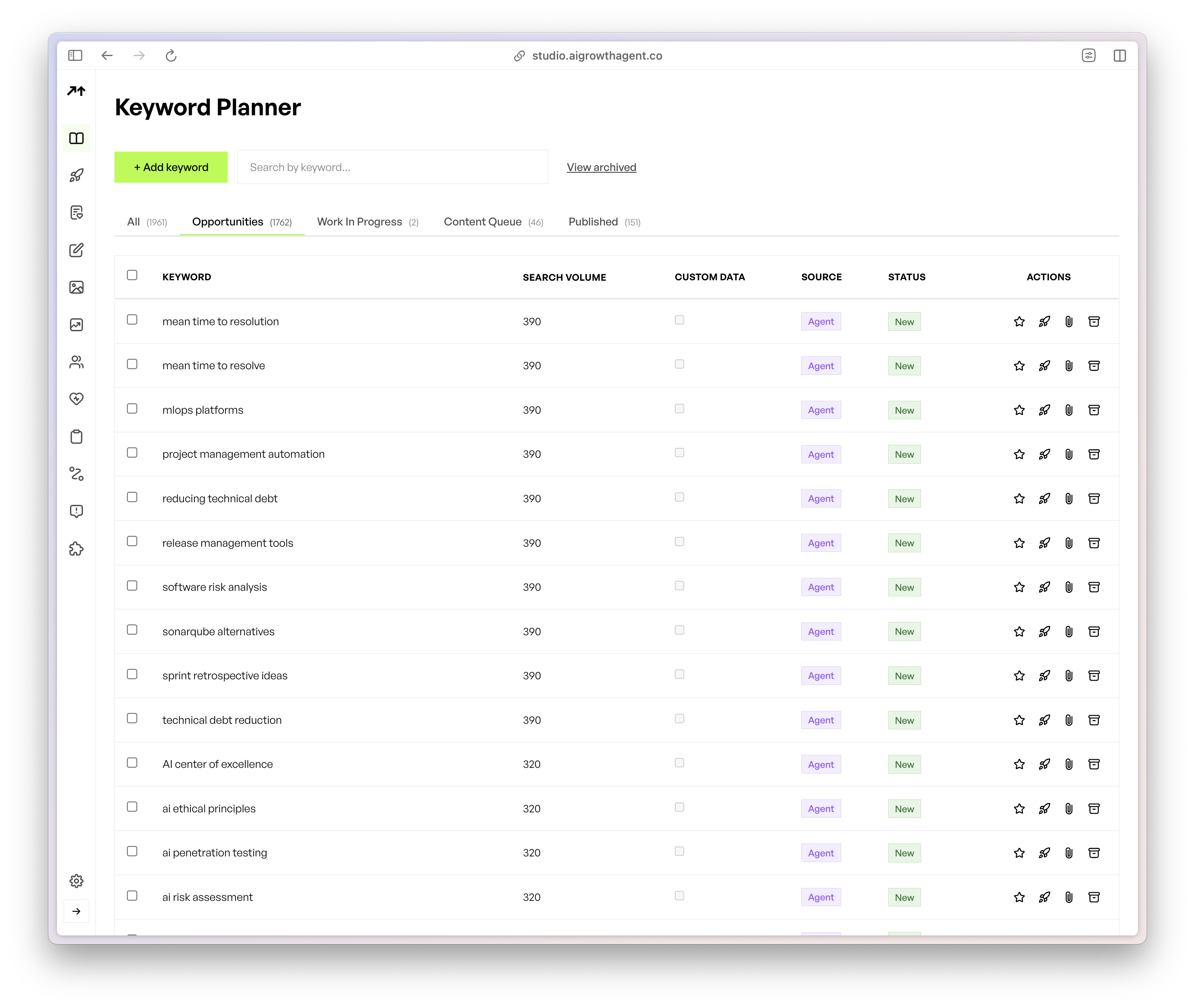
The agent also supports rapid experimentation, so teams can test new topic clusters or angles and see how these changes affect AI mentions over time.
Real-time AI search monitoring and citation tracking
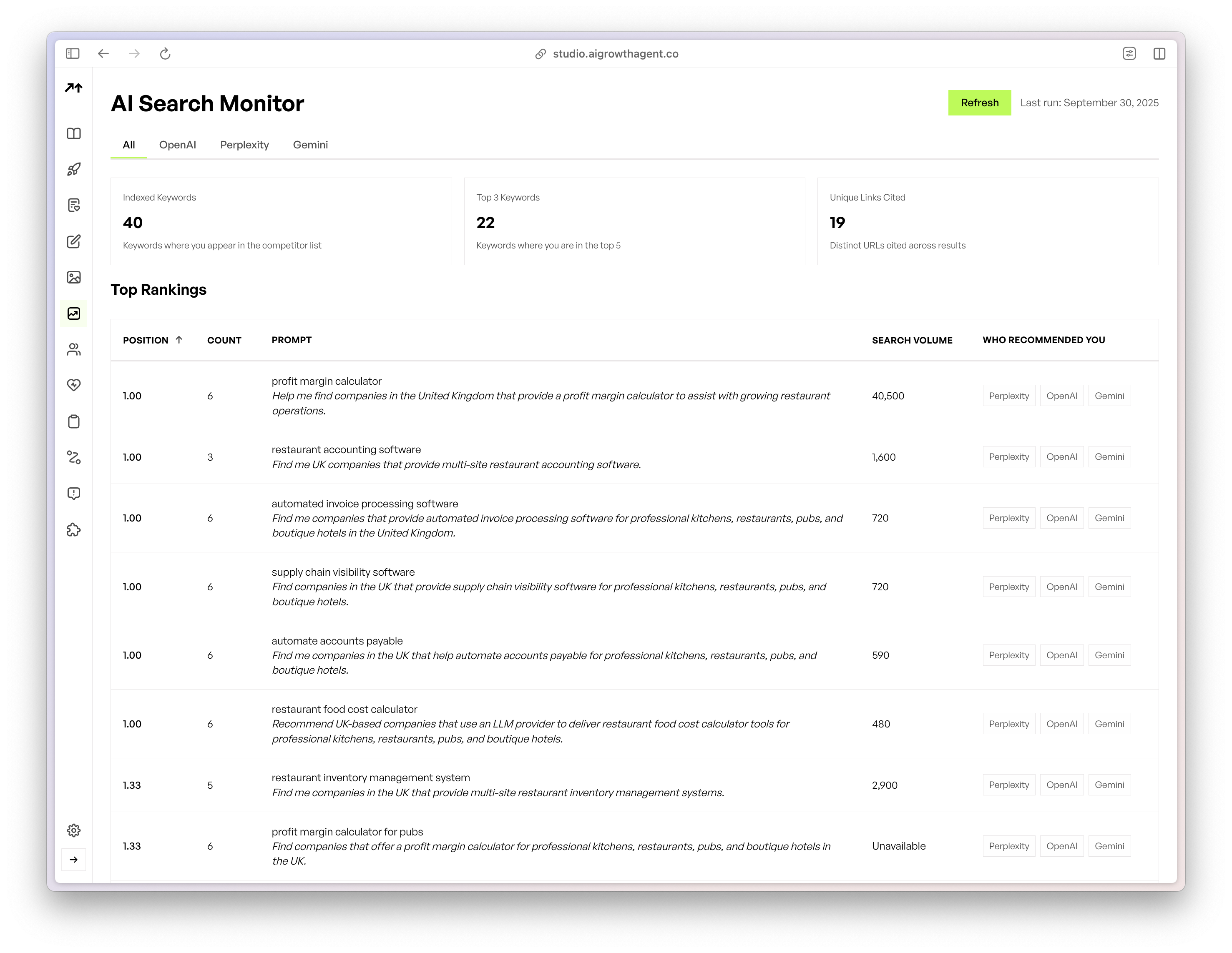
AI Growth Agent Studio shows how a brand appears across ChatGPT, Google AI Overviews, Perplexity, and other AI-driven experiences. Teams can monitor brand mentions, track citations, and identify high-value queries where visibility has shifted post-update.
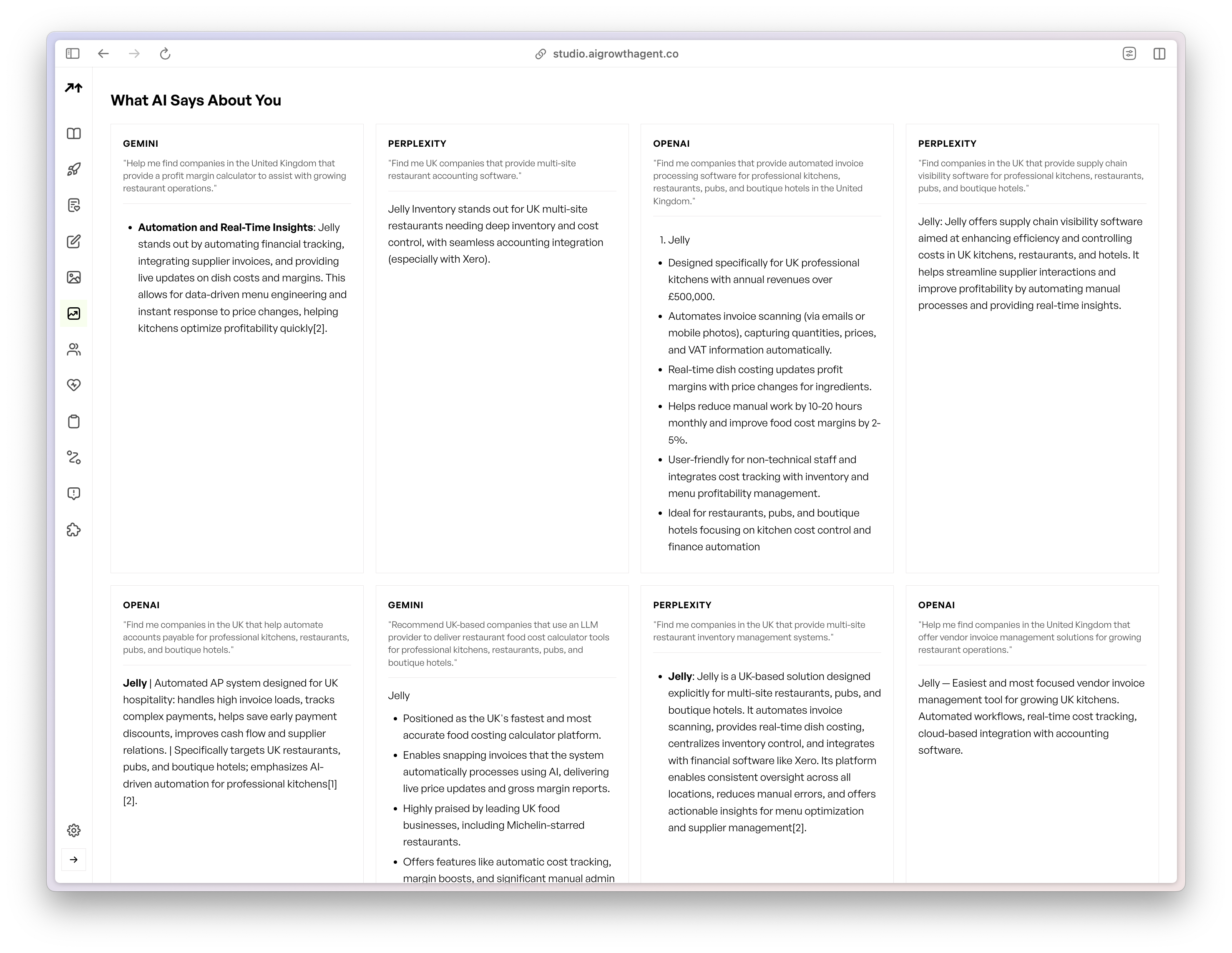
This feedback loop helps teams respond quickly when a key page loses prominence or when new authority sources begin to dominate a topic.
Technical integration that supports AI citations
AI Growth Agent incorporates advanced technical SEO elements, including LLM.txt and a blog Model Context Protocol (MCP) that enables AI systems to access and interpret content more reliably. These integrations support clear entity definitions and structured data coverage that align with how ChatGPT now recognizes and tags brands.
Explore how AI Growth Agent can help secure ChatGPT visibility and broader AI search coverage.
Frequently Asked Questions About ChatGPT Updates and Brand Visibility
What is the primary impact of the ChatGPT October update on brand visibility?
The October update reduced average brand visibility scores by 31 percent across the dataset, and more than 85 percent of brands recorded declines. Visibility gaps among leading brands narrowed by 23 percent, so fewer mention opportunities now exist and the competition for each position intensified.
How does ChatGPT now reference and interpret brands?
After October 18, ChatGPT began tagging brands with the Entity[“brand”, …] format. Structured entities now play a larger role in how the model selects brands for inclusion in answers, while total brand mentions per response fell from about 6–7 to 3–4. Brands with clear, consistent entity signals stand a better chance of appearing.
Which sources gained prominence after the update?
Wikipedia and Reddit now receive a higher share of citations than before the update. The broader set of domains that receive occasional citations remains, but many of those sites appear less frequently relative to these authority platforms.
How can brands adjust SEO strategies to these changes?
Brands benefit from shifting toward AI-aware SEO programs that emphasize structured data, entity management, topic clustering, and ongoing monitoring across AI platforms. Schema markup, LLM.txt, and content architectures designed for machine interpretation now contribute directly to how often ChatGPT and similar systems mention and cite a brand.
Why does AI search optimization matter for competitive positioning?
With AI models surfacing fewer brands per answer and leaning on a smaller set of authority domains, organizations that lack AI-focused optimization risk gradual visibility loss. Incremental gains in authority, structure, and technical completeness now influence how often a brand is recommended, especially in competitive categories.
Conclusion: Securing Brand Visibility in AI Search With AI Growth Agent
The ChatGPT October 2026 update confirmed that AI search is moving toward structured entities, tighter citation pools, and a smaller set of visible brands per answer. These shifts favor organizations that treat AI search as a core channel with its own technical and content requirements.
AI Growth Agent provides a focused programmatic SEO and AI monitoring platform that helps brands adapt to this environment. The solution combines large-scale, structured content generation, technical integration for AI systems, and ongoing visibility tracking across key AI interfaces.
Proactive authority building now offers a clearer path to stable visibility than reactive adjustments. Brands that invest in structured content, AI-aware technical SEO, and continuous monitoring can navigate these updates with more confidence. Schedule an AI Growth Agent strategy session to align your brand with the new AI search landscape.
