Written by: Mariana Fonseca, Editorial Team, AI Growth Agent | Last updated: January 10, 2026
Key Takeaways
- Continuous learning in AI search in 2026 depends on systematic updates to content, technical SEO, and measurement, not one-time optimization projects.
- E-E-A-T signals, semantic depth, and information gain play a central role in how AI systems choose which brands to cite and surface in answers.
- Dynamic technical SEO and structured data help AI models interpret, summarize, and reuse your content across AI Overviews and conversational results.
- AI-specific KPIs and cross-platform monitoring create feedback loops that guide an adaptive content roadmap at scale, especially for multi-brand portfolios.
- AI Growth Agent provides a programmatic way to implement these strategies through autonomous content agents and AI search monitoring, which you can explore by booking a demo.
Discover how AI Growth Agent helps your brand lead in AI search. Schedule a consultation.
1. Strengthen E-E-A-T With Ongoing Content Enrichment for AI Citation
Strong E-E-A-T signals give AI systems confidence to surface and cite your brand. AI search increasingly aligns with Google’s E-E-A-T framework, which rewards clear signals of experience, expertise, authoritativeness, and trustworthiness. Brands that update content with new insights, data, and clear authorship details build this trust over time.
Information gain helps your content stand out in dense result sets. Information gain focuses on adding unique and updated insights beyond competitors, so static pages fall behind as AI systems favor fresher, more comprehensive sources.
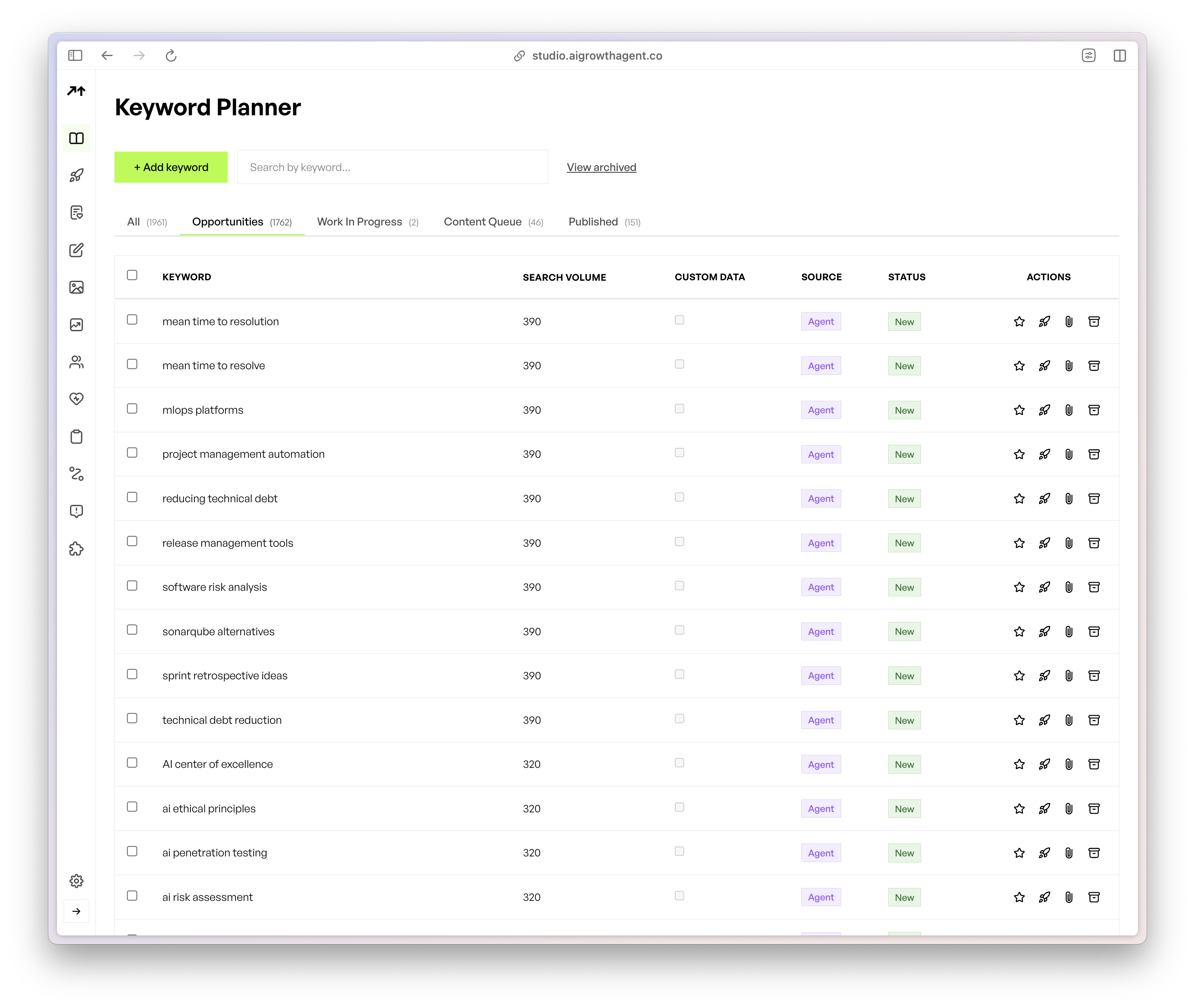
Programmatic tools support this enrichment at scale. AI Growth Agent reviews your content portfolio, identifies gaps, and drafts expanded sections that align with your brand narrative while deepening E-E-A-T signals for AI search engines.
2. Use Dynamic, AI-Ready Technical SEO for Reliable Indexing
A flexible technical foundation makes it easier for AI systems to crawl, interpret, and reuse your content. Ongoing technical SEO work includes schema coverage, page speed, mobile optimization, and content structure that allows clear extraction and summarization.
Structured data and schema markup help AI models understand entities, relationships, and key facts. Well-implemented schema increases the likelihood that your pages feed AI Overviews, snippets, and conversational responses. Sites that neglect these updates risk misinterpretation or exclusion from high-visibility AI features.
Programmatic systems reduce the engineering burden. AI Growth Agent sets up an optimized blog architecture and applies advanced technical SEO, including rich schema, clean metadata, and structures that make your content easier for AI models to parse and summarize.
See how AI Growth Agent automates ongoing technical optimization. Schedule a demo.
3. Align Content With Semantic and Conversational AI Search
Content that mirrors how people ask questions in natural language tends to perform better in AI search. Semantic optimization emphasizes natural phrasing, robust FAQ sections, and clear headings that match conversational and voice queries.
Expanding content to anticipate follow-up questions deepens topical coverage. Leading AI search engines in 2025 combined natural language understanding, semantic search, and generative summaries, and that pattern continues in 2026 as models look for content that provides complete, logically structured answers.
Programmatic analysis exposes how users actually phrase questions and where content falls short. AI Growth Agent’s Programmatic Content Agent builds briefs and long-form pieces from detailed keyword and query research so your pages map closely to real conversational patterns.
4. Monitor AI Signals and Close the Loop for Continuous Learning
Clear feedback loops from AI platforms turn guesswork into a data-driven content strategy. AI-specific KPIs, such as AI Overview presence and conversational query performance, inform ongoing content and technical refinements.
Key AI search signals include:
- Mentions in AI Overviews and generative panels
- Featured snippet and answer-box capture rates
- Voice search rankings and zero-click impressions
- Direct quotes and citations of your content in AI responses
Different AI search engines highlight different strengths and result formats, so visibility tracking needs to cover multiple platforms rather than a single source.
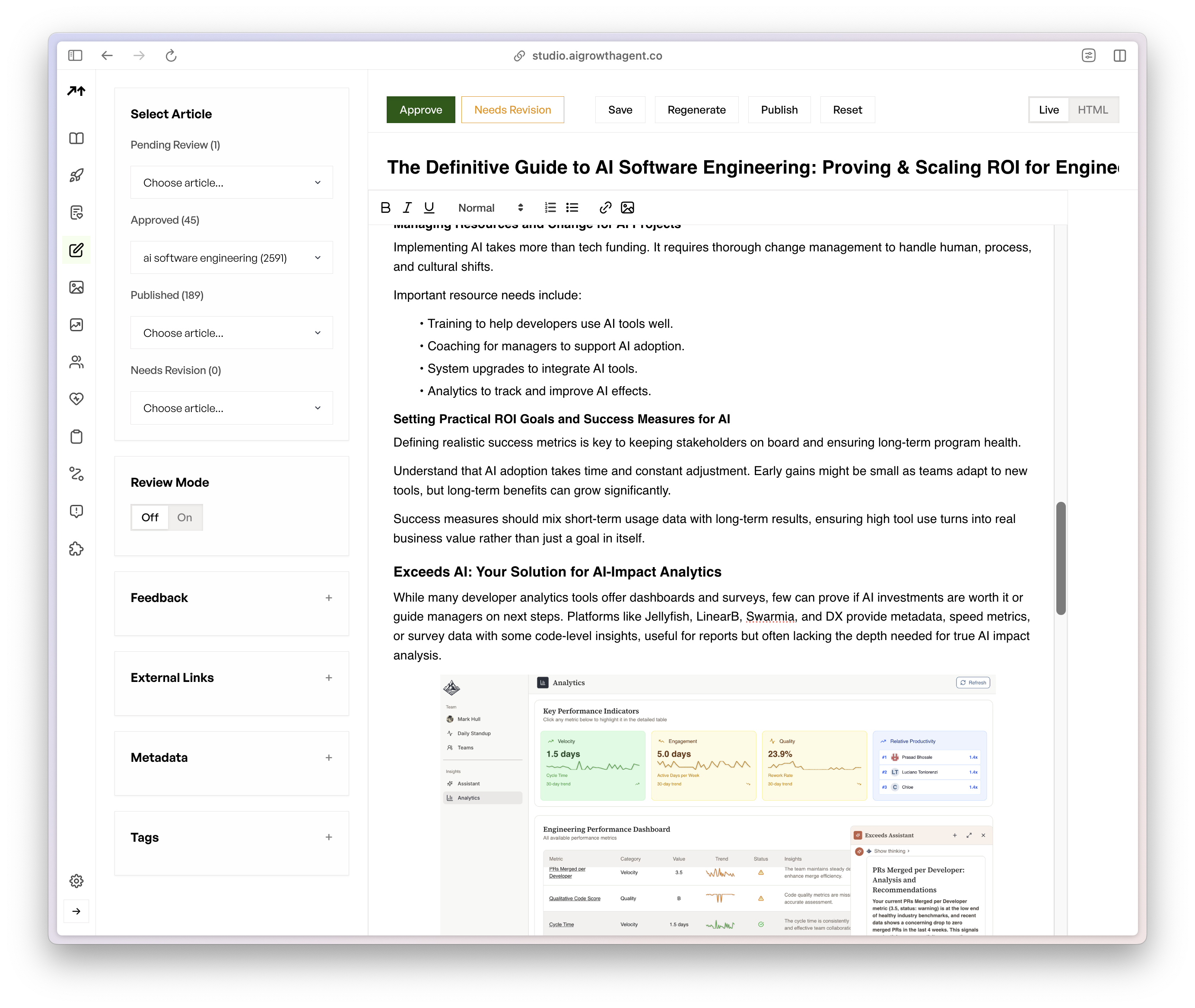
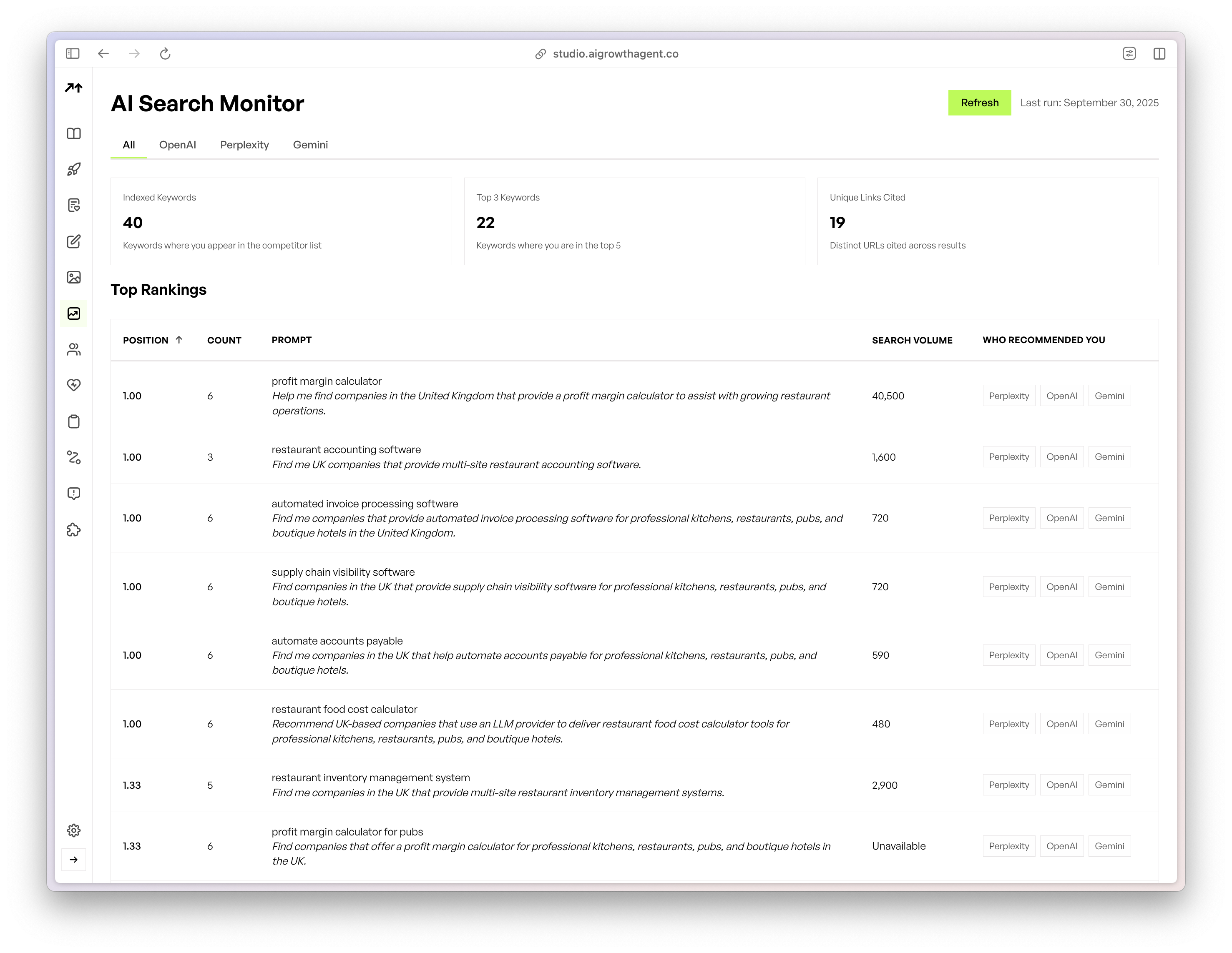
Programmatic monitoring allows faster reaction to these signals. The AI Growth Agent Studio includes an AI Search Monitor and feedback loop that surfaces where and how your content appears, which URLs drive AI visibility, and which snippets AI models reuse.
5. Use Multi-Tenant Programmatic SEO to Support Complex Portfolios
Multi-brand portfolios benefit from SEO systems that support parallel strategies. Private equity firms, venture funds, and enterprises with several product lines need separate content agents that honor each brand’s voice, positioning, and keyword focus while sharing a common operational backbone.
Programmatic platforms address this need. Modern AI search tools allow non-developers to adjust ranking and relevance rules, which points to a best practice where marketers can tune search performance without engineering delays.
AI Growth Agent supports multi-tenant deployment from a single interface. Teams can run multiple Programmatic SEO Content Agents, each with its own manifesto, targeting, and publishing setup across distinct domains or subdomains, while maintaining consistent quality and cadence.
Explore how multi-tenant programmatic SEO can support your portfolio. Book a strategy session.
Conclusion: Programmatic Execution as the Basis for AI Search Authority
AI search in 2026 operates as a moving system rather than a fixed set of rules. Effective AI search optimization depends on continuous audits, content updates, and technical refinements as AI-driven features evolve.
Brands that focus on E-E-A-T enrichment, dynamic technical SEO, semantic coverage, AI-led feedback loops, and multi-tenant execution place themselves in a stronger position to earn and retain AI visibility. AI Growth Agent gives teams a structured way to apply these principles through autonomous content architecture and AI-aware optimization.
AI systems need reliable sources of accurate answers. AI Growth Agent helps your company become one of those sources at scale. If your brand has a solid foundation and wants to compete through Programmatic SEO, the team can assess fit and outline an approach tailored to your goals. Schedule a demo to see how AI Growth Agent can support your AI search strategy.
Frequently Asked Questions (FAQ)
How often do AI search algorithms change, and how do I keep up?
AI search algorithms, especially those behind generative and conversational features, evolve continuously through new training data and user interactions. Manual tracking of these shifts at scale is difficult. A programmatic platform like AI Growth Agent uses autonomous agents to monitor AI search behavior and adjust content and technical SEO so your pages stay aligned with current patterns.
What is “information gain” in the context of AI search updates?
Information gain describes the additional value your content provides beyond what is already available elsewhere. AI systems prefer sources that add new data, perspectives, or clarification, not just summaries of existing material. Brands that regularly enhance pages with updated research, examples, and insights increase information gain, which becomes easier to manage through programmatic content workflows.
Can traditional SEO agencies help with continuous AI search updates?
Traditional SEO agencies often focus on manual, project-based work. That model can produce strong individual assets but usually does not match the frequency and scale of updates that AI search now rewards. Programmatic SEO platforms complement or extend agency work by automating repetitive tasks, applying technical standards consistently, and maintaining a steady flow of optimized content.
What are AI-specific KPIs, and why are they important for continuous learning?
AI-specific KPIs include AI Overview mentions, featured snippet win rates, voice search rankings, zero-click impressions, and direct citations of your content in AI-generated responses. These metrics show how AI models interpret and reuse your pages. Tracking them programmatically, as AI Growth Agent does, allows teams to adjust topics, formats, and technical setups based on how AI systems respond.
Why is programmatic SEO essential for staying competitive in AI search?
Content volume and update frequency in the AI era exceed what most teams can manage manually. Programmatic SEO supports consistent publishing, structured optimization, and fast iteration across many pages and properties. Brands that adopt programmatic methods keep pace with AI search engines that favor comprehensive, current, and technically sound content.