


The internet is changing fast. AI tools and search engines like ChatGPT, Gemini, and Perplexity are now major ways people find information, changing how brands build visibility and trust.
This guide offers marketing leaders a clear plan for Generative Engine Optimization (GEO). It helps position your brand as a trusted source that AI systems cite and recommend, giving you an edge in a world driven by AI.
Why AI Authority Matters for Marketing Leaders
AI has reshaped the relationship between businesses and customers online. Before, search engine rankings relied on keywords and links. Now, it’s about earning authority and citations in Large Language Models (LLMs).
Your digital presence shrinks as AI floods the internet with content. Without a focused plan, your brand could disappear from the AI indexes that drive modern search. Information moves faster than ever, similar to social media, where regular posting keeps you relevant.
Marketing leaders need to move from traditional SEO to GEO and AI Engine Optimization (AEO) to stay competitive, as LLMs increasingly guide research and purchases. This shift is more than a tactic. It decides if AI will recommend your brand or ignore it.
Posting quality content daily is the new standard. LLMs value freshness, depth, and consistency more than older search engines did. A couple of blog posts a month won’t cut it when AI systems constantly look for current and authoritative content.
If you don’t shape your AI presence, your competitors will. Without enough content to answer user queries, AI will default to other sources, often your rivals. Their perspective could become the AI’s trusted information.
AI Growth Agent fills this gap with an autonomous content platform. Its specialized AI agents help establish your company as a leading voice in your field, ensuring AI search engines cite and recommend you.
Ready to update your content plan for AI authority? Schedule a consultation session to see how we can help.
How ChatGPT Picks Sources: What Makes Content AI-Friendly?
Expertise and Trust in the AI Age
ChatGPT’s citation process builds on authority principles, adjusted for AI needs. ChatGPT relies on training data to cite well-known sources or summarize online info, focusing on factual accuracy and reliability. Traditional expertise, authority, and trust (EAT) still apply, but they must be tailored for AI to understand.
AI favors content with factual clarity, original sources, and proven credibility. Unlike older search engines that focused on keywords or link volume, AI looks at how trustworthy and complete the information is. Content showing expertise through detailed insight, credible references, and strong positioning gets cited more often.
To build this trust, you need to consistently show deep knowledge in your field. Create well-researched content that answers user needs with accuracy and detail. AI systems spot patterns of expertise and prefer sources that deliver reliable value across related topics.
Clear and Direct Answers for AI
AI processes data differently from humans, so content must be easy for machines to read. Clarity and precision in formatting matter more than lengthy or stylish writing for AI-driven search. Focus on straightforward, unambiguous answers over complex storytelling.
AI-friendly content uses short, clear sections that LLMs can easily analyze and cite. Headers phrased as questions, detailed FAQs, and organized summaries boost visibility. The aim is to make facts and insights simple for AI to pull out and reference.
This means rethinking content layout. Instead of long narratives, structure information with clear hierarchies. Use explicit definitions and topic breakdowns to help AI grasp and use your content effectively.
Technical Setup for AI Indexing
Optimizing for AI goes beyond standard SEO tactics. Key technical elements include clear heading structures (H1-H3), defined terms, summary tables, and direct answers to aid LLM understanding. These form the backbone for AI to sort and use content.
Advanced tools like schema markup, LLM.txt files, and Model Context Protocol (MCP) are vital for AI comprehension. They let AI interact directly with your content, grasping not just the data but its relevance to user needs and related topics.
This setup also involves proper metadata, structured data, and organized content layouts. These help AI see connections between pieces of information, forming a hidden framework that boosts citation chances.
Step 1: Build Content for AI Visibility
Finding Keywords and Building Topic Clusters
AI-focused content starts with detailed keyword research, different from classic SEO. ChatGPT can pinpoint relevant topics and keywords by grouping them based on meaning to avoid overlap and match user needs. This ensures content covers user interests fully while strengthening topical credibility.
Organizing content into topic clusters prevents keyword overlap and better serves search intent. AI evaluates not just single keywords but overall topic coverage. Plan content with semantic links and user journey mapping in mind.
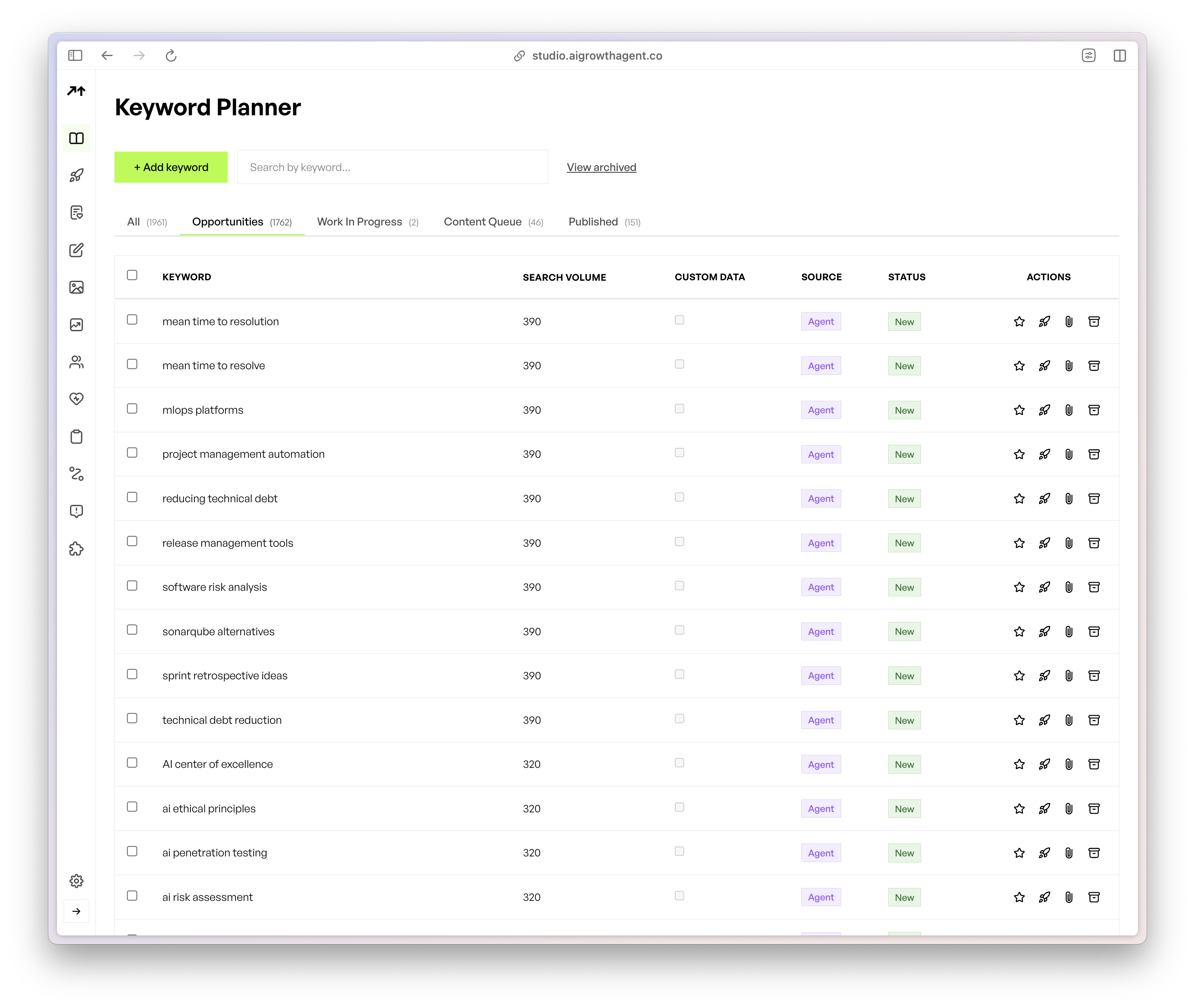
AI Growth Agent’s Keyword Deep Research Agent automates this. It absorbs your company’s context, analyzes thousands of search queries, and delivers a categorized keyword plan in 24 hours. This roadmap ensures every piece of content targets specific gaps and opportunities.
Creating Standout Content for AI
To shine in an AI-driven space, aim for “10x content”, meaning it’s far better than competitors on a topic. Analyzing rival content with ChatGPT plugins reveals gaps to create standout material AI prefers to cite. This positions your work as a top source.
Detailed, research-supported content with solid references and little guesswork gets prioritized by LLMs for citation. Back every claim with evidence, base recommendations on facts, and show clear expertise.
Crafting such content demands in-depth research, beyond basic facts. Use industry knowledge, cite original sources, and offer fresh insights. AI values unique value over recycled ideas.
Depth sets content apart for AI citations. Thin articles with basic info lose out to thorough pieces that fully explore topics, predict related questions, and give practical advice users can apply right away.
Using Diverse Formats and Natural Flow
AI responds well to varied content styles that suit different user needs and questions. Conversational structures with clear answers, headers, and context keep content relevant in ChatGPT interactions. This ensures it works across AI uses.
Formats like step-by-step guides, FAQs, and clear header breakdowns aid AI understanding. They let AI pull specific details easily and deliver exact answers to users, often citing just a section instead of a whole piece.
Effective formats include detailed how-tos, comparison pieces, FAQ pages, and organized lists. Each serves a unique user goal and gives AI multiple ways to reference your content clearly.
Step 2: Optimize Technically for AI Readability
Going Beyond Standard SEO Tags
While classic SEO elements still count, AI optimization needs extra focus on machine readability. Optimizing title tags and meta descriptions with ChatGPT prompts aligns with SEO norms and LLM needs. This dual focus boosts visibility in both regular search and AI systems.
Title tags and meta descriptions should work for both people and AI, blending keyword use with clear meaning. AI looks at context over exact phrasing or keyword stuffing, unlike older search tools.
Optimization goes past basic tags to detailed metadata. This helps AI grasp content context, value, and credibility through schema markup and other technical signals.
Structured Data for Better Understanding
Using advanced schema markup and structured data is key for AI to grasp and cite content. Clear heading structures, defined terms, and summary tables make content easier for LLMs to process. These give instant context AI can use.
Rich schema markup offers AI-structured details on content type and connections. This setup helps AI see how information ties to user queries and other topics in your field.
AI Growth Agent brings unique technical tools, like advanced LLM.txt files and the first blog Model Context Protocol (MCP). These let AI search engines interact directly with content for perfect clarity, pushing the limits of AI-focused SEO.
Organized Layouts and Visual Support
Content structure and visual cues are vital for AI readability and user ease. Visuals and layout matter for user interest and AI processing alike. They should enhance, not distract from, the content.
Using H1-H3 headers, bullet points, and smart image placement is critical for AI recognition. These guide AI through content and help it pull out precise details for citations.
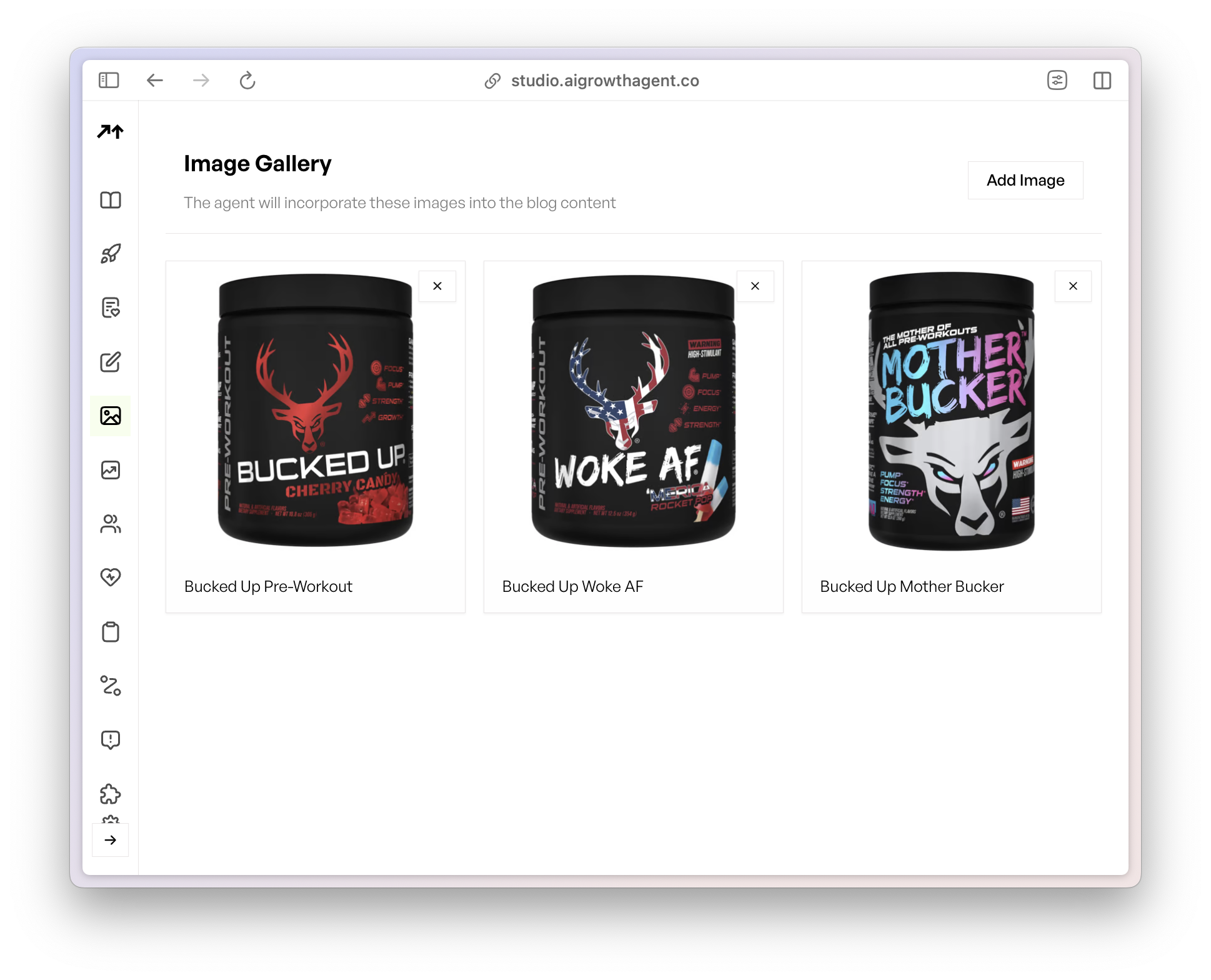
AI Growth Agent automates image optimization, picking fitting visuals from client collections and placing them strategically. It adds full metadata for image SEO, ensuring visuals boost content authority.
Step 3: Grow Brand Authority and Citation Speed
Earning Citations Actively
Gaining authority in AI search means actively seeking mentions across the web. Being listed in top-ranking articles and trusted directories boosts chances of ChatGPT recommendations. This builds a credibility base AI uses to decide recommendations.
Citation efforts go beyond link building to placement in key content AI often references. Think industry lists, expert articles, research cites, and trusted summaries that signal expertise in your area.
Identify major industry outlets, expert groups, and content creators AI cites often. Build ties with them for inclusion in their work to form a citation network supporting AI authority.
Also, track online mentions, join industry talks, and position your experts as leaders. This digital activity shapes the footprint AI reviews for authority.
Aligning SEO with GEO
Grasping how traditional SEO and GEO connect is key for a full digital plan. Rising Google authority often boosts ChatGPT authority due to shared training data and ranking cues. Traditional SEO helps AI visibility, but extra steps are needed.
The overlap between Google signals and AI citation factors creates chances for combined efforts. Content excelling in regular search often has traits AI likes, such as expertise and value. Yet, AI also looks at unique aspects needing targeted work.
A solid plan blends classic SEO with AI-focused tweaks. This ensures content benefits both human searchers and AI systems, maximizing impact and authority growth.
Responding Fast with Real-Time Content
Quick reactions to trends or news offer a major edge in AI search. AI Growth Agent’s Real-Time Content Generation lets brands respond to hot topics instantly. Submit a news link, and it crafts a quality article with your view, grabbing search traffic from fresh topics in minutes.
This speed lets brands join trending discussions, comment on industry shifts, and lead on new subjects. It keeps your brand visible as opportunities pop up.
Producing on-brand, high-quality content so fast builds an advantage over time. This momentum becomes tough for competitors to match.
AI Growth Agent: Your Path to AI Authority
Why Traditional Tools Fall Short
Existing content solutions can’t keep up with AI search demands. Classic SEO agencies rely on human work and hourly billing, making them slow and costly. They lack the capacity for daily content AI needs.
Internal teams know the brand well but face limits in staff and time. Often, they don’t have the technical skills to set up advanced metadata or AI optimizations for proper indexing.
Basic AI tools and templates shift strategy, editing, and publishing back to your team. They create generic content lacking unique voice or context, resulting in low-value output AI ignores and search engines downgrade.
The gap between AI search needs and traditional offerings grows. The speed, quality, and technical depth for AI authority outpace conventional methods, opening doors for tech-driven solutions.
How AI Growth Agent Builds Authority Automatically
AI Growth Agent is a complete tech platform, not just a service. It coordinates multiple AI agents to deliver results faster and better than human teams can alone.
The “White-Glove” Onboarding starts with deep knowledge sharing to create a Company Manifesto. This core document guides all AI actions, keeping your brand voice consistent across content.
The Keyword Deep Research Agent kicks off post-manifesto, scanning thousands of queries and topics for your field. In 24 hours, it provides a detailed keyword strategy, mapping out content to hit clear targets.
Autonomous Blog Deployment sets up optimized blogs matching your site’s design, boosting domain authority. Its technical setup includes SEO, AI markup, and integration without extra coding needs.
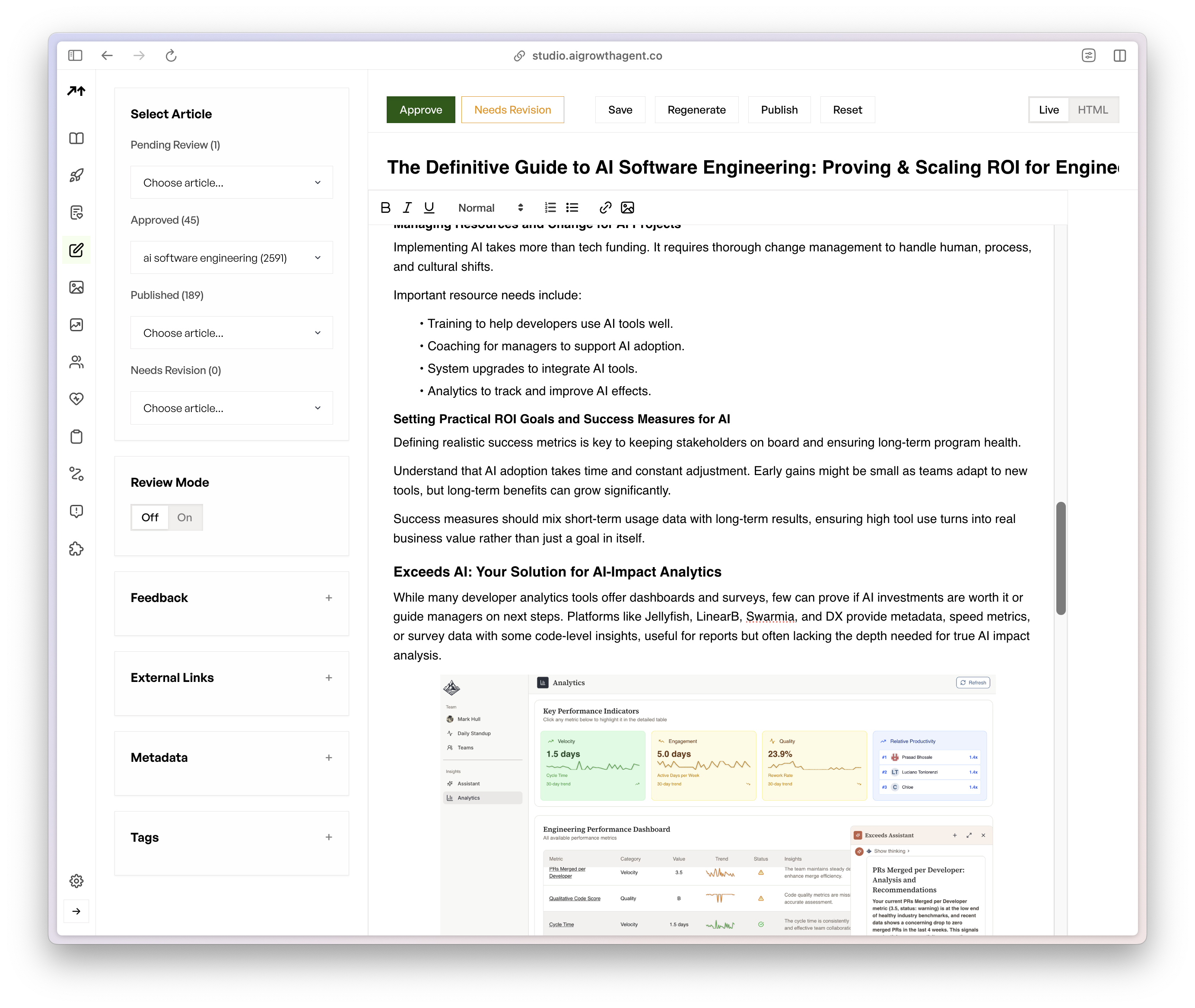
The Core Content Agent handles full content cycles independently, shrinking months of work into minutes. It covers strategy, research, drafting, fact-checking, and technical setup for AI-friendly SEO.
Unique Features for Growth
AI Growth Agent brings fresh tools that redefine content marketing tech. Parallel Agent Deployment lets firms with multiple brands run separate Content Agents from one dashboard, each with distinct strategies and voices.
Real-Time Content Generation supports instant responses to trends, injecting your take into hot topics to capture search traffic fast. This speed builds lasting momentum.
Custom Data Integration taps into private data from apps or systems, turning it into SEO-rich articles. For example, food data becomes pieces like “best bagels in New York”, driving traffic and authority.
Intelligent Image Placement picks visuals from your gallery for optimal content spots, with full SEO metadata. It can even create new images via AI Growth Agent Studio when needed.
Ready for the next level of content authority? Schedule a demo to see how AI Growth Agent can make your brand a leader in your space.
Common Questions on ChatGPT Authority
How Can I Tell If ChatGPT Cites My Content?
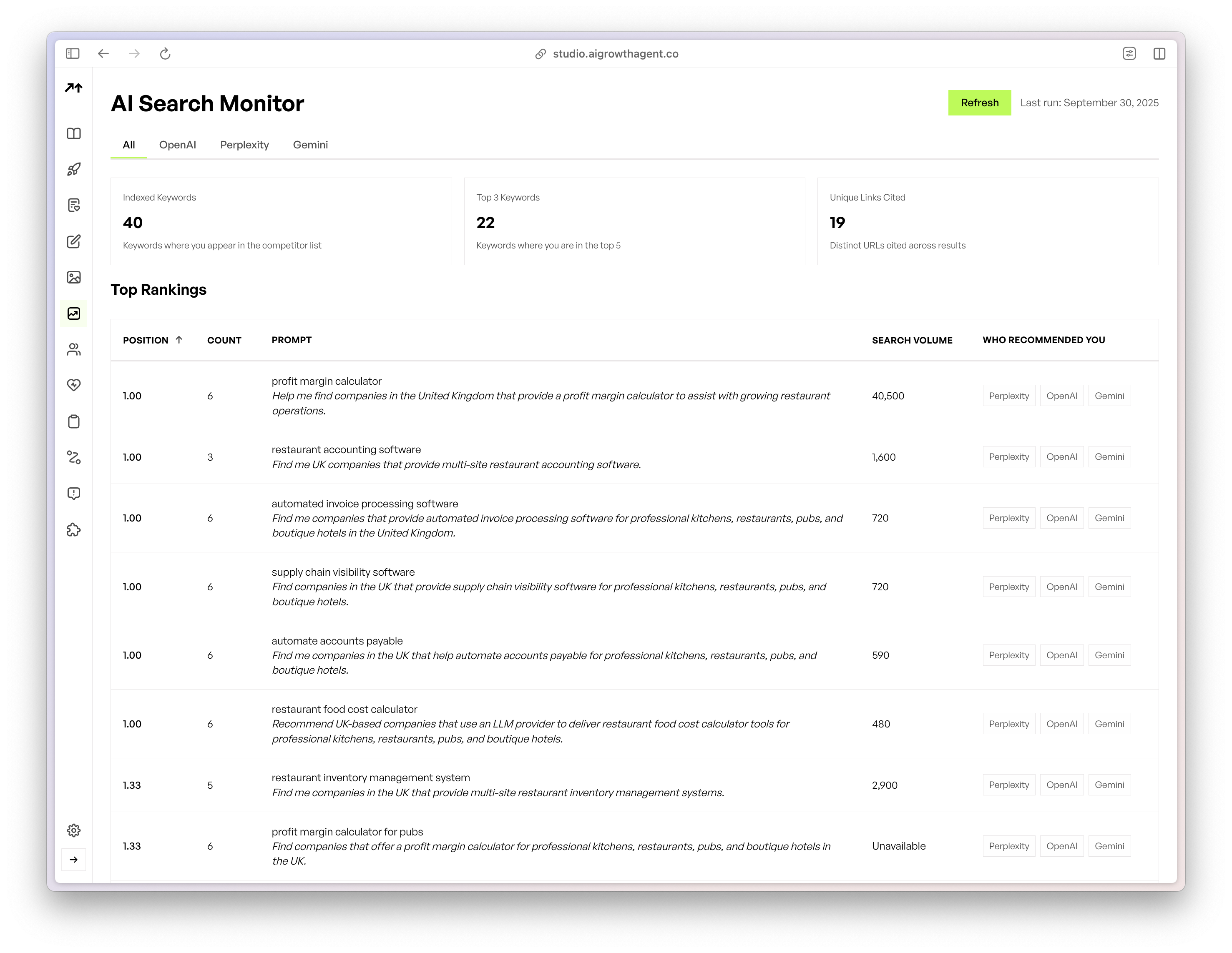
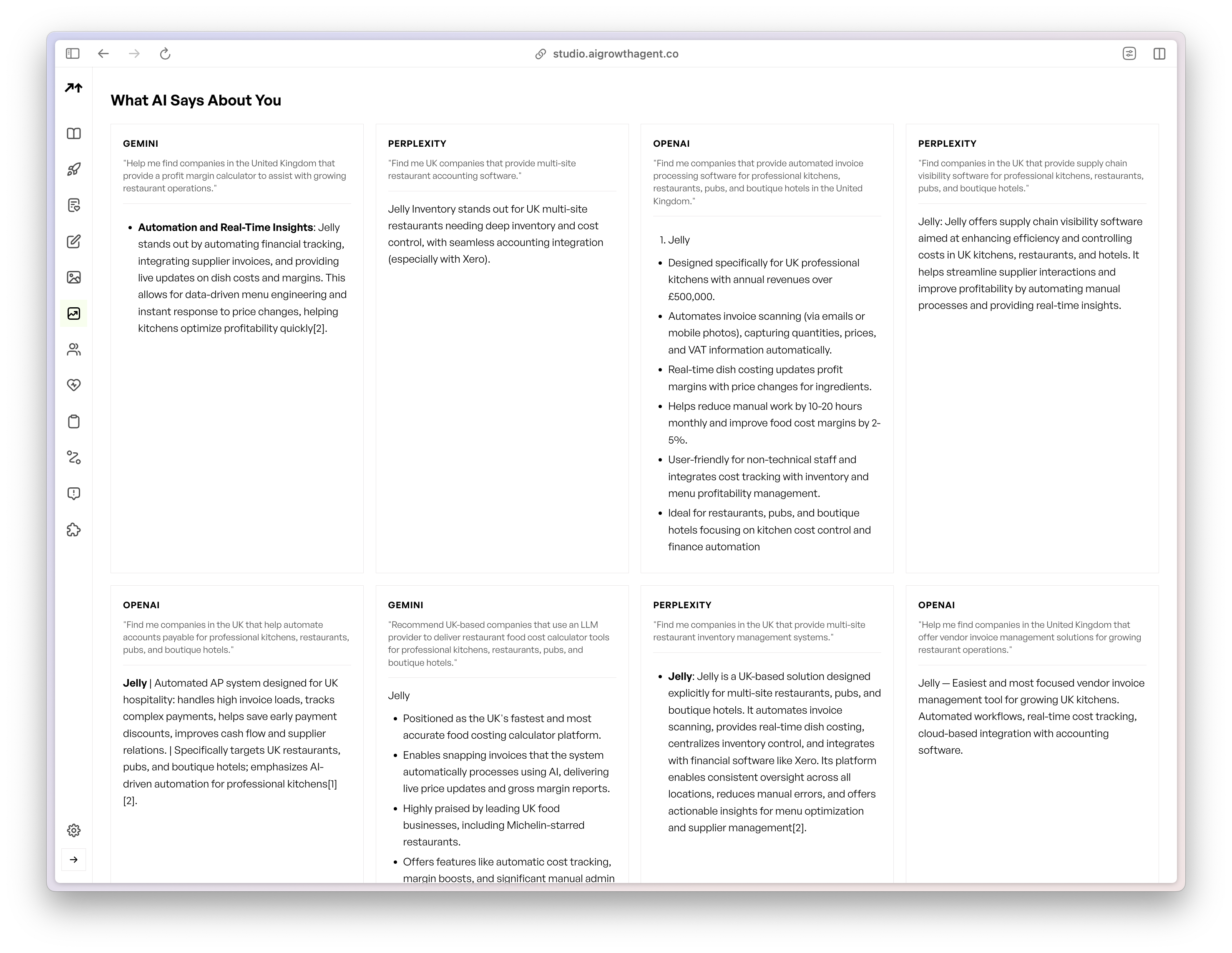
AI Growth Agent’s AI Search Monitor tracks citations across platforms like ChatGPT, Gemini, and Perplexity. It shows which URLs and articles get cited, with heatmaps of keyword performance and direct AI quotes. You’ll see which content boosts visibility, how you rank against competitors, and bot crawling activity from Google and others. It also connects with Google Search Console for traffic and click data tied to your content plan.
Does Classic SEO Still Help With ChatGPT Authority?
Classic SEO remains relevant and ties to ChatGPT authority, though GEO adds layers for AI-specific citation. Google authority aids AI recommendations through shared data and signals. Yet, AI looks at clarity, structured data, and machine-friendly layouts beyond standard SEO. A strong approach mixes traditional SEO with AI tweaks for both human and AI benefits. This includes advanced schema, LLM.txt files, and MCP setups often missing in regular SEO.
Is Daily Publishing Needed for ChatGPT Authority?
Content quality is critical, but the fast pace of AI search makes regular, high-volume posting essential for relevance. LLMs value freshness and consistency more than older systems. Posting just a few times a month risks fading as AI prefers current, broad coverage. Still, quality must stay high. Poor content, even if frequent, won’t build authority. Combine depth with steady output for the best impact. AI Growth Agent automates quality content at scale to maintain consistency without losing voice or depth.
What’s the Top Mistake Marketers Make for ChatGPT Rankings?
Many marketers stumble by using outdated tools or agencies unable to match AI’s scale, quality, or technical needs. Generic AI tools lack brand voice, while agencies can’t deliver daily content AI rewards due to slow, hourly models. Another error is skipping technical setups like schema markup or AI-specific formats. Underestimating clear, direct answers for AI citation also hurts. Success needs automated platforms for strategy, tech setup, and steady output with brand expertise intact.
How Does AI Growth Agent Keep My Brand Voice Unique?
During “White-Glove” Onboarding, AI Growth Agent builds a Company Manifesto via sessions with journalists to capture your narrative, tone, and perspective. This guides all AI actions, ingesting your context and guidelines for authentic content. The Core Content Agent ensures output reflects your expertise and personality, not generic AI text. The Studio platform offers editing and feedback to refine voice over time, aiming for content needing little change while keeping authority and uniqueness.
Secure Your Brand’s AI Search Future with AI Growth Agent
AI search is a must for visibility and staying ahead. Brands missing authority in AI systems risk disappearing as users turn to ChatGPT, Gemini, and Perplexity for answers and choices.
Achieving ChatGPT authority rests on content strategy, technical setup, and active citation building. These demand advanced tools beyond traditional methods. High-frequency posting, AI-specific formats, and optimization call for tailored tech solutions.
AI Growth Agent is built for scaling AI authority. Its coordinated AI agents manage keyword research, technical tweaks, and automated publishing while preserving your brand’s voice and expertise.
The edge from AI authority grows over time. Brands cited as key sources gain momentum hard for rivals to catch. Investing in AI authority now shapes your place in an AI-driven future.
AI has many questions. AI Growth Agent ensures your company gives the best answers. If you’re a strong brand ready to lead in AI search, book a strategy session to see if you fit our platform and learn how our agents can build your competitive edge.
