Written by: Mariana Fonseca, Editorial Team, AI Growth Agent | Last updated: January 10, 2026
Key Takeaways
- AI search engines now drive a large share of business research, so your content platform needs technical depth, not just text generation.
- Entity authority, cross-platform presence, and consistent metadata shape how AI systems describe and recommend your brand.
- Real-time updates, content freshness, and automated distribution help your company stay visible as AI results change daily.
- Multi-tenant orchestration, governance, and AI-specific analytics matter for organizations that manage several brands or product lines.
- AI Growth Agent offers a programmatic SEO agent approach that helps teams build AI search authority at scale; book a demo to see how it fits your roadmap.
1. Programmatic SEO and Technical Authority: Beyond Basic Content Generation
Build technical foundations that AI search can trust
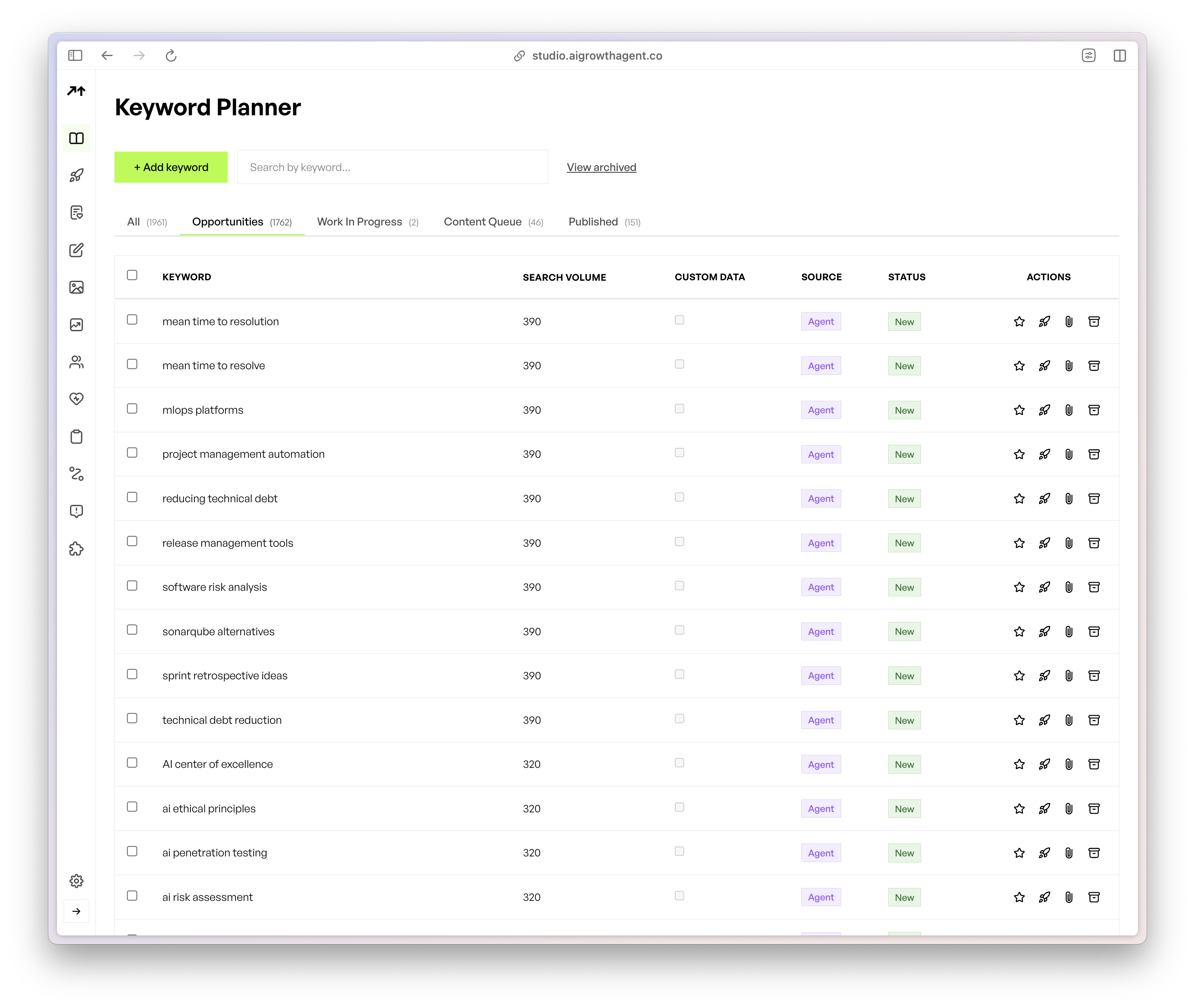
AI search engines favor content that is easy for models to parse and verify. Structured data, schema markup, LLM.txt files, and deliberate internal linking patterns now act as core signals for crawlability and citation confidence.
A suitable platform should engineer each page with consistent schema, optimized metadata, and 3–5 contextual internal links per 1,000 words that guide AI crawlers through your topic map. It also needs to manage performance, since faster pages are roughly three times more likely to be cited in AI answers. Platforms that integrate LLM.txt and Model Context Protocol (MCP) give AI systems more direct access to your content than general-purpose writing tools that stop at draft generation.
2. Establishing Entity Authority: The AI Citation Mandate
Turn your brand into a recognized entity for AI systems
AI search in 2026 relies heavily on entities, not just keywords. Models weigh brands by verified presence, cross-site citations, and consistency of identity signals across the web.
A strong platform helps you build this authority through expert mentions, Q&A contributions, and profiles on trusted properties. Verified and expert sources appear in most top AI results, and user-generated communities such as Reddit, Quora, and LinkedIn now dominate many AI citations. The system should manage consistent entity metadata like NAP details, positioning, and sameAs schema, or competitors may shape how AI systems describe your brand.
Learn how AI Growth Agent structures content to grow your entity’s authority.
3. Real-Time Relevance and Dynamic Authority Scoring
Keep your content fresh enough for rapidly changing AI results
AI search rankings now shift quickly as models ingest new data. Recent authority signals and dynamic scoring systems reward brands that publish and update content frequently.
Effective platforms automate refresh cycles, surfacing updated statistics, current-year references, and visible “Last updated” timestamps. AI Overviews favor content that shows clear signs of recency. Your system should also support rapid publishing around emerging topics, since high-performing brands now rely on daily, multi-platform distribution rather than static editorial calendars.
4. Multi-Tenant Mastery: Scalable Solutions for Complex Organizations
Coordinate multiple brands without losing control
Marketing teams that manage portfolios of products, regions, or companies need a platform that handles complexity. Centralized governance, role-based access, and scalable workflows help keep each brand aligned.
Multi-tenant capabilities let you run separate programmatic SEO agents from one interface while preserving distinct voices and keyword strategies. Basic tools often reduce brand voice to simple tone settings, while advanced systems apply detailed guidelines so that thousands of pages across multiple brands still tell a coherent story.
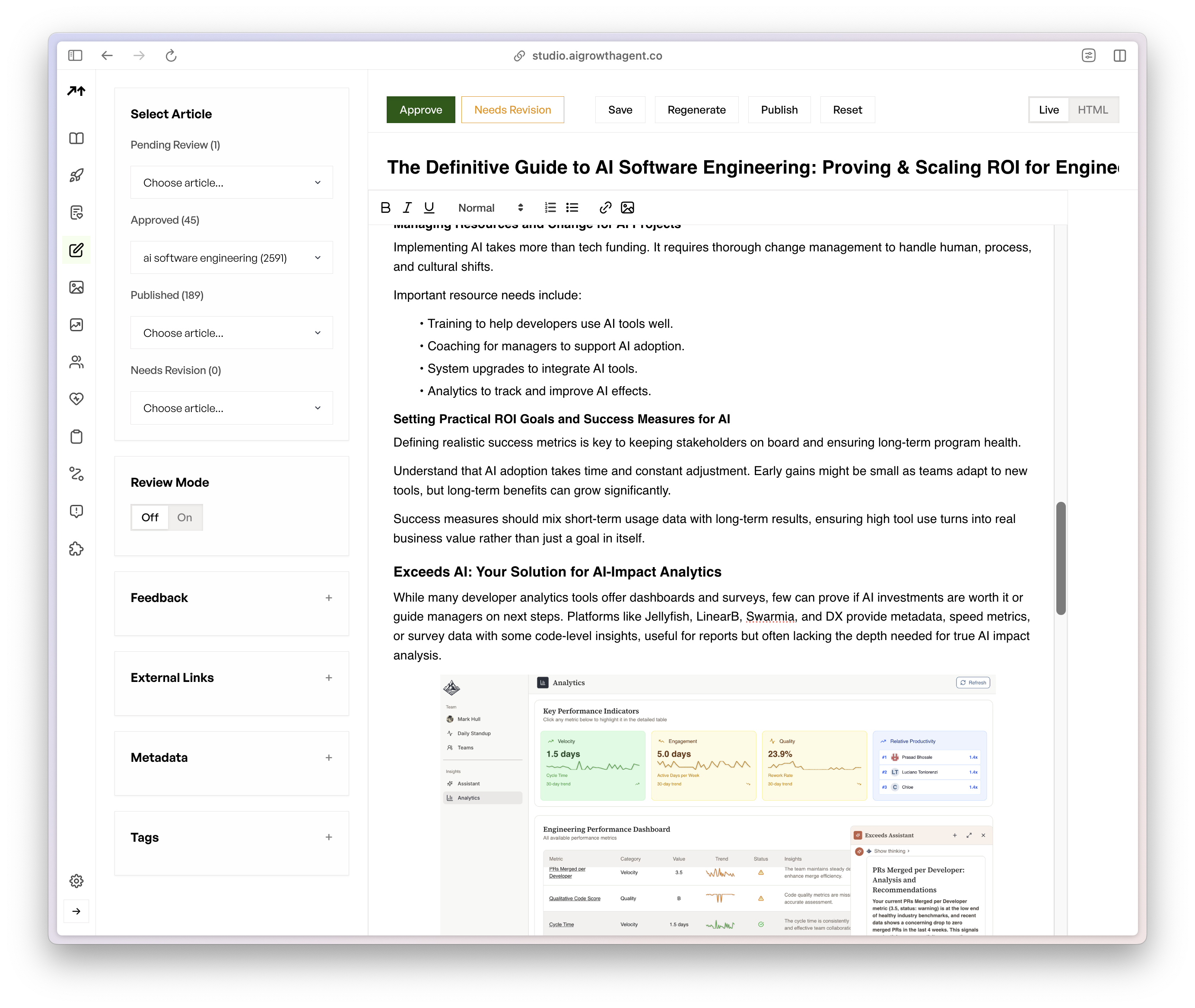
See how AI Growth Agent manages multi-brand content programs in one workspace.
5. Performance Monitoring and AI-Specific Analytics
Track how often AI systems surface your brand
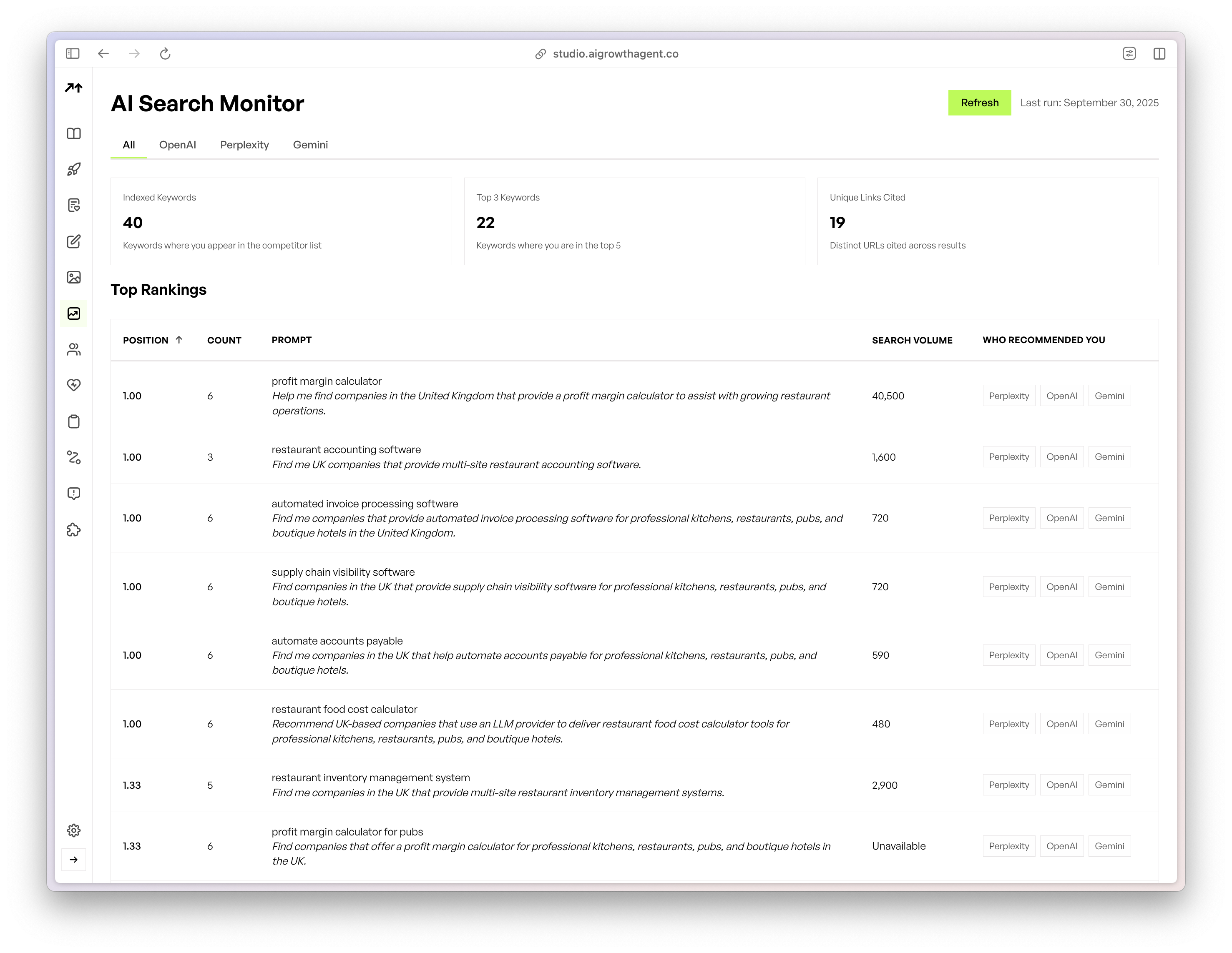
Traditional web analytics cannot show where your brand appears inside AI-generated answers. New visibility tools now measure brand mentions across ChatGPT, Perplexity, Google AI Overviews, and similar systems.
Useful AI analytics report citation frequency, share of voice, triggering queries, sentiment, and competitive benchmarks. These metrics help teams refine content, improve attribution quality, and track progress over time. Real-time alerts and topic maps are becoming standard, so your platform should integrate or provide comparable monitoring.
Choosing Your Champion: How AI Growth Agent Supports Programmatic SEO
AI Growth Agent focuses on content engineering rather than one-off content generation. The platform automates technical SEO, including schema, LLM.txt files, and blog-focused Model Context Protocol (MCP), and aligns that with programmatic keyword and topic planning.
Its multi-tenant framework helps complex organizations coordinate several brands from one control panel while maintaining separate narratives. Real-time content injection and scheduled refreshes support agile responses to news cycles, and AI search monitoring highlights which assets earn citations across major AI systems.
AI Growth Agent also removes much of the operational overhead associated with manual publishing workflows. A manifesto-based brand system guides tone and positioning at scale, so large content libraries can support consistent authority signals for AI search.
How AI Growth Agent’s Programmatic SEO Agent Supports AI Search: A Comparison
|
Feature Area |
AI Growth Agent (Programmatic SEO Agent) |
Traditional SEO Agencies |
Basic AI Content Tools |
|
Content Velocity |
Daily, autonomous, scalable |
Slower, manual production |
Fast drafts, limited strategy |
|
Technical SEO Depth |
Automated schema, LLM.txt, MCP, internal linking |
Manual or partial implementation |
Minimal, handled by the user |
|
AI Citation Focus |
Engineered for authority and AI citation |
Focus on traditional rankings |
No AI-specific optimization |
|
Brand Voice Consistency |
Guided by detailed brand manifestos |
Relies on manual review |
Simple tone presets |
Frequently Asked Questions about AI Content Platforms and Programmatic SEO
How important is entity authority for AI search ranking in 2026?
Entity authority acts as a primary ranking input for AI search in 2026. Brands with consistent profiles, expert mentions, and cross-platform citations earn more reliable visibility than those that rely only on on-site keywords.
Can I achieve AI citation with traditional SEO strategies or basic AI writing tools?
Traditional SEO and basic AI writing tools rarely provide the structured data, entity optimization, and distribution needed for consistent AI citation. Purpose-built programmatic SEO platforms help automate these requirements at the scale modern AI systems expect.
How does content freshness impact AI search visibility?
Content freshness strongly influences how often AI systems select your pages. Visible update dates, current-year examples, and regular revisions signal that your material remains accurate and relevant.
Conclusion: Master AI Search with Programmatic Authority
Choosing an AI content platform in 2026 now means evaluating its programmatic SEO capabilities, not only its writing quality. Technical engineering, entity authority, real-time relevance, multi-tenant management, and AI-focused analytics together determine how AI systems surface your brand.
Teams that invest in platforms designed for AI search optimization can build durable authority and capture more citations across emerging discovery channels. Connect with AI Growth Agent to explore whether a programmatic SEO agent approach matches your goals for AI search in 2026.