Written by: Mariana Fonseca, Editorial Team, AI Growth Agent | Last updated: January 10, 2026
Key Takeaways
- AI search experiences in 2026, including ChatGPT, Google AI Overviews, and Perplexity, now act as major discovery channels for buyers across many industries.
- Hyper-personalization moves beyond broad segments and tailors content and experiences to each person based on real-time behaviors, preferences, and context.
- Effective hyper-personalized marketing depends on three pillars working together: high-quality data, AI-powered orchestration, and a programmatic SEO strategy that scales relevant content.
- Teams that plan for data quality, automation, privacy, and organizational readiness are better positioned to overcome common barriers and capture value from hyper-personalization.
- AI Growth Agent gives marketing teams a programmatic SEO and content engine that supports AI search visibility and hyper-personalized experiences at scale; schedule a demo to see it in action.
Strategic Imperative: Why Hyper-Personalization Matters in AI Search
AI-powered interfaces now shape how people discover brands and products. As AI-generated content grows, generic marketing loses visibility and influence in these systems. Brands that provide specific, relevant answers gain more citations in AI responses and more exposure to buyers.
Hyper-personalization aligns your content and offers with each individual’s needs, not just their demographic group. AI Growth Agent supports this shift by programmatically generating authoritative, structured content that AI systems can understand, cite, and surface in more personalized recommendations.
Understanding Hyper-Personalization: Beyond Basic Segmentation
Hyper-personalization treats every visitor, lead, or customer as a distinct profile with unique patterns and context. This approach spans the full journey, from discovery to retention, and adapts messaging and content at each step.
AI Growth Agent contributes the content layer that marketing and product teams need for these experiences. A wide, well-structured library of pages, articles, and resources helps personalization systems match user signals with the most relevant answer from your brand.
Key Components of Modern Hyper-Personalization
- Real-time adaptation: Experiences adjust as people click, search, and browse, using live behavioral data instead of static rules.
- Individualized content: Pages, offers, and messages change based on the needs of each visitor, not just segment averages.
- Predictive analytics: Models infer intent and likely next steps so you can present helpful content and offers before the user asks.
Pillars of Hyper-Personalization: Data, AI, and Programmatic Execution
Effective hyper-personalization rests on three connected pillars: a strong data foundation, AI orchestration across channels, and a programmatic content strategy that gives AI tools enough high-quality material to work with.
Data Foundation: Fueling Deep Personalization
Teams need a unified profile that brings together behavioral, transactional, and contextual data. When systems share data, you gain a clearer view of individual needs while still respecting consent and privacy standards.
AI-Powered Orchestration: Automating the Customer Journey
AI orchestration tools coordinate messaging, timing, and channel selection. These systems adjust campaigns and experiences based on how people engage across search, website, email, and product surfaces.
Programmatic Content Strategy: Scaling Authority with AI Growth Agent
Programmatic SEO connects your personalization capabilities to a durable content foundation. Personalization engines need a large, accurate library of content to select from. AI Growth Agent’s Programmatic SEO Agent designs and produces structured content collections that help position your company as a reliable source for AI citations and personalized experiences at scale.

Implementing Hyper-Personalization at Scale with AI Growth Agent
Marketing leaders gain better results when they pair a clear roadmap with supporting technology. The steps below outline how to introduce hyper-personalization and use AI Growth Agent as the content backbone for AI search and on-site experiences.
Step 1: Set Objectives and Define Your Data Strategy
Every hyper-personalization effort should start with measurable goals and a plan for data. Teams often track metrics such as:
- Engagement with key pages and offers
- Conversion rates across segments and journeys
- Customer lifetime value and retention
- Cost per acquisition and campaign ROI
Clear metrics guide which data you capture, how you unify it, and which touchpoints you should personalize first.
Step 2: Use Advanced AI for Content Creation
AI systems can draft and adapt content that reflects different intents and contexts, from educational articles to product comparisons. With clear guidelines and review processes, teams can increase content output while preserving accuracy and brand standards.
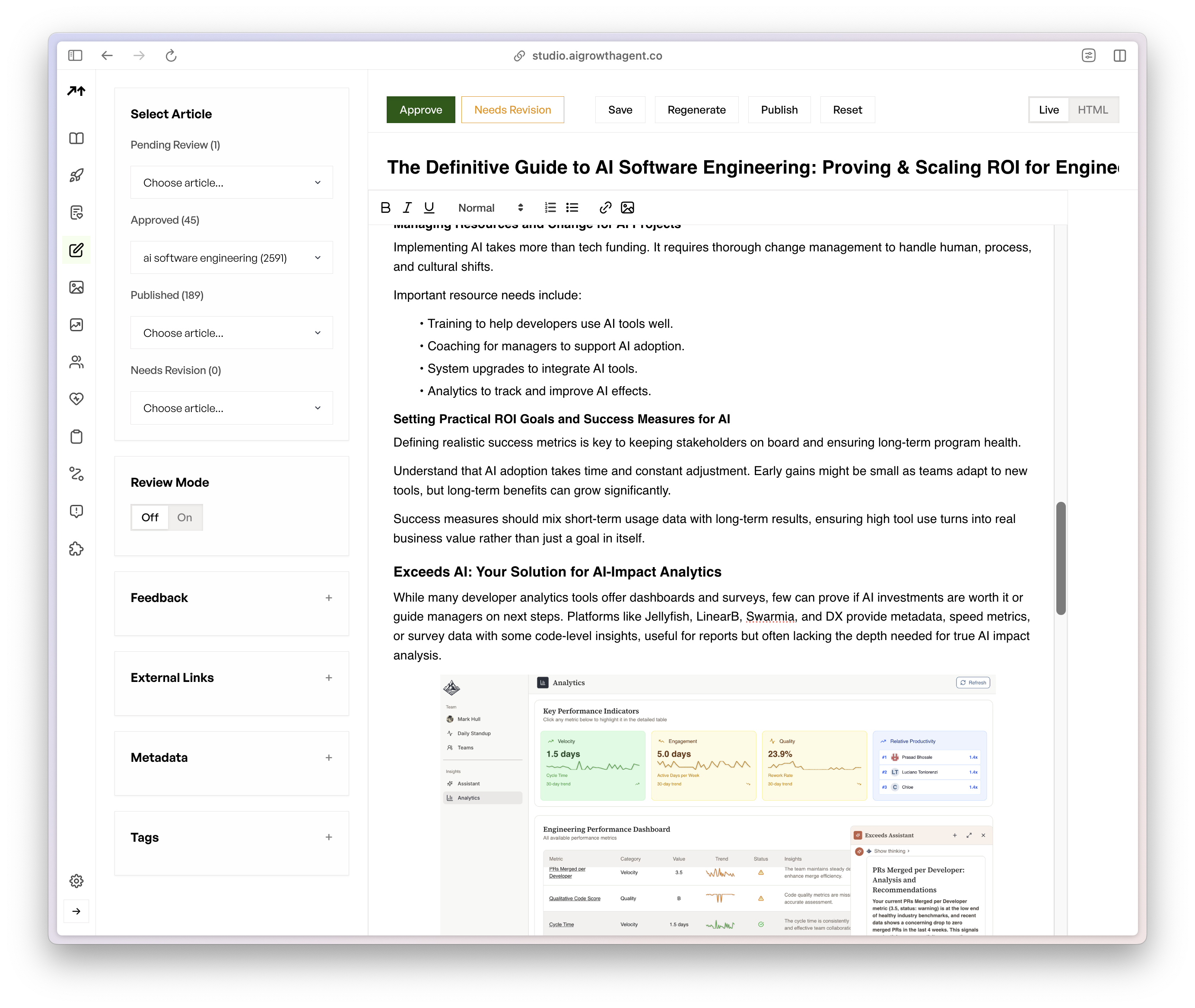
Step 3: Build Authority with Programmatic SEO and AI Growth Agent
AI Growth Agent’s Programmatic SEO Agent automates key parts of content engineering, including keyword discovery, template design, internal linking, and technical optimization. This approach creates large, coherent content clusters that support both AI search visibility and on-site personalization.
As your content footprint grows in a structured way, AI search systems have more reasons to surface your brand in answers, and personalization tools have more options to match with individual user needs.
Step 4: Maintain Continuous Learning and Optimization
Hyper-personalization improves when teams treat it as an ongoing process. Performance data from campaigns, site behavior, and AI search visibility should feed back into your content roadmap and targeting rules. Regular testing helps refine messages, formats, and offers for each audience.
Marketing teams that want to explore this approach further can schedule a consultation session to see how AI Growth Agent supports long-term authority building.
Overcoming Common Challenges in Hyper-Personalization
Many organizations recognize the potential of hyper-personalization but run into predictable obstacles. Addressing these early improves the odds of success.
Data Quality and Silos
Fragmented systems and inconsistent data reduce the accuracy of personalization. Consolidated data pipelines, shared identifiers, and clear ownership of data hygiene help teams build more reliable individual profiles.
Scalability and Automation
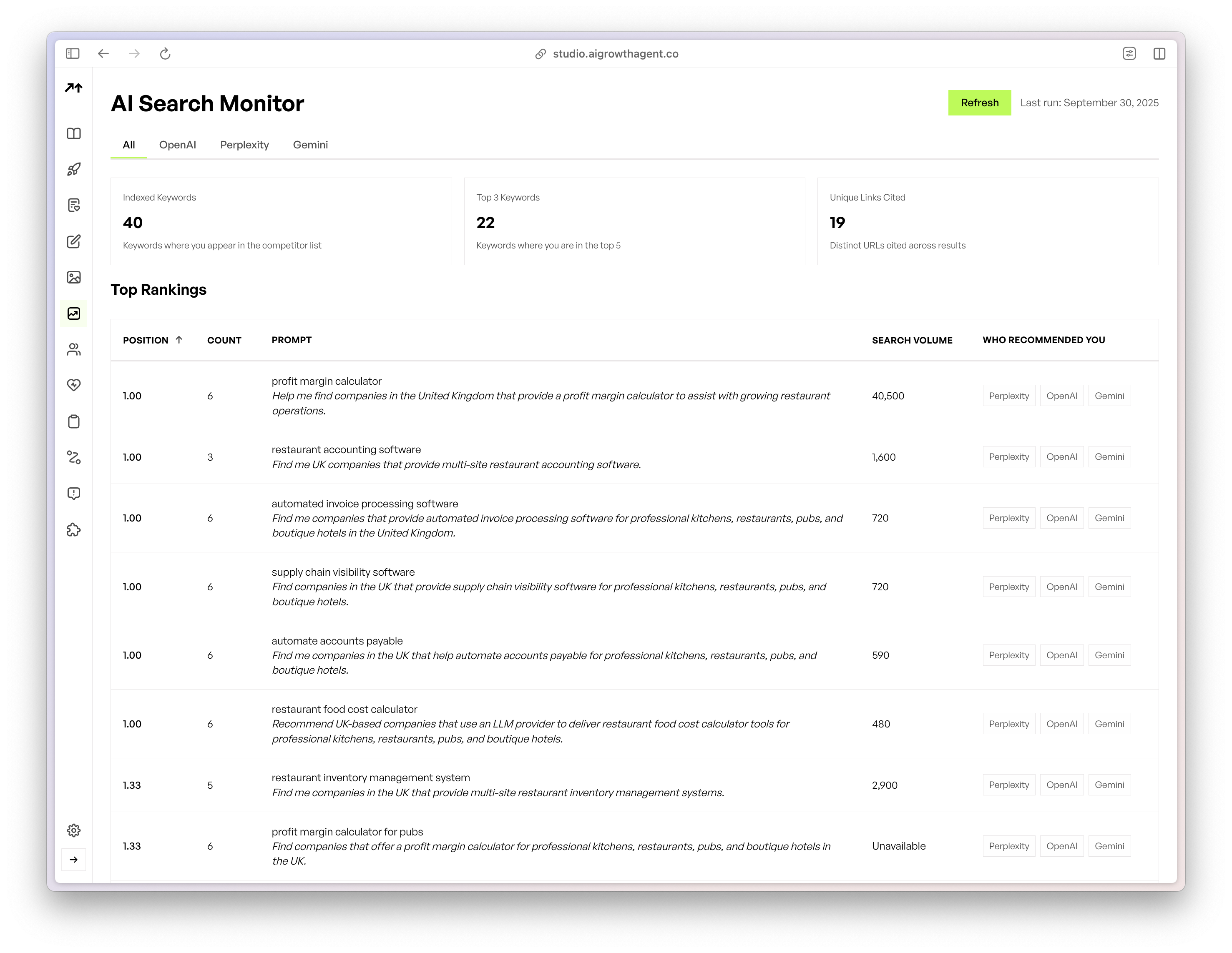
Manual content workflows rarely keep pace with the volume of topics and variations that personalization requires. Programmatic methods such as AI Growth Agent’s content engine help teams produce and maintain more high-quality pages without linear increases in headcount.
Privacy and Trust
Users expect both relevance and respect for their data. Clear consent flows, understandable explanations of how data is used, and granular privacy controls support trust while still enabling meaningful personalization.
Organizational Readiness
Hyper-personalization often requires new skills, cross-functional processes, and leadership support. Teams benefit from shared goals across marketing, product, analytics, and engineering, along with training on AI tools and data literacy.
Comparison Table: Hyper-Personalization Approaches
|
Feature |
Traditional Agencies |
Basic AI Tools |
AI Growth Agent |
|
Scale |
Limited |
Unstructured output |
High-volume, structured programs |
|
Technical SEO |
Manual setups |
Limited coverage |
Automated, technically robust |
|
Content Quality |
Bespoke, low volume |
Variable |
Consistent, authority-focused |
|
AI Search Authority |
Indirect impact |
Limited visibility |
Explicit focus on AI citation and discovery |
Teams that want to close these gaps can schedule a demo and review how AI Growth Agent supports hyper-personalization with a structured content roadmap.
Frequently Asked Questions (FAQ) about Hyper-Personalized Marketing
What is the difference between personalization and hyper-personalization?
Traditional personalization groups customers into segments and delivers similar experiences within each group. Hyper-personalization uses more granular data and AI to tailor experiences for each person based on their actions, preferences, and context.
How does AI search impact the effectiveness of hyper-personalized marketing efforts?
AI search engines favor sources that provide clear, comprehensive coverage of topics. Hyper-personalized marketing performs better when supported by a programmatic content strategy that builds that coverage and positions your brand as a reliable source for AI-generated answers.
What kind of data is essential for effective hyper-personalization?
Helpful data types include behavioral signals, purchase history, demographic information, contextual data like device or location, and first-party data gathered with consent. Combining these in a unified profile enables real-time decisions.
Can hyper-personalization lead to privacy concerns, and how can they be mitigated?
Hyper-personalization can feel intrusive if users do not understand how and why their data is used. Clear communication, visible controls, reasonable data retention, and compliance with regulations reduce this risk and support stronger relationships.
How can small to medium-sized businesses compete with larger enterprises in hyper-personalized marketing?
Smaller teams can focus on specific niches and use programmatic tools such as AI Growth Agent to produce targeted, high-quality content. A focused content strategy often outperforms broader but less relevant coverage.
What role does programmatic SEO play in delivering hyper-personalized experiences?
Programmatic SEO builds a wide library of pages that map to different intents, questions, and solutions. Personalization engines then have more precise content to match with user signals, and AI search systems can surface these pages in relevant results.
How can marketing teams measure the ROI of hyper-personalized marketing strategies?
Teams often track changes in conversion rates, average order value, customer lifetime value, churn, and engagement metrics such as time on page or repeat visits. Combining these quantitative results with feedback from customers and sales teams gives a full view of impact.
Conclusion: Building Durable Authority with Hyper-Personalization
Hyper-personalized marketing now plays a central role in how brands appear in AI search and how customers experience digital journeys. Organizations that pair relevant, individualized experiences with a strong content foundation gain more consistent visibility and trust.
The connection between AI-driven personalization and programmatic content offers a practical path forward. AI Growth Agent’s Programmatic SEO technology helps teams build structured, high-quality content libraries that support both AI search authority and hyper-personalized engagement.
Marketing leaders who want to explore this model can schedule a demo with AI Growth Agent and review how the Programmatic SEO Agent supports scalable, data-informed growth.