Written by: Mariana Fonseca, Editorial Team, AI Growth Agent | Last updated: January 10, 2026
Key Takeaways
- AI search engines such as ChatGPT, Gemini, and Perplexity rely on meaning, entities, and topical depth, so content strategies must move beyond simple keyword and backlink tactics.
- Strong technical foundations, including schema, structured data, page performance, and AI-specific signals like LLM.txt and Model Context Protocol (MCP), increase the likelihood of accurate indexing and citation.
- Consistent, fresh, and platform-aware content helps brands earn citations across multiple AI search environments instead of depending only on traditional Google SERPs.
- Programmatic workflows that turn proprietary data into content and support multi-tenant deployments give larger organizations a repeatable way to scale authority.
- AI Growth Agent provides a programmatic SEO platform that covers these areas; schedule a demo to see how it can support your AI search strategy.
Schedule a consultation to review your AI search strategy and see how programmatic content can strengthen your visibility in 2026.
Adapt Your Content Strategy To AI-Driven Search
AI-powered search engines now act as primary discovery tools. ChatGPT, Google AI Overviews via Gemini, and Perplexity use hybrid systems that blend index-based retrieval with AI-driven re-ranking and summarization, so brands need both solid technical SEO and clear, well-structured content. AI search optimization in 2026 relies on this combined approach, which favors content that stays current and well organized.
Traditional strategies that rely on keyword density and basic backlinks are losing ground to semantic and entity-based SEO. Google now uses AI systems like BERT and MUM to interpret context, intent, and multiple content formats together, with a large share of ranking signals shaped by those models. Any top content generator for SEO optimization must therefore support programmatic publishing that builds clear authority and improves the odds of citation in Large Language Models.
1. Build Programmatic Depth And Entity-Based Authority
AI search engines evaluate content based on meaning, intent, topical depth, and usefulness rather than keyword repetition. Systems that power AI search rank content by how well it answers a query and how comprehensively it covers a topic. A strong content generator needs to create structured topic and intent clusters that cover related questions, subtopics, and user journeys.
This approach strengthens site-level expertise and trust, which makes AI models more likely to treat a domain as an authority. Effective systems explain what a concept is, why it matters, and how it works, across many interconnected pages that share consistent terminology and entity relationships.
Actionable takeaway: select a content generator that can analyze complex search landscapes, map entities and related topics, and plan content that builds topical authority across your entire domain, not just isolated posts.
AI Growth Agent supports this requirement through a Programmatic SEO Agent that plans and generates large volumes of structured, interlinked content. The agent focuses on internal topic relationships and consistent language, which helps AI systems interpret subject-matter authority at the domain level.
2. Use Autonomous Technical Engineering And LLM.txt For AI Indexing
Technical SEO now plays a direct role in how AI systems understand and surface content. Structured data, schema markup, page speed, and mobile usability all influence how quickly and accurately content is indexed. A top content generator for SEO optimization should go further by supporting AI-specific protocols such as LLM.txt and Model Context Protocol.
These elements give AI models a clear map of a site, define how to access content, and improve the chance that pages appear as cited sources in AI answers. Systems that standardize metadata, schema, and modular content fields give AI models better signals about page purpose and relevance.
Actionable takeaway: prioritize platforms that can autonomously apply advanced schema, descriptive metadata, optimized media tags, and AI-facing files like LLM.txt at scale.
AI Growth Agent deploys a dedicated blog architecture that is optimized for programmatic SEO and AI indexing. The platform decorates each post with structured data, detailed metadata, and image optimization, while also implementing an LLM.txt file and MCP integration so AI search engines can query the content with higher precision.
See how AI Growth Agent handles technical engineering for AI search; schedule a demo to review how this applies to your site.
3. Maintain Multi-Platform Visibility And Real-Time Relevance
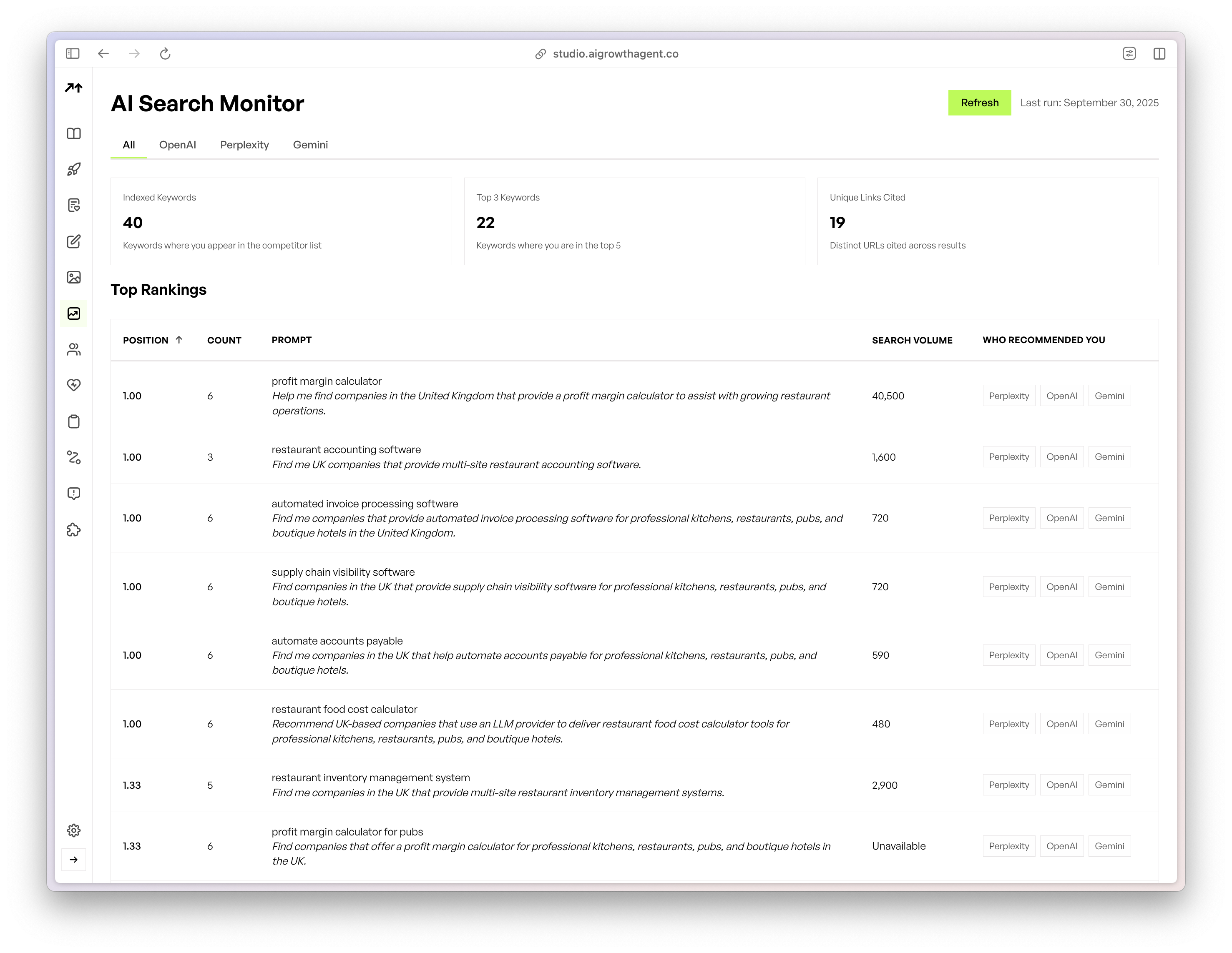
AI search now spans multiple environments. Google AI Overviews, ChatGPT, and Perplexity each show distinct citation patterns and formatting preferences. A modern SEO content generator must support a “search everywhere” strategy rather than focusing only on traditional SERPs.
Freshness now operates as a key ranking and citation factor in AI search, so brands benefit from consistently updated content and timely coverage of new topics. Real-time or near-real-time content programs help capture emerging demand while reinforcing recency signals.
Actionable takeaway: choose a platform that tracks citations across major AI engines and can quickly generate relevant, high-quality content around breaking topics or new queries.
AI Growth Agent provides Real-Time Programmatic SEO Content Injection. Teams can supply a link to a trending news item, and the agent produces an optimized article that reflects the brand’s point of view within minutes. The integrated AI Search Monitor tracks visibility and citations across ChatGPT, Gemini, and Perplexity.
4. Turn Proprietary Data Into Scalable Content Assets
Many organizations hold proprietary or “dark” data that never reaches search engines. A top content generator for SEO optimization should convert this structured or semi-structured information into useful public content at scale. This process creates pages that reflect unique datasets, benchmarks, or recommendations that competitors cannot easily imitate.
AI systems increasingly complete multi-step reasoning tasks and chain together multiple sources. Well-structured pages that expose proprietary data in a clear, machine-readable format have a higher chance of appearing in these reasoning chains.
Actionable takeaway: favor solutions that integrate with internal tools or databases and automatically generate SEO-optimized pages from those data sources.
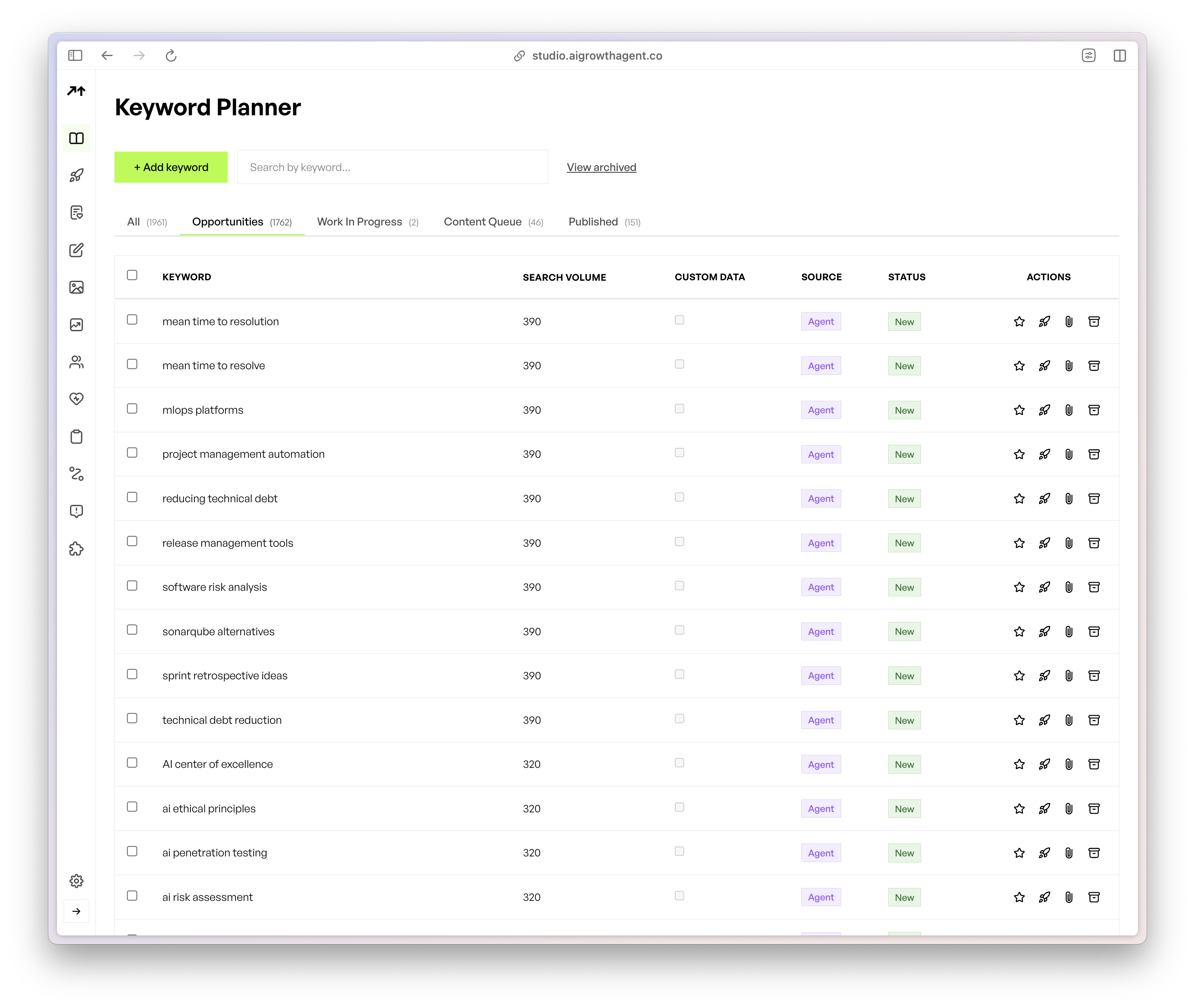
AI Growth Agent supports Database-to-Content Automation. Clients can export internal records, such as recommendations or catalog entries, and turn them into targeted, indexable articles. This process converts previously hidden data into ongoing programmatic SEO assets.
5. Scale Across Brands With Multi-Tenant Agents And Feedback Loops
Larger organizations often manage several brands, products, or portfolios. They need content systems that scale across many domains without losing strategic control. A strong content generator should support multi-tenant deployments, where separate programmatic SEO agents operate with distinct voices and strategies from a central interface.
Programmatic workflows now play a central role in keeping pace with expanding AI query space, so continuous feedback is important. Scalable, systemized processes for planning and updating content help maintain AI search performance over time.
Actionable takeaway: evaluate whether a platform can support multiple brands, track AI search performance by property, and adjust content plans automatically based on feedback from AI visibility data.
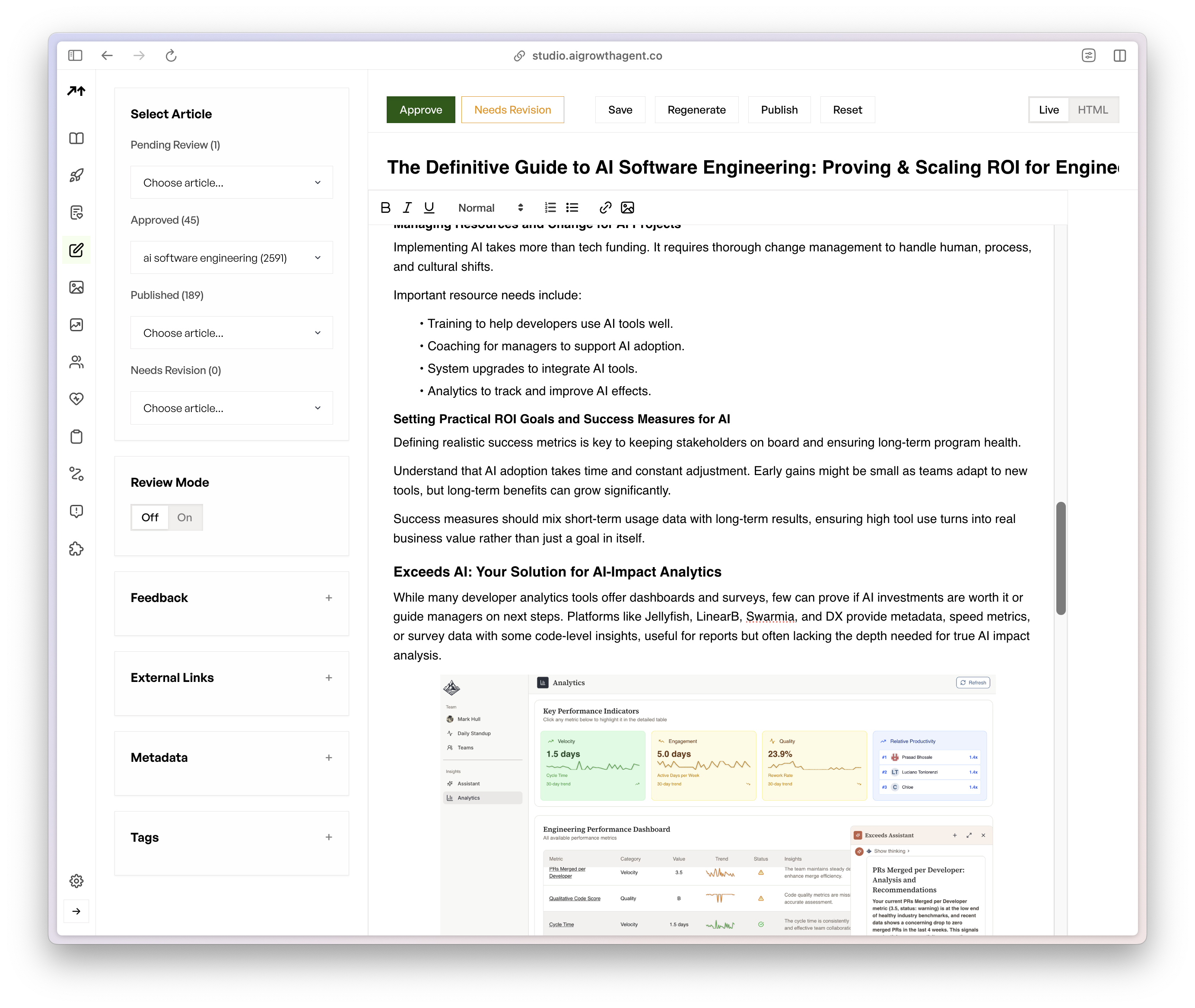
AI Growth Agent offers Multi-Tenant Programmatic Deployment, which allows multiple Programmatic SEO Content Agents to run in parallel. Each agent uses its own manifesto, keyword plan, and voice while publishing to separate domains or subdomains. The AI Search Monitor and feedback loop report on AI citations and indexing patterns, then inform ongoing optimization.
Schedule a demo with AI Growth Agent to see how multi-tenant agents can support several brands or markets from one control center.
Frequently Asked Questions (FAQ) about Top Content Generators for SEO Optimization
What is the difference between AI-driven content and programmatic content for SEO?
AI-driven content often describes one-off article creation with limited structure or technical optimization. Programmatic content for SEO describes a system that plans, generates, and optimizes large volumes of content with consistent schema, internal linking, and AI-facing protocols. AI Growth Agent follows this programmatic model, focusing on architecture and authority rather than isolated pieces.
How do AI search engines treat content freshness, and how can a top content generator help?
AI search engines give preference to recent and frequently updated content, especially for queries where information changes quickly. A top content generator supports automated workflows and rapid content updates, which helps brands maintain a steady cadence and stay visible in AI citations.
What role does an LLM.txt file play in AI search optimization?
An LLM.txt file provides instructions for Large Language Models about how to access and interpret site content. This file can highlight important sections, define preferred paths, and improve clarity for AI systems. Clear guidance improves the likelihood of accurate summaries and citations.
Can a programmatic SEO agent replace human SEO teams and writers?
A programmatic SEO agent can automate content engineering, drafting, and technical optimization at significant scale, which reduces the need for manual execution. Human teams still play a key role in setting strategy, defining positioning, approving guidelines, and interpreting performance data. AI Growth Agent is designed to augment marketing leaders by handling the repeatable work while they focus on direction and oversight.
How quickly can companies see results with a top content generator for SEO optimization?
Timelines vary by market, domain history, and competition. Some AI Growth Agent clients have seen meaningful visibility shifts within weeks, such as appearance in Perplexity recommendation lists, Google AI Overview snapshots, or ChatGPT citations for high-intent queries. Faster progress often correlates with consistent publishing volume and strong technical foundations.
Conclusion: Build Sustainable Authority In The AI Search Era
Marketing teams that rely only on traditional SEO tactics risk losing visibility as AI-driven search evolves. Programmatic content generation, combined with solid technical foundations and ongoing feedback from AI platforms, offers a practical path to durable authority.
AI Growth Agent provides tools for programmatic depth, AI-focused technical engineering, multi-platform monitoring, data-to-content automation, and multi-tenant deployment. These capabilities help organizations publish content that AI systems can understand, trust, and cite.
Schedule a demo with AI Growth Agent to evaluate whether this approach fits your goals for AI search visibility in 2026.