Written by: Mariana Fonseca, Editorial Team, AI Growth Agent | Last updated: January 10, 2026
Key Takeaways
- AI-driven search in 2026 favors content that is structured so ChatGPT, Google AI Overviews, and Perplexity can parse, rank, and cite it reliably.
- The most effective AI blog content creators act as autonomous SEO systems that manage research, architecture, optimization, and publishing, not just writing.
- Programmatic keyword clustering, multi-tenant deployment, and data-to-content automation let lean teams cover large topic areas while maintaining brand control.
- Continuous monitoring of AI search results and feedback loops enable content strategies that improve based on real citation and visibility data.
- Teams that want these capabilities in a single platform can work with AI Growth Agent and schedule a demo to see it in action.
1. Build Autonomous Content Architectures for AI Citation
Enterprise content operations now rely heavily on generative models, with more than 80% of enterprises integrating generative AI into production. At the same time, the global AI market passed $184 billion in 2024, and AI assistants have become primary discovery interfaces.
Modern AI blog content creators need to engineer complete content architectures tailored to AI retrieval, not only draft articles. Effective systems structure posts with advanced schema markup, LLM.txt files, and Model Context Protocol integration so AI crawlers can interface directly with content repositories. The shift toward more autonomous intelligence makes this structured interface crucial for citation and ranking.
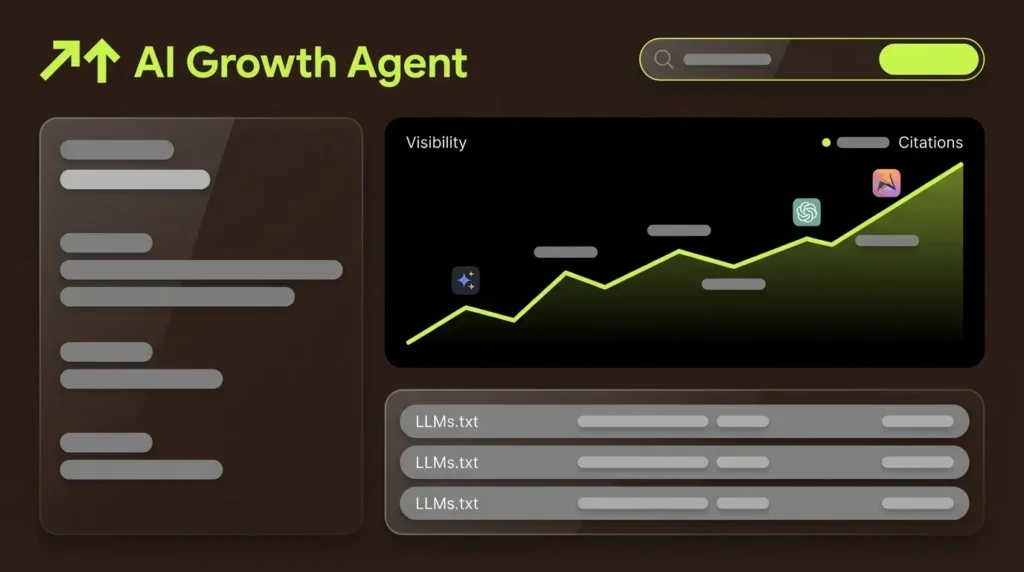
AI Growth Agent focuses on this layer by implementing detailed LLM.txt instructions and a blog-oriented Model Context Protocol, which give AI systems clear guidance on how to interpret and cite specific URLs. The result is content that is easier for AI search engines to parse, index, and reuse in generated answers.
2. Use Programmatic Research and Strategic Keyword Clustering
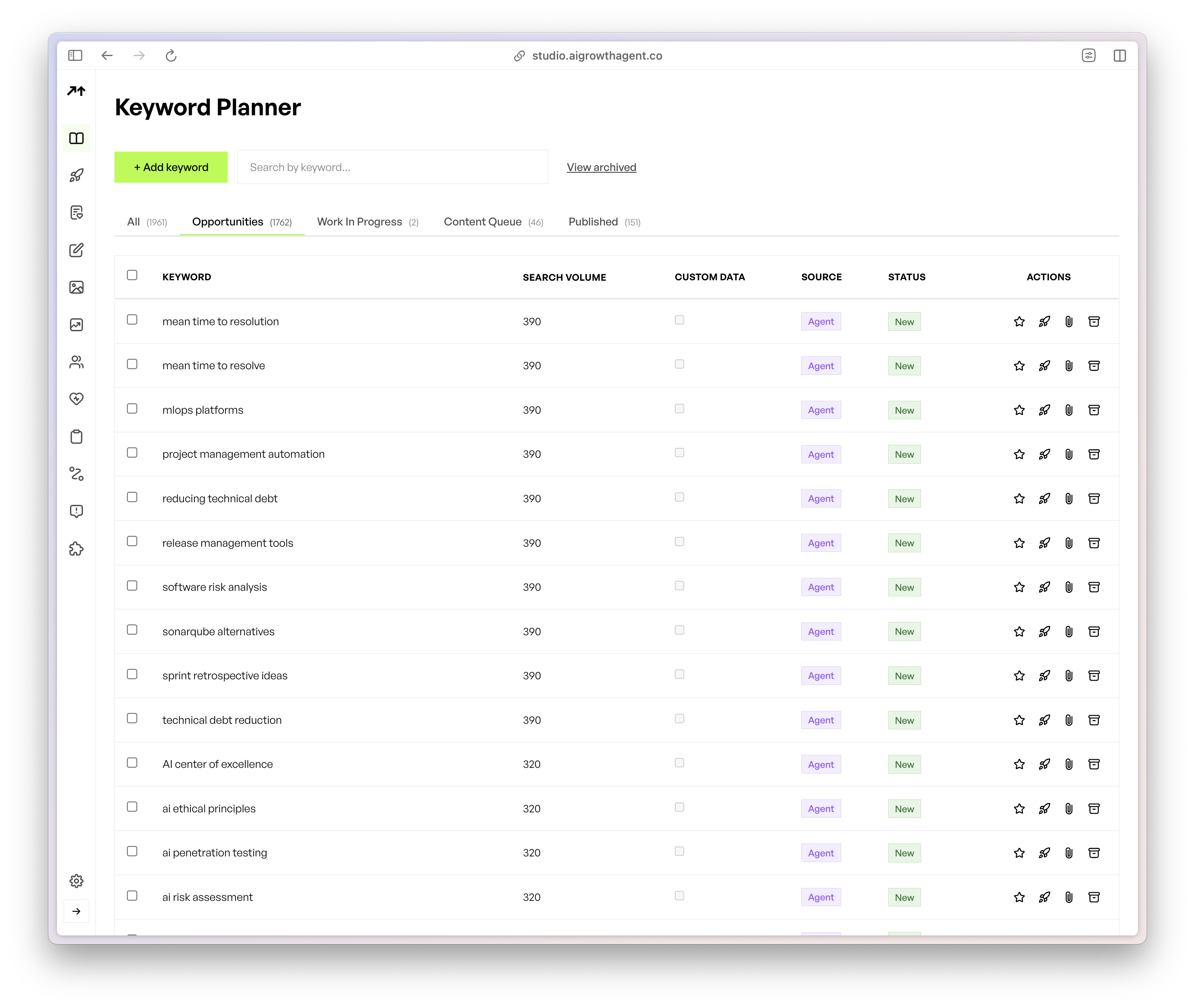
Effective AI blog platforms in 2026 need to operate as large-scale research engines. They evaluate thousands of queries, group them into intent-based clusters, and map those clusters to a coherent content architecture.
Keyword-based search volume is declining as semantic and conversational search grows, so systems must optimize for intent and topic coverage rather than isolated phrases. Strong platforms maintain context across campaigns, ensuring that every new article strengthens broader topical authority.
AI Growth Agent applies programmatic research immediately after onboarding. It ingests company context, processes large datasets of relevant searches, and delivers pillar-and-cluster strategies that align with AI and traditional search. Each post then has a clear role in supporting domain authority and AI citation potential.
3. Automate End-to-End Technical SEO, Not Just Writing
Text generation alone does not meet 2026 search standards. AI blog content creators need to manage the entire technical SEO lifecycle, from planning and drafting to optimization and publishing. AI agents and automation have become central to digital operations, so content tools must behave like autonomous agents, not static editors.
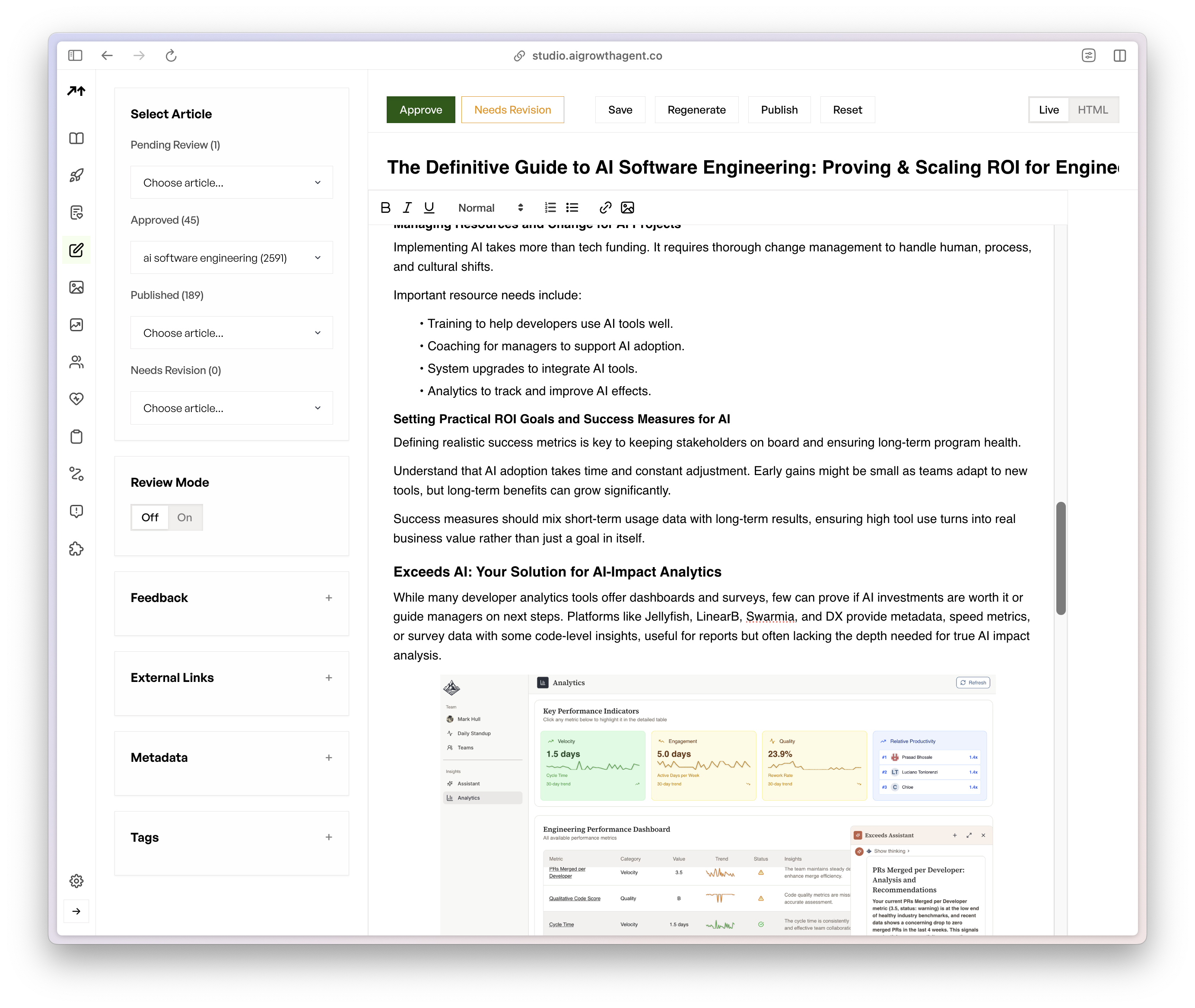
Robust systems handle schema markup, metadata, URL structures, internal links, and image SEO without requiring manual rework. They integrate with CMS platforms, enforce brand and design rules, and reduce the need for engineering support.
AI Growth Agent decorates each post with rich schema, optimized titles and descriptions, internal links, and structured asset placement. This is important as routine marketing and entry-level technical tasks continue to shift toward automation, and teams look for platforms that replicate consistent execution at scale.
Marketing teams that want this type of automation can schedule a consultation to review AI Growth Agent’s technical SEO workflows and see how they match existing processes.
4. Manage Multi-Tenant Deployment and Real-Time Adaptability
Many organizations now operate multiple brands, products, or regions that each need distinct content strategies. The best AI blog content creators support multi-tenant setups where separate agents maintain their own brand guidelines, keyword strategies, and publishing rules from one central interface.
Private equity firms, portfolio platforms, and multi-brand enterprises gain particular value from this structure. A small central team can coordinate content for multiple sites, while each agent preserves tone, terminology, and positioning for its brand.
Real-time adaptability is equally important. Content velocity has become a key factor in staying visible in AI-driven search, and systems need to generate timely, on-topic articles from breaking news or emerging trends.
AI Growth Agent supports multi-tenant orchestration and rapid content injection. Teams can provide a news link or prompt, then generate and publish aligned, optimized posts in minutes across several brands or domains.
5. Turn Proprietary Data Into Content and Place Assets Intelligently
Organizations hold large volumes of underused data in apps, internal tools, and databases. Leading AI blog content creators convert this structured data into indexable, search-optimized content that builds authority and captures long-tail demand.
This capability extends to images and other media. Systems should choose relevant visuals, product screenshots, and diagrams, then apply alt text and metadata that reinforce the target topic. AI now underpins many digital touchpoints, so the same assets often support on-site content, AI assistant responses, and other channels.
AI Growth Agent has used this approach to turn proprietary datasets, such as food recommendation libraries, into SEO articles for each recommendation list. The platform selects or generates visuals, places them where they add clarity, and aligns all metadata with the surrounding topic and brand standards.
6. Use Autonomous Learning and AI Search Monitoring Feedback Loops
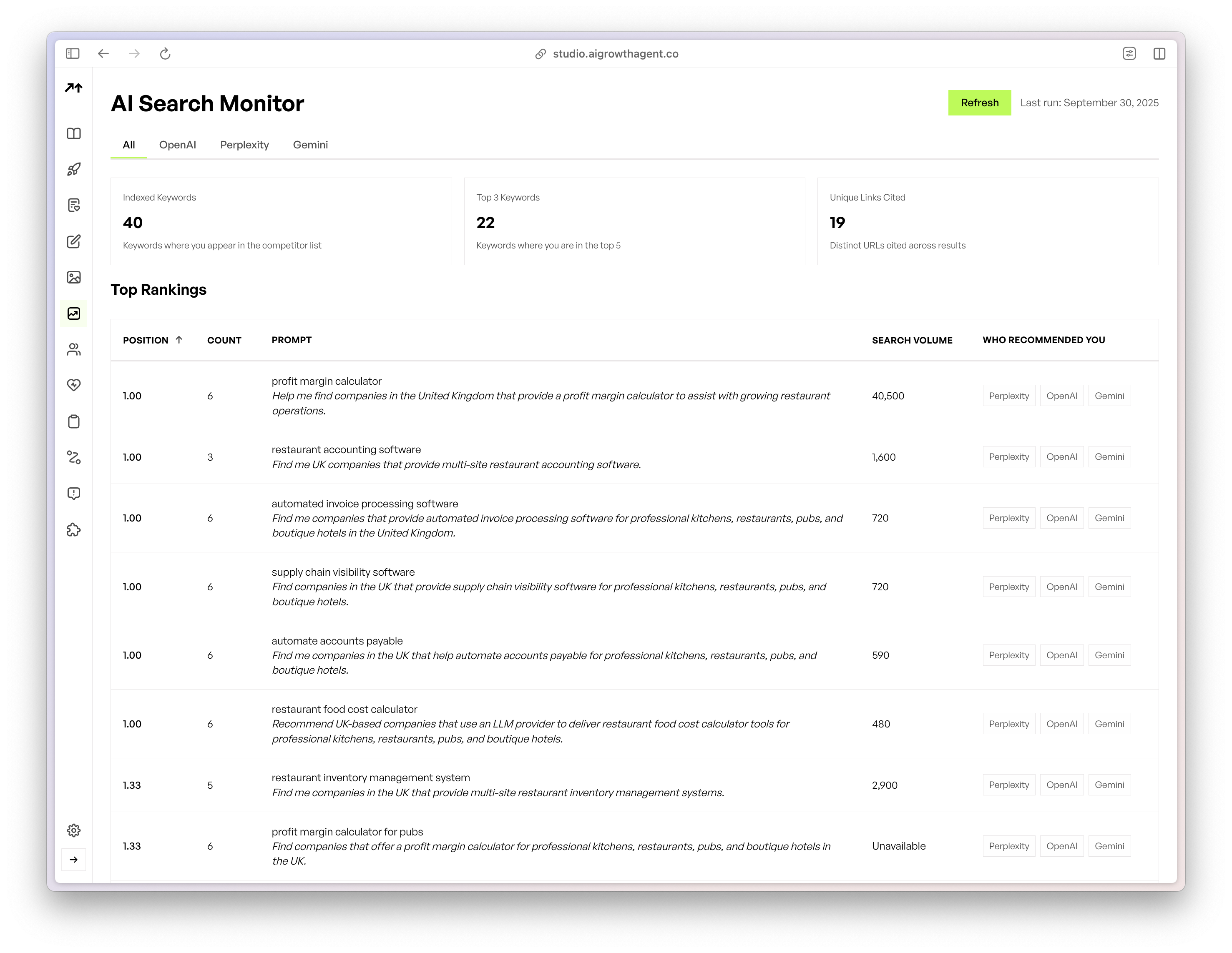
AI blog content creators in 2026 need feedback loops that learn from real AI search behavior. They should track how often specific URLs are cited, which pages appear in AI overviews, and where gaps exist across topics or formats.
Systems that preserve user preferences and context across sessions support more reliable improvement over time. Platforms can use this context plus AI search analytics to refine future outlines, adjust content structures, and prioritize updates to underperforming pages.
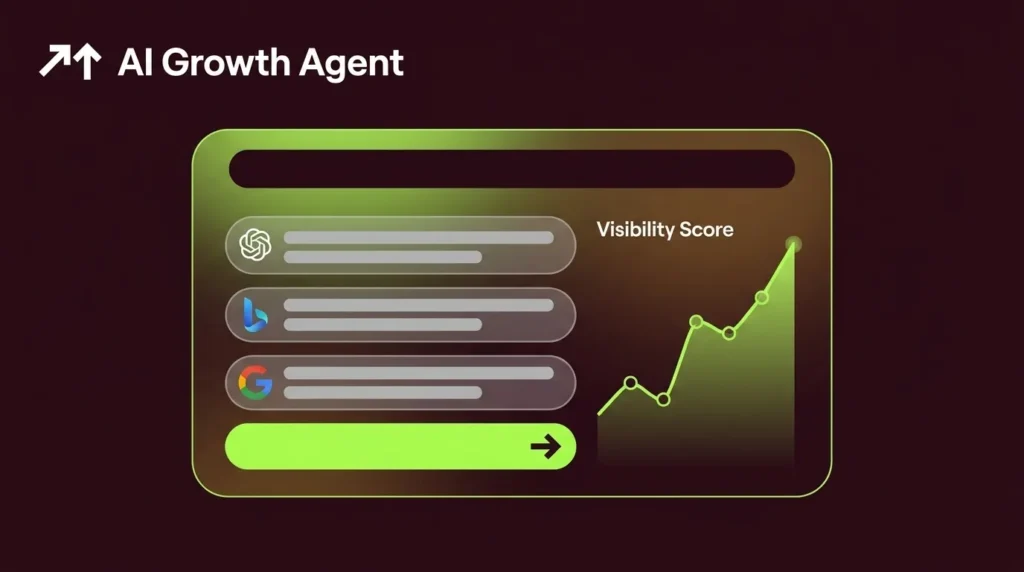
AI Growth Agent includes AI search visibility monitoring that covers platforms such as ChatGPT, Google AI Overviews, and Perplexity. It tracks citations, keyword coverage, and crawl patterns, then feeds those insights back into content planning so strategies evolve alongside search behavior. Evaluation metrics for AI systems increasingly emphasize autonomy and adaptability, and this feedback loop supports both.
Teams that want a content system that improves itself over time can schedule a demo of AI Growth Agent’s AI search monitoring and optimization loop.
Frequently Asked Questions
What makes an AI blog content creator the best in 2026?
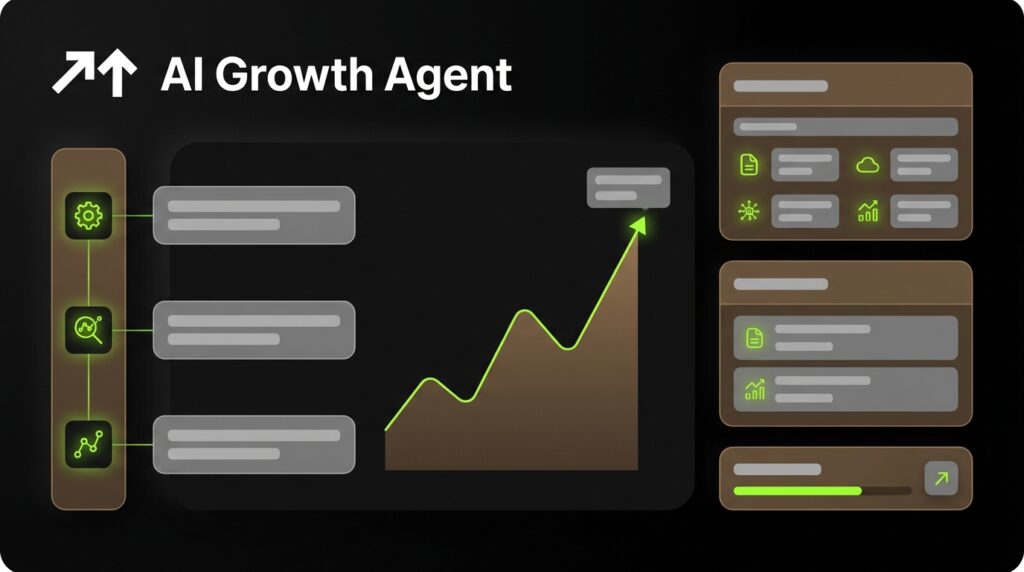
The strongest platforms combine several capabilities: autonomous content architecture, programmatic research and clustering, full technical SEO automation, multi-tenant deployment, data-to-content workflows, and learning based on AI search performance. They function as programmatic SEO engines that produce content designed for AI citation, not only for human readers.
How do AI blog content creators differ from traditional SEO agencies or content teams?
Traditional teams rely on manual research, writing, and optimization, which limits volume and speed. AI blog content creators use automation to scale core tasks such as topic discovery, outlining, drafting, and technical setup. Platforms like AI Growth Agent reduce dependence on large writer and developer teams while preserving brand control and technical quality.
Can AI blog content creators maintain brand voice and quality at scale?
Yes. Modern systems use brand guidelines, tone settings, and content examples to calibrate output. They learn from edits and feedback, then update future content to reflect those preferences. Multi-tenant platforms can also maintain different styles for each brand, region, or product line in a portfolio.
How do these platforms help content get cited by AI search engines?
They structure content so AI systems can parse and reuse it reliably. This includes schema markup, LLM.txt guidance, Model Context Protocol integration, clear headings, and consistent terminology. Ongoing monitoring of citations and AI overviews then guides iterative improvements to article structures and site architecture.
What ROI can businesses expect from implementing AI blog content creators?
Organizations typically see more indexed pages, broader topic coverage, and higher visibility in both traditional and AI-driven search. Programmatic systems can publish far more frequently than manual teams, which compounds results over time. Clear technical optimization and AI-focused structures also increase the likelihood that content appears as a cited source in AI-generated answers.
Conclusion: Build AI Search Authority With the Right 2026 Content System
The six capabilities outlined here define what it now takes to compete for AI search visibility. Autonomous content architectures, programmatic research, technical SEO automation, multi-tenant orchestration, data-driven publishing, and continuous learning work together to create content ecosystems that AI systems can trust and cite.
AI Growth Agent provides these functions in one programmatic SEO platform that supports research, drafting, optimization, and publishing with minimal manual effort. Marketing leaders who want to establish durable authority in AI and traditional search can schedule a consultation with AI Growth Agent and evaluate how an autonomous content agent fits into their 2026 growth strategy.