


Key Takeaways
- AI search engines evaluate technical performance by how clearly they can extract, interpret, and cite your content, not only by traditional page-level SEO metrics.
- Brands that lack structured, fresh, and entity-consistent content risk a shrinking digital footprint as AI systems favor competitors with richer data signals.
- Programmatic SEO creates the scale, structure, and speed that AI search requires, turning keyword research, content creation, and schema into repeatable systems.
- Success in the AI search era depends on new KPIs, including AI citations, coverage across platforms, and response visibility in tools like ChatGPT, Gemini, and Perplexity.
- AI Growth Agent provides a dedicated Programmatic SEO Agent that automates technical SEO, content architecture, and AI search monitoring at scale; schedule a demo to see it in action.
Why Traditional Metrics Miss AI Search Opportunities
AI search engines now focus on content that can power confident answers inside Large Language Models. They look for depth, structure, and clear entities that can be cited reliably, not just pages that match individual keywords.
Classic KPIs such as manual keyword rankings, isolated backlinks, and a handful of high-performing pages no longer capture performance in this environment. AI systems favor brands that publish consistent, structured, and comprehensive coverage of a topic. Companies that lack enough high-quality data points become harder for AI systems to reference, which creates a shrinking digital footprint over time.
See how your technical strategy can align with AI search so your brand remains visible as user behavior shifts toward AI assistants.
Technical Priorities That Help AI Search Engines Trust Your Site
Semantic Completeness and Clear Entities for LLMs
AI systems perform best when your pages describe topics, entities, and relationships in a consistent, structured way. Clean HTML, logical heading hierarchies, and strong internal linking help LLMs understand how concepts connect across your site.
Structured data and schema give AI models explicit context about people, products, locations, and organizations. This reduces ambiguity and increases the likelihood that your content appears as a cited source in AI-generated answers.
Authority, Reputation, and Trust Signals
Technical performance now extends beyond your own domain. AI search engines evaluate whether your brand appears consistently across trusted sources, with aligned names, descriptions, and claims.
Consistent entity profiles, corroborated information, and references on authoritative sites all contribute to higher confidence scores. This improves how often AI systems surface and cite your content.
Speed, Freshness, and Multimodal Content
Fast-loading pages signal reliability and create better user experiences, which remain core ranking inputs for AI-infused search systems. Modern crawlers and AI models also check how frequently your content updates and how recently key pages changed.
High-quality images, charts, and other media, paired with descriptive alt text and schema, help AI understand visual information and support richer, multimodal responses.
Infrastructure Quality for AI Overviews and Summaries
Google AI Overviews and similar features rely on content that is both technically sound and contextually complete. Clear URL structures, correct canonical tags, and well-implemented schema help your pages qualify for these experiences.
Sites that maintain strong Core Web Vitals, logical information architecture, and predictable content templates make it easier for AI systems to extract accurate information at scale.
How Programmatic SEO Builds Authority At AI Scale
Manual, article-by-article SEO cannot keep pace with the volume and structure that AI search now rewards. AI assistants draw from wide coverage across many queries, variations, and entities, which requires a programmatic approach.
Programmatic SEO turns keyword research, content creation, internal linking, and schema into repeatable systems. This makes it possible to publish hundreds or thousands of technically consistent pages that work together to build topic authority.
Programmatic Keyword and Content Research
Cluster-based research groups related queries, intents, and entities into coherent topic maps. Each cluster becomes a structured content set that covers a theme in depth, rather than chasing individual keywords.
This method mirrors how AI systems assemble multi-part answers. It helps ensure your brand appears across more of the questions users ask in tools like ChatGPT, Gemini, and Perplexity.
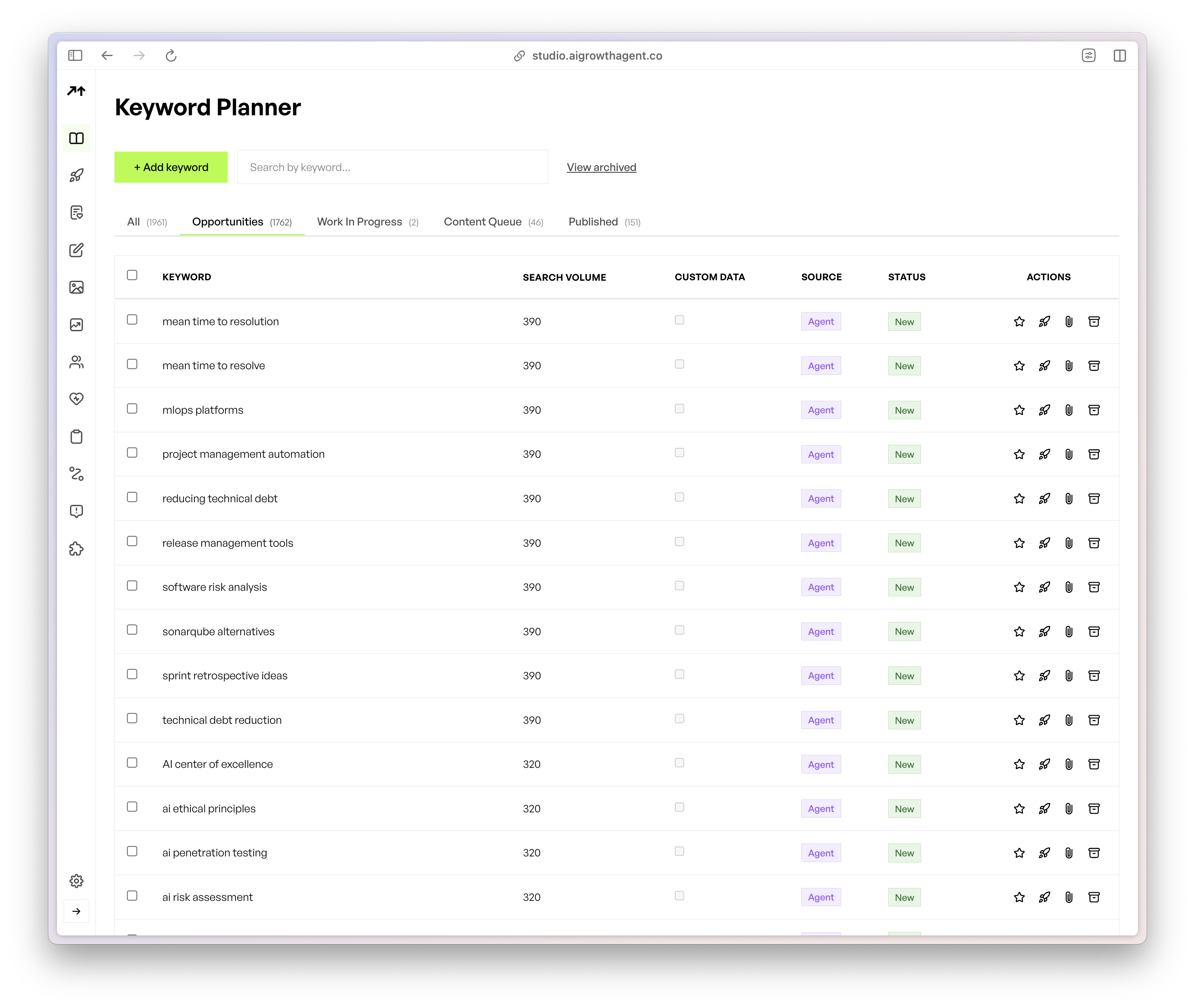
Autonomous Technical Infrastructure and Schema Precision
Programmatic systems create consistent templates that apply metadata, structured data, internal links, and image optimization automatically. This reduces human error and keeps every page aligned with technical best practices.
Centralized rules for titles, descriptions, schema types, and URL patterns give AI search engines a predictable structure to interpret, which increases citation potential.
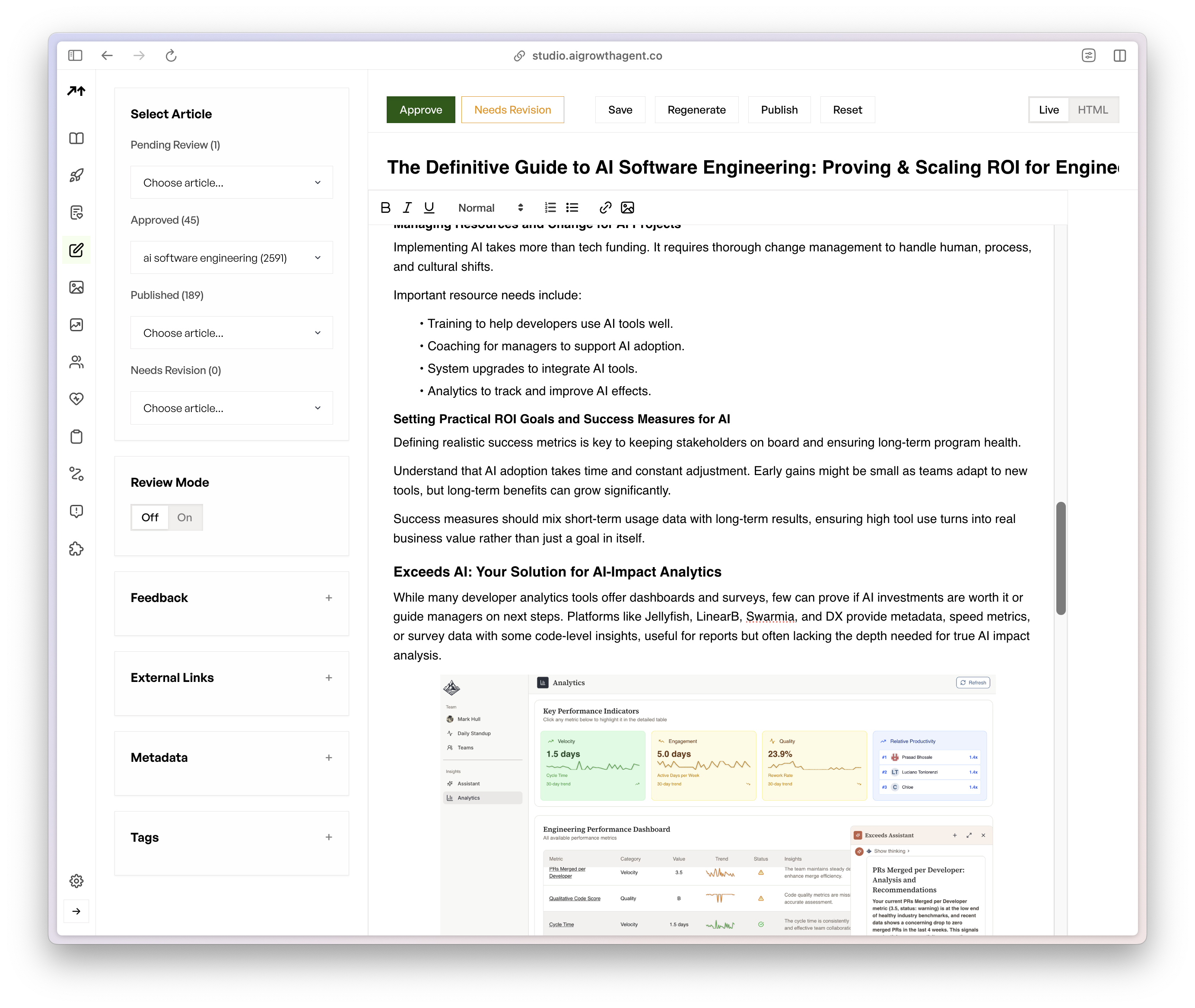
Real-Time Content for Emerging Topics
New questions appear quickly as markets shift, and AI systems rapidly incorporate fresh information. A programmatic framework that supports fast content generation for emerging queries helps your brand capture this demand.
Consistent updates and new pages send strong freshness signals, which improves your chances of inclusion in AI-generated summaries and overviews.
How AI Growth Agent Supports Technical Performance At Scale
AI Growth Agent focuses on the engineering side of Programmatic SEO. The platform automates keyword clustering, content creation, schema, and publishing so your team can scale AI-ready content without adding manual overhead.
Autonomous Content Architectures
AI Growth Agent designs and maintains content architectures that align with your brand, product lines, and target audiences. The agent handles keyword strategy, outlines, drafting, internal linking, and technical optimization in a unified workflow.
This creates consistent, AI-readable content structures while freeing human teams to focus on strategy, compliance, and subject-matter review.
Key Capabilities for AI Search Optimization
- Multi-tenant programmatic deployment that supports portfolios of brands or product lines from a single interface, while preserving distinct strategies, voices, and publishing destinations.
- Database-to-content automation that turns structured data into individual, search-optimized pages to deepen topical coverage and demonstrate expertise.
- Advanced technical engineering, including support for LLM.txt files and a blog Model Context Protocol that makes it easier for AI tools to understand and query your content.
Schedule a Programmatic SEO demo to see how AI Growth Agent automates technical optimization across large content portfolios.
How To Measure Technical Success in the AI Search Era
Measurement in the AI era should reflect how often and how effectively AI systems rely on your content, not only how individual pages rank in classic search results.
Useful KPIs include:
- AI citations and mention frequency across ChatGPT, Gemini, Perplexity, and similar assistants.
- Share of voice across AI-generated answer sets for priority topics and entities.
- Organic traffic and engagement tied to programmatic content clusters.
- Technical health indicators such as schema coverage, crawl efficiency, and site speed.
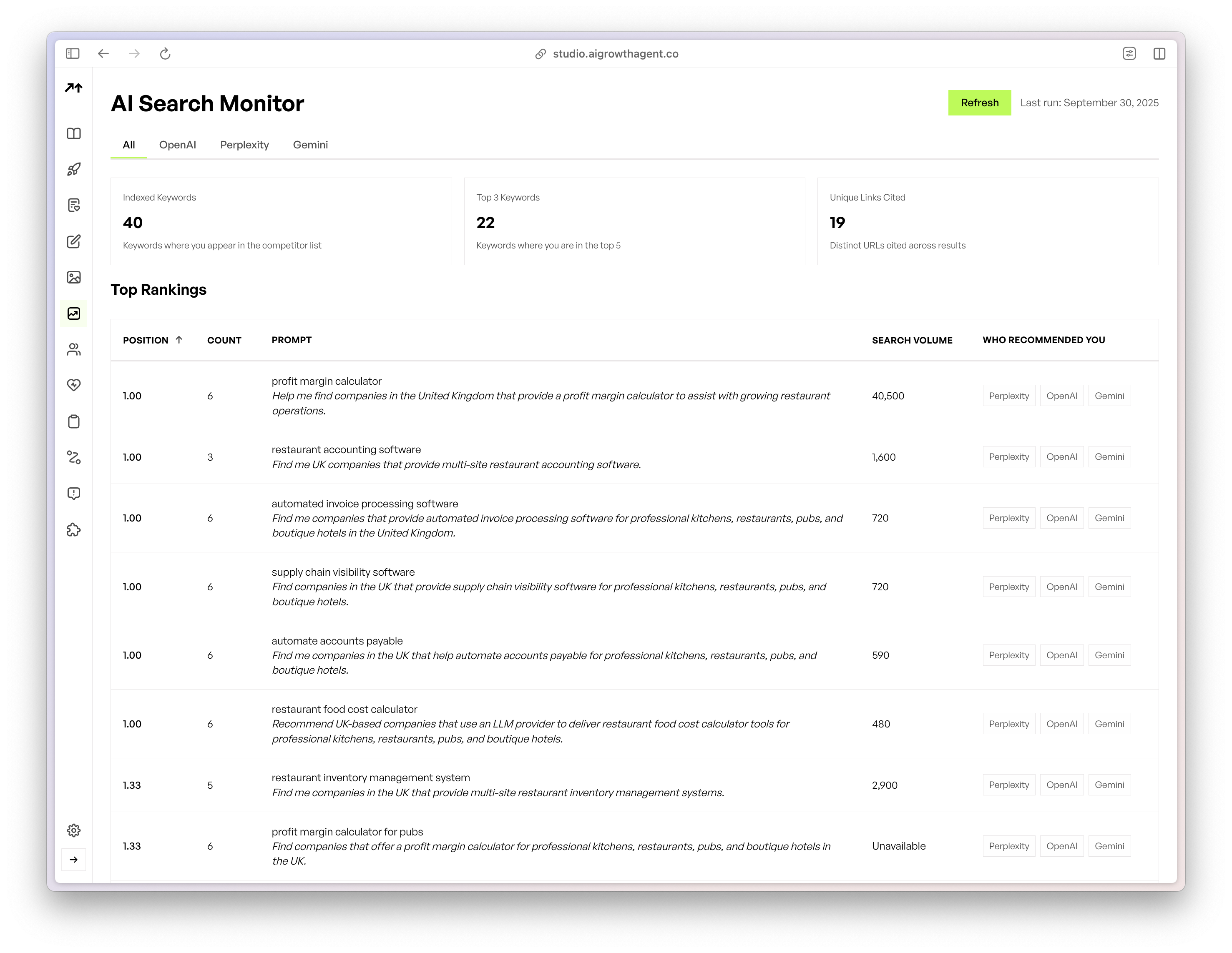
AI Growth Agent includes monitoring tools that track visibility and performance across AI search environments, which supports continuous improvement of both content and technical infrastructure.
Common Technical Mistakes That Limit AI Search Visibility
Dependence on Manual-Only SEO Agencies
Teams that rely solely on manual SEO workflows struggle to match the scale and consistency AI search now expects. Limited monthly output leaves gaps in topical coverage and structured data.
Generic AI Writing Tools Without Engineering
Basic text-generation tools produce copy but not fully engineered pages. Without templates, schema, and metadata, this content often remains invisible or underutilized by AI systems.
Weak Entity Consistency and Corroboration
Inconsistent naming, descriptions, and claims across your site and external profiles make it harder for AI models to trust your brand as a single, reliable entity.
Irregular Content Updates
Publishing in bursts and then pausing for long periods reduces freshness signals. Even high-quality content can lose prominence when it does not receive periodic updates.
Lack of Dedicated AI-Ready Infrastructure
Sites that ignore advanced technical requirements, such as structured data coverage and clear content models, create friction for AI crawlers and summarization systems.
Frequently Asked Questions: Technical Website Performance and AI Search
How do AI search engines differ from traditional search engines in evaluating websites?
AI search engines evaluate how well your content can answer multi-step questions and support citations inside LLMs. They emphasize structured context, entity clarity, and topical depth, not just keyword matching or raw backlink counts.
What role does schema markup play in AI search visibility?
Schema markup acts as a structured map of your content. Clear schema helps AI systems understand what each page covers, which entities it mentions, and how topics relate. This improves extraction accuracy and increases citation potential.
Can traditional SEO agencies optimize effectively for AI search performance?
Some agencies provide valuable strategic support, but manual delivery models rarely scale to the volume and structure that AI search favors. Effective AI-era optimization usually requires programmatic systems, automation, and engineering capabilities.
What are the most important technical factors for Google AI Overviews?
Google AI Overviews favor sites with strong overall quality, clear structured data, and accurate, up-to-date information. Pages that load quickly, use schema correctly, and align with core ranking systems are more likely to be included.
How does content freshness affect AI search rankings?
AI systems give extra weight to recent and regularly updated content, especially in fast-moving topics. Brands that maintain predictable update cycles and refresh older pages signal ongoing relevance and reliability.
Which KPIs best reflect success in AI search optimization?
Meaningful KPIs include AI citation volume, presence in AI-generated answers for key topics, organic traffic growth from programmatic content, and improvements in technical health scores such as schema coverage and page speed.
Next Steps To Secure Authority in the AI Search Landscape
Technical website performance now includes how clearly AI systems can interpret, trust, and reuse your content. Brands that align architecture, schema, and content velocity with AI search behavior will maintain and grow their visibility.
Programmatic SEO offers a practical way to meet these requirements, combining structured content design with automation so large sites stay consistent and current.
AI Growth Agent provides an AI-native approach to technical performance and content scale, helping marketing leaders build durable authority in the 2026 AI search era. Book a consultation to see how programmatic optimization can turn your site into a preferred source for AI search engines.
