


Executive summary
- AI search engines such as ChatGPT, Google AI Overview via Gemini, and Perplexity now shape how users discover products, services, and expertise.
- Content that repeats existing information without original insight or depth loses visibility as AI systems favor authoritative, citation-worthy sources.
- Originality comes from proprietary data, distinct perspectives, and clear frameworks that add knowledge to the public domain.
- Depth comes from comprehensive topical coverage, strong internal linking, and technical structure that helps AI systems reuse your content.
- AI Growth Agent uses programmatic SEO, technical optimization, and monitoring to help brands scale original, deep content that AI search engines can cite.
The AI search shift: why generic content no longer ranks
AI search engines have changed how people discover and evaluate information. Traditional search relied on keyword matching and link signals. AI-powered platforms now synthesize information from many sources to provide direct, consolidated answers. This change favors content with clear originality and depth that can be cited and reused.
Content saturation and the volume versus value problem
AI-generated content has increased online volume at an unprecedented rate. Every day, millions of new articles, blog posts, and pages compete for attention, and many of them repeat existing information instead of adding new insight. In this environment, AI search engines assess content based on accessibility, indexability, and reusability by both traditional crawlers and AI-specific agents, and they prioritize sources that provide distinct value over repackaged material.
This saturation raises the bar for meaningful visibility. Brands that rely on generic, templated content see their digital footprint shrink as AI systems favor sources that demonstrate expertise and original thinking. The focus has shifted from publishing frequency to depth of insight, and content that cannot stand out on quality and usefulness struggles to earn exposure.
AI citation as a new visibility channel
AI search engines do more than rank pages. They cite specific sources inside answers. When ChatGPT recommends a tool, when Google AI Overview highlights a study, or when Perplexity references an expert, those citations influence how users perceive authority. AI search platforms organize sources into authority tiers and prefer high-authority, industry-specific resources for citation.
This citation-based model reshapes competition. Brands that earn consistent AI citations gain exposure and can become the reference voice in their category. AI Growth Agent focuses on building content architectures that support AI citation by using structured, programmatic SEO strategies.
How originality and depth drive AI-focused domain authority
In AI search, originality and depth operate as technical requirements for content that aims to be cited and recommended. Marketing leaders that understand these concepts as concrete, operational standards are better positioned to build durable advantages.
Content originality: adding new knowledge and perspective
Originality in the AI era depends on adding something new to the information landscape. That can include proprietary research, unique data analysis, distinct industry perspectives, or frameworks that help people understand a topic in a new way. Pages offering proprietary research, labeled original findings, and data-backed claims are 30–40% more likely to be cited by LLMs.
AI Growth Agent’s Programmatic Content Agent uses your Company Manifesto and credible web sources to develop content that reflects your specific expertise. The system identifies gaps in existing coverage and recommends topics where your brand can add unique analysis or data, increasing the likelihood that AI engines will reference your pages in their responses.
Originality also extends to methodology and frameworks. Brands that publish clear models, repeatable processes, or new categorizations contribute reference material that AI systems can use as stable anchors when answering related queries.
Content depth: covering topics comprehensively
Depth in AI search comes from comprehensive topical treatment. Effective content addresses core user intent, explores related entities and subtopics, and connects the topic to adjacent questions users are likely to ask next. Semantic variation and coverage of related entities and subtopics increase topical authority and depth, which improves citation rates in AI search.
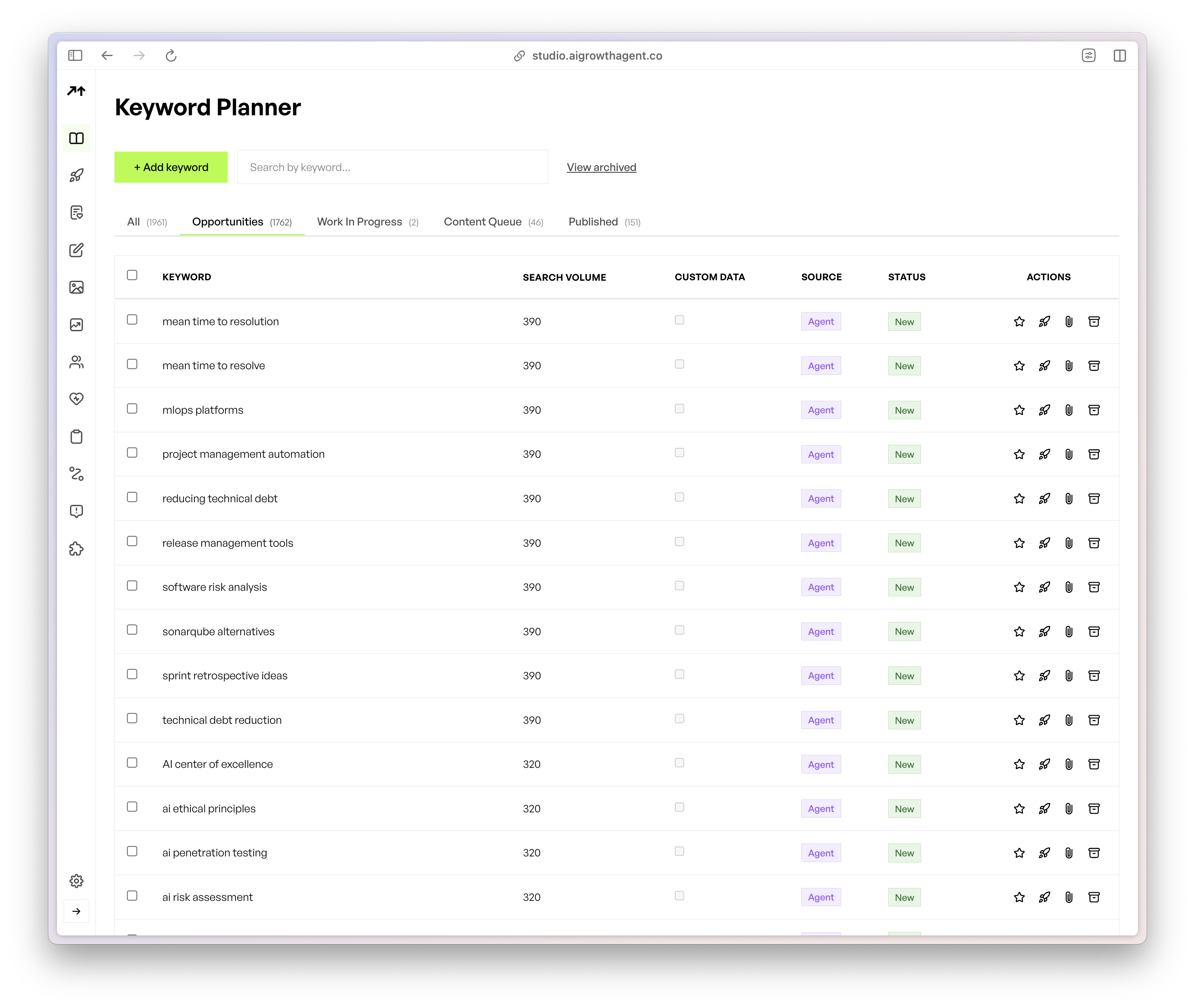
AI Growth Agent supports this approach through programmatic keyword and content research. The platform evaluates thousands of search queries and related topics in your domain to identify clusters you can cover as integrated resources. That structure helps AI systems treat your site as a comprehensive source rather than a collection of isolated posts.
Teams can also use the AI Growth Agent Keyword Planner to organize keywords, entities, and questions into topic clusters that map directly to content briefs and publishing schedules.
Elevating E-E-A-T for stronger AI citation signals
The E-E-A-T framework (Experience, Expertise, Authoritativeness, Trustworthiness) now plays a central role in AI citation decisions. AI search engines weigh E-E-A-T signals when ranking content for citation, so brands seeking consistent AI recommendation need a deliberate plan for reinforcing these elements.
Experience signals come from real-world application of knowledge and practical insights. Expertise appears in precise, accurate explanations and domain-specific knowledge. Authoritativeness grows from consistent acknowledgment within a field. Trustworthiness depends on factual accuracy, transparent sources, and clear ownership. AI Growth Agent supports E-E-A-T by enforcing fact-checking, integrating subject-matter expertise from your Company Manifesto, and structuring content so that authorship and sourcing are easy to understand.
Moving beyond traditional keyword SEO toward topic authority
AI search evaluates sites based on topical authority rather than isolated keywords. Systems assess whether your brand acts as a reliable source on related subjects across many queries and contexts. This shift favors content ecosystems that map entire topic areas, not just target phrases.
AI Growth Agent helps teams build those ecosystems. Programmatic strategies group content into clusters, connect related assets, and align on-page elements with the underlying topic model that AI systems use to interpret relevance and authority.
Architecting for authority: best practices for original, AI-optimized content
Content that earns AI citations usually follows a structured, repeatable process. The practices below describe how to design content so that both humans and AI systems can understand, reuse, and trust it.
Structuring content for AI recognition and reuse
AI systems interpret web pages more reliably when content follows a clear structure. Content structure matters: logical headings, FAQs, direct answers, and proper schema markup improve AI recognition. Clean structure helps AI models identify definitions, lists, comparisons, and step-by-step processes.
Effective structure often includes descriptive headings, FAQ-style sections, bullet points, and concise summaries that help both users and AI agents extract key information. AI Growth Agent embeds these structural patterns into each content asset so technical optimization supports clarity rather than replacing it.
Technical SEO for AI indexing and reusability
Technical foundations determine whether AI systems can access, interpret, and safely reuse your content. Citation-worthiness depends on content that is accurate, updated, well-structured, and authoritative, with verifiable claims, author credentials, and citations. Schema, metadata, and machine-readable signals make that evaluation easier.
AI Growth Agent implements advanced technical SEO, including rich schema markup, optimized metadata, and a blog Model Context Protocol (MCP) that lets AI search engines interface directly with your blog database for clearer understanding of your content.
Additional technical elements include optimized image metadata, structured data for key entities, and crawl optimization for AI-oriented bots. AI Growth Agent automates much of this work so marketing teams can focus on strategy and subject-matter quality.
Using internal linking and content clustering to signal authority
Strategic internal linking and content clustering signal strong topical presence and both breadth and depth to AI algorithms. Clear pathways help users and AI systems move from high-level overviews to detailed explainers, tools, and case studies.
AI Growth Agent applies a programmatic approach to internal linking and clustering. Each new piece connects to related assets, which gradually builds a network that reflects your expertise across a topic, not just a single page.
Maintaining freshness with ongoing content audits
Systematic content audits and updates help maintain freshness and visibility in AI-driven environments. AI systems favor current, accurate information, so stale pages can lose ground even if they were previously strong performers.
AI Growth Agent monitors content performance and AI visibility, then highlights pages that need updates, consolidation, or re-optimization. This continuous process improves the chances that AI systems will continue to cite your content as conditions and user behavior change.
Overcoming the scale challenge for originality and depth
Marketing leaders often understand the need for original, deep content but struggle to deliver it at the volume required for AI search visibility. Traditional workflows break down under this pressure and create tradeoffs between scale, quality, and technical rigor.
The limits of fully manual content models
Many SEO agencies and internal teams rely on manual processes that do not fit AI search demands. Agencies may deliver a small number of articles each month, which limits topic coverage and slows feedback cycles. Internal teams frequently lack dedicated engineering support for elements such as schema, MCP integrations, or LLM-specific files, which can lead to under-optimized content even when the writing is strong.
AI Growth Agent addresses these limits by combining automation, programmatic research, and structured review, so teams can increase throughput without sacrificing depth or technical quality.
Avoiding the unstructured text output of basic AI tools
Many general-purpose AI writing tools produce unstructured text that lacks strategy, topic modeling, and technical implementation. Marketing teams then need to add structure, links, fact-checking, and metadata manually, which often results in high volume but low authority.
AI Growth Agent operates as an end-to-end content system. It plans topics, enforces structure, supports fact-checking, and incorporates the technical specifications that improve AI recognition and reuse.
Programmatic SEO with AI Growth Agent
AI Growth Agent resolves the scale versus quality tradeoff with programmatic SEO automation. The Programmatic SEO Content Agent manages the content lifecycle from strategy and research through drafting, revision, and technical implementation, following rules defined in your Company Manifesto.
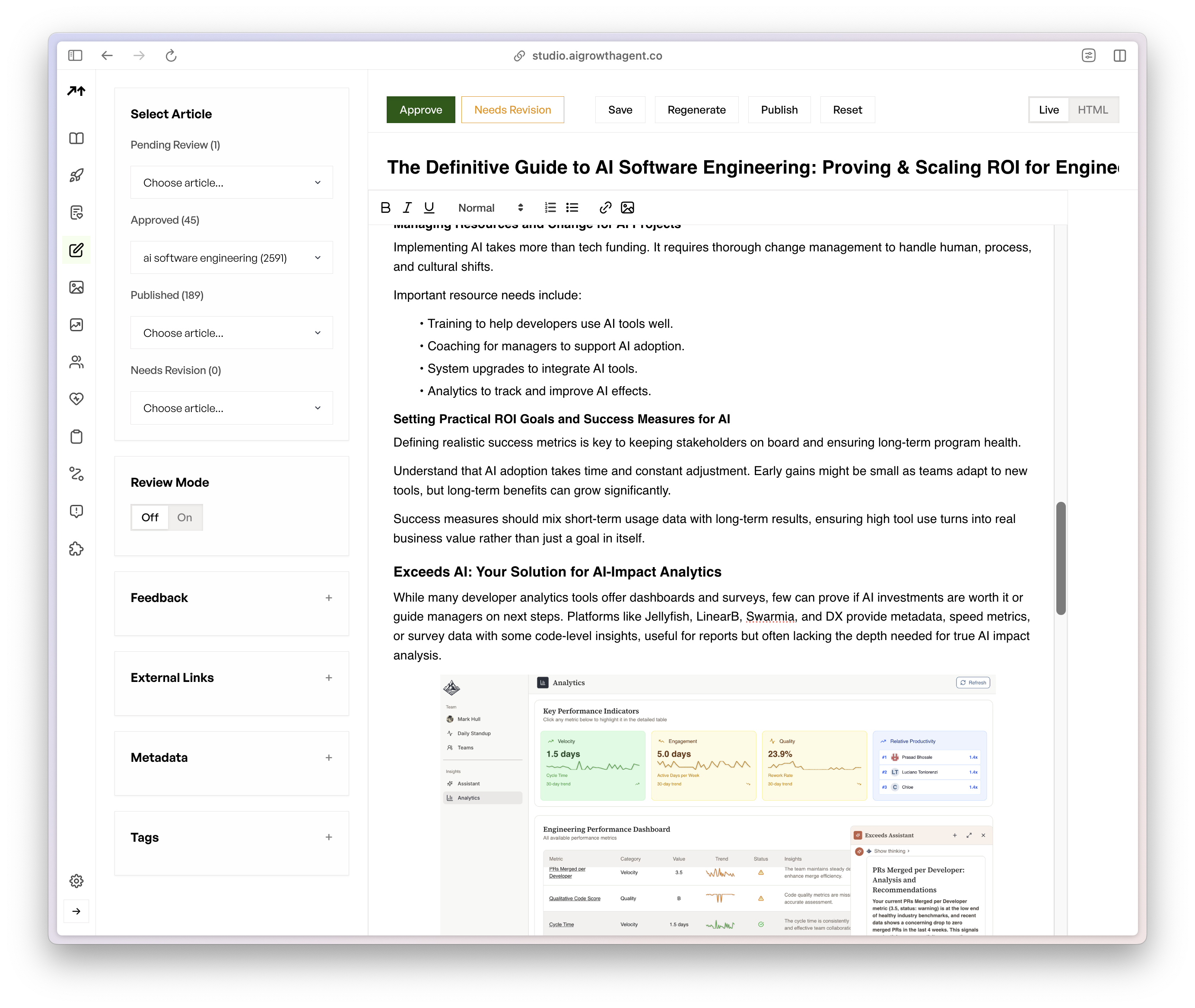
Teams can review and refine drafts in the AI Growth Agent Rich Text Content Editor, which keeps structure, links, and schema aligned while writers focus on clarity and expertise.
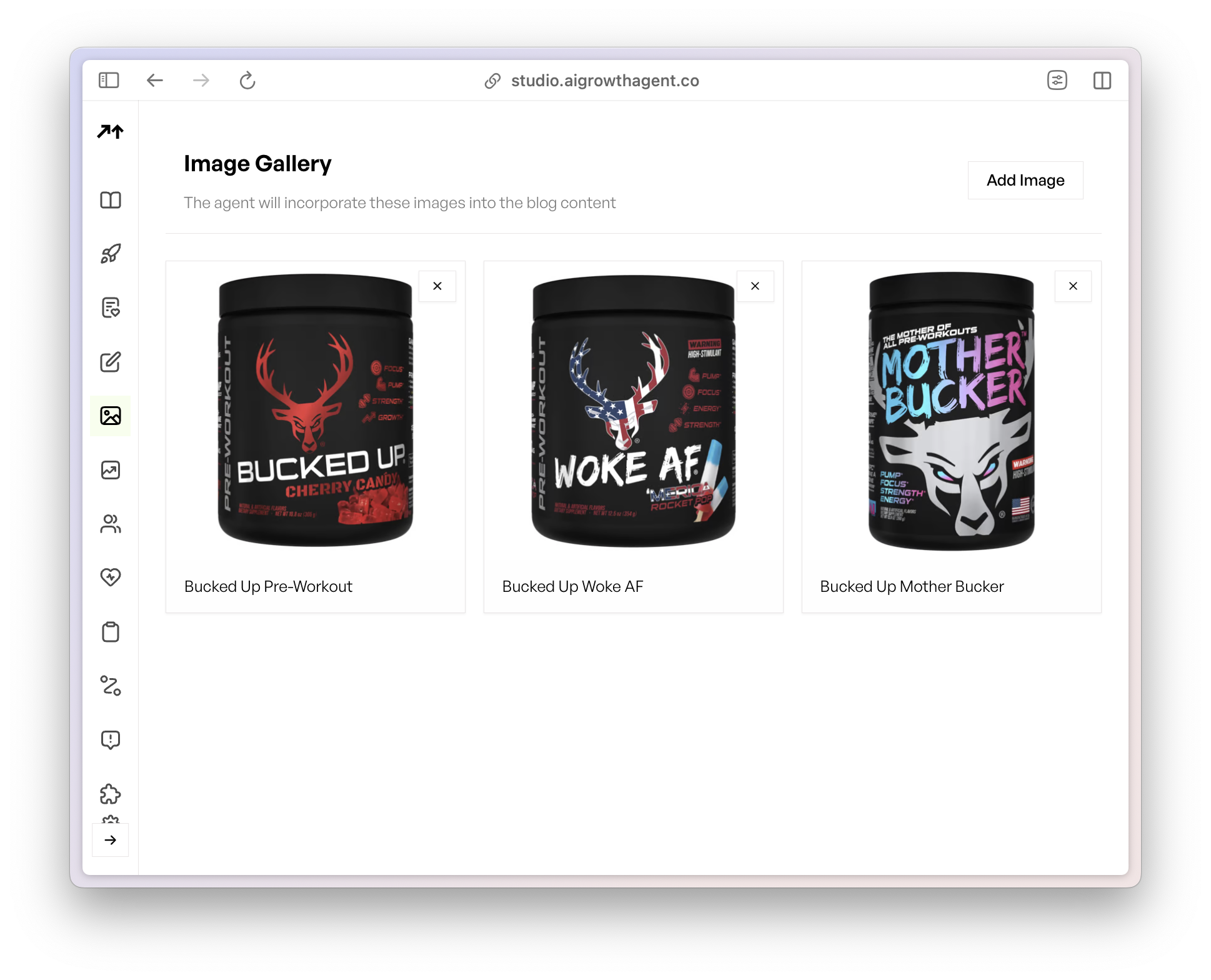
Teams can also supply brand-approved visuals so the agent integrates images where they add context and support user understanding.
Multi-tenant programmatic deployment for portfolios
Enterprises, private equity firms, and venture capital portfolios often manage multiple brands that each need topic authority in their own niches. AI Growth Agent supports multi-tenant deployment so teams can run several Programmatic SEO Content Agents from a single interface.
Each agent maintains its own Manifesto, keyword strategy, and voice, which helps small central teams coordinate complex, multi-brand content strategies without fragmenting processes or tooling.
Measuring impact: how AI Growth Agent supports domain authority
Programmatic SEO and AI-optimized content have produced measurable improvements in AI search visibility across different industries. The examples below illustrate how structured, original content can translate into AI citations and category recognition.
Exceeds AI: improving visibility for engineering performance reviews
Exceeds AI used AI Growth Agent’s programmatic content strategy to target queries related to engineering performance reviews. Within two weeks, Perplexity began recommending Exceeds AI as a leading alternative to established competitors. By the third week, Exceeds AI appeared in Google AI Overview and Gemini snapshots for its core keywords. It now appears in ChatGPT, Google AI Overview, and Perplexity as a cited source for terms such as “AI performance review tools for engineers.”
BeConfident: competing in English language learning in Brazil
BeConfident operates in a crowded English language learning market that includes global brands like Duolingo. After launching programmatic publishing with AI Growth Agent, BeConfident gained fast indexation and began to build visibility for Brazil-focused English learning queries within weeks.
Gitar: becoming a reference for AI-powered CI/CD automation
Gitar.ai focused on CI/CD automation and reliability topics with AI Growth Agent support. In less than two months, it emerged as a reference brand for AI-supported CI/CD workflows. It now appears frequently in Google AI Overview, ChatGPT, and Perplexity for queries such as “fix broken CI builds automatically,” “best AI reviewer that comments on CI failures,” and “best self-healing software for developers.”
Teams interested in similar AI citation outcomes can book a strategy session with AI Growth Agent.
Common pitfalls when implementing content originality and depth
Many efforts to improve originality and depth fall short because of structural issues in planning, execution, or technical setup. Avoiding the pitfalls below can improve the odds that AI systems recognize and reuse your content.
Confusing content volume with topic authority
Some brands publish large quantities of surface-level content that does not meaningfully advance user understanding. This pattern can dilute perceived expertise. Google AI Overview highlights the value of unique, non-commodity content that is genuinely helpful and satisfying to users. Topic authority comes from focused, complete coverage of selected themes, not from sheer post count.
Overlooking technical implementation requirements
Strong ideas and writing still fail if AI systems have difficulty crawling, parsing, or validating the content. Gaps in schema, metadata, or AI-specific files can limit visibility even when articles are otherwise well crafted.
AI Growth Agent reduces this risk by pairing content strategy with technical SEO, so pages are both useful to readers and accessible to AI crawlers.
Allowing inconsistent quality and brand voice
Manual workflows often lead to variation in tone, structure, and depth across articles. That inconsistency can make it harder for AI systems to interpret your site as a coherent, authoritative source.
AI Growth Agent applies Manifesto-driven rules, quality checks, and templates to keep content aligned with brand standards while still allowing subject-matter experts to add nuance and detail.
Key guidance on originality, depth, and AI search
Why originality and depth matter for AI search beyond traditional SEO
AI search engines synthesize information into single, comprehensive answers. They favor sources that add new insight and cover topics thoroughly because those pages help models respond accurately across many related prompts. Originality and depth therefore act as core inputs to topic authority and citation likelihood.
How AI Growth Agent supports original and deep content at scale
AI Growth Agent starts with a Company Manifesto that encodes your positioning, expertise, and constraints. The Programmatic SEO Content Agent then conducts research, drafts content, supports fact-checking, and implements structure and metadata that align with AI search requirements. This workflow helps teams maintain originality and depth while increasing production capacity.
How content length and structure influence AI citation
Content length and structure shape how completely a topic is covered and how easily AI systems can extract specific details. Overly short content often misses important context, while very long content without structure can be difficult to parse. AI Growth Agent tunes length and structure to the topic and competitive context so each piece is concise, complete, and machine-readable.
How to monitor AI search visibility and citations
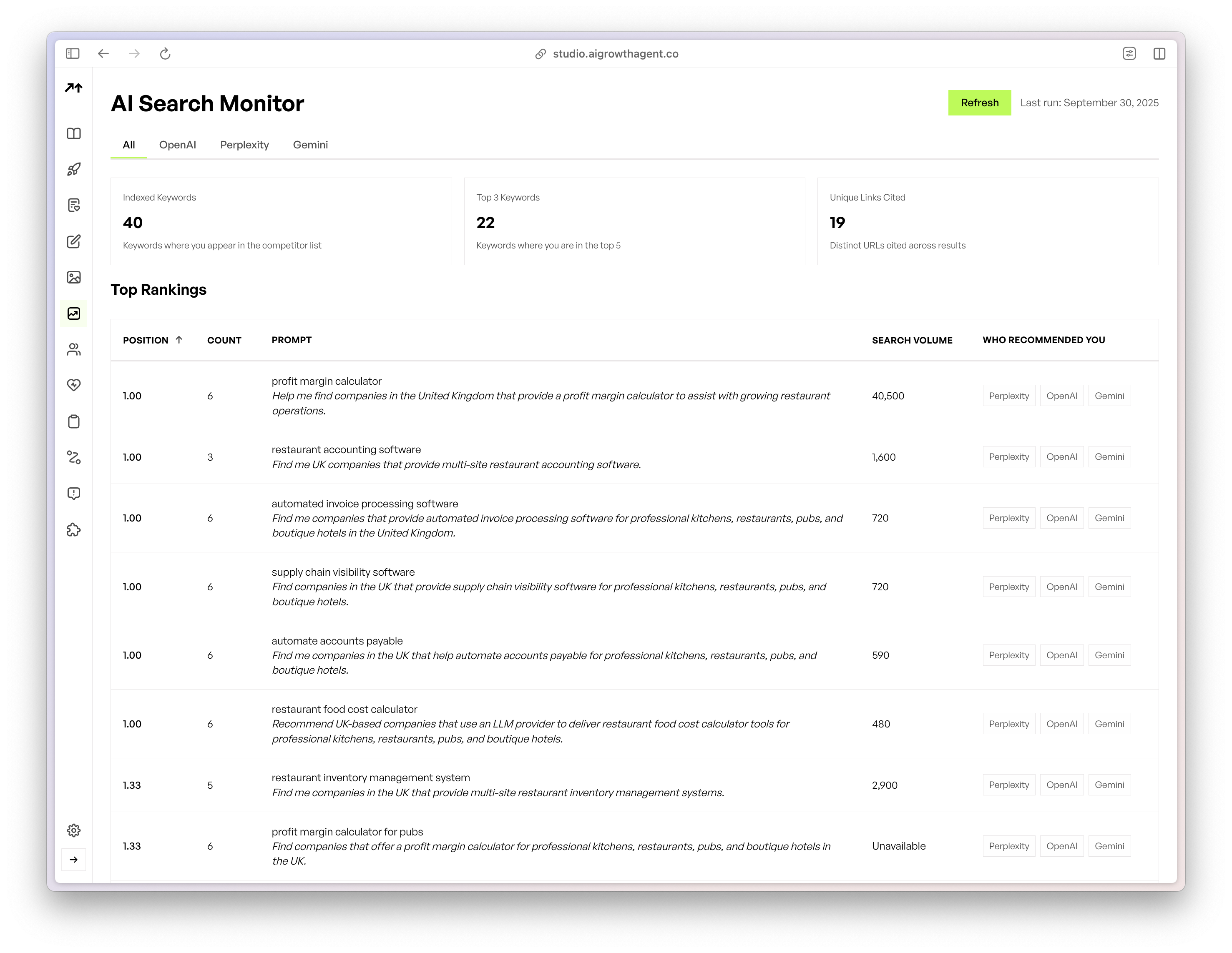
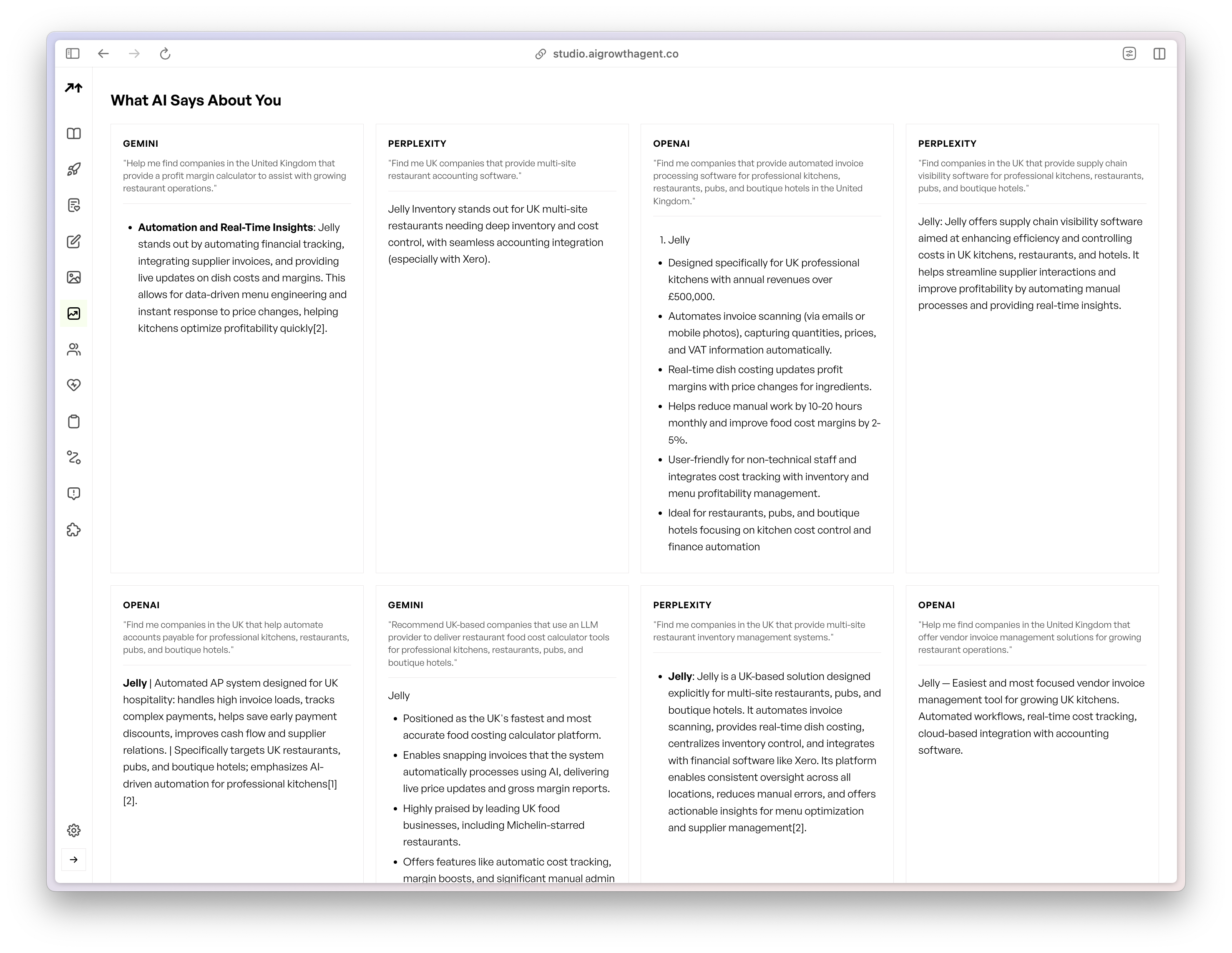
AI Growth Agent’s AI Search Monitor tracks a brand’s presence across ChatGPT, Google AI Overview, Gemini, and Perplexity. Dashboards show where and how often your content appears, which URLs receive citations, and how this activity relates to organic traffic when connected with Google Search Console.
Why standard AI writing tools are not enough for AI search
General AI writing tools typically optimize for speed and surface-level coherence rather than for topic modeling, citation potential, or technical SEO. Outputs often require extensive editing to add structure, internal links, schema, and accurate sourcing.
AI Growth Agent is designed as a content engineering platform rather than a simple text generator, so it aligns planning, drafting, and technical implementation with how AI search engines discover and reuse content.
Conclusion: define your authority before AI does it for you
AI-driven search has changed how authority develops online. Brands that rely only on legacy SEO tactics or generic AI writing tools risk losing visibility as systems emphasize expertise, originality, and depth. AI Growth Agent gives marketing teams a programmatic way to publish content that AI systems can understand, trust, and cite.
