


Written by: Mariana Fonseca, Editorial Team, AI Growth Agent
Executive summary
- AI search engines such as ChatGPT, Google AI Overviews with Gemini, and Perplexity now shape how buyers discover brands, which reduces visibility for companies that rely only on traditional SEO.
- Programmatic SEO (pSEO) gives marketing leaders a structured way to publish large volumes of technically strong content that AI systems can parse, trust, and cite.
- AI Growth Agent automates this programmatic SEO lifecycle, from research and content engineering to schema, LLM.txt, and Model Context Protocol implementation.
- Compared with agencies and basic AI writing tools, AI Growth Agent provides higher scale, more technical depth, and direct focus on AI citations.
- Real examples from brands like Exceeds AI, BeConfident, Bucked Up, and Gitar show how programmatic SEO can improve AI search visibility within weeks.
The Problem: Why Your Brand’s Digital Footprint is Shrinking in the AI Search Era
How AI Search Changes Brand Visibility and Citations
The shift from traditional search to AI-powered discovery has created a new battleground for brand visibility. AI-powered search engines now handle billions of queries each month, which changes how people discover and evaluate brands. ChatGPT, Google AI Overviews via Gemini, and Perplexity now act as primary discovery tools and favor sources that provide comprehensive, structured answers.
This shift represents a redefinition of how search works. Earlier strategies focused on ranking for specific keywords and writing for human readers first. Modern AI search instead favors depth, structure, and authority that Large Language Models (LLMs) need in order to cite a brand confidently as a definitive source.
Volume and noise in digital content further complicate this problem. Search engines now index unprecedented amounts of AI-generated content, which makes it harder for brands to stand out without a deliberate approach to content and technical optimization.
Why Traditional Content Production Cannot Keep Up With AI Search
The pace of information has increased sharply in the AI era. LLMs favor content that is recent, deep, and structurally consistent. Traditional content workflows rarely deliver those qualities at the required scale. Publishing one or two handcrafted posts each month, which is common for many marketing teams and SEO agencies, no longer keeps pace with modern AI search dynamics.
Most SEO agencies use a craftsman-style model that depends on manual work. Output usually consists of a small number of articles per month at premium prices. These articles may read well, but they rarely reach the volume or technical precision that AI systems expect when building an authority graph across thousands of related queries.
Internal marketing teams often face even stricter constraints. Many teams do not have the engineering support needed to design and maintain programmatic SEO systems. Modern AI search optimization involves elements such as structured data markup, advanced metadata, and automated publishing. These requirements extend beyond traditional marketing skills and tooling.
How Content Gaps Let Competitors Own Your AI Citations
Content gaps in an AI search environment function as strategic weaknesses. If LLMs do not find enough authoritative material from your brand, they default to other sources, often including direct competitors. This shift compounds over time. Competitors not only capture traffic but also become the reference point that AI systems use to describe your category, products, and key concepts.
The effects reach beyond a simple loss of traffic. Brands that AI systems do not cite tend to see significant declines in organic visibility, because AI-powered features now occupy more space on results pages. If your content lacks the volume and authority that AI citation requires, your brand misses chances to be mentioned and recommended at the moment of decision.
Some marketing leaders treat basic AI content tools such as ChatGPT as full programmatic solutions. These tools still require strategy, formatting, schema markup, editorial review, and publishing support. The operational burden usually shifts back to internal teams.
Brands that want to avoid AI invisibility can act now. Schedule a consultation session with AI Growth Agent to assess current AI search readiness and plan a path to stronger visibility.
The Solution: Embracing Programmatic SEO for Authority and Scale in AI Search
How Programmatic SEO Supports AI Search Optimization
Programmatic SEO describes a structured content strategy built to match the scale and technical needs of AI search. Traditional SEO methods rely on manual writing and manual optimization. Programmatic SEO uses automation and data-driven workflows to generate technically sound content across many related topics.
This approach aims to automate the content lifecycle from planning to publishing. Programmatic SEO connects keyword research, content strategy, technical implementation, and distribution. Brands can use it to target thousands of queries while building a connected content architecture that gives AI systems the context they need to view that brand as an authority.
Technical precision is a central part of programmatic SEO, not an afterthought. The work includes schema markup, automated metadata optimization, and structured content layouts that are easy for AI systems to interpret. Structured data implementation plays a key role in AI search optimization, because it gives LLMs explicit signals about entities, relationships, and expertise.
Key Pillars of a Programmatic SEO Strategy for AI Citations
A strong programmatic SEO strategy for AI search rests on several connected pillars that together build authority.
The first pillar centers on automated keyword research and clustering for AI-driven topics. This work moves beyond simple keyword volume to map complex, conversational queries that reflect AI search behavior. Content clusters then address each theme in detail, so users and AI systems can follow a clear path through related questions.
The second pillar focuses on autonomous content generation and engineering for LLM consumption. Content needs consistent structure, clear headings, and explicit context. Each asset should function as a reliable resource that AI systems can draw from when assembling answers.
The third pillar involves advanced technical SEO. This includes schema, LLM.txt files, and Model Context Protocol integration. These elements provide AI indexers with instructions and structured context on how to use your content and where it fits in the broader knowledge graph.
The final pillar covers continuous monitoring and feedback loops for AI search performance. Teams track how content appears across AI platforms, then refine topics, structure, and technical setups based on that behavior.
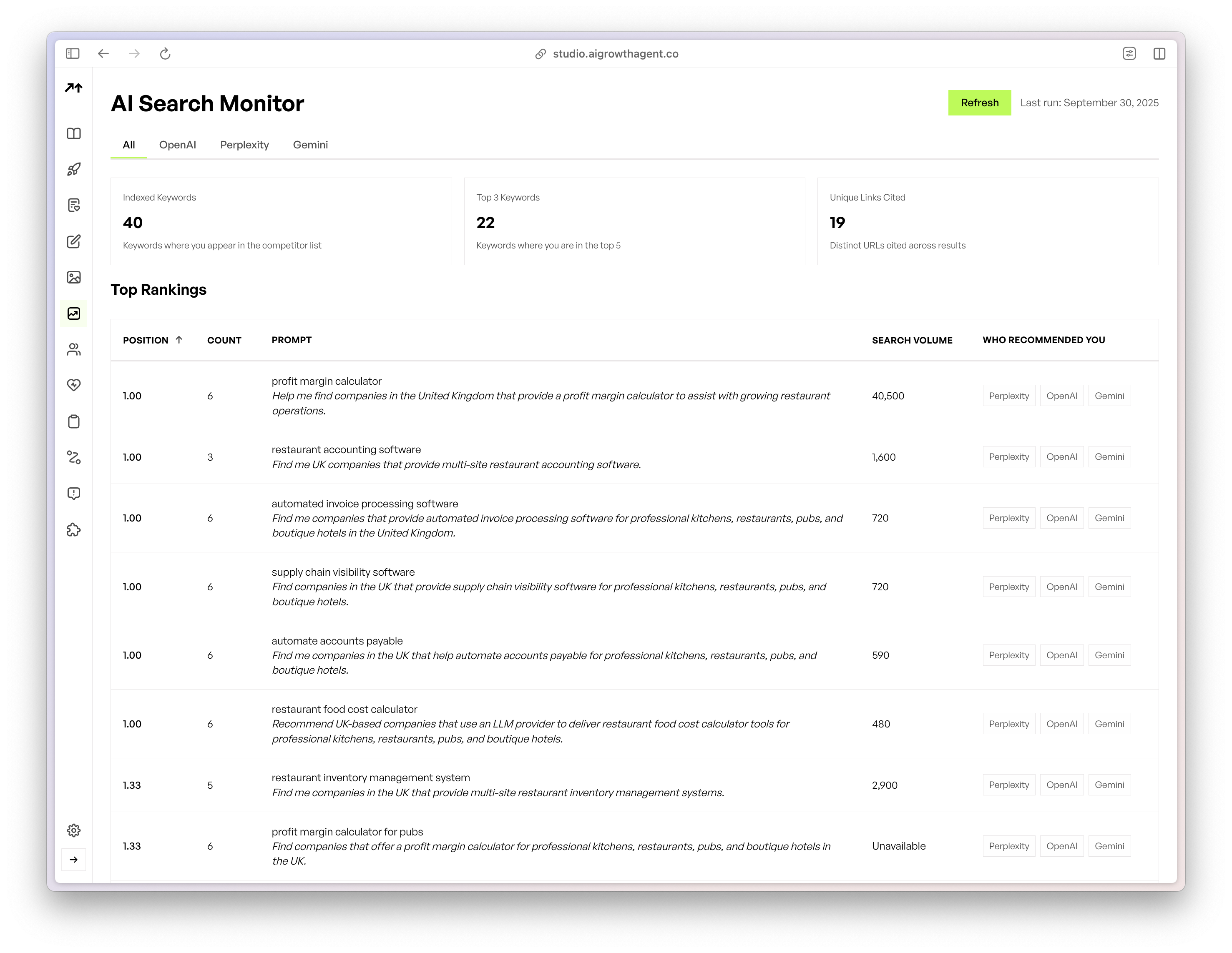
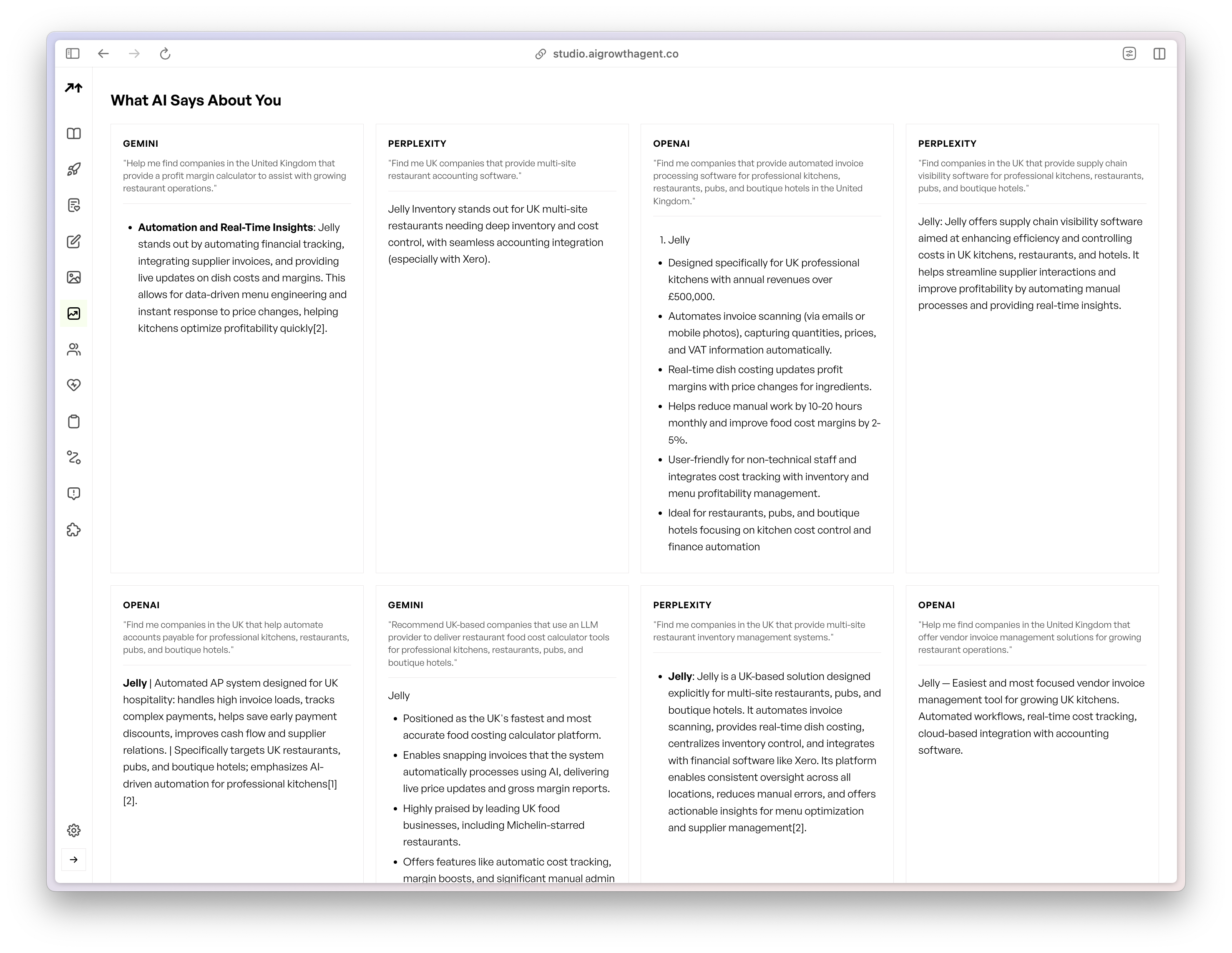
AI Growth Agent supports this pillar through its AI Search Monitor, which shows how ChatGPT, Gemini, and Perplexity describe and position your brand so you can adjust strategy with real usage data.
How Programmatic SEO Encourages AI Citations and Brand Authority
Programmatic SEO improves odds of AI citation by giving LLMs the structured content ecosystems they prefer to use. When AI systems evaluate potential sources, they seek clear expertise, consistency, and technical reliability. Programmatic methods help brands build those signals at scale.
Systematic coverage of related topics signals depth. As content clusters expand, AI systems can treat them as a knowledge base for a specific niche. This structure makes it easier for AI tools to reference your material when responding to complex or multi-step queries.
The impact extends across channels. Brands that AI systems cite consistently tend to earn higher trust and authority across digital experiences, which often improves performance in organic search, paid campaigns, and product discovery.
How AI Growth Agent Supports Programmatic SEO at Scale
AI Growth Agent functions as a programmatic SEO platform that addresses the needs of AI search. Instead of acting as a standalone AI writing tool or a traditional agency, it operates as an autonomous system that manages core parts of the technical SEO lifecycle at scale and with consistent quality.
How an Agent-Driven Approach Builds Content Authority
AI Growth Agent uses an agent-driven architecture that focuses on outcomes instead of manual tool operation. The system executes complex tasks such as research, content engineering, and technical SEO while adapting to brand rules and constraints.
The onboarding process includes a guided setup that produces a detailed Company Manifesto. This document captures positioning, voice, audiences, and product details. The agent relies on this Manifesto as a source of truth for all programmatically generated content.
This foundation helps maintain quality and brand alignment even at high volume. The agent incorporates feedback over time and updates its understanding of your value proposition and differentiation as your strategy evolves.
Programmatic Content Engineering and Technical Depth
AI Growth Agent offers programmatic content engineering that is tuned for AI indexers. The system runs automated keyword research, identifies relevant search opportunities, and groups them into structured clusters for coverage.
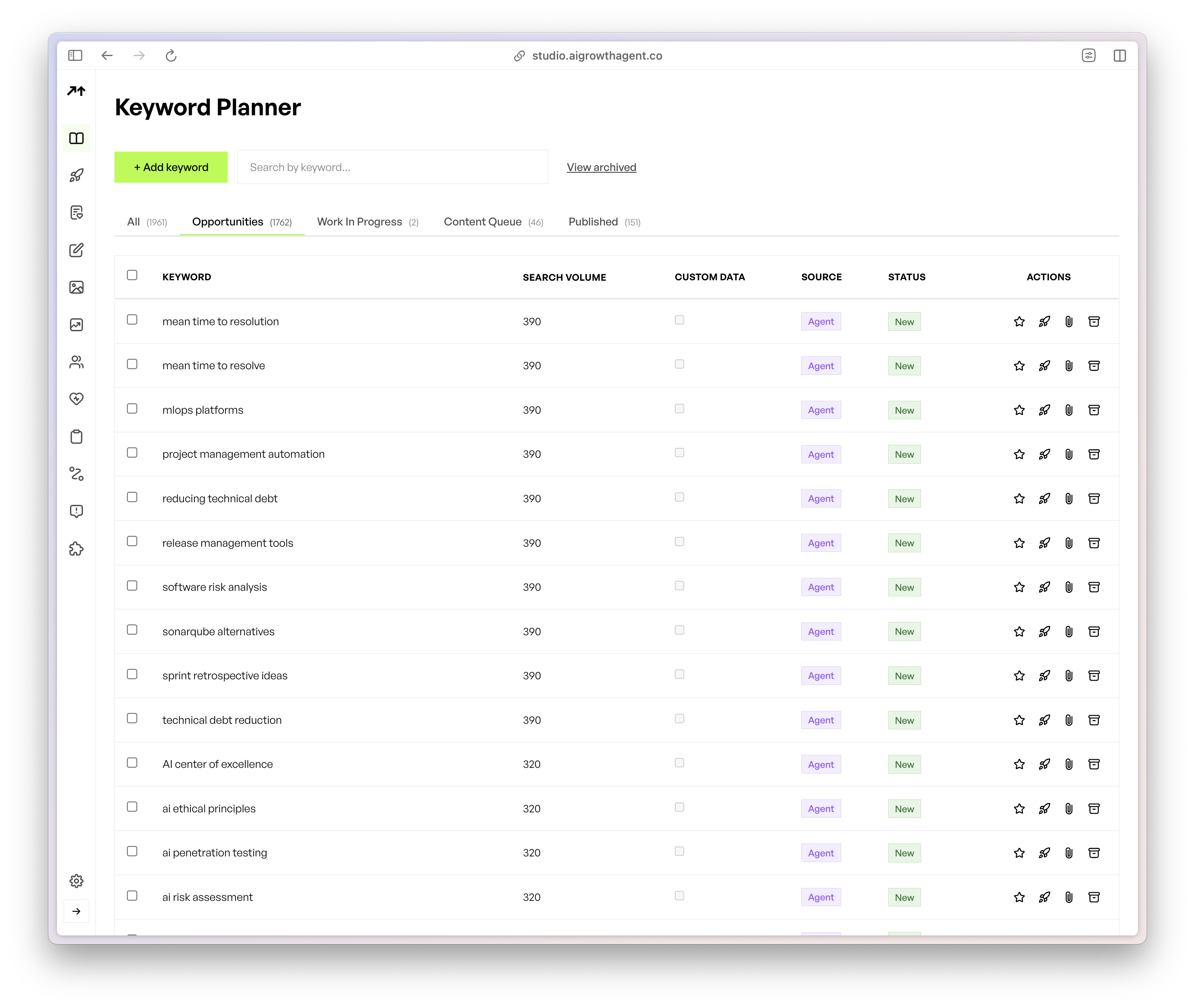
The platform includes a dedicated keyword planner that surfaces long-tail and AI-style queries aligned with your goals, then connects those terms to content briefs and article production flows.
The autonomous technical infrastructure setup reduces engineering overhead for marketing teams. The agent can create optimized blog architectures on subdomains that match your existing brand design while providing a clean base for programmatic SEO. This setup includes schema markup, structured internal linking, and other core elements of modern technical SEO.
The platform also handles LLM.txt files and blog Model Context Protocol configuration. These components make it easier for AI systems to locate your content, understand how to use it, and respect usage preferences. Each article includes fact-checking workflows and technical checks to improve reliability and discoverability.
How the AI Growth Agent Studio Gives You Control
The AI Growth Agent Studio acts as a command center for managing programmatic SEO. The interface allows teams to review drafts, edit content directly, give strategic guidance, and monitor performance in one place.
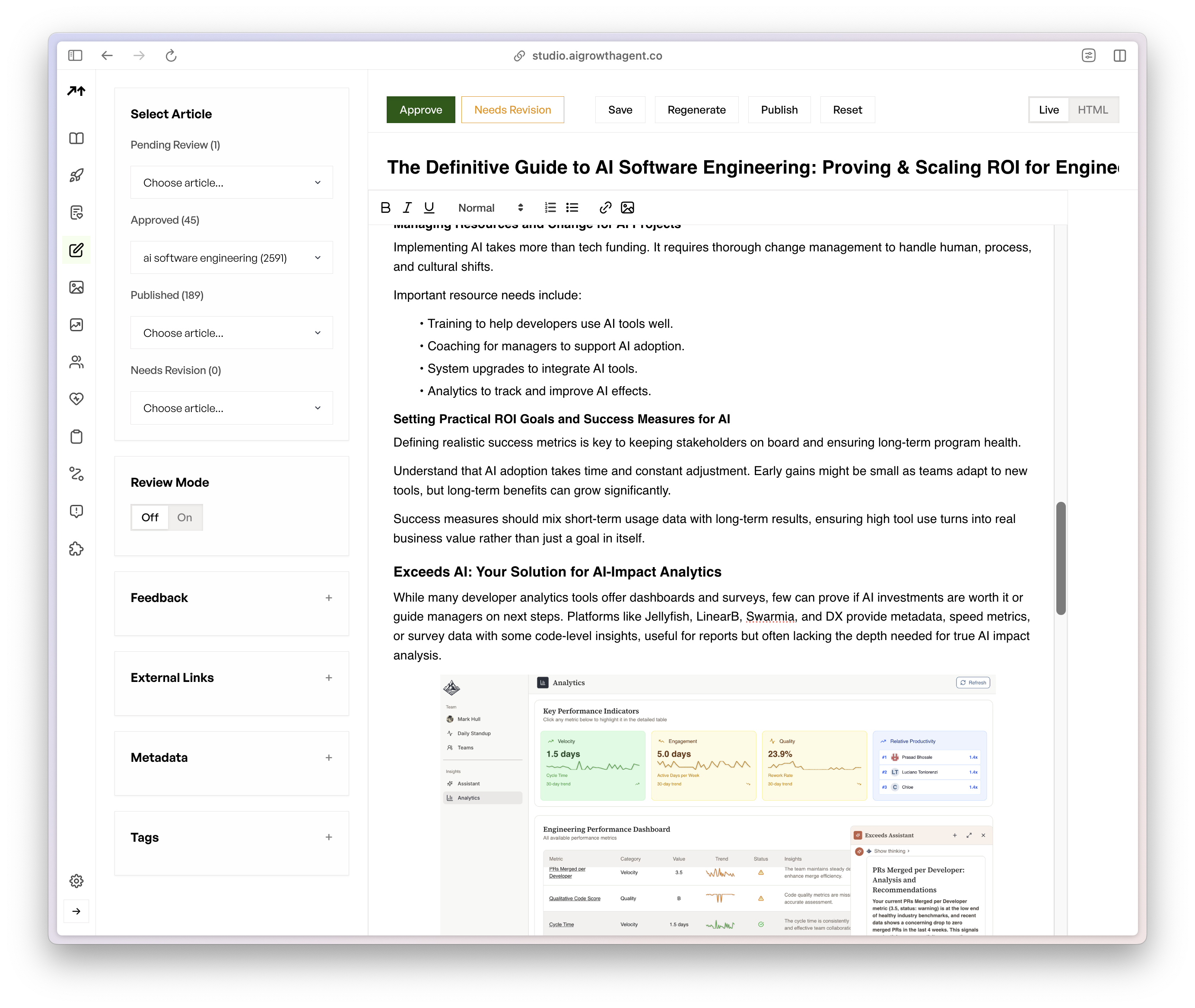
The Studio includes a rich text editor for fine-tuning language, structure, and visual elements before publishing. This keeps the agent in charge of scale and technical implementation while letting your team apply editorial judgment where it matters.
A continuous feedback loop in the Studio helps the agent learn your preferences. Once it captures your standards, Auto-Pilot mode allows the system to publish on a set cadence while still giving you visibility into calendars, drafts, and performance data.
Distinct Capabilities: Where AI Growth Agent Stands Out
AI Growth Agent includes capabilities that support complex programmatic SEO operations. Multi-Tenant Programmatic Deployment helps organizations with several brands manage each one from a single interface while maintaining separate Manifestos, strategies, and content libraries.
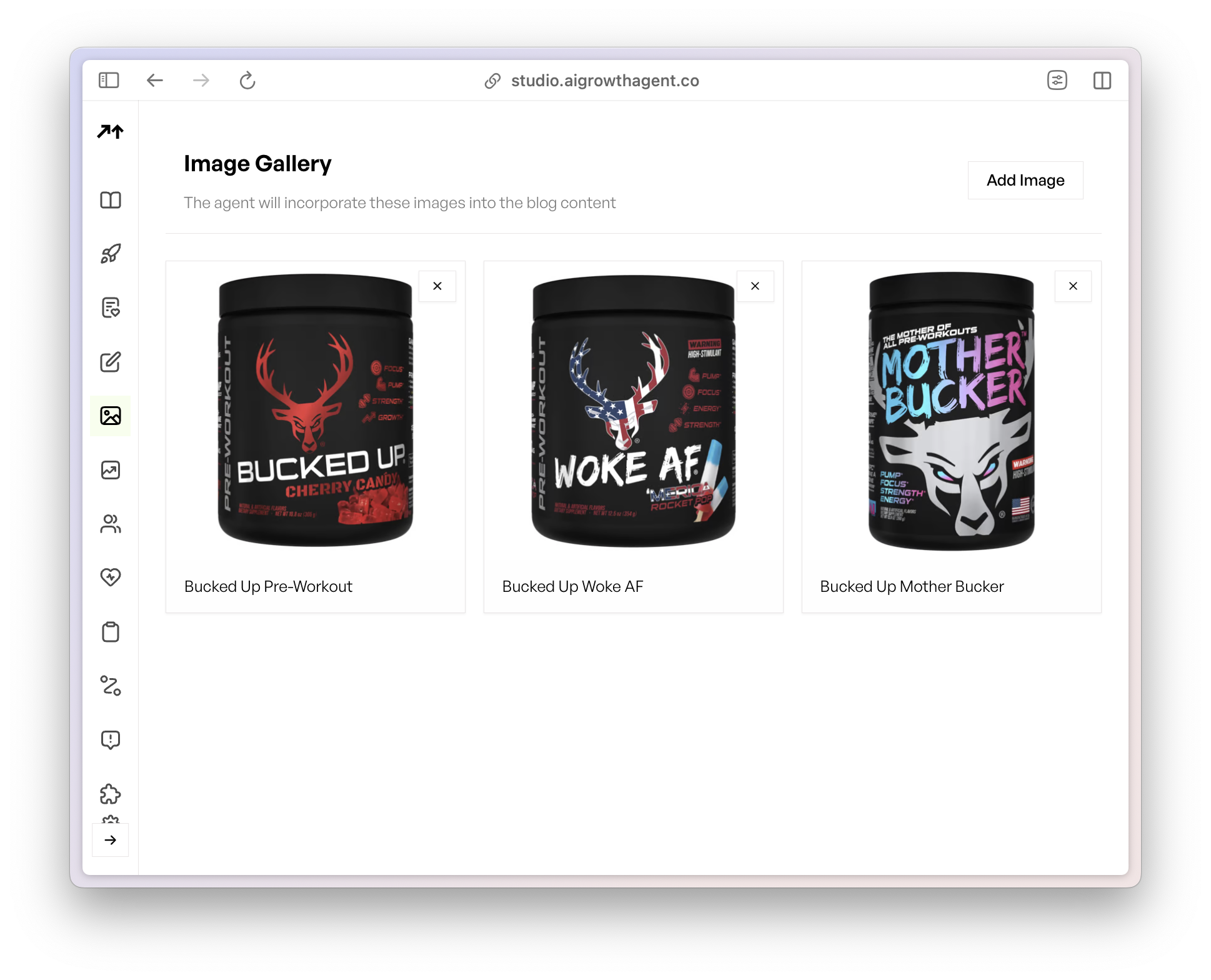
Real-Time Programmatic SEO Content Injection enables quick responses to emerging topics by generating and publishing optimized content in short timeframes. Database-to-Content Automation converts structured internal data into content assets that AI systems can understand. Intelligent Image and Asset Placement aligns visual assets with on-page context and injects metadata to assist both AI and traditional search engines.
Marketing leaders who want to evaluate this approach can schedule a demo of AI Growth Agent and review how the agent handles research, drafting, technical SEO, and publishing.
Programmatic SEO Solutions: A Comparative Overview for Marketing Leaders
|
Feature Category |
AI Growth Agent |
Traditional SEO Agencies |
Self-Service AI Content Tools |
AI Search Monitors |
|
Core Offering |
Autonomous programmatic SEO agent |
Manual craft-focused service |
General-purpose content generation |
Diagnostic reporting |
|
Content Scale |
High, platform-driven scale |
Limited by staff capacity |
Limited by user time and process |
N/A |
|
Technical SEO Depth |
Advanced, automated schema, LLM.txt, MCP |
Basic to intermediate, often manual |
Minimal, handled by user |
N/A |
|
Autonomy |
Full lifecycle automation with oversight |
Human-led execution |
Manual prompts and review |
Monitoring only |
|
Strategy & Research |
Programmatic and agent-driven |
Manual research and planning |
Requires user-defined strategy |
Diagnostic only |
|
Cost Model |
Platform-based pricing |
Hourly or retainer-based engagement |
Subscription plus internal labor |
Subscription, no direct remediation |
|
AI Citation Focus |
Engineered for AI visibility |
Optimized for traditional rankings |
Low, limited structure for AI |
High focus on reporting, no content solution |
|
Integration |
Automated, hosted or WordPress |
Manual setup and updates |
Managed by user |
N/A |
|
Competitive Edge |
Agent-based programmatic SEO platform |
High-touch but slower and less scalable |
Flexible but requires significant manual effort |
Provides insights without execution |
Success Stories: How Brands Use AI Growth Agent’s Programmatic SEO to Compete in AI Search
Exceeds AI: Raising Visibility for AI Performance Reviews
Exceeds AI illustrates how structured programmatic SEO can affect AI visibility in a short period. Within two weeks of launching AI Growth Agent’s programmatic content, Exceeds AI appeared in Perplexity results as a leading alternative in the AI performance review category.
By the three-week mark, Exceeds AI also gained placements in Google AI Overview and Gemini snapshots for core keywords. The brand now maintains regular visibility across ChatGPT, Google AI Overview and Gemini, and Perplexity for queries related to AI performance review tools for engineers.
BeConfident: Building Visibility in a Crowded Language Learning Market
BeConfident shows how programmatic SEO can support smaller brands competing in markets dominated by large incumbents. The company operates in an English-learning category where players such as Duolingo already have strong presence.
After implementing AI Growth Agent’s programmatic SEO approach, BeConfident achieved fast indexing and started building authority. Within weeks, Google AI Overview and Gemini recommended BeConfident as the top app in Brazil for learning English, which helped the brand gain attention in a competitive space.
Bucked Up: Establishing a Presence in Protein Supplements
Bucked Up demonstrates how programmatic SEO can help establish authority in specific product niches. About three weeks after publishing programmatic content with AI Growth Agent, Bucked Up gained notable AI search visibility for protein soda products, appearing alongside established competitors.
Gitar: Leading the Conversation on AI-Powered CI/CD Automation
Gitar highlights how programmatic SEO can support thought leadership in technical categories. In less than two months, Gitar used AI Growth Agent to build content and technical infrastructure that positioned the brand as an authority on AI-powered CI/CD automation.
Gitar now appears in Google AI Overview and Gemini, ChatGPT, and Perplexity for targeted queries such as “fix broken CI builds automatically,” “best AI reviewer that comments on CI failures,” and “best self-healing software for developers.”
Programmatic SEO for AI Search: Frequently Asked Questions (FAQ)
What is the difference between programmatic SEO and traditional SEO for AI search?
Programmatic SEO is built to match the volume and technical requirements of AI search. Traditional SEO often centers on manually written articles that target broad keywords for human readers. Programmatic SEO instead automates research, planning, and production so brands can cover a wide range of specific queries that AI systems handle.
Programmatic SEO typically includes schema markup, LLM.txt files, and other technical elements that help AI systems parse and interpret content. Traditional SEO often gives less emphasis to these AI-specific signals and focuses more on conventional rankings in classic search results.
How does AI Growth Agent ensure content quality and brand voice?
AI Growth Agent maintains quality and brand consistency through its Company Manifesto and learning architecture. The onboarding process creates a detailed Manifesto that defines audiences, tone, positioning, and examples that the agent follows.
The AI Growth Agent Studio then supports continuous refinement. Teams review drafts, provide feedback, and adjust rules. The agent uses this feedback to align future content more closely with brand guidelines while still applying the technical optimizations required for visibility.
Can AI Growth Agent integrate with my existing CMS for programmatic SEO?
AI Growth Agent can integrate with common platforms such as WordPress, Hashnode, Webflow, Framer, Sanity, and HubSpot. Many clients select the hosted option, since it provides a controlled environment that is already optimized for programmatic SEO and simplifies technical management.
How quickly can I see results with AI Growth Agent’s programmatic SEO strategy?
AI Growth Agent aims for fast implementation. Many engagements move from initial consultation to a first programmatically engineered article in about one week. Case studies show that some brands see early visibility within a few weeks, including Exceeds AI’s Perplexity recommendations in two weeks and Bucked Up’s AI search visibility in three weeks.
Conclusion: Secure Your Brand’s Authority with Programmatic SEO in the AI Search Landscape
The rise of AI search calls for an updated content strategy that traditional, low-volume methods struggle to provide. AI Growth Agent offers the infrastructure and automation that brands can use to increase visibility and authority through structured programmatic SEO.
Brands with strong products and clear positioning can use AI Growth Agent to expand their presence in AI search, supply well-structured answers to complex queries, and monitor how AI systems represent them. If your organization wants to evaluate this approach, you can schedule a demo to see if you are a good fit for AI Growth Agent today.
