


Executive summary
- AI search systems now favor high-velocity, technically structured, programmatic content over traditional manual SEO and sparse publishing schedules.
- Most in-house teams and agencies lack the engineering skills, data workflows, and automation needed to compete for AI citations at scale.
- Programmatic SEO requires new capabilities, including advanced schema, structured data, keyword clustering, and content architectures designed for AI consumption.
- Organizations can close this gap through a mix of upskilling, hiring, outsourcing, or adopting autonomous agents, with agents offering the fastest path to scale.
- AI Growth Agent provides an autonomous programmatic content system, combining technical SEO, content production, and AI search monitoring in a managed studio environment.
Protecting your digital footprint as AI reshapes search
Adapting to AI search with programmatic content velocity
The relationship between businesses and search engines has shifted. Google AI Overviews now appear in over 15% of search queries, and tools like ChatGPT and Perplexity have become primary discovery channels for many users. These AI systems do not only rank content. They synthesize, cite, and recommend based on depth, freshness, and structural consistency.
Traditional content teams that publish a few pieces each month face a scale problem. AI-generated content volume has grown by more than 1,000% in the past year, which creates intense competition for visibility. Manual content creation, even when high quality, cannot match the publishing velocity that AI search ecosystems now reward.
The technical bar for AI citation also continues to rise. Modern AI search interfaces depend on schema markup, structured data, and optimization patterns designed for large language models. Each article now benefits from engineering support that blends content strategy with software development skills.
Closing skill gaps beyond manual SEO
Many marketing agencies focus on storytelling but lack programmatic execution. Their craftsman model, which produces one or two carefully written articles per month, cannot support the scale required for AI visibility. These teams also tend to lack the engineering capacity to deploy advanced schema, structured data, and other technical elements that make content easier for AI systems to interpret and cite.
Internal marketing teams often face similar constraints. They understand brand, positioning, and messaging, but rarely have the technical skills to design and maintain programmatic content systems. The gap between strategy and implementation creates bottlenecks, slows production, and limits the ability to build the technical infrastructure required for programmatic SEO without significant developer support.
Basic AI writing tools can increase output but rarely solve the technical problem. Generic platforms such as ChatGPT or Jasper generate unstructured text. They do not add the formatting, metadata, or publishing automation that programmatic SEO requires. The technical workload still falls on already busy marketing and development teams.
To upgrade your content team’s capabilities for AI search, schedule a demo to see if you are a good fit for programmatic SEO automation.
Managing the risk of competitors earning AI citations
Insufficient content volume and technical depth can erode authority over time. AI search systems use large numbers of data points to decide which sources to trust and recommend. When a brand lacks comprehensive, well-structured content, AI models rely instead on competitors with stronger programmatic strategies.
This pattern creates a compounding advantage for early movers. Competitors that become AI-cited sources gain more visibility across results. Their explanations shape user understanding, their products receive more recommendations, and their expertise gets reinforced across multiple AI platforms. At the same time, brands with shallow or sparse content footprints become less visible and less likely to be cited.
Technical sophistication magnifies this effect. Competitors that implement advanced schema, structured data protocols, and AI-focused optimization gain more reliable indexing and higher quality signals for AI systems. As a result, they appear more frequently in AI-driven search experiences.
Reshaping your content team for programmatic SEO and AI authority
Core skill sets for AI-ready content teams
Content teams that plan to compete in AI search need skills that go beyond traditional marketing. Technical SEO engineering forms the base. Teams benefit from experience with advanced schema, structured data, and metadata structures that help AI systems understand and reuse content while keeping it readable for people.
Data analysis skills support programmatic planning. Teams need to manage keyword clustering, content gap analysis, and competitive research at scale. This work includes processing thousands of queries, spotting patterns, and ranking topics based on AI search demand and citation potential.
Advanced AI content orchestration introduces another layer. Teams benefit from understanding how to design content systems that can produce consistent, high-quality output through automation. This includes workflow design, quality control at scale, and safeguards that protect brand voice.
Content architecture skills complete the picture. Modern teams think in terms of interconnected topic clusters rather than isolated pages. They design hierarchies, internal linking structures, and programmatic templates that support both human navigation and AI comprehension.
Strategic options for building a programmatic content engine
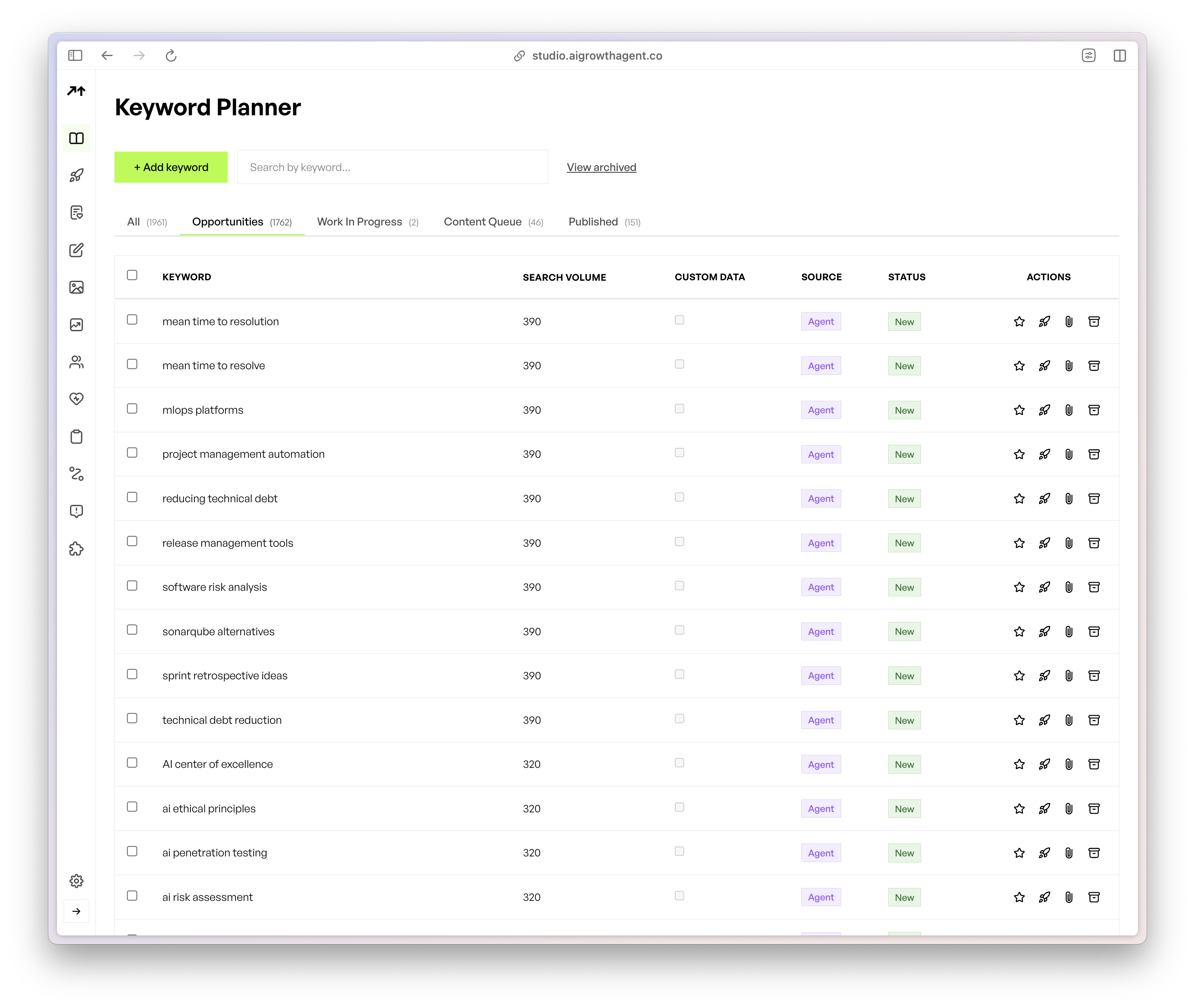
Organizations can pursue several approaches to build programmatic SEO capability. Internal upskilling requires the most time and training. Leaders identify team members with technical aptitude, then invest in education on programmatic SEO, structured data, automation, and AI optimization.
Specialized hiring can accelerate progress but faces a tight labor market. Demand for technical SEO professionals has grown by 340% while the pool of qualified candidates remains limited. Competition for these skills can lead to longer hiring cycles and higher costs.
Strategic outsourcing offers access to expertise without adding headcount. However, many agencies still rely on manual processes and do not provide true programmatic capabilities. Their services may improve content quality but often cannot deliver the scale or technical depth that AI search now favors.
Autonomous agents provide another option. This model combines rapid capability deployment with scalable execution. Programmatic SEO agents can handle technical implementation, content production, and optimization tasks with minimal ongoing human input. This approach reduces skill gaps and delivers more consistent execution than manual approaches.
Core elements of programmatic SEO for AI citation
Effective programmatic SEO depends on several technical elements that are difficult to manage manually across large content libraries:
- Advanced schema markup and structured data: Schema and markup that help AI systems interpret, organize, and cite content with higher accuracy.
- Specialized protocols: Technical files and protocols that allow AI search systems to interact directly with site content and understand its context.
- Deep keyword clustering and hierarchical content architectures: Structured topic clusters that support user navigation and signal subject matter depth to AI models.
- Autonomous content engineering and technical optimization: Automated handling of metadata, image optimization, internal linking, and other SEO tasks at scale.
- Multi-tenant programmatic deployment: Systems that support multiple brands, audiences, or sites from a shared technical and workflow foundation.
To improve your content team’s programmatic capabilities, schedule a consultation session and explore autonomous content engineering options.
Comparing content team solutions for AI search performance
|
Feature/Capability |
Traditional Agencies |
Internal Marketing Teams |
AI Growth Agent |
|
Content Velocity & Scale |
1-2 articles/month |
2-4 articles/month |
Daily programmatic publishing |
|
Technical SEO for AI |
Basic schema implementation |
Limited technical capabilities |
Advanced schema and technical protocols |
|
Cost Efficiency (Scaling) |
Linear cost increase |
Requires additional headcount |
Fixed cost regardless of volume |
|
Strategic Oversight Required |
High management overhead |
Continuous internal coordination |
Minimal after initial setup |
|
Direct Output for AI Citation |
Manual optimization required |
Lacks technical expertise |
Engineered for AI recommendation |
|
Time to First Authoritative Content |
6-8 weeks |
4-6 weeks |
1 week |
This comparison highlights the limits of traditional approaches to content scaling. Agencies and internal teams often cannot match the technical depth and production speed that AI search environments reward. Manual workflows struggle to compete with systems built for programmatic automation and AI citation.
How AI Growth Agent supports programmatic content and AI authority
Autonomous content engineering at meaningful scale
AI Growth Agent expands content team capacity by handling the full programmatic SEO lifecycle. The agent manages strategy, research, content creation, fact checking, and technical implementation with limited need for day-to-day human intervention.
The system implements advanced schema automatically, optimizes metadata for AI consumption, and builds internal linking structures that support topical depth. Each piece of content receives structured data and image optimization as part of a consistent technical standard.
Content velocity increases significantly through automation. While many teams aim for weekly publishing, AI Growth Agent can support daily production without relying on proportional headcount growth. This steady flow of content provides the signal density AI systems need to recognize authority.
Brand voice remains consistent through a structured onboarding process. The agent learns positioning, messaging frameworks, and strategic priorities at the start. These inputs create guardrails that keep output aligned with brand standards, even as volume increases.
Strengthening AI citations and recommendations
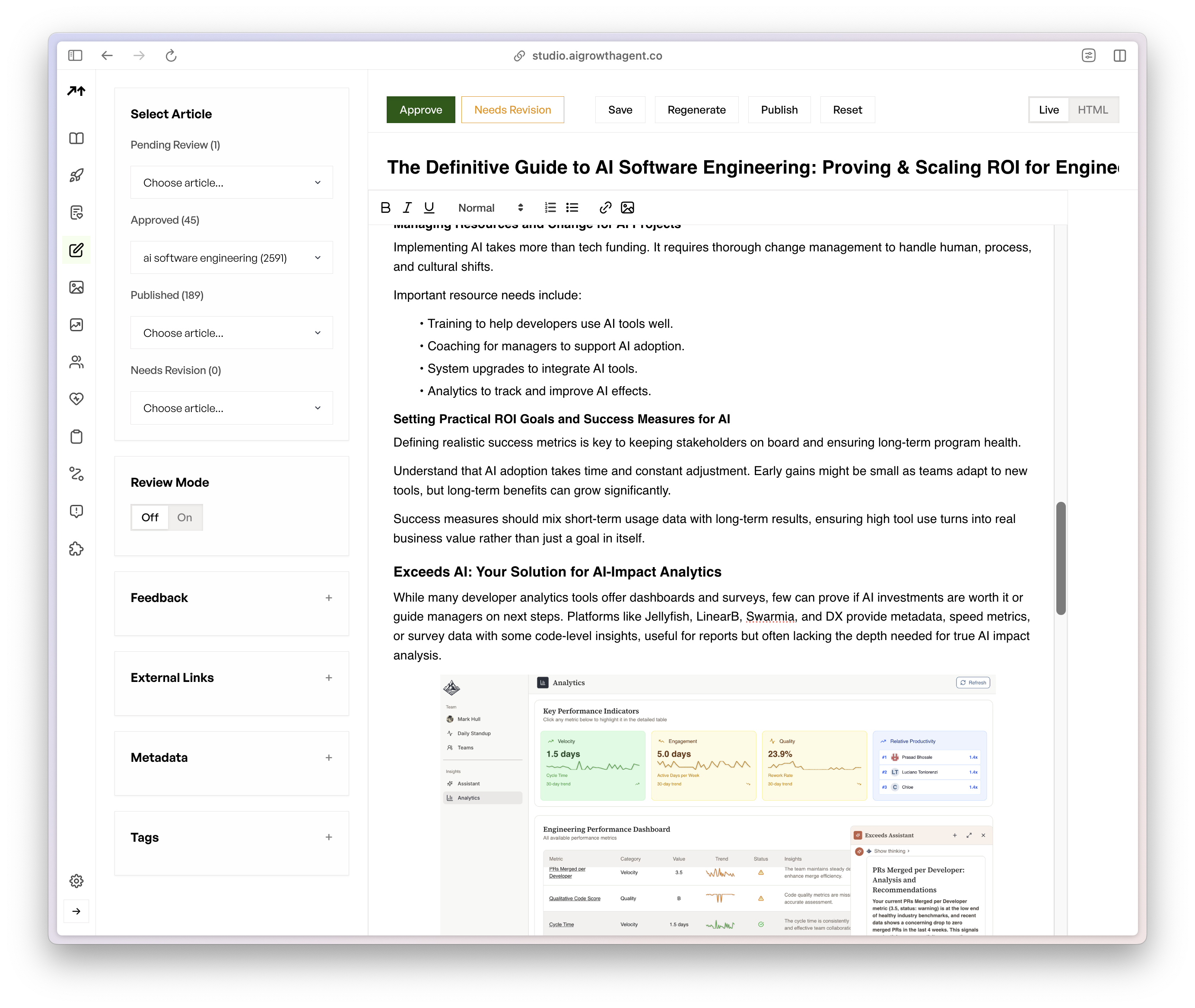
AI Growth Agent focuses on the structures and signals that increase the likelihood of AI citations across platforms such as ChatGPT, Google AI Overviews, and Perplexity. Client examples include BeConfident, which reached the top Google AI Overview position for English learning apps in Brazil within weeks of implementation.
To pursue stronger AI citation in your market, schedule a demo to see if you are a good fit for autonomous content engineering.
Real-time content and database-to-content automation
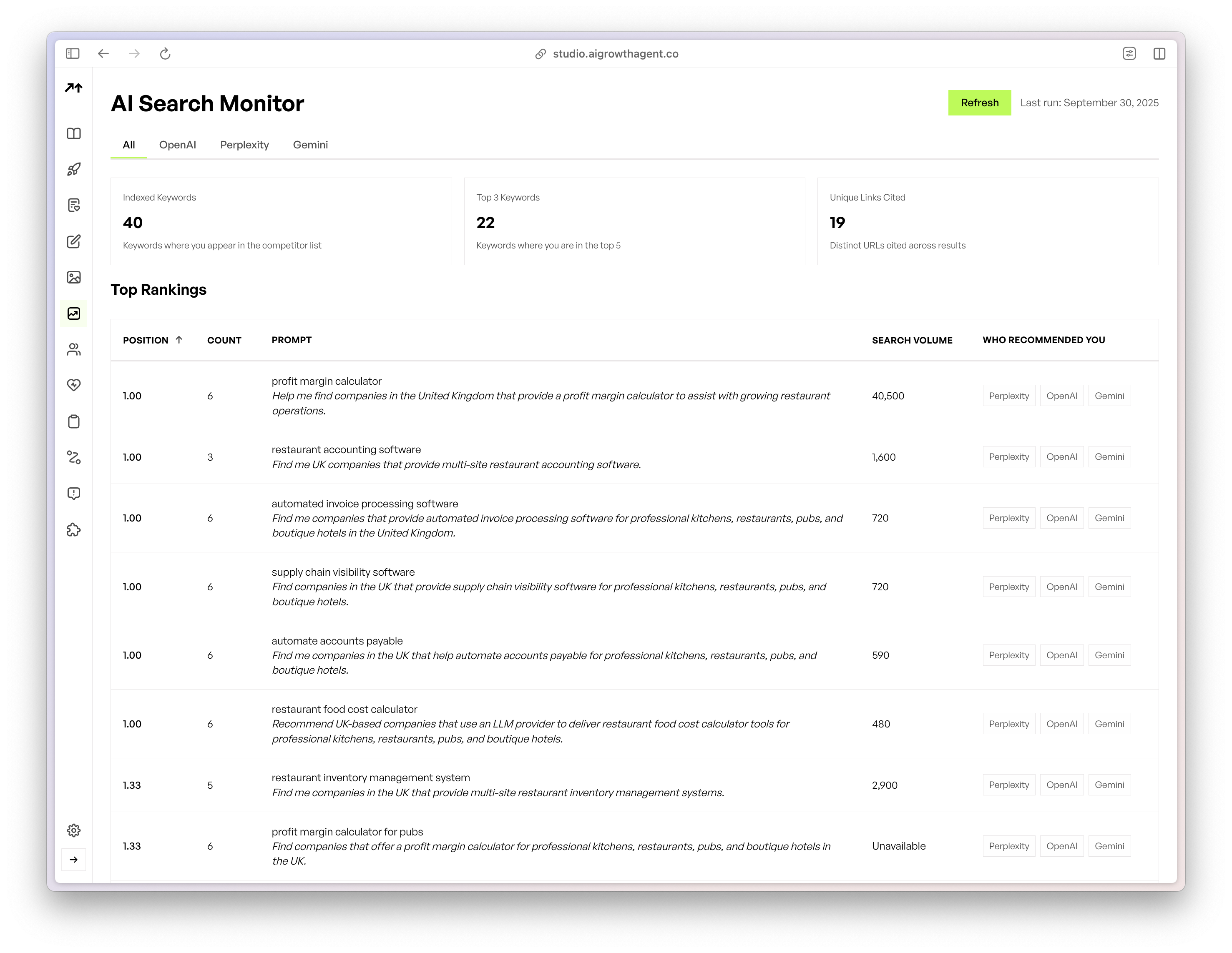
AI Growth Agent offers capabilities that are difficult to replicate with manual teams. Real-time content injection allows rapid coverage of emerging topics and breaking news. When you provide a relevant article or source, the agent can produce optimized content that reflects your brand perspective in minutes.
Database-to-content automation converts structured data into search-friendly pages. For example, a food recommendation app turned a non-indexed internal database into SEO-focused articles for specific local searches, which expanded organic reach.
Multi-tenant deployment supports complex organizations. Private equity and venture firms can manage separate agents for each portfolio company, with distinct brand voices and strategies, while still benefiting from shared programmatic infrastructure.
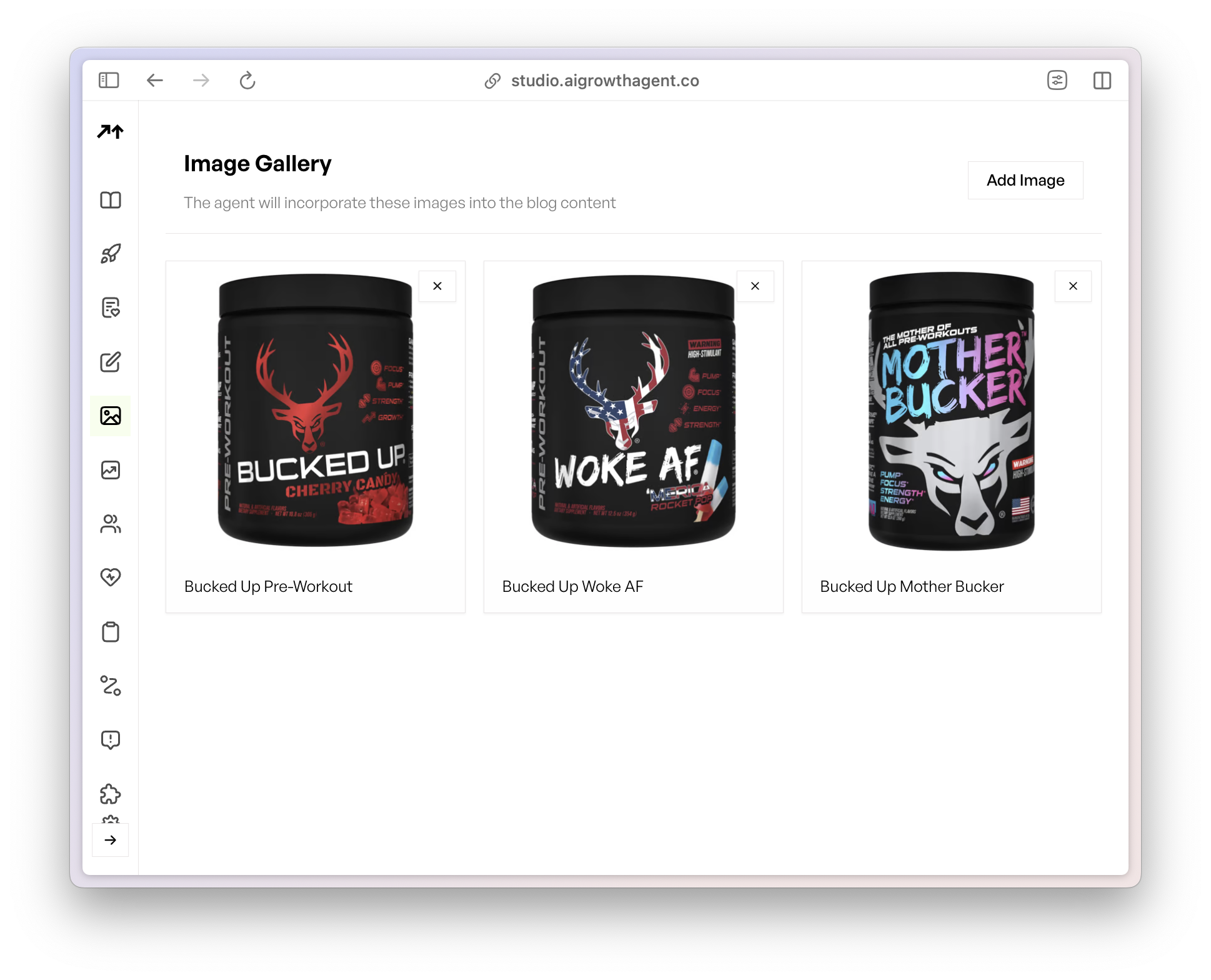
Intelligent asset placement improves how visual content supports search performance. The agent selects relevant images, product screenshots, and brand assets, then applies descriptive metadata so that visuals contribute to both user experience and AI understanding.
Simplified management with the AI Growth Agent Studio
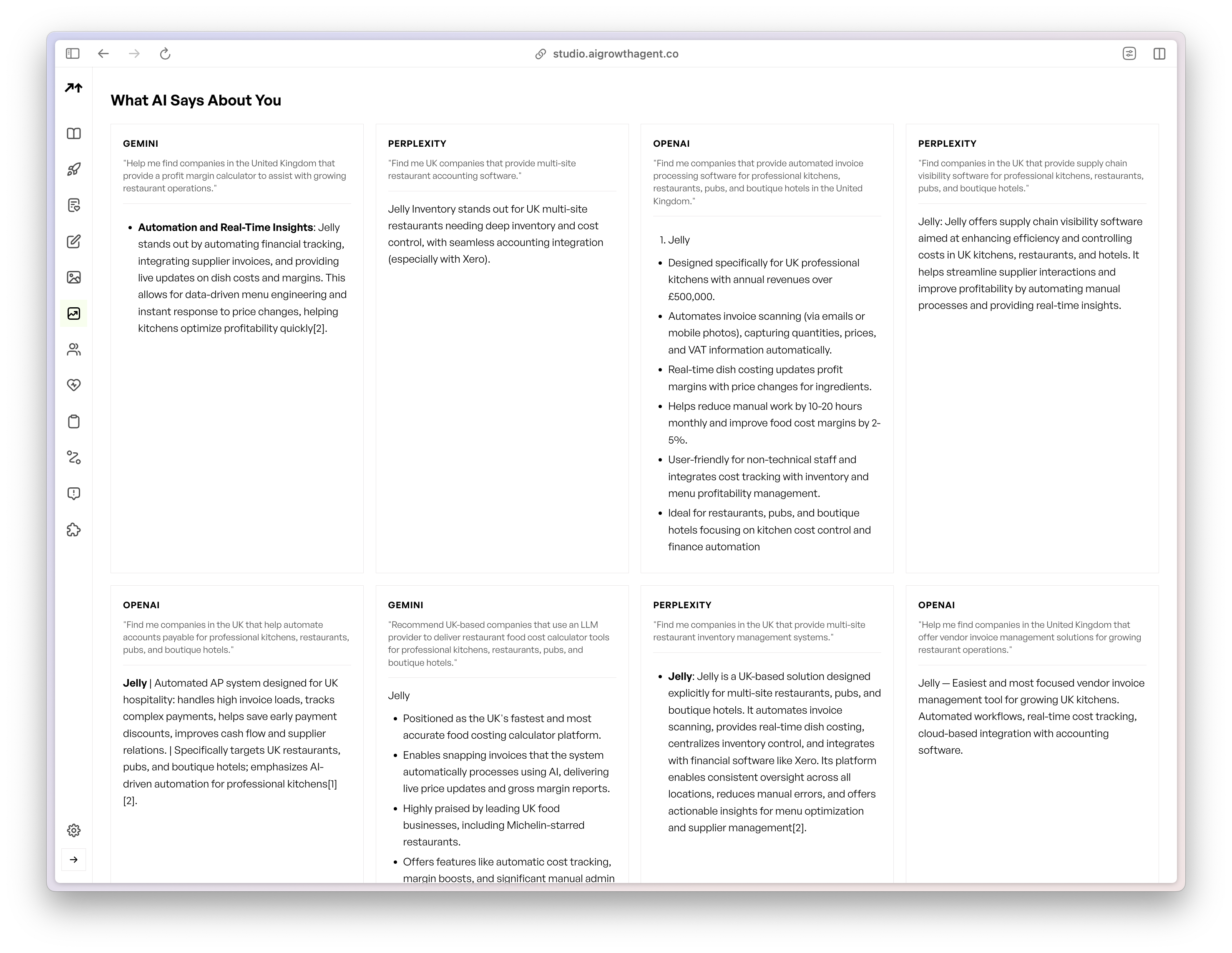
The AI Growth Agent Studio gives marketing teams a single interface to oversee programmatic content operations. Users can edit drafts with a rich text editor, provide feedback that refines the agent’s behavior, and choose between manual approval and autonomous publishing modes.
Learning capabilities reduce management effort over time. The agent incorporates early feedback and gradually produces content that requires fewer edits. Many clients shift toward autonomous publishing once the system consistently aligns with their preferences.
Performance monitoring in the Studio connects activity to outcomes. Teams can review AI citation trends across ChatGPT, Google AI Overviews, and Perplexity, alongside organic search performance using Google Search Console data. These insights support ongoing optimization and clear reporting.
The interface removes many technical barriers that often slow programmatic SEO projects. Schema implementation, metadata optimization, and publishing automation run behind the scenes, so marketers can focus on priorities such as positioning, messaging, and campaign planning.
To develop a more durable advantage in AI search, schedule a demo with AI Growth Agent and review how the studio fits your current workflow.
Frequently Asked Questions
What are the most critical technical skills for a content team aiming for AI visibility?
The most important skills for AI-ready content teams include technical SEO engineering and advanced schema implementation. Teams benefit from knowing how to structure content so that AI systems can parse and reuse it while people can still read it easily. This involves adding the right schema types, organizing information clearly, and maintaining consistency across large content sets. Data analysis skills for keyword clustering and content gap analysis at scale are also important, as is the ability to design content architectures that support both user journeys and AI understanding of expertise.
How quickly can programmatic SEO impact my brand’s AI citations?
Programmatic SEO can influence AI citations relatively quickly when the technical foundation and content velocity are in place. BeConfident, for example, reached a top Google AI Overview position within weeks. Results depend on factors such as implementation quality, content volume, existing domain authority, and competitive intensity. Programmatic approaches help by creating more high-quality data points in a shorter timeframe than manual teams typically can.
Is it possible to integrate programmatic SEO with existing content strategies?
Programmatic SEO can extend an existing content strategy rather than replace it. Many organizations keep their editorial calendars and flagship content while adding programmatic systems to handle supporting pages and topic clusters. This model provides the scale and technical structure that AI search prefers, while preserving the brand stories and campaigns that teams already plan. Integration usually involves defining programmatic content pillars that align with current priorities, then generating related assets at scale.
What sets an autonomous agent apart from basic AI writing tools for content teams?
Autonomous agents differ from basic AI writing tools in both scope and depth. Tools such as ChatGPT or Jasper typically generate individual text outputs. Autonomous agents, by contrast, manage full pages or collections of pages with built-in technical optimization. They apply schema, metadata, and image SEO automatically, handle keyword research, and manage workflows from idea through publishing. These agents also learn from feedback, maintain brand voice, and integrate with analytics, which reduces the operational burden on marketing teams.
How do I know if my current content team structure is sufficient for AI search competition?
Content teams can assess AI readiness by looking at three areas: technical skills, production velocity, and AI optimization experience. Teams that lack advanced schema skills or automation for content deployment are likely to fall behind competitors that use programmatic approaches. Publishing cadence offers another indicator. Teams that publish fewer than several articles per week may struggle to give AI systems enough data to recognize authority. Finally, reviewing whether content appears in AI interfaces such as ChatGPT, Google AI Overviews, and Perplexity provides a clear signal of how well current efforts map to AI search needs.
Conclusion: Competing in AI search with an optimized content team strategy
Shifts in search technology require organizations to rethink how they structure and support content teams. Manual processes, even with strong creative output, rarely deliver the scale and technical precision that AI-focused search now rewards. Programmatic SEO approaches that combine content strategy with engineering at scale are becoming a practical necessity.
Marketing leaders that continue to rely only on traditional models risk losing ground as AI-powered search experiences favor programmatic content architectures. The technical requirements for AI citation now exceed the capabilities of many existing teams, which creates demand for solutions that bridge gaps in both skills and capacity.
AI Growth Agent offers an autonomous option for organizations that want to build authority and increase AI citations across major platforms. Through programmatic content engineering, automated technical optimization, and a managed studio environment, brands can expand their presence in AI search without proportional increases in headcount.
To align your content strategy with the realities of AI-driven search, schedule a consultation session with AI Growth Agent and explore whether an autonomous programmatic approach fits your goals.
