Written by: Mariana Fonseca, Editorial Team, AI Growth Agent
Key Takeaways
- AI-powered search in 2026 favors brands that publish structured, high-quality content at scale, not occasional manual posts.
- A scalable WordPress CMS depends on hosting, database design, caching, and front-end architecture that can handle large programmatic content libraries.
- Performance monitoring and advanced technical SEO, including schema and emerging AI-specific protocols, directly influence how often AI systems reference your content.
- Programmatic SEO strategy only works long term if infrastructure, analytics, and workflows are tightly aligned with clear scalability goals.
- AI Growth Agent helps teams plan, publish, and monitor programmatic content on scalable WordPress setups, turning infrastructure into a consistent source of AI citations; schedule a demo to see how.
Why Your WordPress CMS Needs to Be Scalable for the AI Era
AI search engines such as ChatGPT, Gemini, and Perplexity now rely on recency, depth, and consistency when selecting content to summarize and cite. Brands that publish only a few manual posts each month lose ground as AI-generated and AI-optimized content volume grows.
Programmatic velocity has become the baseline. Brands that provide rich, structured content on many related topics give AI systems more reliable data points. When that content is missing, AI models default to competitors with stronger coverage and clearer authority signals.
A scalable WordPress CMS provides the technical capacity to publish, update, and maintain this content library without constant firefighting. Reliable performance and uptime help AI crawlers access pages quickly, which supports better indexing and more frequent citations.
Organizations that want to compete for AI visibility benefit from treating WordPress scalability as a core part of their search strategy, not an afterthought.
The 7 Essential Approaches to a Scalable WordPress CMS
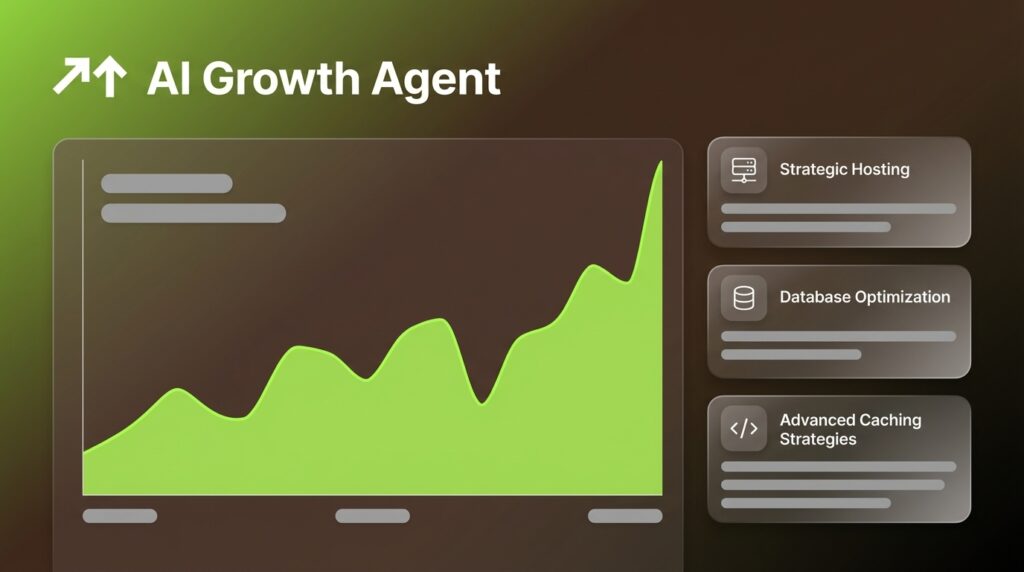
1. Strategic Hosting: Vertical, Horizontal, and Autoscaling
Hosting architecture sets the ceiling for scalability. Vertical scaling adds CPU, RAM, and storage to a single server, which works well for growing sites that are still consolidating traffic on one main application.
Horizontal scaling spreads traffic across multiple application servers behind a load balancer, which supports high-traffic or spike-prone environments. Autoscaling adds or removes resources automatically as demand changes, so performance and uptime stay stable without constant manual tuning.
Consistent speed and availability help AI indexers and users reach content quickly, which supports stronger trust and authority signals over time.
2. Database Optimization and Management
Database design and maintenance directly influence how fast WordPress can serve content at scale. Well-optimized databases reduce query processing time and server response delays, which become more noticeable as post counts climb.
Effective strategies include:
- Removing unnecessary post revisions, transients, and orphaned data
- Adding or refining indexes for high-traffic queries
- Using efficient query patterns in themes, plugins, and custom code
- Implementing read replicas to spread load on very large sites
These practices improve Time to First Byte and keep response times predictable, which benefits users and AI crawlers handling large programmatic content sets.
3. Advanced Caching Strategies (Object, Page, CDN)
Caching converts dynamic workloads into faster, lighter responses. Content Delivery Networks (CDNs) store static assets on distributed edge servers, reducing latency for global visitors.
Object caching keeps database query results in memory so repeat requests do not hit the database every time. Page caching stores rendered HTML for common views, which reduces PHP and database work on busy sites. Media compression and optimization further lower bandwidth demands for image- and video-heavy libraries.
This layered approach allows large WordPress sites to handle AI-driven and human traffic more efficiently while keeping crawl budgets focused on actual content, not slow infrastructure.
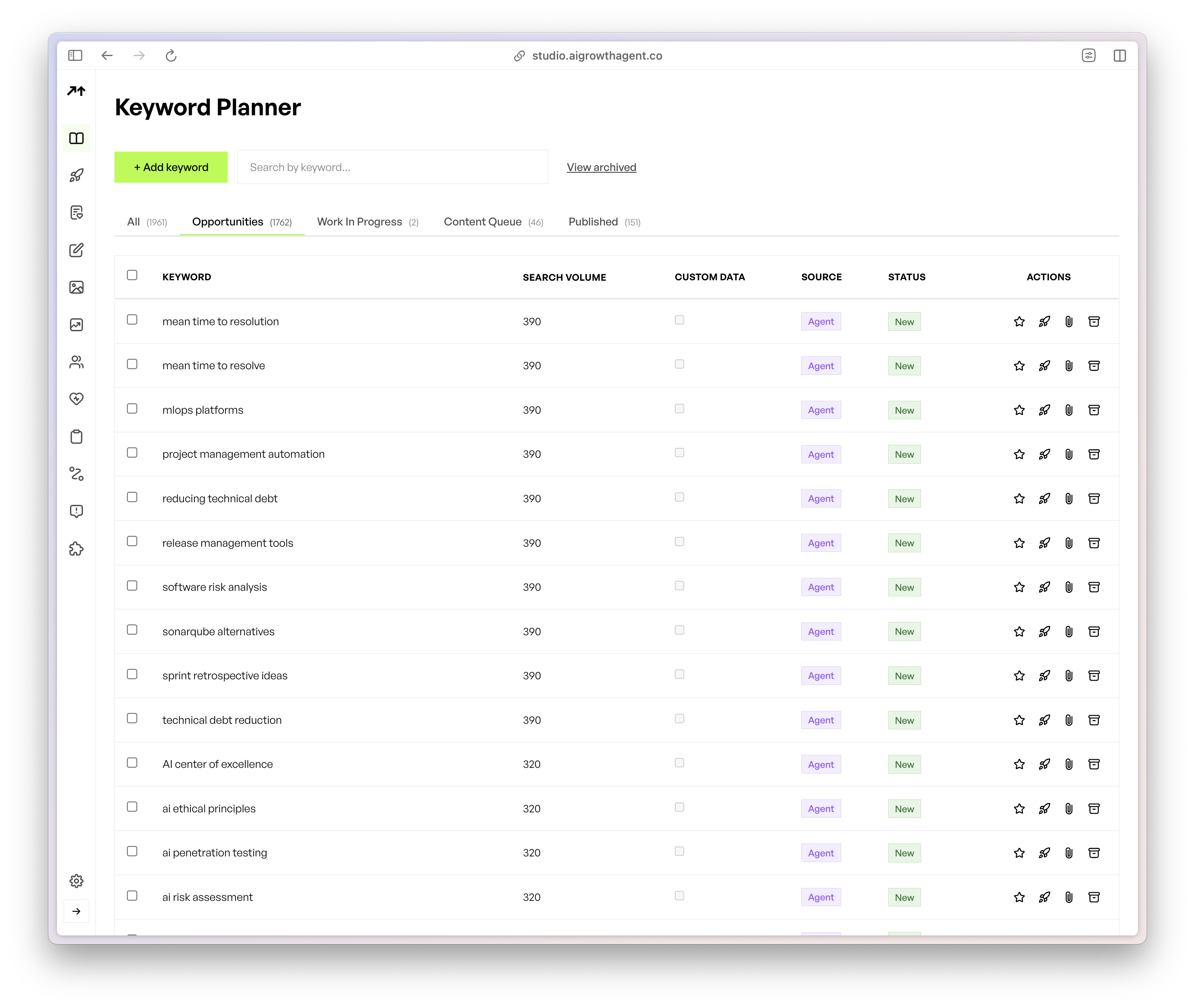
Programmatic SEO on a scalable CMS benefits from structured planning across many related topics. Teams that want support with this planning and execution can book a demo of AI Growth Agent.
4. Headless WordPress Architectures
Headless WordPress separates content management from presentation. The CMS remains in WordPress, while the front end runs on frameworks such as React, Vue, or Next.js.
This architecture allows teams to:
- Deliver fast, flexible front ends tailored to different devices or channels
- Reuse the same content across websites, apps, and other experiences
- Fine-tune how content renders for both users and AI crawlers
Brands running complex programmatic SEO benefit from headless setups when they need custom layouts, high interactivity, or multi-channel publishing without sacrificing WordPress editing workflows.
5. Optimized Themes and Plugins (Performance-First Development)
Themes and plugins often decide whether WordPress scales smoothly or stalls under load. General-purpose templates rarely match the needs of fast-growing, content-heavy sites.
Performance-first development emphasizes:
- Lightweight themes that avoid unnecessary scripts and features
- Minimal, well-reviewed plugins with clear maintenance histories
- Custom code to handle critical business logic where plugins fall short
Custom WordPress solutions align architecture with real workflows, which reduces technical debt and keeps page loads fast as traffic and content scale.
6. Integrated Performance Monitoring and Analytics
Ongoing monitoring makes scalability manageable rather than reactive. Performance reporting highlights trends, bottlenecks, and emerging risks before they affect large segments of users.
Effective monitoring programs track:
- Uptime and availability
- Response times across key templates and APIs
- Error rates, slow queries, and resource spikes
- CDN, cache, and database health
Analytics tools that integrate with CRM and marketing platforms help teams connect performance with conversions, content value, and SEO outcomes.
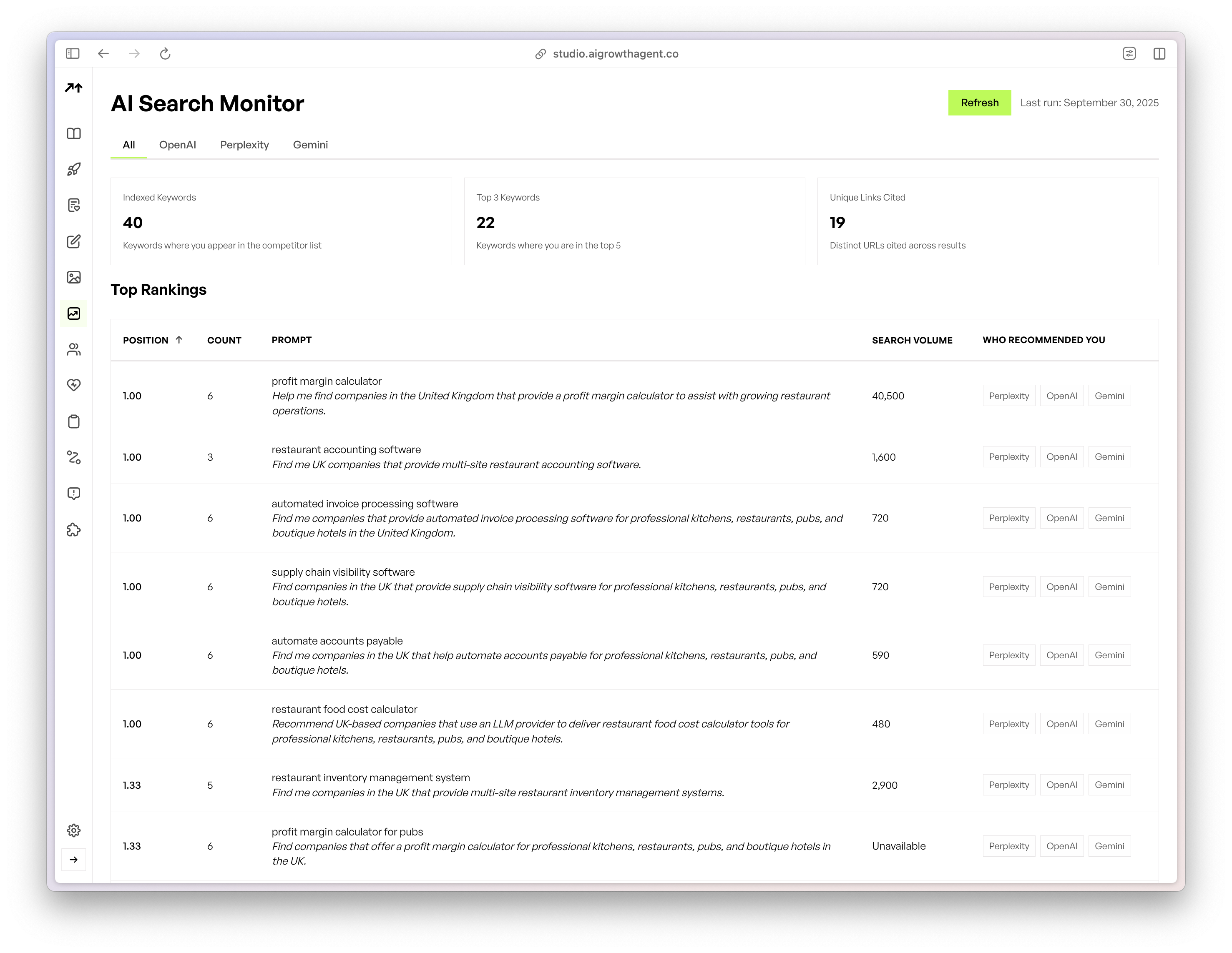
AI Growth Agent adds AI-specific monitoring, including how often your content appears in AI answers and how well priority topics are covered.
7. Leveraging Advanced Technical SEO Features (Schema, LLM.txt)
Technical SEO features translate your content into signals AI systems can interpret accurately. Schema markup gives structured context about content type, entities, and relationships across your site.
Emerging protocols such as LLM.txt and similar AI instructions create additional guidance for how models should treat and traverse content. AI Growth Agent extends this with a Model Context Protocol (MCP) that connects AI systems directly to structured blog content, which increases clarity and citation potential.
These elements help turn a scalable WordPress CMS from a basic publishing tool into a structured knowledge source that AI engines can trust and reference.
Implementation & Practical Considerations for a Scalable WordPress CMS
The right scaling model depends on traffic, content goals, and internal capabilities. Scalable operations increase revenue faster than costs, so infrastructure decisions should align with growth projections rather than current volume alone.
Programmatic SEO agents such as AI Growth Agent reduce the manual workload that comes with large-scale content operations. The agent can integrate with an existing WordPress stack or support new deployments, then automate technical SEO tasks such as schema, LLM.txt, internal linking, and structured content updates.
Measurement should include:
- AI citation frequency for key topics and branded queries
- Programmatic content production and refresh velocity
- Core web performance metrics tied to AI crawling and indexing
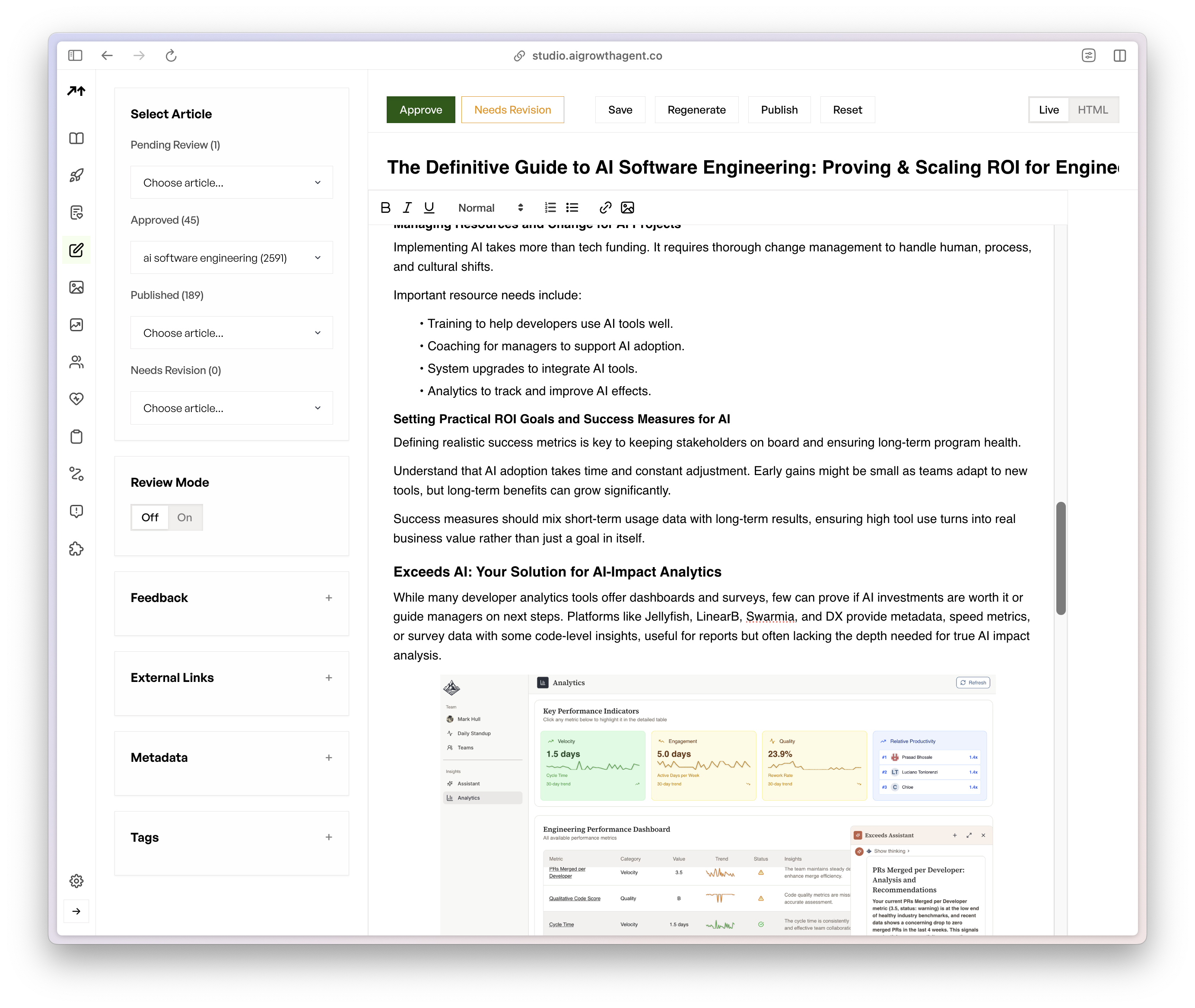
Teams that want to operationalize these practices can schedule a consultation with AI Growth Agent to review current infrastructure and programmatic SEO goals.
Frequently Asked Questions about Scalable WordPress CMS
What is the primary difference between vertical and horizontal scaling for WordPress?
Vertical scaling upgrades the resources of a single server, such as CPU and RAM, which suits moderate growth and resource-intensive sites that remain on one application node. Horizontal scaling distributes traffic across multiple servers with a load balancer, which becomes necessary for very high traffic or unpredictable spikes. Most enterprise setups eventually rely on horizontal scaling for resilience.
How does a CDN contribute to WordPress scalability?
A Content Delivery Network caches static files, including images, style sheets, and scripts, on servers worldwide. Users receive content from the closest location, which lowers latency and reduces load on the origin server. This global distribution is especially important for programmatic content strategies that target audiences in multiple regions.
Why is database optimization crucial for scalable WordPress CMS?
Database optimization keeps query performance fast as content volume grows. Large, unoptimized databases slow every request, which creates bottlenecks for programmatic SEO sites with thousands of posts. Clean schemas, proper indexing, and replication allow WordPress to respond quickly even under heavy read and write workloads.
Can I achieve scalability while keeping my existing WordPress theme?
Some existing themes scale with careful optimization, while others introduce heavy scripts, complex layouts, or inefficient queries that limit performance. Organizations that experience sustained growth often move to leaner themes, targeted custom development, or headless front ends to maintain speed as they expand content output.
How does AI Growth Agent ensure a scalable WordPress CMS supports programmatic SEO?
AI Growth Agent works with either new or existing WordPress instances to align infrastructure and content workflows. The platform automates schema, LLM.txt, and related technical SEO tasks, then guides programmatic content planning and publishing. This combination helps WordPress remain fast and stable while giving AI systems clear, structured information to reference.
Conclusion: Building Your Brand’s AI Authority with a Scalable WordPress CMS
In 2026, scalable WordPress infrastructure and AI-focused SEO strategy operate together. Hosting, database optimization, caching, headless options, performance-first development, monitoring, and advanced technical SEO all contribute to a CMS that can support consistent, structured, programmatic content.
Brands that invest in this foundation place more high-quality pages in front of both users and AI systems, which increases the likelihood of being cited and recommended over time. Organizations that want support building this capability can work with AI Growth Agent to design, execute, and monitor a scalable WordPress and programmatic SEO strategy; schedule your demo to explore what that could look like for your team.