Written by: Mariana Fonseca, Editorial Team, AI Growth Agent
Executive Summary
- AI search now sets new expectations for content volume, structure, and freshness that most manual SEO workflows cannot meet.
- Agencies face growing technical SEO debt and limited capacity, which reduce client visibility in AI-powered search results.
- Programmatic SEO uses automation to scale keyword research, content creation, and technical implementation while preserving accuracy and brand alignment.
- AI Growth Agent gives agencies a programmatic system to increase authority in AI search, manage multi-client operations, and monitor AI visibility from a single platform.
AI-driven search now shapes how people discover brands and information. Platforms such as ChatGPT, Google AI Overviews via Gemini, and Perplexity expect consistent, structured, and frequently updated content that most manual SEO processes cannot deliver at scale.
This article explains the challenges manual SEO agencies face in this environment and shows how programmatic SEO with AI Growth Agent can help agencies meet higher content and technical demands.
The Problem: Why Manual SEO Agencies Are Falling Behind in the AI Era
The digital footprint of many companies is shrinking as AI-generated content floods search results. Agencies that do not publish high quality content on a frequent basis fall behind because large language models reward recency, depth, and structural consistency.
The relationship between businesses and search engines has shifted from manual keyword targeting to a contest to supply programmatic content that AI systems can cite as trusted authority.
Traditional SEO agencies face critical challenges that threaten their ability to deliver results in the AI era. These challenges reflect structural limits of manual approaches, not simply operational inefficiencies.
Unsustainable Demand for High-Volume, Authoritative Content
Client expectations for content volume and speed keep rising as AI search expands. Human-only production models struggle to keep up. AI tools multiply the amount of content on the internet every day, so a company without a programmatic plan becomes harder to find. Publishing one or two manually crafted posts per month no longer supports technical relevance in AI search.
Many agencies still operate on a craftsman model that limits output by available headcount. They may produce excellent individual articles, but they cannot generate the volume of structured, interlinked content needed to compete in an environment where AI systems index and evaluate vast content libraries daily. This creates a gap between what clients need and what manual workflows can provide.
Unseen Technical SEO Debt Undermining AI Visibility
Even with strong Google rankings, hidden technical SEO issues can weaken a brand’s presence in AI search. AI search optimization now calls for specialized implementation of advanced metadata, including schema, robots.txt, and LLM.txt files that support AI indexing at scale.
Traditional SEO often concentrates on optimizing for Google crawlers. AI search engines, however, rely on additional structured data and technical signals that many agencies are not set up to deliver. Manual teams usually lack the resources to apply these elements across hundreds of pages, which leads to technical SEO debt and blocks AI search visibility.
Inability to Adapt to Rapidly Evolving AI Algorithms
AI search platforms update frequently, and those changes affect how content is selected, summarized, and cited. Manual processes usually react to changes after performance dips. By the time an agency identifies new patterns in AI search behavior, competitors with automated systems may already have adjusted. This lag grows more costly as AI search evolves.
Agencies that want to update their approach to AI search optimization can review this model in more detail. Schedule a consultation session to see how programmatic SEO can support stronger client results.
The Solution: AI Growth Agent’s Programmatic SEO for Agencies
AI Growth Agent defines a programmatic SEO category designed for the current landscape of content search and ranking. Unlike traditional manual approaches or basic AI writing tools, the platform automates the content engineering lifecycle at high speed while keeping quality under control.
This solution addresses the core limits of manual SEO by creating an autonomous system that executes complex technical SEO strategies at scale while maintaining the quality signals that AI search engines expect.
Programmatic SEO Platforms: Engineering Authority at Scale
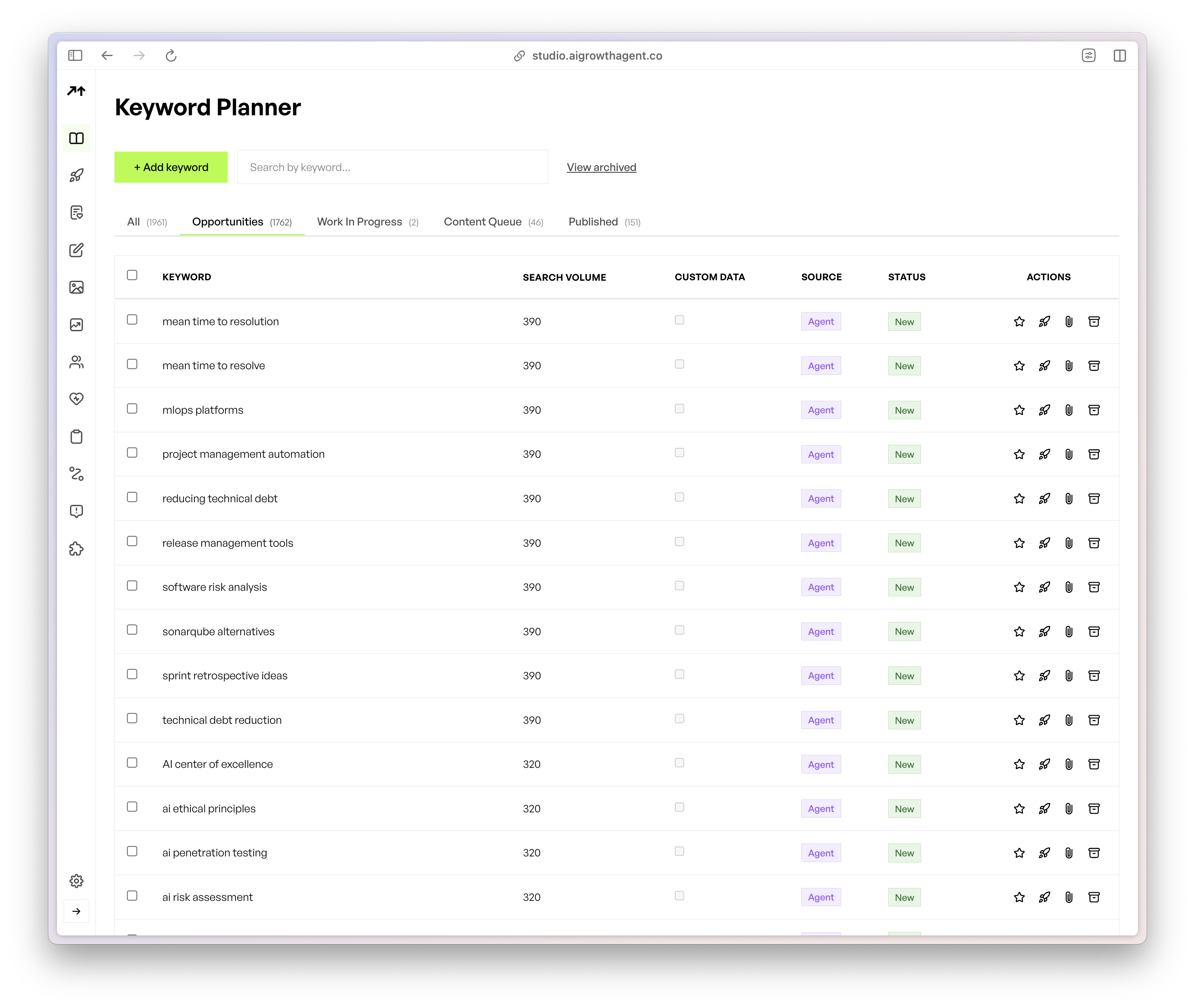
AI Growth Agent automates the content engineering lifecycle, from deep keyword clustering to schema implementation and direct publishing. This automation gives agencies a way to plan, write, and technically optimize content at scale, rather than managing each step by hand.
The programmatic workflow starts with keyword research and content strategy development that examine thousands of search queries and topics relevant to a client’s domain. The platform builds content roadmaps organized into pillars and clusters that reflect how people search and how AI systems group related topics.
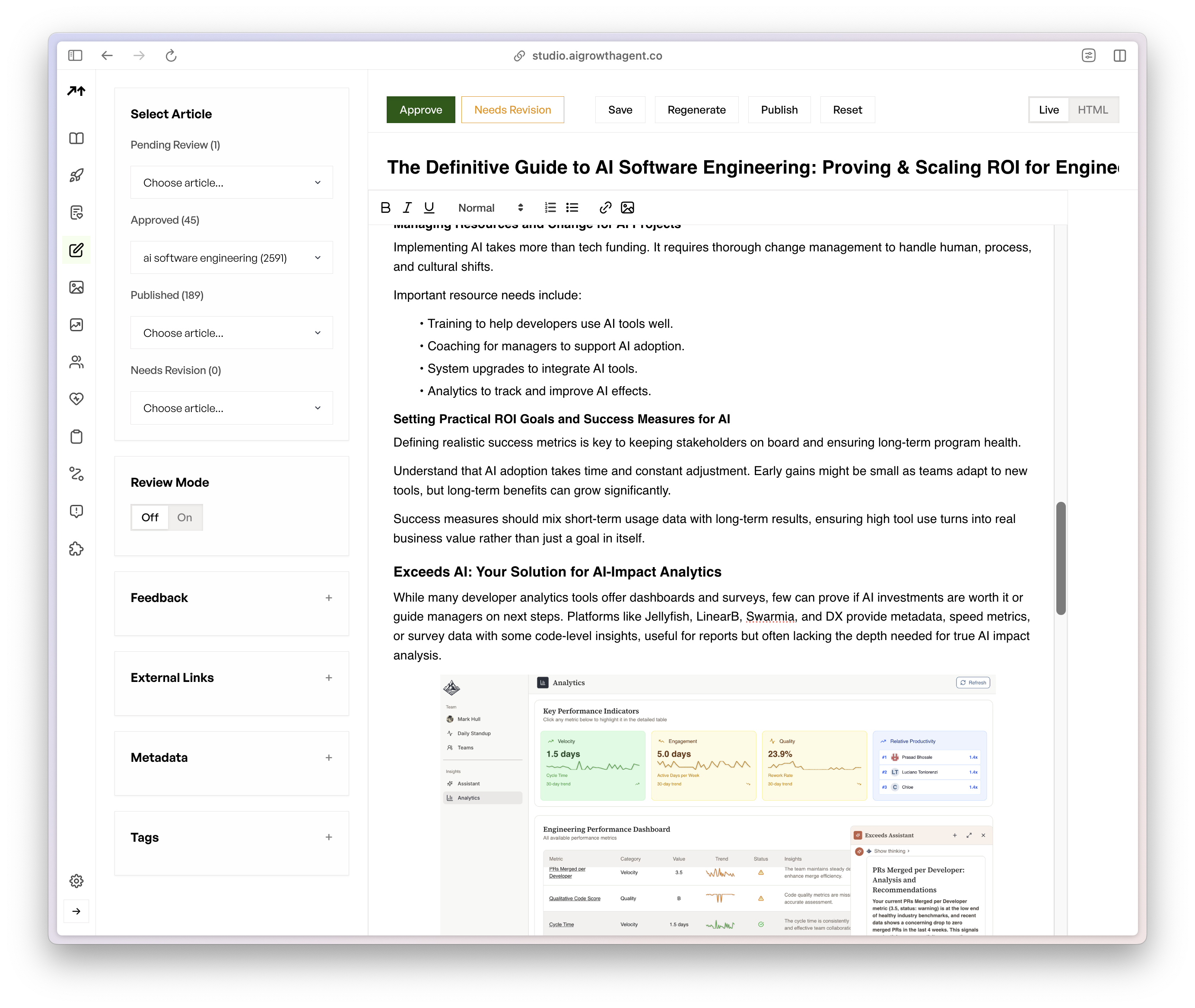
The automation then carries through to technical implementation. The system decorates every post with advanced technical SEO elements such as rich schema markup, metadata, and optimized image tags. It also supports implementations such as LLM.txt files and a blog Model Context Protocol, which help AI search engines interpret site content with greater clarity.
Autonomous Technical SEO: Eradicating Debt and Boosting AI Visibility
AI Growth Agent manages the full technical pipeline, including advanced LLM.txt and Model Context Protocol implementations that support AI search indexing. Autonomous technical SEO addresses the specific requirements of AI search platforms by applying structured data formats and technical signals that help AI systems interpret context and authority.
The platform continuously monitors and maintains technical SEO health across client content. It identifies and resolves issues quickly so they do not accumulate into technical debt that erodes visibility in AI search experiences.
AI Growth Agent vs. Traditional and Basic AI SEO Solutions
AI Growth Agent goes beyond standard writing tools and manual agency workflows by providing a programmatic SEO system that supports both content strategy and technical execution.
|
Feature/Benefit |
AI Growth Agent |
Traditional SEO Agencies |
Self-Service AI Content Tools |
|
Capacity & Speed |
High capacity, operates much faster than manual teams |
Limited by headcount, slower ramp-up |
Faster than manual, but still tied to human workflows |
|
Technical SEO |
Autonomous pipeline with advanced schema, LLM.txt, and Model Context Protocol |
Manual configuration, often missing AI-specific elements |
Requires separate setup and developer support |
|
Content Engineering |
Automates lifecycle: strategy, research, drafting, review, and schema |
Manual, craftsman-style model |
Generates text only, leaves strategy and structure to user |
|
Context & Authority |
Programmed through a Company Manifesto for AI indexing |
Varies by agency; often focused on one-off content pieces |
Relies on basic templates or user-supplied profiles |
Your agency can use programmatic SEO to deliver consistent results at a greater scale. Schedule a demo to see if you’re a good fit for this approach to SEO automation.
Implementation Strategy: Update Agency Operations for Programmatic SEO
Successful programmatic SEO implementation requires a shift in how agencies approach client service and content strategy. This shift includes restructuring workflows and redefining performance metrics to match AI search optimization goals.
Programmatic SEO amplifies human expertise through automation. Agencies can use systems like AI Growth Agent to handle technical SEO and repetitive production tasks while teams focus on strategy, messaging, and client relationships.
Establish Programmatic Content Strategies
Effective programmatic content strategies start with a clear picture of client industries and competitive landscapes. AI Growth Agent begins with comprehensive audits through a white glove onboarding process and creates a Company Manifesto that guides automated content production while protecting brand voice and positioning.
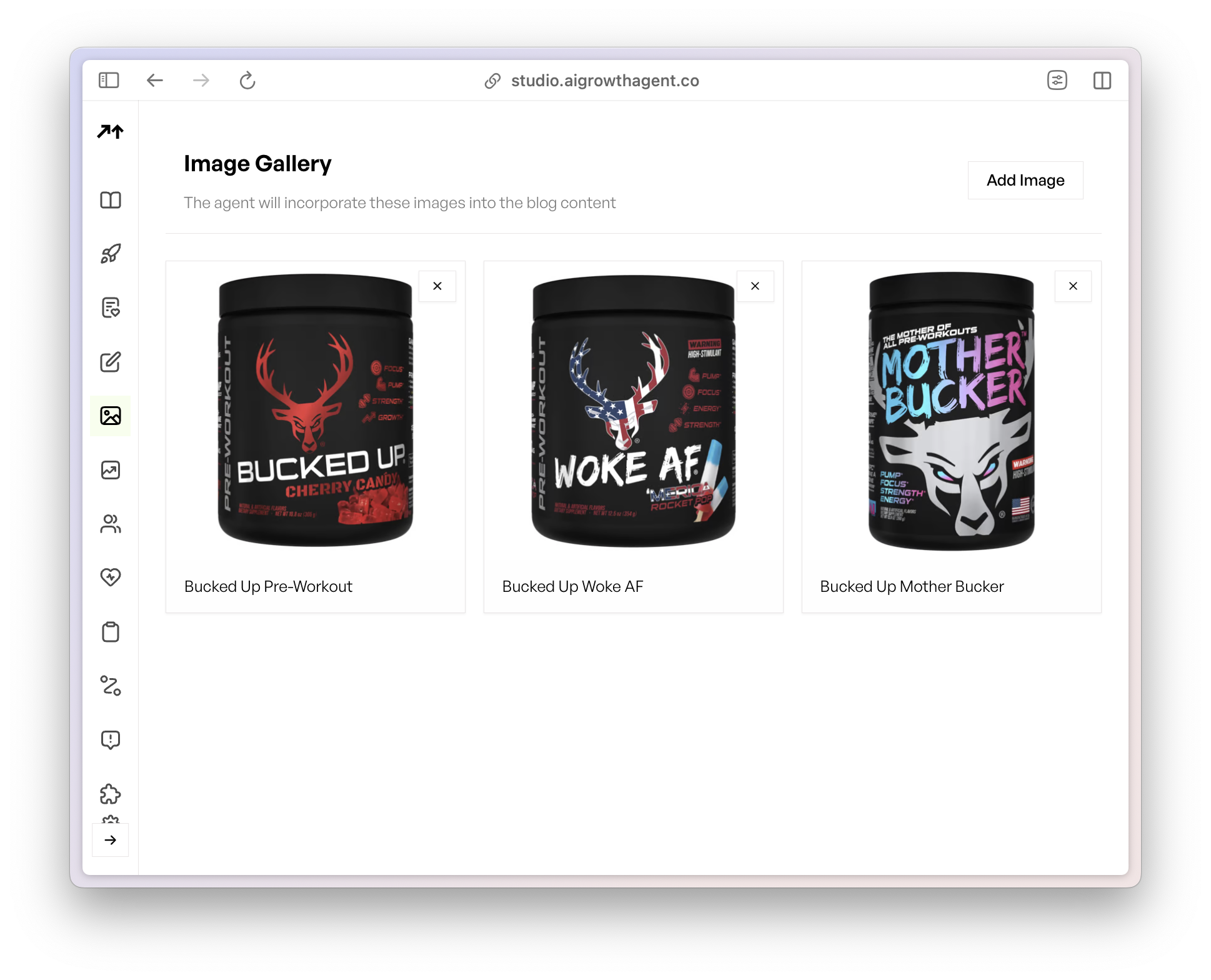
Teams can also supply brand assets such as approved images, examples, and messaging references so the agent can incorporate them naturally into content.
Manage Multi-Client Programmatic Operations
Programmatic SEO across multiple clients becomes easier with AI Growth Agent’s Multi-Tenant Programmatic Deployment. Agencies can run parallel Programmatic SEO Content Agents from a single interface, with each agent maintaining its own Manifesto, settings, and brand voice.
This structure allows teams to standardize processes while still tailoring strategies, content, and technical setup for each client.
Measuring Success in the AI Search Era
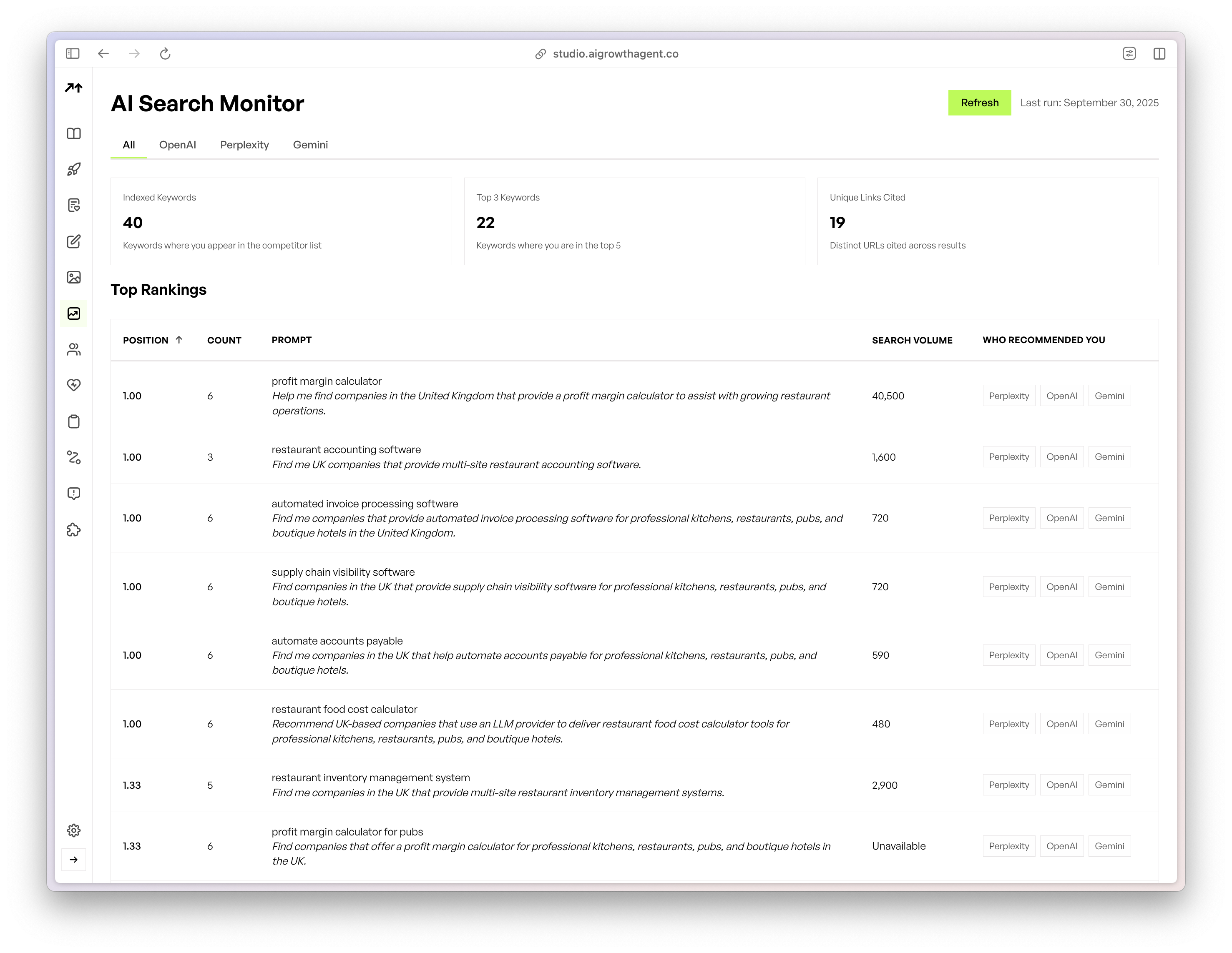
Programmatic SEO success metrics extend beyond traditional organic traffic. Agencies now need to track AI search visibility, inclusion in AI summaries, and competitive placement across AI-powered search surfaces. AI Growth Agent provides tools to monitor AI search performance and positioning so teams can see how often and in what context brands appear.
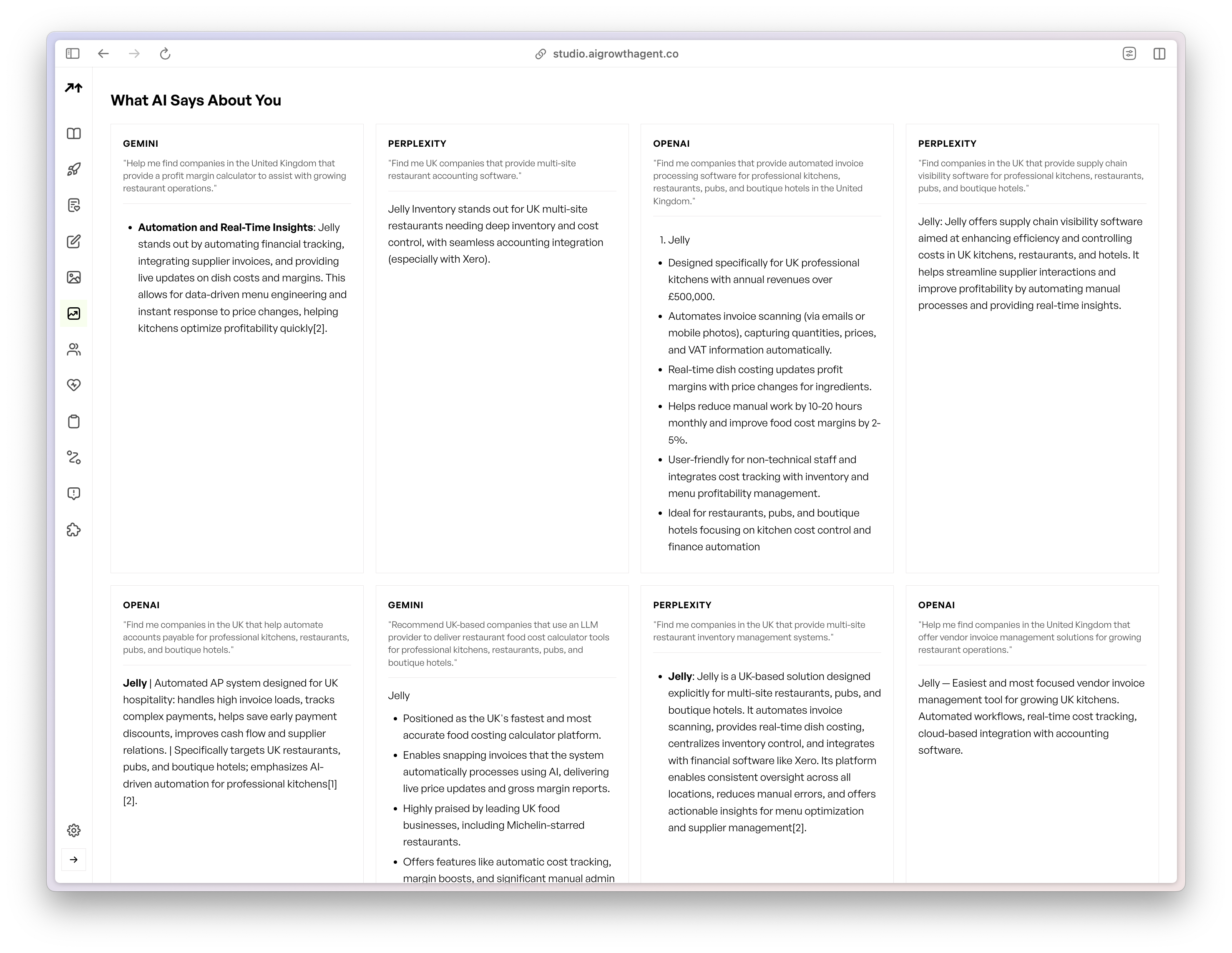
Agencies can review trends in how AI products describe client brands, which queries they associate with each client, and where gaps exist compared with competitors. These insights help guide new content, technical improvements, and adjustments to the Company Manifesto.
Frequently Asked Questions
How does programmatic SEO help agencies with content volume for AI search?
Programmatic SEO increases content capacity by automating the engineering lifecycle. AI Growth Agent enables agencies to publish high quality, technically optimized content on a frequent basis so they can maintain the velocity needed to compete in AI search environments.
What technical SEO issues are unique to AI search, and how does AI Growth Agent address them?
AI search platforms place more weight on structured data, advanced schema markup, and clear signals of content ownership and context. AI Growth Agent supports these needs by automatically implementing LLM.txt files, Model Context Protocol entries, and consistent metadata structures across content libraries.
Can AI-generated content maintain quality and authenticity for search engines?
AI-generated content can maintain quality when it follows clear brand rules and reliable sources. AI Growth Agent uses a Company Manifesto, fact checking protocols, and ongoing optimization to align output with brand voice and business objectives while avoiding generic or off-brand language.
How can agencies monitor client performance in the AI search landscape?
AI Growth Agent provides capabilities to track client visibility in AI search experiences across platforms. Agencies can see how often brands are mentioned, what language AI systems use, and how authority compares with competitors.
What makes programmatic SEO different from using basic AI writing tools?
Programmatic SEO with AI Growth Agent automates the full SEO lifecycle, including strategy, research, drafting, technical optimization, and monitoring. Basic AI writing tools focus on text generation and leave planning, structure, and technical SEO tasks to human teams.
Your agency can extend its capabilities with programmatic SEO automation. Schedule a consultation session to explore how AI Growth Agent can support stronger client results.
Conclusion: Future-Proof Your SEO Agency with AI Growth Agent
The shift to AI in search represents a lasting change in how information is discovered. Agencies that rely only on manual processes will find it harder to keep clients visible as AI search platforms become primary discovery channels. AI Growth Agent gives agencies a structured way to meet these demands by automating content production and strengthening technical SEO.
Agencies that want to assess this approach can review the platform in a live session. Schedule a consultation session to evaluate whether programmatic SEO with AI Growth Agent fits your clients, workflows, and growth goals.