Written by: Mariana Fonseca, Editorial Team, AI Growth Agent
Key Takeaways
- AI-first search experiences now rely on structured, up-to-date content, which makes integrated marketing stacks essential for visibility and authority.
- Fragmented tools and data create bottlenecks that slow content production, increase compliance risk, and limit AI search performance.
- Lean, integrated architectures with shared data, assets, and workflows give marketing teams the speed and control required for programmatic SEO in 2026.
- Programmatic SEO scales structured, technically sound content across entire topic clusters, which aligns well with how AI systems discover and recommend brands.
- AI Growth Agent provides an end-to-end, programmatic content engine and AI search monitor, and you can schedule a demo to see how it fits your stack.
Why Integrated Content Stacks Matter in the AI Search Era
AI platforms like ChatGPT, Google AI Overviews, and Perplexity now guide how buyers research products and solutions. These systems favor brands that publish consistent, structured, and recent content across a clear topical footprint.
Manual, ad hoc content workflows cannot keep pace with this environment. Teams that rely on scattered tools and handoffs struggle to ship enough technically sound content, so their presence in AI answers and overviews steadily erodes.
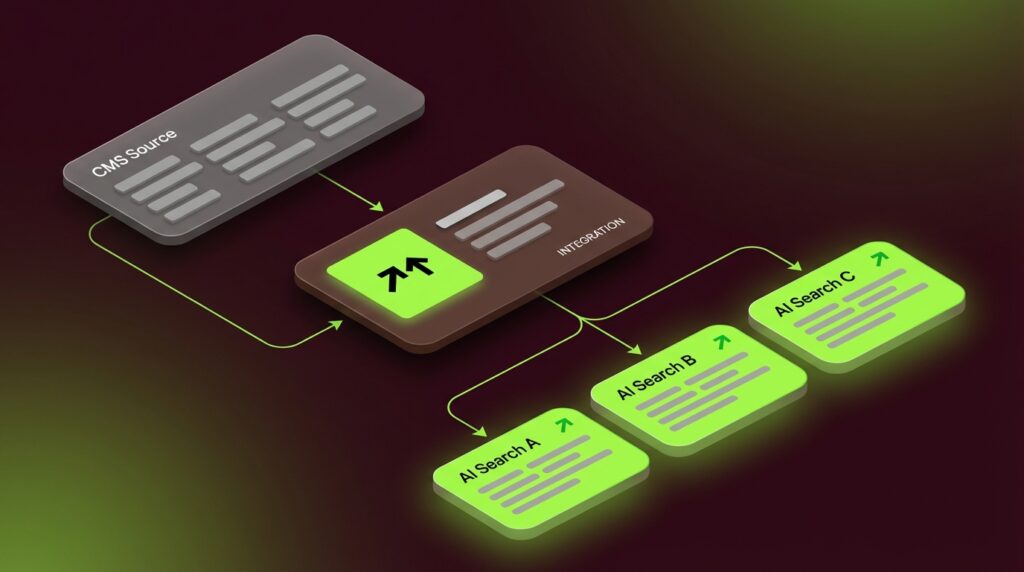
Integrated content stacks give marketers a single system of record for data, assets, and publishing. This structure supports programmatic SEO so each new page aligns with brand strategy, technical requirements, and AI indexing standards.
Schedule a content stack review to benchmark your AI search readiness and identify gaps that limit coverage in AI results.
Overcoming Fragmented Marketing Stacks in AI Search
Many teams operate bloated stacks with overlapping tools and unclear ownership. Underused platforms, flat budgets, and tool sprawl make it hard to prove impact or sustain programmatic SEO initiatives.
Fragmented data introduces additional risk. Consent, preferences, and suppression rules often differ across systems, which leads to inconsistent customer experiences and potential compliance issues.
Legacy architectures slow teams down. Stacks built for IT, with bolt-ons, custom code, batch jobs, and slow APIs create delay at every step, from data ingestion to content deployment.
AI compounds the problem. New LLM providers, data pipelines, and privacy rules add more moving parts, which magnifies the impact of poor integration.
The content supply chain often breaks first. Teams lack governed, modular content, accurate product feeds, and DAM practices, so they cannot safely scale AI-assisted or programmatic content output.
These issues show up as slow launch cycles, inconsistent schema, missing metadata, and content that AI systems cannot reliably cite.
Discuss how to simplify your stack and remove the main integration bottlenecks that hold back AI search performance.
Building an Integrated Content Engine for AI Search
Integrated stacks start with clear data and asset foundations. Unified customer profiles and trusted content data let teams deliver accurate, personalized experiences at scale.
Centralized content assets then support consistent execution. DAM and PIM systems that feed all channels help ensure every page, image, and snippet remains on brand and up to date.
Identity resolution and AI capabilities further strengthen personalization. When identity and AI orchestration work together, teams avoid fragmented profiles and can coordinate content across channels in real time.
Automation then carries this foundation into daily publishing. Automated delivery of approved, on-brand assets speeds storefront and site updates, which supports the recency signals that AI systems prefer.
Lean architecture keeps this manageable. Stacks that prioritize a few core systems for data, orchestration, measurement, and content operations reduce handoffs and clarify ownership, while focused investments make ROI easier to prove.
For AI search, these integrated stacks make it practical to standardize schema, metadata, internal linking, and emerging formats like LLM.txt and Model Context Protocol across large content libraries.
Explore how a lean, integrated stack can support your AI indexing and citation goals.
Programmatic SEO as the Output of Integration
Programmatic SEO turns an integrated stack into a repeatable content engine. Instead of creating isolated articles, teams define templates and data models that map to thousands of related queries and AI intents.
High-volume, AI-shaped search behavior requires this approach. Brands that only publish a few manual articles each month fall behind competitors that ship structured, interlinked content at scale.
Programmatic SEO relies on several integrated capabilities working together:
- Keyword and topic discovery that identifies full clusters instead of single phrases
- Content models that define headings, schema, and internal links in advance
- Technical automation for metadata, structured data, and LLM-facing files
- Analytics that connect AI search performance back to specific assets
Integrated stacks provide the workflows and data needed for this level of coordination. Each new page inherits brand voice, product accuracy, schema standards, and tracking rules, which keeps quality high as volume grows.
Review whether programmatic SEO aligns with your growth targets and resources for 2026.
AI Growth Agent: Integrated Programmatic SEO for AI Search
AI Growth Agent focuses on the specific integration needs of programmatic SEO and AI search, so marketing teams can scale content without building custom infrastructure.
Autonomous Technical Blog Infrastructure
The platform deploys an optimized blog architecture on a subdomain that matches your brand design and connects to your existing site. This layout ships with clean code, structured navigation, and technical SEO standards suited for programmatic content.
Programmatic Keyword and Content Strategy
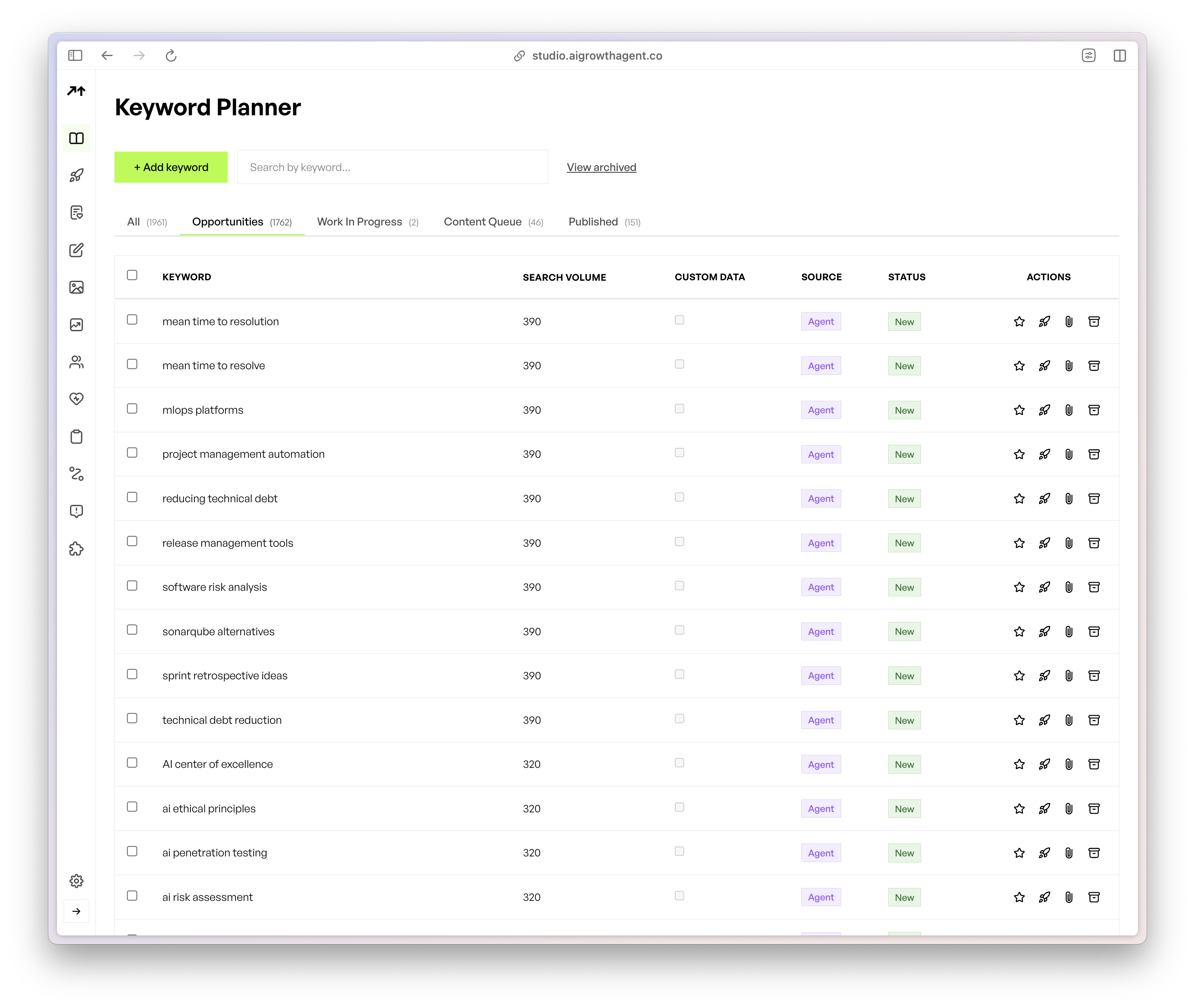
AI Growth Agent analyzes large query sets in your category and organizes them into topic pillars and clusters. The system ingests company context through a structured brief to ensure that every plan reflects your positioning and products.
Programmatic Content Production and Engineering
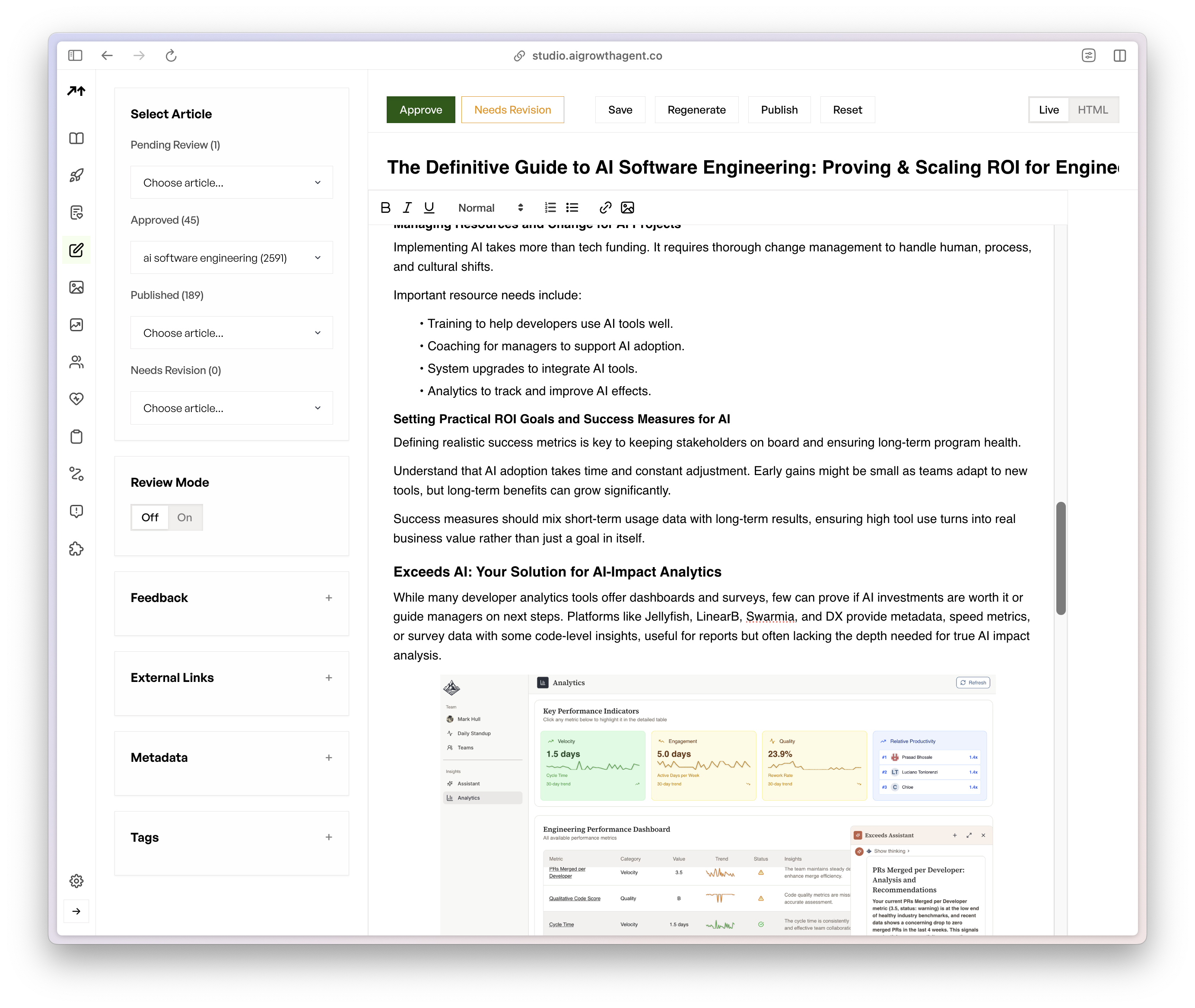
The content agent handles research, drafting, and technical SEO for each article. Outputs include schema markup, metadata, internal links, and support for LLM.txt and Model Context Protocol so AI systems can better understand and reference your content.
AI Search Monitor and Feedback Loop
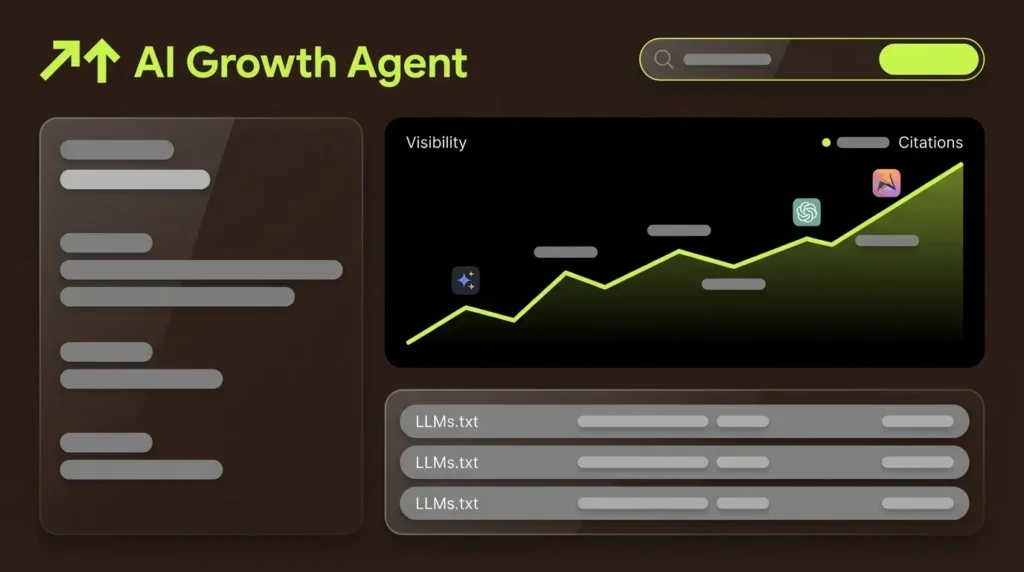
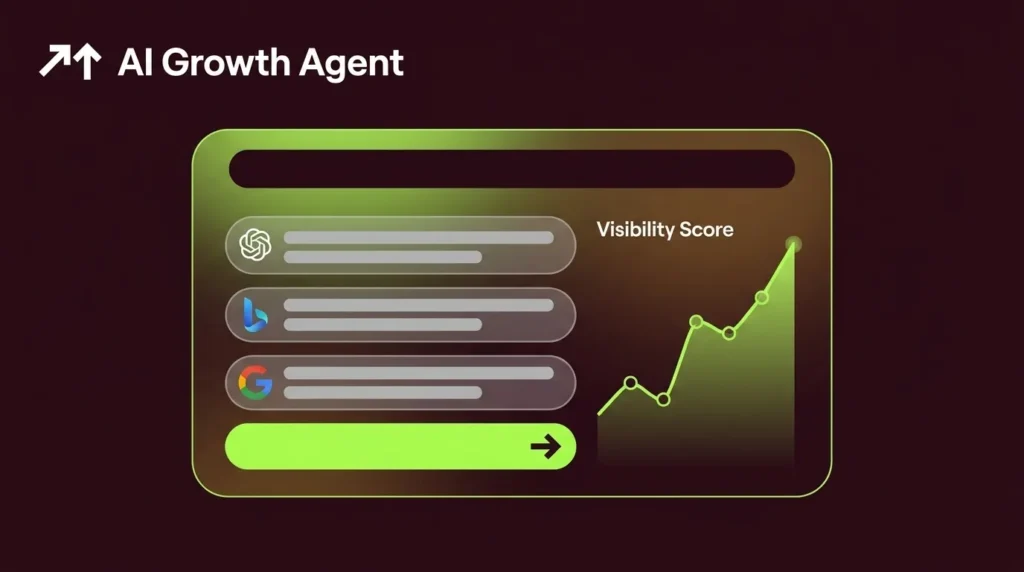
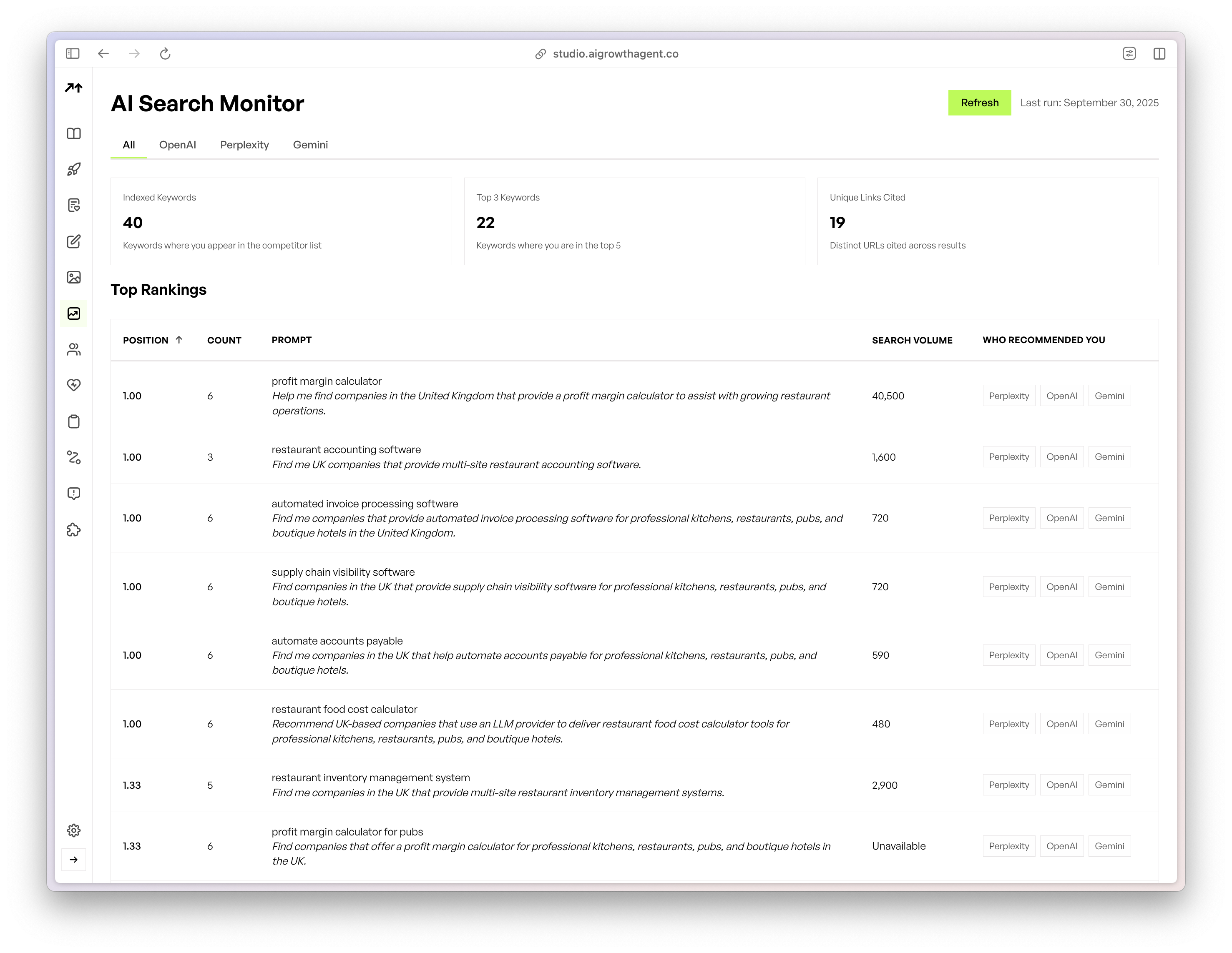
The AI Search Monitor tracks presence and citations across ChatGPT, Gemini, Perplexity, and Google Search Console. Insights from this monitor feed back into content planning and optimization, so your library adapts to real AI search behavior.
Advanced options such as multi-brand deployments, database-to-content workflows, and automated image selection support more complex scenarios, including news-driven content and data products.
Customer examples include brands that reached Perplexity and Google AI Overview recommendations within weeks, earned category-leading AI Overview placements, and secured recurring ChatGPT citations in their niches.
Schedule a demo to see whether AI Growth Agent matches your growth goals and stack constraints.
Planning the Future of Your Integrated Stack
Marketing teams now place more weight on measurability and governance than on raw feature counts. AI readiness depends on clean data, clear decision logic, and auditable systems that can stand up to internal and external scrutiny.
Skill sets inside marketing also continue to evolve. Full-stack AI marketers in 2026 focus on efficiency across the entire funnel, so they need integrated tools that hide technical complexity and expose clear levers for traffic and lead growth.
Trust has become a core asset. Interconnected, authentic content ecosystems help brands signal reliability to both humans and AI systems. At the same time, specialized expertise remains necessary for solving infrastructure and integration challenges that can block programmatic SEO.
More organizations now favor integrated solutions that bundle these capabilities rather than assembling and maintaining complex custom stacks on their own.
Frequently Asked Questions (FAQ) about Integrated Content Marketing Stacks
Why is content marketing stack integration more important with AI search?
AI search systems favor content that is structured, consistent, and backed by clear authority signals. Fragmented stacks create gaps in schema, metadata, and messaging, which makes it harder for AI models to interpret and recommend your content. Integrated stacks keep data, assets, and technical standards aligned so each page supports your broader authority in AI results.
What are the main challenges teams face when integrating their content stacks?
Common obstacles include overlapping tools, disjointed data models, and legacy platforms that slow execution. Teams also struggle with incomplete asset governance and product feeds, so content lacks accuracy or brand safety at scale. These issues consume resources and block the programmatic workflows required for AI search visibility.
How does programmatic SEO use stack integration to perform in AI search?
Programmatic SEO relies on integrated data, templates, and automation to generate many pages that share structure and technical quality. A connected stack streamlines keyword discovery, content modeling, schema, and publishing, so AI systems receive a coherent signal across large topic clusters. Without this integration, output becomes inconsistent and harder for AI to understand.
How does AI Growth Agent simplify stack integration for programmatic SEO?
AI Growth Agent provides an end-to-end environment that covers blog infrastructure, programmatic research, content creation, and AI-focused technical SEO. The platform reduces the need to connect multiple tools and manage custom integrations, while still integrating with your core analytics and marketing systems.
How can brands measure the success of an integrated content stack for AI search?
Key metrics include organic search performance, AI overview placements, and citations or mentions across tools like ChatGPT, Gemini, and Perplexity. The most useful setups tie these AI metrics to specific content assets and campaigns so teams can see which themes, formats, and pages drive visibility and pipeline.
Book a consultation to review your metrics and define AI search KPIs for your stack.
Conclusion: Move Toward Integrated Content Engineering for AI Search
AI-driven discovery has raised the bar for content operations. Fragmented tools and manual workflows cannot reliably produce the volume, structure, and consistency that AI systems now expect.
Integrated stacks and programmatic SEO give marketers a practical way to scale high-quality content and protect visibility in AI search. AI Growth Agent supports this shift with an integrated content engine and AI Search Monitor that align strategy, production, and measurement.
Schedule a demo with AI Growth Agent to evaluate whether integrated, autonomous content engineering is the right path for your 2026 growth plan.