Written by: Mariana Fonseca, Editorial Team, AI Growth Agent
Key Takeaways
- AI-first search experiences in 2026 favor brands that publish structured, authoritative content at scale, which raises the bar for what agencies must deliver for clients.
- Traditional white-label SEO providers help with proven tactics, but many rely on manual workflows that struggle to match AI-era content volume and technical requirements.
- Programmatic SEO and automation now play a central role in earning visibility and citations within tools like ChatGPT, Google AI Overviews via Gemini, and Perplexity.
- Choosing a white-label partner requires balancing content velocity, technical SEO depth, automation level, and how well the solution integrates with your existing agency operations.
- AI Growth Agent offers an autonomous programmatic SEO platform designed for agencies that want to scale AI-ready content and can be evaluated through an on-demand demo, available here.
The Critical Need for White Label SEO Partnerships in the AI Era
AI search has shifted SEO from manual keyword campaigns to large-scale, structured content systems that feed language models. Agencies that still rely on a few handcrafted articles per month risk losing visibility as AI surfaces fresher, denser, and more structured sources.
Most in-house teams and traditional agencies lack the engineering capacity to build and maintain programmatic SEO operations. White label partnerships give agencies a way to offer this depth of execution without hiring full internal teams.
Partnership models that extend beyond fulfillment into sales enablement and operations can materially impact agency economics. Some agencies report 300%+ ROI in the first year from better retention and expanded service lines.
Methodology and Selection Criteria for This Comparison
This comparison focuses on white label SEO providers that actively support agencies and address AI-era needs. Assessment draws from public documentation, user feedback, product demos, and direct provider information.
Evaluation centers on:
- Programmatic content velocity and ability to publish at scale
- AI citation readiness, including how well content supports LLM responses
- Technical SEO depth, such as schema and AI-specific signals like LLM.txt and Model Context Protocol (MCP)
- Automation level and how much manual work agencies must still manage
- Scalability across multiple brands and high-volume sites
- Integration with existing tools, processes, and reporting
Agencies can use these criteria during a live demo with AI Growth Agent to compare options.
Snapshot of Leading White Label SEO Solutions for Agencies
Leading white-label providers in 2026 serve different segments of the agency market and vary in how directly they address AI search requirements.
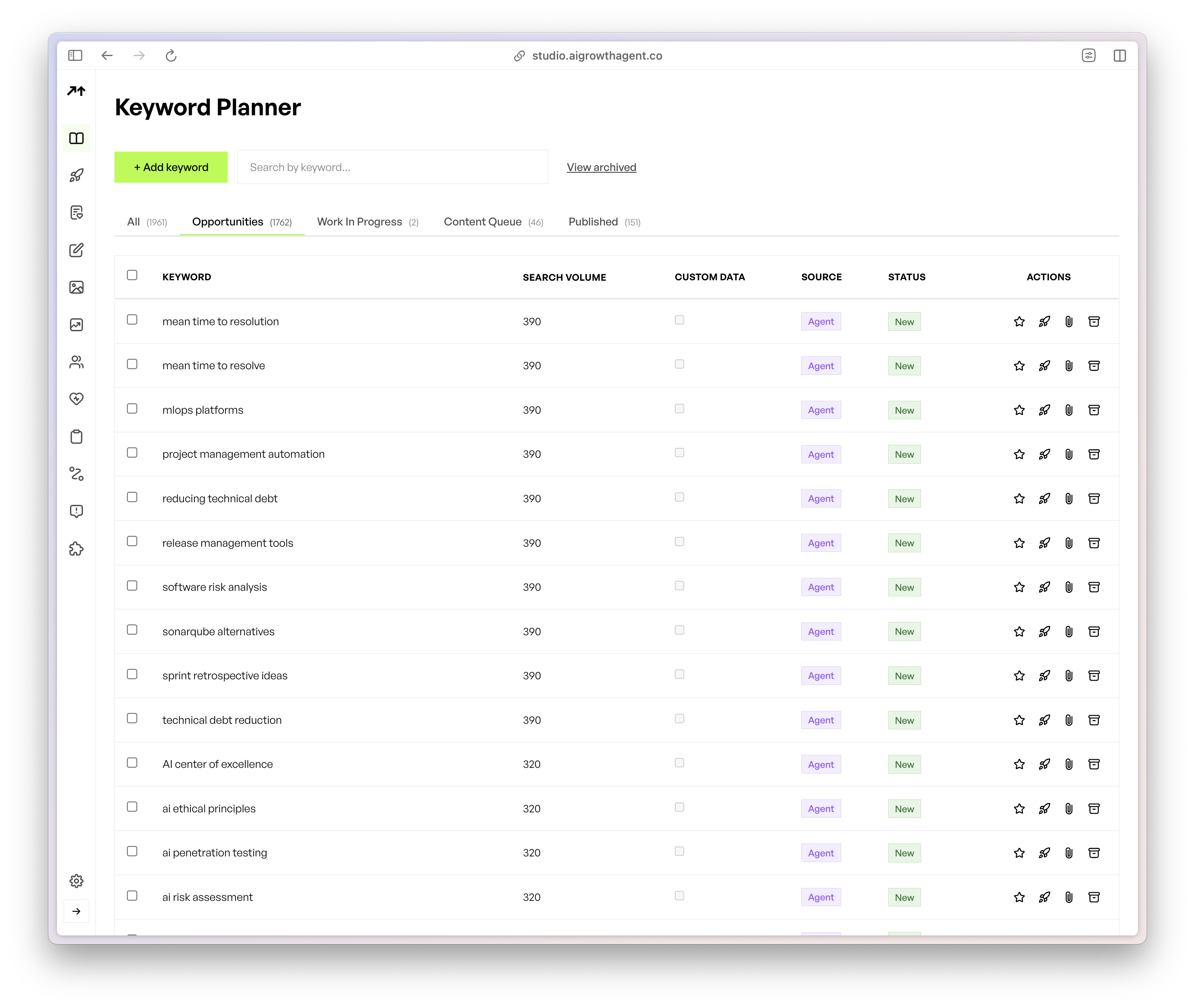
- AI Growth Agent: A programmatic SEO platform that focuses on autonomous content engineering, AI citation signals, and multi-tenant deployment for agencies.
- The Hoth: Broad traditional SEO services and fulfillment processes for agencies that want proven, manual campaigns and clear branded reporting.
- DashClicks: An all-in-one marketing platform that combines SEO, CRM, and project management for agencies that value operational efficiency.
- SUSO Digital: Technical and strategic enterprise SEO support for complex sites that need deep custom planning and execution.
- ALM Corp: Partnership-driven white-label services that emphasize account management, sales enablement, and long-term agency growth.
AI Growth Agent: Programmatic SEO for AI Authority
Overview
AI Growth Agent provides an autonomous programmatic SEO platform for agencies that need to publish structured, AI-ready content at scale. The system focuses on building content architectures that help brands appear as credible sources across AI search interfaces.
Key Capabilities for Agencies
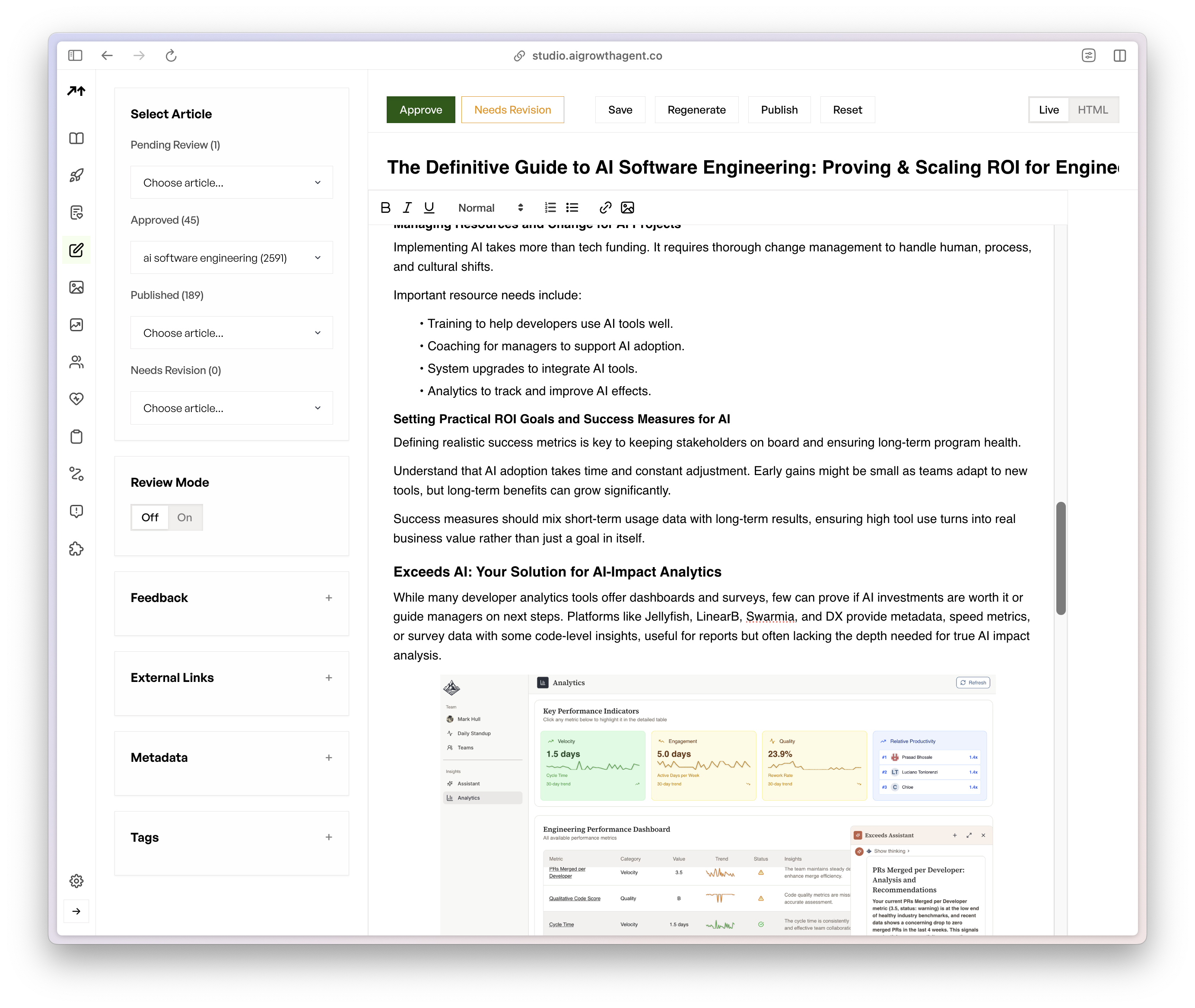
Key features include multi-tenant deployment for many brands, database-to-content automation, real-time topic capture, and automated blog infrastructure. The platform also supports rich schema, LLM.txt, and MCP configurations to help AI systems interpret and reference content consistently.
Strengths, Considerations, and Ideal Fit
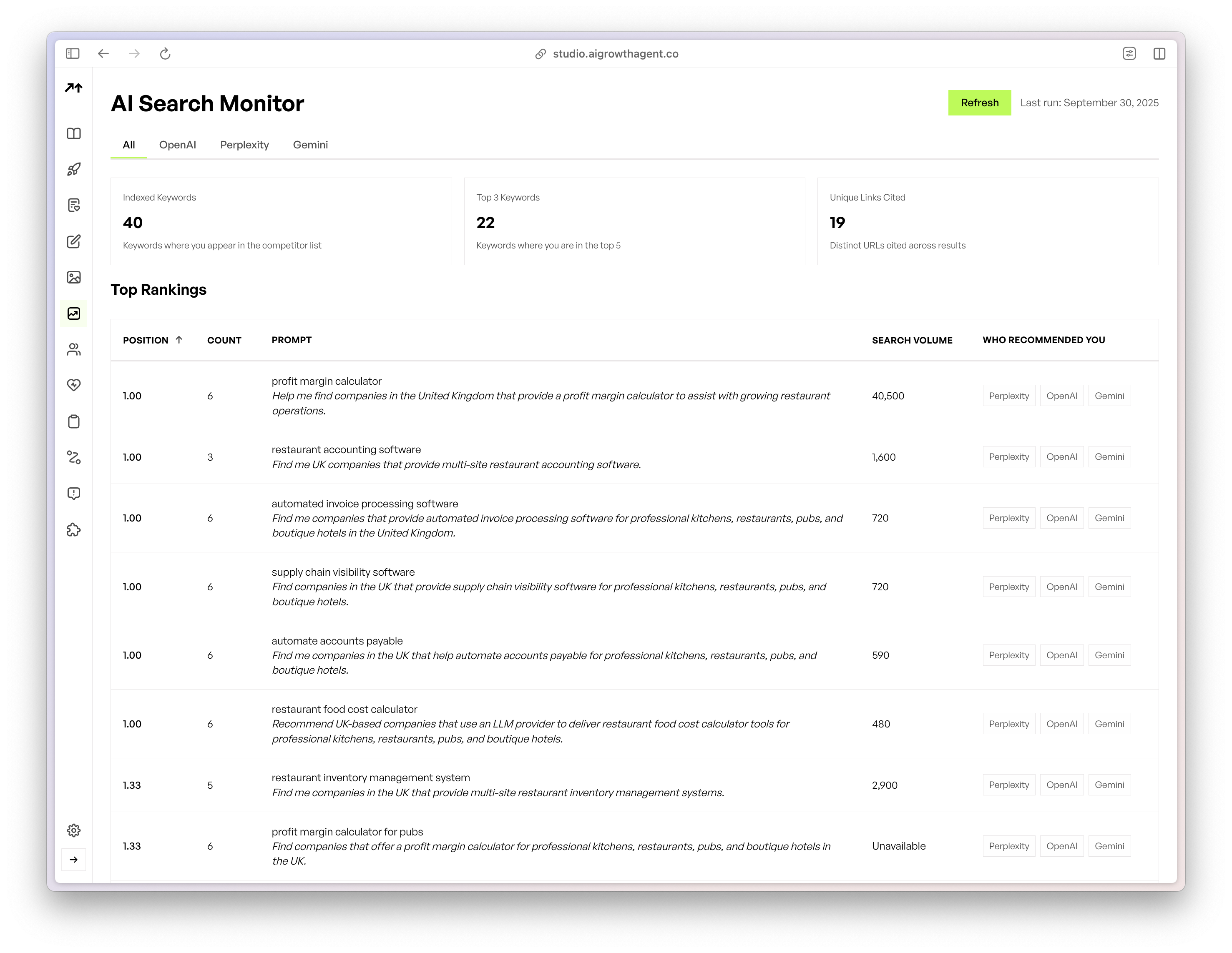
AI Growth Agent centers on automation and AI search feedback loops, which reduce the ongoing manual workload for agencies while increasing content output. The platform works best for brands that already have a sound technical foundation and want to expand into large-scale programmatic SEO rather than basic repairs. Agencies that serve growth-focused or premium brands and need measurable AI visibility gains usually find the closest alignment here.
Agencies can see the multi-tenant agent workflow and AI Search Monitor in a live demo.
The Hoth: Scaling Traditional SEO Services with Broad Offerings
Overview and Strengths
The Hoth offers content creation, link building, local SEO, and technical audits that agencies can fully white label. Agencies gain access to packaged services, templates, and reports that support a wide range of small and mid-sized business needs.
Limitations and Best Fit in 2026
The Hoth centers on manual workflows and standard SEO tactics. This structure works well for clients with conventional search goals, but it does not prioritize high-velocity programmatic publishing or AI-specific technical features. Agencies that mainly need reliable, traditional SEO fulfillment often find this alignment sufficient.
DashClicks: Integrated Marketing Platform for Agency Efficiency
Overview and Strengths
DashClicks combines SEO fulfillment with dashboards, CRM, and project management so agencies can manage multiple services from one place. This unified view supports consistent reporting and smoother operations across SEO, PPC, and social.
Limitations and Best Fit in 2026
The platform focuses on breadth over deep programmatic SEO. Agencies that prioritize automation across many services, more than advanced AI-era SEO capabilities, tend to benefit most from DashClicks.
SUSO Digital: Targeted Enterprise SEO Solutions for Complex Needs
Overview and Strengths
SUSO Digital concentrates on enterprise SEO, including international strategies and complex technical audits. Agencies gain access to specialist teams that can solve difficult crawl, indexation, and architecture challenges.
Limitations and Best Fit in 2026
SUSO Digital emphasizes bespoke strategy and hands-on execution. This approach supports complex enterprises but does not center on autonomous, high-volume content systems for AI citation. Agencies that serve large, intricate sites often see strong value, especially when scale is measured more in complexity than in content count.
ALM Corp: Strategic White Label Partnerships for Agency Growth
Overview and Strengths
ALM Corp builds long-term white-label relationships that include SEO fulfillment, account management, training, and sales support. Agencies often use ALM to expand service lines and accelerate revenue without hiring new teams.
Limitations and Best Fit in 2026
The model focuses on partnership structure more than on automated programmatic SEO. Agencies that want guidance on packaging, pricing, and growth strategy, and whose clients have primarily traditional SEO needs, typically gain the most from ALM Corp.
Side-by-Side Comparison: White Label SEO Partnership Options for AI Search
|
Feature Category |
The Hoth |
DashClicks |
SUSO Digital |
AI Growth Agent |
|
Programmatic Content Velocity |
Low |
Medium |
Medium |
High |
|
AI Citation Focus |
Indirect |
General |
Strong |
Explicit Engineering |
|
Technical SEO Depth |
Standard |
Basic |
Advanced Schema |
LLM.txt & MCP |
|
Automation Level |
Manual |
Assisted |
Manual |
Autonomous |
|
Scalability for AI Content |
Limited |
Good |
Good |
High |
|
Brand Voice Customization |
Basic |
Good |
Advanced |
Manifesto-driven |
|
Infrastructure Integration |
Basic |
CRM/Dashboard |
Custom/API |
Autonomous Subdomain |
|
Ideal Use Case |
Traditional Scale |
Platform Efficiency |
Enterprise Strategy |
AI Authority via pSEO |
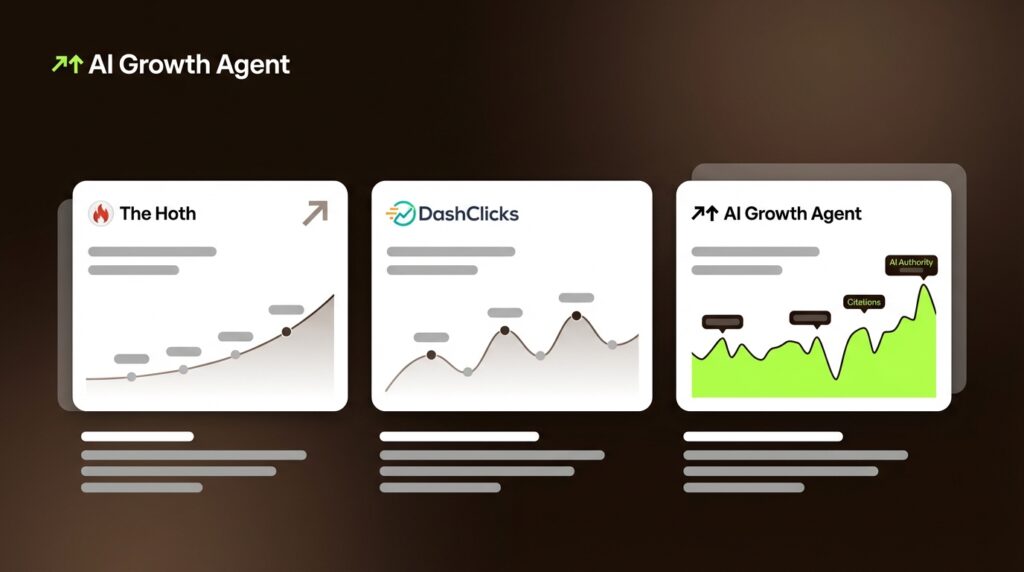
This comparison highlights a clear tradeoff. Traditional white-label providers concentrate on established SEO practices and agency operations, while AI Growth Agent focuses on automation and AI-specific optimization.
Agencies that need incremental efficiency improvements may find The Hoth, DashClicks, or SUSO Digital adequate. Agencies that must publish at a programmatic scale and measure AI citations typically lean toward AI Growth Agent.
Use a side-by-side demo with AI Growth Agent to assess which model fits your client base.
Key Considerations for Agencies Choosing a White Label Partner in 2026
Aligning with Client Needs and AI Goals
Agencies should map each partner against client expectations for AI visibility, not just organic traffic. Clients who care about presence in ChatGPT, Gemini-powered Google AI Overviews, and Perplexity responses will need programmatic publishing and AI-ready structures.
Implementation, Onboarding, and Reliability
Time to value, setup complexity, and process consistency matter as much as feature lists. Reliable white-label relationships depend on secure, repeatable delivery frameworks. Agencies should confirm how each provider handles onboarding, support, and incident response.
Evaluating ROI and Operating Model
Return on investment now includes AI citations, programmatic content volume, and capacity gains. Successful agencies track KPIs like retention, service adoption, and turnaround time, then compare them against subscription, labor, and opportunity costs.
Helpful questions for internal review include:
- Can the partner support the content volume needed for AI-era visibility?
- How strong is the platform on technical SEO signals for AI systems?
- What level of automation reduces project management overhead?
- How quickly can new clients launch and see directional results?
- Does the model scale revenue faster than internal cost and headcount?
Agencies can walk through these questions with AI Growth Agent during a strategy session.
Frequently Asked Questions about White-Label SEO for the AI Era
What is programmatic SEO, and why is it crucial for white-label agencies now?
Programmatic SEO uses systems and templates to generate large numbers of pages and updates from structured data. In 2026, this approach helps brands cover many related queries, maintain consistency, and keep content fresh for AI models. Agencies that support clients with broad product catalogs, local footprints, or data-rich offerings often depend on programmatic SEO to stay competitive.
How do most white-label solutions differ from a partnership with AI Growth Agent?
Most traditional white-label solutions center on human-led campaigns that agencies repackage for clients. AI Growth Agent supplies a software-driven agent that publishes and optimizes content with minimal manual input. The main difference is the degree of automation and the extent to which the platform is tuned to AI search behavior.
What timelines are realistic for seeing impact on search visibility and AI citations?
AI-focused programmatic SEO can show early movement in AI recommendations within weeks, then compound over several months. For example, some AI Growth Agent clients have seen Perplexity recommendations within 2 weeks and citations in ChatGPT and Google AI Overviews within 3 weeks. Traditional manual approaches usually require longer timelines because they publish and iterate more slowly.
Conclusion: Securing Your Agency’s Programmatic Edge in White Label SEO
White label SEO options in 2026 sit on a spectrum from traditional fulfillment to autonomous, AI-aware systems. The right partner depends on whether your agency primarily needs dependable manual execution, operational consolidation, enterprise consulting, or scaled programmatic SEO.
Agencies that must help clients stand out in AI search often require automation, technical depth, and continuous publishing. AI Growth Agent was built around those needs and gives agencies a dedicated programmatic engine rather than another manual fulfillment queue.
If your agency serves brands with solid technical foundations and wants to expand AI-era visibility through programmatic SEO, schedule a demo with AI Growth Agent to evaluate fit.