Written by: Mariana Fonseca, Editorial Team, AI Growth Agent
Key Takeaways
- AI-first search is reducing traditional organic traffic, so WordPress sites need structured, programmatic content architectures to stay visible.
- Category-level authority now matters more than isolated keyword rankings for earning AI Overviews and chat-based search citations.
- Structured content silos, intent-based grouping, and clear internal linking help large language models understand and cite your WordPress content.
- Programmatic SEO reduces manual workload so lean marketing teams can ship category-scale content at a pace that matches 2026 search competition.
- Marketing leaders can operationalize these tactics in WordPress with AI Growth Agent; schedule a demo to see the platform in action.
The Critical Shift: From Keyword-Centric to Programmatic Content in an AI-First World
Why AI-First Search Changes Your WordPress Strategy
Search behavior is moving from blue links to AI-generated answers. Google’s AI Overviews grew from 18.55% of search results in Q3 2024 to 49.92% by Q4 2025, and this shift continues into 2026. Marketing leaders who still optimize only for classic rankings risk losing visibility in AI Overviews, answer boxes, and chat-style interfaces.
Your digital footprint can shrink even while you publish more, because AI systems summarize information from many sources and show fewer clickable results. Manual, one-keyword-at-a-time optimization cannot keep pace with models that evaluate entire topical landscapes.
What AI Overviews Mean for 2026 SEO Planning
AI Overviews appear most often on complex, intent-rich queries. Long queries of eight or more words are several times more likely to trigger AI Overviews, so content must address full questions and workflows, not only head terms.
AI search traffic for digital marketing topics is projected to surpass traditional search by 2028. Programmatic velocity, the ability to publish high-quality structured content in volume, is becoming a baseline requirement rather than an experiment.
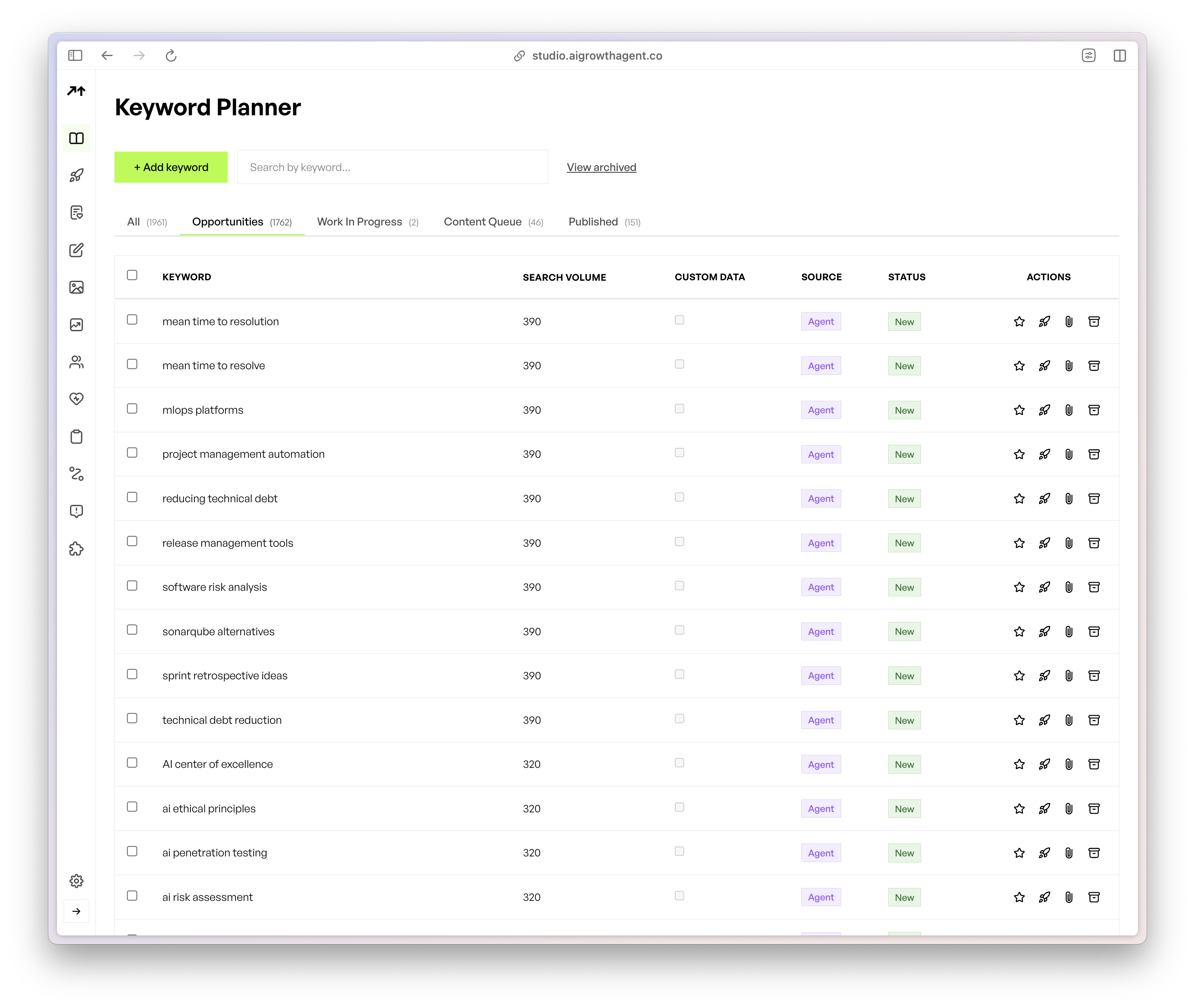
Strategic planning for 2026 needs to treat AI Overviews and LLM citations as primary outcomes, with classic rankings as a secondary effect.
Why WordPress Category Dominance Matters for AI Search
How Category Dominance Works for AI Models
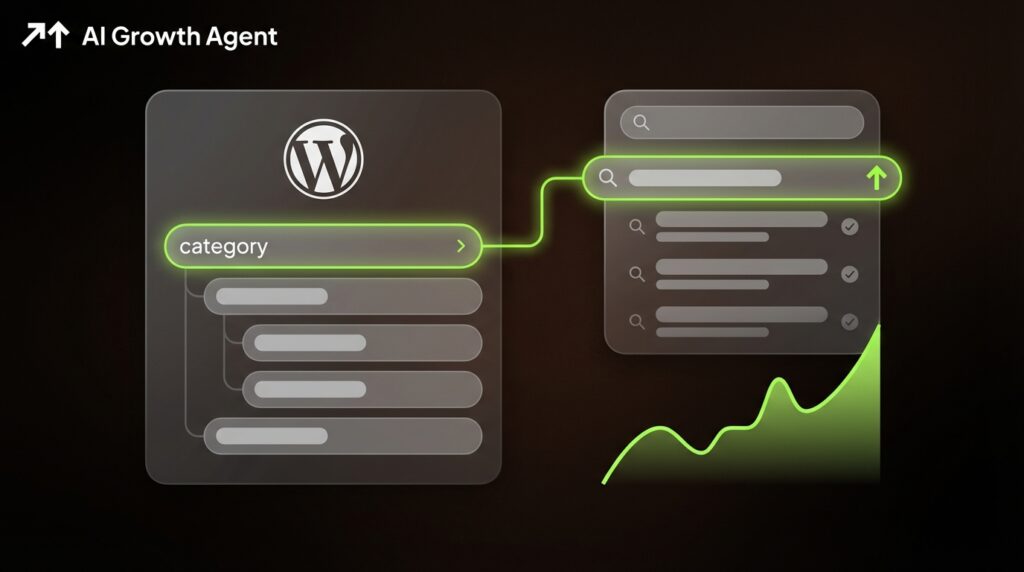
WordPress category dominance uses your taxonomy system to signal topical ownership. Categories define clear domains of expertise, while tags and custom taxonomies show relationships between related concepts.
When you structure content this way, AI models can read your site as a knowledge graph rather than a loose collection of posts. That structure increases the likelihood that your content appears as a cited source across many related queries.
Business Impact: Being Cited vs. Only Ranked
Google now blends AI citations with traditional organic results, which can reduce clicks even for pages that rank in the top positions. A page can hold position one and still lose traffic if AI Overviews answer the query directly.
Marketing leaders increasingly measure success by citation presence in AI surfaces, not only by rankings or click-through rate. Each citation reinforces topical authority, which then improves the odds of future citations across adjacent topics.
Best Practices for WordPress Category Dominance
Building Comprehensive Content Silos
Effective category dominance starts with a clear scope for each category. Each category should cover one strategic theme where your brand can credibly own the conversation.
Within that theme, plan a content silo that includes:
- Foundational explainers that define key concepts
- How-to content that walks through processes and frameworks
- Use cases and examples that show real applications
- Comparisons and alternatives that frame decision tradeoffs
This layered structure helps AI understand both breadth and depth within the category.
Grouping Content by Intent, Not Only Keywords
Modern AI-driven ranking systems prioritize intent, quality, and relevance over keyword density. Organizing content by underlying intent gives these systems a clearer signal.
For each category, define the main user intents, such as research, evaluation, implementation, and optimization. Then group content so each cluster thoroughly answers a specific intent, using natural language that mirrors how people ask questions in tools like ChatGPT and Gemini.
Using Internal Links to Signal Thematic Authority
Internal links show AI models which pages anchor each topic. Pillar pages at the category level should link down to detailed articles, and those articles should link back up to the pillar.
Effective internal linking for category dominance usually includes:
- Pillar pages that summarize the topic and point to key subtopics
- Contextual links between related articles within the same category
- Navigation elements that keep category journeys clear and shallow
This pattern helps both crawlers and LLMs follow the logic of your expertise.
Writing Semantic, LLM-Friendly Content
AI-focused SEO favors content with clear structure, strong E-E-A-T signals, and self-contained explanations. WordPress content that follows this pattern is easier for AI systems to quote accurately.
For each important article, aim to include:
- Concise executive summaries near the top
- Clear headings that reflect real user questions and tasks
- Bullet lists for steps, pros and cons, and key takeaways
- Structured data and clean HTML to reduce parsing errors
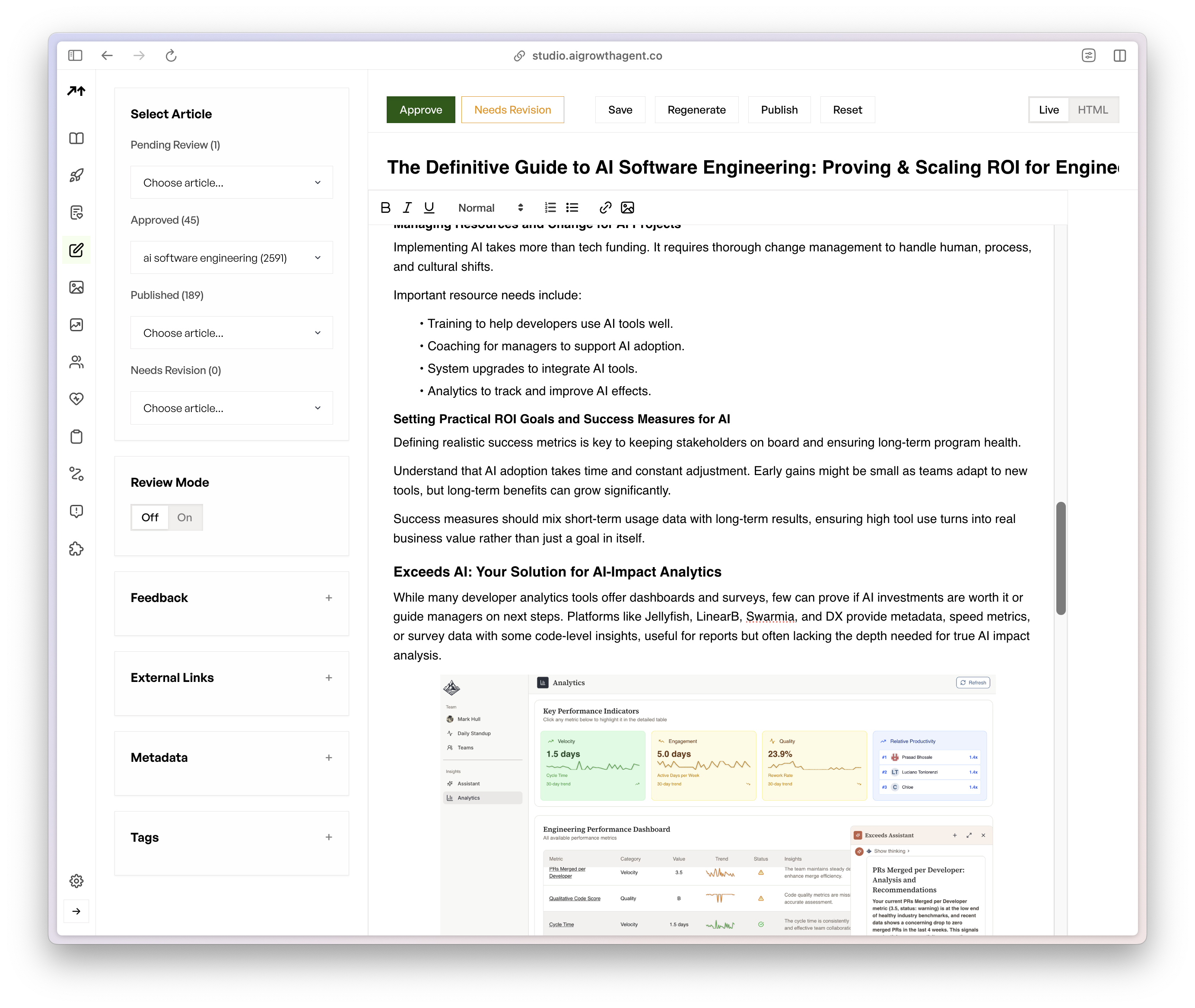
Each piece should be useful on its own while clearly fitting into the larger category narrative.
To see how these structures can be automated in WordPress, book a demo with AI Growth Agent.
Solving Common Execution Challenges with AI Growth Agent
Addressing Manual Effort and Resource Gaps
Maintaining category dominance across multiple themes can strain even large teams. High publishing cadence, technical SEO, schema management, and ongoing optimization often exceed what internal resources can handle.
AI Overviews now appear on a majority of many SERPs, which raises the bar for content quality and consistency. Manual workflows rarely sustain the volume and structure needed to compete.
How AI Growth Agent Operationalizes Category Dominance
AI Growth Agent focuses on programmatic SEO for WordPress, with an agent that manages the end-to-end lifecycle of category content. The system handles tasks such as:
- Keyword clustering into clear category and subtopic groups
- Drafting and structuring articles aligned to E-E-A-T and LLM needs
- Adding schema, internal links, and other on-page optimizations
- Publishing directly into your WordPress theme with minimal manual cleanup
The platform also supports modern technical elements, including LLM.txt and Model Context Protocol configuration, so AI systems can discover and consume your content more reliably.
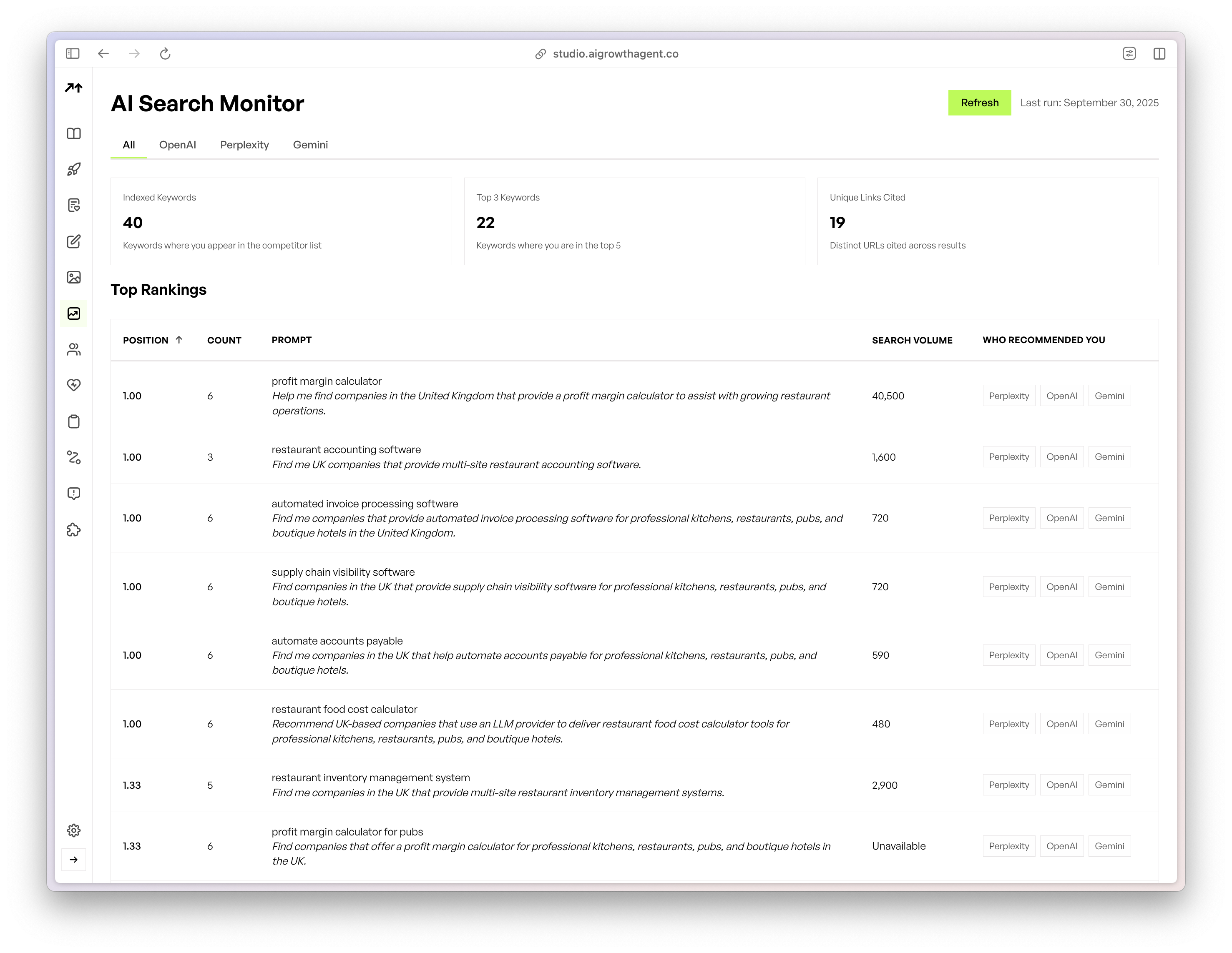
AI Growth Agent for WordPress Category SEO in 2026
Key Capabilities That Support Marketing Leaders
- Multi-tenant deployment: Manage multiple brands, product lines, or regions from one interface while preserving distinct category strategies.
- Real-time content injection: Publish timely posts that connect news, trends, and product updates back to your existing category silos.
- Database-to-content automation: Turn product data, research, or internal metrics into structured articles that competitors cannot easily copy.
- Intelligent asset placement: Select and tag images with relevant metadata to improve both visual SEO and the richness of AI citations.
AI Growth Agent vs. Traditional SEO Approaches
|
Feature |
AI Growth Agent |
Traditional SEO Agencies |
Basic AI Content Tools |
|
WordPress integration |
Direct publishing with category-aware architecture |
Manual uploads and plugin configuration |
Copy export that still needs human formatting |
|
Content scale |
Programmatic publishing across many categories |
Limited by human bandwidth |
Volume possible, but often unstructured |
|
AI search optimization |
Built for LLM citation, schema, and MCP |
Focused mainly on classic SERPs |
Text generation without deep technical SEO |
|
Authority building |
Category-wide coverage and internal linking plans |
Campaign-based, often uneven across topics |
Isolated articles with little category strategy |
FAQ on WordPress Category Dominance and AI Search
How do AI search engines evaluate category authority on WordPress?
AI systems look at content depth across related topics, internal linking, consistency of taxonomy, and technical clarity. When a category shows many high-quality, interlinked articles that cover a topic from multiple angles, models are more likely to treat that site as a reliable source for related queries.
Can small marketing teams execute category dominance effectively?
Teams with limited headcount can implement the strategy if they reduce manual work. Programmatic tools such as AI Growth Agent handle research, drafting, and publishing steps that would otherwise require several specialized roles, which allows small teams to maintain consistent category output.
Is WordPress still a strong platform for AI-focused SEO in 2026?
WordPress remains a strong choice because its taxonomy, plugin ecosystem, and theme flexibility support structured content architectures. The main requirement is a modern workflow that emphasizes category planning, semantic SEO, and programmatic publishing instead of one-off posts.
Conclusion: Turning WordPress Categories into AI-Ready Authority Hubs
AI-first search in 2026 rewards sites that show clear topical ownership, not just isolated high-ranking pages. WordPress category dominance offers a practical framework for organizing content so AI systems can understand, trust, and cite your expertise.
Manual processes alone rarely deliver the volume, structure, and consistency that this approach requires. Programmatic SEO with tools built for WordPress, such as AI Growth Agent, helps marketing leaders move from scattered posts to durable category ecosystems that perform across both traditional and AI-driven search.
To explore how this can look for your categories and tech stack, schedule a consultation with AI Growth Agent.