Written by: Mariana Fonseca, Editorial Team, AI Growth Agent
Key Takeaways
- AI-powered search engines dominate 2026 content discovery and reward brands that publish high-volume, technically precise content.
- AI Growth Agent leads with autonomous programmatic SEO that automates keyword clustering, schema markup, MCP, and publishing at scale.
- Traditional tools like HubSpot, Semrush, Surfer SEO, and Superside offer niche strengths but stop short of full automation and AI citation tracking.
- Structured data and semantic HTML increase AI citations by 25-40%, and AI Growth Agent specializes in this implementation.
- Premium B2B brands see fast ROI with AI Growth Agent’s one-week onboarding. Schedule a demo with AI Growth Agent to assess fit for your content scaling goals.
How We Chose and Compared These Platforms
Our analysis focuses on leading solutions surfaced through 2026 SERP research, including HubSpot, Semrush, Surfer SEO, Superside, and AI Growth Agent. We prioritized features that solve AI-era content challenges such as automation depth, technical SEO sophistication, and documented case studies that show measurable ROI.
We drew on G2 and Capterra reviews, product documentation, and analyst insights from 2026 B2B marketing strategy reports, plus real-world performance data. We placed special weight on AI citation enablement, since structured extractability with clear section breaks, semantic HTML, and answer-first formatting leads to 40% more frequent citations.
Five Approaches to Content Scaling in 2026
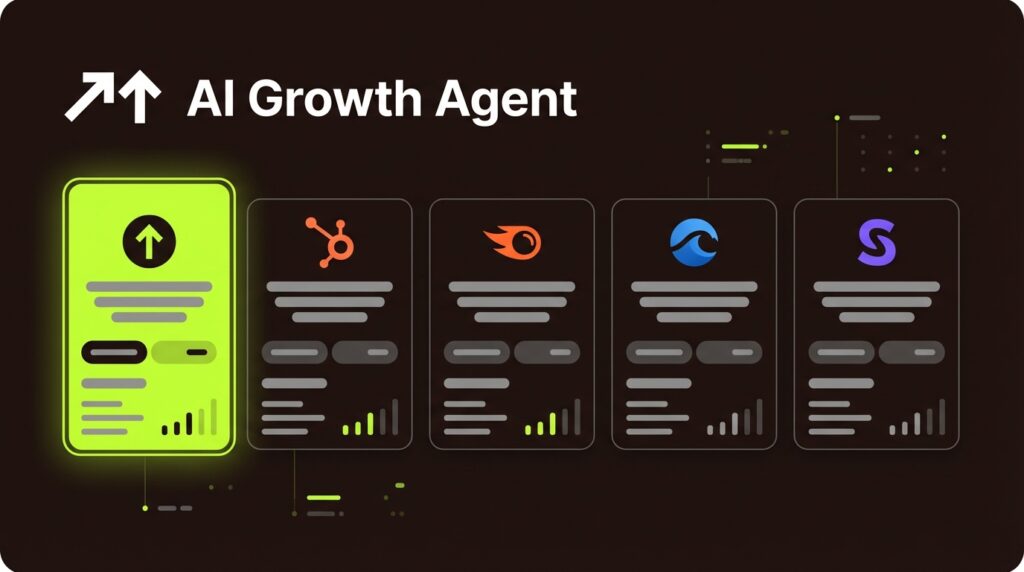
The content scalability market in 2026 breaks into five clear approaches to high-volume content production.
- AI Growth Agent: Autonomous programmatic SEO agent that engineers schema-optimized content architectures with advanced MCP and multi-tenant support
- HubSpot Content Hub: All-in-one CMS and CRM platform with Breeze AI for integrated content creation and lead nurturing workflows
- Semrush: SEO research and content strategy platform with topic gap analysis and AI writing assistants
- Surfer SEO: AI-powered content optimization tool centered on Content Scores and SERP-based outlines
- Superside: Creative outsourcing platform that delivers subscription-based design and video content at scale
Each platform tackles a different part of the scalability puzzle, from technical infrastructure to creative production. Schedule a demo with AI Growth Agent to see how autonomous programmatic SEO stacks up against these traditional approaches.
AI Growth Agent: Autonomous Programmatic SEO Engineered for AI Search
AI Growth Agent
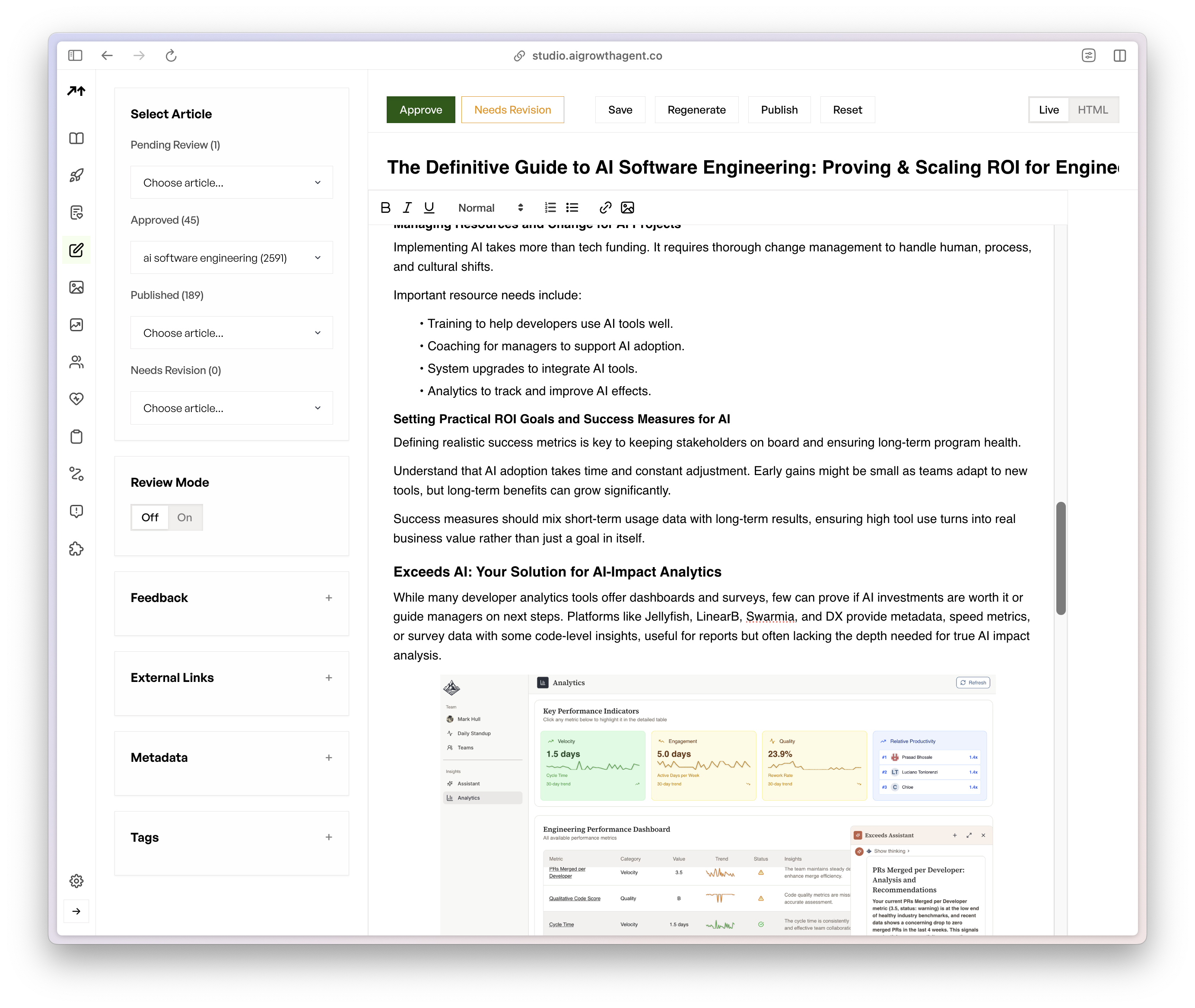
AI Growth Agent operates as an autonomous programmatic SEO agent built for AI search dominance. Specialized agents automate the full content lifecycle, from keyword clustering through schema implementation and direct publishing, which removes technical friction for premium brands.
Key Capabilities:
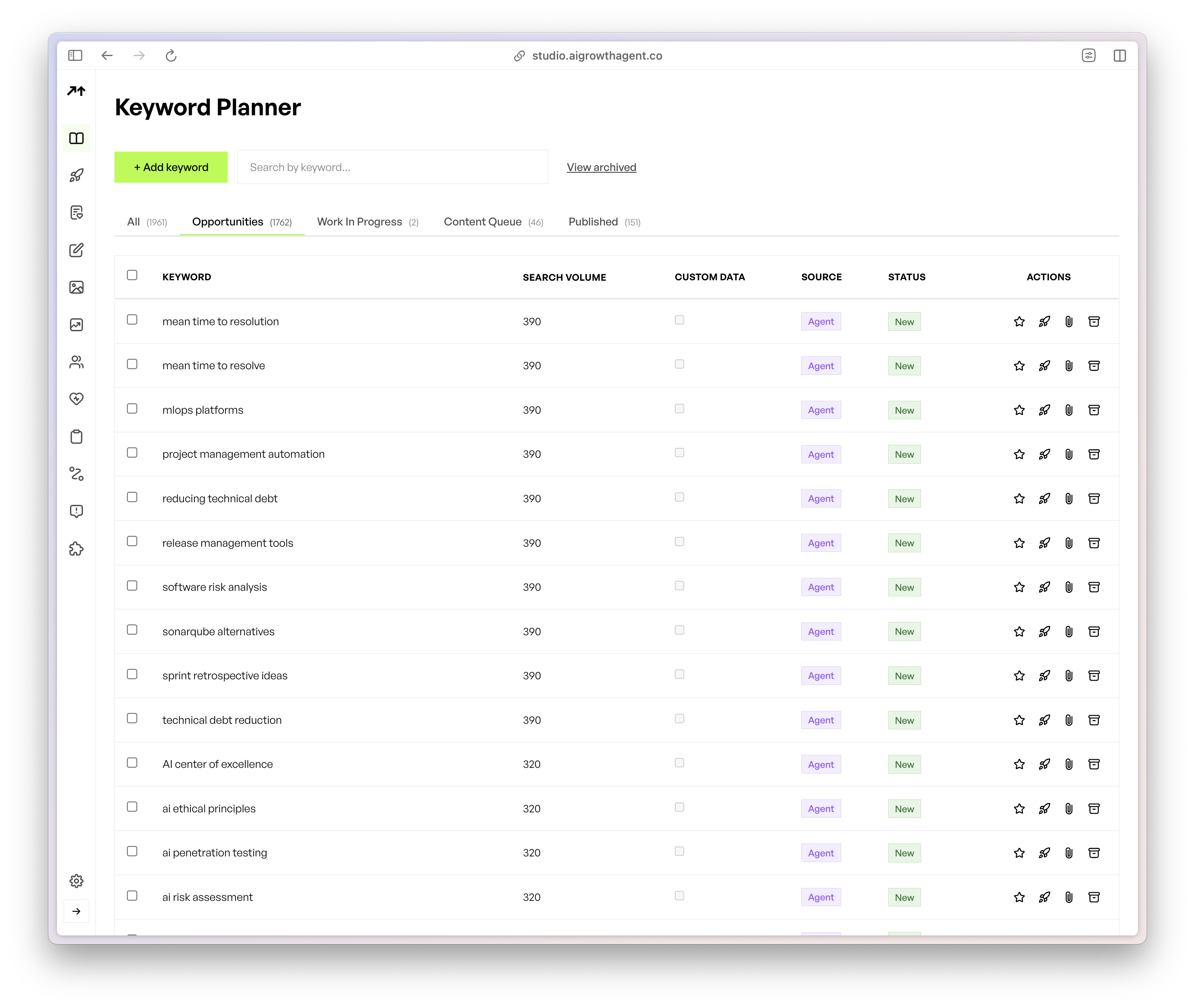
- Company Manifesto onboarding that programs agent behavior in one hour
- Autonomous programmatic keyword research and content clustering across tens of thousands of queries
- Advanced schema markup, LLM.txt, and the world’s first blog Model Context Protocol (MCP) implementation
- AI Growth Agent Studio dashboard with full editorial control and auto-pilot mode
- Real-time content injection for trending topics and breaking news
- Multi-tenant deployment for portfolio companies and enterprise brands
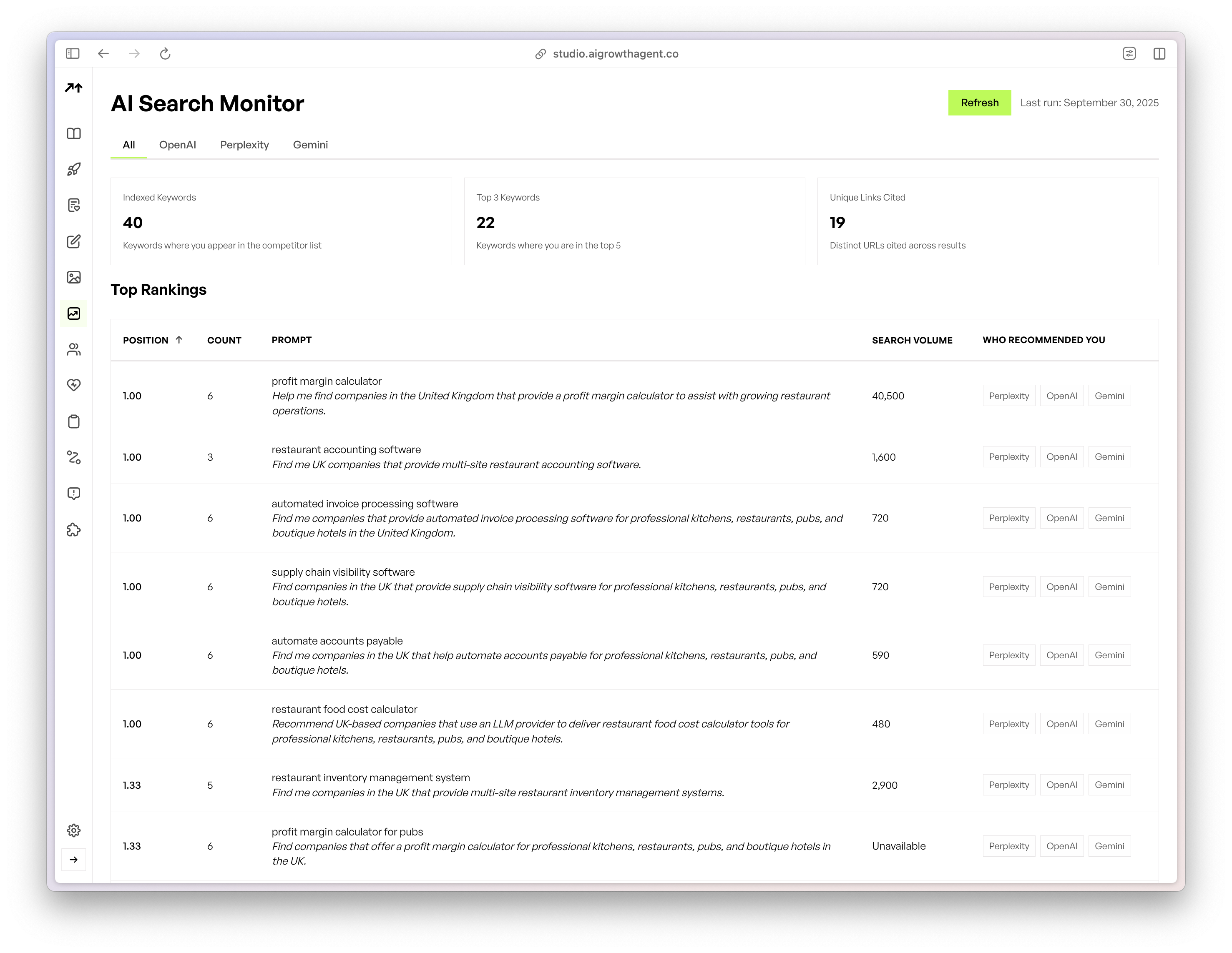
- AI Search Monitor that tracks citations across ChatGPT, Gemini, and Perplexity
Strengths: The platform excels in velocity and AI visibility, with results such as Gitar reaching top citations in under two months. It delivers technical precision through automated schema and structured data that manual teams rarely match.
Limitations: AI Growth Agent focuses on premium brands with solid technical foundations. It does not function as an SEO repair solution for sites with deep technical debt.
Ideal Fit: Multi-brand private equity portfolios, enterprises that need daily publishing velocity, and premium B2B brands that prioritize AI search ROI and citation dominance.
HubSpot Content Hub: Unified CMS With AI-Assisted Workflows
HubSpot Content Hub
HubSpot Content Hub delivers an integrated CMS inside the broader HubSpot ecosystem and connects marketing, sales, and service through centralized content workflows.
Key Capabilities:
- Breeze AI integration for content creation and refinement
- Content staging tools for site redesigns and relaunches
- Drag-and-drop page editing with theme customization
- SEO recommendations and built-in optimization tools
- Integration with HubSpot CRM for lead nurturing workflows
- Content Agent for agentic content remixing and personalization
Strengths: The platform works well for unified marketing operations with strong CRM alignment. Content Agent enables agentic content remixing, turning high-performing assets like case studies into personalized landing pages or industry-specific variations quickly.
Limitations: Content Hub Starter has a 30-page limit, a common objection for scaling. Teams still handle most scaling manually, and programmatic SEO support for high-volume production remains limited.
Pricing: Tiered subscription model from Starter through Enterprise, with mixed-tier options.
Ideal Fit: Mid-market B2B companies that value unified marketing operations more than maximum content velocity and deep technical SEO.
Semrush: Research Powerhouse for Strategy-First Teams
Semrush
Semrush functions as a comprehensive SEO research and content strategy platform. It supplies data-driven insights for keyword research, competitive analysis, and content gap discovery across digital channels.
Key Capabilities:
- Extensive keyword research and topic gap analysis
- AI writing assistants for content creation and refinement
- Competitive content analysis and SERP tracking
- Content audit tools for improving existing assets
- SEO workflow management and collaboration features
- Integrations with popular CMS platforms for publishing workflows
Strengths: Semrush offers industry-leading data and research capabilities with strong competitive intelligence. It supports strategic planning and content ideation phases effectively.
Limitations: Teams still perform most production manually, and the platform does not provide autonomous publishing. Technical SEO automation for schema and structured data remains limited.
Pricing: Subscription-based with multiple tiers that vary by feature set and usage limits.
Ideal Fit: SEO agencies and in-house teams that prioritize research and strategy over automated production and technical execution.
Surfer SEO: Content Optimization for Individual Pages
Surfer SEO
Surfer SEO focuses on AI-powered content optimization and analyzes top-ranking pages to generate data-backed recommendations for structure, keyword usage, and SERP competitiveness.
Key Capabilities:
- Content Score analysis based on top-ranking competitors
- AI-generated outlines and structure recommendations
- Real-time optimization suggestions during writing
- SERP analysis and keyword density guidance
- Content editor with built-in SEO scoring
- Team collaboration tools for review workflows
Strengths: Surfer SEO works well for optimizing individual articles with clear, data-driven recommendations. It emphasizes SERP analysis and competitive benchmarking.
Limitations: The platform focuses on optimization rather than full-scale production or publishing automation. It does not support programmatic SEO for large content libraries or technical infrastructure.
Pricing: Subscription model with usage-based limits on content analyses and optimizations.
Ideal Fit: Content teams that refine a smaller volume of high-impact pieces instead of pushing maximum production velocity.
Superside: Creative Production at Scale Without SEO Automation
Superside
Superside delivers creative outsourcing through a subscription model and supplies design, video, and creative content at scale using managed teams and streamlined workflows.
Key Capabilities:
- Subscription-based creative production for design and video
- Managed creative teams with dedicated account management
- Streamlined workflows and project management
- Brand guideline compliance and quality control
- Multi-format creative production, including social media assets
- Creative strategy consultation and campaign development
Strengths: Superside supports high-volume creative production with consistent quality and strong brand adherence. Project management and workflow structure are robust.
Limitations: Processes remain manual and do not include technical SEO or automated publishing. Programmatic content creation and AI search optimization are not part of the offering.
Pricing: Subscription-based creative services with tiers that control access to resources and turnaround times.
Ideal Fit: Brands that prioritize visual content and creative assets more than technical SEO or programmatic scaling.
Side-by-Side Comparison of Automation and AI Readiness
The table below highlights differences in automation, scalability, technical SEO depth, and AI monitoring.
|
Solution |
Automation Level |
Scalability |
Technical SEO |
AI Monitoring |
|
AI Growth Agent |
Autonomous |
Unlimited |
Deep (Schema/MCP/LLM.txt) |
Real-time Citations |
|
HubSpot |
AI-Assisted |
Platform-Limited |
Basic SEO Tools |
Limited |
|
Semrush |
Manual + AI Tools |
Team-Dependent |
Research-Focused |
None |
|
Surfer SEO |
Optimization-Focused |
Individual Content |
Content Scoring |
None |
|
Superside |
Manual Creative |
Team-Limited |
None |
None |
AI Growth Agent leads in programmatic velocity and AI-era technical capabilities, while other tools shine in narrower roles but stop short of end-to-end autonomous scaling. Schedule a demo to see how autonomous programmatic SEO compares to manual and tool-assisted approaches for your roadmap.
Rolling Out and Measuring a Scalable Content Engine
Effective content scalability depends on onboarding speed, technical integrations, and clear measurement frameworks. AI Growth Agent supports rapid deployment with a one-hour kickoff and first published articles within one week, while traditional platforms often require months of setup and configuration.
Teams should define content volume targets, run technical infrastructure audits, and confirm CMS integration needs across WordPress, Webflow, or HubSpot. They also need AI citation tracking capabilities.
Piloting solutions with demo implementations helps teams evaluate content quality, technical SEO execution, and workflow fit before scaling. Schedule a demo to see if you’re a good fit for autonomous content scaling.
Frequently Asked Questions
What are content scalability solutions, and why do they matter in 2026?
Content scalability solutions are platforms and technologies that let businesses produce high-volume, high-quality content without matching increases in manual effort. In 2026, these solutions matter because AI-powered search engines such as ChatGPT, Perplexity, and Google AI Overviews favor brands with large, authoritative content libraries for citations and recommendations. As AI-generated content floods the web, companies without scalable systems see shrinking digital footprints and reduced visibility in AI-driven discovery.
How does programmatic SEO differ from tools like Surfer SEO?
Programmatic SEO automates the full content lifecycle, from keyword research through publishing, and creates thousands of targeted pages using data-driven templates and structured architectures. Tools like Surfer SEO focus on improving individual pieces of content through SERP analysis and scoring, which still requires manual work for each asset.
Programmatic SEO platforms can generate comprehensive strategies that target long-tail keyword patterns at scale, while optimization tools enhance existing content one article at a time. The main difference comes from automation depth and scalability.
Which solution performs best for AI citations and search visibility?
AI Growth Agent currently leads in AI citation performance through autonomous implementation of advanced technical SEO features such as schema markup, LLM.txt files, and Model Context Protocol (MCP) integration. These capabilities, combined with structured formatting and real-time AI search monitoring, position content for strong visibility across ChatGPT, Perplexity, and Google AI Overviews. Other platforms lack the technical depth and automation needed for consistent AI citation performance, especially around structured extractability that AI systems favor when choosing sources.
How does AI Growth Agent compare to traditional SEO agencies for scaling?
AI Growth Agent operates as an autonomous technology platform rather than a manual agency, which enables unlimited scalability without headcount constraints. Traditional SEO agencies follow a craftsman model and often deliver one or two strong articles per month, but they rarely have the engineering resources for programmatic SEO.
AI Growth Agent executes the entire technical SEO lifecycle autonomously, from keyword clustering through schema and publishing, while agencies require ongoing oversight and cannot match AI-era velocity. The platform also provides transparent control through AI Growth Agent Studio, unlike many agency black-box processes.
What onboarding timelines should teams expect?
Onboarding timelines vary widely across solutions. AI Growth Agent moves from initial consultation to first published article within one week using its Manifesto-based onboarding. HubSpot Content Hub often needs several weeks for full CMS setup and team training. Semrush and Surfer SEO focus on tool access, so teams still need additional time for strategy and execution.
Creative services like Superside may require months to finalize workflows and brand compliance. The speed advantage of autonomous platforms becomes critical for companies that need immediate content velocity.
What ROI can businesses expect from AI-driven content scaling in 2026?
ROI from AI-driven scaling depends on execution quality and technical sophistication. Case studies show strong returns, including a B2B company that achieved 429% organic traffic growth and $5.9M in revenue with 6,864% ROI over 17 months using AI SEO strategies.
Content marketing typically generates around 3:1 ROI and can reach 748% with strong SEO. AI adoption increases content velocity by about 84%, which supports faster optimization cycles and higher conversion rates. Technical implementation quality remains the key factor, and platforms with advanced schema, structured data, and AI citation optimization outperform basic AI writing tools.
Conclusion: Why Autonomous Programmatic SEO Wins 2026
The 2026 content landscape favors autonomous platforms that engineer AI-ready content at high velocity and with deep technical rigor. Traditional tools still play valuable roles, but only programmatic SEO agents like AI Growth Agent deliver end-to-end automation for AI search dominance. Schedule a demo to discover how autonomous content scaling can position your brand as the definitive authority in your category.