


Key Takeaways
- AI search experiences across ChatGPT, Google AI Overviews, Gemini, and Perplexity increase the need for consistent, high-quality content across every channel.
- Programmatic SEO uses structured content architectures to turn proprietary data into aligned, search-ready assets that work across web, social, email, and AI search.
- Human-led governance combined with technical layers such as schema, LLM.txt files, and the Model Context Protocol improves how AI systems understand and cite brand content.
- AI Growth Agent differs from basic AI tools and traditional agencies by embedding a Company Manifesto, automating content engineering, and monitoring AI search visibility.
- Marketing teams can use AI Growth Agent to standardize brand voice, scale programmatic SEO, and improve AI search authority by scheduling a tailored demo.
The Multi-Channel Content Crisis: Why AI Accelerates Brand Inconsistency & Authority Erosion
Enterprise marketing teams in 2026 manage large volumes of AI-generated content across search, social, email, and paid campaigns. 71% of marketers report generic or bland AI outputs, and 42% receive thin or irrelevant content that does not fit audience needs by channel.
This challenge extends into brand coherence. Without clear guardrails, enterprises tend to publish safe but unmemorable content at scale, which weakens differentiation across blog content, lifecycle programs, and performance media.
Fragmented workflows also break the link between content and customer journeys. AI-generated assets often drift away from campaigns and funnel stages, which leaves gaps that competitors fill with clearer and more authoritative messaging in AI search results.
Basic AI tools and traditional agencies struggle with this complexity. Unstructured text generation and manual production cannot support consistent voice, technical quality, and speed at the same time, so teams need systems that coordinate these elements programmatically.
The Programmatic Solution: Engineering High-Authority Content Architectures for Multi-Channel AI Domination
Programmatic SEO content architectures give teams a repeatable way to generate, structure, and distribute content for every channel. This approach embeds brand rules and data directly into workflows, so AI outputs stay aligned with strategy instead of drifting toward generic copy.
Modern systems integrate with customer data platforms, digital asset management tools, and internal knowledge bases. AI models perform best when supported by proprietary audience insights and historical performance data, which improves relevance and consistency across touchpoints.
A strong technical layer supports this strategy. Structured data, schema markup, and LLM.txt files give AI search engines a clear way to interpret site content and internal databases. This foundation improves performance in traditional search and in AI environments such as ChatGPT, Gemini, and Perplexity.
Human-led governance remains essential. Strategy, review, and approval frameworks keep AI-assisted content aligned with brand standards while still allowing automation to handle volume and speed.
Discover how autonomous programmatic SEO can support these architectures and workflows.
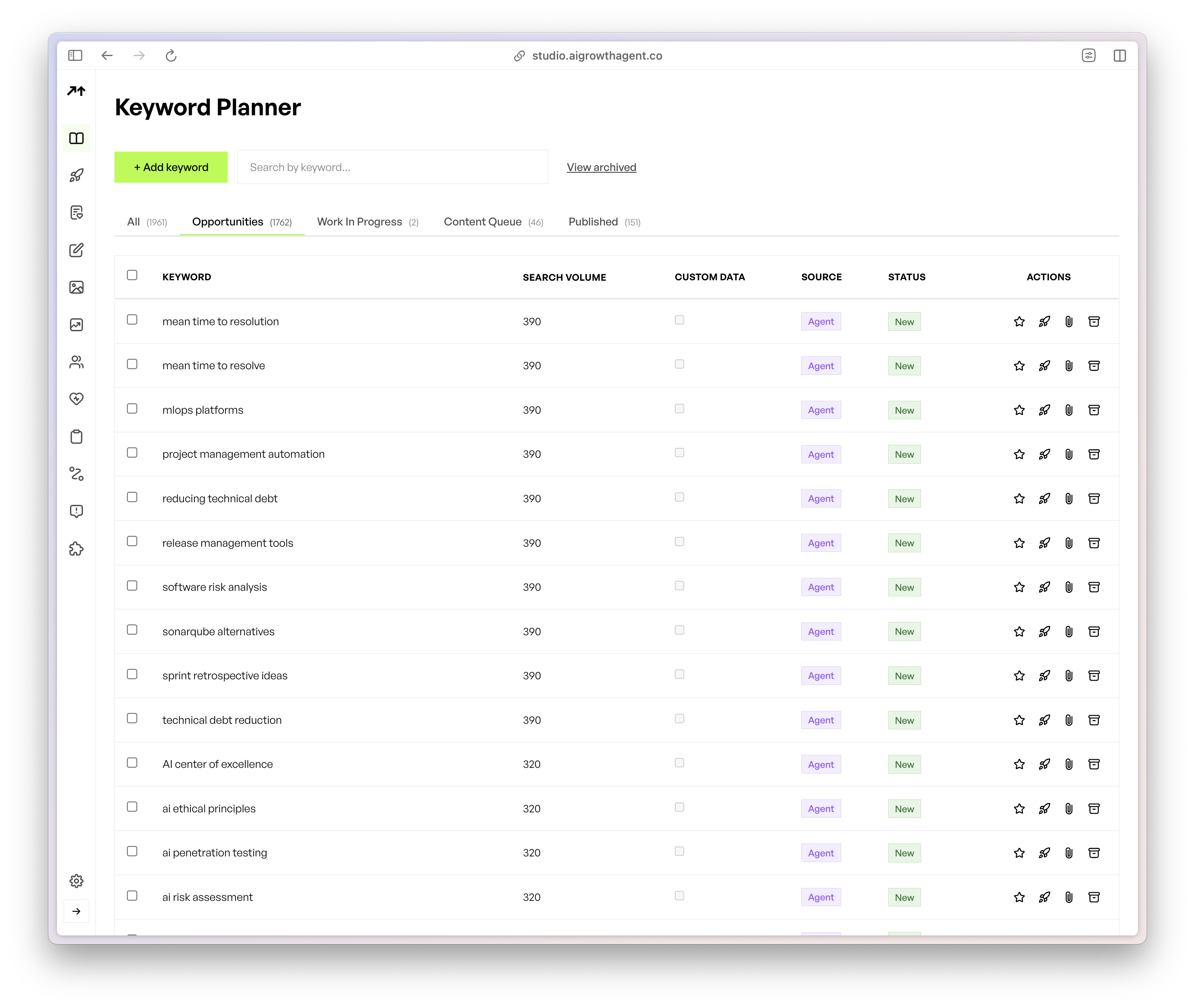
Introducing AI Growth Agent: Programmatic SEO for Multi-Channel AI Content
AI Growth Agent provides a programmatic SEO system designed for multi-channel content in the AI era. The platform automates content planning, creation, and technical optimization while staying inside brand and compliance guardrails.
Key capabilities address common gaps in other solutions:
- Multi-Tenant Programmatic Deployment: AI agents can manage complex, multi-step workflows across tools and channels, which supports multiple products, regions, or brand portfolios.
- Real-Time Programmatic SEO Content Injection: Teams can respond quickly to emerging topics with content that already matches brand voice and technical best practices for search and AI discovery.
- Database-to-Content Automation: Proprietary datasets convert into structured, SEO-ready pages that expand topical authority and organic coverage.
- The Model Context Protocol (MCP) and LLM.txt: A technical architecture gives AI search engines direct, structured access to content sources, which improves the chance of accurate citation in ChatGPT, Gemini, and Perplexity.
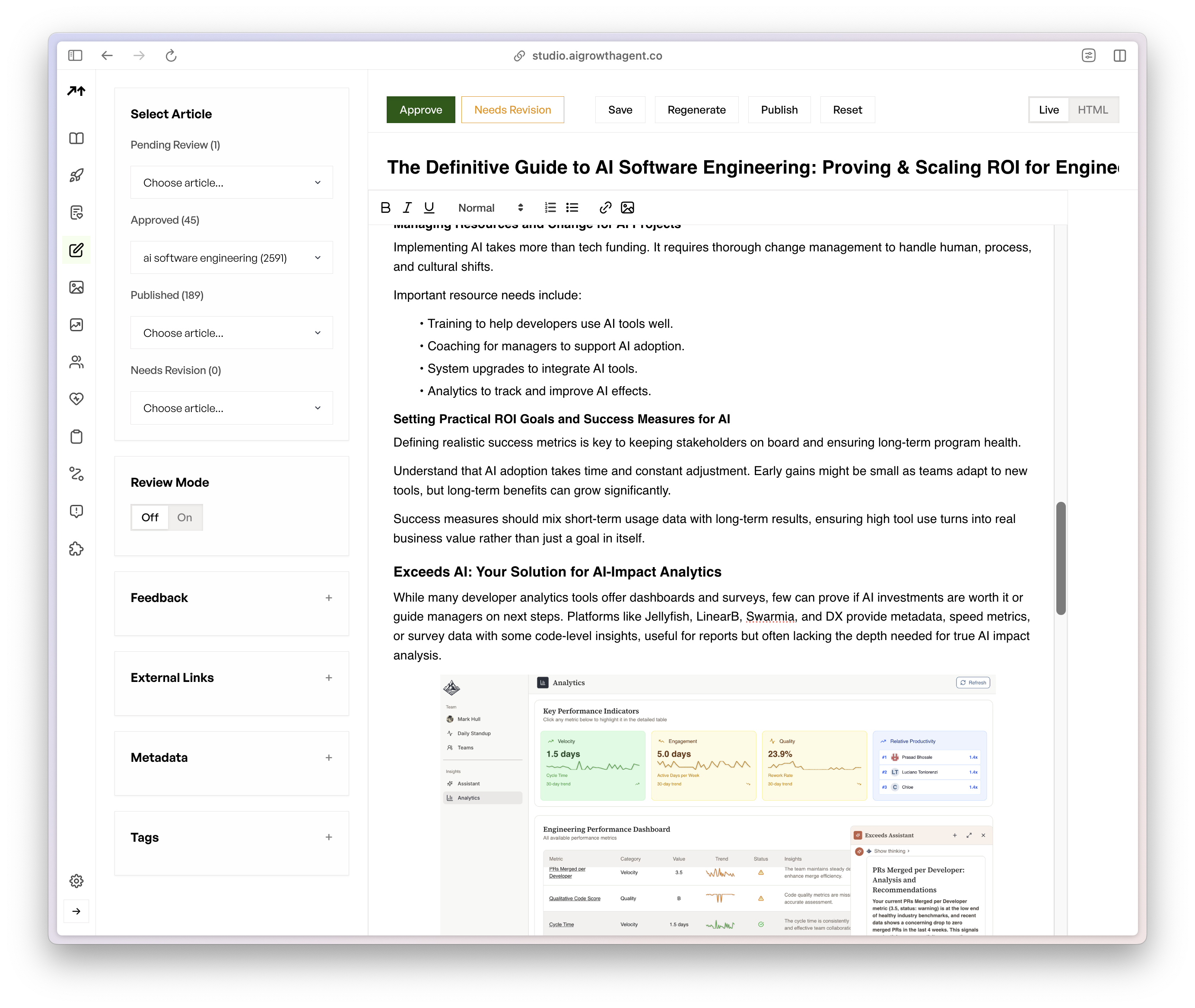
AI Growth Agent enforces brand standards through a detailed Company Manifesto created during onboarding. This document becomes a live reference inside the agent and guides voice, messaging, and positioning across blogs, landing pages, and channel-specific derivatives.
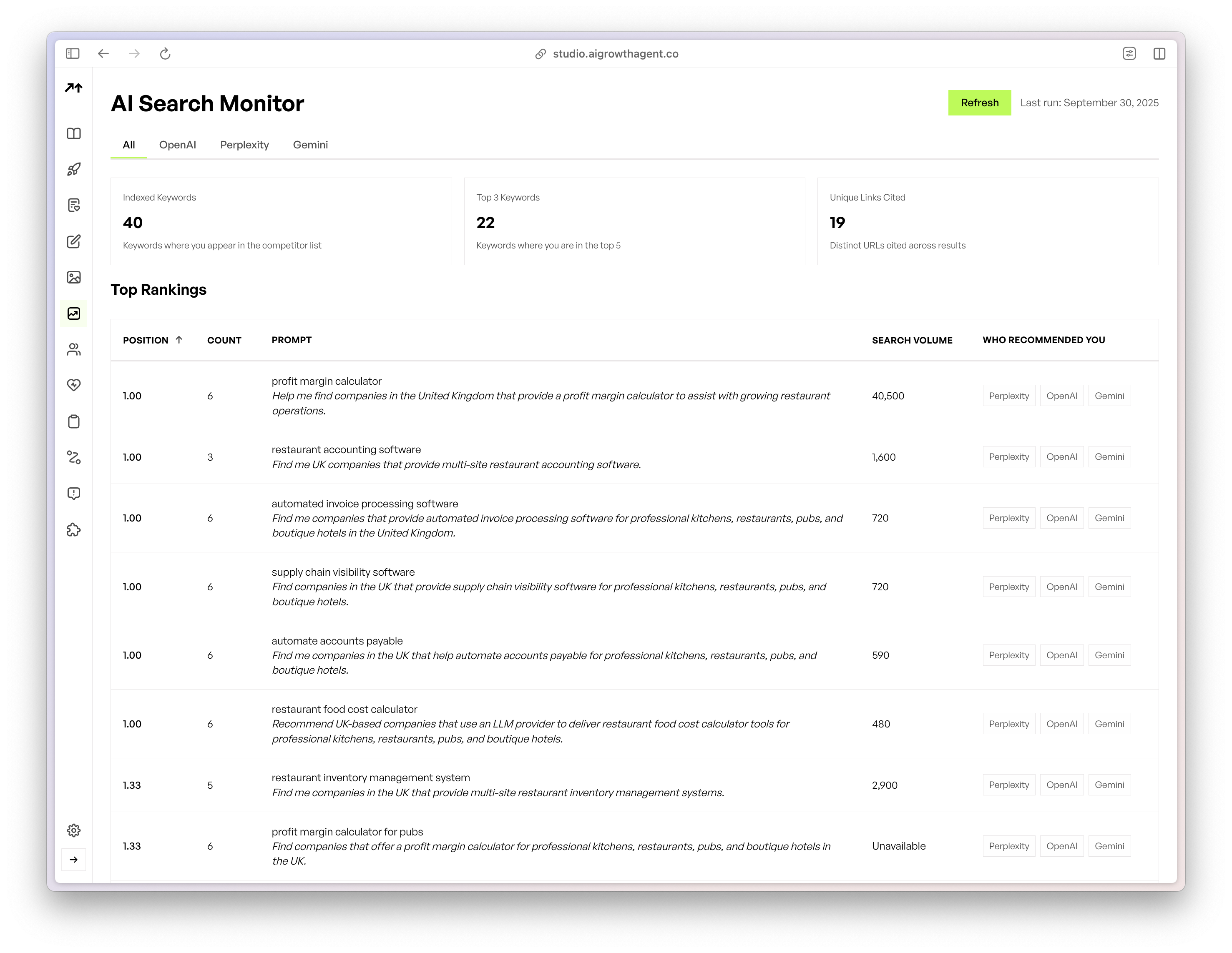
The system also implements schema markup, metadata, and other technical elements required for visibility in Google AI Overviews, AI chat responses, and traditional search results. The AI Search Monitor tracks citations and visibility so teams can see how content performs in AI environments over time.
Schedule a demo to see how AI Growth Agent supports multi-channel AI content and programmatic SEO.
Achieving Multi-Channel Brand Consistency & Authority: AI Growth Agent vs. Traditional Approaches
AI Growth Agent differs from basic AI tools and traditional agencies across three core areas: brand authenticity, content velocity, and AI-specific technical relevance.
Overcoming Generic Outputs & Maintaining Authenticity
The Company Manifesto embeds brand voice and narrative into every asset. This framework speaks directly to the issue where 71% of marketers see generic AI outputs that do not match their brand.
Instead of constant prompt tinkering, teams rely on this manifesto and structured workflows. The agent uses embedded context to keep tone, claims, and positioning aligned across long-form articles, briefs, and derivative assets.
Scaling Content Velocity Without Sacrificing Quality
The pSEO Content Agent plans, drafts, and optimizes content at a pace human teams cannot match alone. It also handles technical SEO elements such as schema, LLM.txt files, and metadata that are important for AI search interpretation.
Outputs arrive as fully engineered web pages rather than plain text. This reduces manual formatting and technical work before publication and creates a repeatable, scalable process.
Ensuring Technical Relevance & Citation in AI Search
AI Growth Agent uses the Model Context Protocol and LLM.txt implementation to align content with how AI search systems read and retrieve information. The AI Search Monitor then tracks citations across ChatGPT, Google AI Overviews, and Perplexity to show tangible impact.
|
Feature/Capability |
Basic AI Content Tools |
Traditional SEO Agencies |
AI Growth Agent |
|
Brand Voice Consistency |
Manual, inconsistent, generic outputs |
Manual processes, limited scale |
Autonomous via Manifesto and MCP |
|
Content Velocity and Scale |
Limited by human bandwidth |
High scale with fully engineered pages |
|
|
Technical SEO for AI Search |
Manual integration required |
Manual, not LLM-specific |
Automated schema, LLM.txt, and MCP |
|
Multi-Channel Distribution |
Inconsistent adaptation |
Engineered for consistent performance |
Frequently Asked Questions (FAQ) about Programmatic SEO and Multi-Channel AI Content
How does AI Growth Agent ensure brand consistency across different channels and avoid generic AI outputs?
AI Growth Agent uses a detailed Company Manifesto developed during onboarding. This document defines voice, messaging, and guardrails, and the agent references it when generating assets for blogs, social posts, and AI search responses. The result is consistent, recognizable content without repeated prompt adjustments.
Can AI Growth Agent help repurpose long-form content for various multi-channel distribution formats?
AI Growth Agent creates structured long-form pieces that work as primary sources for repurposing. Teams can derive social posts, email sequences, and video outlines from these foundations while keeping core messaging aligned and avoiding the pattern of safe but forgettable content.
How does AI Growth Agent content perform in new AI search engines like ChatGPT, Google AI Overviews, and Perplexity?
Each article includes technical elements such as LLM.txt references and MCP integration that help AI systems connect questions with accurate content. The AI Search Monitor then shows where and how content appears in ChatGPT, Gemini, and Perplexity, which helps teams refine topics and structures over time.
How does AI Growth Agent mitigate the risk of content hallucinations or factual inaccuracies at scale?
AI Growth Agent combines internal knowledge from the Company Manifesto with curated external references. Fact-checking steps and feedback workflows in the AI Growth Agent Studio allow subject-matter experts to review and correct content, which reduces hallucinations and strengthens reliability.
What technical infrastructure does AI Growth Agent provide for multi-channel content distribution?
AI Growth Agent can deploy an optimized blog subdomain that matches the existing site design while adding clean, programmatic SEO infrastructure. The platform manages schema, metadata, and other technical elements so content is ready for both traditional search engines and AI search interfaces.
Conclusion: Building Multi-Channel Authority in the AI Search Era
Marketing leaders in 2026 need a way to maintain brand consistency while producing enough AI-assisted content to compete. Generic tools often fragment messaging, and manual workflows struggle to keep up with channel demands and AI search requirements.
AI Growth Agent offers a programmatic SEO system that connects brand governance, content production, and AI-focused technical optimization. The Company Manifesto, MCP integration, and AI Search Monitor work together to help brands appear as reliable sources across channels and AI discovery platforms.
Teams that want to standardize multi-channel content and improve their presence in AI search can evaluate this approach by scheduling a consultation with AI Growth Agent.
