


Key Takeaways
- AI-powered search in 2026 favors brands that publish consistent, technically structured content that AI systems can parse and cite.
- Programmatic SEO agents increase content velocity while preserving quality through automation, governance, and feedback loops.
- Structured data and clear content hierarchies make B2B content more discoverable and quotable by AI search engines.
- Brand-specific guidelines and oversight help AI-generated content stay accurate, trustworthy, and aligned with buyer needs.
- AI Growth Agent gives B2B teams an end-to-end programmatic SEO system for AI-era visibility, authority, and scale. Schedule a consultation session to see if you are a good fit.
AI search is now a primary interface between B2B buyers and vendors. Brands that treat programmatic content and technical SEO as core infrastructure will earn more visibility, citations, and trust in this environment.
The New Reality: Why AI Content Generators Are Indispensable for B2B
Protecting Your Digital Footprint in AI-Saturated Search
AI-generated content is expanding faster than human teams can compete with manually. Without a programmatic approach, a brand’s presence in AI-driven search results shrinks as models favor richer, more comprehensive data from other sources.
Ranking in 2026 depends less on isolated keyword tactics and more on structured, authoritative content that AI systems can understand, summarize, and reference. Brands that publish high-quality content frequently, with clear technical signals, are better positioned to be surfaced and cited.
Limits of Traditional Content and Generic AI Tools
Manual agency models often produce strong individual articles, yet they struggle to generate the volume and structured data coverage that AI search now expects. Internal teams may lack the engineering resources to build and maintain programmatic SEO systems, even when the strategy is clear.
Generic AI writing tools typically focus on text generation only. Marketing teams still need to handle keyword research, internal linking, schema, metadata, formatting, and publishing. That fragmentation creates bottlenecks and makes it harder to maintain consistent optimization for AI-driven discovery.
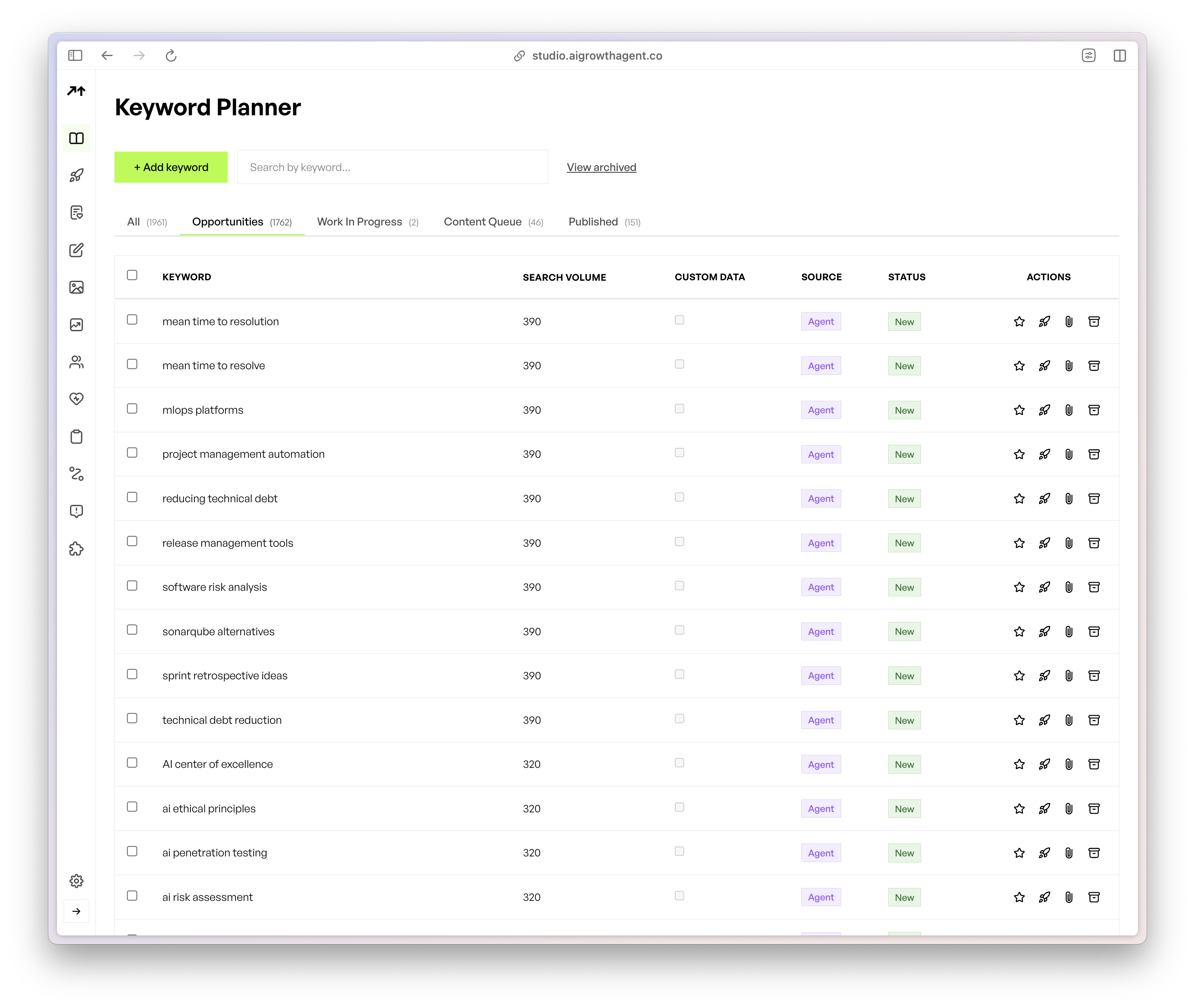
1. Increasing Content Velocity With Intelligent Automation
Solving the Shrinking Pixel Problem
Advanced AI content generators such as AI Growth Agent help B2B marketers publish high-quality, relevant pages at a pace that is difficult to match with human-only teams. This programmatic velocity counters the shrinking pixel problem, where a static content footprint gets diluted in an internet dominated by AI output.
AI Growth Agent links research, strategy, drafting, review, and technical optimization in a single workflow. Automated processes apply brand rules and feedback consistently so teams can scale content production without losing control of quality or message.
Aligning Speed With Quality Standards
Effective automation relies on clear rules and guardrails. AI Growth Agent uses programmatic brand voice settings, structured templates, and built-in technical checks to keep quality high as volume grows.
The platform can identify keyword clusters, outline content, embed on-page SEO, and prepare pages for publishing in one sequence. Teams then review and refine where needed, which concentrates human effort on judgment and accuracy instead of repetitive formatting tasks.
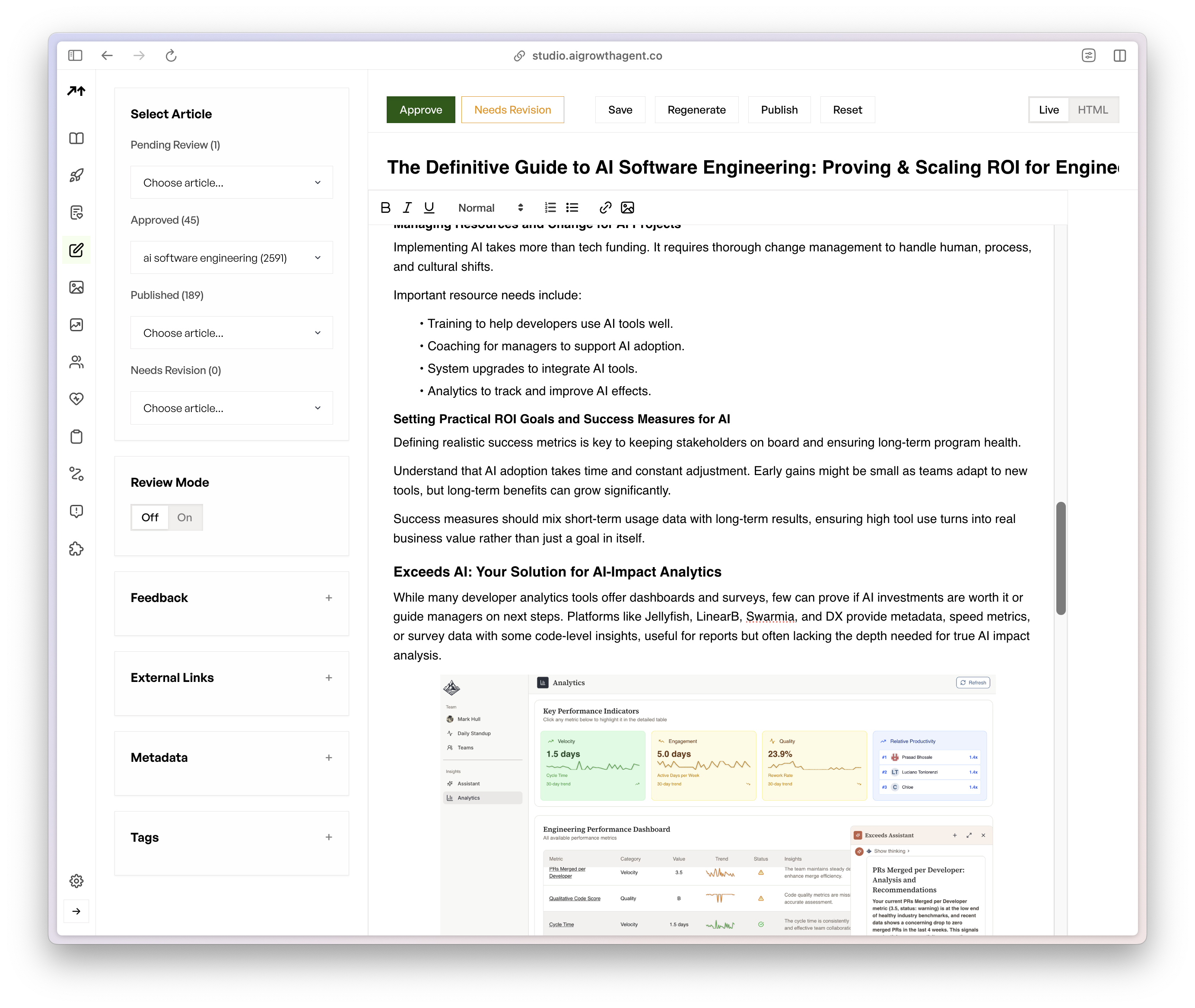
2. Engineering Authority Through Structured Content for AI Citation
Building for Generative Engine Optimization
Generative Engine Optimization is the discipline of shaping content so that AI search systems can easily interpret and reuse it. AI Growth Agent embeds structured data, clear headings, internal links, and metadata into each page to support this goal.
Well-structured content helps AI models recognize topics, entities, and relationships. That clarity increases the chances that a brand’s material appears as a quoted or summarized source in AI overviews and conversational answers.
Creating AI-Ready Content Assets, Not Just Text
AI Growth Agent can implement protocols such as blog Model Context Protocols that help AI systems connect directly with a site’s content. That connection supports more precise retrieval of relevant sections when models generate responses.
The platform adds schema markup, optimized image tags, and metadata patterns that signal expertise and relevance. These technical elements give B2B brands a stronger foundation for becoming preferred sources when AI tools assemble answers for buyers.
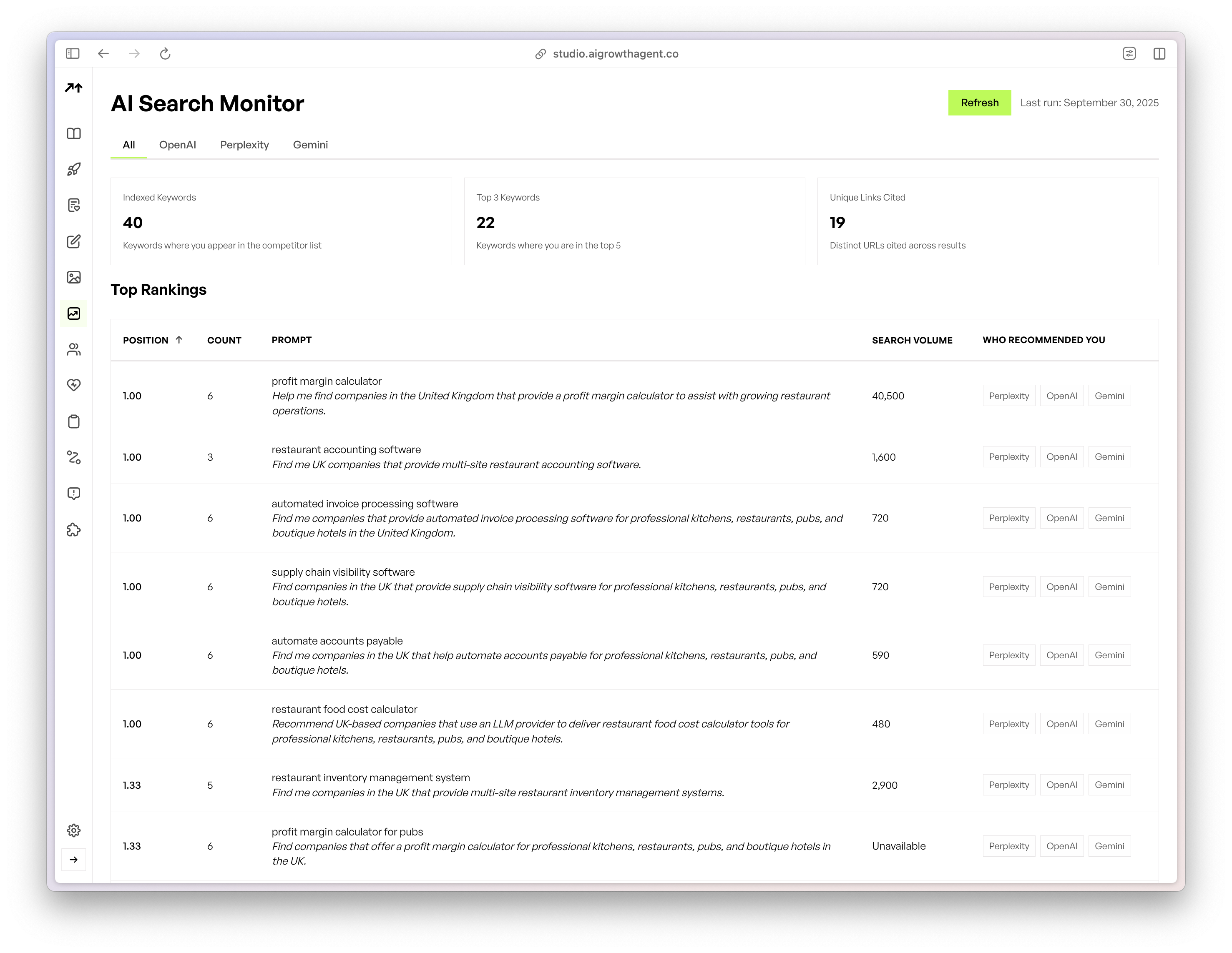
3. Personalizing Content at Scale for AI-Driven Buyer Journeys
Adapting Content to Specific B2B Contexts
B2B buying journeys involve multiple stakeholders, long timelines, and varied information needs. AI Growth Agent uses a detailed Company Manifesto created during onboarding to reflect a brand’s positioning, product nuances, and target personas across content.
This structure allows the system to tailor articles, landing pages, and resources to different stages, from early research to vendor comparison. As AI-driven buyer agents evaluate options, consistent and relevant content increases a brand’s likelihood of being shortlisted.
Reinforcing Brand Perspective Across Assets
The Programmatic SEO Agent inside AI Growth Agent maintains a consistent voice and narrative across large content libraries. The system learns from feedback, adjusts phrasing, and incorporates domain expertise so pages feel cohesive even when produced at scale.
Schedule a demo to see if you are a good fit if you want to align high-volume content production with specific buyer and segment needs.
4. Maintaining Brand Authenticity and Trust Amid AI Proliferation
Keeping the Human Element Central
Trust depends on accuracy, clarity, and consistency, not just volume. AI Growth Agent incorporates brand guidelines, approval workflows, and review stages so human experts can refine key points and verify claims before publishing.
This collaboration model uses AI for scale and speed while relying on subject matter experts for nuance and judgment. The result is content that reads as human, informed, and aligned with organizational priorities.
Managing Voice and Factual Rigor
Brand voice programming in AI Growth Agent provides patterns for tone, terminology, and positioning. The platform uses these patterns along with fact-checking steps and feedback loops in the AI Growth Agent Studio to keep output aligned with reality and with internal standards.
Over time, the system learns from edits and approvals. Future drafts then require fewer changes, which improves both consistency and efficiency.
5. Supporting Multi-Tenant Management and Real-Time Responsiveness
Scaling Content Across Brands and Domains
Many B2B organizations manage several brands, regions, or product lines. AI Growth Agent supports multi-tenant programmatic deployment so teams can run separate agents with distinct voices, strategies, and keyword focuses from a single interface.
Each tenant can publish to different domains or subdomains while following its own rules and playbooks. Central teams gain visibility and governance without slowing local execution.
Responding Quickly to Market Signals
Markets and topics shift quickly, especially in technology and SaaS. AI Growth Agent helps teams respond to new questions, trends, and competitor moves with rapid, SEO-ready content that matches brand guidance.
The AI Growth Agent Studio offers tools for editing, giving feedback, and managing approvals. Database-to-content automation can also convert internal datasets into structured articles, case studies, or resources that strengthen SEO and support sales conversations.
Schedule a consultation session to see if you are a good fit if you need enterprise-level control over many brands while keeping content production fast and consistent.
Frequently Asked Questions About AI Content Generators for B2B
How do AI content generators support content quality in B2B?
Quality comes from combining algorithms with clear standards and workflows. AI Growth Agent uses a Company Manifesto, structured templates, and technical checks to guide generation. Teams then refine drafts through iterative feedback, which tunes the system to a brand’s expectations.
Can AI content generators create authoritative B2B content?
AI content generators can support authority when they are configured to focus on depth, structure, and technical optimization. AI Growth Agent maps topic clusters, applies schema markup, and builds interconnected content libraries that signal expertise to AI search systems.
What is the key difference between generic AI tools and programmatic SEO agents?
Generic tools usually create standalone text that still needs manual research, formatting, and publishing. Programmatic SEO agents such as AI Growth Agent handle strategy, keyword research, technical SEO, and deployment in one system, which produces fully prepared pages rather than raw drafts.
How do AI content generators help B2B brands earn AI search citations?
AI content generators improve citation potential by making content easy for models to parse and reference. AI Growth Agent uses structured data, metadata, and protocols like blog Model Context Protocols so AI systems can more reliably locate and reuse relevant passages.
Conclusion: Build Durable Authority in AI-Driven Search
AI-powered search has raised the bar for what counts as visible, useful content in B2B. Brands that pair human expertise with programmatic content systems can publish more often, structure information more clearly, and present stronger signals of authority to AI engines.
AI Growth Agent is a programmatic SEO platform that helps B2B teams create technically sound, brand-aligned content architectures at scale. The system supports strategy, generation, optimization, and publishing, so your expertise is easier for AI tools and buyers to find.
If your organization has strong fundamentals and wants to compete more effectively in AI search, schedule a consultation session to see if you are a good fit for AI Growth Agent in 2026.
