


Key takeaways from this article:
- AI-powered search engines now surface brands as cited sources inside tools like ChatGPT, Gemini, and Perplexity, not just on traditional search results pages.
- Brands that publish structured, high-quality content at scale create stronger signals for AI citation and long-term category authority.
- Technical SEO for AI depends on schema, metadata, and semantic clarity so models can parse, trust, and reuse your content accurately.
- Programmatic content architectures and real-time publishing help teams capture emerging demand and trending topics before competitors do.
- AI search analytics must extend beyond clicks to include visibility, citations, and sentiment across multiple AI models.
- AI Growth Agent provides software that automates programmatic SEO, technical optimization, and AI search monitoring for marketing teams that want consistent AI visibility.
AI-powered search is changing how people discover brands and make decisions. AI systems now synthesize information from many sources, then present answers directly in the interface. Brands that want to stay visible need content that AI systems can find, interpret, and cite with confidence.
AI Growth Agent gives marketing leaders a programmatic SEO agent that builds high-authority content architectures and keeps them updated for AI search. The platform automates research, content production, technical optimization, and publishing so your brand is easy for AI systems to reference.
Marketing teams that want to upgrade their AI search strategy can schedule a demo to see how AI Growth Agent supports AI-ready content at scale.
1. Prioritize Programmatic Content Velocity for AI Search Visibility
AI-generated content has increased the volume of information online, and AI search engines now reward brands that publish a steady flow of fresh, structured, and in-depth content. Manual content workflows struggle to keep pace with this environment, especially when the goal is to earn frequent AI citations.
AI search models favor brands that update content often and expand coverage across related topics. Brands that publish infrequently or in small batches risk a decline in visibility as AI systems favor sources with more current and comprehensive information.
Traditional SEO often relied on monthly or quarterly publication schedules. AI search places more weight on recency and breadth of coverage. Marketing leaders now benefit from programmatic content engines that can support daily or near-daily publication without overloading internal teams.
Programmatic content velocity relies on a system approach to content rather than one-off articles. A connected network of pages, briefs, and updates lets each piece reinforce the others. This structure supports both scale and depth, two qualities AI search systems use to evaluate authority.
Manual processes often create bottlenecks at every stage, including research, outlining, drafting, SEO optimization, review, and publishing. Advanced AI content optimization software, such as AI Growth Agent, automates much of this lifecycle. The platform supports keyword research, strategy development, content drafting, technical SEO, and direct publishing in a single workflow.
Implementation works best when teams move beyond basic AI writing tools toward platforms that handle full content engineering. AI Growth Agent often takes clients from onboarding to the first programmatically engineered article within about a week, targeting clear opportunities in AI-powered search results.
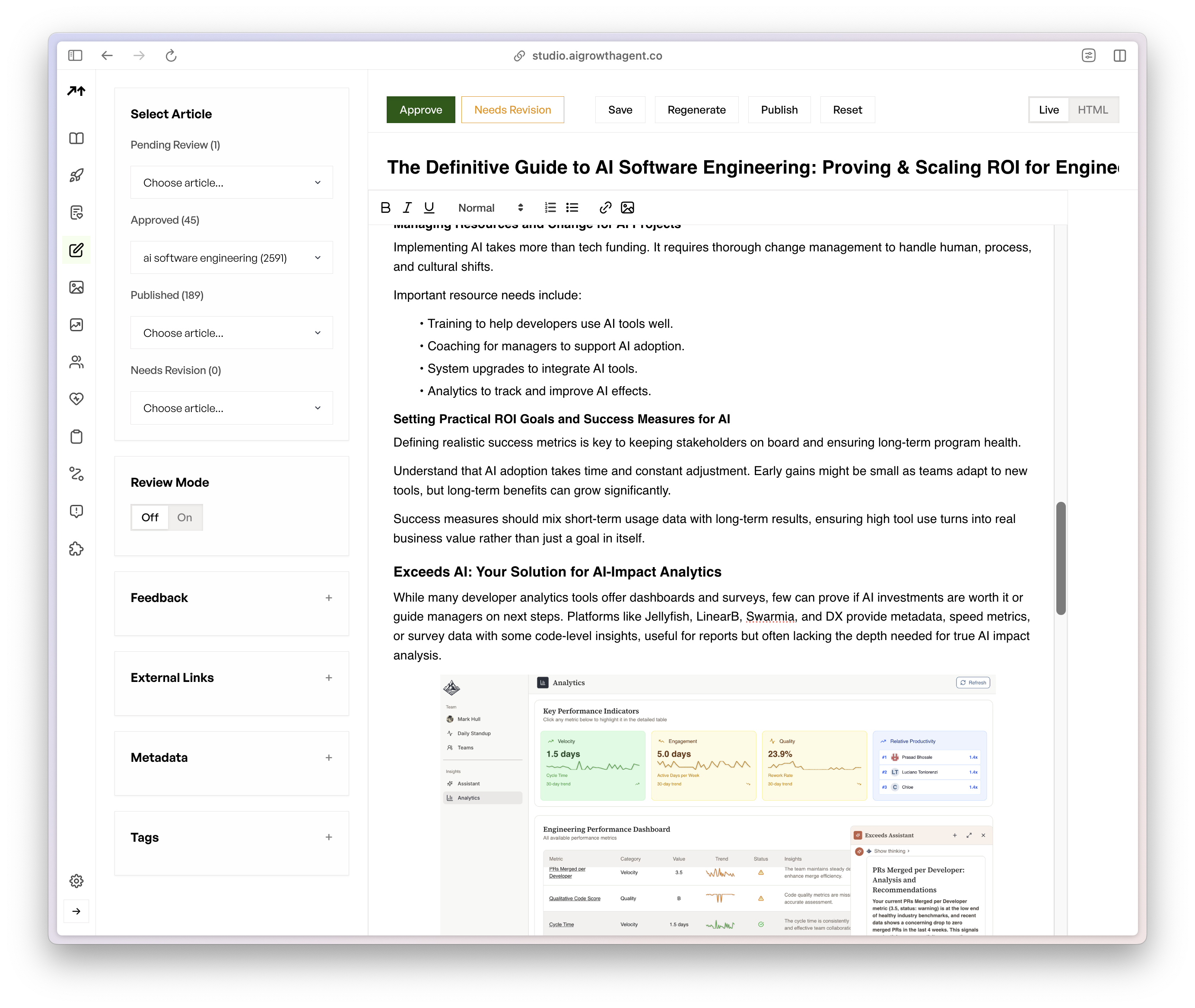
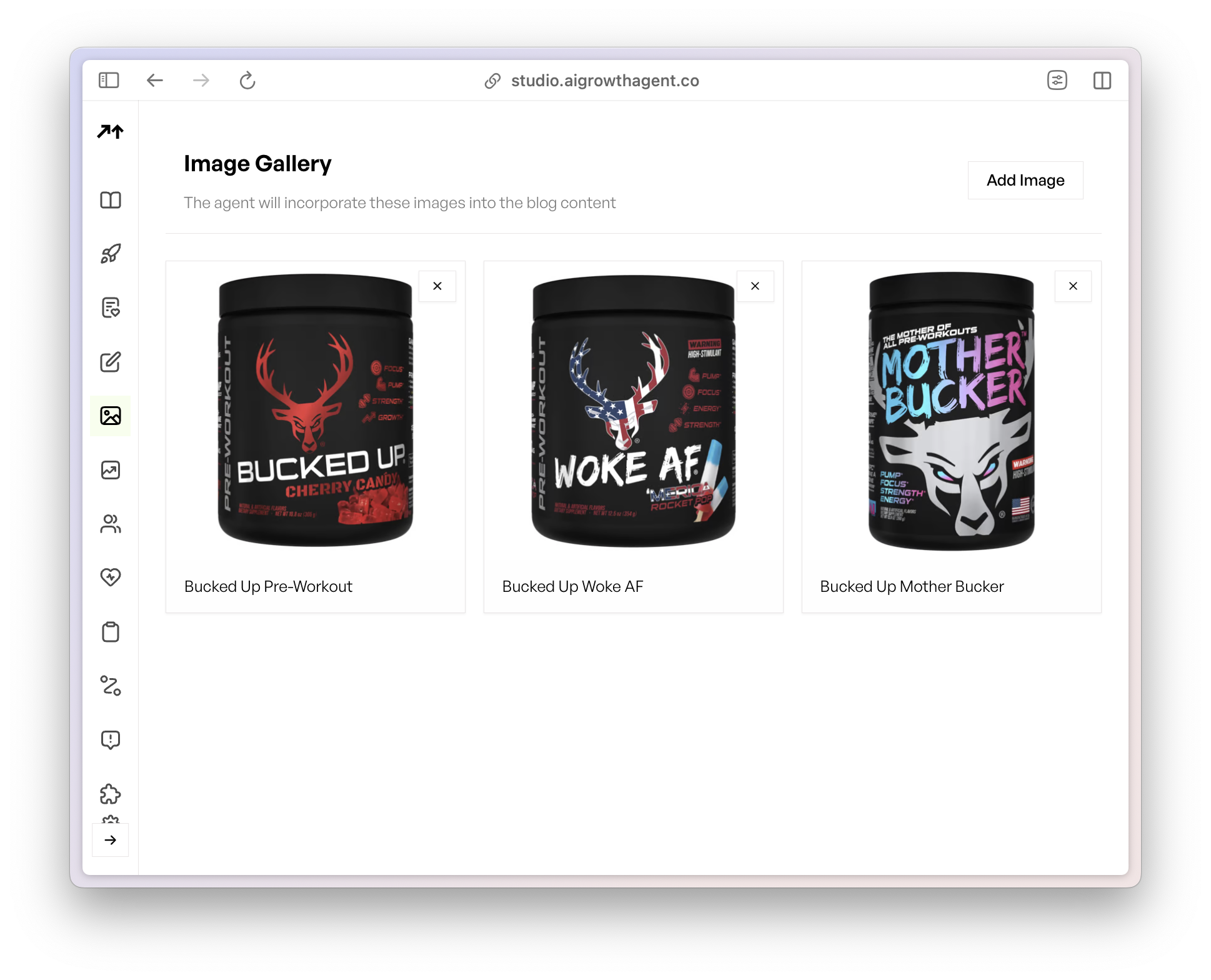
Many teams also want to keep creative control of visuals and brand assets. AI Growth Agent allows marketers to provide images and media that the agent can naturally incorporate into drafts, keeping both quality and speed high.
2. Engineer Content for Technical AI Parseability and Semantic Precision
AI search visibility now depends on more than keywords. Content needs clear semantics, consistent structure, and precise metadata so AI models can ingest and reuse it correctly at scale.
Direct citation by systems like ChatGPT, Google AI Overviews, and Perplexity depends on how easily these models can scan your site, understand the context, and extract specific answers. Structured, well-labeled content makes that process much easier than long, unstructured text blocks.
Modern AI search engines analyze content across several layers. They evaluate keywords, intent, entities, factual signals, and how each page fits into a broader topic. Pages that lack structure or clear relationships between concepts often remain underused, even if they contain useful information.
Schema markup plays a central role. Structured data helps AI systems identify people, products, organizations, and key concepts. It also clarifies how those elements connect. This structure supports stronger confidence when AI systems decide which sources to cite.
Semantic precision further improves reliability. Clear definitions, unambiguous terminology, and consistent naming conventions help AI models distinguish between similar entities or concepts. Content that reduces ambiguity becomes a safer source for AI answers.
AI Growth Agent implements advanced technical SEO across all content, including rich schema, metadata, image tags, and protocols like LLM.txt and a blog Model Context Protocol (MCP). These elements make it easier for AI search engines to read directly from your content and understand the structure of your blog or knowledge base.
Teams that want their content to align with AI technical requirements can schedule a demo of AI Growth Agent and review how the platform handles structured data and semantic optimization.
Critical technical elements for AI optimization
Several technical elements work together to make content more useful to AI systems:
- Structured data and schema: Provide explicit details about entities, relationships, and page types so AI systems can interpret content accurately.
- Metadata for AI: Use descriptive titles, meta descriptions, and tags that clarify authority, freshness, and relevance for both search engines and AI models.
- AI-aware content architecture: Organize pages into clear hierarchies and topic clusters that reflect how AI models group related concepts.
- Consistent internal linking: Connect related articles with descriptive anchor text so AI systems can follow topical paths across your site.
3. Build a “Mountain of Authority” with Programmatic Content Architectures
AI models will cite competitors when they find more consistent or complete information elsewhere. Brands that want to define a category need a deep, programmatic content architecture that covers the full range of relevant topics and questions.
AI citations often favor content that answers questions directly, presents structured insights, and follows predictable formatting. A scattered collection of isolated blog posts rarely delivers the same effect as an organized architecture built around pillars and supporting articles.
The idea of a “mountain of authority” shifts focus from a few high-performing pages to broad topical coverage. AI systems look for patterns of expertise across an entire domain. Interconnected content that addresses many related questions signals deeper authority than standalone pieces.
Programmatic content architectures usually begin with detailed keyword and topic clustering. AI Growth Agent evaluates large sets of relevant queries, then groups them into pillars and clusters that match how people and AI models explore a subject.
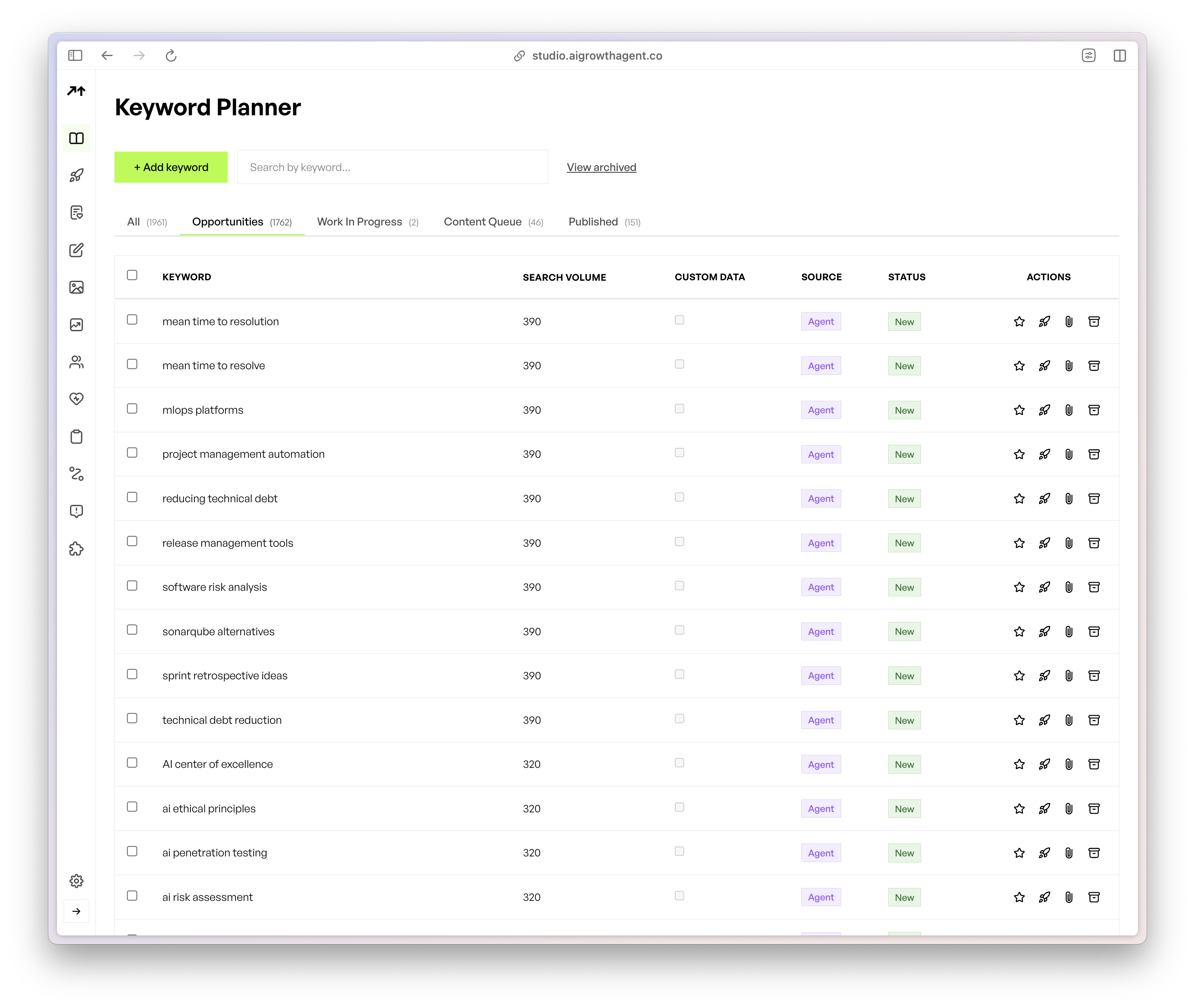
Content pillars then anchor the architecture. They provide thorough overviews of core topics, while supporting articles address narrower questions, use cases, and comparisons. This network gives AI systems multiple ways to confirm your expertise and pull citations for different query types.
Technical implementation also matters. Internal linking strategies, URL structure, and on-page headings help AI systems understand how each piece fits within the broader content map. Clear hierarchies and consistent navigation improve both user experience and AI comprehension.
Content depth remains a key differentiator. AI search engines tend to favor sources that offer detail, examples, and clear explanations over thin or repetitive content. AI Growth Agent supports both tactical articles and in-depth pillars so teams can build authority with a mix of formats.
Strategic content clustering for AI authority
Effective clustering for AI search reflects how models evaluate topical authority across groups of pages, not just individual URLs.
- Topic clusters should map to real user questions and related subtopics, creating visible pathways through your content.
- Cross-references between articles help AI systems trace concepts and verify information from multiple angles.
- Programmatic content strategies work best when they include regular content gap analysis to identify missing topics or underdeveloped areas.
- AI Growth Agent continuously monitors the search landscape and AI citation patterns to highlight new opportunities and prevent authority gaps.
4. Embrace Real-Time Responsiveness and Multi-Tenant Deployment for Dynamic AI Visibility
The AI search environment shifts quickly, especially around breaking news, product launches, and emerging trends. Brands that can respond in near real time are more likely to appear in AI-generated answers while interest is highest.
Real-time responsiveness in AI content optimization focuses on two capabilities. Teams need to identify trending topics early, then publish relevant, high-quality content fast enough to capture new demand. AI Growth Agent supports this with real-time programmatic SEO content injection. Teams can provide a link to a trending article and generate an optimized response with their brand’s perspective within minutes.
This responsiveness relies on a technical foundation that automates research, drafting, optimization, and publishing. AI Growth Agent handles trend detection, topic analysis, on-page SEO, and CMS-ready output so teams can move quickly without sacrificing structure or accuracy.
Many organizations also manage multiple brands, regions, or product lines. Multi-tenant deployment helps these teams run distinct content strategies from one place. AI Growth Agent allows private equity firms, venture portfolios, and multi-brand enterprises to operate separate Programmatic SEO Content Agents inside a single interface, each with its own Manifesto, keyword strategy, and voice.
Coordinating several content streams while maintaining quality and consistency requires clear governance. AI Growth Agent keeps brand strategies separate where needed while sharing technical infrastructure to reduce duplication and overhead.
Consistent messaging across sites, product pages, and blogs strengthens authority signals for AI systems. AI Growth Agent supports synchronized updates so key narratives and facts stay aligned across properties.
Advanced multi-brand content management
Multi-tenant content strategies benefit from structured processes and shared tooling.
- Brand voice management: AI Growth Agent uses detailed Manifestos to maintain distinct tones, vocabularies, and messaging frameworks for each brand.
- Cross-brand coordination: The platform highlights when multiple brands in a portfolio target similar topics, helping teams reduce internal competition and position each brand clearly.
- Centralized monitoring: AI Growth Agent Studio tracks AI search performance for all properties in one dashboard, making it easier to compare results and standardize optimization practices.
5. Redefine Success: Measure AI Visibility and Citation, Not Just Clicks
AI overviews and conversational interfaces have increased the share of zero-click results, where users get answers without visiting a website. In this context, visibility within AI responses becomes as important as traditional clicks and rankings.
Structured content that appears inside AI summaries can shape awareness, trust, and consideration before a user decides whether to click through. Brands that prioritize this form of visibility can influence decisions earlier in the journey.
Measurement frameworks need to evolve to match these behaviors. AI search performance now includes brand mentions, direct citations, and how often a brand appears as an example or recommendation inside AI responses.
AI Growth Agent Studio provides analytics for this new layer of visibility. The platform surfaces keyword indexing heatmaps, URLs that drive AI visibility, direct quotes from AI responses, real-time ChatGPT citation tracking, and crawl statistics for Google, ChatGPT, and Perplexity bots.
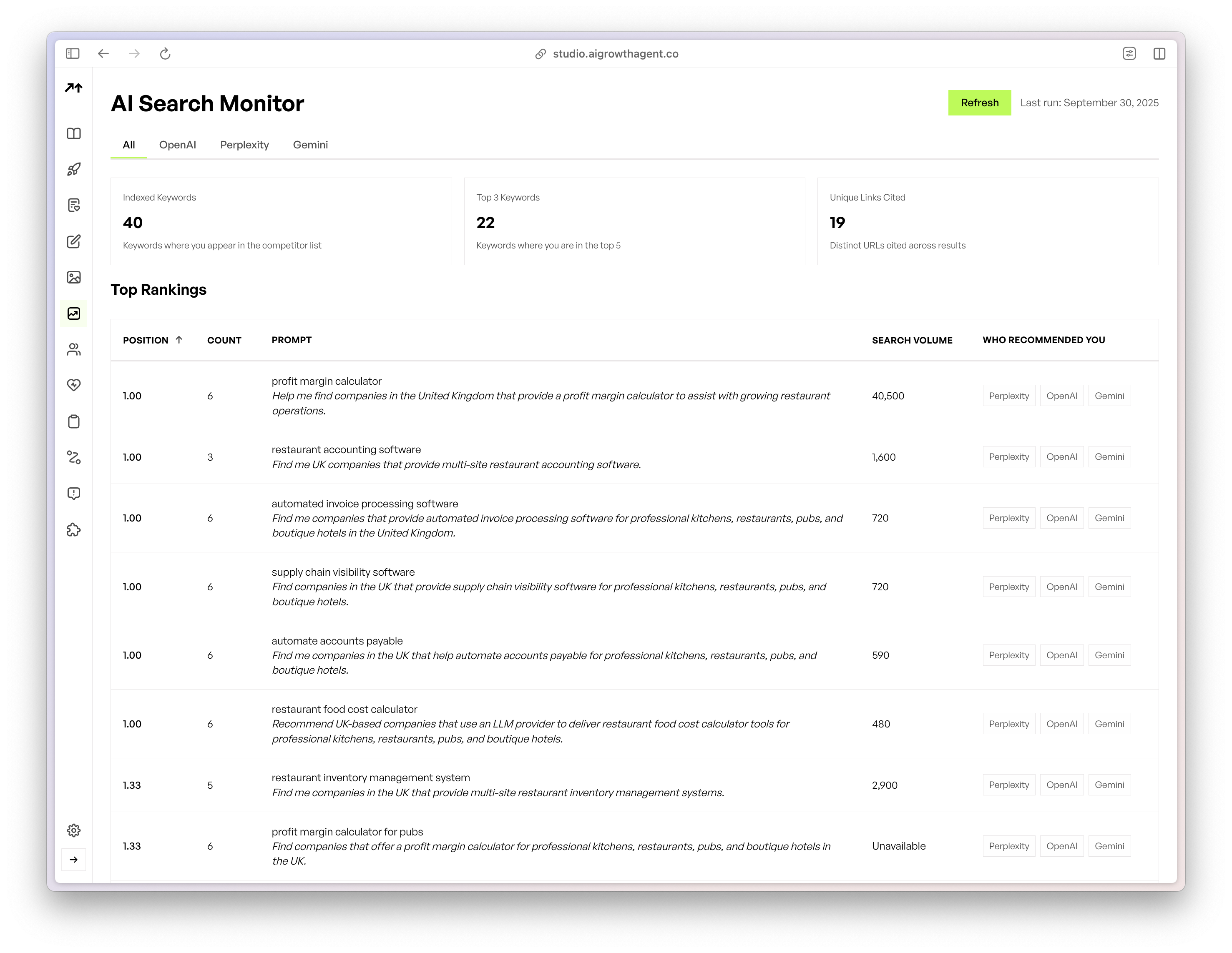
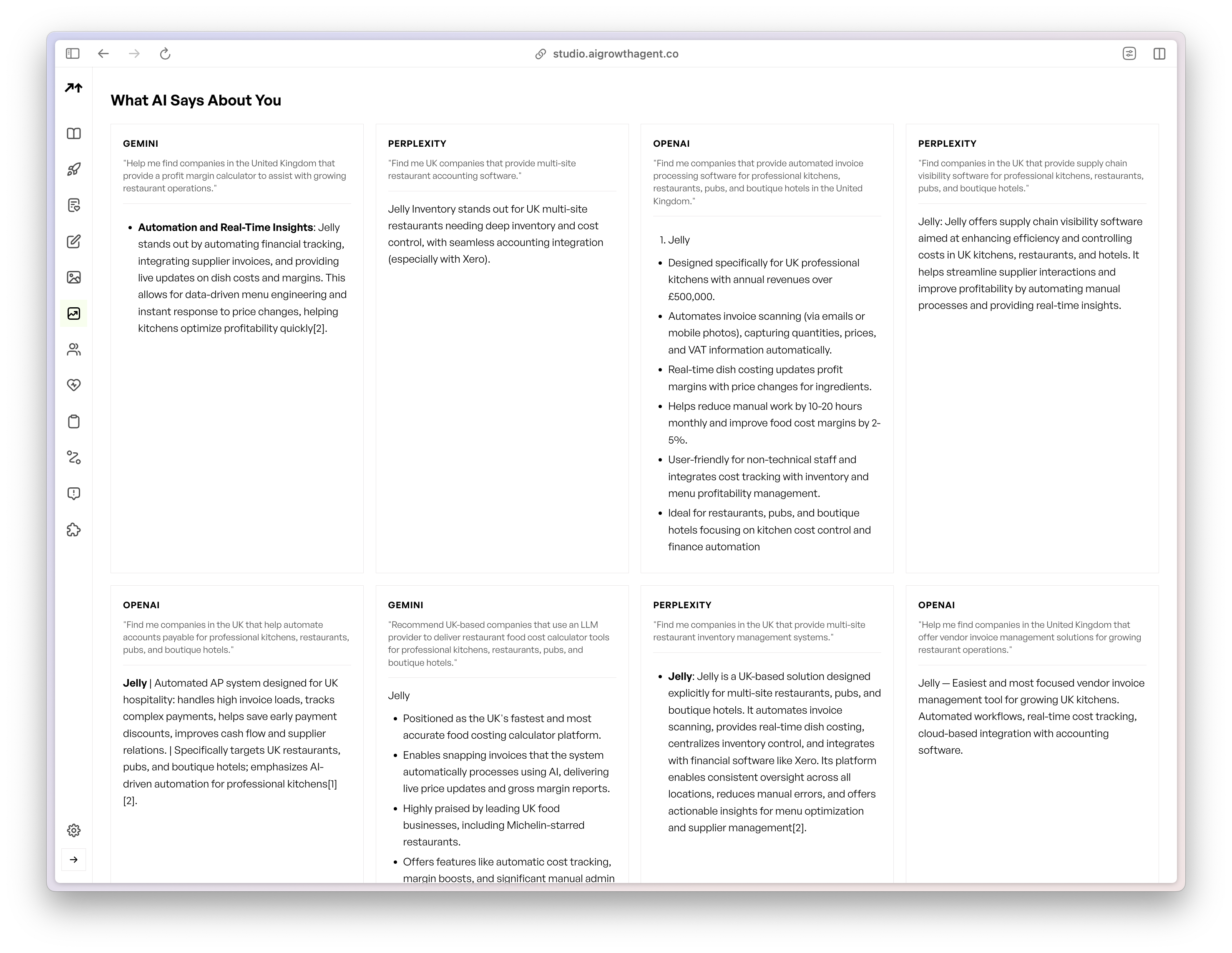
Citation analysis helps teams understand not only if their content appears, but how it is framed. The tone of AI responses, the sections where brands are mentioned, and the presence of competitors all contribute to perceived authority.
Brand sentiment inside AI answers offers another signal for competitive positioning. AI Growth Agent tracks citation context and competitor presence so teams can see where they lead, lag, or risk being replaced in key narratives.
Long-term AI visibility contributes to brand awareness, authority, and market share over time. AI Growth Agent helps organizations build this presence early so they can benefit from compounding advantages as AI systems continue to evolve.
Advanced AI search analytics
Comprehensive AI search monitoring covers more than basic rankings.
- Citation analysis: Track how often your brand appears in AI answers, where it shows up within responses, and which pages drive those mentions.
- Query-level insights: See which questions, intents, and topics produce AI citations for your brand across different platforms.
- Attribution modeling: Connect AI visibility to downstream actions by tracking how often AI-exposed users later visit, subscribe, or convert.
- Competitive intelligence: Monitor competitor citation patterns to understand shifts in category authority and uncover new content opportunities.
Teams that want to expand beyond traditional SEO metrics can schedule a demo with AI Growth Agent and review AI visibility data for their category.
Frequently Asked Questions (FAQ) About AI Content Optimization Software
How do AI search engines truly differ from traditional search engines in their content requirements?
AI search engines focus on semantic understanding and factual synthesis rather than simple keyword matching. Traditional search tended to rank individual pages based on signals like backlinks and on-page keywords. AI systems aim to answer user questions directly by combining information from many sources into one response.
This shift changes what effective content looks like. AI search engines look for clearly structured information that can be extracted and reused in small pieces, not just pages designed to rank for a single keyword.
Technical requirements reflect this difference. AI systems benefit from content with clear headings, strong internal linking, explicit entities, and accurate metadata. These elements help models understand what a page covers and how trustworthy it is.
Depth and completeness play a larger role as well. AI models often favor sources that cover a topic thoroughly, with definitions, examples, and edge cases, rather than short posts that only touch on a concept.
Success in AI search is therefore measured by citation frequency, visibility inside AI-generated answers, and the quality of surrounding context, not just by traditional rankings.
Why is “content velocity” more critical now, and how does it relate to AI citation?
Content velocity has become more important because AI systems update their knowledge quickly and operate in an environment with rising content volume. Brands that publish slowly risk being overshadowed as new information appears.
AI search engines often give preference to recent, relevant information when choosing what to cite. Rankings can shift faster than in traditional search because models regularly refresh their understanding of topics.
Brands that publish comprehensive content at a higher cadence tend to build stronger authority signals. Over time, this consistent activity can lead to more frequent and more prominent AI citations.
Higher content velocity also enables faster responses to emerging topics, product changes, and news. AI Growth Agent supports this with real-time content injection that helps brands appear in conversations around current events and new searches.
Maintaining both speed and quality requires infrastructure beyond basic writing tools. AI Growth Agent combines automated research, fact-checking support, real-time SEO optimization, and direct publishing workflows to support a sustainable content pace.
Can generic AI writing tools effectively optimize my content for AI search?
Generic AI writing tools can help generate readable drafts, but they often stop short of full AI search optimization. Many of these tools focus on text creation rather than the broader requirements of content engineering.
AI search optimization usually benefits from automated schema markup, semantic annotations, structured data, and metadata tuning. Generic tools may require manual prompts or additional platforms to add these elements.
Strategic planning is another area where generic tools can be limiting. Advanced AI search strategies need deep keyword research, clustering, and ongoing adjustments as search behavior changes. Many writing tools expect teams to provide strategy rather than generating it automatically.
Operationally, generic tools often leave technical SEO implementation, CMS integration, and performance tracking to your internal team. AI Growth Agent offers an end-to-end solution that covers strategy, production, optimization, and monitoring for AI search.
What technical infrastructure is required for advanced AI content optimization?
Advanced AI content optimization relies on a technology stack that supports automation, structure, and measurement across the full content lifecycle.
First, teams benefit from automated content engineering that can apply schema markup, structured data, and semantic annotations consistently across large volumes of content.
Second, real-time monitoring systems help track performance across AI platforms. AI Growth Agent connects content production with AI search analytics so teams can see which pieces drive citations and where gaps remain.
Third, deployment workflows need to be efficient enough to support higher content velocity. AI Growth Agent integrates with content management systems and automates technical SEO steps so teams can publish quickly while maintaining quality.
Data management and research form a fourth layer. AI Growth Agent draws from comprehensive keyword data and trend signals to guide topics, formats, and content depth.
Finally, the infrastructure should support brand voice management and multi-tenant deployment. AI Growth Agent maintains separate brand guidelines while using shared optimization engines for consistency and scale.
How long does it typically take to see results from AI content optimization efforts?
AI content optimization can show early results faster than many traditional SEO programs. Some brands see initial AI citations within a few weeks of publishing optimized content.
Clients using AI Growth Agent, including Exceeds AI, BeConfident, Bucked Up, and Gitar, have reported outcomes such as Perplexity recommendations, Google AI Overview placements, and ChatGPT citations within weeks of starting programmatic publishing.
Early indicators include first appearances in AI responses, higher indexing rates, and more consistent visibility in zero-click search results. These signals show that AI systems are starting to rely on your content.
Building strong, durable authority usually takes several months of consistent publishing. Programmatic tools like AI Growth Agent accelerate this process by increasing content volume and improving structure.
Timelines also depend on competition. Highly contested categories may require longer timeframes, while emerging or niche topics can show faster gains for brands that move early with a clear strategy.
Conclusion: Strengthen Your Brand’s Authority with AI Content Optimization Software
AI-powered search now shapes how people discover, evaluate, and choose brands. Strategies that worked for traditional search alone no longer cover the full picture of visibility and authority.
The five strategies in this article highlight how marketing leaders can adapt: increase programmatic content velocity, engineer content for AI parseability, build comprehensive authority architectures, respond in real time, and track AI-specific visibility metrics.
Delaying these steps gives competitors more time to establish authority signals that AI systems will continue to use. Early action creates compounding benefits as AI models grow more familiar with your brand and content.
Advanced AI content optimization software such as AI Growth Agent helps teams implement these strategies at scale. The platform combines research, content generation, technical optimization, and AI search analytics in one environment.
Marketing leaders who want to secure category authority in the AI era can schedule a demo of AI Growth Agent to see how programmatic SEO and AI-focused optimization fit their goals.
