


Key takeaways from this comparison:
- AI-powered search engines like ChatGPT, Google AI Overviews, and Perplexity now shape how enterprise brands gain visibility and authority.
- Traditional SEO agencies, self-service AI content tools, and AI search monitors each solve part of the problem but leave gaps in scale, technical depth, or execution.
- AI Growth Agent provides a programmatic SEO agent that researches, writes, technically optimizes, and publishes content built for AI search engines.
- Enterprise teams use AI Growth Agent to increase content velocity, strengthen AI citations, manage multi-brand portfolios, and reduce manual technical work.
- Implementation starts with a Company Manifesto, then moves into automated research, clustering, publishing, and continuous monitoring of AI search performance.
The New Reality of AI Search: Why Traditional Approaches Are Failing
Your Digital Footprint is Shrinking
AI-generated content continues to grow at high volume, which makes it harder for brands to maintain visibility. Each new piece of content competes for the same queries, and your share of the digital landscape declines as a result. Without a structured response to this content surge, even established brands risk losing presence with the AI systems that now drive discovery.
Programmatic Velocity is the New Baseline
The speed of information has increased, and manual publishing cannot keep pace. A cadence of one or two human-written articles per month no longer maintains relevance in AI-driven search. Large language models prioritize recency, depth, and consistent structure, which requires frequent, high-quality content output. Brands that succeed in AI search maintain steady, authoritative publishing at scale, supported by automation rather than manual workflows alone.
If You Do Not Define Yourself, Your Competitors Will
Limited content about your brand becomes a liability in AI search. When AI systems do not find enough credible information about your company, they rely on more complete sources, which often means your competitors. Their content then shapes how AI describes the category, which positions them as default authorities while your brand appears less often or not at all.
Essential Evaluation Criteria for AI Search Solutions
Scalability and Programmatic Content Velocity
AI search success now depends on automated, high-volume content production that still meets quality standards. The ability to publish daily, authoritative articles has become a core advantage. Effective solutions must combine content generation with the engineering capacity to support continuous, programmatic publishing without manual bottlenecks.
Technical Sophistication and AI Optimization
AI search optimization extends beyond drafting text. Solutions need advanced schema markup, structured data consistency, and technical frameworks that match how AI crawlers interpret information. The supporting infrastructure must align to how AI systems index, evaluate, and cite content, not just how traditional search engines operate.
End-to-End Automation and Integration
Enterprise brands benefit from solutions that integrate directly with existing workflows and CMS platforms such as WordPress and HubSpot. A complete approach manages the full content lifecycle, from research and strategy through to publication. Reducing manual handoffs and technical friction allows teams to maintain content velocity and quality at the same time.
Measurable ROI and AI Citation Tracking
Marketing leaders need clear performance visibility, not just features. Effective platforms support tracking of organic traffic, content indexation, AI citations, and improvements in brand authority across major AI environments such as ChatGPT, Perplexity, and Google AI Overviews.
Competitor Analysis: Why Current Solutions Fall Short in AI Search
Traditional SEO Agencies: Manual, Slow, and Costly
Traditional SEO agencies rely on manual work from human specialists. This model can produce strong individual articles, but it does not scale to the volume required for AI search competition.
These agencies depend on headcount and billable hours, which caps content velocity. For enterprise brands, this limits the ability to build broad topical coverage and authority at the speed AI search demands.
Many agencies also lack the engineering depth to deploy and maintain advanced technical infrastructure for AI search. As a result, they struggle to implement consistent structured data and schema, which undermines AI indexation and citation quality.
Project-based or hourly billing further restricts scale. When brands need hundreds of optimized pages rather than a handful of flagship articles, the cost of manual production rises quickly and becomes difficult to justify.
Self-Service AI Content Tools: Unstructured Output, Manual Burden
Self-service AI tools such as Jasper and ChatGPT improved on pure manual writing, but they still fall short of full programmatic SEO.
Some tools output unstructured text that still requires significant editing and technical work. Others now generate more structured content and integrate with publishing platforms, yet they often leave strategy, schema, and final implementation to internal teams. Marketing and SEO staff must still design content plans, apply technical formatting, and manage publication workflows.
These tools often enhance writers without removing the need for a technical SEO function. Teams can face several gaps:
- An integration gap, where CMS setup and automation require separate configuration.
- A context gap, where detailed brand and audience understanding must be collected and prompted manually.
- A strategy gap, where topic clustering and pSEO design still rely on human planning.
- A quality gap, where structured data, performance, and AI-specific optimization need separate attention.
Basic AI tools usually do not provide a complete programmatic strategy or the specialized architecture needed for AI-focused technical SEO. For enterprise brands that must produce hundreds of optimized articles each month, these tools can increase workflow complexity. Internal teams still manage coordination, quality control, and final technical implementation.
AI Search Monitors: Diagnose, Do Not Execute
AI search monitoring platforms such as Profound play an important role by providing visibility into AI citations and brand coverage across both LLMs and traditional search.
These tools highlight where brands receive few or no citations and reveal competitive content gaps. However, they primarily operate as diagnostic systems. They identify problems and opportunities but rarely provide direct mechanisms to execute the content and technical changes that close those gaps.
Marketing leaders who need to move from insight to action still require separate systems or teams to produce and deploy content. Monitoring tools then become another step in the workflow rather than a complete solution for AI search performance.
If you want to move from monitoring your AI search performance to actively improving it at scale, schedule a demo to see if you are a good fit for programmatic SEO automation.
AI Growth Agent: The Programmatic SEO Agent for AI Search Authority
Introducing AI Growth Agent
AI Growth Agent gives enterprise marketers a focused way to build authority in AI search. The platform is built for marketing managers, directors, VPs, and CMOs at established brands that need both scale and quality.
AI Growth Agent deploys a Programmatic SEO Agent that engineers, writes, and technically optimizes content across large topic spaces. The agent manages deep keyword clustering, schema implementation, and direct publishing. This reduces technical friction while creating consistent, authoritative pages that manual SEO workflows struggle to match at volume.
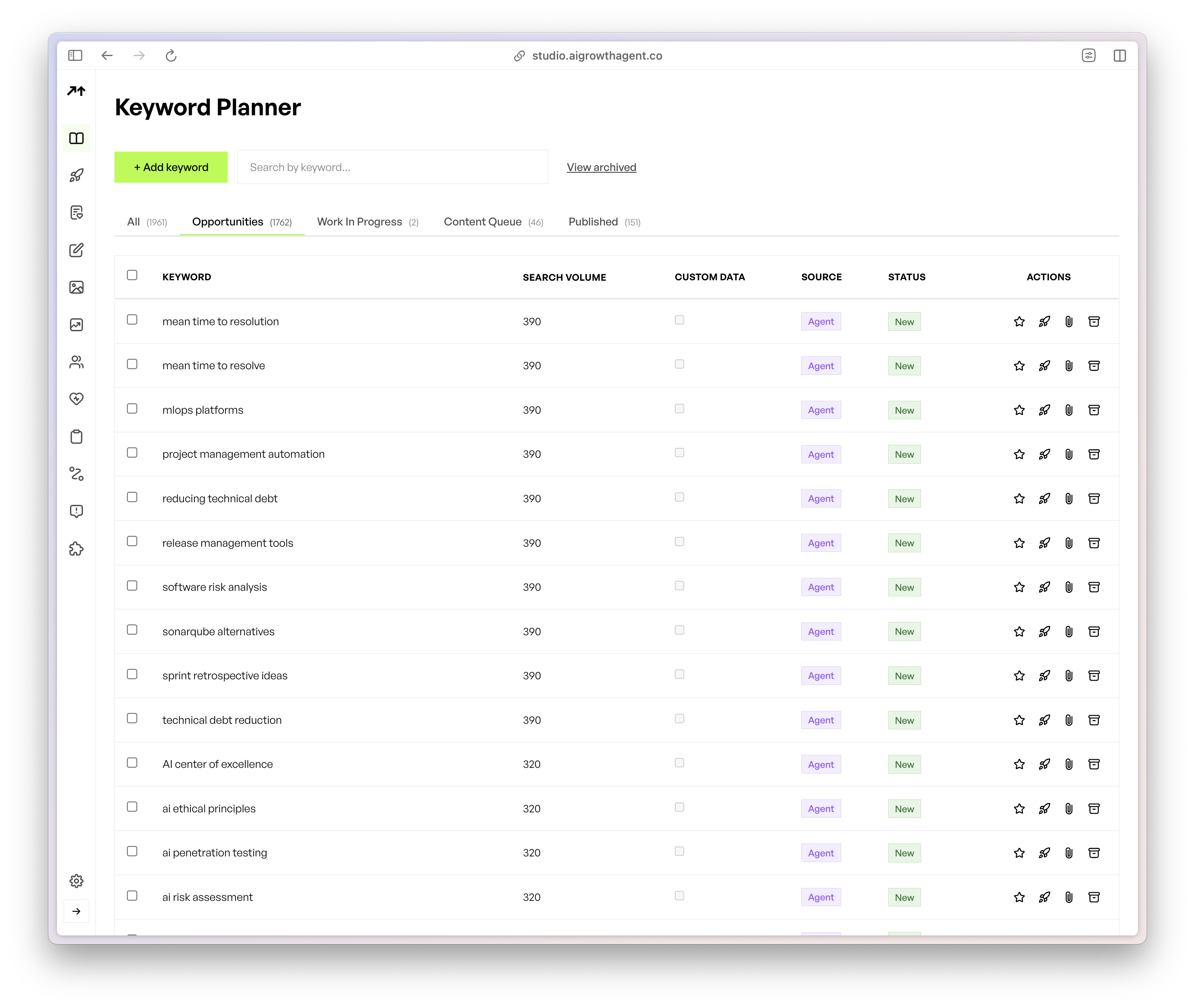
Breakthrough Capabilities for Programmatic Content Engineering
Multi-tenant programmatic deployment allows enterprise groups and portfolios to run multiple Programmatic SEO Content Agents from one interface. Each agent holds its own Company Manifesto, keyword strategy, and brand voice and can publish to separate domains or subdomains while leadership monitors everything in one place.
Real-time programmatic SEO content generation supports fast responses to news and market shifts. The platform can produce and optimize articles around emerging topics within minutes, which helps brands participate in time-sensitive conversations and capture relevant search demand.
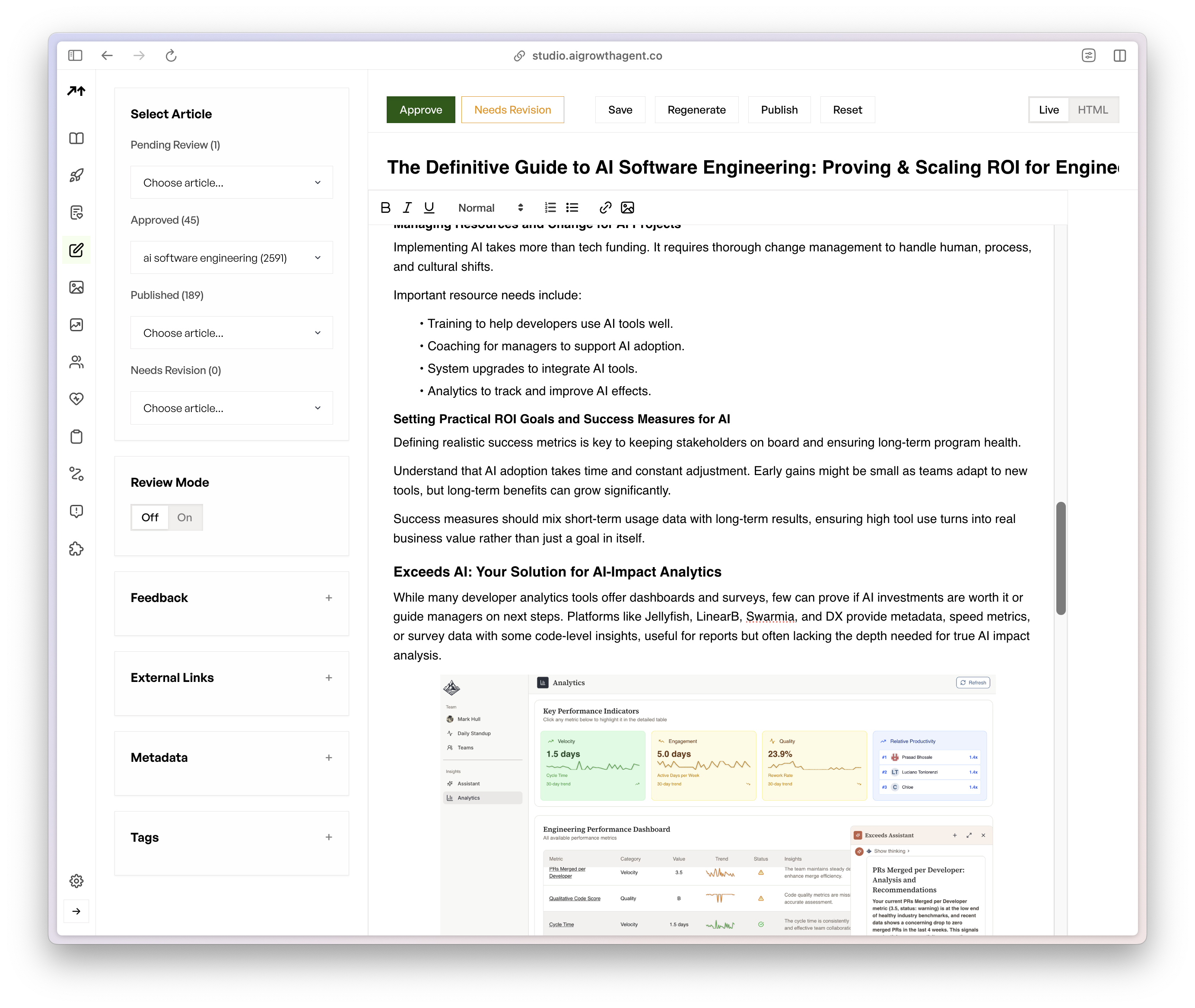
Database-to-content automation turns proprietary data into search assets. For example, a client with food recommendations locked inside a mobile app used AI Growth Agent to generate SEO-focused articles for each recommendation set, such as lists of top local venues. This approach converted non-indexed data into a programmatic SEO library.
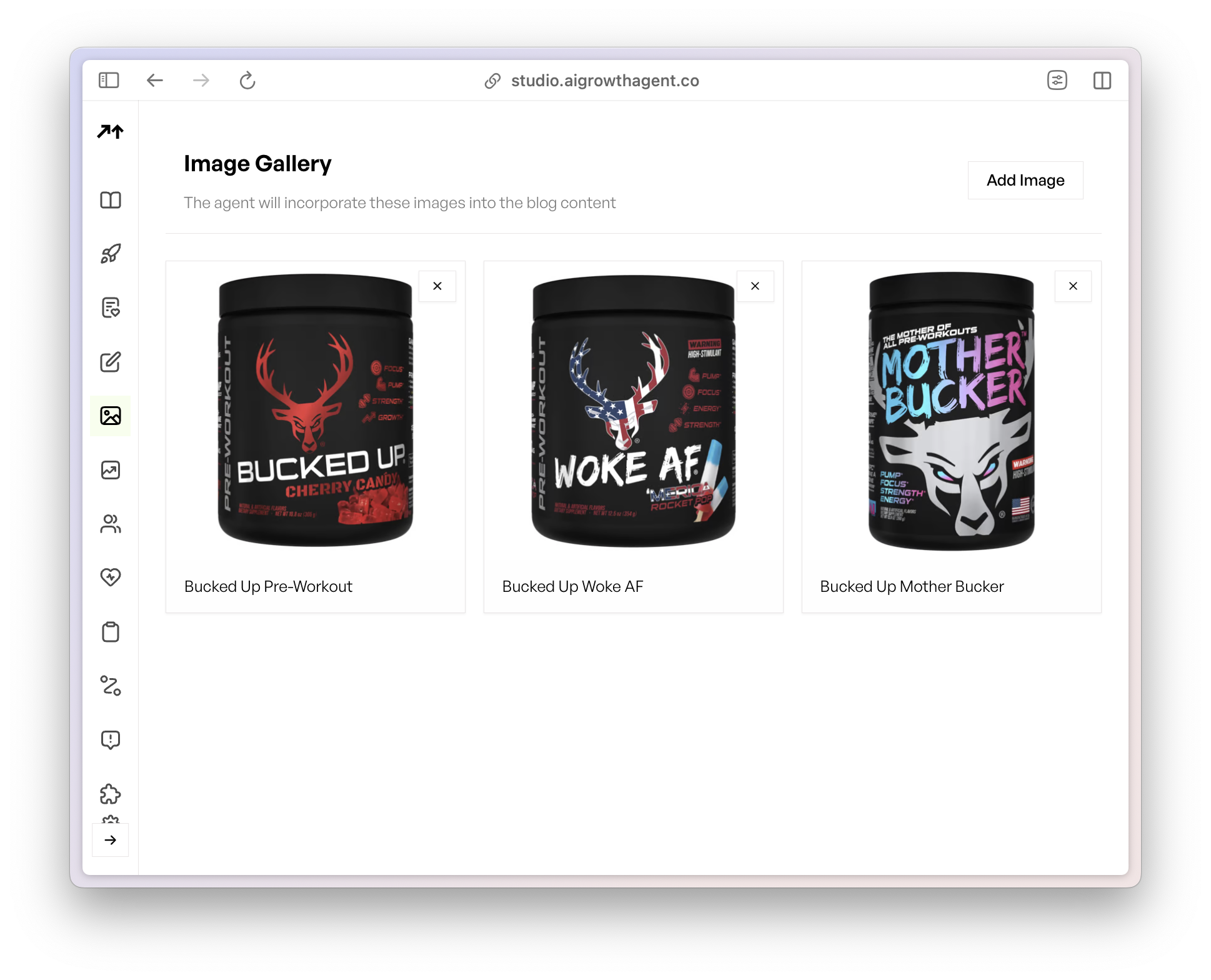
Intelligent image and asset placement helps each article use visuals effectively. The agent selects appropriate images from approved libraries, injects metadata for image SEO, and can generate new imagery as needed inside the content workflow.
Autonomy and Technical Sophistication
AI Growth Agent designs content architectures around keyword clusters and applies schema markup automatically. This supports AI search engines in understanding relationships between topics, entities, and pages, which strengthens indexation and citation potential.
The agent ingests company context and evaluates large sets of search queries tied to each brand. It then builds Programmatic Content Strategies grouped into pillars and clusters that match how people and AI systems frame questions.
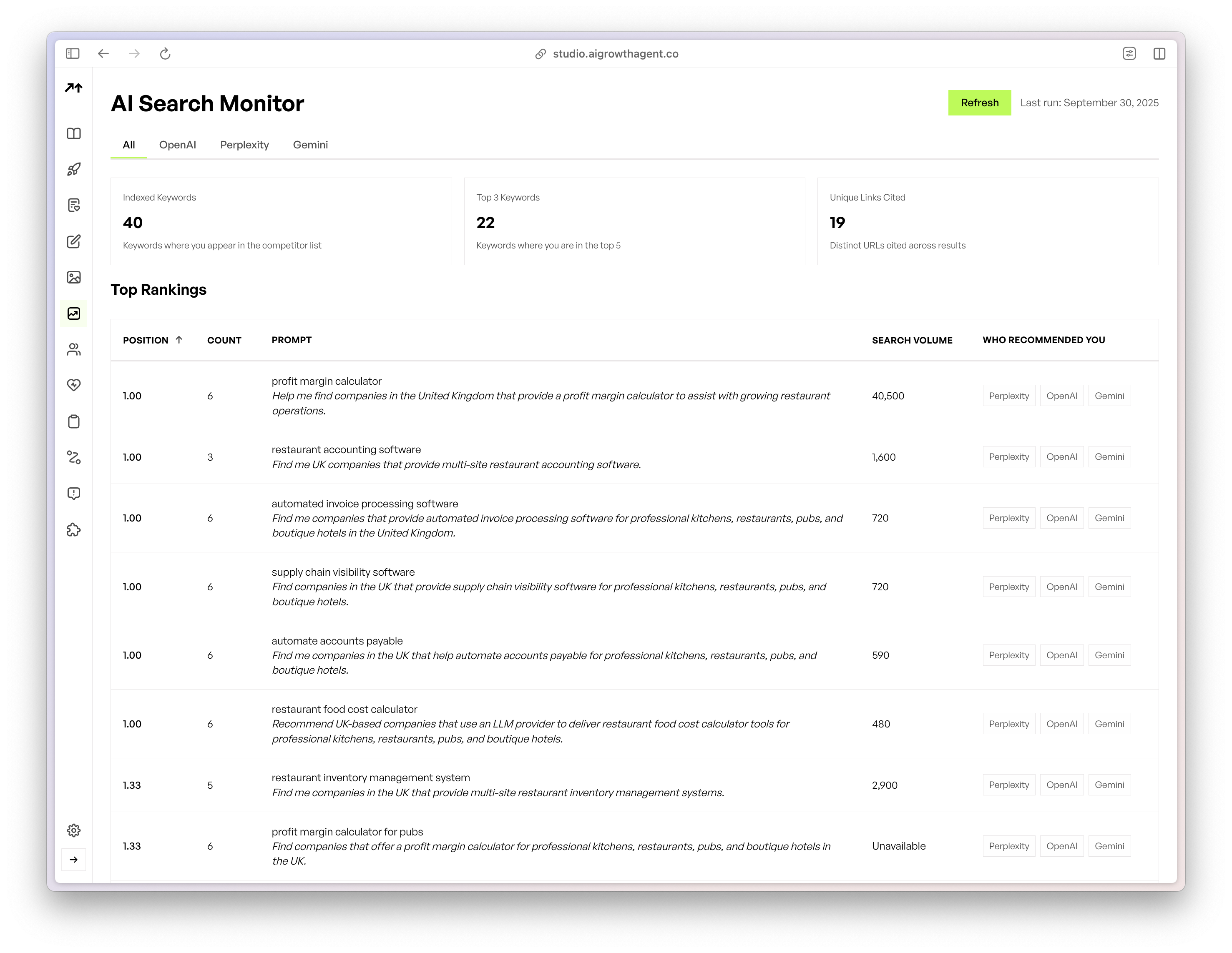
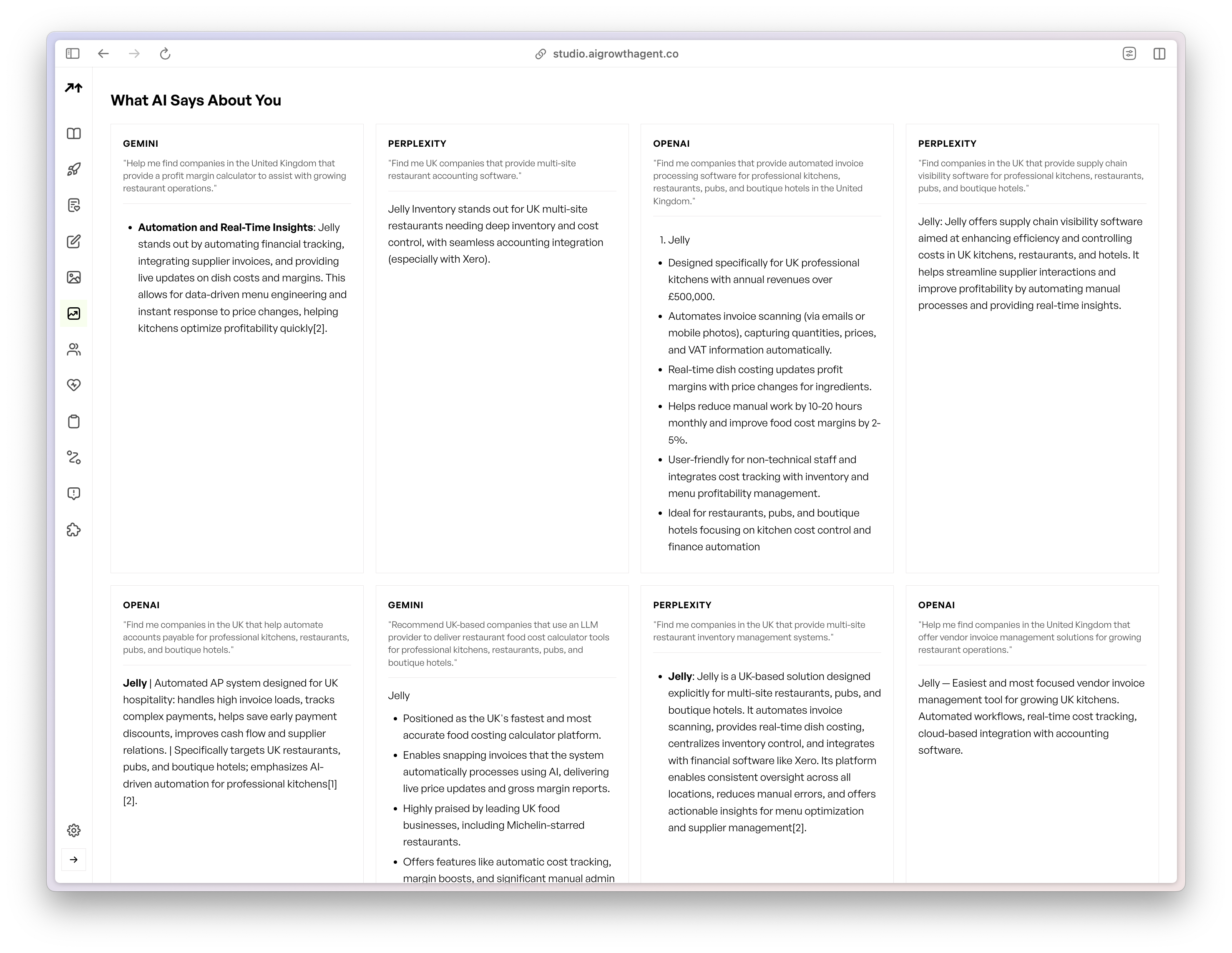
The AI Search Monitor view lets teams see how often and how accurately AI systems mention their brand across environments such as ChatGPT, Gemini, and Perplexity. This creates a feedback loop between programmatic publishing and AI search outcomes.
White-Glove Onboarding and Transparent Control
Onboarding starts with a one-hour kickoff session with AI Growth Agent’s in-house journalist. That conversation becomes the Company Manifesto, a living document that guides the Programmatic SEO Agent so content follows brand voice and positioning.
Clients manage the system through AI Growth Agent Studio, which acts as a control center for programmatic SEO. Teams can review and edit drafts, provide feedback that refines the agent’s output, and enable Auto-Pilot mode once they are comfortable with quality and tone.
Proven Success and Rapid ROI
AI Growth Agent focuses on measurable outcomes, and many clients see early gains in both traditional and AI search. Exceeds AI became a recommended alternative to competitors within Perplexity in two weeks and appeared in Google AI Overview snapshots for core terms within three weeks. BeConfident surfaced as a leading English learning app in Brazil through Google AI Overviews within weeks of programmatic publishing. Bucked Up received ChatGPT citations among top protein soda brands within three weeks, and Gitar established itself as a reference brand for AI-powered CI/CD automation across AI search platforms in under two months.
Comparative Analysis: AI Growth Agent vs. Competitors
|
Capability |
AI Growth Agent |
Traditional SEO Agencies |
Self-Service AI Content Tools |
|
Content Velocity |
Daily or hourly programmatic publishing |
Limited by headcount |
Dependent on manual effort |
|
Technical SEO Infrastructure |
Autonomous schema and technical optimization |
Manual, variable expertise |
Manual integration required |
|
Integration and Setup |
Hosted deployment or CMS integration |
Manual integration required |
Manual configuration |
|
Content Strategy |
Automated research and clustering |
Manual, human-led |
Manual keyword input |
|
Capability |
AI Growth Agent |
AI Search Monitors |
Value Proposition |
|
End-to-End Execution |
Strategy through publication |
Monitoring only |
Complete lifecycle automation |
|
Multi-Brand Scalability |
Multi-tenant deployment |
Single-layer dashboards |
Programmatic enterprise scale |
|
Technical Innovation |
Advanced technical SEO |
Citation tracking |
AI-native content architecture |
|
Pricing Model |
Subscription with value focus |
Data volume subscription |
Predictable ROI-oriented spend |
This comparison shows that each solution category delivers partial value. Traditional agencies produce strong content but cannot scale easily. Self-service tools generate drafts but require heavy manual oversight. Monitoring platforms reveal gaps but do not execute the work needed to close them. AI Growth Agent combines these elements into one programmatic infrastructure built for AI search authority.
You can see how this approach fits your brand by scheduling a consultation session with the AI Growth Agent team.
The Strategic Imperative: Why AI Growth Agent is Essential for Enterprise Success
AI-powered search is changing how people discover, compare, and select brands. Enterprise teams that delay programmatic content strategies risk ceding category authority to early adopters.
AI Growth Agent removes the usual tradeoff between scale and quality. Competing options often force a choice between slow, handcrafted content or high-volume but shallow output. AI Growth Agent combines structured research, automated writing, and technical optimization so brands can publish at volume without sacrificing standards.
The platform’s automation allows marketing leaders to focus on positioning, campaigns, and partnerships rather than the mechanics of content production. As the system publishes, the brand accumulates structured, AI-ready content that supports long-term authority in search.
Implementation Strategy: Maximizing ROI with AI Growth Agent
Effective implementation starts with the Company Manifesto. This document captures brand story, positioning, tone, and boundaries and acts as the reference point for all programmatic content.
Research and clustering capabilities then identify the highest-impact topics and queries for each business. The agent prioritizes themes and keywords that align with commercial goals, so programmatic publishing supports pipeline, revenue, or product adoption objectives rather than vanity metrics.
Multi-tenant deployment creates particular value for companies with multiple product lines or operating brands. Each entity can maintain its own voice and strategy while sharing core infrastructure, which reduces duplicate effort and centralizes governance.
The AI Growth Agent Studio gives leaders and practitioners visibility into what the agent is producing. Teams can review drafts, adjust guidelines, and feed back performance data, which helps the system improve while maintaining the pace of publication.
Future-Proofing Your AI Search Strategy
The AI search environment continues to evolve, with changes in ranking behavior, interface design, and citation patterns. AI Growth Agent’s architecture is built to adapt as these systems update how they interpret and present information.
Autonomous research and content generation allow brands to respond quickly to new topics, questions, and competitive moves. Teams can capture emerging opportunities without needing to staff new roles or undertake lengthy implementation projects.
Programmatic content engineering also builds a compounding advantage. Each article strengthens entity understanding and topical coverage, which supports future indexation and citations. Over time, this layered authority helps position the brand as a consistent reference in AI-generated answers.
You can shift your AI search posture from reactive to proactive by scheduling a demo to see if you are a good fit for AI Growth Agent.
Frequently Asked Questions about AI Growth Agent
Can AI Growth Agent replace my internal marketing team or SEO agency?
AI Growth Agent automates the technical and high-volume aspects of programmatic SEO that human teams and traditional agencies often find difficult to scale. It does not replace strategic marketing work, but instead extends your team’s capacity by handling content engineering, optimization, and publishing. Your staff can then spend more time on messaging, campaigns, and partnerships.
How quickly can I see results with AI Growth Agent in AI search?
Many enterprise brands see early indicators within weeks of launch. The platform’s onboarding process typically leads to a first programmatically engineered article within one week of the initial session. With consistent publishing, clients often begin seeing indexation and AI citations from platforms such as ChatGPT, Perplexity, and Google AI Overviews within two to three weeks.
Is AI Growth Agent suitable for small businesses or those with limited content needs?
AI Growth Agent is designed for brands that need to operate at a programmatic scale. The platform delivers the most value to enterprises and established businesses that want to solve the scale versus quality challenge and build a durable AI search authority. It is best suited to companies with strong foundations that are ready to invest in long-term content assets.
How does AI Growth Agent integrate with existing marketing technology stacks?
AI Growth Agent integrates with common CMS platforms such as WordPress, HubSpot, Webflow, Framer, Sanity, and Hashnode. Many enterprise clients choose the hosted option for its technical performance and simplicity of management. For teams that prefer to publish into an existing CMS, WordPress is typically recommended to take full advantage of technical SEO and programmatic publishing features.
Conclusion: The Definitive Path to AI Search Authority with AI Growth Agent
Search behavior has shifted, and enterprise brands now compete in a landscape shaped by AI-generated answers as much as traditional results pages. Manual SEO approaches and basic AI tools no longer provide enough coverage or structure to win consistent citations.
AI Growth Agent offers a structured way to build and maintain market authority. Through autonomous content engineering, technical optimization, and continuous publishing, the platform helps brands create a durable presence in both AI and traditional search.
The client examples illustrate what this can look like in practice, from Exceeds AI gaining visibility in performance review software discussions, to BeConfident growing its presence in language learning, to Bucked Up and Gitar building category recognition in their respective markets. These outcomes show how a programmatic approach can reshape how AI systems describe and recommend a brand.
AI systems will continue to generate answers about your industry, products, and competitors. AI Growth Agent helps ensure your brand appears as a reliable source in those answers. If you lead a premium brand with solid fundamentals and want to build category authority through programmatic SEO, schedule a demo to see if you are a good fit for AI Growth Agent.
