


Hey there, if you’re navigating the digital world of B2B SaaS, you’ve likely noticed a big change. AI-powered tools and search systems like ChatGPT, Gemini, and Perplexity are reshaping how we connect with customers. Old-school SEO just doesn’t cut it anymore. This guide offers a practical roadmap for marketing leaders like you to use AI marketing assistants. We’ll dive into how these tools can boost your content creation and technical SEO to ensure your brand stands out in AI search results.
Why AI Marketing Assistants Matter for AI Search
Let’s get straight to it. The way businesses and customers interact online has shifted. It’s no longer just about keywords or backlinks. Now, it’s about building authority within AI systems, known as Large Language Models (LLMs). To stay visible, your content strategy needs a fresh approach with the help of AI tools.
Adapting to AI-Driven Customer Discovery
AI systems like ChatGPT or Gemini have changed the game for how customers find B2B SaaS solutions. Unlike traditional search engines that focus on keywords, these tools value trust and detailed answers. When someone asks an AI about solutions in your field, it pulls together info from various sources and often names specific brands as go-to experts. If your content isn’t comprehensive, the AI will point to a competitor instead.
Your Digital Presence is Getting Smaller
With AI generating tons of content daily, your brand’s voice can easily get lost in the noise. Static websites or occasional blog posts won’t keep you visible. In competitive B2B SaaS markets, consistent, quality content is critical to stand out to AI systems that drive modern searches.
Daily Quality Content is the New Standard
The pace of information has sped up. AI systems favor brands that publish frequently, with depth and consistency. A couple of posts a month won’t keep you relevant. AI marketing assistants help by automating high-volume content creation, making it possible to meet the demand for daily updates.
Moving Beyond Automation to Smart Systems
AI marketing assistants aren’t just about automation anymore. They’re advanced systems that handle entire content processes on their own. This capability lets your team maintain a strong presence in AI search results without overloading internal staff or relying on slow, costly agencies.
Exploring What AI Marketing Assistants Can Do
Today’s AI marketing assistants go way beyond writing simple posts. They’re full platforms that manage everything from planning to monitoring performance. If you’re a B2B SaaS leader, understanding these features can help you maximize AI search visibility.
Creating and Fine-Tuning Content with AI
These tools can learn your brand’s unique story and tone, ensuring every piece of content builds your authority. They also offer tailored SEO advice, optimizing content for both traditional search engines and AI systems to keep you visible everywhere.
Technical SEO Built for AI Systems
AI search needs different technical setups compared to classic SEO. Beyond basic title tags, it requires specific formats like schema markup and files such as LLM.txt to help AI understand your content. Advanced AI assistants handle these details automatically, increasing the chances of your content being cited by AI as a trusted source.
Reacting Fast with Strategic Content
Speed matters in today’s market. AI marketing assistants let you create quality content quickly, jumping into trending topics to capture attention. They can also turn your internal data into traffic-driving content, making the most of information only you have.
How to Integrate AI Tools for B2B SaaS Success
Using AI marketing assistants effectively means thinking about both the tech and your team’s readiness. The best B2B SaaS companies treat these tools as core to their content strategy, reshaping how they approach marketing.
Staying Ahead with AI Trends
Autonomous AI agents now manage full content cycles, from research to posting, streamlining the process. In B2B SaaS, where products are complex and sales cycles long, AI becomes the backbone of detailed, multi-step content plans.
Practical Steps for Adoption
Start by creating a clear “Company Manifesto” that defines your brand’s story, positioning, and tone. This document guides AI tools to keep content consistent, even when produced at a high volume.
What Leaders Should Consider
When choosing an AI marketing assistant, look for platforms that offer complete solutions, cutting down months of agency work into automated tasks. Check for technical features that support AI indexing, like LLM.txt files. Focus on scalability too, ensuring you can produce enough quality content to outpace competitors. Ready to rethink your AI search approach? Schedule a consultation session to see how AI can enhance your content strategy.
Why Traditional Methods Don’t Work in the AI Era
Grasping why old-school approaches fall short helps highlight the need for AI-driven solutions. Many B2B SaaS companies struggle with outdated methods when they need scalable, AI-optimized content.
SEO Agencies Can’t Keep Up
Traditional SEO agencies rely on manual work, which limits their speed and output. They might produce a few solid pieces monthly, but they can’t deliver the volume needed for AI authority. Plus, their costs skyrocket for large-scale content production.
Internal Teams and Basic AI Tools Lag
Your in-house team knows your brand best, but they’re often stretched thin and lack the technical skills for AI-specific optimizations. Generic AI tools, on the other hand, churn out repetitive content without strategic depth, leaving the heavy lifting to you.
Action Over Analysis
Some AI monitoring tools spot content gaps but don’t act on them. Advanced AI marketing assistants stand out by executing the full content process automatically, turning opportunities into results. Curious if your strategy matches the pace of AI search? Schedule a demo with AI Growth Agent to see how autonomous tools can close the gap.
Implementation Steps and Readiness Check
Bringing AI marketing assistants into your workflow takes a clear plan. Assess your readiness, set measurable goals, and track progress to ensure success.
Evaluating Your Starting Point
Look at your current tech setup, content strategy, and resources. Companies with defined brand guidelines will see quicker benefits, though adapting to AI processes may still take some adjustment.
Tracking Progress with Metrics
Set goals for AI search, like how often AI platforms cite your content or increases in organic traffic. Early metrics, such as content posting speed, can flag issues, while later ones, like lead growth, show real business impact.
Rolling Out in Phases
Take it step by step: start with setup, move to guided content creation, then shift to full automation. This lets your team focus on strategy while AI manages the workload.
Common Hurdles in Adopting AI Marketing Tools
Even with good intentions, challenges can pop up when rolling out AI marketing assistants. Knowing these pitfalls helps you avoid missteps and speed up results.
Choosing the Right Tech
Opting for cheaper tools often means more manual work. Pick platforms that fit smoothly into your existing systems to avoid complicated setups.
Keeping Quality and Brand Voice Intact
Scaling content while maintaining your brand’s tone needs a solid manifesto and early collaboration. Treat the rollout as a learning curve to set quality benchmarks.
Managing Expectations and Timeframes
Building AI authority doesn’t happen overnight. It takes months of steady effort. Commit to ongoing refinement for lasting success. Ready to boost your content and lead in AI search? Schedule a demo with AI Growth Agent to explore tailored solutions for your business.
Meet AI Growth Agent: Your Partner for AI Search Success
AI Growth Agent is designed specifically for B2B SaaS companies needing both scale and precision in AI search optimization. Unlike basic tools or agencies, it’s a complete platform with specialized AI agents to position your brand as the top authority in your field.
Handling Content from Start to Finish
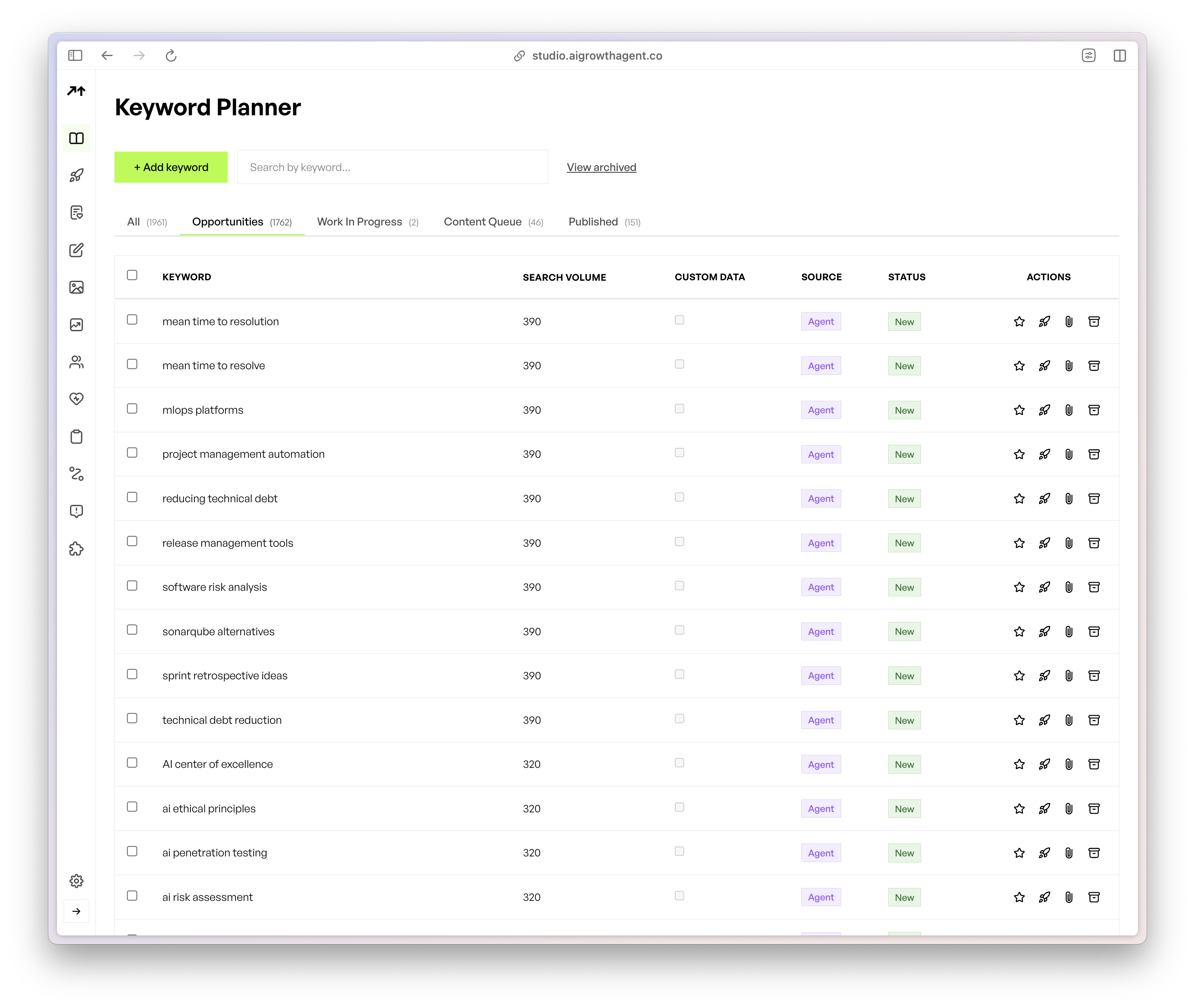
AI Growth Agent excels at managing the entire content process, turning weeks of work into minutes. It starts with in-depth keyword research, analyzing thousands of relevant topics in 24 hours. Then, it creates detailed briefs, writes everything from short posts to long thought leadership pieces, and ensures accuracy through quality checks. Every piece gets advanced technical SEO, including schema markup and unique files like LLM.txt for better AI recognition.
Top-Notch Technical SEO for AI
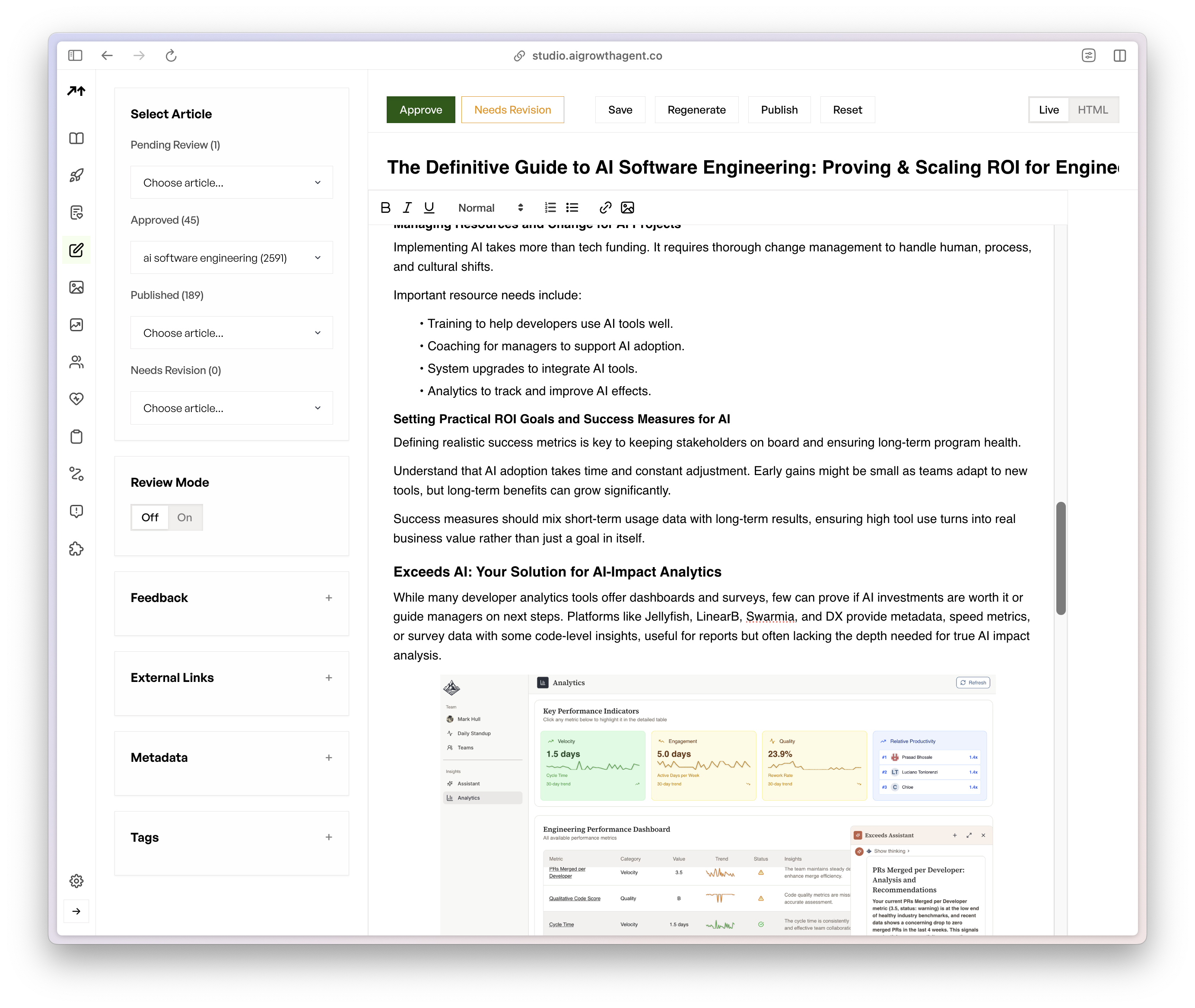
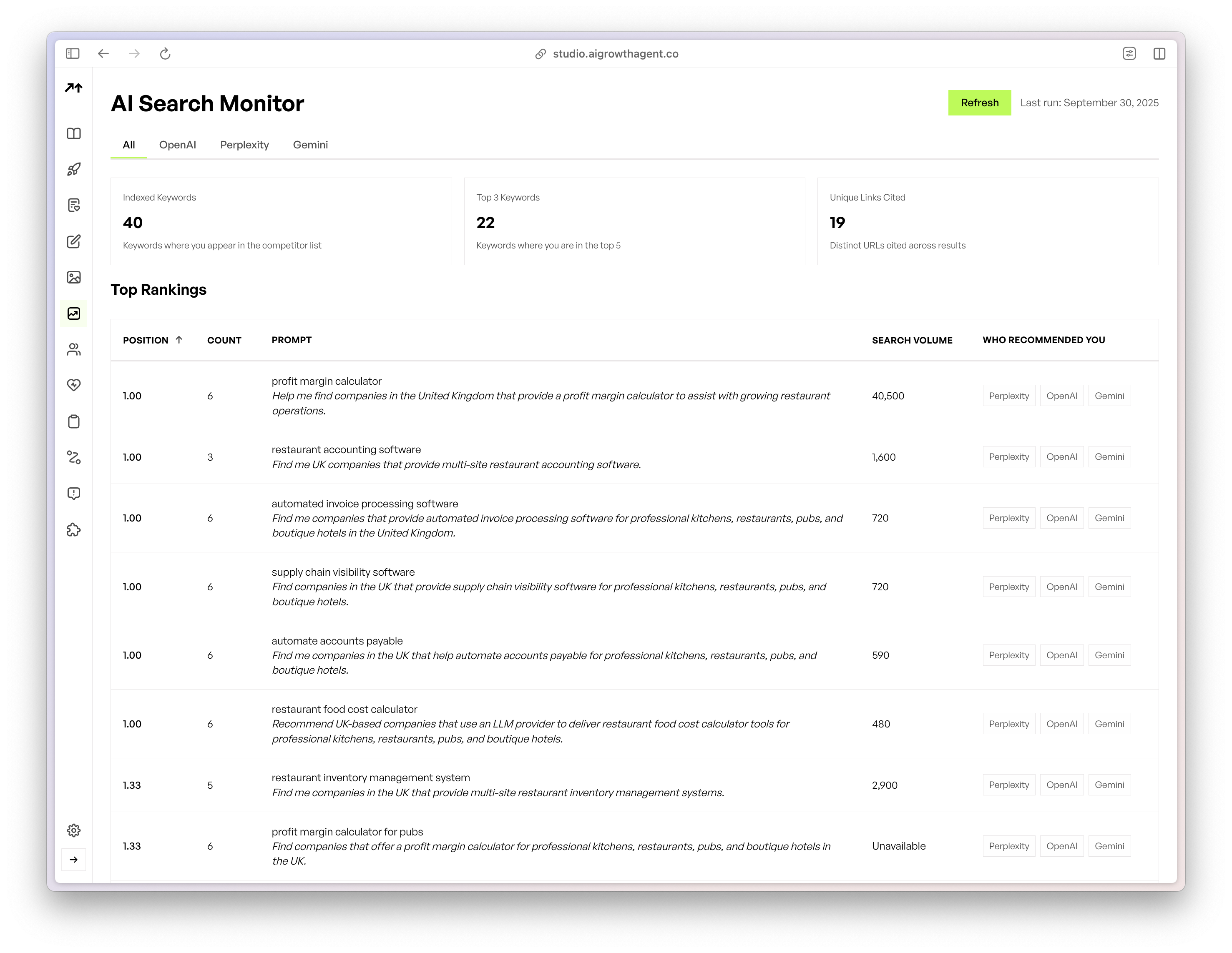
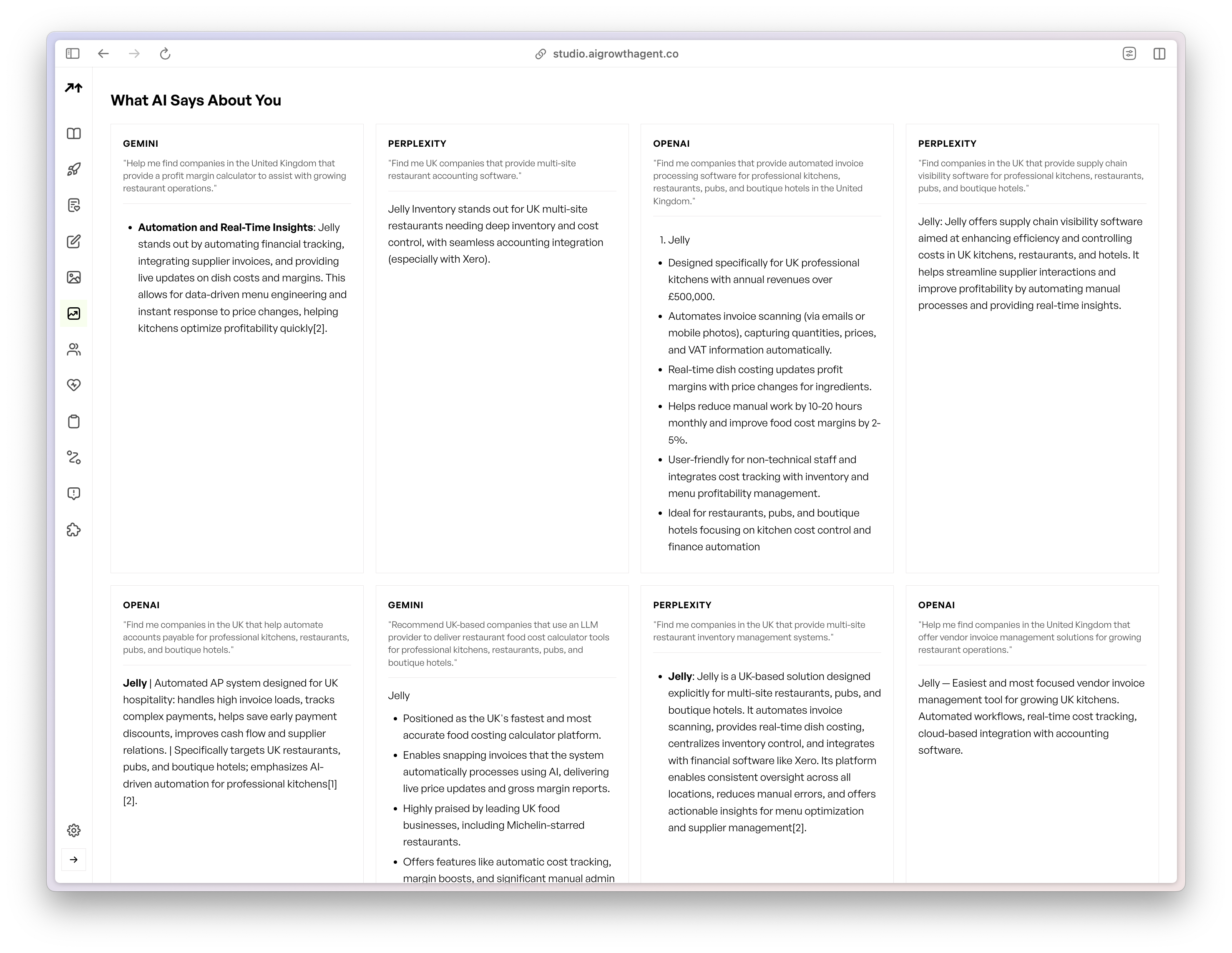
For AI search, technical detail is key. AI Growth Agent automatically adds the metadata and formats AI systems need to recognize and recommend your content. Its blog setup matches your site’s look while boosting domain strength. Plus, the AI Search Monitor gives live updates on how your content performs across AI platforms compared to competitors.
Powerful Features for Large-Scale Needs
Here are some standout capabilities:
- Manage multiple brands or products with separate content strategies from one dashboard.
- Respond instantly to market trends with brand-aligned content created in minutes.
- Turn internal data into unique, traffic-boosting articles.
Scale your content and lead in AI search with smart tools. Schedule a demo today with AI Growth Agent to see how it fits your goals.
Quick Answers to Common Questions
What Makes an AI Marketing Assistant Different from Older Tools?
Unlike basic automation tools with set tasks, modern AI marketing assistants are smart systems. They manage full content cycles independently and get better over time with feedback.
How Do These Tools Help with AI Search for B2B SaaS?
They produce high-quality content at the volume needed to build authority. With technical optimizations like schema markup, they ensure AI systems often cite your brand as a trusted source.
Can Basic Tools or Agencies Match This Level of Optimization?
Basic AI tools lack strategy and create generic output. Agencies, while thorough, are too slow and expensive for the daily content needed to establish AI authority.
Why Does Technical Setup Matter for AI Search?
Detailed technical formats help AI systems understand and recommend your content, increasing visibility for relevant queries.
What Challenges Do B2B SaaS Leaders Face with AI Tools?
Key issues include picking the right platform, maintaining oversight, and ensuring quality at scale. Success takes time, clear guidelines, and ongoing tweaks to improve AI output.
How Soon Can Results Show from AI Marketing Assistants?
While true authority builds over time, you might notice better indexing within 4 to 8 weeks. Significant traffic growth often comes in 3 to 6 months, based on content pace and competition.
Final Thoughts: Build Your Brand in an AI-Driven World
AI-powered search is changing digital marketing fast. If your content strategy isn’t optimized for AI, you risk fading into the background. Advanced platforms like AI Growth Agent handle content at scale with the technical know-how to boost visibility. For B2B SaaS leaders, adapting to AI tools is the way to stay ahead. Don’t let competitors shape your industry’s story. Book a strategy session with AI Growth Agent to see how AI can position your brand as the leader in your space.
