


Key Takeaways
- Content teams in 2026 need consistent, high-volume publishing to stay visible in AI search and keep pace with how users now discover information.
- Structured content, strong technical SEO, and clear metadata increase the likelihood that AI systems like ChatGPT, Gemini, and Perplexity will cite your brand.
- Governed AI workflows and brand voice controls protect quality at scale, so teams can move faster without weakening editorial standards.
- Centralized, automated content operations make it easier to measure performance, reduce costs, and prove ROI from AI content initiatives.
- AI Growth Agent provides a focused programmatic SEO platform and AI Growth Agent demo, available at https://cal.com/team/aigrowthagent/demo, to help teams build authority in AI search.
Schedule your AI Growth Agent demo to see how programmatic SEO can support your 2026 content goals.
1. Increase Content Velocity While Protecting Quality
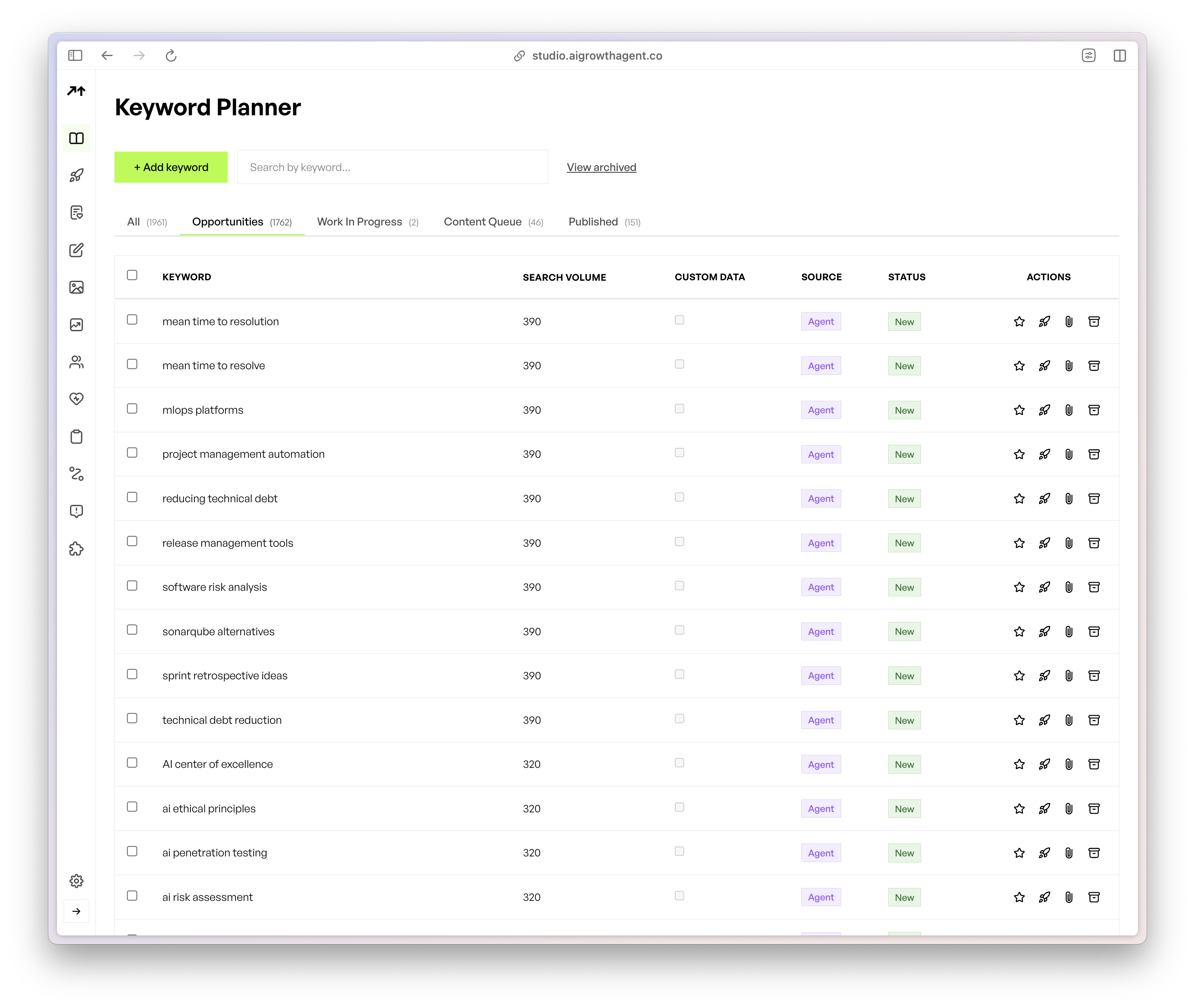
Content teams gain a clear advantage when they publish more often without sacrificing quality. AI platforms help extend capacity beyond what manual workflows allow.
Effective platforms coordinate the full content lifecycle, from ideation to publication. A coordinated workflow allows teams to:
- Generate topic clusters and content series around strategic themes
- Keep messaging consistent across pages and channels
- Maintain a recognizable brand voice at a higher volume
- Shorten the time from brief to published content
Brands that treat AI as an orchestrator rather than a basic writing tool can scale output and still meet editorial and compliance standards.
2. Engineer Content For AI Citation And Technical Authority
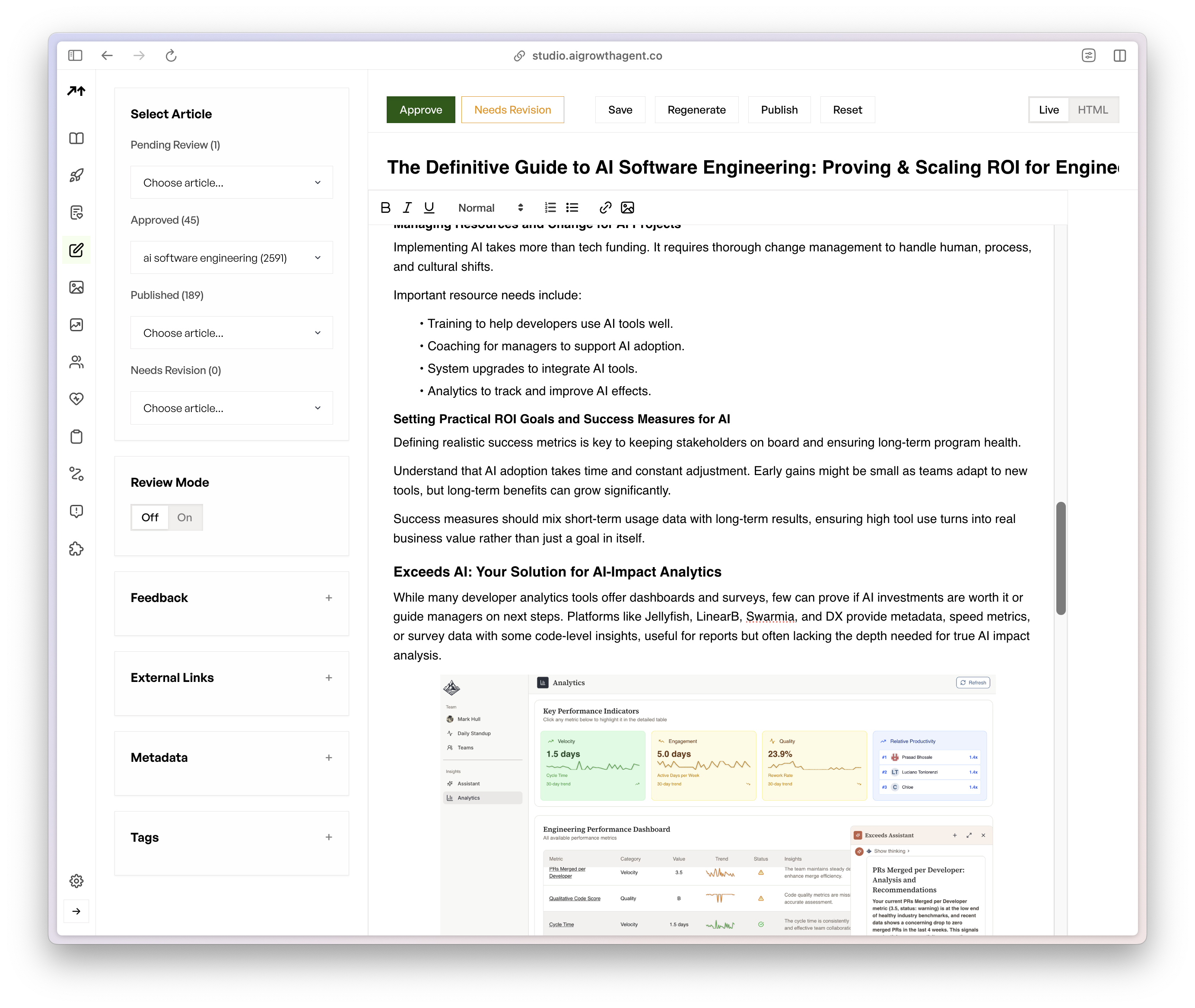
AI search engines work best with content that is clear, structured, and easy to parse. They look for direct answers, supporting context, and predictable formatting.
Content teams can support AI citation by:
- Using clear headings and subheadings for each question or theme
- Providing concise, direct answers near the top of each section
- Adding supporting details, examples, and definitions below the main answer
- Organizing related content into clusters that link to each other
Technical SEO now plays a larger role in how AI systems read and reference content. Elements such as schema, metadata, and structured files help AI agents understand context with higher accuracy.
Teams should focus on:
- Rich schema markup that describes entities, products, services, and FAQs
- Well-structured metadata for titles, descriptions, and canonical URLs
- Optimized image tags that clarify what each visual represents
- Files like LLM.txt and Model Context Protocol configurations that guide model access
These practices turn each page into a complete digital asset rather than only a block of text, which increases the chance of citation in AI-driven results.
See how AI Growth Agent builds technical authority for AI search with programmatic content engineering.
3. Apply Governance And Brand Voice Controls At Scale
Brand integrity is at risk when teams rely on generic AI tools without clear guardrails. Strong governance keeps quality high while enabling faster production.
Advanced AI content platforms support governance by:
- Embedding brand guidelines, style rules, and terminology into the system
- Defining approval paths and review checkpoints for sensitive content types
- Standardizing templates for articles, landing pages, and knowledge content
- Logging changes and outputs for compliance and auditing
Human review then shifts from rewriting entire drafts to checking key sections, validating claims, and confirming tone. This model keeps editors in control while allowing AI to handle repetitive, structured work at scale.
4. Centralize And Automate To Improve Operations And ROI
Content operations become more efficient when teams manage strategy, production, and measurement from a single system. Centralization reduces duplicate effort and makes it easier to spot gaps.
AI-powered platforms support operational efficiency by automating parts of the content pipeline, including:
- Keyword research and clustering for target themes
- Brief creation with outlines, intent, and internal links
- Draft generation and technical optimization
- Publishing workflows to CMS or other channels
Teams can then track core performance metrics such as:
- Content velocity, time from idea to live page
- Production efficiency, cost per asset, and revision rates
- Quality consistency, adherence to brand voice and standards
- Engagement outcomes, including traffic, conversions, and time on page
Clear reporting on these metrics helps leaders evaluate ROI from AI initiatives and adjust strategy when needed.
5. Use Programmatic SEO To Become A Preferred AI Search Source
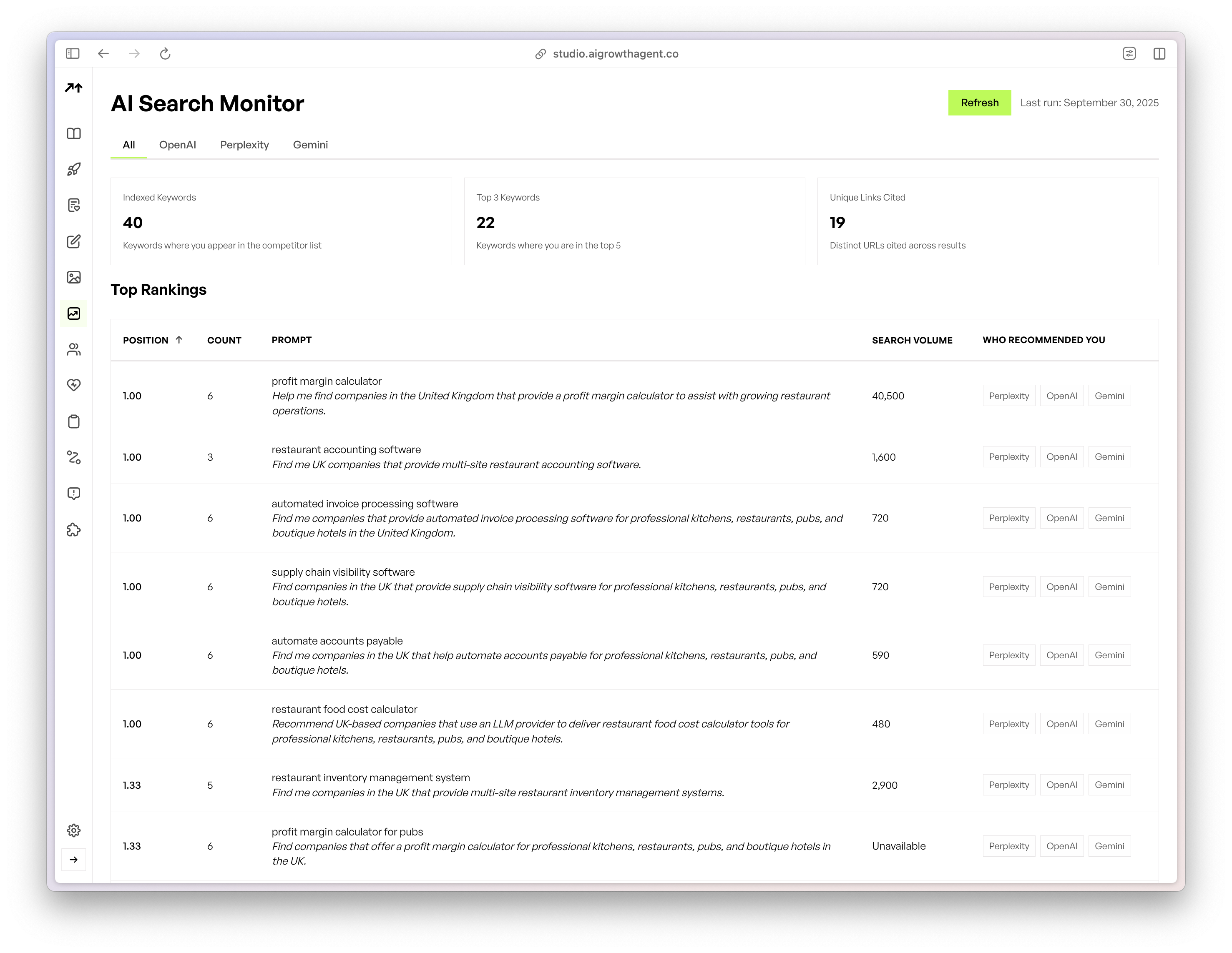
AI search now favors brands that supply a wide, reliable, and consistently structured set of answers. Programmatic SEO helps teams publish this kind of coverage at scale.
When brands fail to describe their products, services, and expertise in enough detail, AI systems may surface competitor content instead. Programmatic workflows reduce that risk by:
- Mapping large keyword sets to specific pages and clusters
- Ensuring each topic has a clear, authoritative answer
- Standardizing structure so AI systems can parse content quickly
- Keeping content updated as information and offerings change
AI Growth Agent functions as a programmatic SEO agent that supports these goals by automating key steps such as keyword research, content engineering, drafting, fact-checking, and technical optimization, including schema markup and publishing.
The platform also offers capabilities that support complex content environments, including:
- Multi-tenant deployment to manage multiple brands from a single interface
- Real-time content injection based on relevant trending news
- Database-to-content automation that turns proprietary data into search-ready pages
These features help brands present consistent, structured information across many topics, which improves visibility in AI-powered search experiences.
Frequently Asked Questions
How can AI platforms ensure content quality while increasing velocity?
AI platforms support quality at scale by encoding brand guidelines and governance rules into the generation process. They can automate technical SEO, basic fact-checking, and formatting, while keeping clear human review steps for higher judgment tasks. This balance allows teams to increase output without lowering the standard required for authoritative content that AI search engines are more likely to cite.
What is the difference between generic AI writing tools and advanced AI content platforms for programmatic SEO?
Generic AI writing tools focus on single-use text generation and often produce content that still requires manual editing, structuring, and optimization. Advanced AI content platforms such as AI Growth Agent operate as end-to-end systems that cover keyword clustering, structured briefs, technical engineering, schema implementation, and direct publishing. They deliver pages that are ready for search and AI citation, not only draft text.
How do AI search engines prioritize content for citation?
AI search engines consider authority, relevance, freshness, and structure when selecting sources to cite. They favor content that provides clear answers, organized sections, and thorough context, supported by clean schema markup and metadata. Platforms that consistently publish this type of optimized content, aligned with protocols such as LLM.txt and Model Context Protocol, tend to receive stronger visibility across tools like ChatGPT, Gemini, and Perplexity.
Can a small content team effectively compete with larger enterprises using AI platforms?
Smaller teams can compete with larger organizations when they use AI platforms to automate research, drafting, and technical optimization. Automation reduces manual workload, so team members can focus on strategy, subject-matter expertise, and final review. With this approach, a lean team can publish at a pace and level of technical quality that rivals or exceeds larger, less automated teams.
What key metrics should content teams track to measure the ROI of AI content initiatives?
Content teams can evaluate ROI by tracking:
- Content velocity, the time from ideation to publication
- Production efficiency, including cost per page and revision cycles
- Quality consistency, such as adherence to voice and editorial standards
- Engagement outcomes, including traffic, conversions, and user behavior
- AI-specific indicators, such as citations in ChatGPT, Gemini, and Perplexity, crawl statistics, and Google Search Console performance
Together, these metrics show how AI-supported content efforts contribute to visibility, authority, and revenue.
Conclusion: Define Your Authority In The Age Of AI Search
Content teams that adapt to AI-powered search in 2026 can strengthen visibility, while teams that delay may lose ground to better-structured competitors. A programmatic approach that emphasizes velocity, technical authority, governance, centralized operations, and specialized AI platforms allows brands to move from ad hoc content creation to consistent category leadership.
AI Growth Agent offers a focused way to build this kind of authority. Schedule a demo with AI Growth Agent to assess fit and explore how programmatic SEO can support your AI search strategy.
